Sale Price:
£100.00
Original Price:
£150.00
This is a very rare Rear wheel arch/wing section with original German Army black overpaint remains from a Wehrmacht used German Opel Olympia staff car.
This wheel arch still retains a lot of original colour but is very rusty which is mostly surface rust with some holes but is still very solid not braking up falling apart.The arch has been nicely cleaned and is perfect for display or any collection.The arch is 40 inches long and roughly 15 inches wide.The wheel arch recovered from the Moissey Ford area in the Falaise pocket, Normandy from the summer battlefield of 1944.
The Opel Olympia was a significant German compact car produced between 1935 and 1940 (and post-war), utilized extensively by the Wehrmacht during WWII as a staff car, courier vehicle, and light ambulance. Known for its advanced unitary (all-steel) construction, it was powered by a 1.3L to 1.5L I4 engine, often featuring "suicide" doors. over 168,000 were made between 1935 and 1940.
This tiny road leading to a muddy track fording a large stream carried tens of thousands of German soldiers out of the Falaise Pocket in only a few days in August of 1944.
This is a very rare Rear wheel arch/wing section with original German Army black overpaint remains from a Wehrmacht used German Opel Olympia staff car.
This wheel arch still retains a lot of original colour but is very rusty which is mostly surface rust with some holes but is still very solid not braking up falling apart.The arch has been nicely cleaned and is perfect for display or any collection.The arch is 40 inches long and roughly 15 inches wide.The wheel arch recovered from the Moissey Ford area in the Falaise pocket, Normandy from the summer battlefield of 1944.
The Opel Olympia was a significant German compact car produced between 1935 and 1940 (and post-war), utilized extensively by the Wehrmacht during WWII as a staff car, courier vehicle, and light ambulance. Known for its advanced unitary (all-steel) construction, it was powered by a 1.3L to 1.5L I4 engine, often featuring "suicide" doors. over 168,000 were made between 1935 and 1940.
This tiny road leading to a muddy track fording a large stream carried tens of thousands of German soldiers out of the Falaise Pocket in only a few days in August of 1944.

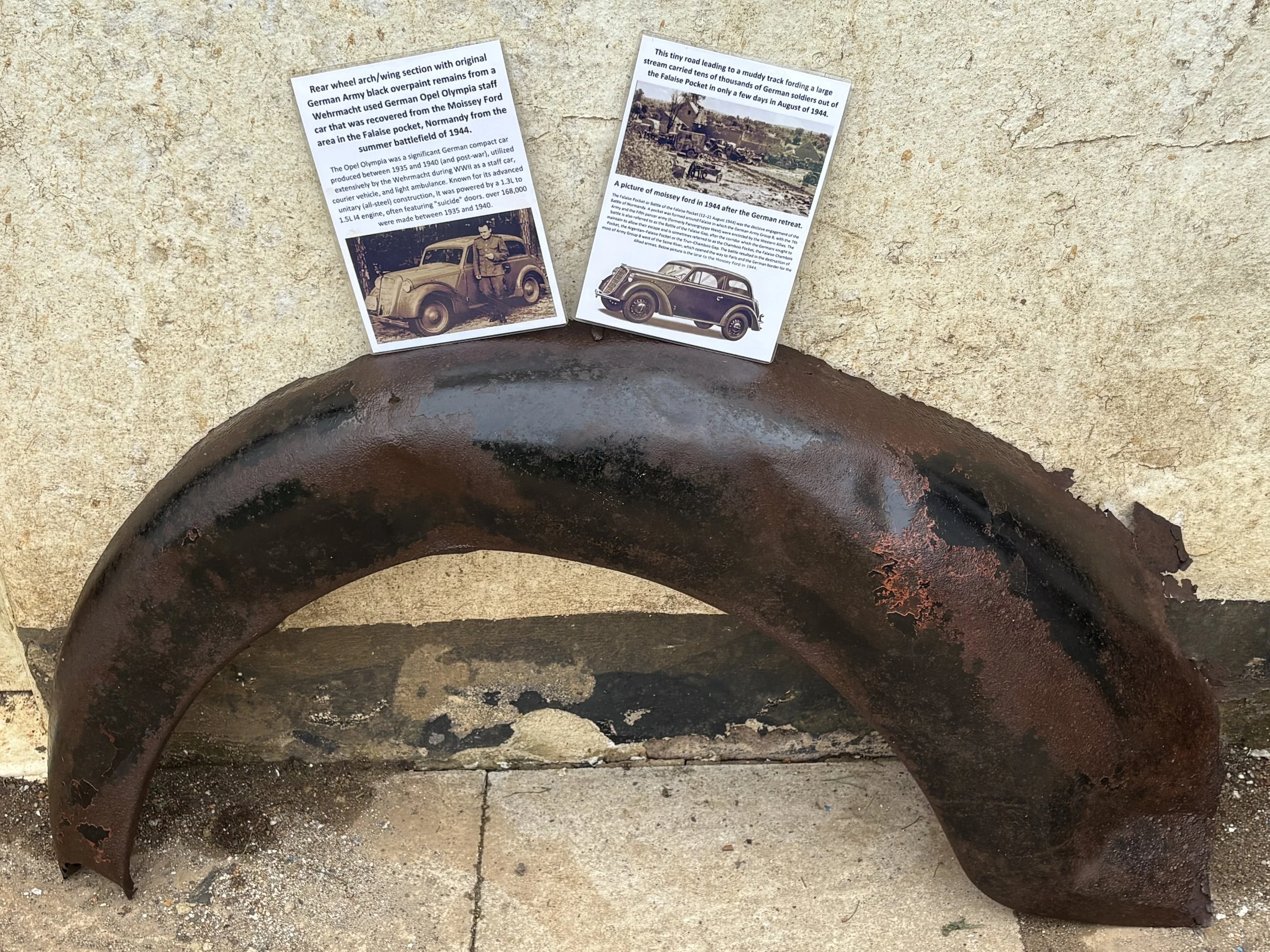 Image 1 of 12
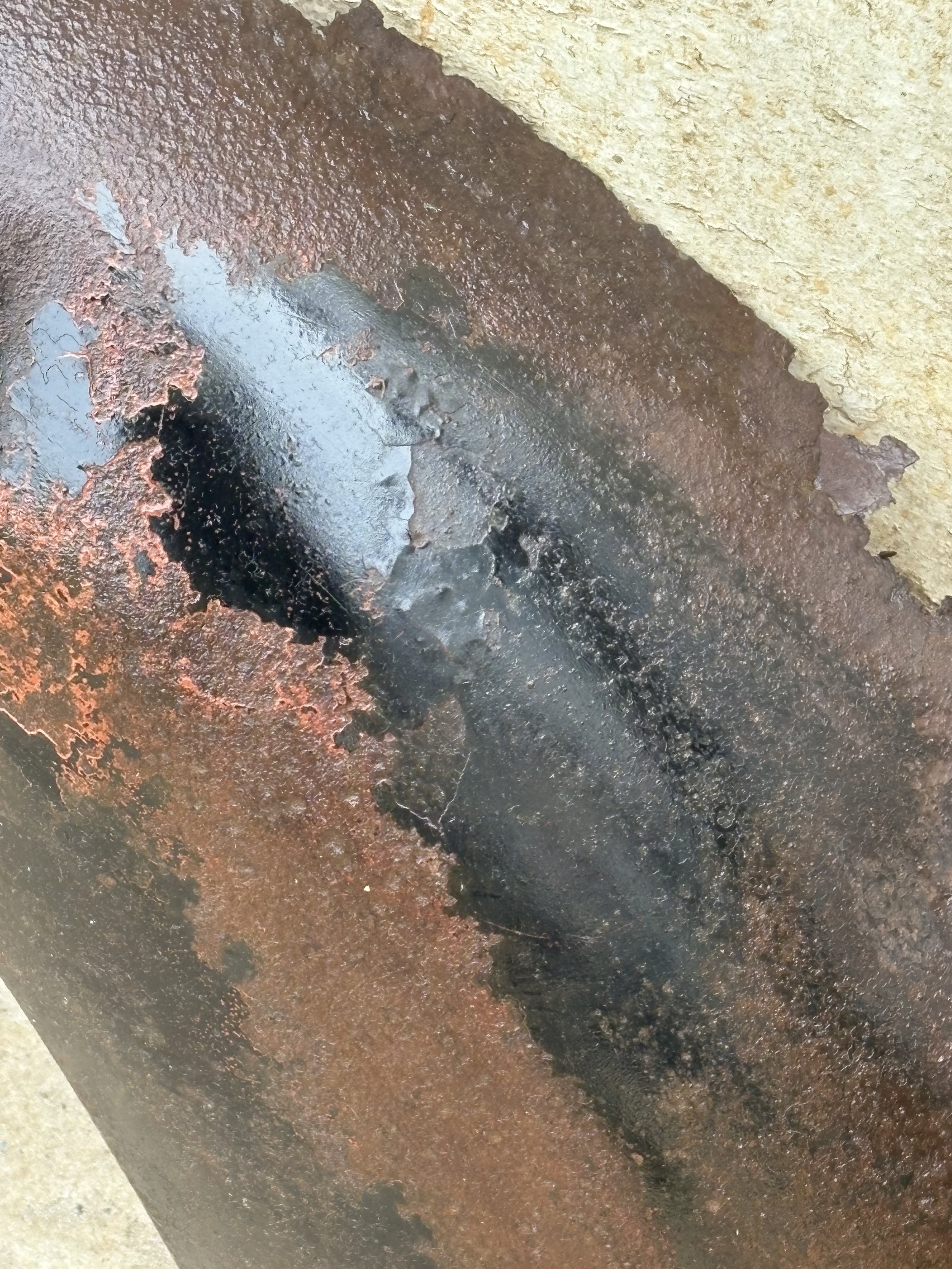 Image 2 of 12
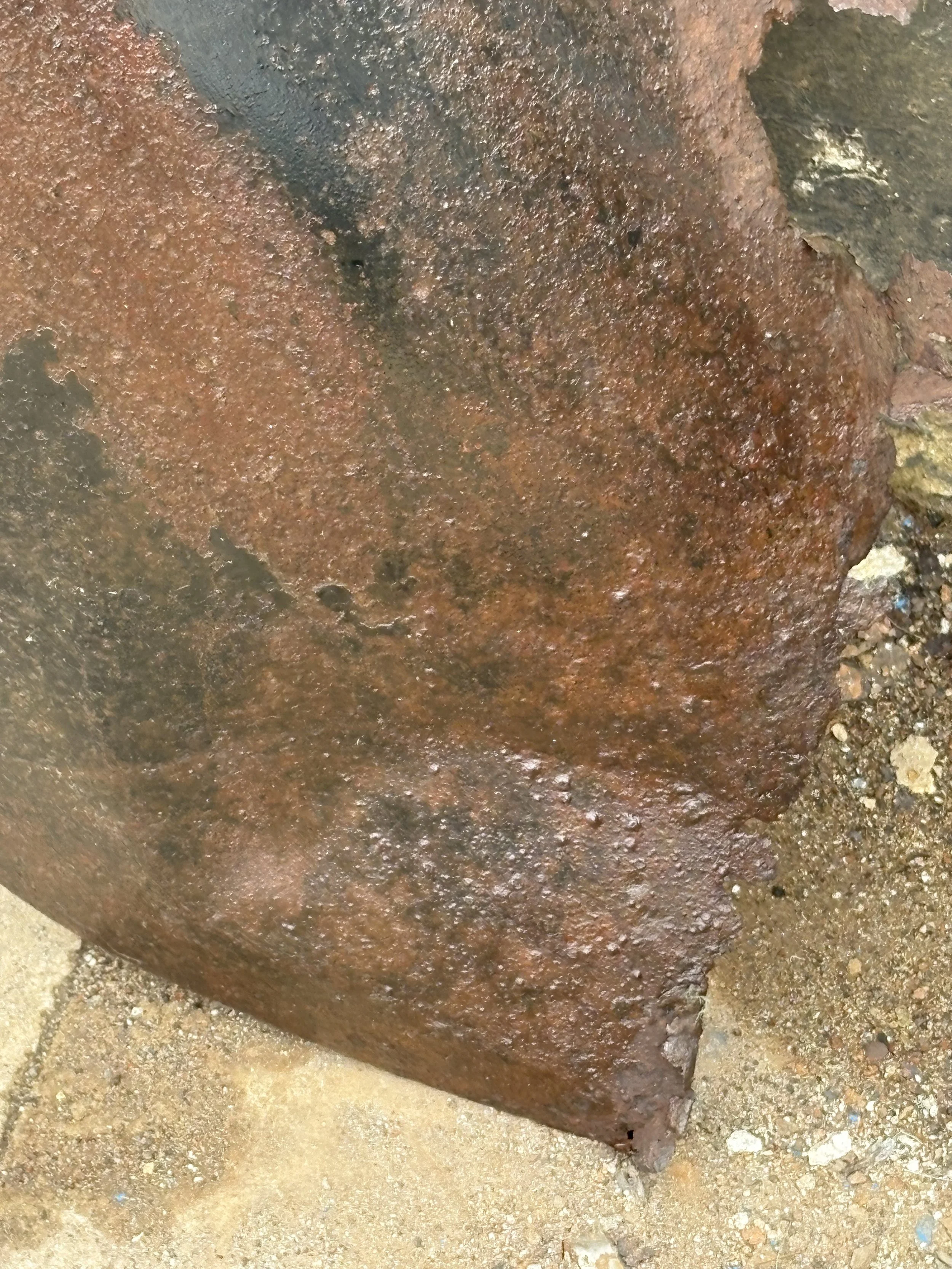 Image 3 of 12
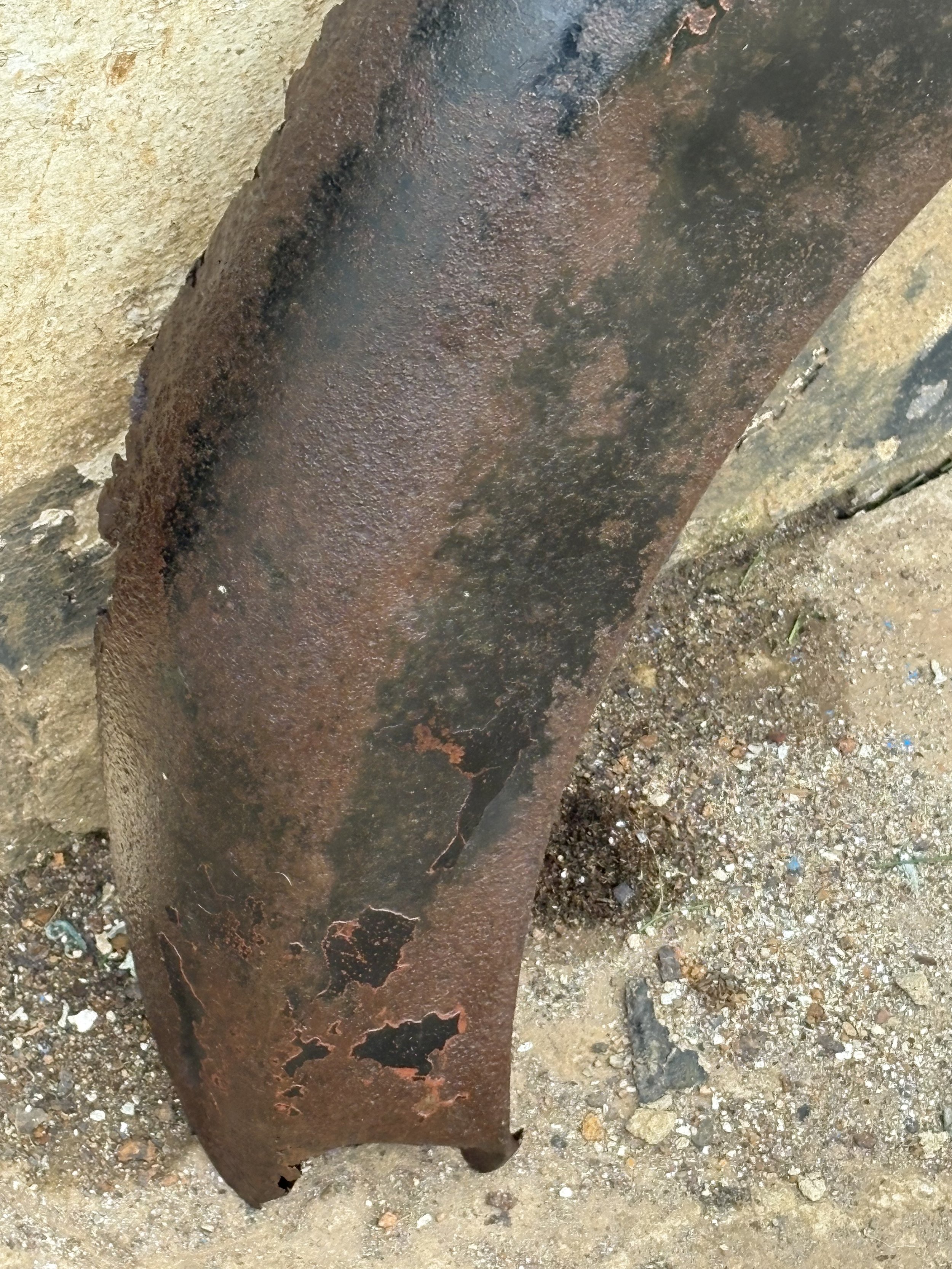 Image 4 of 12
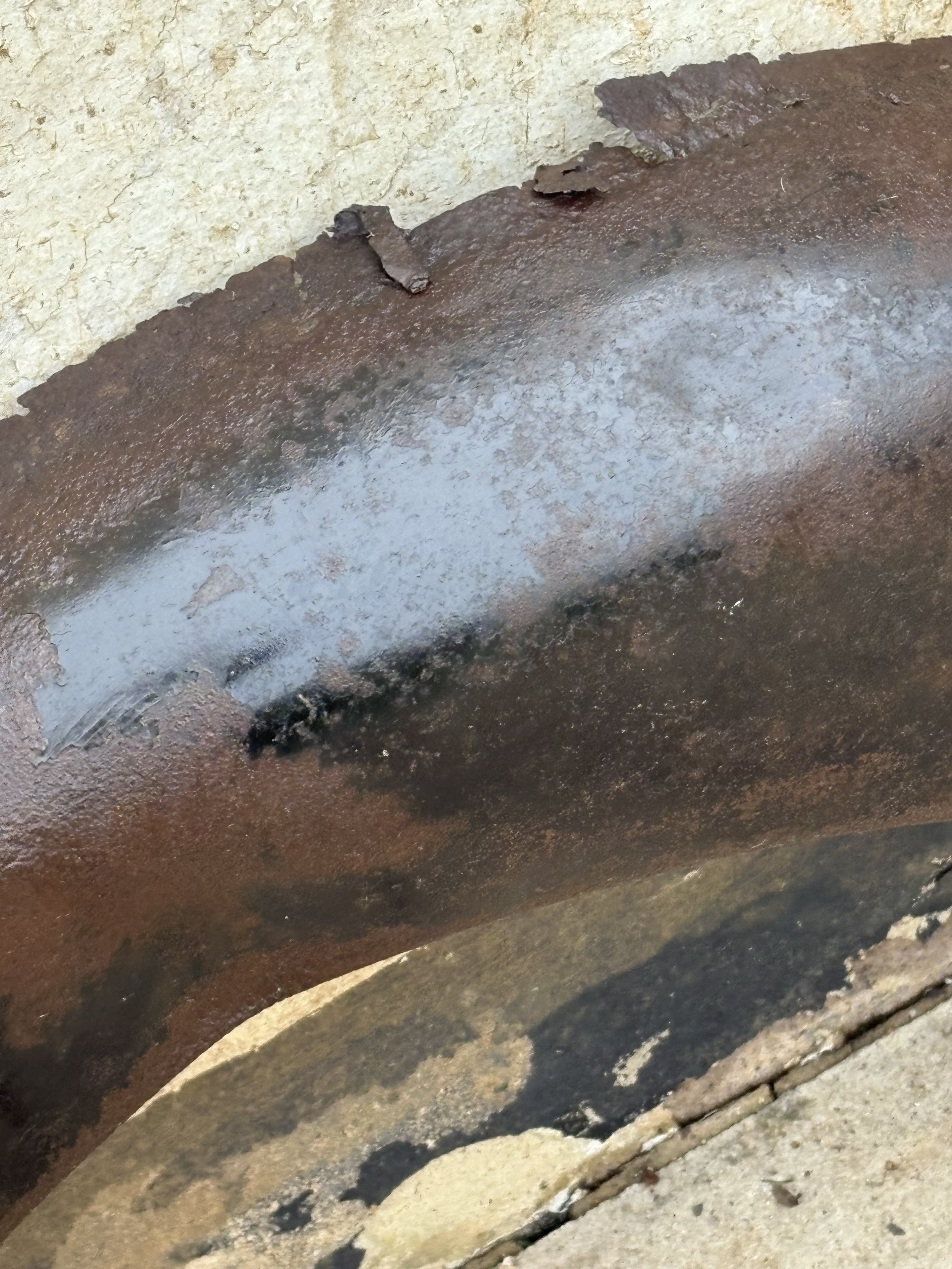 Image 5 of 12
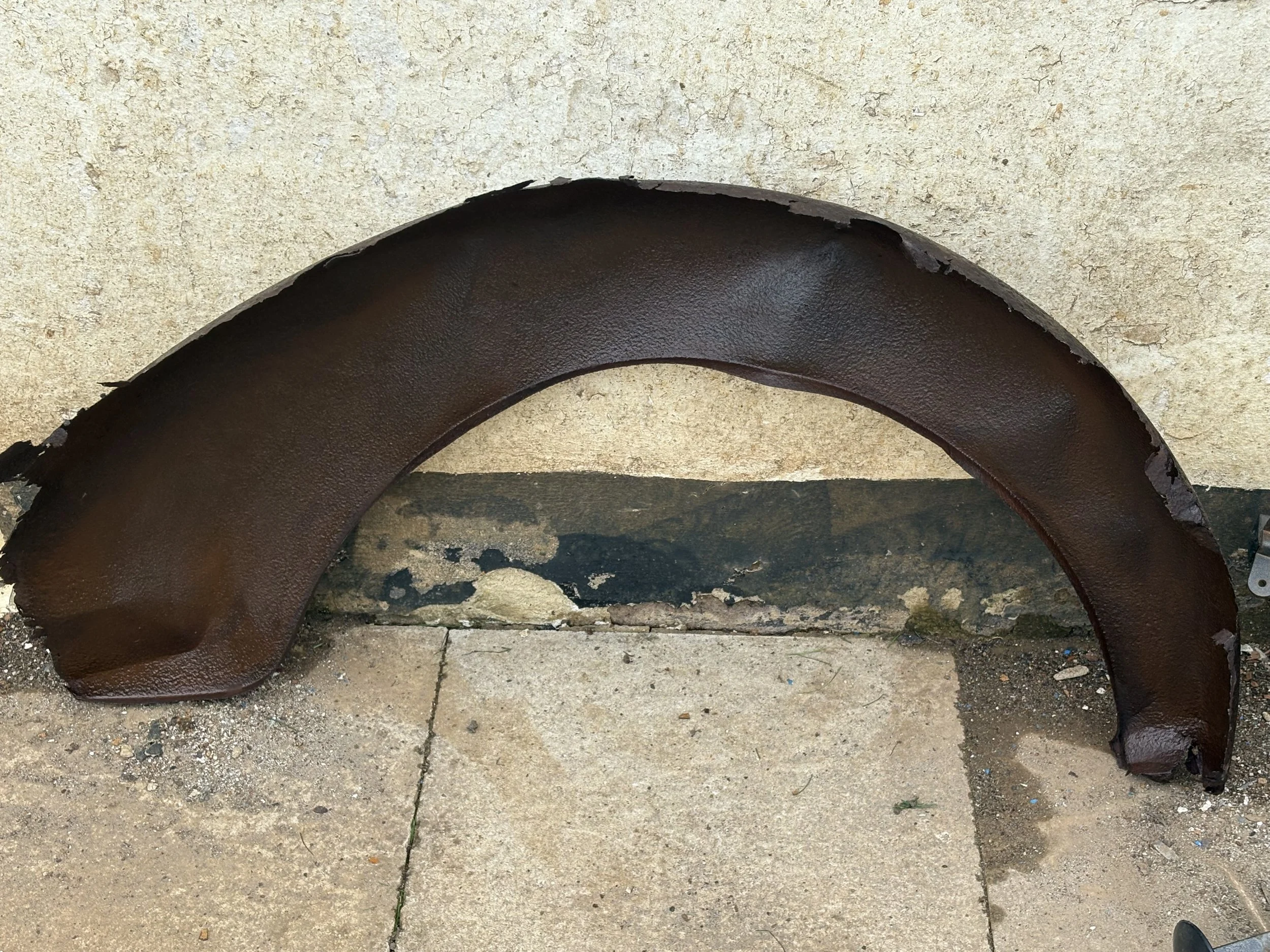 Image 6 of 12
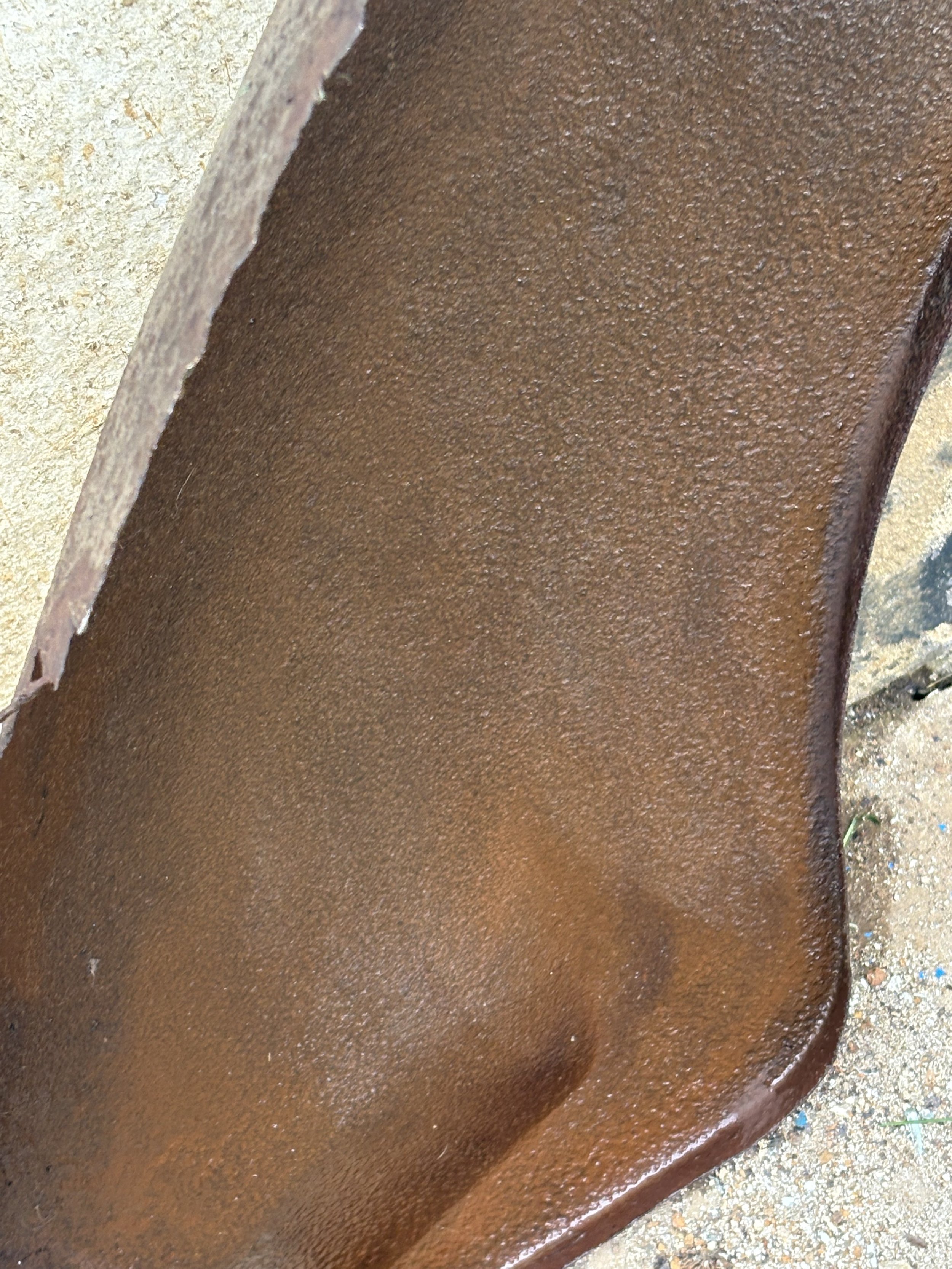 Image 7 of 12
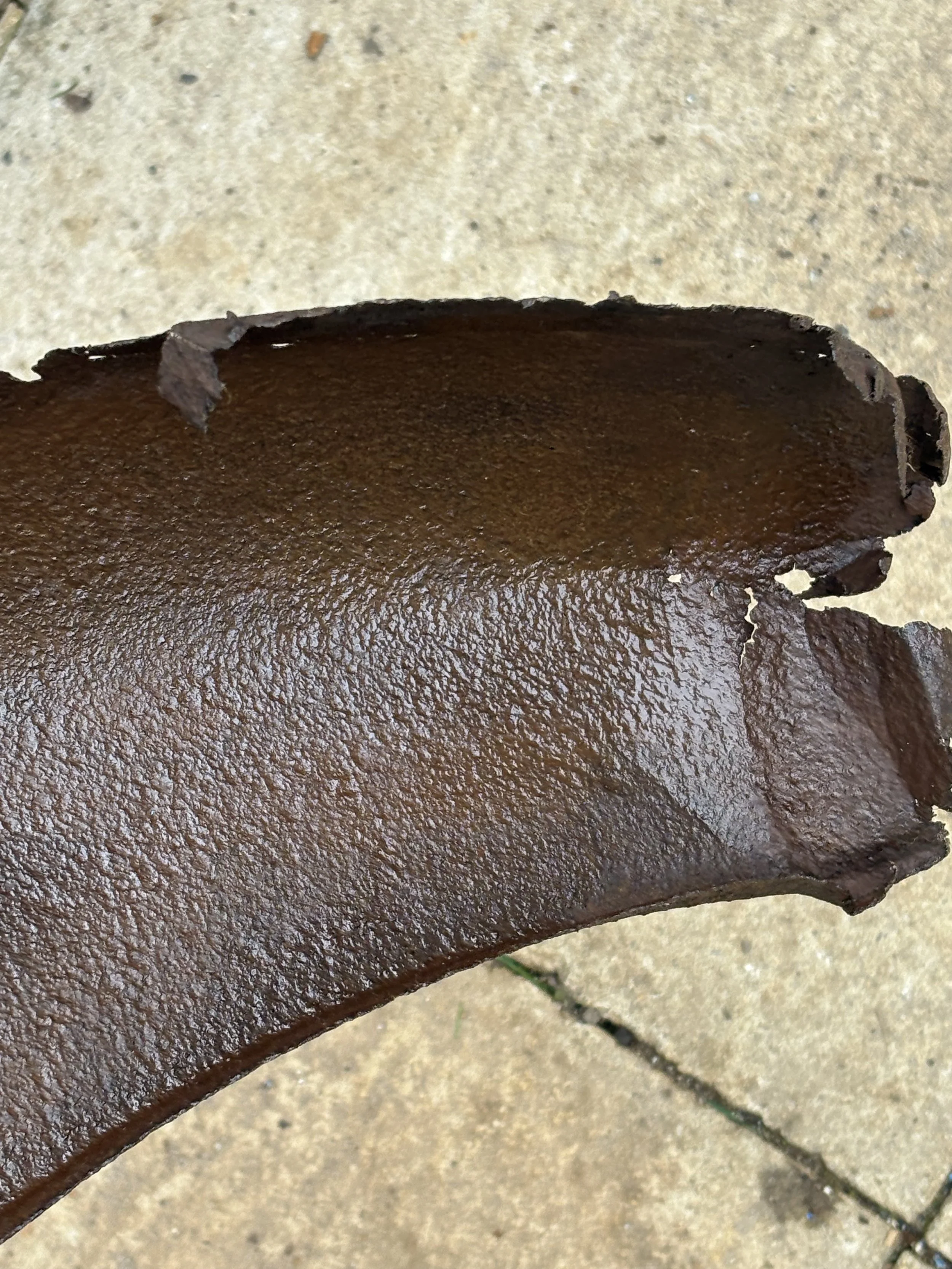 Image 8 of 12
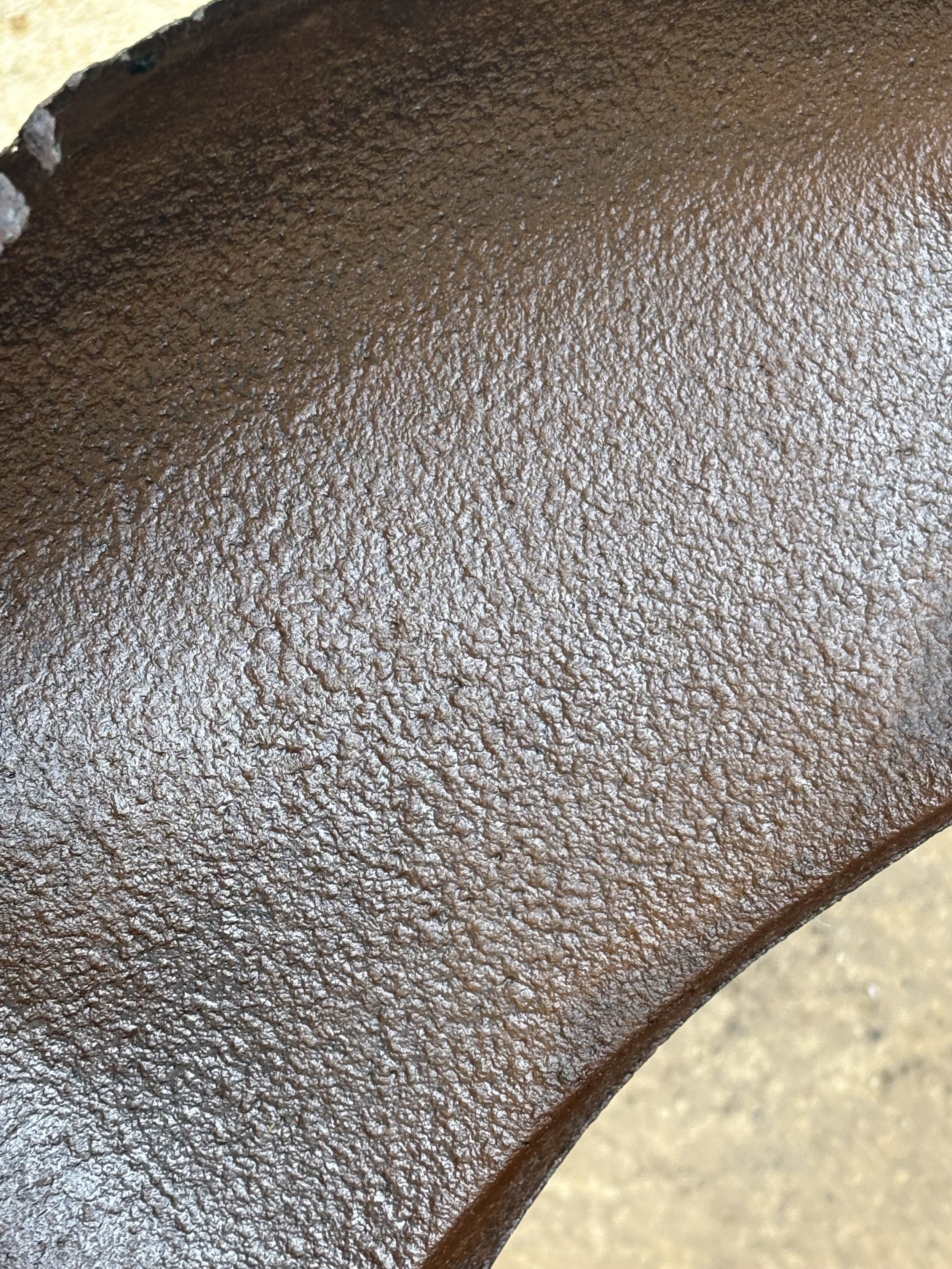 Image 9 of 12
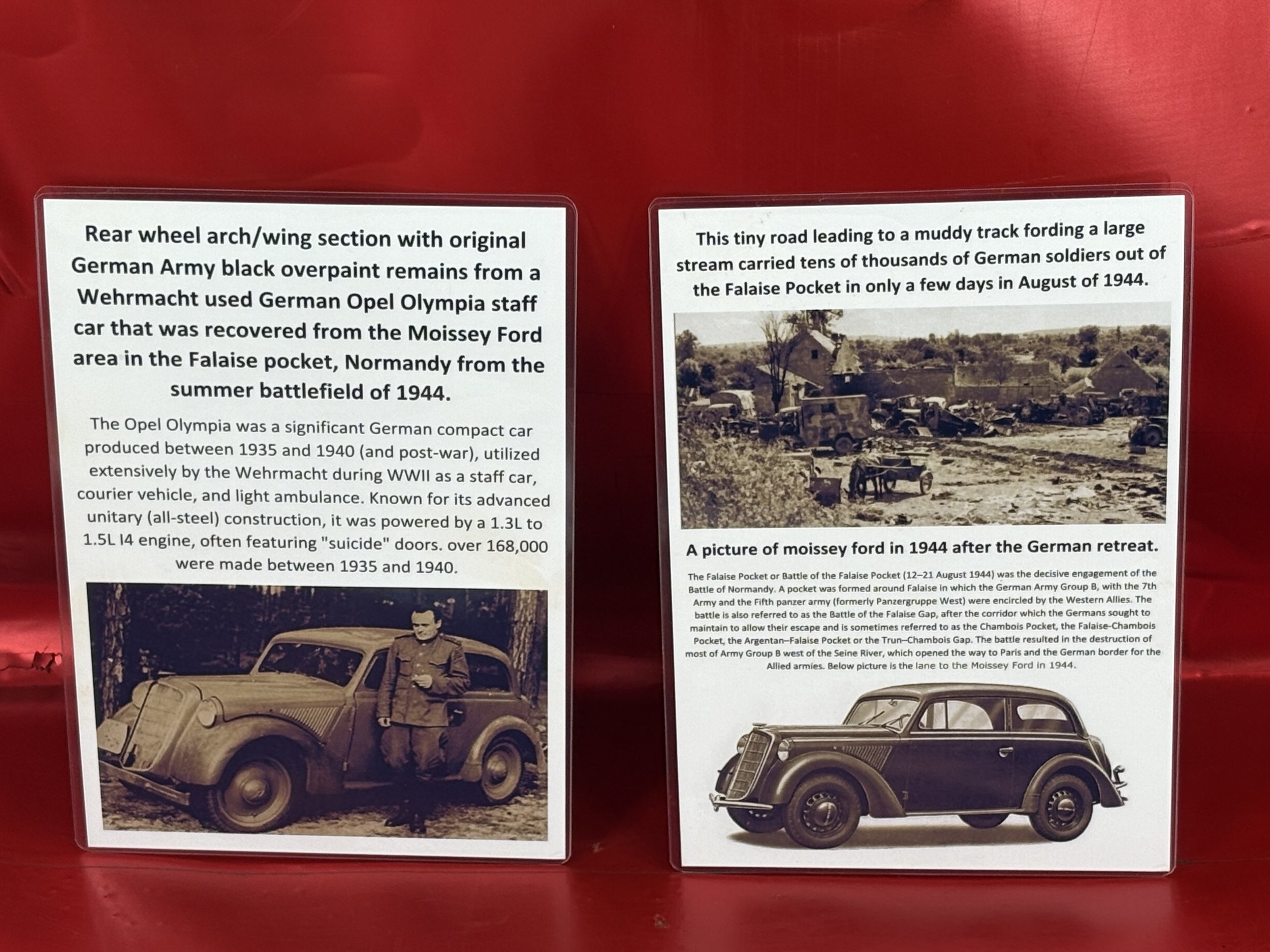 Image 10 of 12
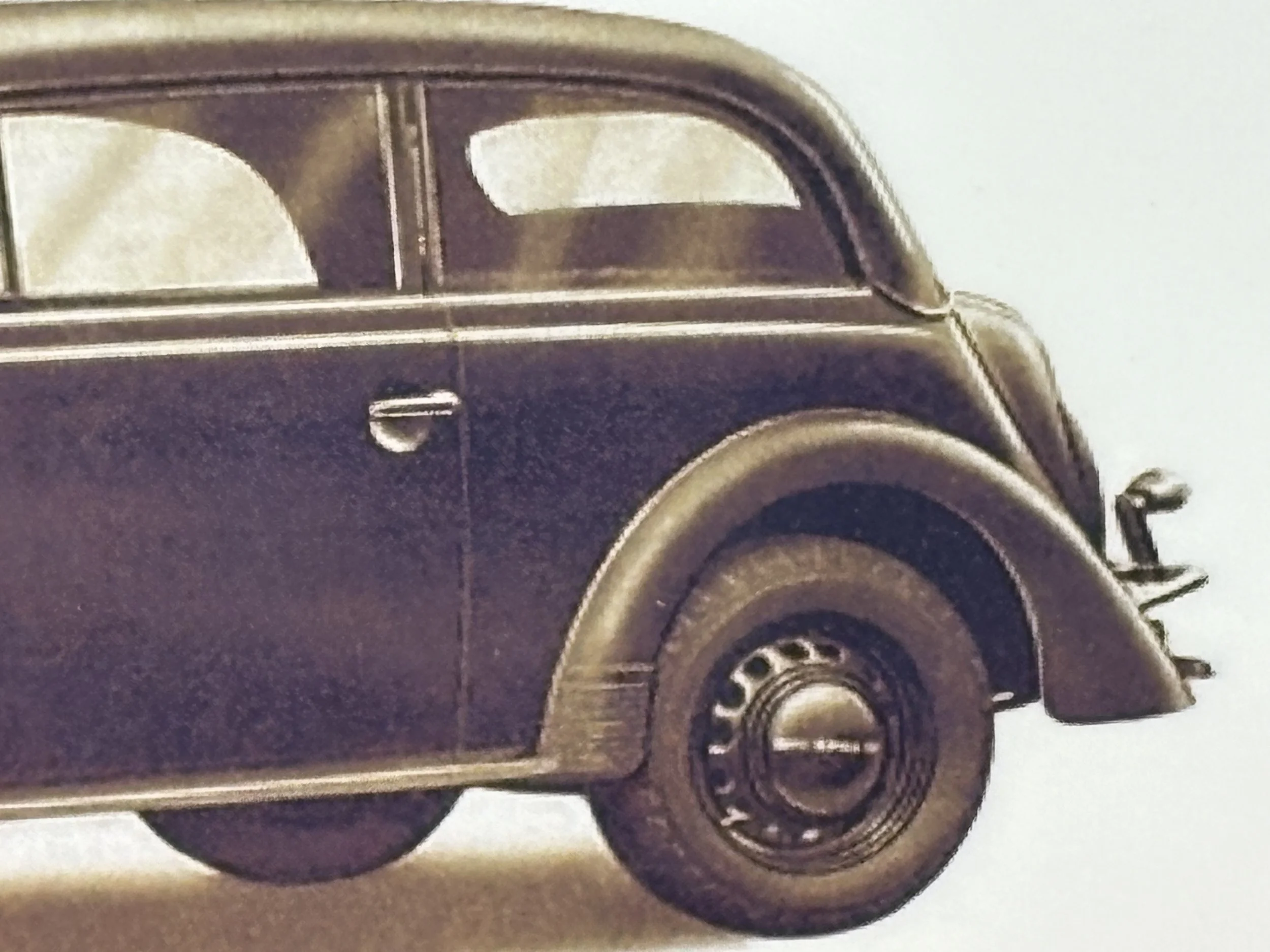 Image 11 of 12
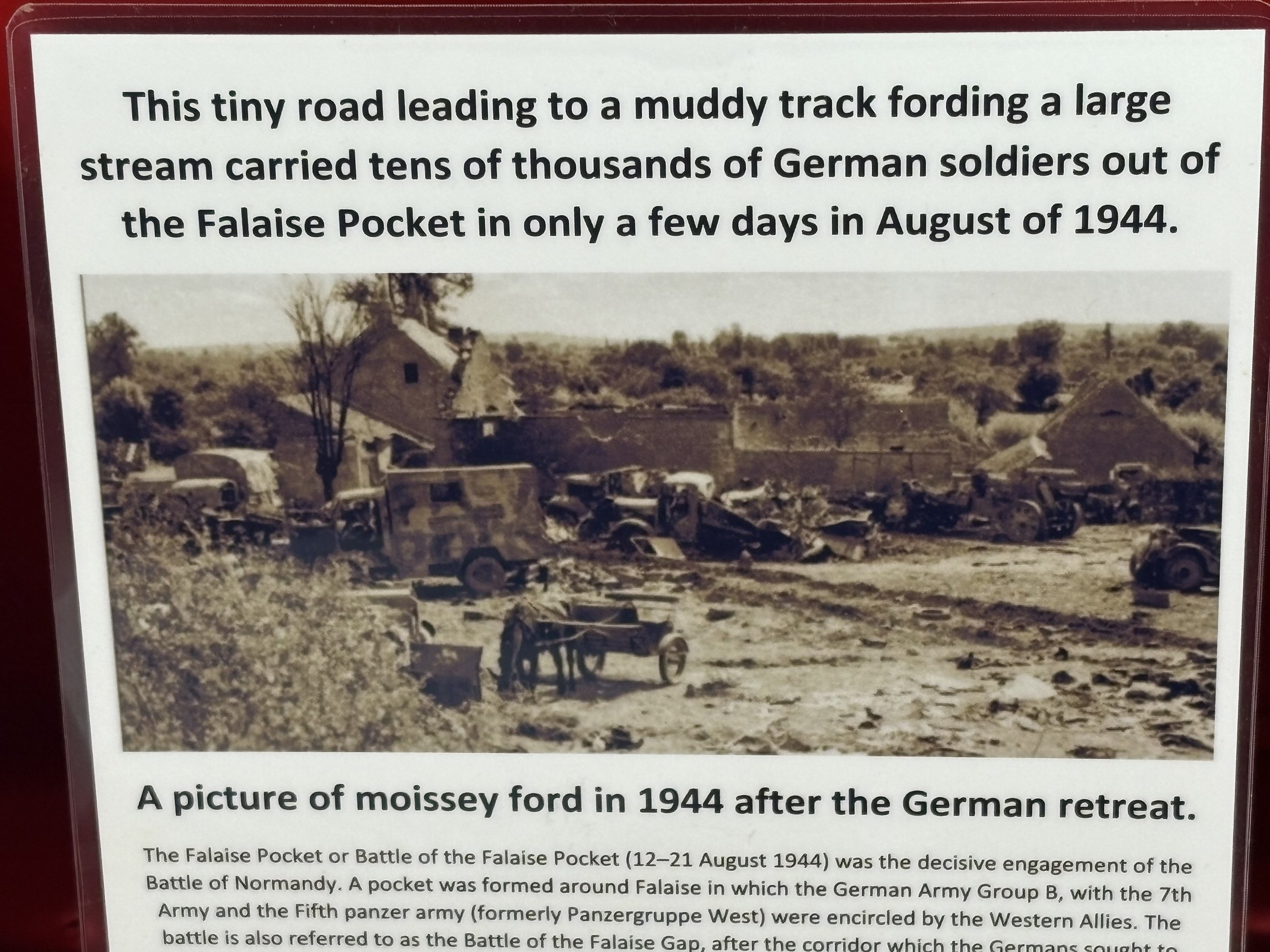 Image 12 of 12