This is a very nice and rare Glass framed copy of a combat report which details how Squadron Leader Roger Bushell [the great escape mastermind} was shot down on 23 May 1940 during Dunkirk evacuation over France.
The copy of the report is complete and totally readable it is the report of Pilot Officer A.R Wright who was the same squadron and names Roger Bushell by name on the report. All of the picture have been mounted in to a glass fronted frame with all the information and pictures. about the report The frame measuring 12 inches long by 9 inches wide on blue background making it perfect for display or a collection and a very rare relic from one of the most famous RAF pilots of the war especially with his key role in the Great Escape of March 1944 in Germany.
Squadron Leader Roger Bushell was a brilliant, South African-born lawyer and British Royal Air Force pilot who became one of the most resilient thorn-in-the-side figures to Nazi Germany. A fluent German speaker and elite skier, Bushell was given command of the RAF's premier No. 92 Squadron in 1939. His front-line combat career was tragically short; on 23 May 1940, during a fierce aerial dogfight defending the Dunkirk evacuation beaches, he shot down two German aircraft before his own plane caught fire, forcing him to crash-land in occupied France. Captured immediately, Bushell refused to accept captivity and launched multiple daring escapes—once nearly reaching the Swiss border and another time evading capture for eight months in Prague with the Czech resistance—before being sent to the maximum-security Stalag Luft III camp. There, under the code name "Big X," he masterminded "The Great Escape," a massive, highly sophisticated operation involving 600 prisoners digging three tunnels simultaneously (Tom, Dick, and Harry). Though 76 men famously broke out in March 1944, Bushell was recaptured and subsequently murdered by the Gestapo on the personal orders of Adolf Hitler. His indomitable leadership later immortalised him as the inspiration for Richard Attenborough’s character, Roger Bartlett, in the 1963 classic film The Great Escape.
The aircraft intricately tied to Bushell's fateful final mission was Supermarine Spitfire Mk. I, serial number N3194 (codenamed "Z"). Powered by the iconic Rolls-Royce Merlin III engine, this particular Mark I variant was the 435th Spitfire ever constructed and represented the absolute cutting edge of British aviation technology at the dawn of the war. It featured the classic elliptical wings and nimble handling that allowed Bushell to aggressively engage Messerschmitt fighters over the English Channel. On that same mission, Bushell was leading a formation that included Spitfire P9373 (coded "GR-H"), a sister aircraft piloted by 24-year-old wingman Sergeant Paul Klipsch. While Bushell's N3194 was lost to the earth after his forced landing, Klipsch's P9373 was violently shot down in the same dogfight, claiming the young pilot's life on his very first day of combat. Decades later in 1999, the deeply buried wreckage of P9373 was archaeologically excavated for the television programme Time Team, pulling remarkably preserved personal artefacts and mechanical components from the French soil to finally piece together the full story of Bushell's tragic final patrol.
This is a very nice and rare Glass framed copy of a combat report which details how Squadron Leader Roger Bushell [the great escape mastermind} was shot down on 23 May 1940 during Dunkirk evacuation over France.
The copy of the report is complete and totally readable it is the report of Pilot Officer A.R Wright who was the same squadron and names Roger Bushell by name on the report. All of the picture have been mounted in to a glass fronted frame with all the information and pictures. about the report The frame measuring 12 inches long by 9 inches wide on blue background making it perfect for display or a collection and a very rare relic from one of the most famous RAF pilots of the war especially with his key role in the Great Escape of March 1944 in Germany.
Squadron Leader Roger Bushell was a brilliant, South African-born lawyer and British Royal Air Force pilot who became one of the most resilient thorn-in-the-side figures to Nazi Germany. A fluent German speaker and elite skier, Bushell was given command of the RAF's premier No. 92 Squadron in 1939. His front-line combat career was tragically short; on 23 May 1940, during a fierce aerial dogfight defending the Dunkirk evacuation beaches, he shot down two German aircraft before his own plane caught fire, forcing him to crash-land in occupied France. Captured immediately, Bushell refused to accept captivity and launched multiple daring escapes—once nearly reaching the Swiss border and another time evading capture for eight months in Prague with the Czech resistance—before being sent to the maximum-security Stalag Luft III camp. There, under the code name "Big X," he masterminded "The Great Escape," a massive, highly sophisticated operation involving 600 prisoners digging three tunnels simultaneously (Tom, Dick, and Harry). Though 76 men famously broke out in March 1944, Bushell was recaptured and subsequently murdered by the Gestapo on the personal orders of Adolf Hitler. His indomitable leadership later immortalised him as the inspiration for Richard Attenborough’s character, Roger Bartlett, in the 1963 classic film The Great Escape.
The aircraft intricately tied to Bushell's fateful final mission was Supermarine Spitfire Mk. I, serial number N3194 (codenamed "Z"). Powered by the iconic Rolls-Royce Merlin III engine, this particular Mark I variant was the 435th Spitfire ever constructed and represented the absolute cutting edge of British aviation technology at the dawn of the war. It featured the classic elliptical wings and nimble handling that allowed Bushell to aggressively engage Messerschmitt fighters over the English Channel. On that same mission, Bushell was leading a formation that included Spitfire P9373 (coded "GR-H"), a sister aircraft piloted by 24-year-old wingman Sergeant Paul Klipsch. While Bushell's N3194 was lost to the earth after his forced landing, Klipsch's P9373 was violently shot down in the same dogfight, claiming the young pilot's life on his very first day of combat. Decades later in 1999, the deeply buried wreckage of P9373 was archaeologically excavated for the television programme Time Team, pulling remarkably preserved personal artefacts and mechanical components from the French soil to finally piece together the full story of Bushell's tragic final patrol.

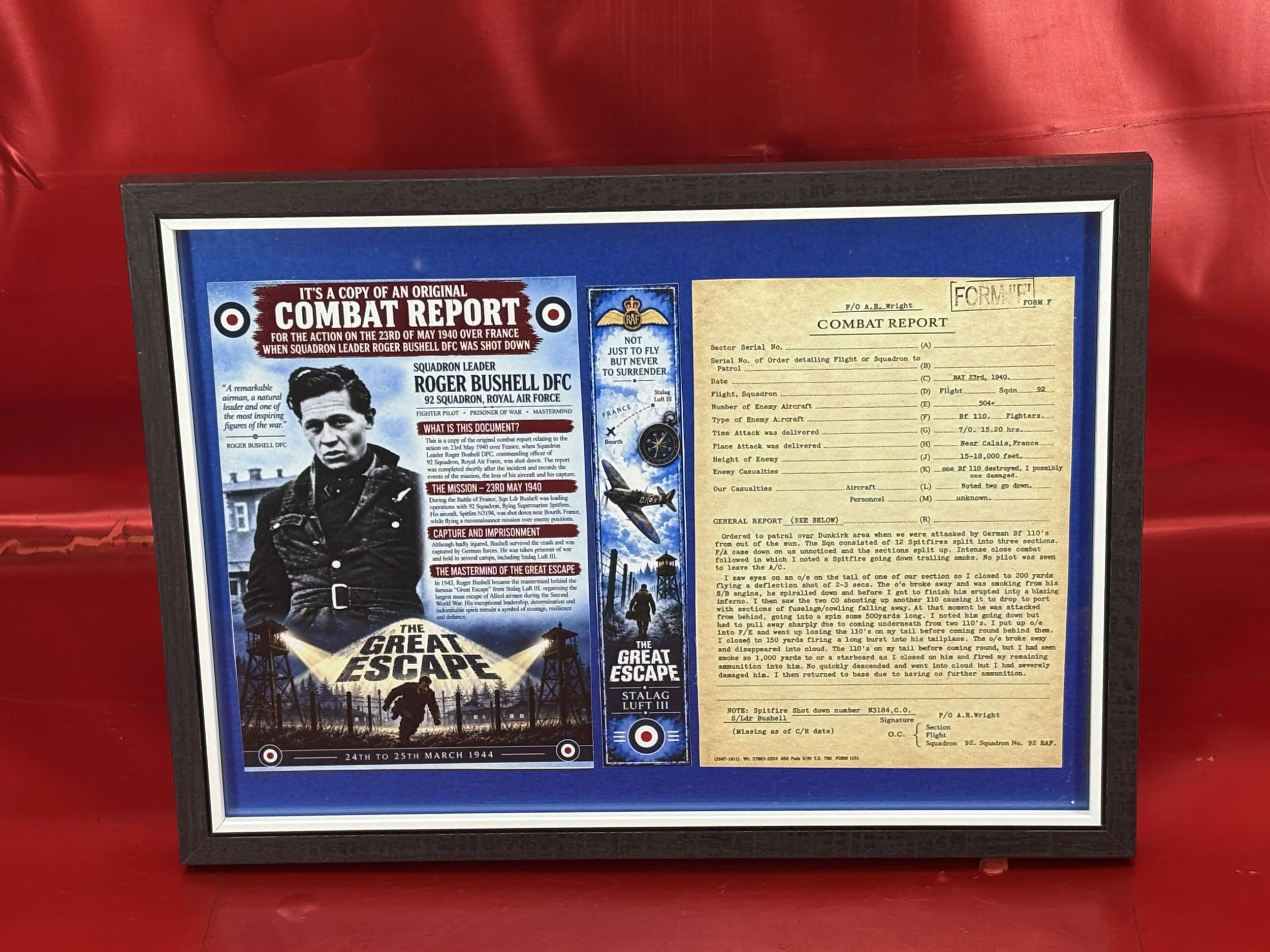 Image 1 of 8
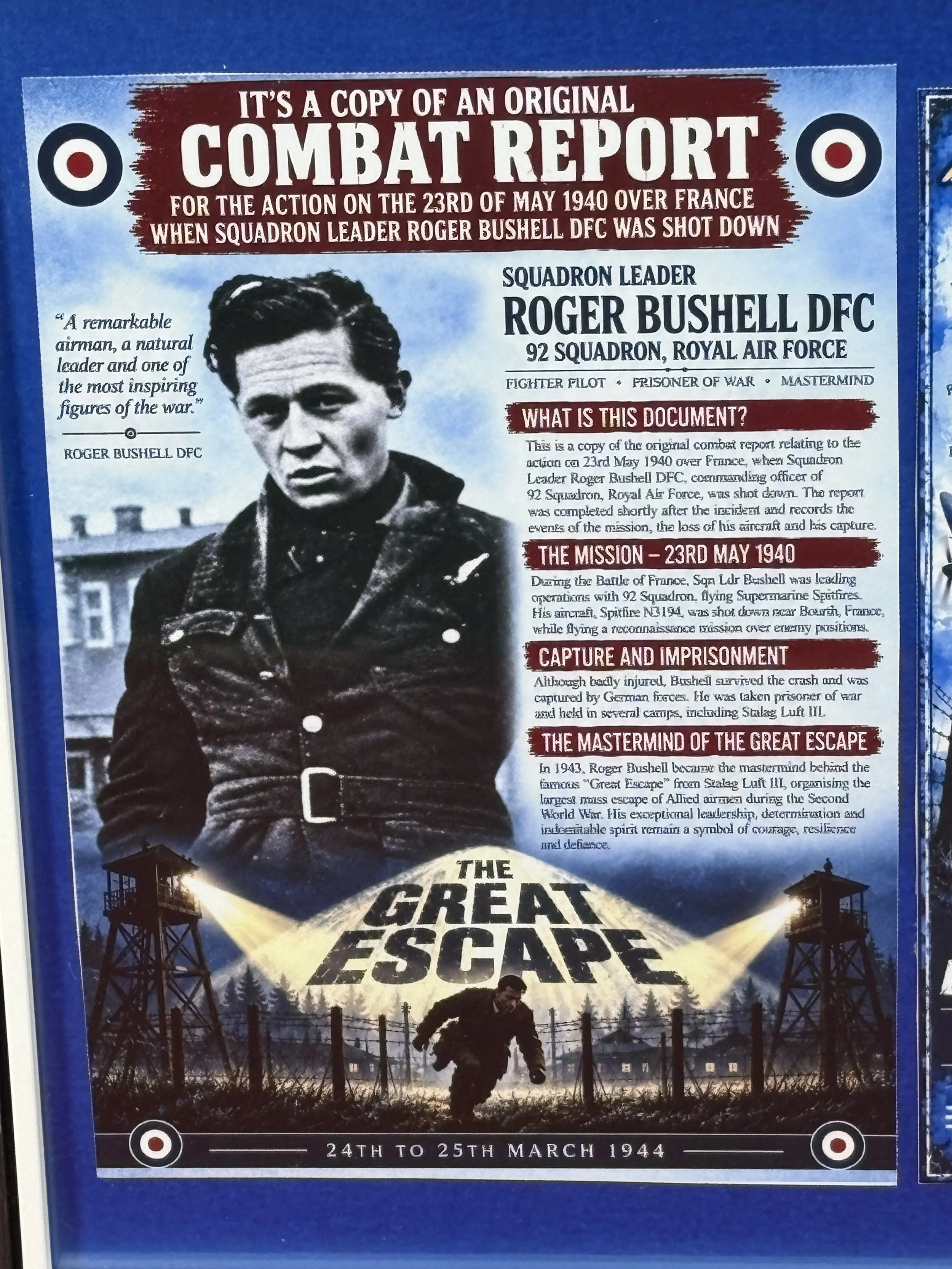 Image 2 of 8
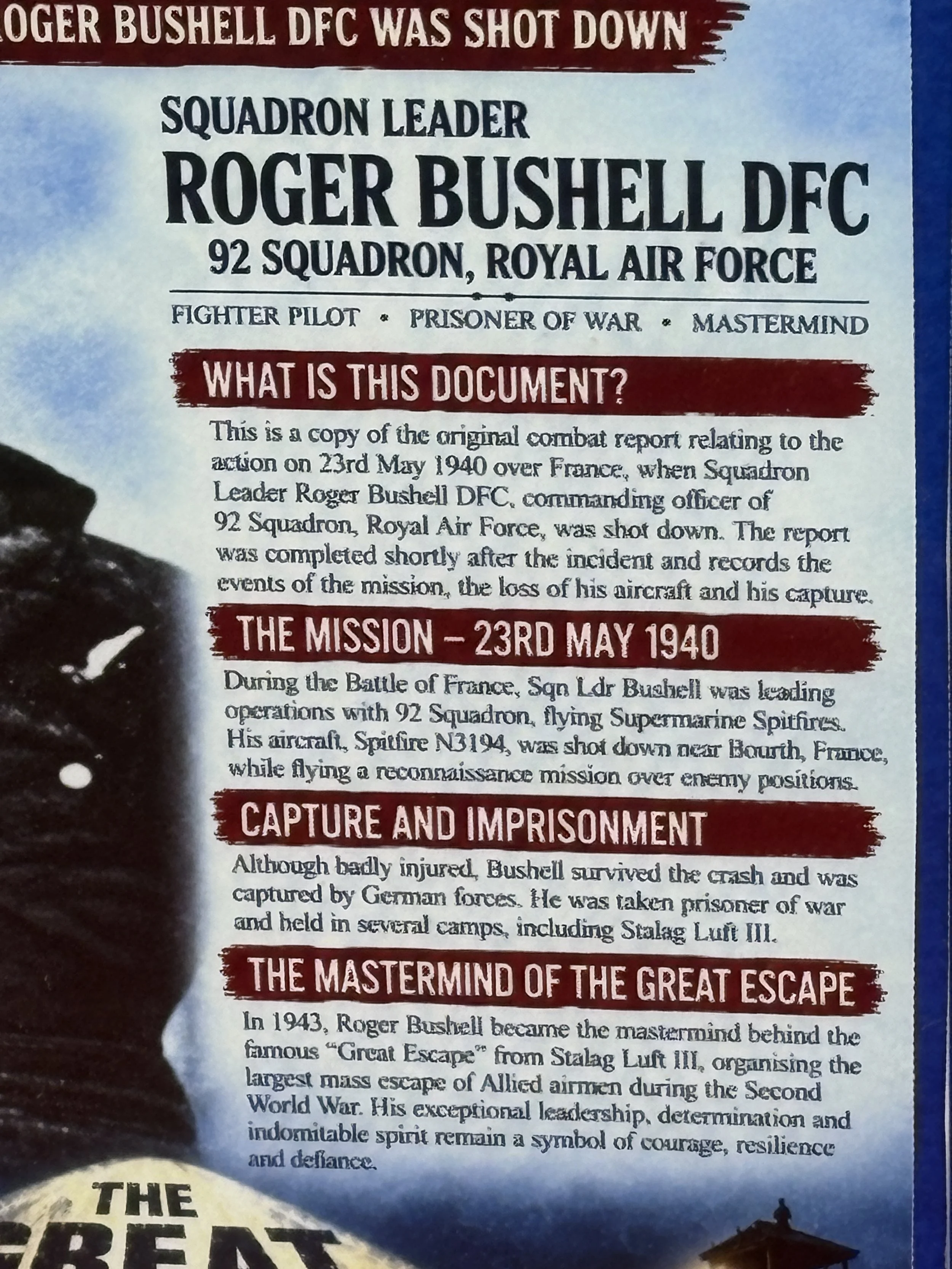 Image 3 of 8
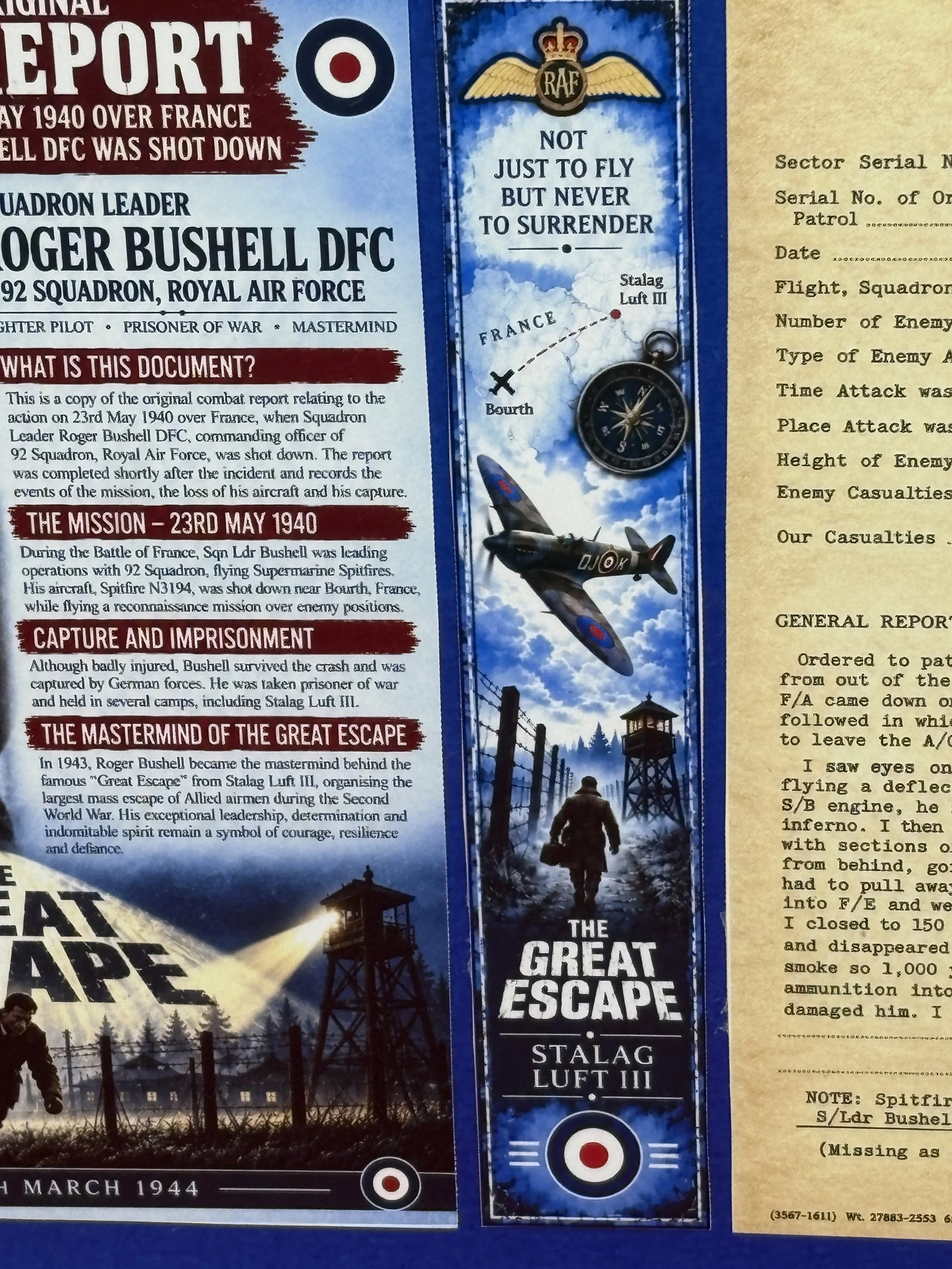 Image 4 of 8
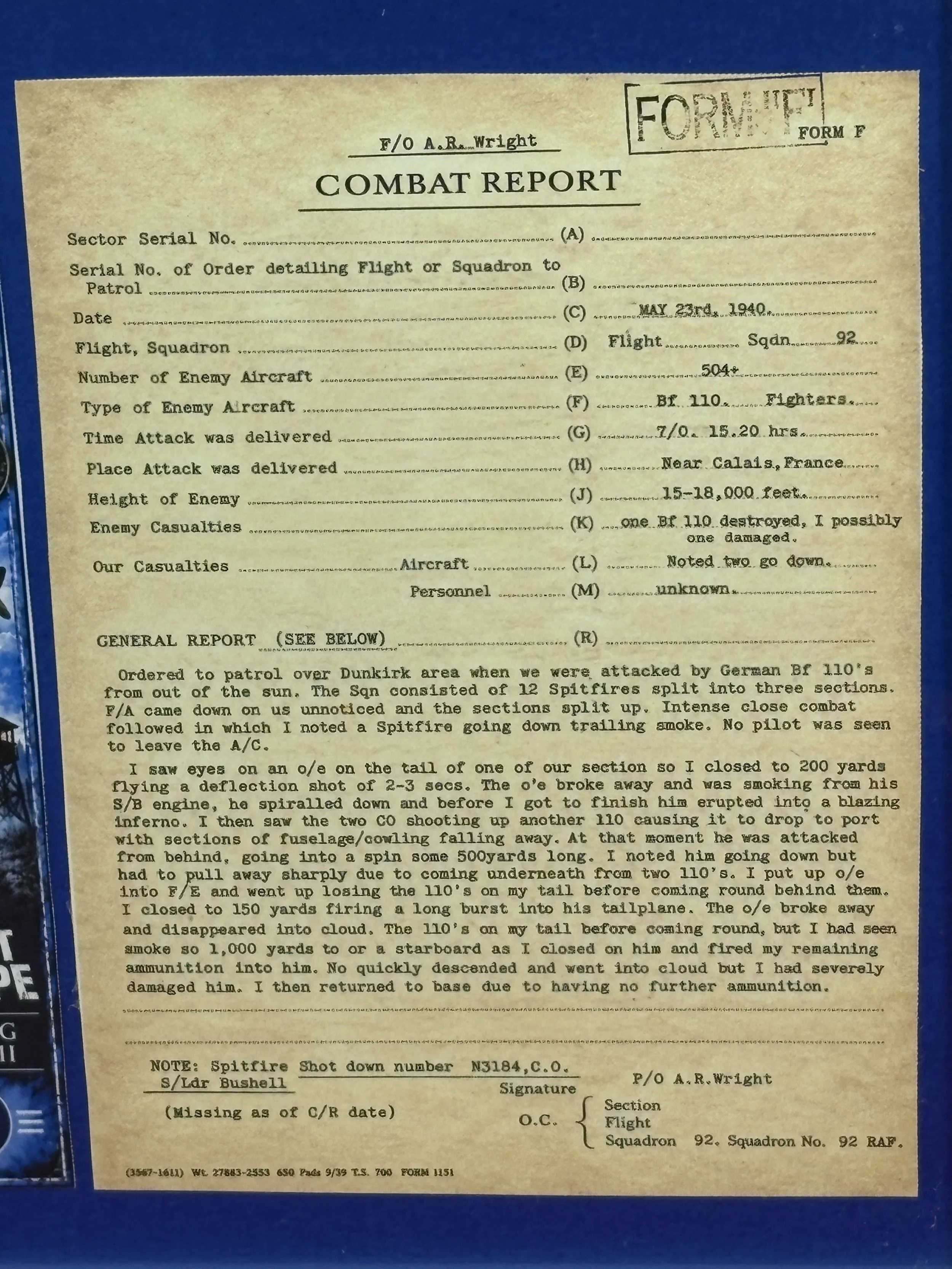 Image 5 of 8
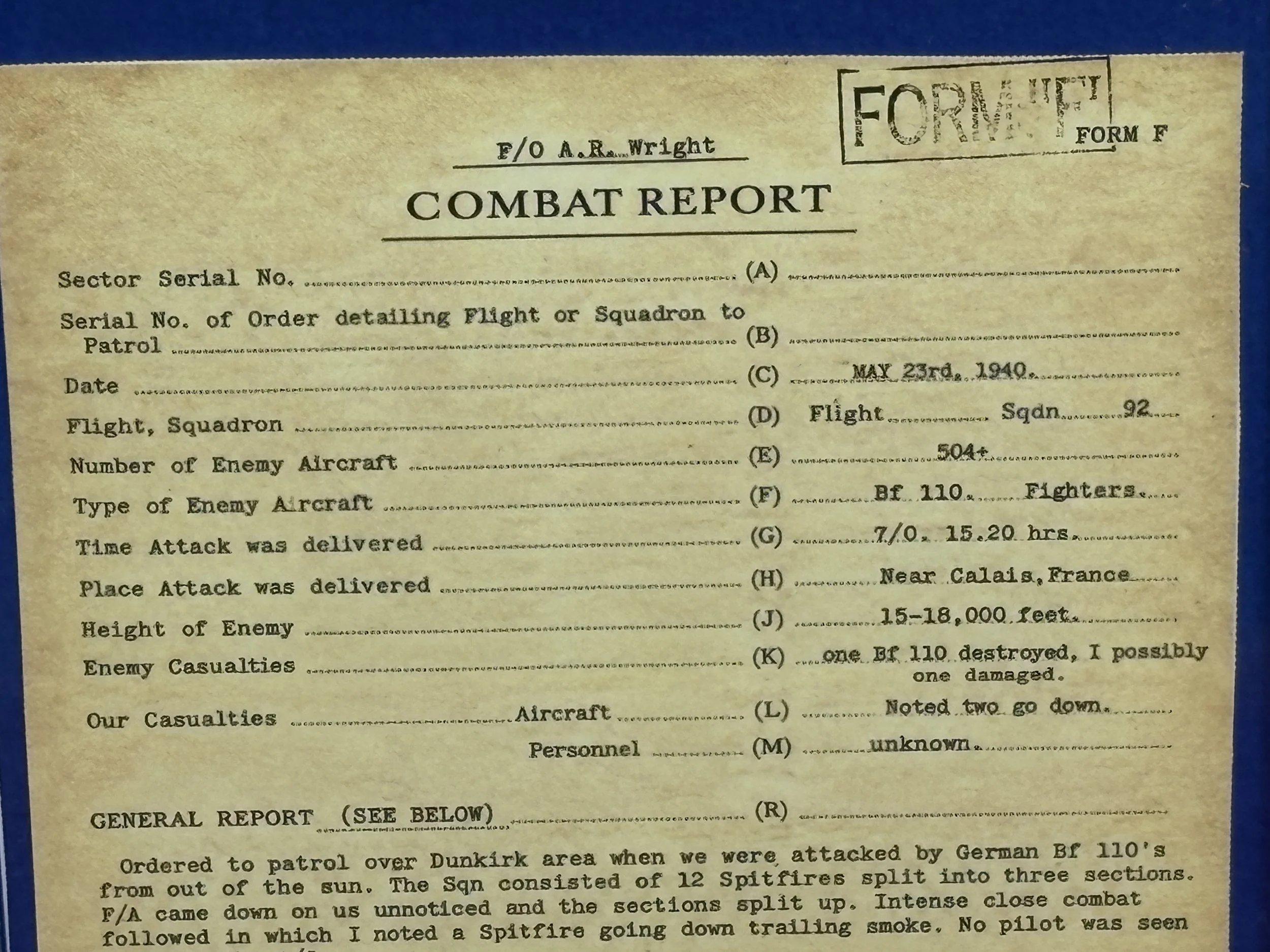 Image 6 of 8
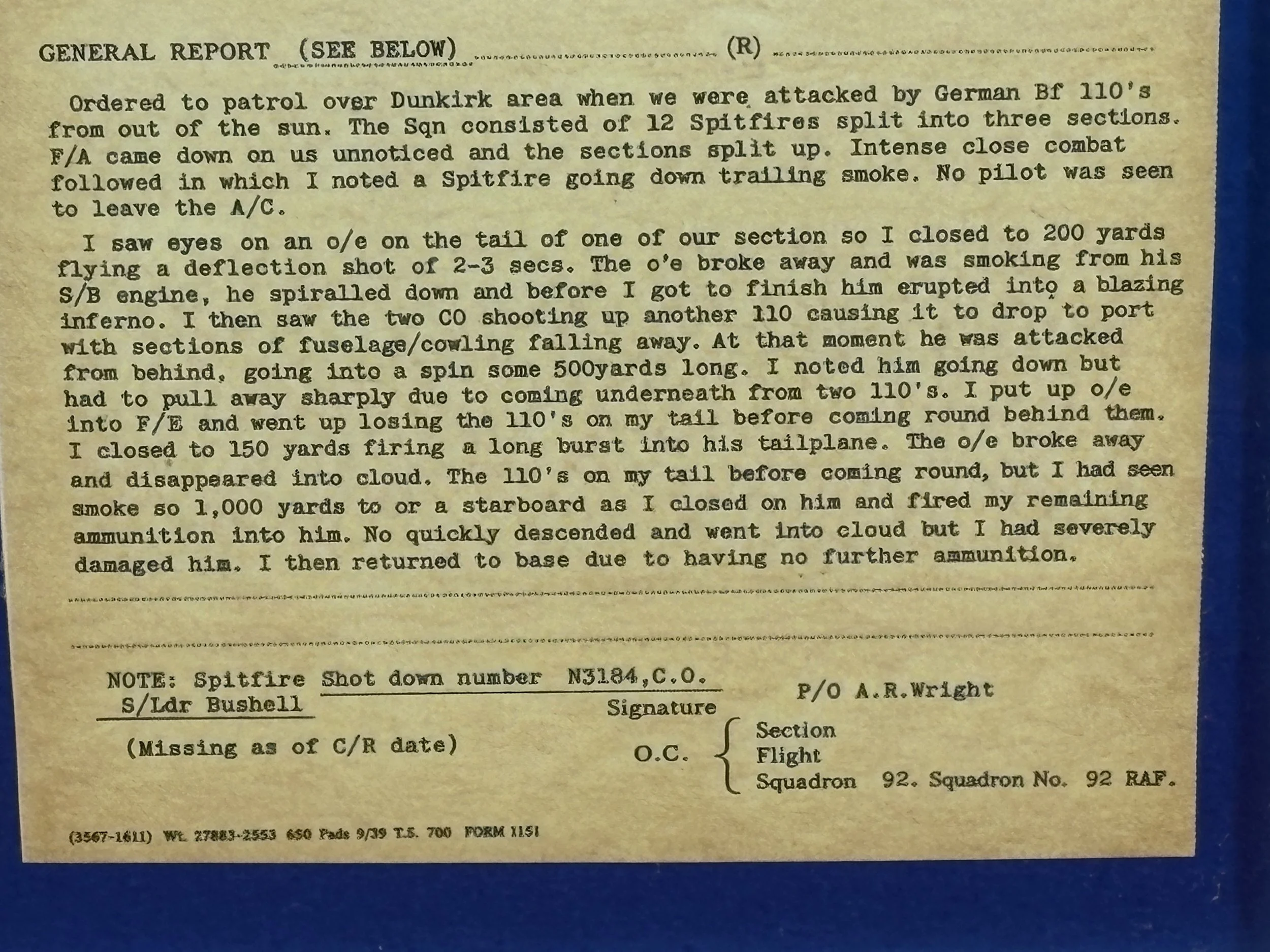 Image 7 of 8
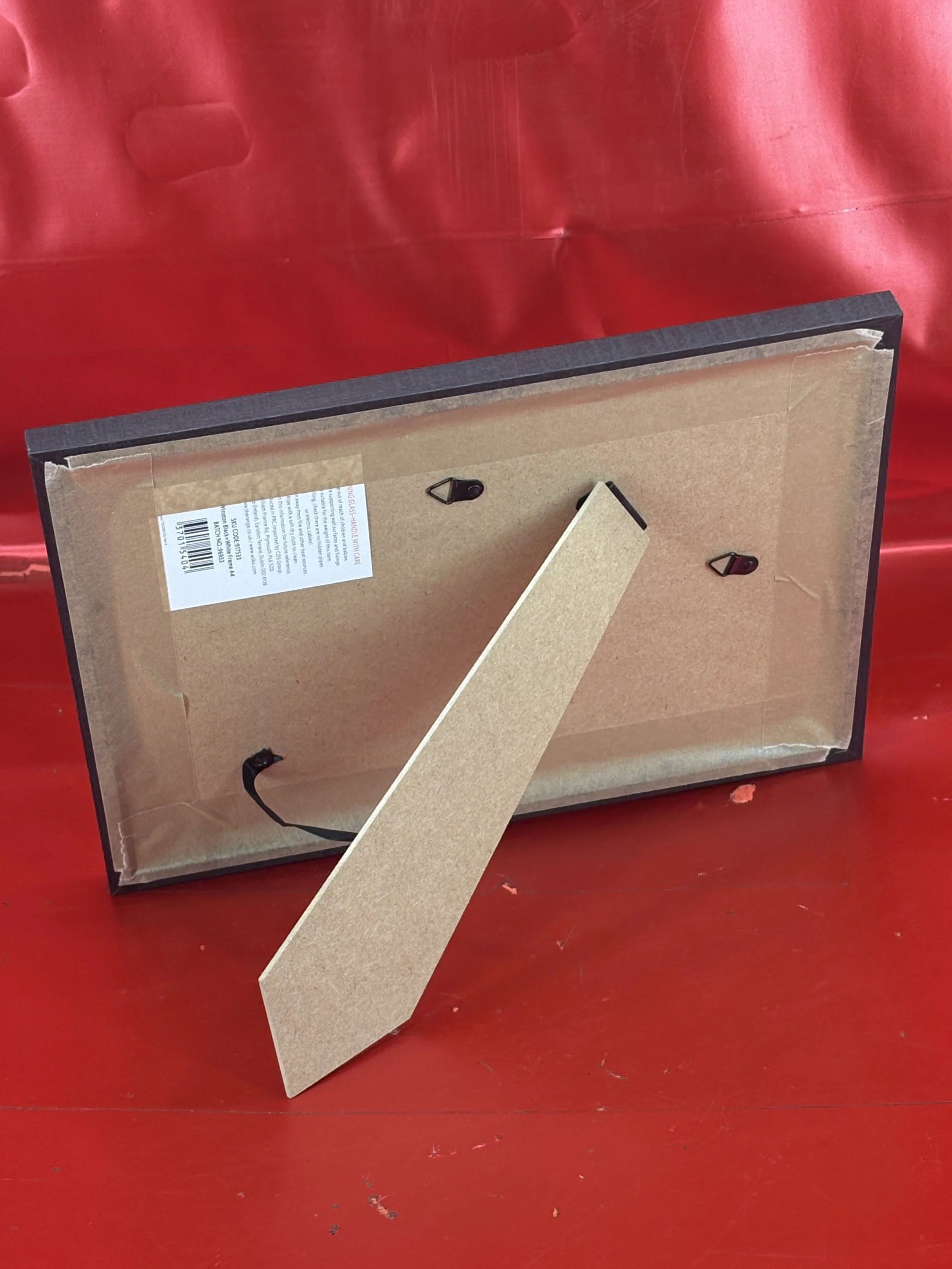 Image 8 of 8