This is an authentic, glass-framed group of parts which there is so very little about actually one of the rarest battle of Britain aircraft parts to get. These were recovered from quarry it crashed in a blew up, the fact that during the war the recovery team took very little from the site as there was not much left. The parts were found by a quarry worker in the 1960’s and he only recovered small fragments as the aircraft had completely disintegrated in the crash and the explosion.
The parts are recovered from a German Messerschmitt bf 110 flown by the nephew of the famous German leader, shot down in the Battle of Britain. The relics still retain traces of there original wartime finish, making them attractive and increasingly scarce pieces from one of the Luftwaffe's most recognisable aircraft.
There is 4 parts which are aluminium airframe sections and engine parts which were torn, bent and distorted by the impact of the crash all of the parts remain in good, solid condition. They have been carefully cleaned but still have a lot of dirt on them ingrained from the quarry, but they still have there original character and wartime patinas.
The relics are presented in a glass-fronted box frame, complete with aircraft information and many pictures also a map and original crash site picture, making them a excellent display piece for any aviation or Second World War collection. The frame measures approximately 13 inches by 13 inches in size.
The parts come from German Messerschmitt Bf 110 of (9./ZG 76) with pilot Hans Joachim Goring [Nephew} of Hermann, shot down 11th July 1940 in Battle of Britain
Oberleutnant Hans-Joachim Göring was a prominent Luftwaffe pilot whose identity was closely tied to his uncle, Reichsmarschall Hermann Göring, the supreme commander of the German Air Force. He was assigned to the 9. Staffel of Zerstörergeschwader 76 (9./ZG 76), an elite heavy fighter wing flying the Messerschmitt Bf 110C. Propagandised by his uncle as the supreme "Destroyer" (Zerstörer), the twin-engine Bf 110 was intended to dominate the skies with its heavy forward-facing 20mm cannons and machine guns. However, during the opening days of the Battle of Britain, the aircraft’s severe tactical flaw was laid bare: it was too heavy and un-nimble to survive against agile, single-engine British fighters without its own fighter escort.
The fatal intersection of the pilot, his aircraft, and the air war occurred on 11 July 1940 during a massive daylight raid over the English Channel. Göring's unit was tasked with escorting Junkers Ju 87 Stuka dive bombers striking shipping targets near Portland Harbour, Dorset. During the ensuing dogfight, his Messerschmitt Bf 110 was intercepted and riddled with gunfire by Hawker Hurricanes belonging to the RAF's No. 87 Squadron. The damaged aircraft plummeted out of the sky and crashed violently into the cliffs at the Verne Citadel on the Isle of Portland. The catastrophic high-speed impact detonated the plane's fuel tanks, completely disintegrating the aircraft and instantly killing both Oberleutnant Göring and his rear gunner, Unteroffizier Albert Zimmermann. Because the crash site was later completely destroyed by industrial stone quarrying, no identifiable remains or trace of the high-profile pilot were ever recovered.
This is an authentic, glass-framed group of parts which there is so very little about actually one of the rarest battle of Britain aircraft parts to get. These were recovered from quarry it crashed in a blew up, the fact that during the war the recovery team took very little from the site as there was not much left. The parts were found by a quarry worker in the 1960’s and he only recovered small fragments as the aircraft had completely disintegrated in the crash and the explosion.
The parts are recovered from a German Messerschmitt bf 110 flown by the nephew of the famous German leader, shot down in the Battle of Britain. The relics still retain traces of there original wartime finish, making them attractive and increasingly scarce pieces from one of the Luftwaffe's most recognisable aircraft.
There is 4 parts which are aluminium airframe sections and engine parts which were torn, bent and distorted by the impact of the crash all of the parts remain in good, solid condition. They have been carefully cleaned but still have a lot of dirt on them ingrained from the quarry, but they still have there original character and wartime patinas.
The relics are presented in a glass-fronted box frame, complete with aircraft information and many pictures also a map and original crash site picture, making them a excellent display piece for any aviation or Second World War collection. The frame measures approximately 13 inches by 13 inches in size.
The parts come from German Messerschmitt Bf 110 of (9./ZG 76) with pilot Hans Joachim Goring [Nephew} of Hermann, shot down 11th July 1940 in Battle of Britain
Oberleutnant Hans-Joachim Göring was a prominent Luftwaffe pilot whose identity was closely tied to his uncle, Reichsmarschall Hermann Göring, the supreme commander of the German Air Force. He was assigned to the 9. Staffel of Zerstörergeschwader 76 (9./ZG 76), an elite heavy fighter wing flying the Messerschmitt Bf 110C. Propagandised by his uncle as the supreme "Destroyer" (Zerstörer), the twin-engine Bf 110 was intended to dominate the skies with its heavy forward-facing 20mm cannons and machine guns. However, during the opening days of the Battle of Britain, the aircraft’s severe tactical flaw was laid bare: it was too heavy and un-nimble to survive against agile, single-engine British fighters without its own fighter escort.
The fatal intersection of the pilot, his aircraft, and the air war occurred on 11 July 1940 during a massive daylight raid over the English Channel. Göring's unit was tasked with escorting Junkers Ju 87 Stuka dive bombers striking shipping targets near Portland Harbour, Dorset. During the ensuing dogfight, his Messerschmitt Bf 110 was intercepted and riddled with gunfire by Hawker Hurricanes belonging to the RAF's No. 87 Squadron. The damaged aircraft plummeted out of the sky and crashed violently into the cliffs at the Verne Citadel on the Isle of Portland. The catastrophic high-speed impact detonated the plane's fuel tanks, completely disintegrating the aircraft and instantly killing both Oberleutnant Göring and his rear gunner, Unteroffizier Albert Zimmermann. Because the crash site was later completely destroyed by industrial stone quarrying, no identifiable remains or trace of the high-profile pilot were ever recovered.

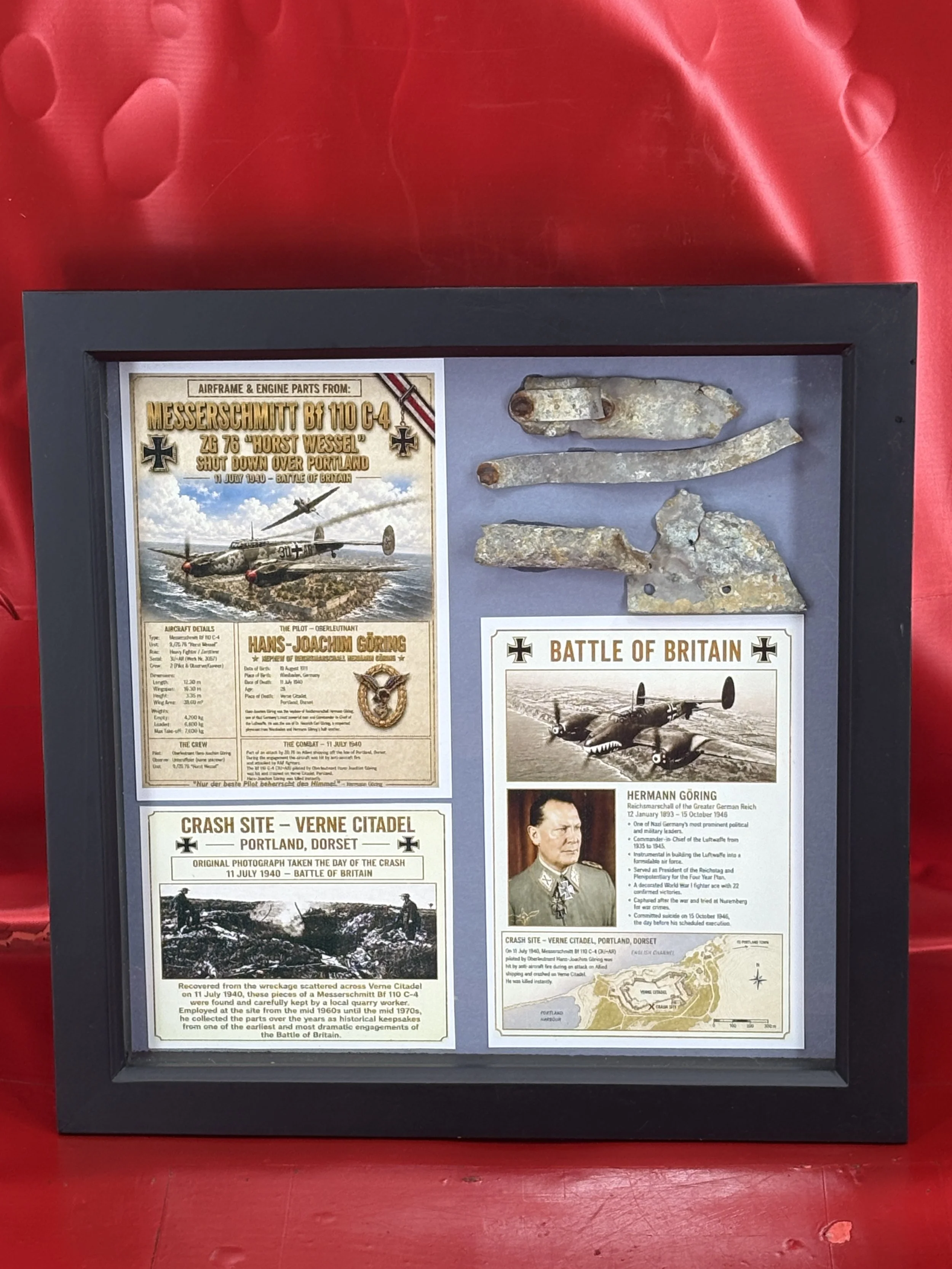 Image 1 of 11
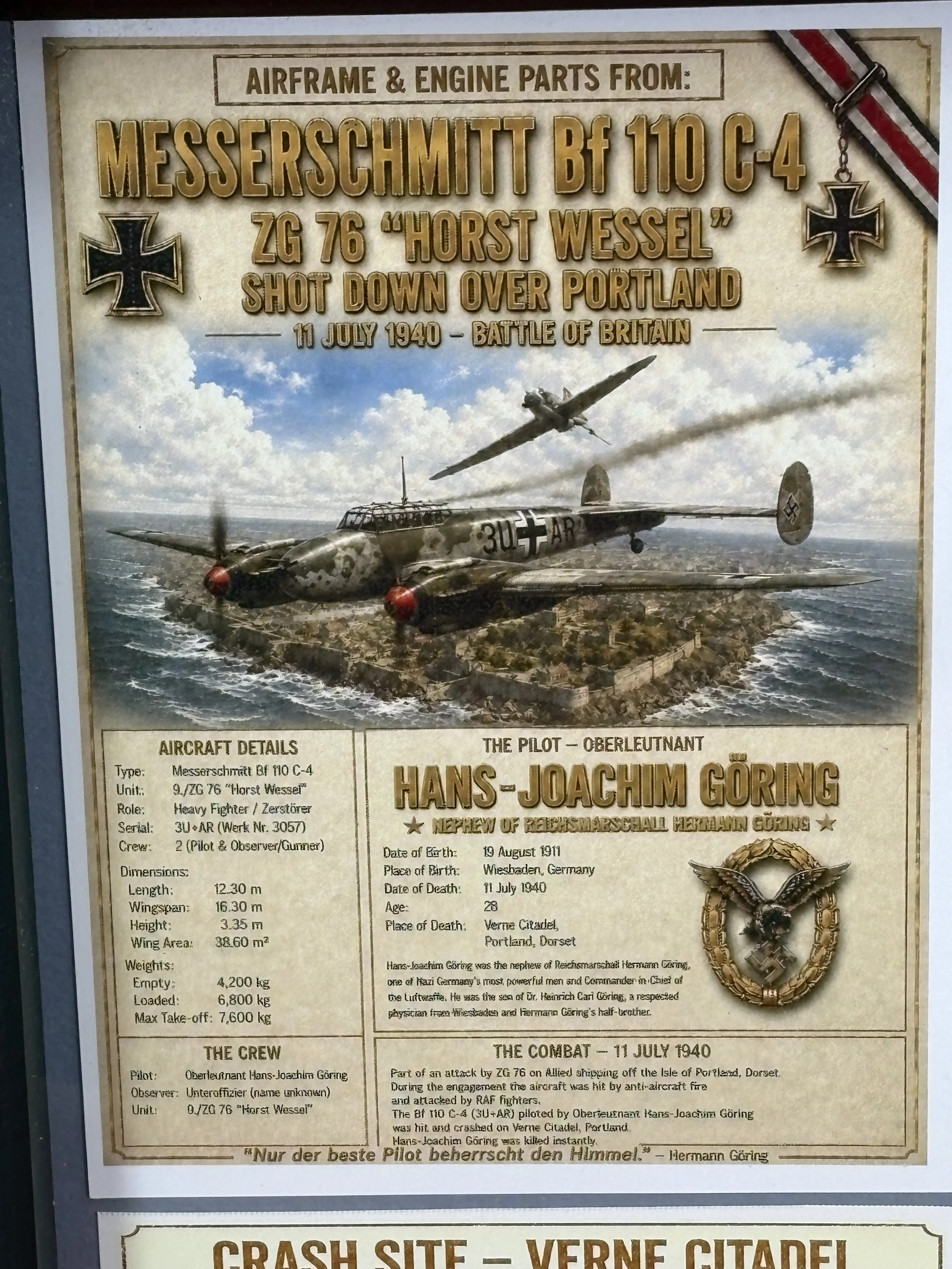 Image 2 of 11
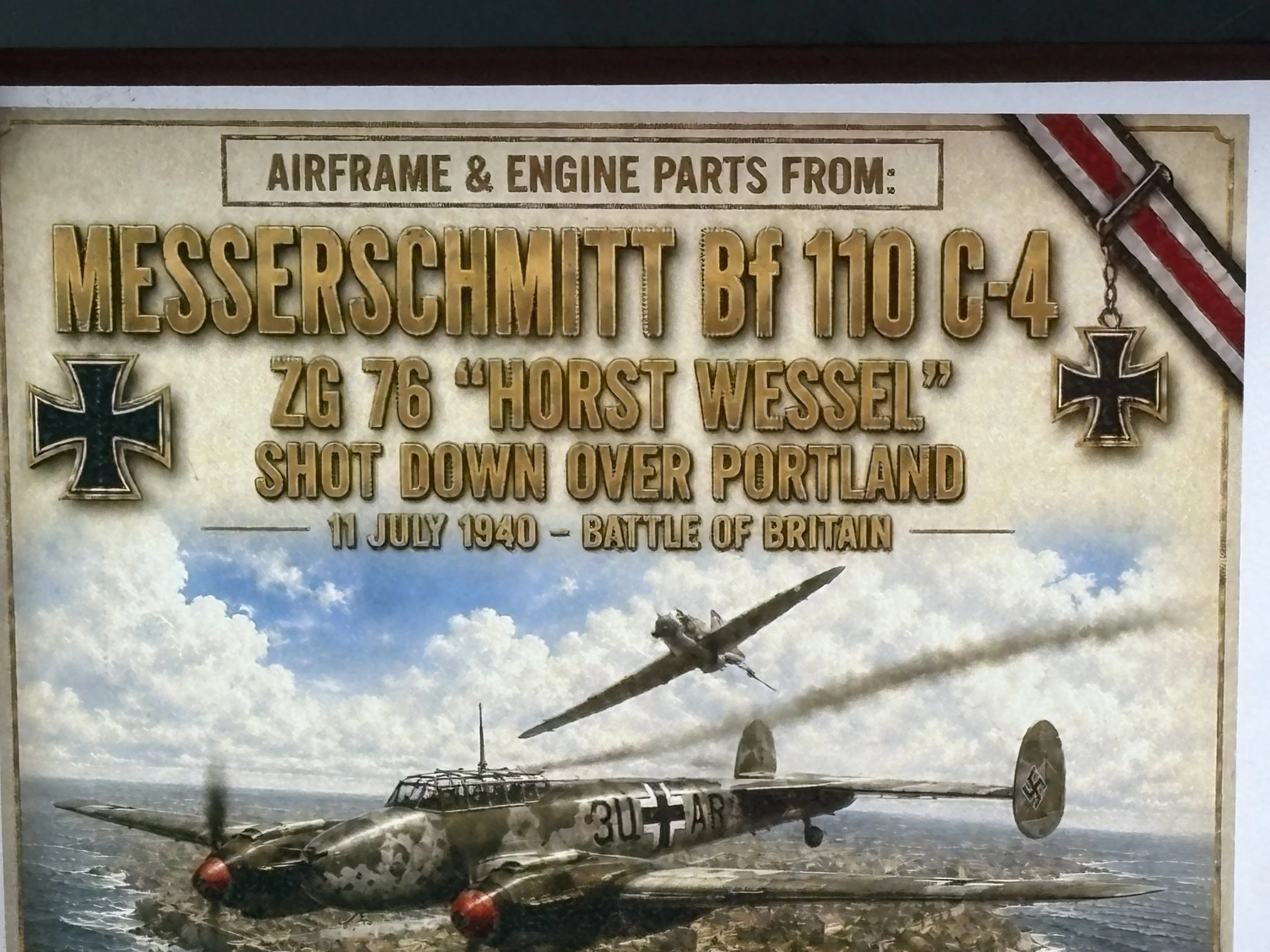 Image 3 of 11
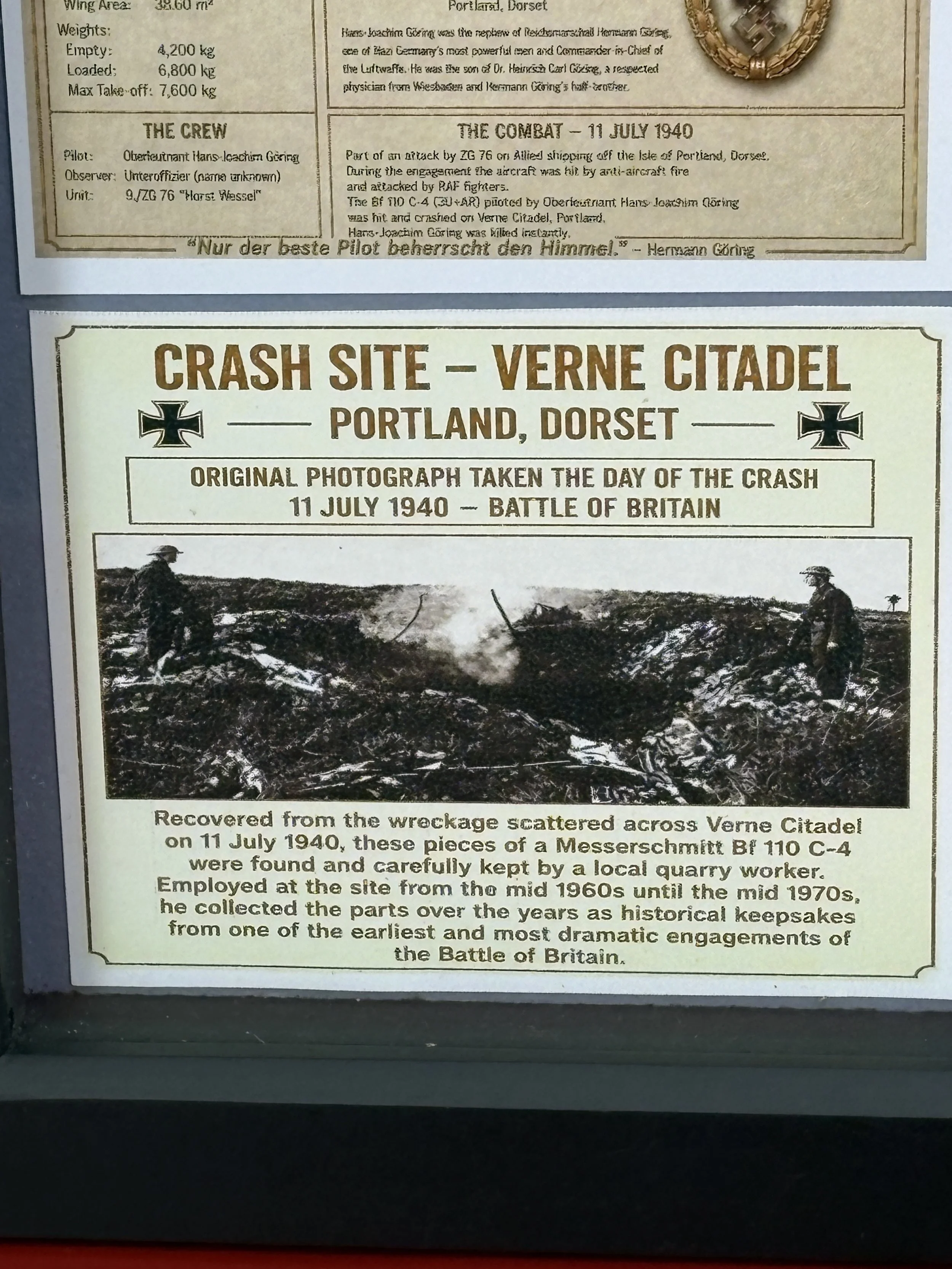 Image 4 of 11
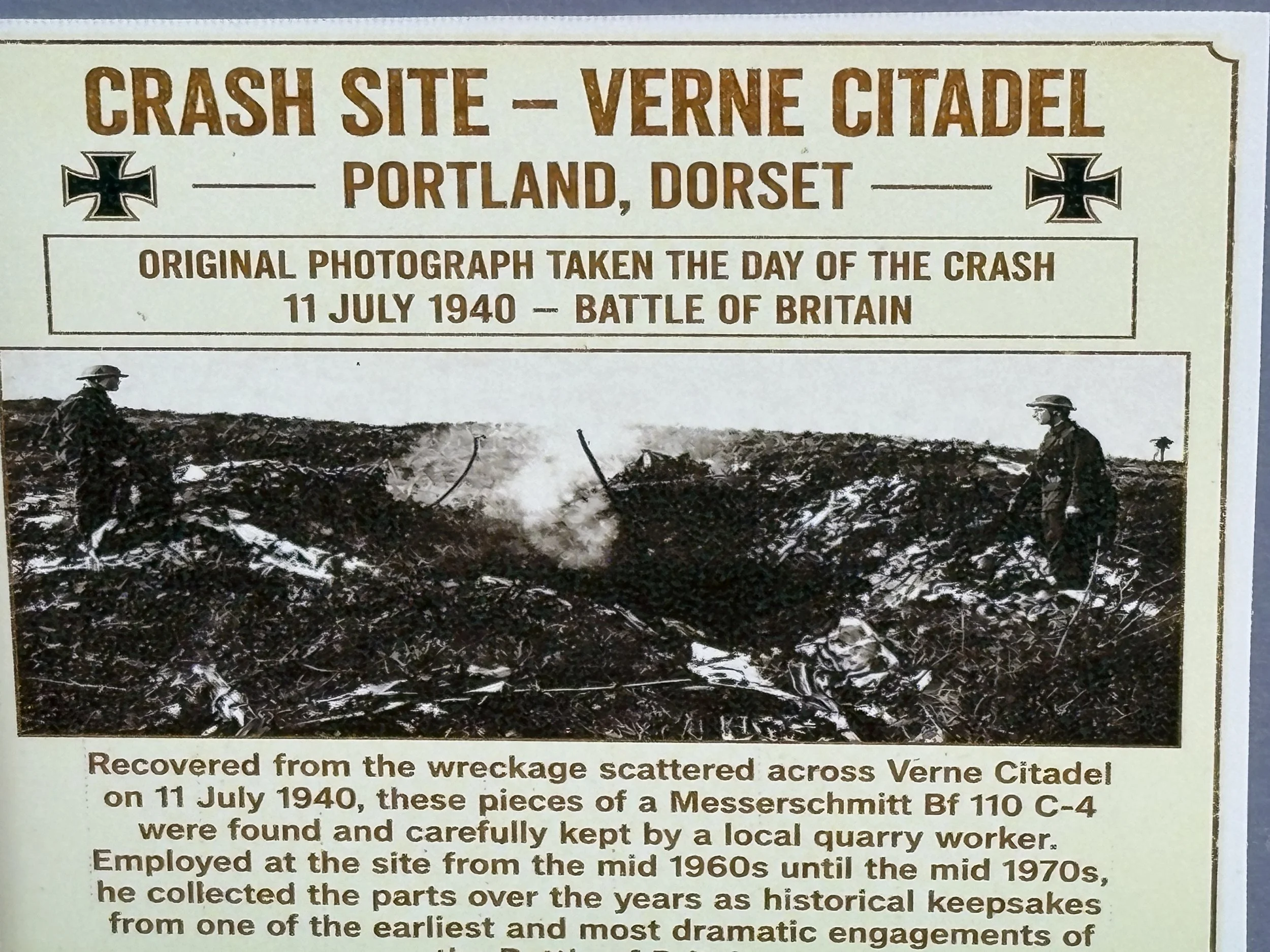 Image 5 of 11
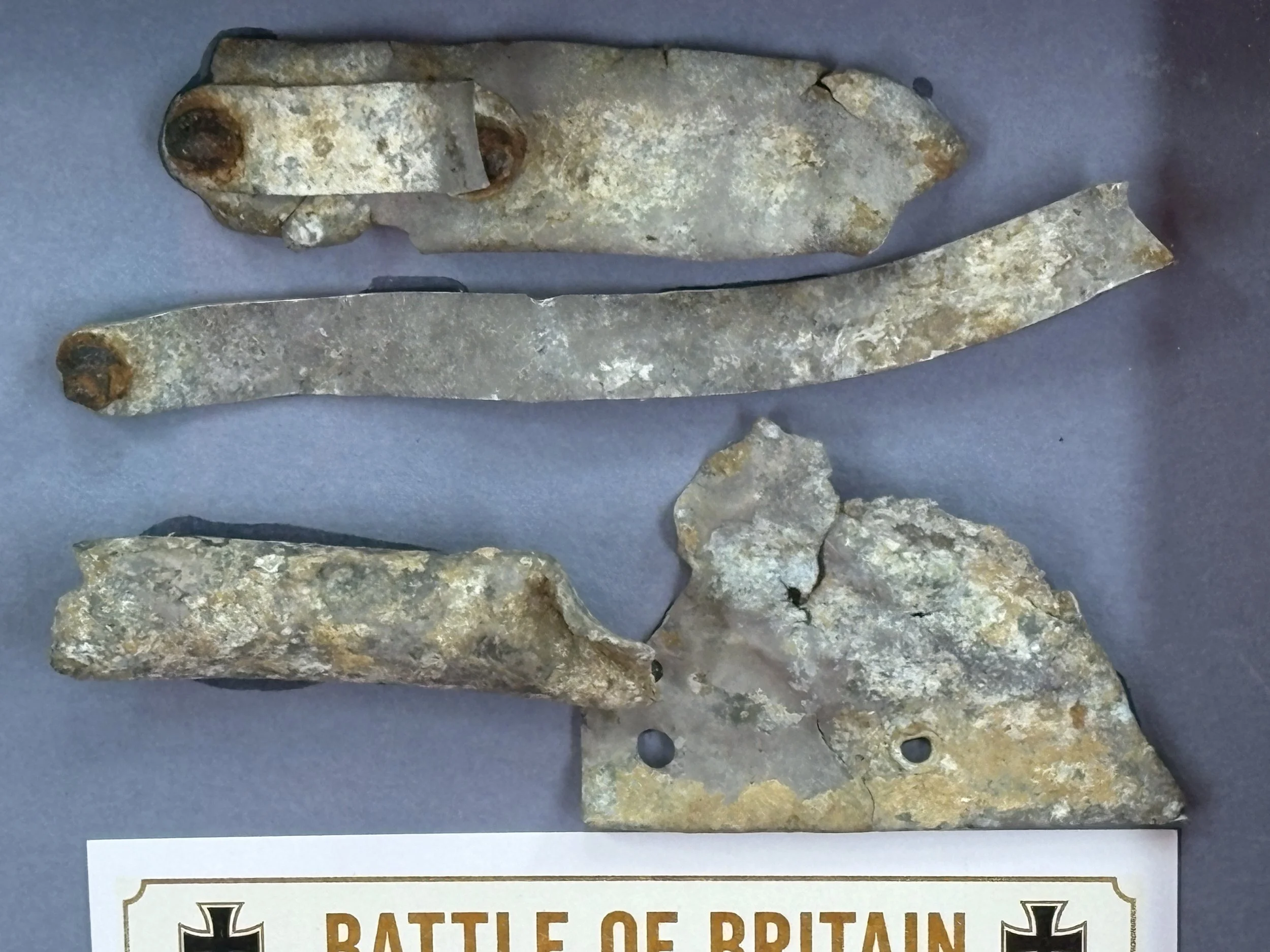 Image 6 of 11
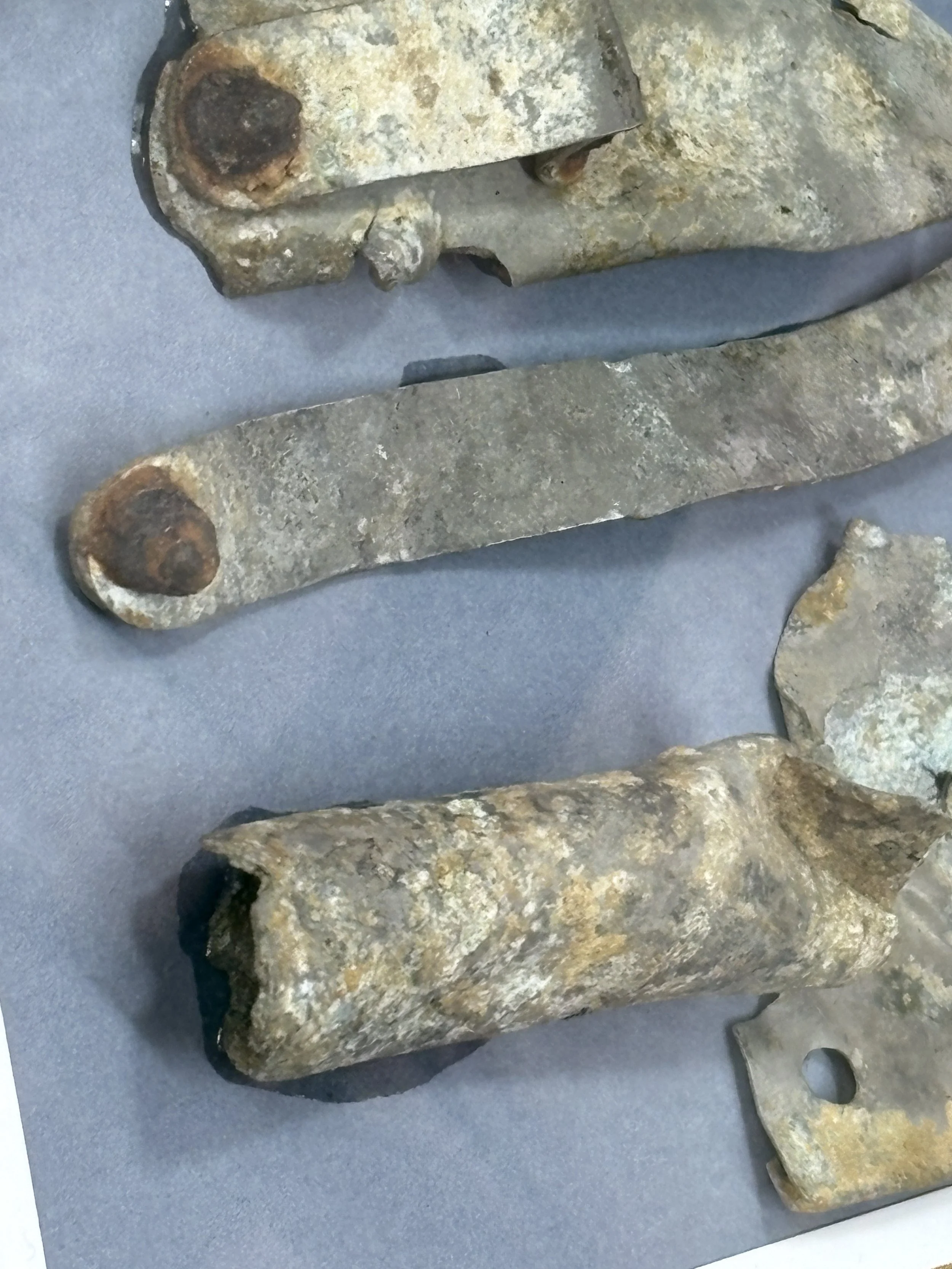 Image 7 of 11
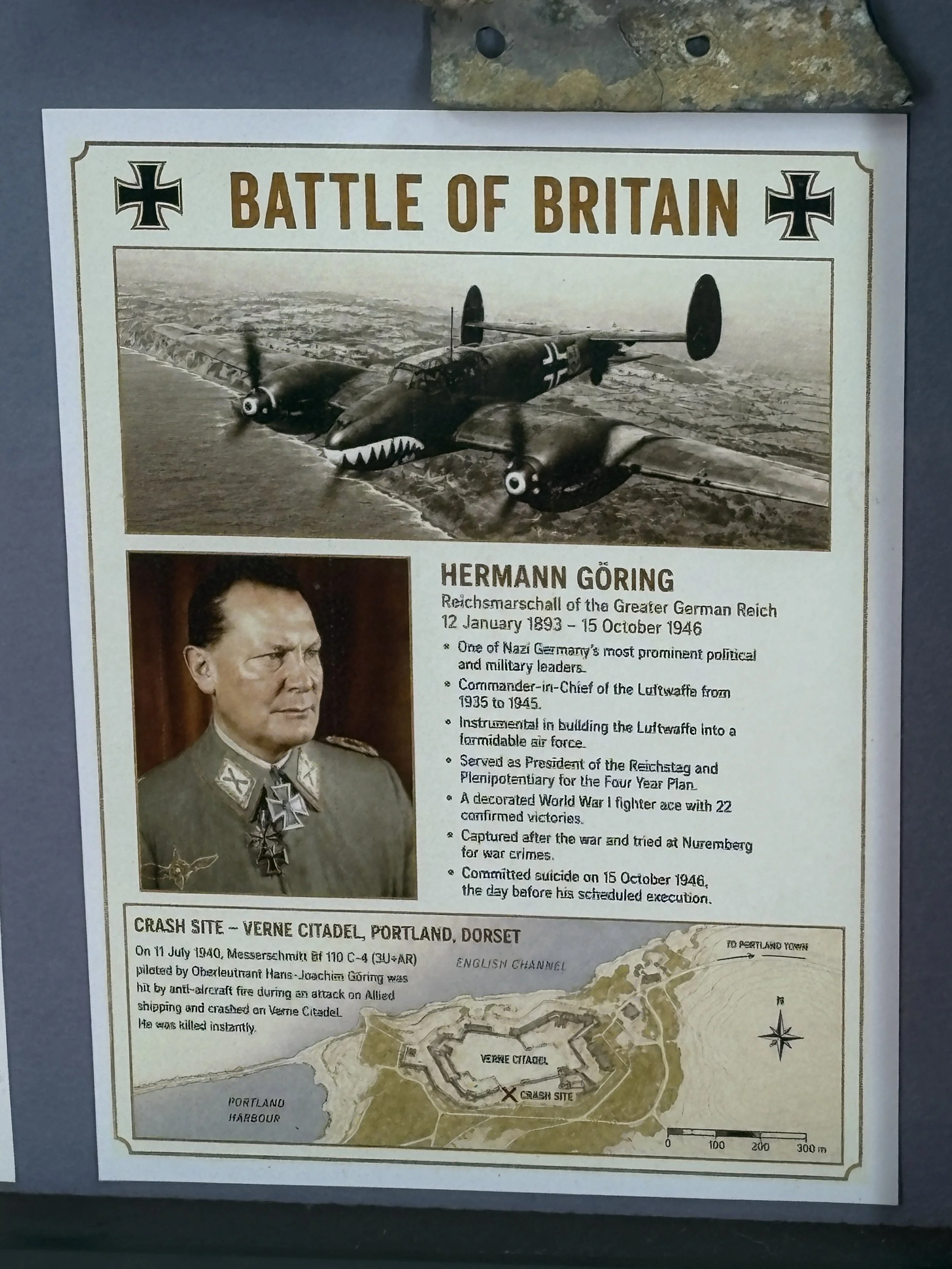 Image 8 of 11
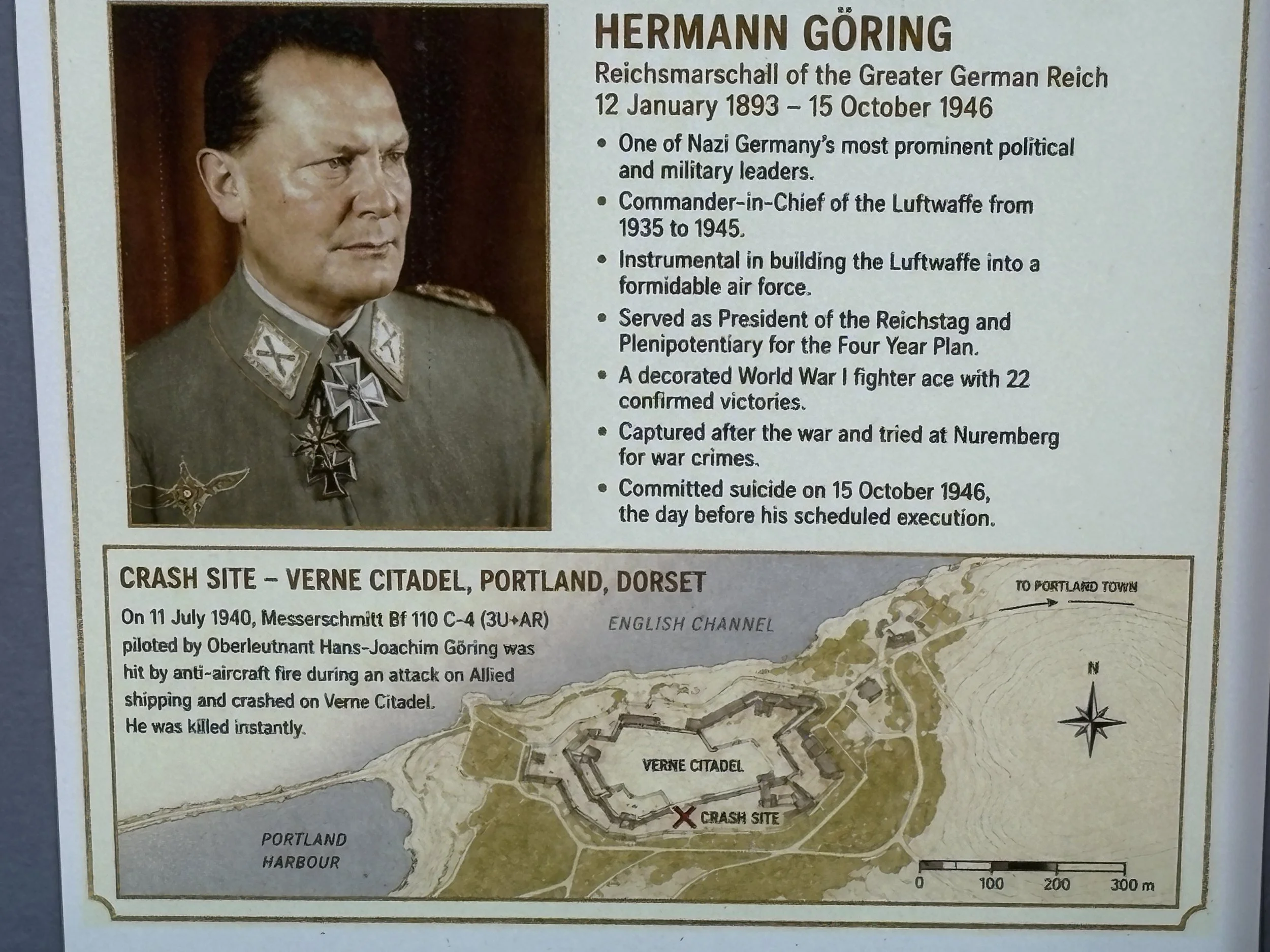 Image 9 of 11
 Image 10 of 11
 Image 11 of 11