This is a German M42 steel helmet worn by a soldier in Kriegsmarine Marine-Flak-Abteilung 704.The position known as LO 336 was associated with the 4. Batterie “Memel” (4./Marine-Flak-Abteilung 704), a Kriegsmarine formation belonging to the naval anti-aircraft and coastal-defence organisation of the Lorient fortress. The battery was equipped with four 10.5 cm Flak C/32 guns and was positioned on the west side of the Ria d’Étel, near Kervran and Plouhinec
The helmet which is in relic condition it has a fair bit of rust with rust holes and damage. It is a solid piece which is not breaking up or falling apart. The helmet does not have any of its leather liner in place but does have some of its original green paintwork remains fairly clear to see and it has been very nicely cleaned and is perfect for display or any collection. The helmet was recovered in the early 2000’s from the site along with many other items by a local group of relic hunters when they investigated the site.
The helmet was found in the Kervran/Kerbrezel area near Plouhinec which was defended by troops of the Marine-Flak-Abteilung 704. This emplacement formed part of the eastern and south-eastern defensive system of the German Lorient Pocket on the French Coast which had by passed by the Allies. This fortified area that remained under German control from August 1944 until the final surrender on 10 May 1945 and in that time there were many smaller skirmish battles around the perimeter.
The helmet comes with 2xA5 laminated information cards with map marked where the helmet was found also many pictures.
After Allied forces isolated the Lorient Pocket in August 1944, Kriegsmarine Flak personnel were incorporated into the land defence of the fortress and operated alongside German Army formations. The Plouhinec sector was predominantly rural, consisting of fields, wooded areas, tracks, coastal ground and dispersed defensive positions overlooking approaches to the Ria d’Étel. The wider German defensive system included trenches, bunkers, Tobruk positions, gun emplacements, minefields and other field fortifications. The area saw continuing artillery activity and local fighting during the long siege, including actions around the Étel sector as Allied forces gradually tightened their positions around the pocket. German forces remained in their defensive positions until the general surrender of the Lorient Pocket on 10 May 1945. The Kervran position therefore represents a documented example of Kriegsmarine personnel serving in a rural ground-defence role during the final year of the Second World War, rather than being confined to the naval installations and U-boat base at Lorient.
Historical note: The unit attribution and location should be understood at battery/position level: 4./Marine-Flak-Abteilung 704 is documented at Kervran/LO 336 which is the exact location of recovery, while other parts of the wider Plouhinec defensive line were occupied by German Army formations.
This is a German M42 steel helmet worn by a soldier in Kriegsmarine Marine-Flak-Abteilung 704.The position known as LO 336 was associated with the 4. Batterie “Memel” (4./Marine-Flak-Abteilung 704), a Kriegsmarine formation belonging to the naval anti-aircraft and coastal-defence organisation of the Lorient fortress. The battery was equipped with four 10.5 cm Flak C/32 guns and was positioned on the west side of the Ria d’Étel, near Kervran and Plouhinec
The helmet which is in relic condition it has a fair bit of rust with rust holes and damage. It is a solid piece which is not breaking up or falling apart. The helmet does not have any of its leather liner in place but does have some of its original green paintwork remains fairly clear to see and it has been very nicely cleaned and is perfect for display or any collection. The helmet was recovered in the early 2000’s from the site along with many other items by a local group of relic hunters when they investigated the site.
The helmet was found in the Kervran/Kerbrezel area near Plouhinec which was defended by troops of the Marine-Flak-Abteilung 704. This emplacement formed part of the eastern and south-eastern defensive system of the German Lorient Pocket on the French Coast which had by passed by the Allies. This fortified area that remained under German control from August 1944 until the final surrender on 10 May 1945 and in that time there were many smaller skirmish battles around the perimeter.
The helmet comes with 2xA5 laminated information cards with map marked where the helmet was found also many pictures.
After Allied forces isolated the Lorient Pocket in August 1944, Kriegsmarine Flak personnel were incorporated into the land defence of the fortress and operated alongside German Army formations. The Plouhinec sector was predominantly rural, consisting of fields, wooded areas, tracks, coastal ground and dispersed defensive positions overlooking approaches to the Ria d’Étel. The wider German defensive system included trenches, bunkers, Tobruk positions, gun emplacements, minefields and other field fortifications. The area saw continuing artillery activity and local fighting during the long siege, including actions around the Étel sector as Allied forces gradually tightened their positions around the pocket. German forces remained in their defensive positions until the general surrender of the Lorient Pocket on 10 May 1945. The Kervran position therefore represents a documented example of Kriegsmarine personnel serving in a rural ground-defence role during the final year of the Second World War, rather than being confined to the naval installations and U-boat base at Lorient.
Historical note: The unit attribution and location should be understood at battery/position level: 4./Marine-Flak-Abteilung 704 is documented at Kervran/LO 336 which is the exact location of recovery, while other parts of the wider Plouhinec defensive line were occupied by German Army formations.

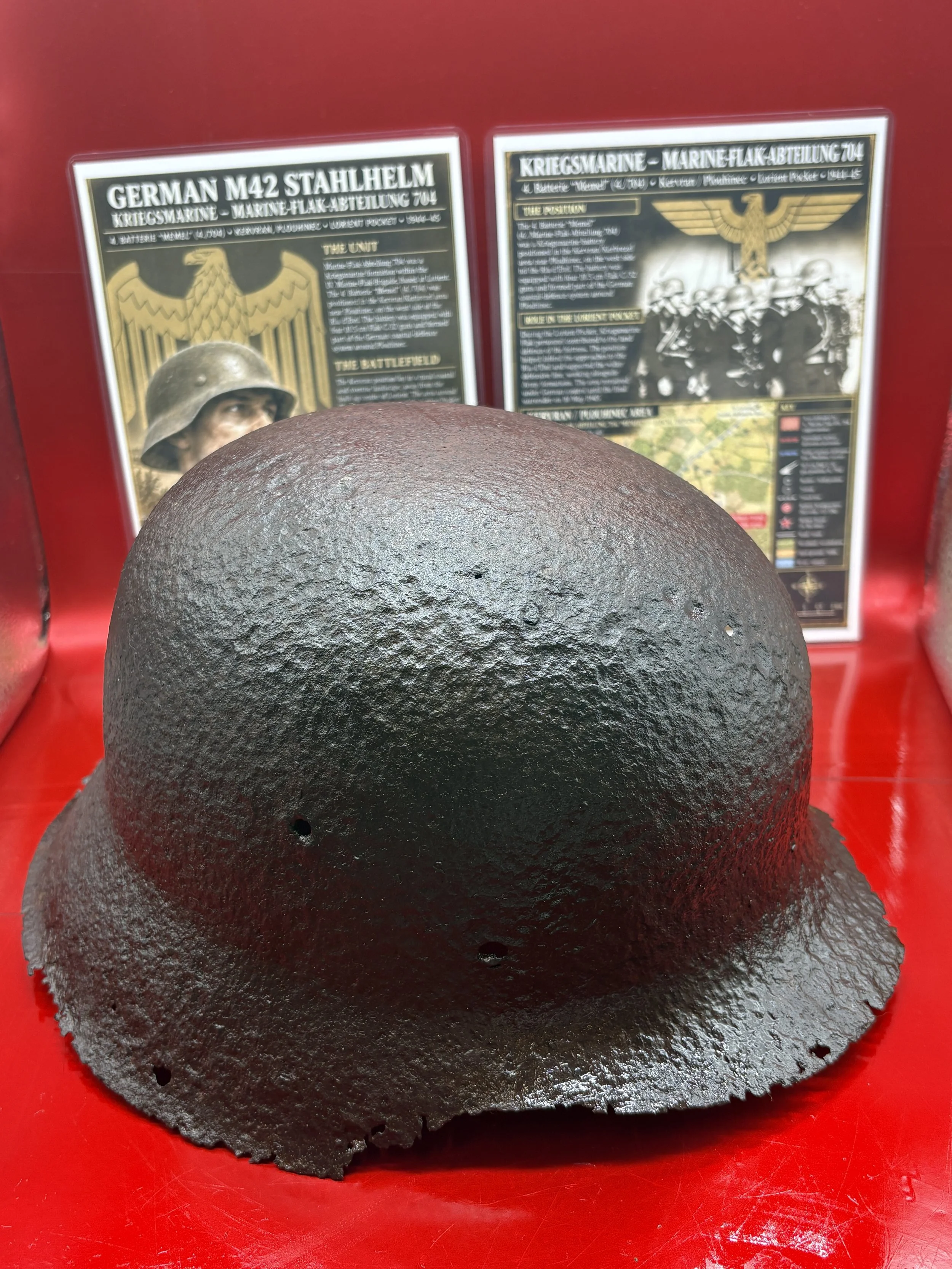 Image 1 of 12
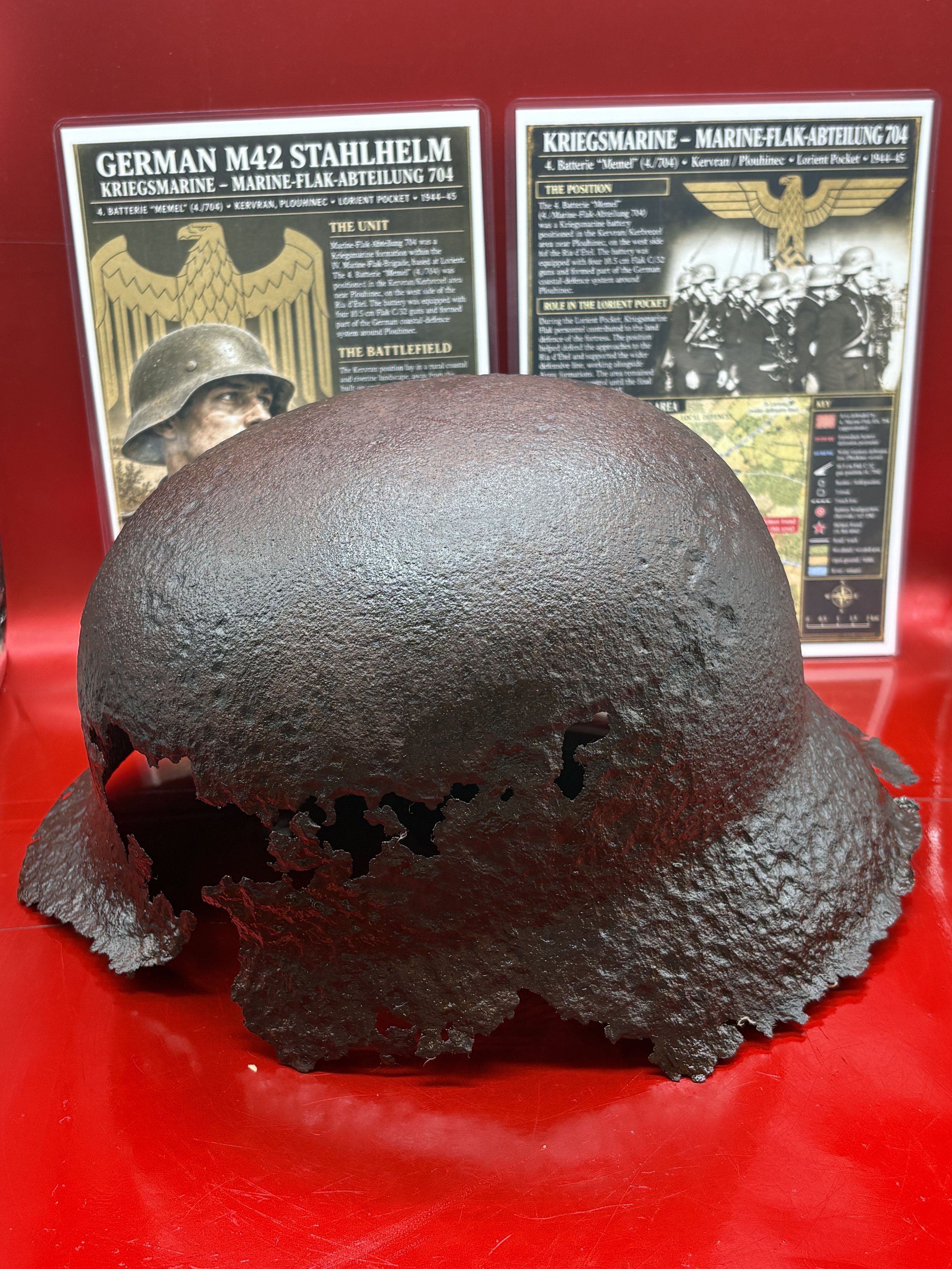 Image 2 of 12
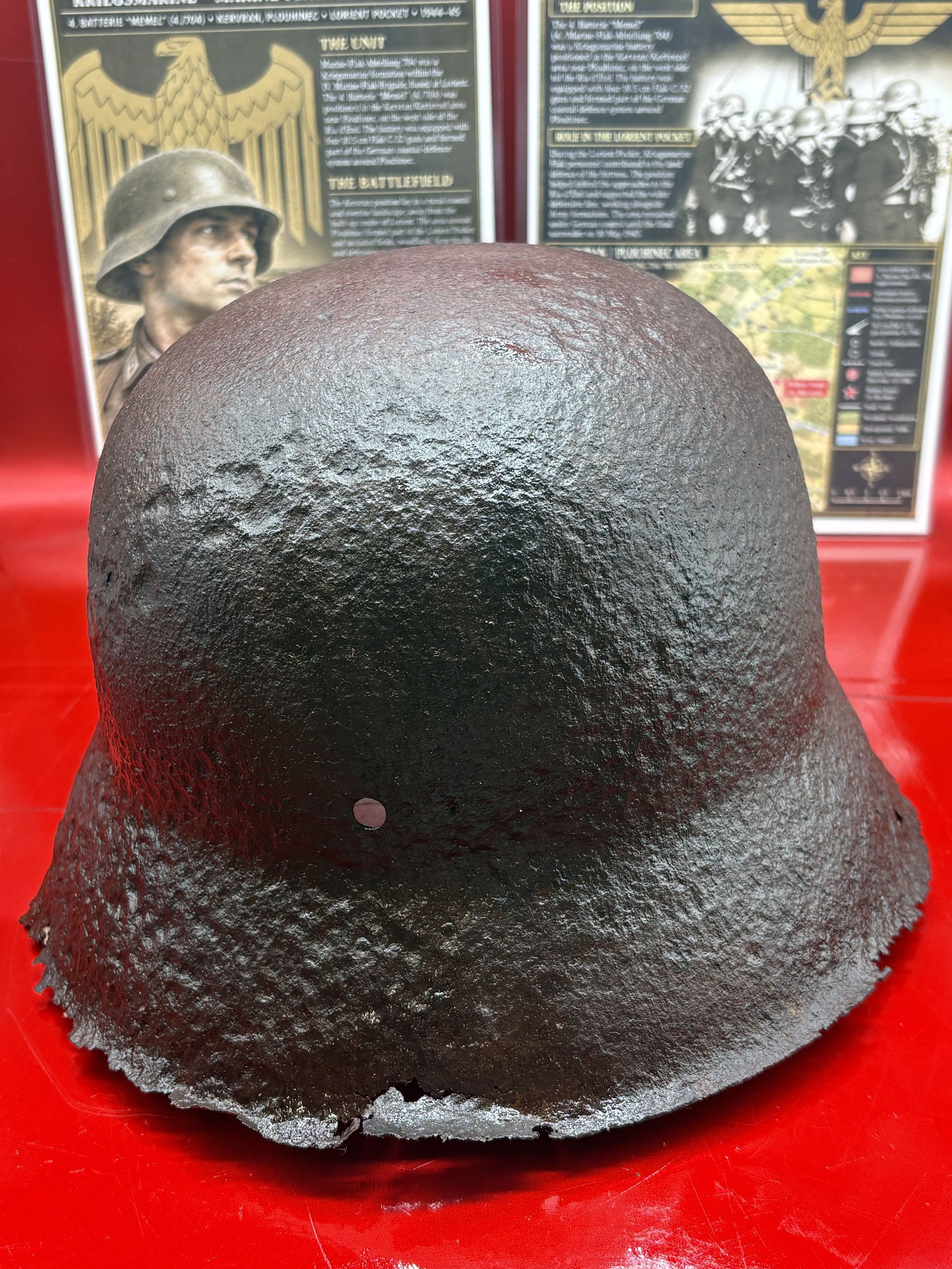 Image 3 of 12
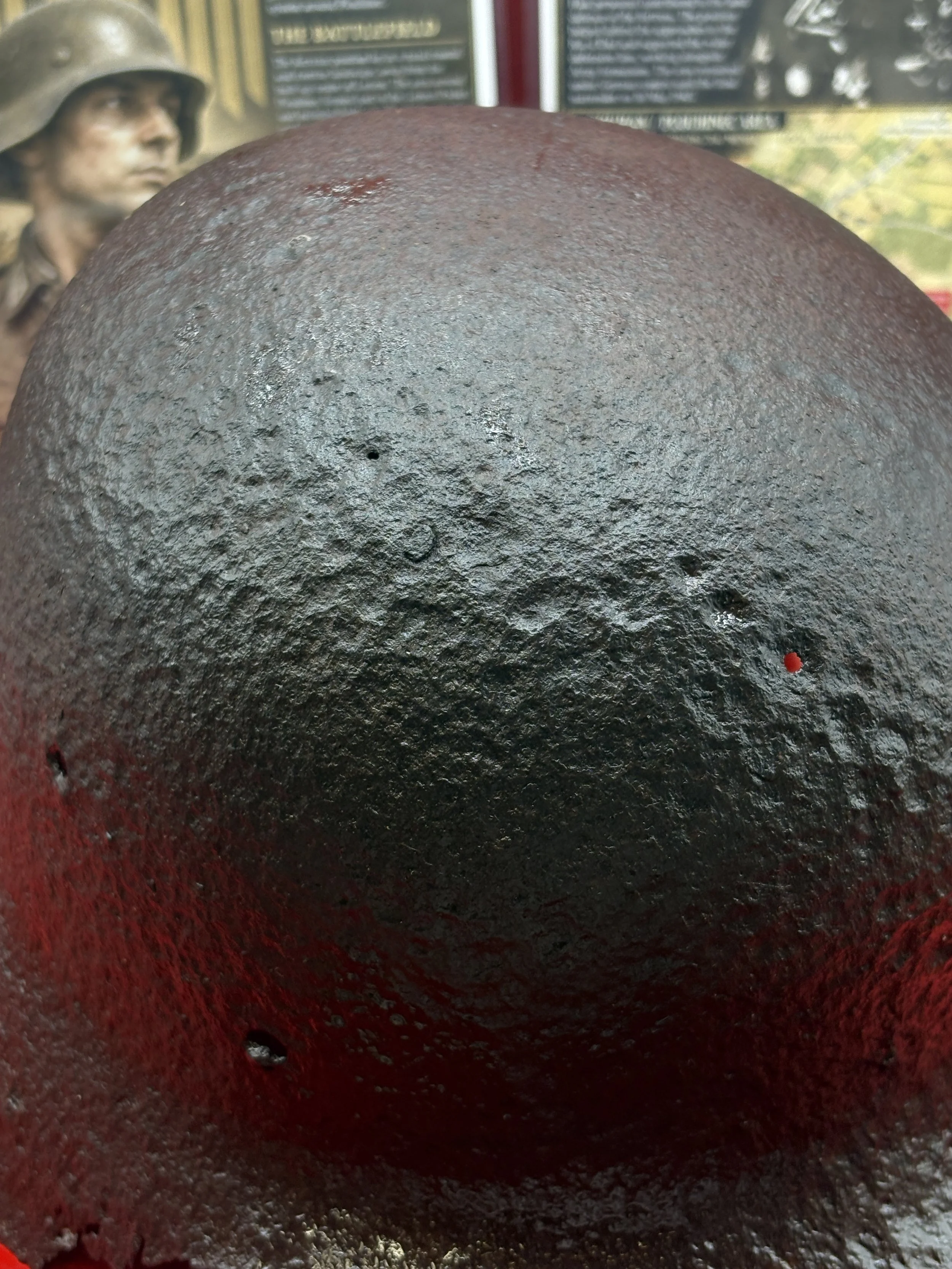 Image 4 of 12
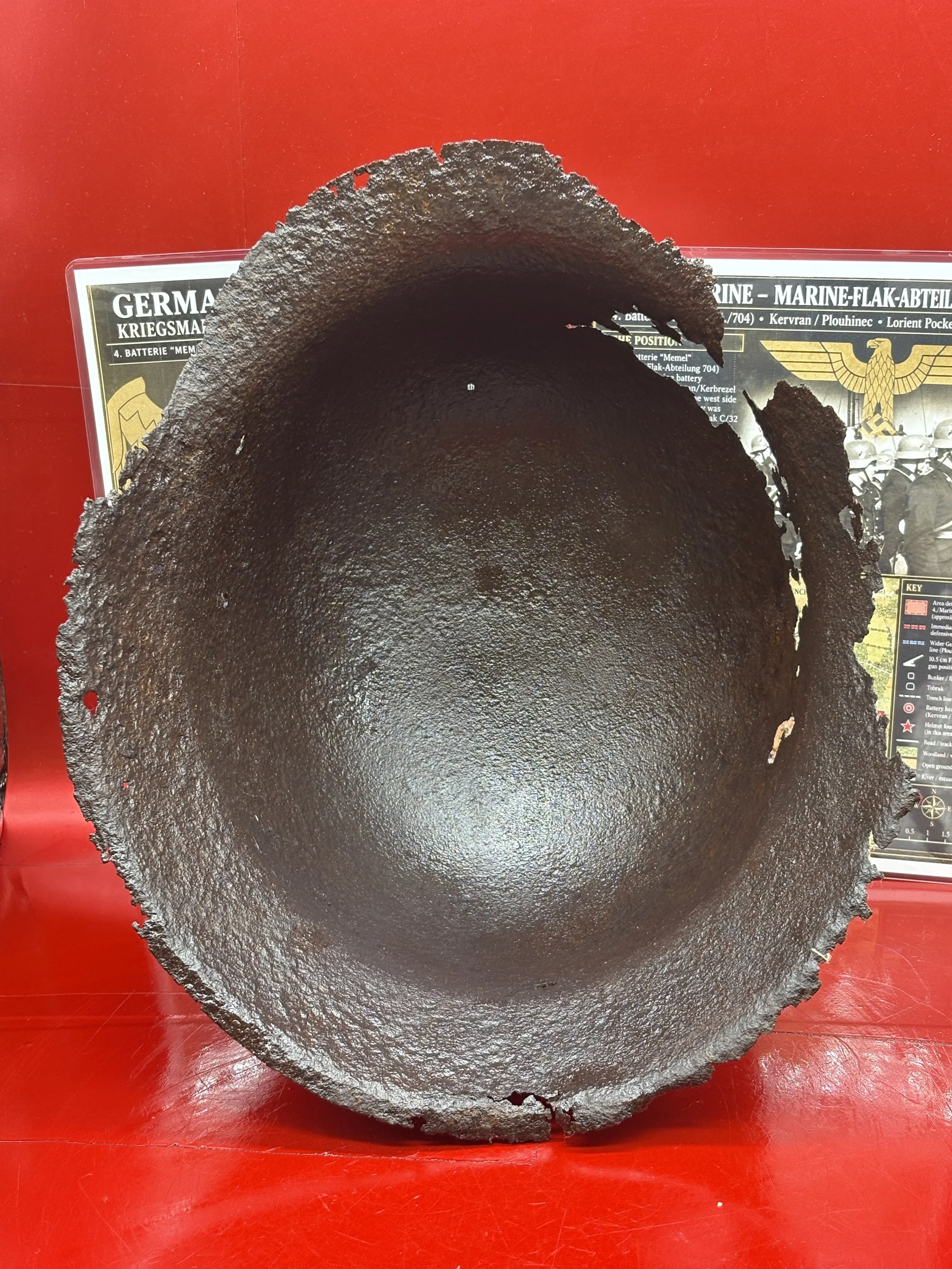 Image 5 of 12
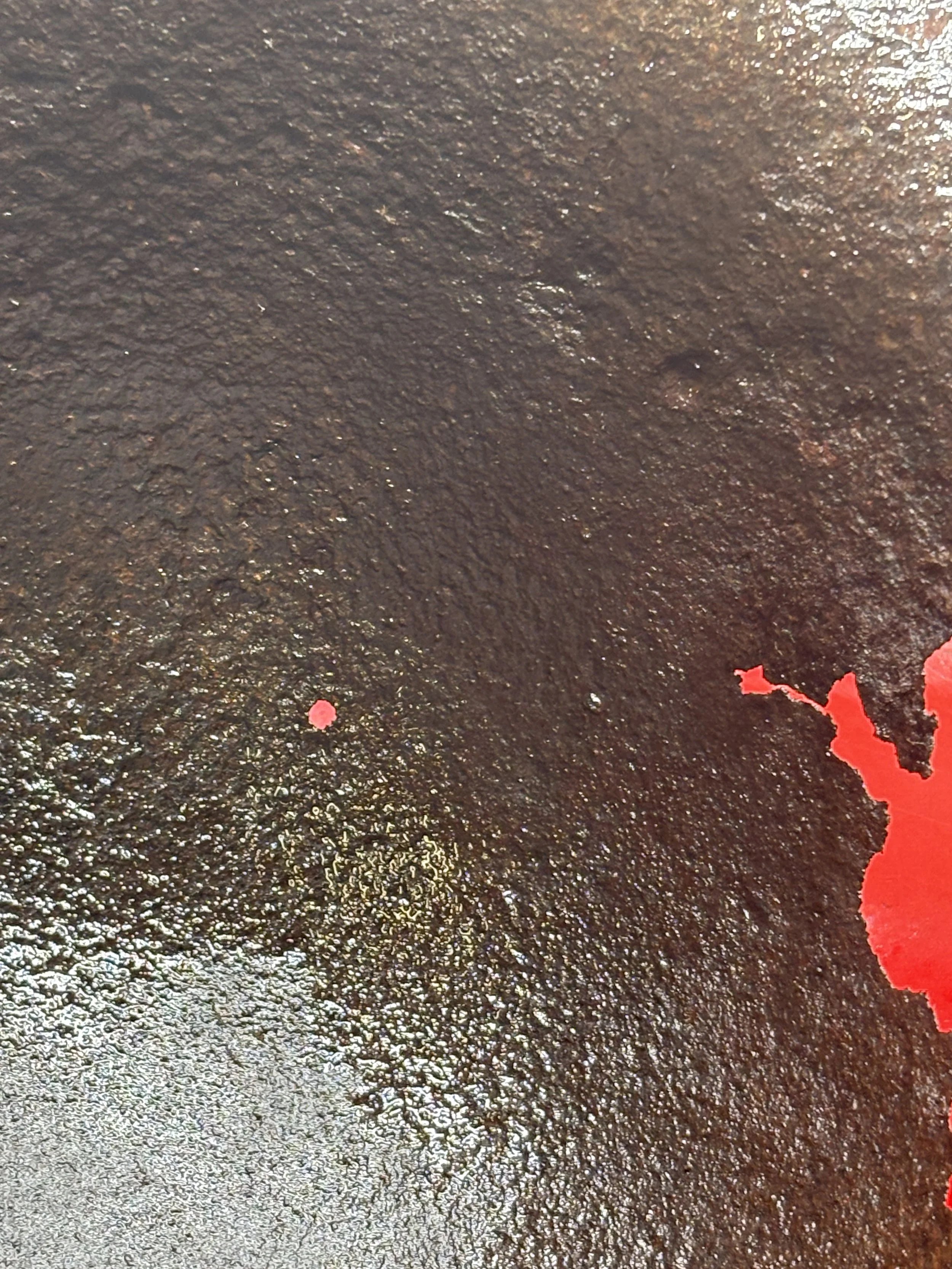 Image 6 of 12
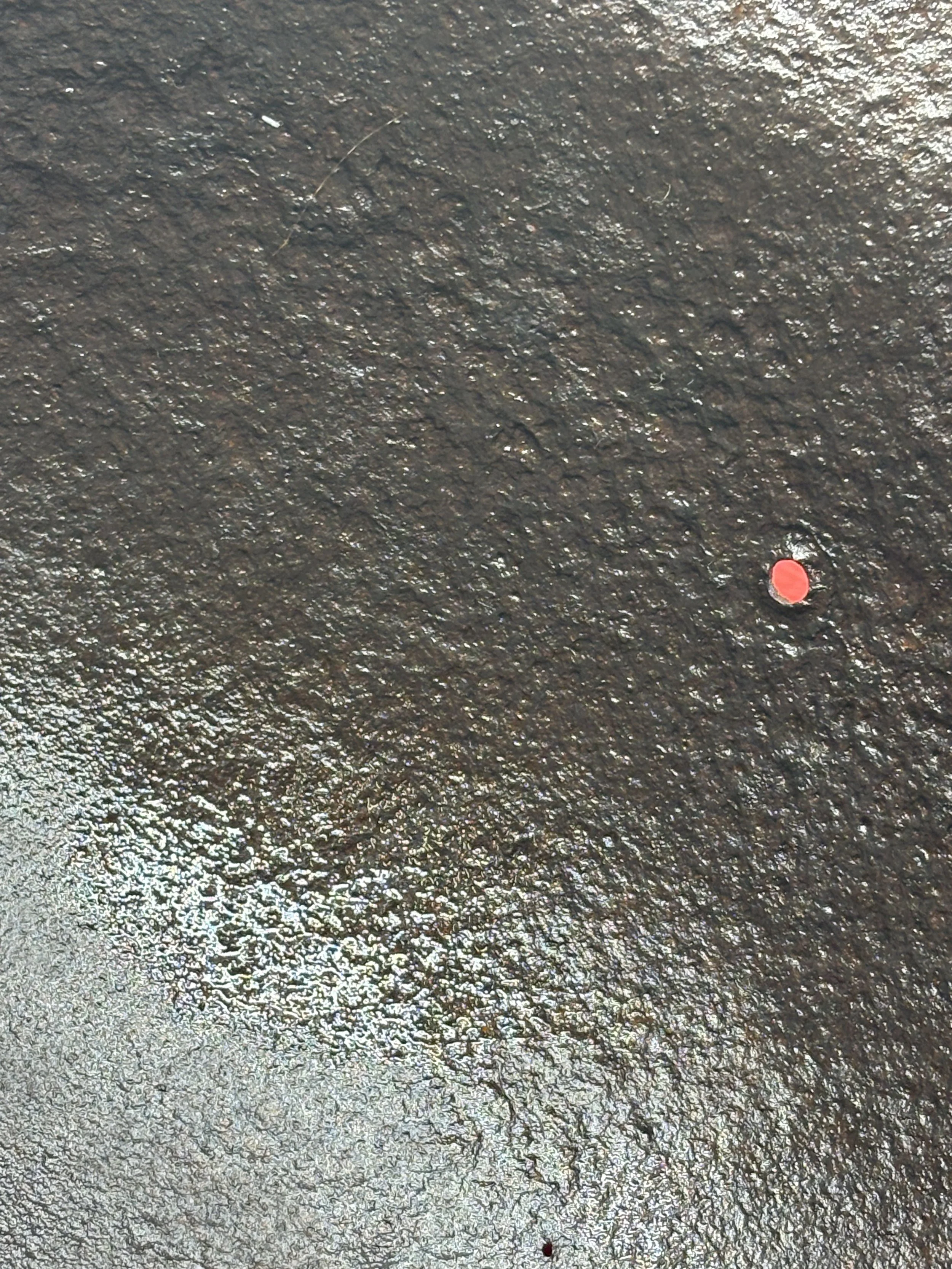 Image 7 of 12
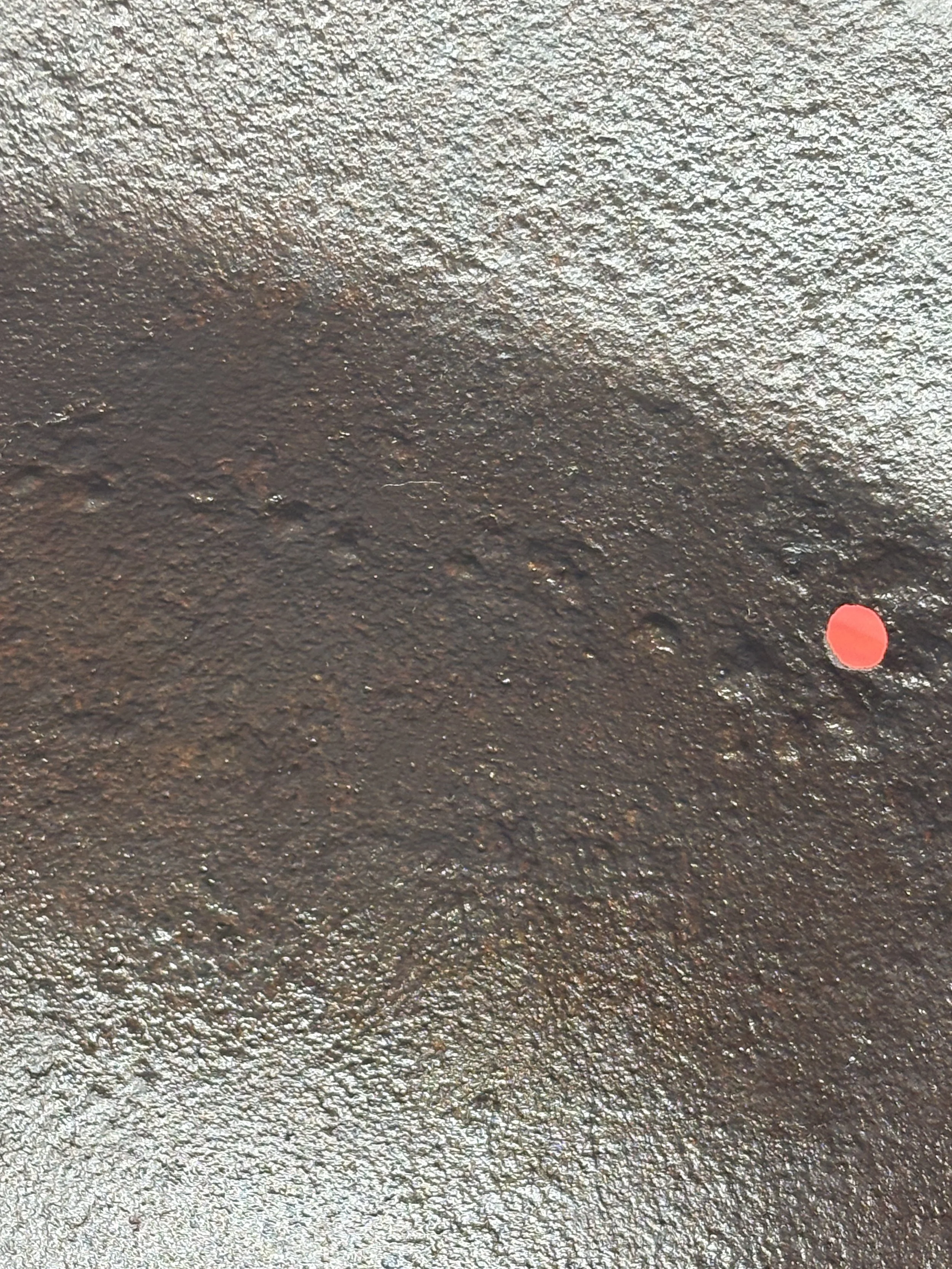 Image 8 of 12
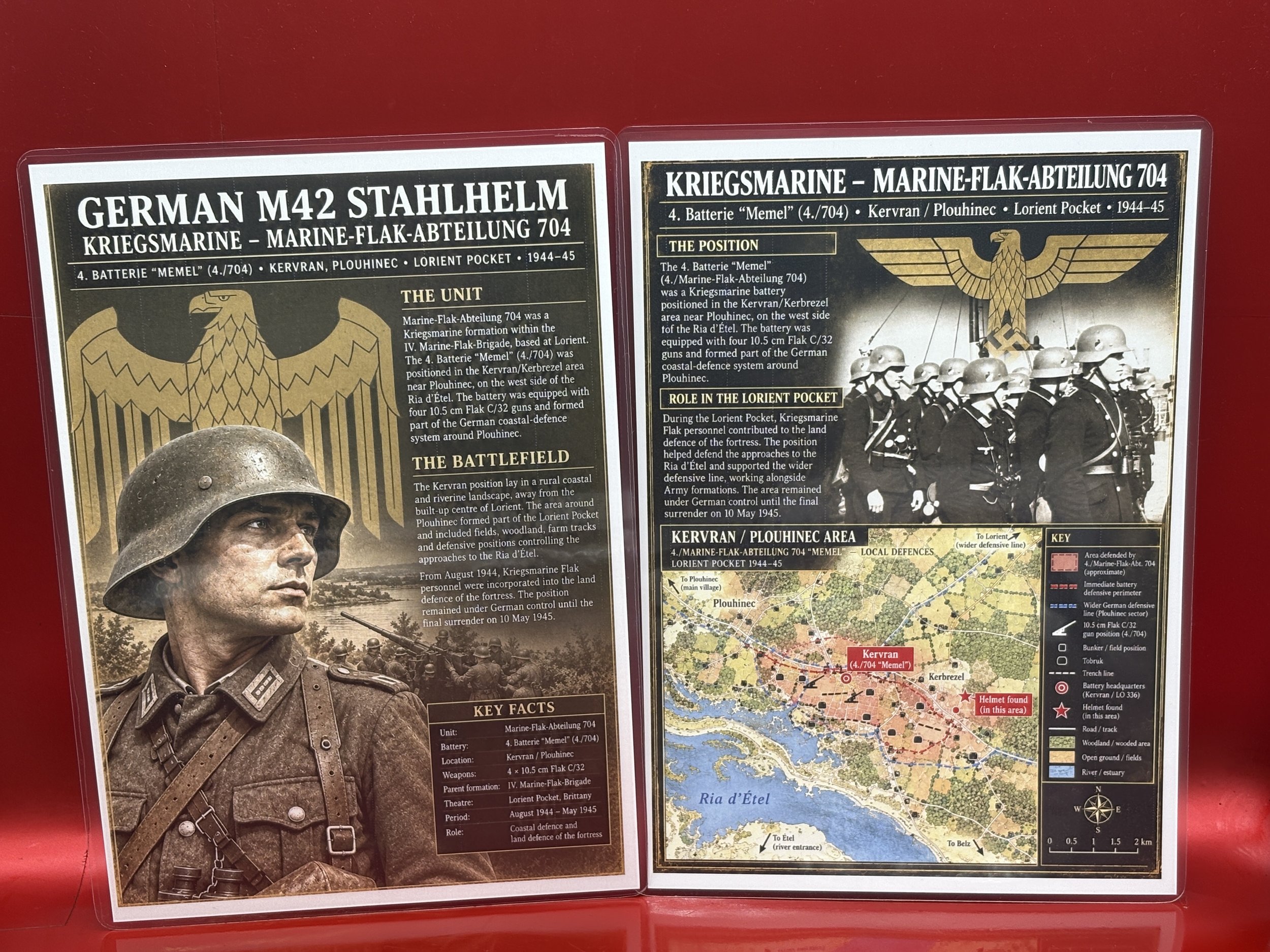 Image 9 of 12
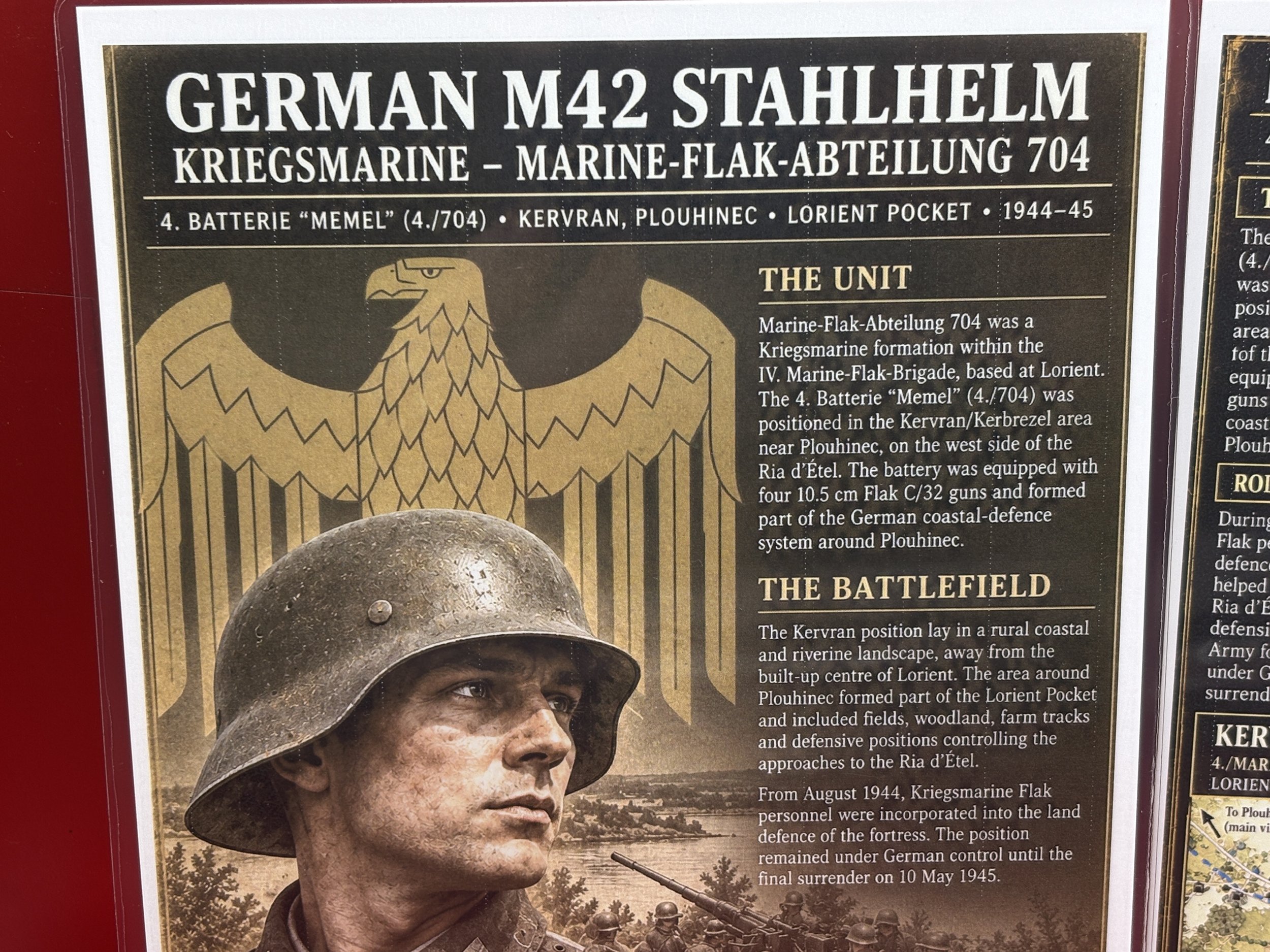 Image 10 of 12
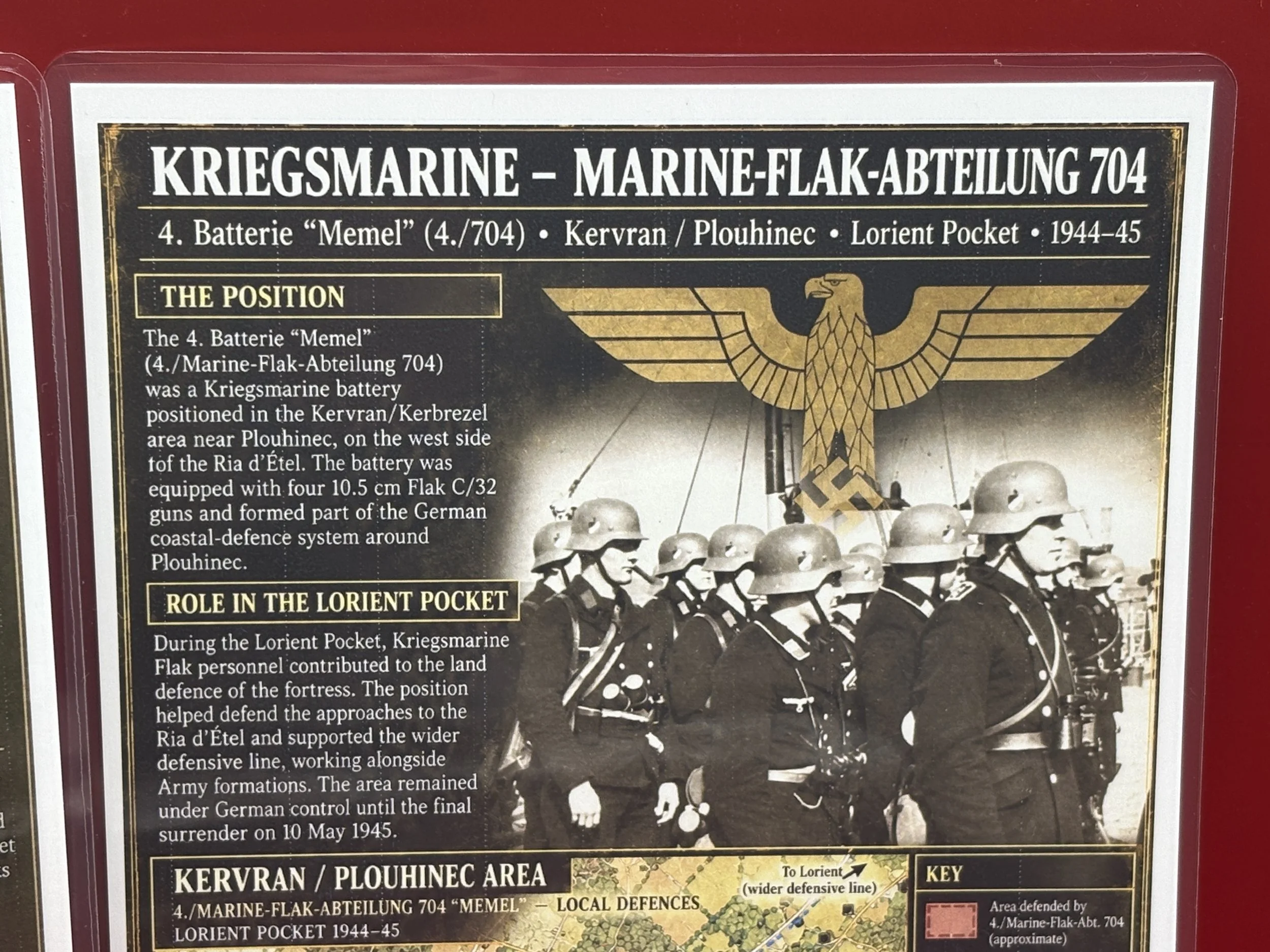 Image 11 of 12
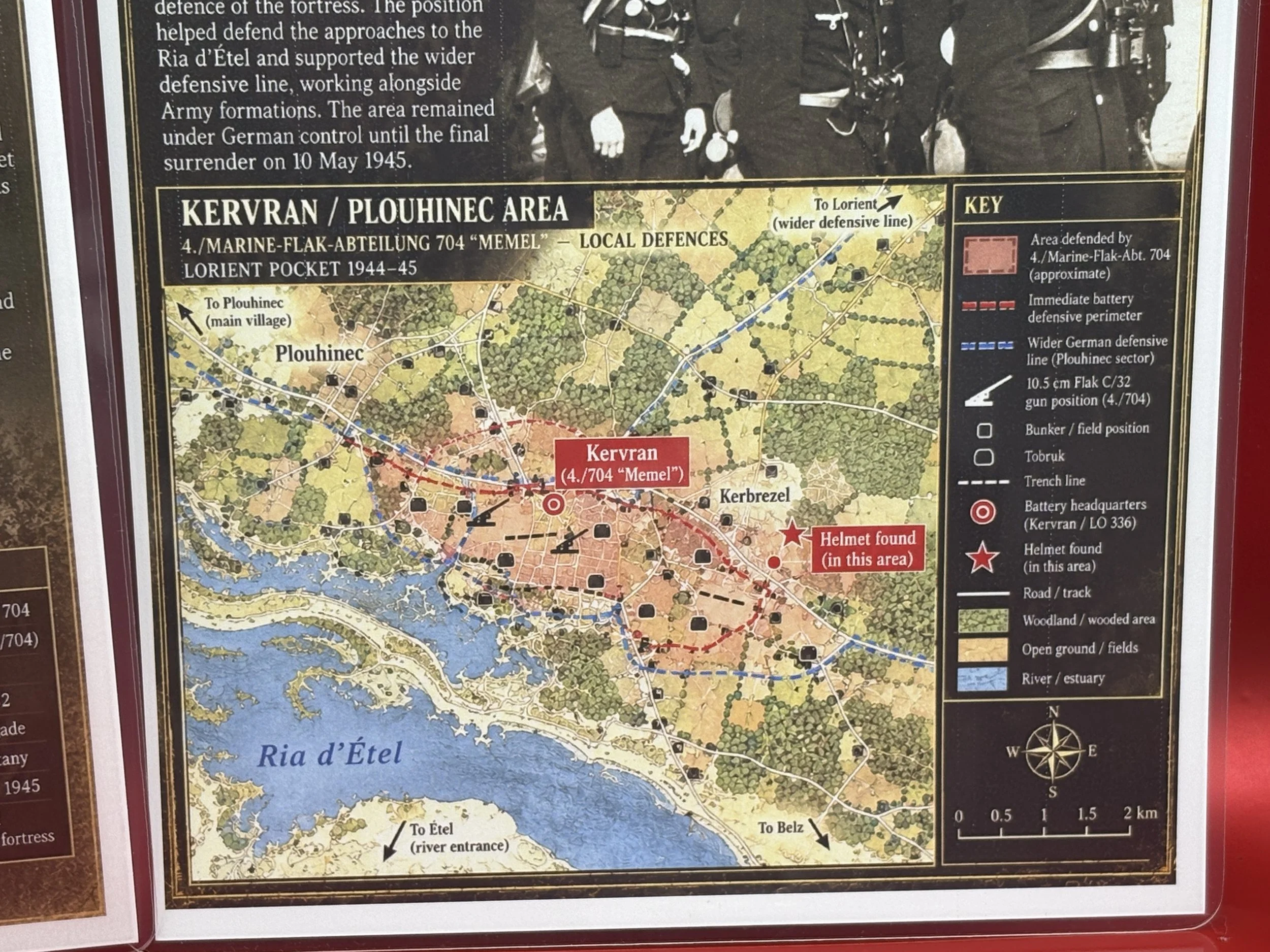 Image 12 of 12