This is a lovely complete original death plaque which is in undamaged condition still is nice shiny original colour with all of its markings clear to see. It comes complete with pages of information on the sailor it was awarded for and is rare to get one for sailor and naval ones are much harder to find.
The plaque is for Royal Naval reserve deck hand D.Dunnet who died 16th May 1916 aged 31.He served on patrol boats laying mines and anti-submarine actions.
Royal Naval Reserve – First World War Casualty
Official Number 4693/SD
MEMORIAL PLAQUE ("DEATH PENNY") RESEARCH PROFILE
This Memorial Plaque was issued following the death of David Kennedy Dunnett, a Royal Naval Reserve sailor from Caithness, Scotland, who died during the First World War while serving with Britain's wartime naval forces.
PERSONAL DETAILS
Name: David Kennedy Dunnett
Date of Birth: March 1885
Place of Birth: Canisbay Parish, Caithness, Scotland
Occupation: Fisherman
Residence: Wick / Canisbay district, Caithness
Service: Royal Naval Reserve (RNR)
Official Number: 4693/SD
Rating: Deck Hand
Physical Description (from service records):
• Height approximately 5 feet 7 inches
• Brown hair
• Grey eyes
• Fair complexion
David Kennedy Dunnett came from the rugged north coast of Scotland, an area with a long maritime tradition. Like many men from Caithness, he earned his living from the sea and followed the fishing industry before joining the Royal Naval Reserve.
ROYAL NAVAL RESERVE SERVICE
The Royal Naval Reserve drew heavily upon Britain's fishing and merchant marine communities. At the outbreak of war in 1914, thousands of experienced seamen were mobilised to support the Royal Navy.
Dunnett served as a Deck Hand in the Royal Naval Reserve and was employed in wartime naval duties connected with the Auxiliary Patrol. The Auxiliary Patrol was responsible for protecting Britain's coasts and sea lanes, carrying out patrol work, minesweeping operations and anti-submarine duties.
These dangerous assignments were undertaken by fishermen and merchant seamen who adapted their peacetime maritime skills to wartime service.
WAR SERVICE AND DEATH
Service records and naval documents confirm that David Dunnett was serving in the Royal Naval Reserve during the First World War and was attached to H.M.S. Victory, the administrative centre of Portsmouth Naval Barracks.
Date of Death: 19 May 1916
Age at Death: 31 years
Rank/Rating: Deck Hand
Service Number: 4693/SD
Service: Royal Naval Reserve
His death occurred during wartime service and resulted in his inclusion amongst Britain's First World War casualties.
BURIAL AND COMMEMORATION
Unlike many naval casualties who have no known grave and are commemorated on naval memorials, David Dunnett was returned to his native Caithness for burial.
Burial Location:
Canisbay Churchyard
Canisbay, Caithness, Scotland
Imperial War Graves Commission records confirm that his grave was officially recognised and marked under the Commission's care. The grave was subsequently recorded and maintained as an official war grave.
The surviving registration documents confirm:
• David Dunnett
• Royal Naval Reserve
• Official Number 4693/SD
• Deck Hand
• Died 19 May 1916
• Aged 31
The existence of both National Archives service records and Imperial War Graves Commission documentation provides a clear and traceable record of his military service and final resting place.
THE MEMORIAL PLAQUE
Following the First World War, the British Government issued bronze Memorial Plaques to the next of kin of all British and Empire service personnel who died as a result of the conflict.
Manufactured in bronze and measuring approximately 120mm in diameter, the plaques became known colloquially as the "Death Penny" or "Dead Man's Penny."
Each plaque was individually named and bore the recipient's full name cast into the design. They were intended as a permanent national expression of gratitude and remembrance.
This plaque was issued to the family of:
DAVID KENNEDY DUNNETT
Royal Naval Reserve
Deck Hand
Official Number 4693/SD
Born 1885 – Died 19 May 1916
PROVENANCE
Research accompanying this plaque includes material derived from:
• Royal Naval Reserve service records held by The National Archives.
• Imperial War Graves Commission / Commonwealth War Graves Commission grave registration records.
• Burial records for Canisbay Churchyard, Caithness.
• Contemporary naval casualty documentation.
The plaque therefore represents not only an original First World War Memorial Plaque, but also a fully identified and documented casualty from Scotland's northern fishing communities whose wartime service and burial place can be traced through surviving official records.
"HE DIED FOR FREEDOM AND HONOUR"
David Kennedy Dunnett
1885 – 1916
Royal Naval Reserve
Deck Hand
4693/SD
This is a lovely complete original death plaque which is in undamaged condition still is nice shiny original colour with all of its markings clear to see. It comes complete with pages of information on the sailor it was awarded for and is rare to get one for sailor and naval ones are much harder to find.
The plaque is for Royal Naval reserve deck hand D.Dunnet who died 16th May 1916 aged 31.He served on patrol boats laying mines and anti-submarine actions.
Royal Naval Reserve – First World War Casualty
Official Number 4693/SD
MEMORIAL PLAQUE ("DEATH PENNY") RESEARCH PROFILE
This Memorial Plaque was issued following the death of David Kennedy Dunnett, a Royal Naval Reserve sailor from Caithness, Scotland, who died during the First World War while serving with Britain's wartime naval forces.
PERSONAL DETAILS
Name: David Kennedy Dunnett
Date of Birth: March 1885
Place of Birth: Canisbay Parish, Caithness, Scotland
Occupation: Fisherman
Residence: Wick / Canisbay district, Caithness
Service: Royal Naval Reserve (RNR)
Official Number: 4693/SD
Rating: Deck Hand
Physical Description (from service records):
• Height approximately 5 feet 7 inches
• Brown hair
• Grey eyes
• Fair complexion
David Kennedy Dunnett came from the rugged north coast of Scotland, an area with a long maritime tradition. Like many men from Caithness, he earned his living from the sea and followed the fishing industry before joining the Royal Naval Reserve.
ROYAL NAVAL RESERVE SERVICE
The Royal Naval Reserve drew heavily upon Britain's fishing and merchant marine communities. At the outbreak of war in 1914, thousands of experienced seamen were mobilised to support the Royal Navy.
Dunnett served as a Deck Hand in the Royal Naval Reserve and was employed in wartime naval duties connected with the Auxiliary Patrol. The Auxiliary Patrol was responsible for protecting Britain's coasts and sea lanes, carrying out patrol work, minesweeping operations and anti-submarine duties.
These dangerous assignments were undertaken by fishermen and merchant seamen who adapted their peacetime maritime skills to wartime service.
WAR SERVICE AND DEATH
Service records and naval documents confirm that David Dunnett was serving in the Royal Naval Reserve during the First World War and was attached to H.M.S. Victory, the administrative centre of Portsmouth Naval Barracks.
Date of Death: 19 May 1916
Age at Death: 31 years
Rank/Rating: Deck Hand
Service Number: 4693/SD
Service: Royal Naval Reserve
His death occurred during wartime service and resulted in his inclusion amongst Britain's First World War casualties.
BURIAL AND COMMEMORATION
Unlike many naval casualties who have no known grave and are commemorated on naval memorials, David Dunnett was returned to his native Caithness for burial.
Burial Location:
Canisbay Churchyard
Canisbay, Caithness, Scotland
Imperial War Graves Commission records confirm that his grave was officially recognised and marked under the Commission's care. The grave was subsequently recorded and maintained as an official war grave.
The surviving registration documents confirm:
• David Dunnett
• Royal Naval Reserve
• Official Number 4693/SD
• Deck Hand
• Died 19 May 1916
• Aged 31
The existence of both National Archives service records and Imperial War Graves Commission documentation provides a clear and traceable record of his military service and final resting place.
THE MEMORIAL PLAQUE
Following the First World War, the British Government issued bronze Memorial Plaques to the next of kin of all British and Empire service personnel who died as a result of the conflict.
Manufactured in bronze and measuring approximately 120mm in diameter, the plaques became known colloquially as the "Death Penny" or "Dead Man's Penny."
Each plaque was individually named and bore the recipient's full name cast into the design. They were intended as a permanent national expression of gratitude and remembrance.
This plaque was issued to the family of:
DAVID KENNEDY DUNNETT
Royal Naval Reserve
Deck Hand
Official Number 4693/SD
Born 1885 – Died 19 May 1916
PROVENANCE
Research accompanying this plaque includes material derived from:
• Royal Naval Reserve service records held by The National Archives.
• Imperial War Graves Commission / Commonwealth War Graves Commission grave registration records.
• Burial records for Canisbay Churchyard, Caithness.
• Contemporary naval casualty documentation.
The plaque therefore represents not only an original First World War Memorial Plaque, but also a fully identified and documented casualty from Scotland's northern fishing communities whose wartime service and burial place can be traced through surviving official records.
"HE DIED FOR FREEDOM AND HONOUR"
David Kennedy Dunnett
1885 – 1916
Royal Naval Reserve
Deck Hand
4693/SD

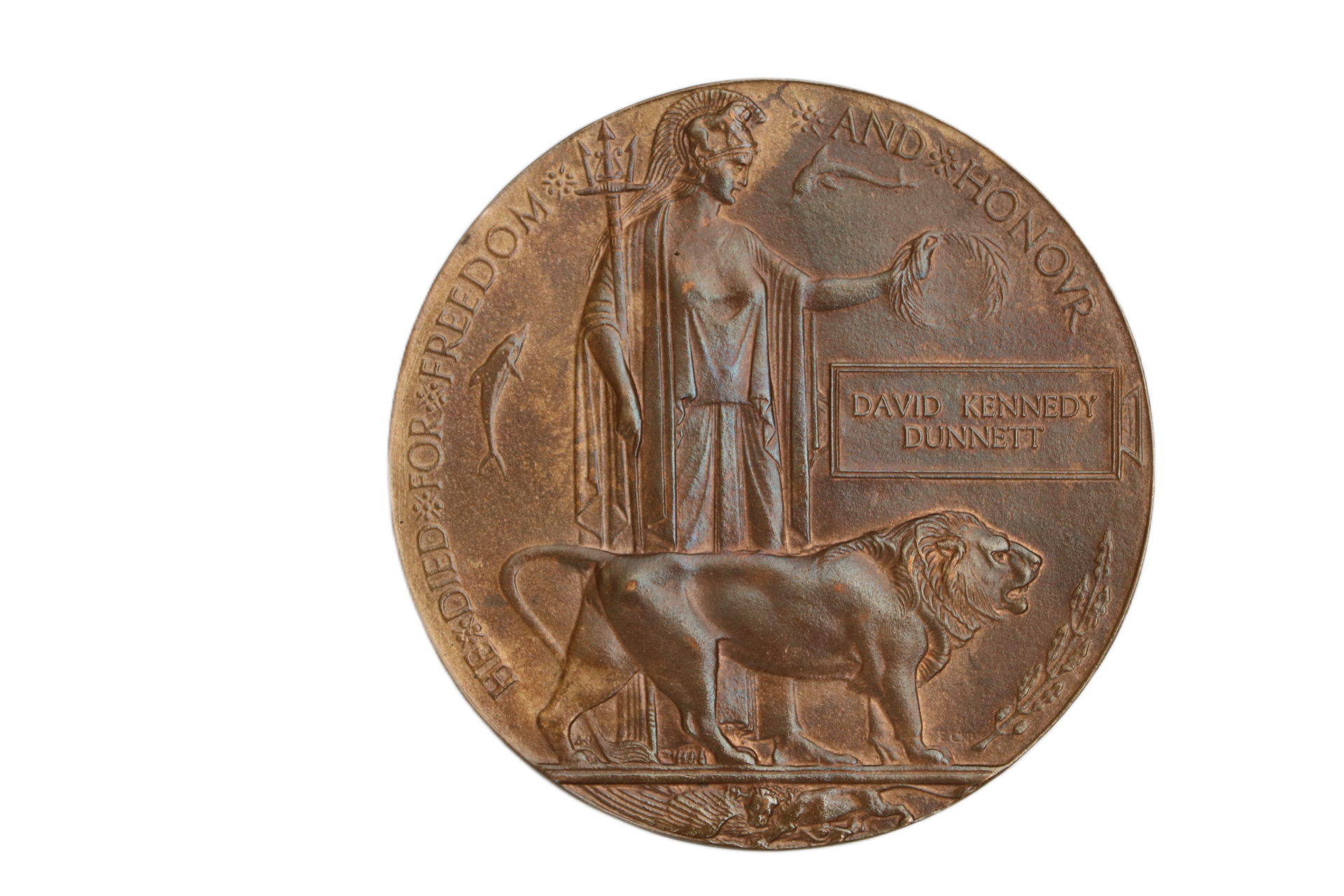 Image 1 of 9
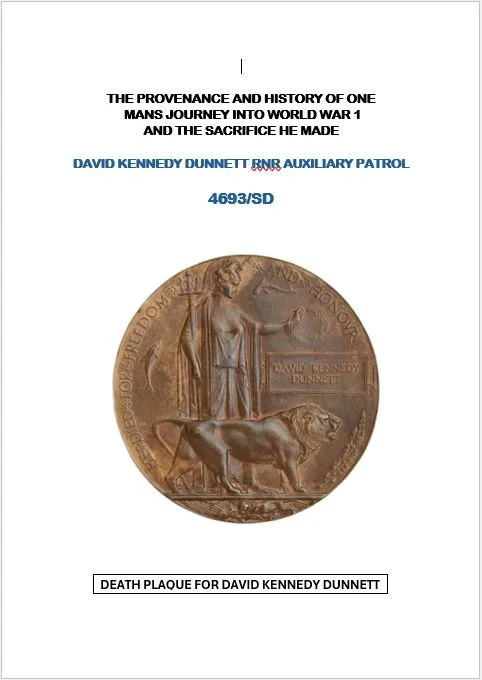 Image 2 of 9
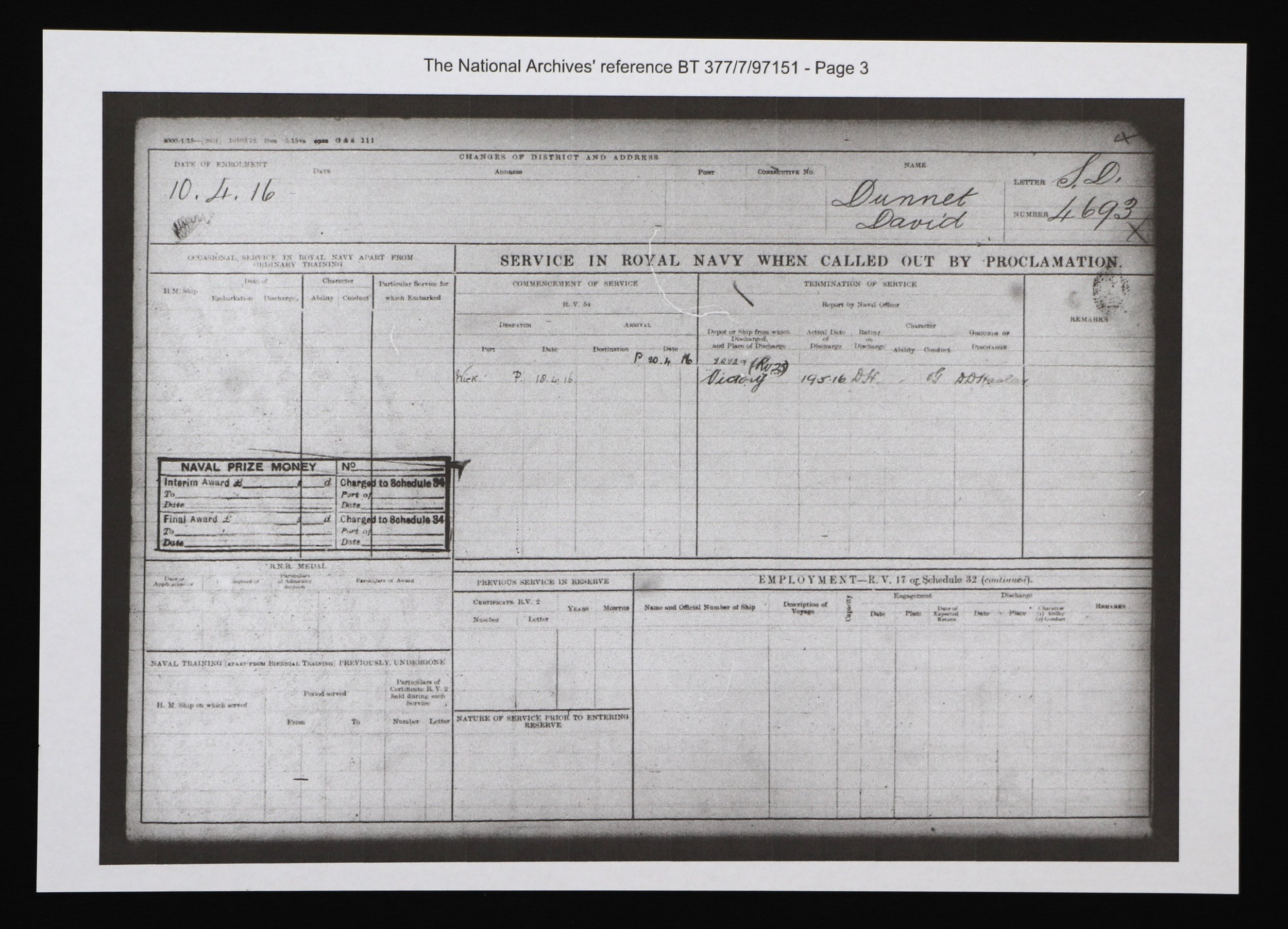 Image 3 of 9
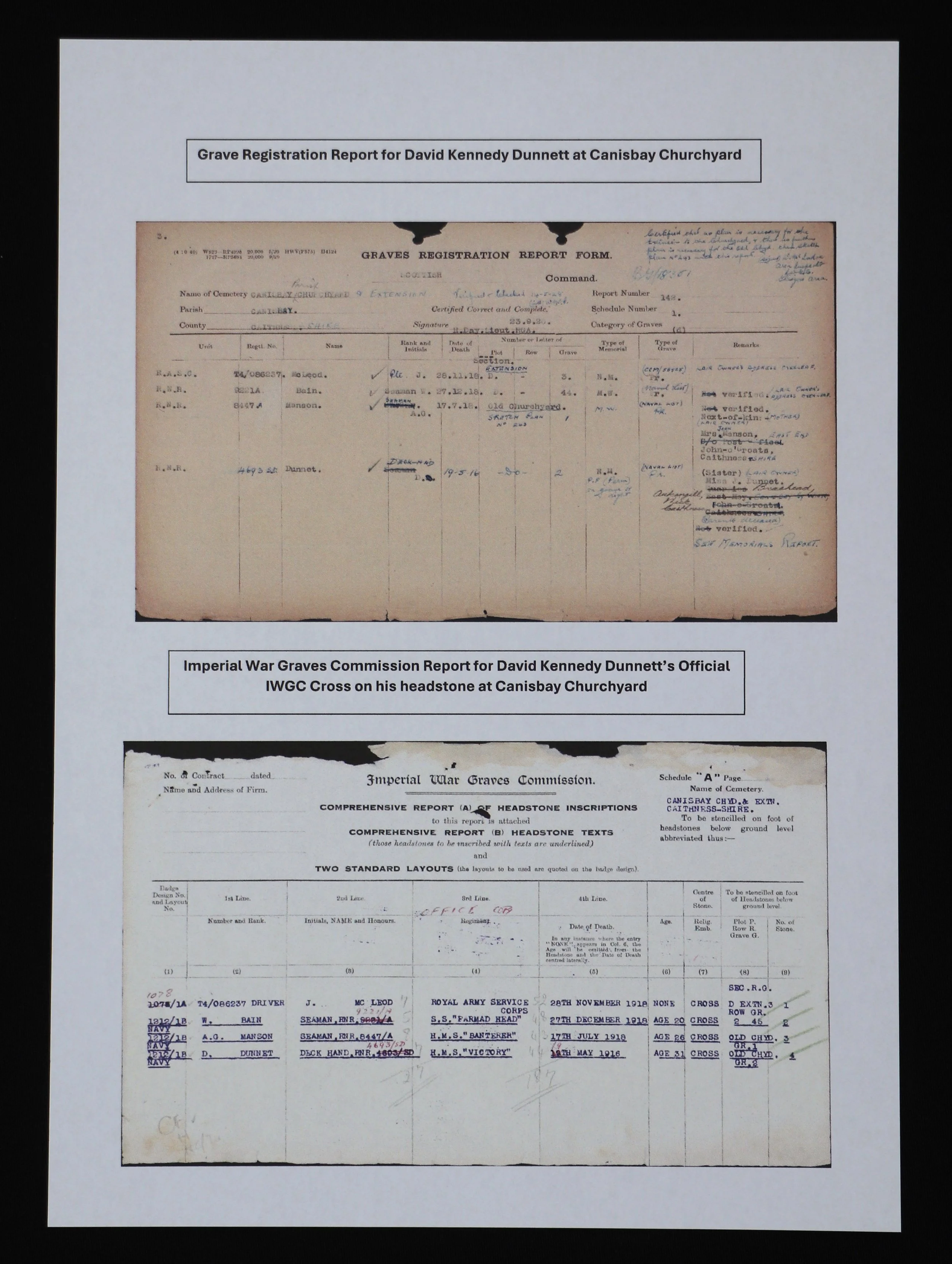 Image 4 of 9
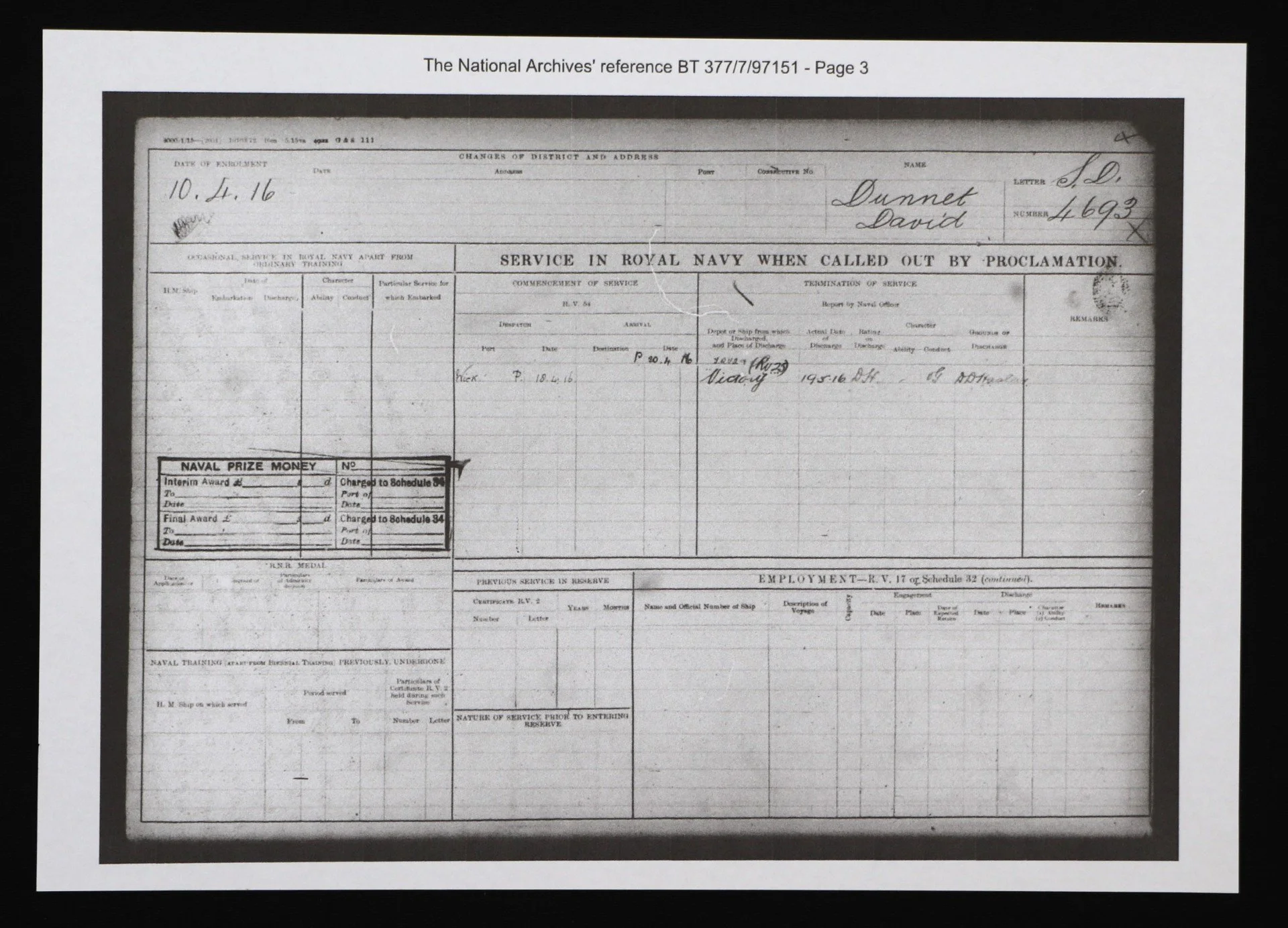 Image 5 of 9
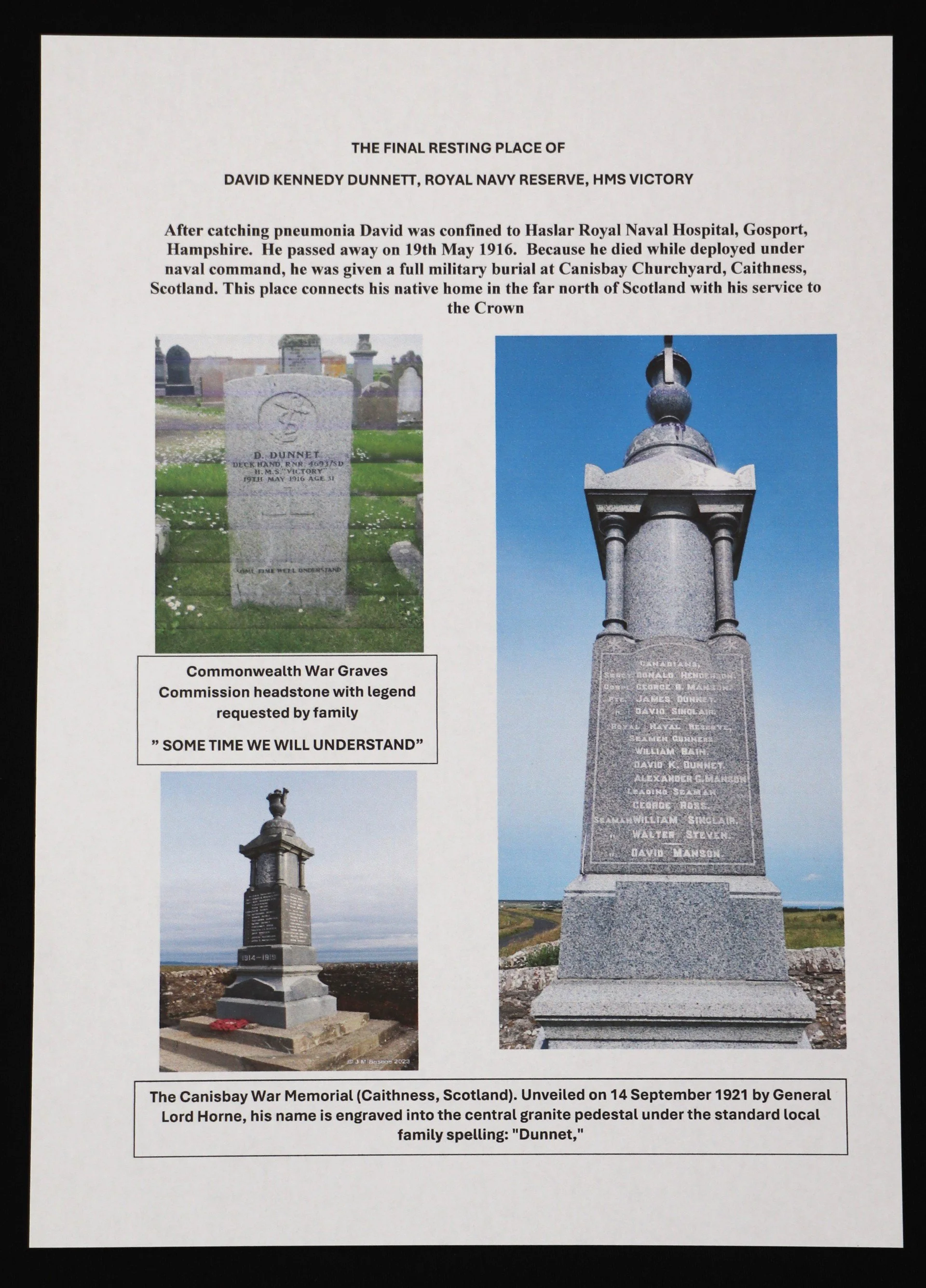 Image 6 of 9
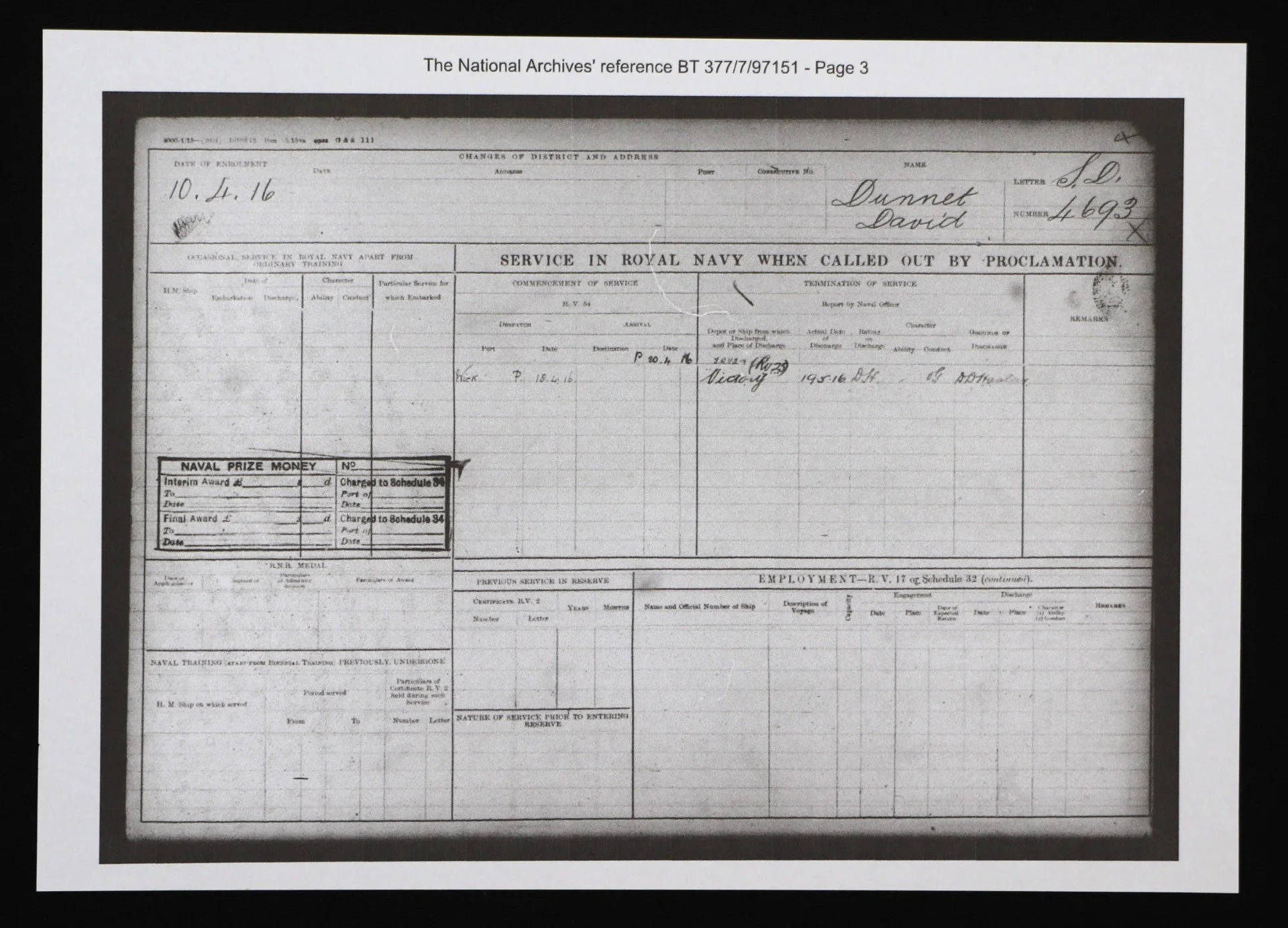 Image 7 of 9
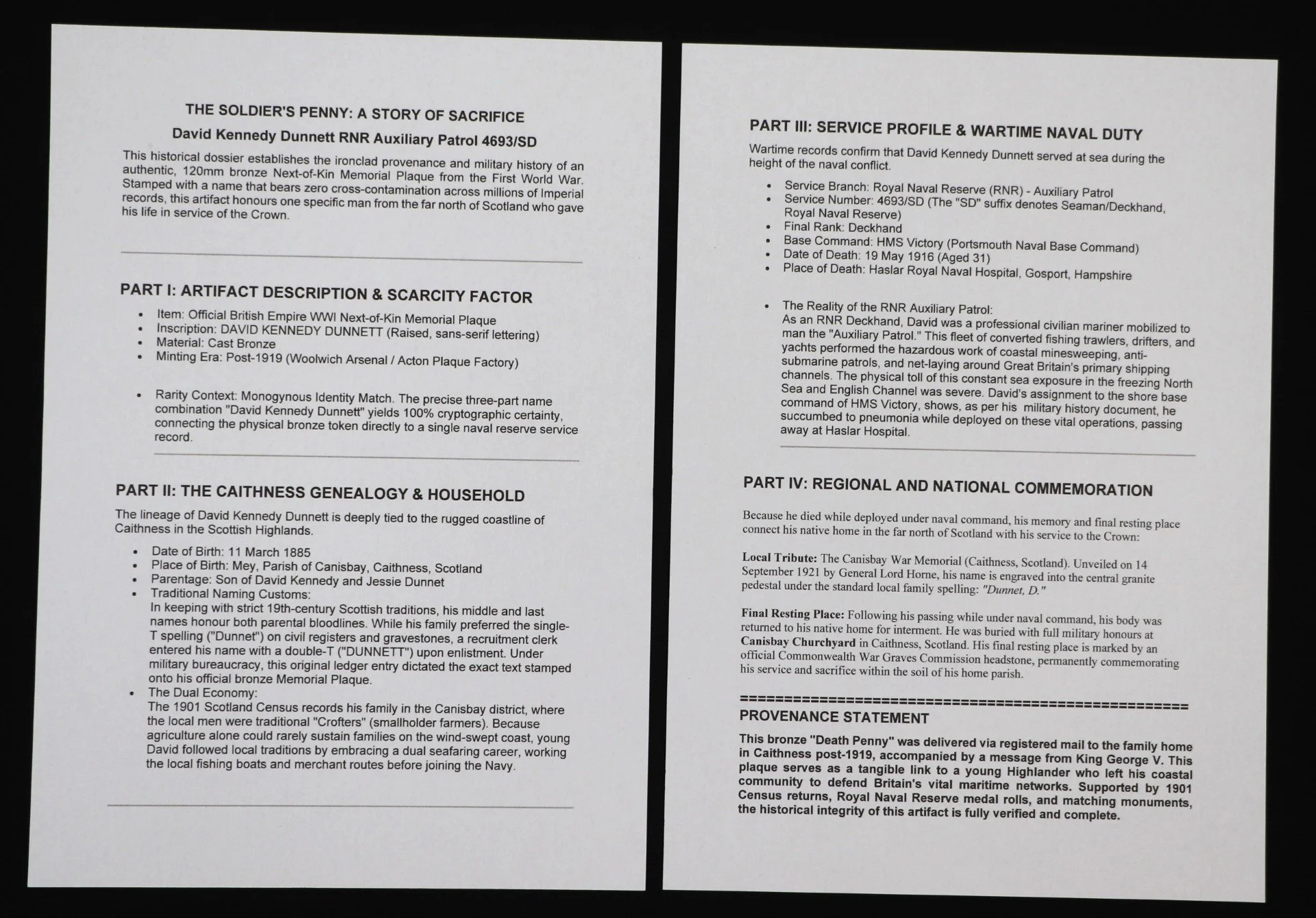 Image 8 of 9
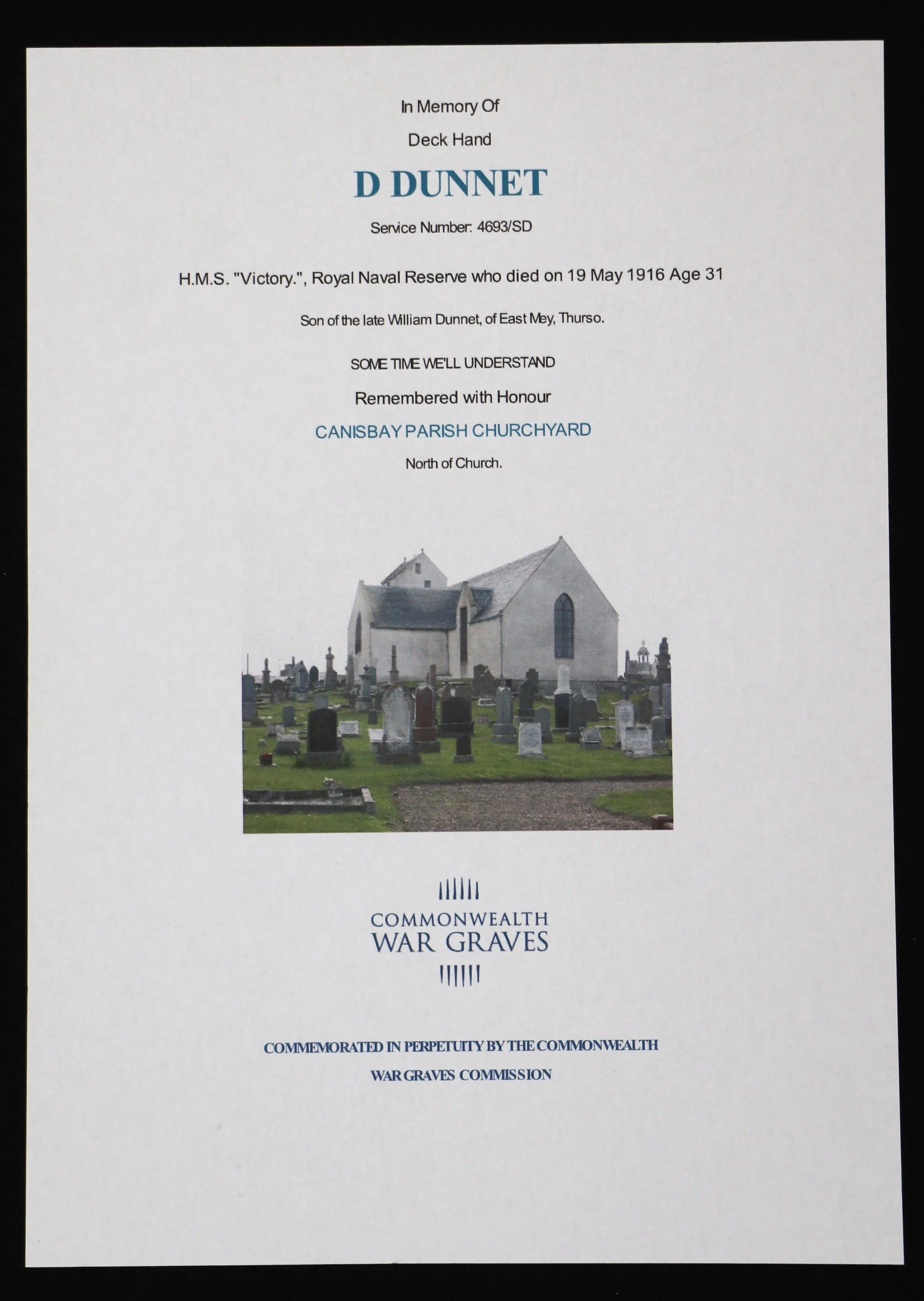 Image 9 of 9