This is an authentic, glass-framed aluminium internal equipment mounting panel which still has some of its green paintwork remains very clear to see.
The aluminium panel was torn away by the impact of the crash but remains in good, solid condition. It has been carefully cleaned while preserving its original character and wartime patina.
The relic is presented in a glass-fronted box frame, complete with aircraft information and diagram, making it an excellent display piece for any aviation or Second World War collection. The frame measures approximately 13 inches by 13 inches.
The part is from British RAF Lancaster bomber Mark I (serial number NF923), of 617 squadron, shot down by German night ace Hauptmann Schnaufer on 23–24 September 1944 and crashed in the Netherlands
The Avro Lancaster Mark I (serial number NF923), sporting the squadron code KC:M, was a heavy bomber assigned to the elite No. 617 Squadron RAF—famously known as the "Dam Busters". Before its final fateful sortie, this robust four-engine aircraft was utilized for highly specialized precision operations. This included operating out of Yagodnik in the Soviet Union just a week prior to its loss, during an attack on the German battleship Tirpitz on 15 September 1944. Built to carry the war's heaviest munitions, NF923 was modified with a specialized bomb bay specifically designed to accommodate the 12,000 lb "Tallboy" earthquake bomb, an immense weapon engineered by Barnes Wallis to destroy heavily fortified infrastructure.
The aircraft met its end during the night of 23–24 September 1944 after taking off from RAF woodhall spar at 19:18 on a mission targeting the Dortmund-Ems Canal at Ladbergen, Germany. While en route, the Lancaster was intercepted at an altitude of 3,900 metres by the lethal German night fighter ace Hauptmann Heinz-Wolfgang Schnaufer of Stab IV/NJG1. Enemy cannon fire rapidly knocked out three of the Lancaster's engines and ignited a fierce blaze inside the bomb bay. Compounding the crisis, the crew was completely unable to jettison their massive Tallboy bomb. Recognizing the imminent danger, the pilot, Flight Lieutenant Geoffrey Stevenson Stout DFC, courageously held the burning aircraft steady to allow his six crew members to bail out. Moments later, the bomber plunged from the sky and crashed on the Vordensebinnenweg near Lochem, Netherlands. Flt Lt Stout died at the controls, while two other crew members eventually succumbed to their injuries; the remaining four survived via evasion or capture
This is an authentic, glass-framed aluminium internal equipment mounting panel which still has some of its green paintwork remains very clear to see.
The aluminium panel was torn away by the impact of the crash but remains in good, solid condition. It has been carefully cleaned while preserving its original character and wartime patina.
The relic is presented in a glass-fronted box frame, complete with aircraft information and diagram, making it an excellent display piece for any aviation or Second World War collection. The frame measures approximately 13 inches by 13 inches.
The part is from British RAF Lancaster bomber Mark I (serial number NF923), of 617 squadron, shot down by German night ace Hauptmann Schnaufer on 23–24 September 1944 and crashed in the Netherlands
The Avro Lancaster Mark I (serial number NF923), sporting the squadron code KC:M, was a heavy bomber assigned to the elite No. 617 Squadron RAF—famously known as the "Dam Busters". Before its final fateful sortie, this robust four-engine aircraft was utilized for highly specialized precision operations. This included operating out of Yagodnik in the Soviet Union just a week prior to its loss, during an attack on the German battleship Tirpitz on 15 September 1944. Built to carry the war's heaviest munitions, NF923 was modified with a specialized bomb bay specifically designed to accommodate the 12,000 lb "Tallboy" earthquake bomb, an immense weapon engineered by Barnes Wallis to destroy heavily fortified infrastructure.
The aircraft met its end during the night of 23–24 September 1944 after taking off from RAF woodhall spar at 19:18 on a mission targeting the Dortmund-Ems Canal at Ladbergen, Germany. While en route, the Lancaster was intercepted at an altitude of 3,900 metres by the lethal German night fighter ace Hauptmann Heinz-Wolfgang Schnaufer of Stab IV/NJG1. Enemy cannon fire rapidly knocked out three of the Lancaster's engines and ignited a fierce blaze inside the bomb bay. Compounding the crisis, the crew was completely unable to jettison their massive Tallboy bomb. Recognizing the imminent danger, the pilot, Flight Lieutenant Geoffrey Stevenson Stout DFC, courageously held the burning aircraft steady to allow his six crew members to bail out. Moments later, the bomber plunged from the sky and crashed on the Vordensebinnenweg near Lochem, Netherlands. Flt Lt Stout died at the controls, while two other crew members eventually succumbed to their injuries; the remaining four survived via evasion or capture

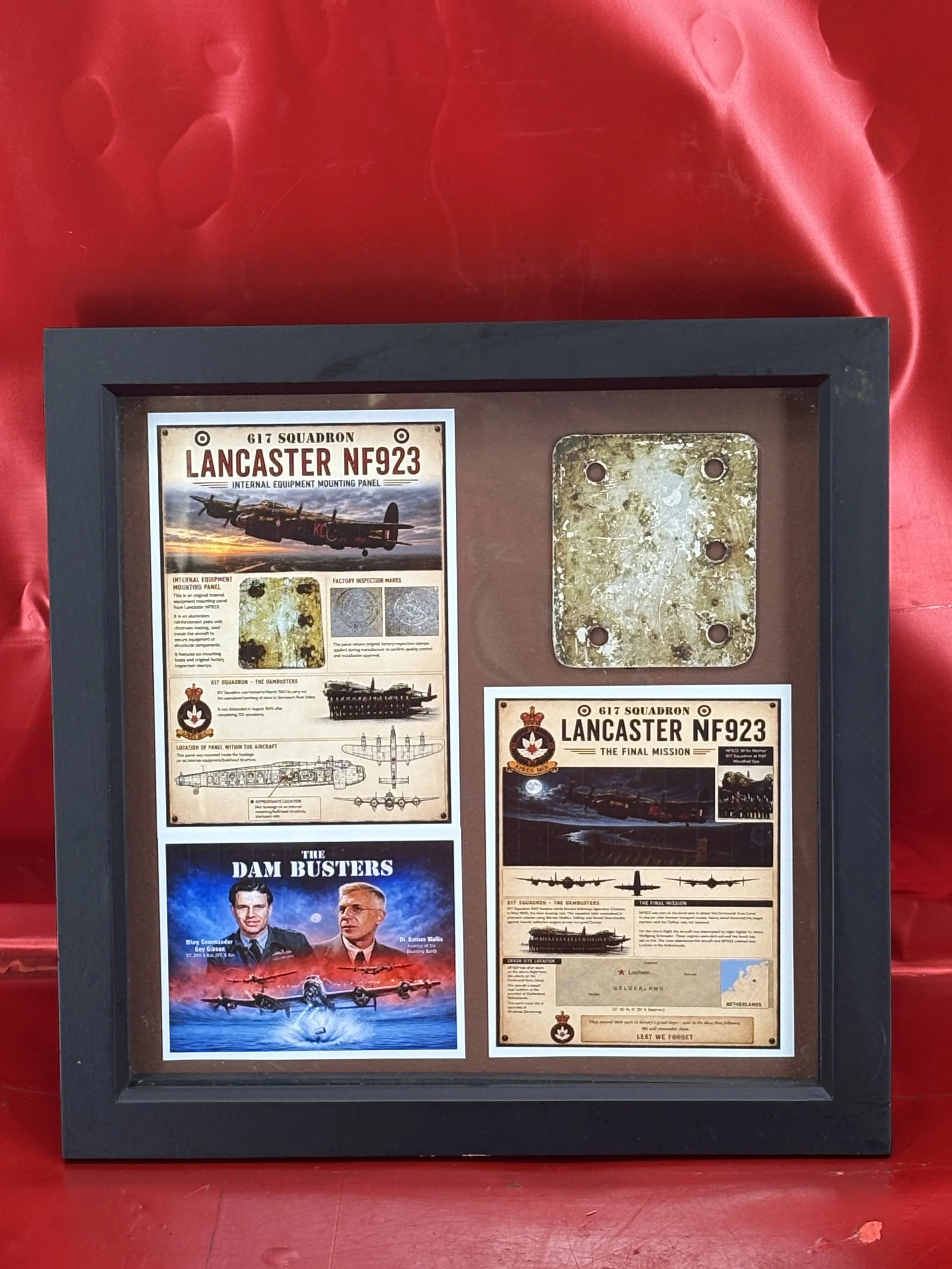 Image 1 of 9
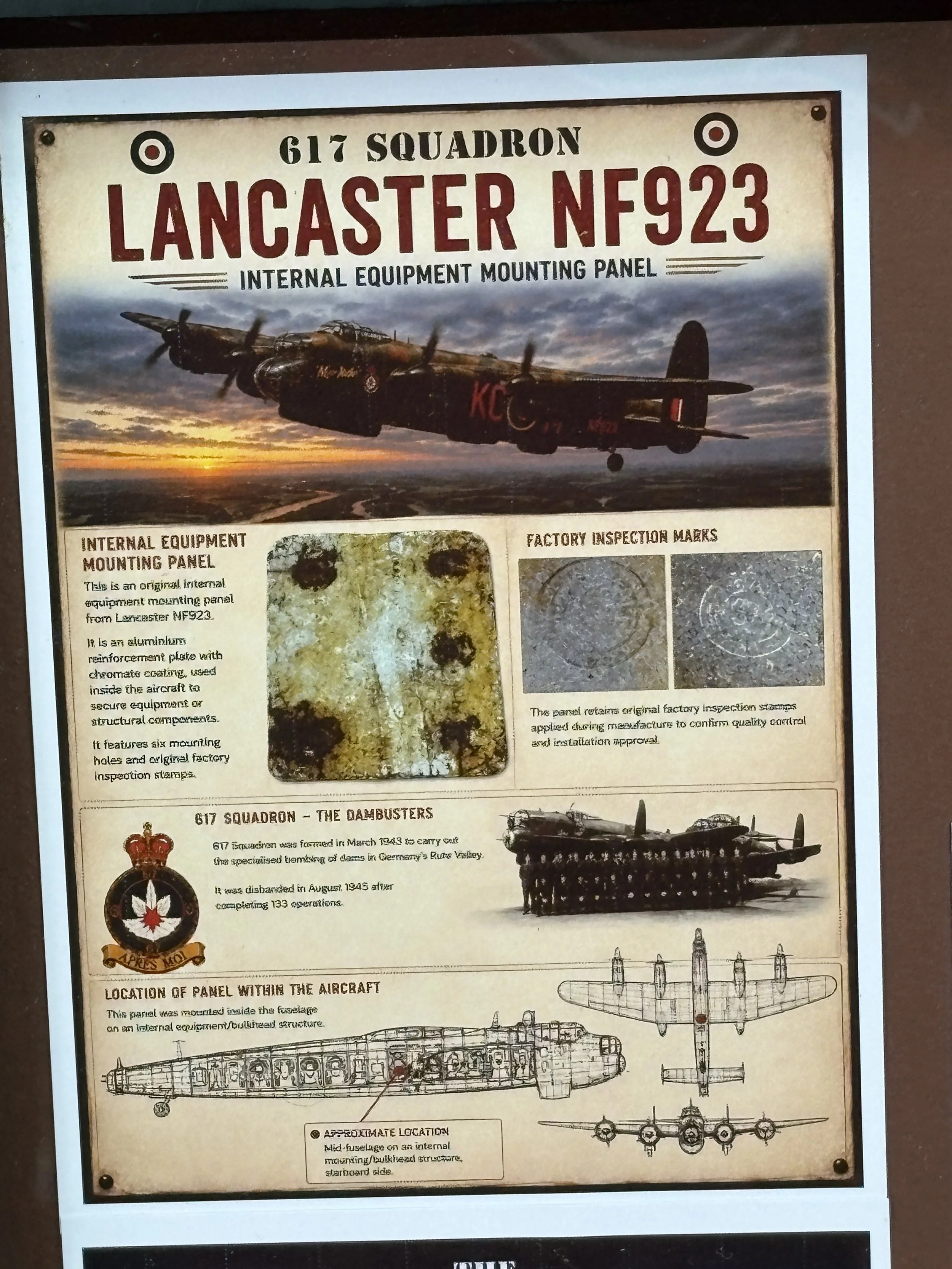 Image 2 of 9
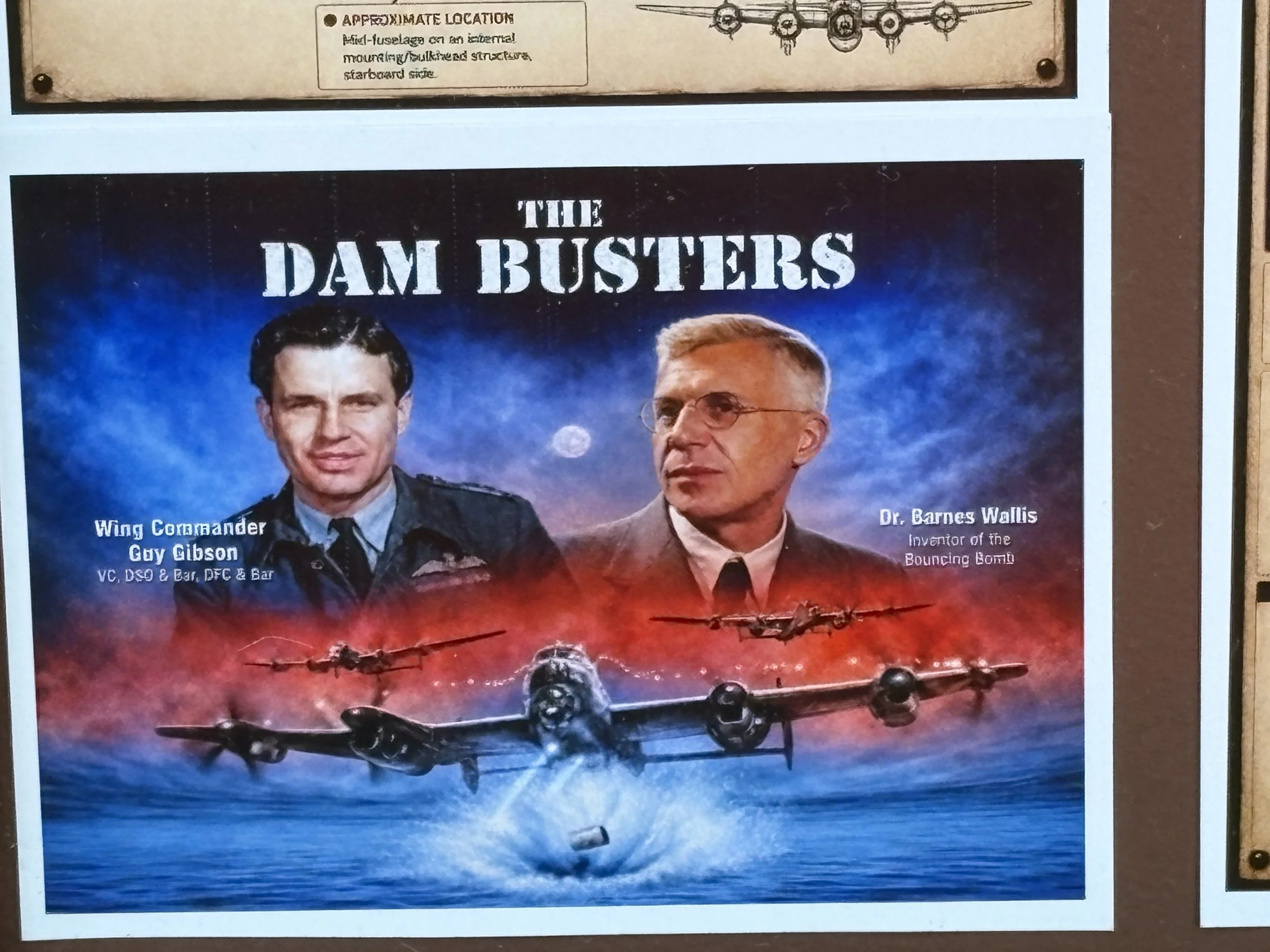 Image 3 of 9
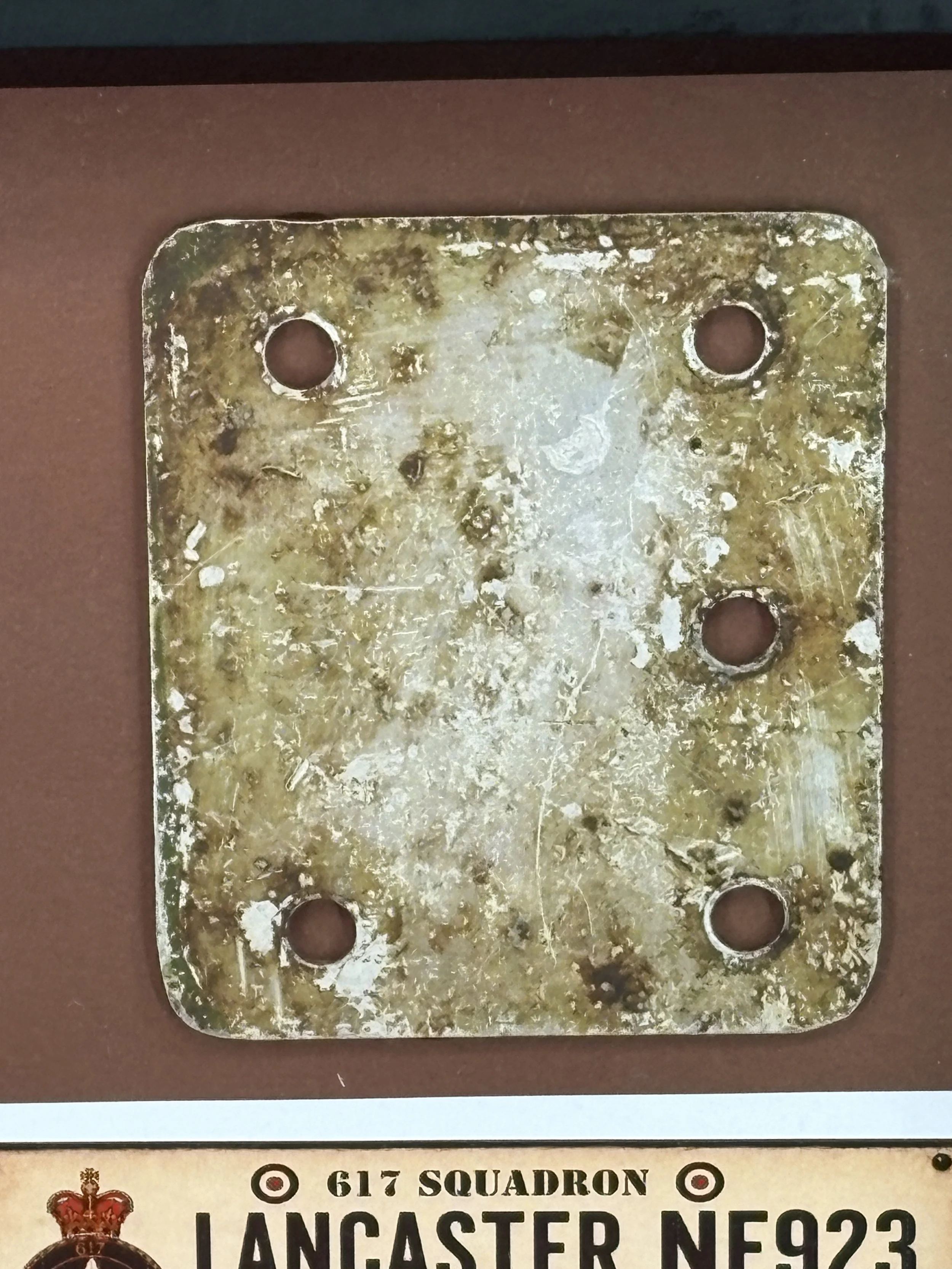 Image 4 of 9
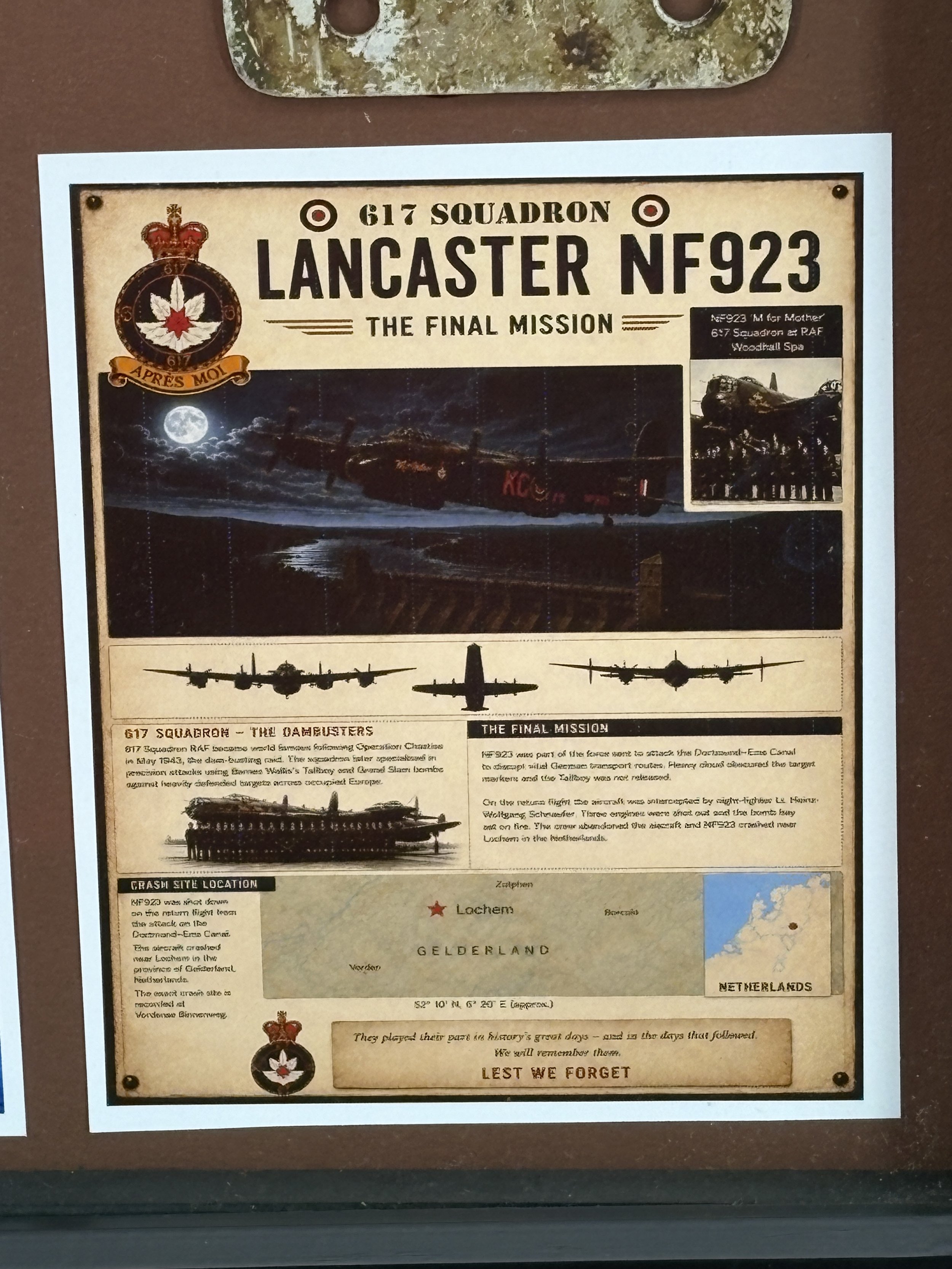 Image 5 of 9
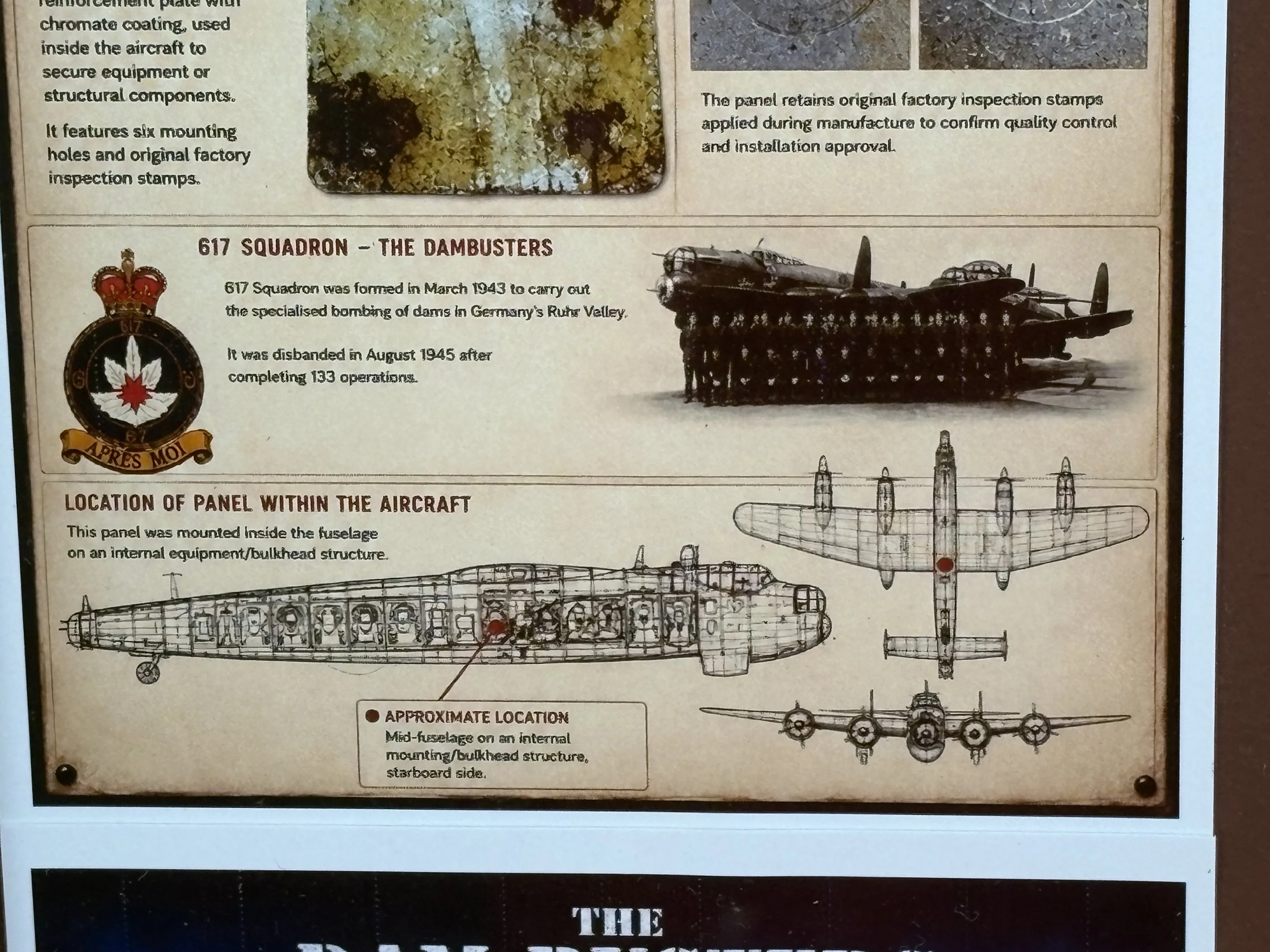 Image 6 of 9
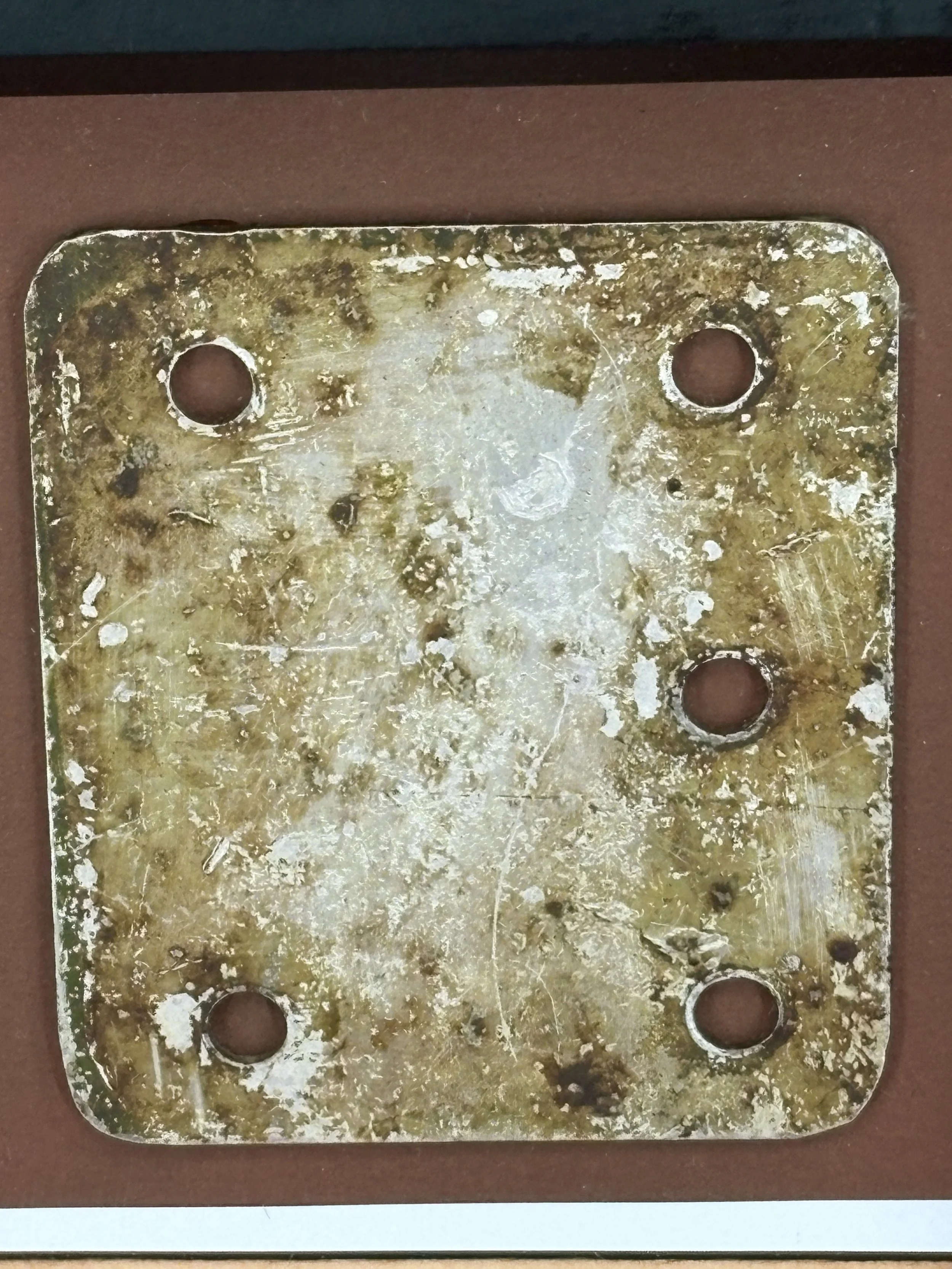 Image 7 of 9
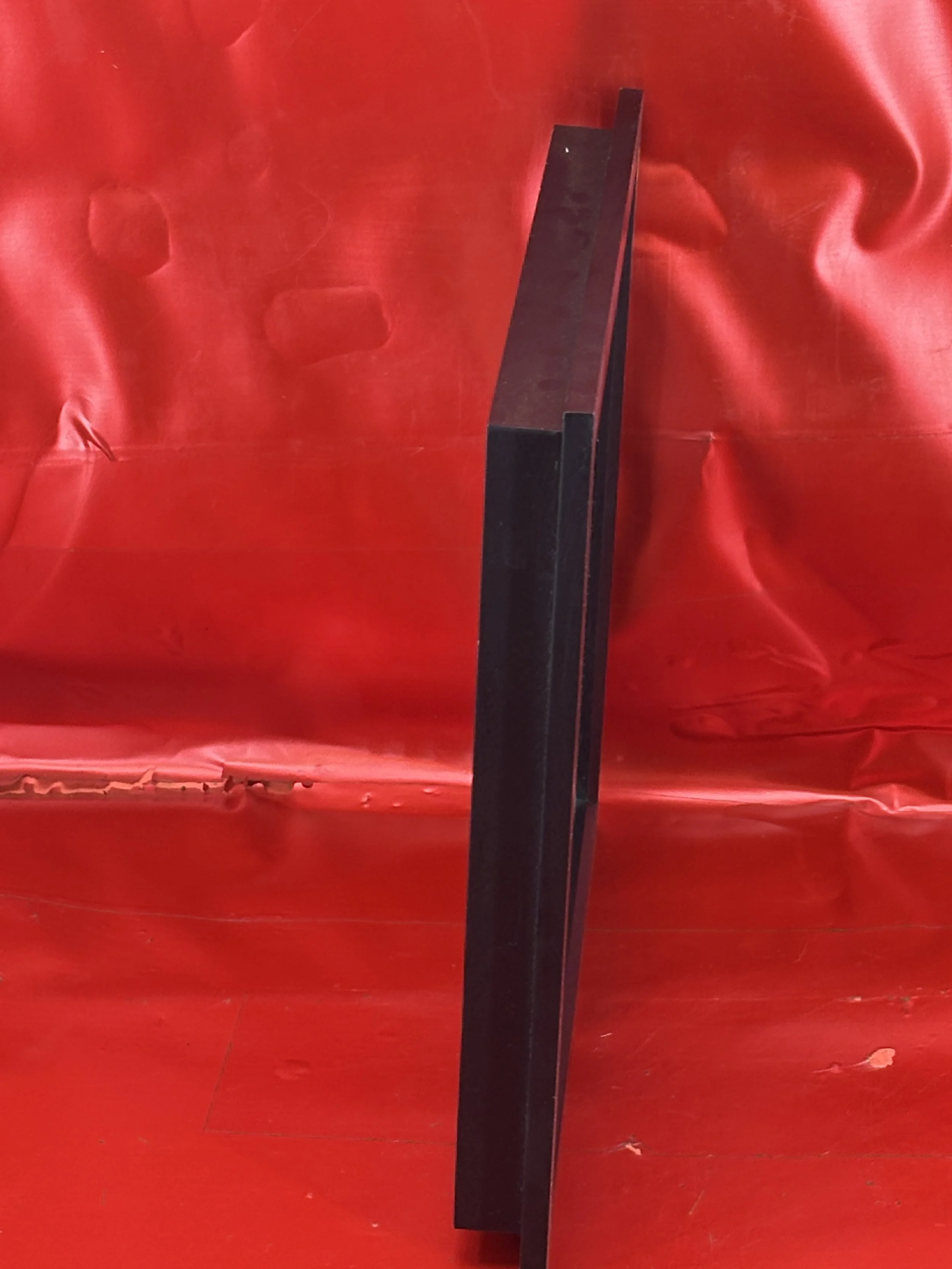 Image 8 of 9
 Image 9 of 9