This is an authentic, glass-framed aluminium airframe section recovered from a German Messerschmitt 109. The relic which is in lovely condition still retains some of its original wartime finish and some original white paintwork, making it an attractive and increasingly scarce piece from one of the Luftwaffe's most recognisable aircraft.
The aluminium section was torn, bent and distorted by the impact of the crash but remains in good, solid condition. It has been carefully cleaned while preserving its original character and wartime patina.
The relic is presented in a glass-fronted box frame, complete with aircraft information, making it an excellent display piece for any aviation or Second World War collection. The frame measures approximately 10 half inches by 10 half inches.
This part comes from MESSERSCHMITT Bf 109 G-10 – “BLACK 12”. On 1 January 1945, during Operation Bodenplatte, Unteroffizier Karl Betz of 10./Jagdgeschwader 6 took off from Bissel, Germany, in his Messerschmitt Bf 109 G-10, Werknummer 490719, coded “Black 12”. His mission formed part of the Luftwaffe’s New Year’s Day assault on Allied airfields, with Volkel in the Netherlands as JG 6’s intended target.
At approximately 09:30, Betz’s aircraft was shot down, with the victory attributed to Flight Officer Doug Cameron of No. 401 Squadron, Royal Canadian Air Force. The Bf 109 struck a tree and crashed at Dorshout, near Veghel, Netherlands, killing Betz. He was initially buried locally and later reinterred at the German War Cemetery in Ysselsteyn, grave AV-2-30.
Operation Bodenplatte (Operation Baseplate), launched on 1 January 1945, was a massive, surprise low-level strategic assault by the German Luftwaffe against 16 Allied airfields in Belgium, the Netherlands, and northern France. Conceived as a desperate bid to regain air superiority during the closing stages of the Ardennes Offensive (Battle of the Bulge), it ultimately resulted in a catastrophic self-inflicted blow that shattered Germany's remaining air strength

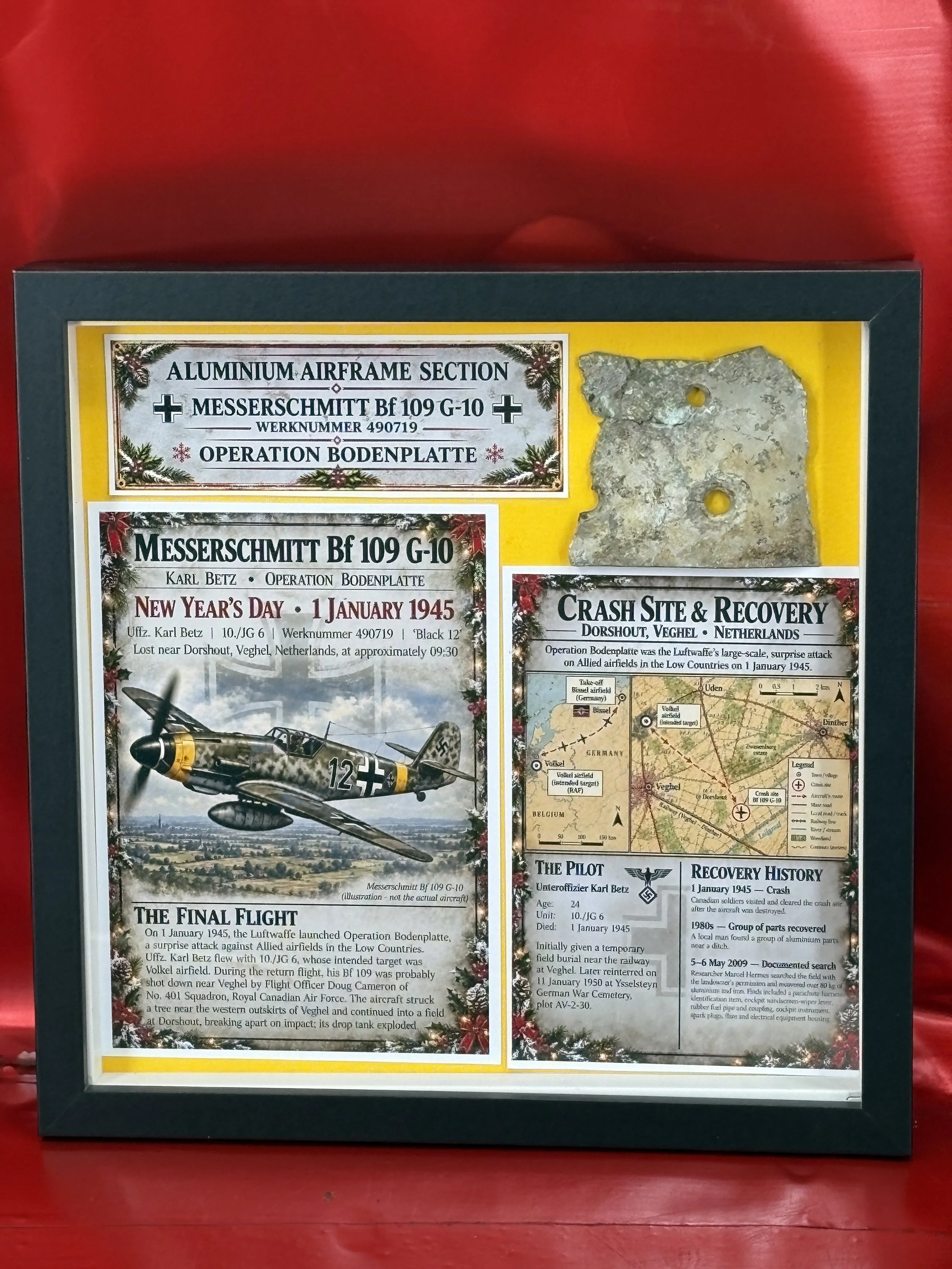 Image 1 of 8
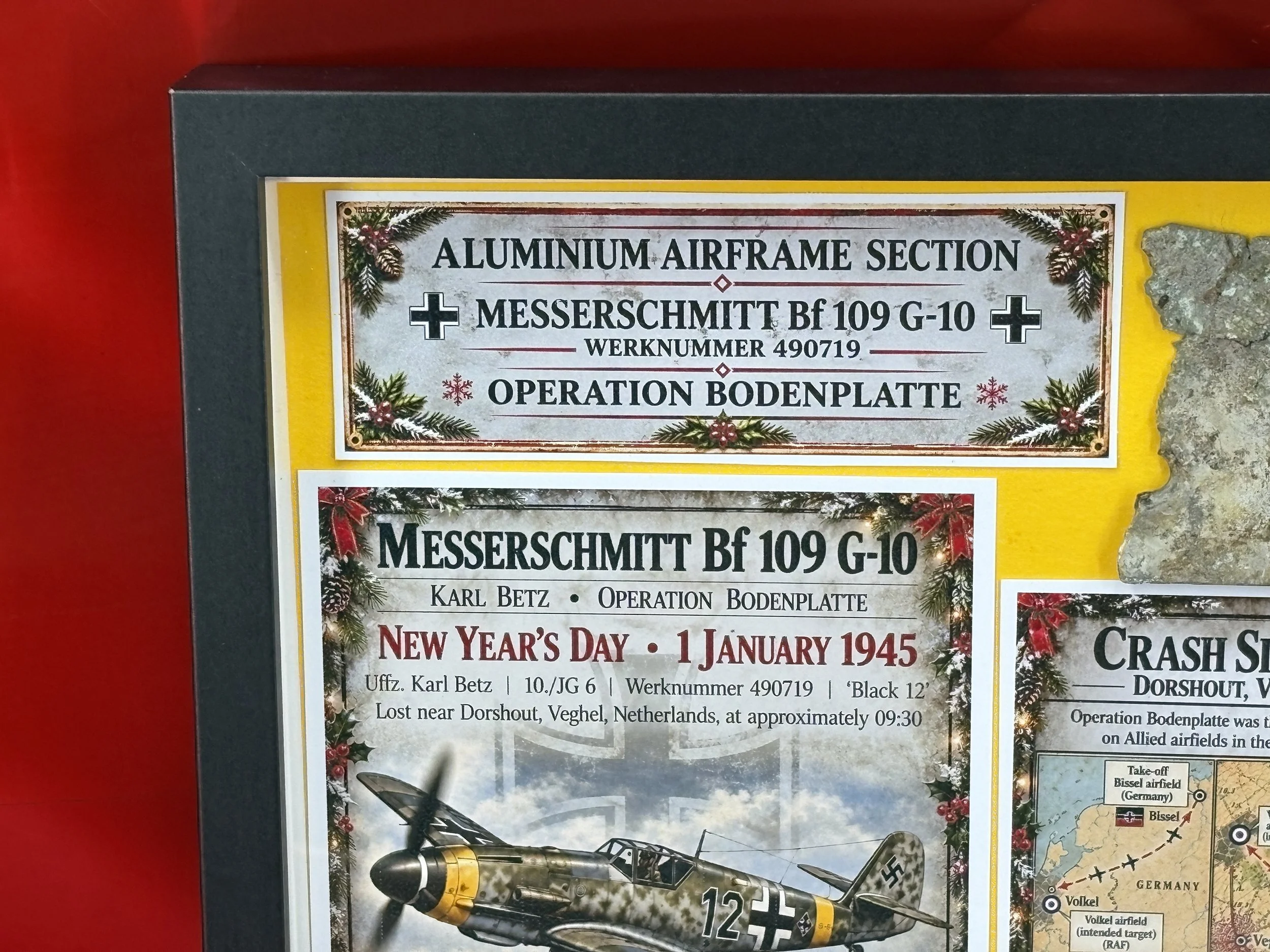 Image 2 of 8
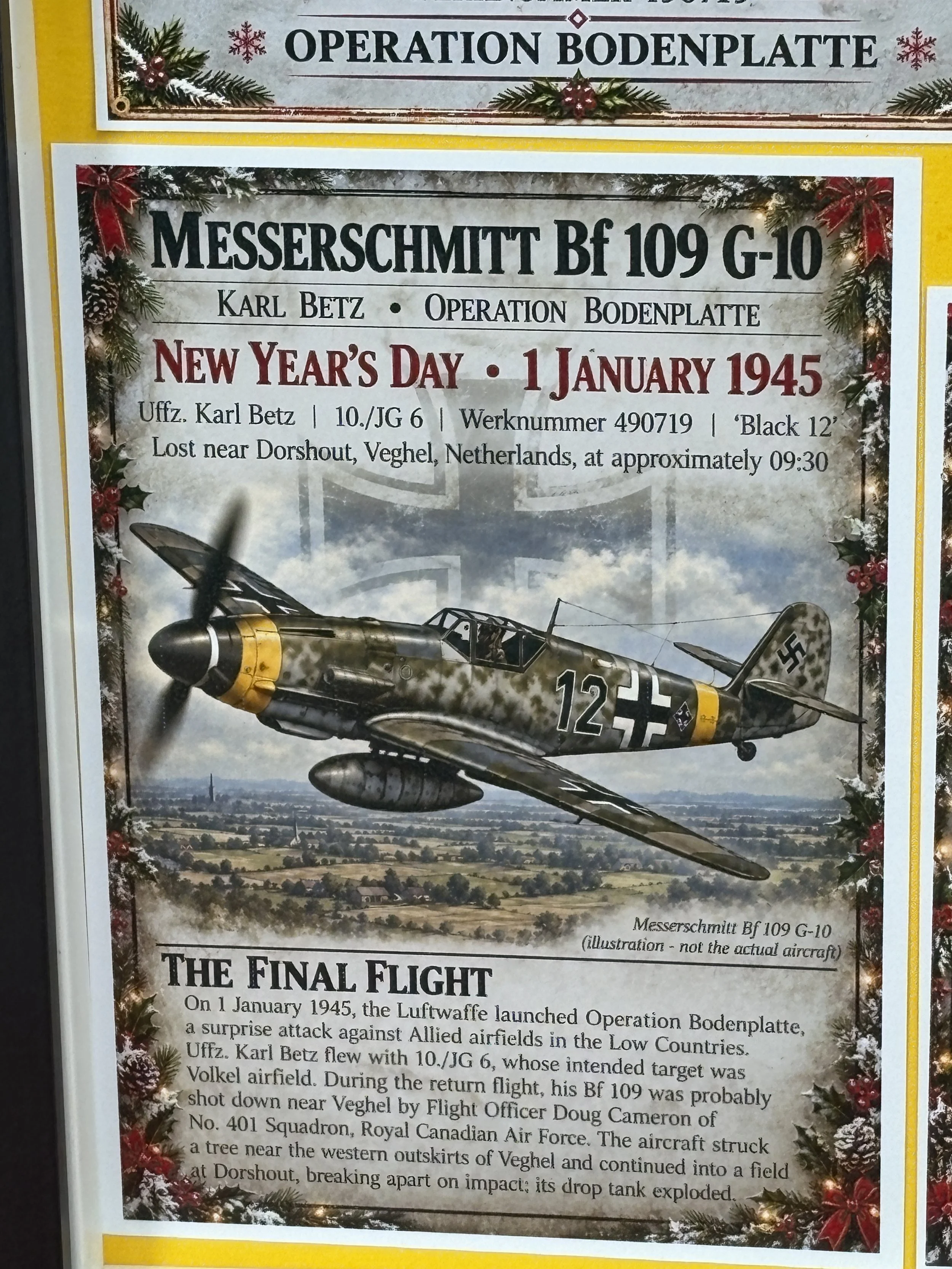 Image 3 of 8
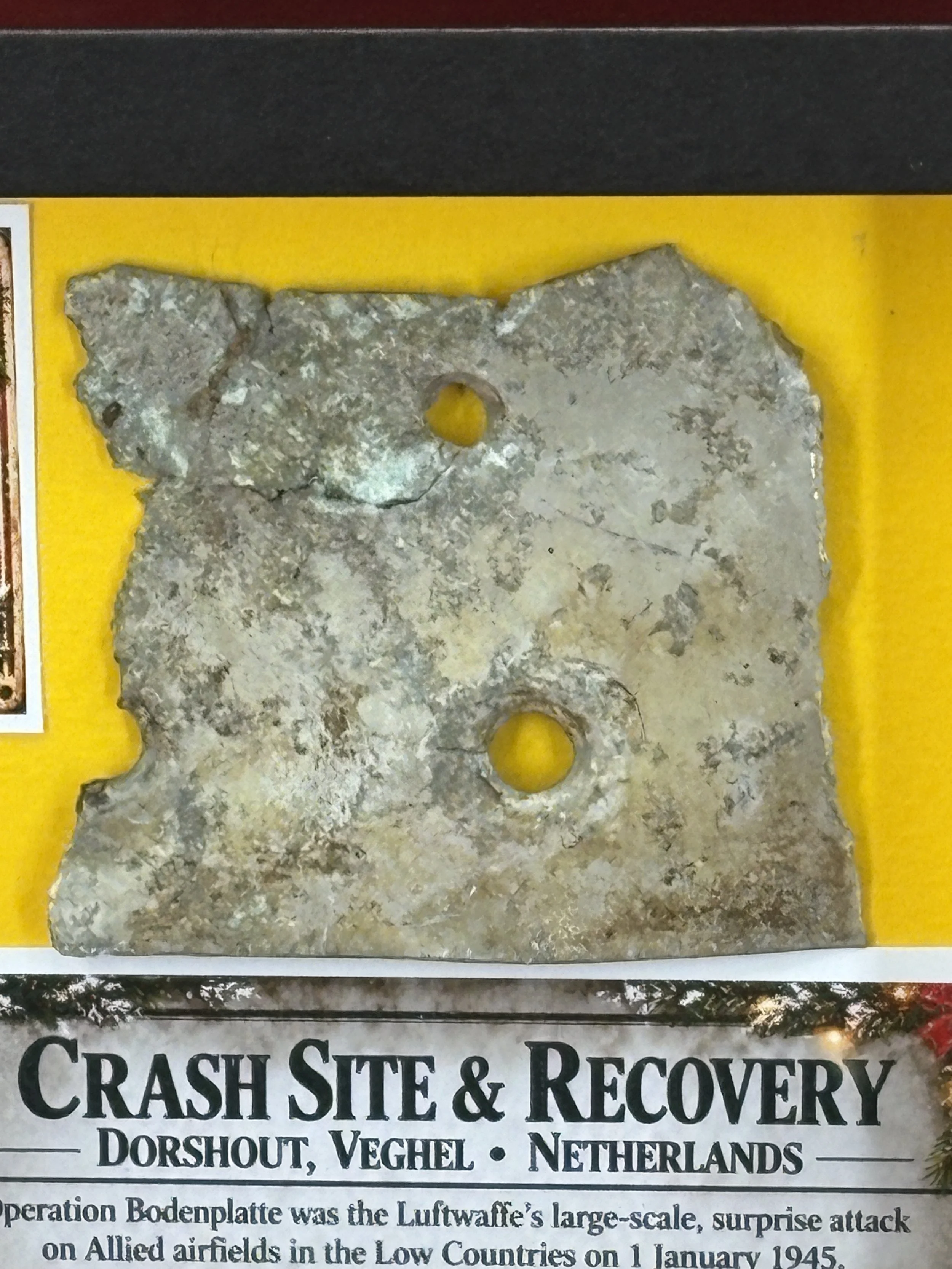 Image 4 of 8
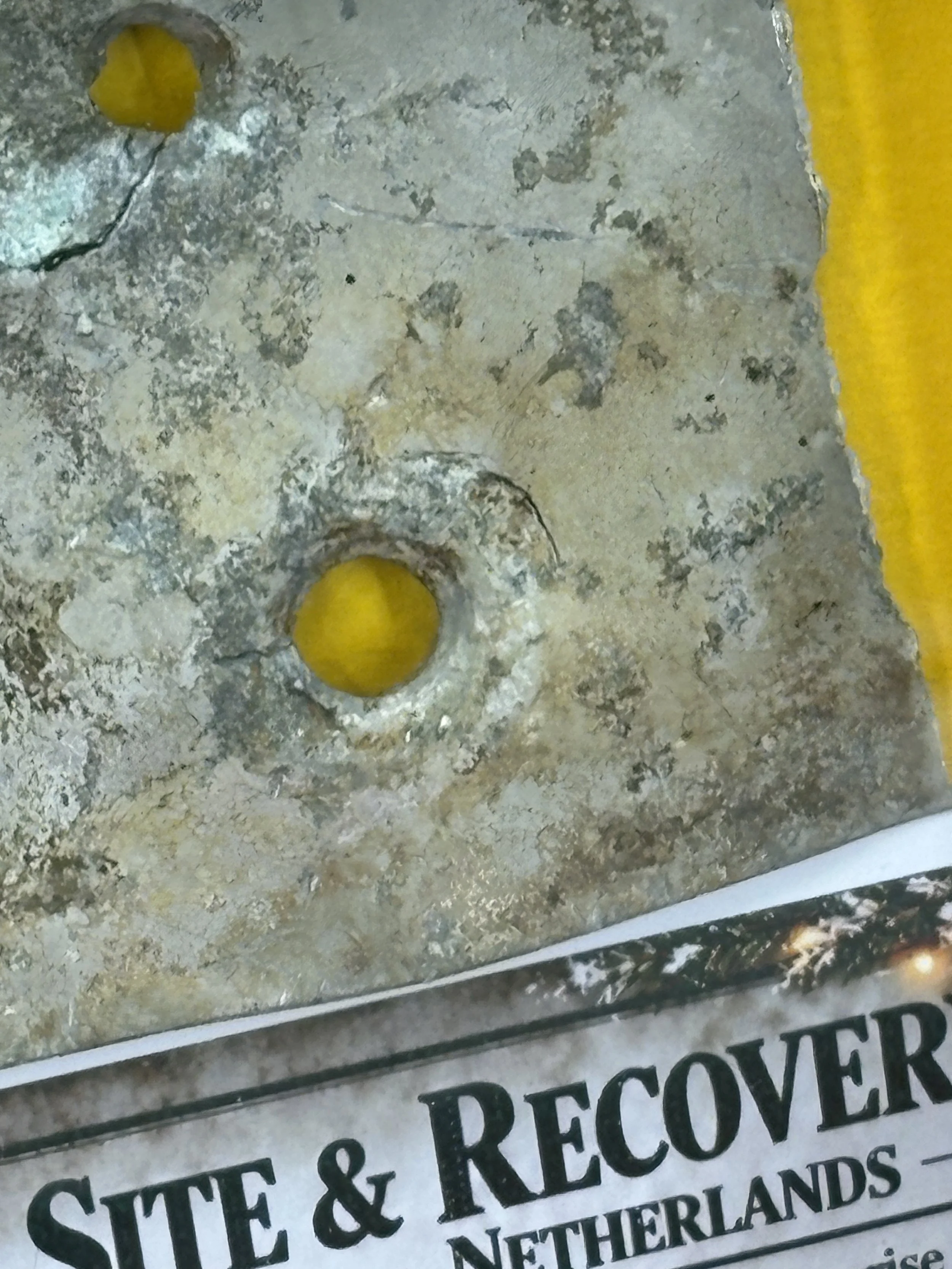 Image 5 of 8
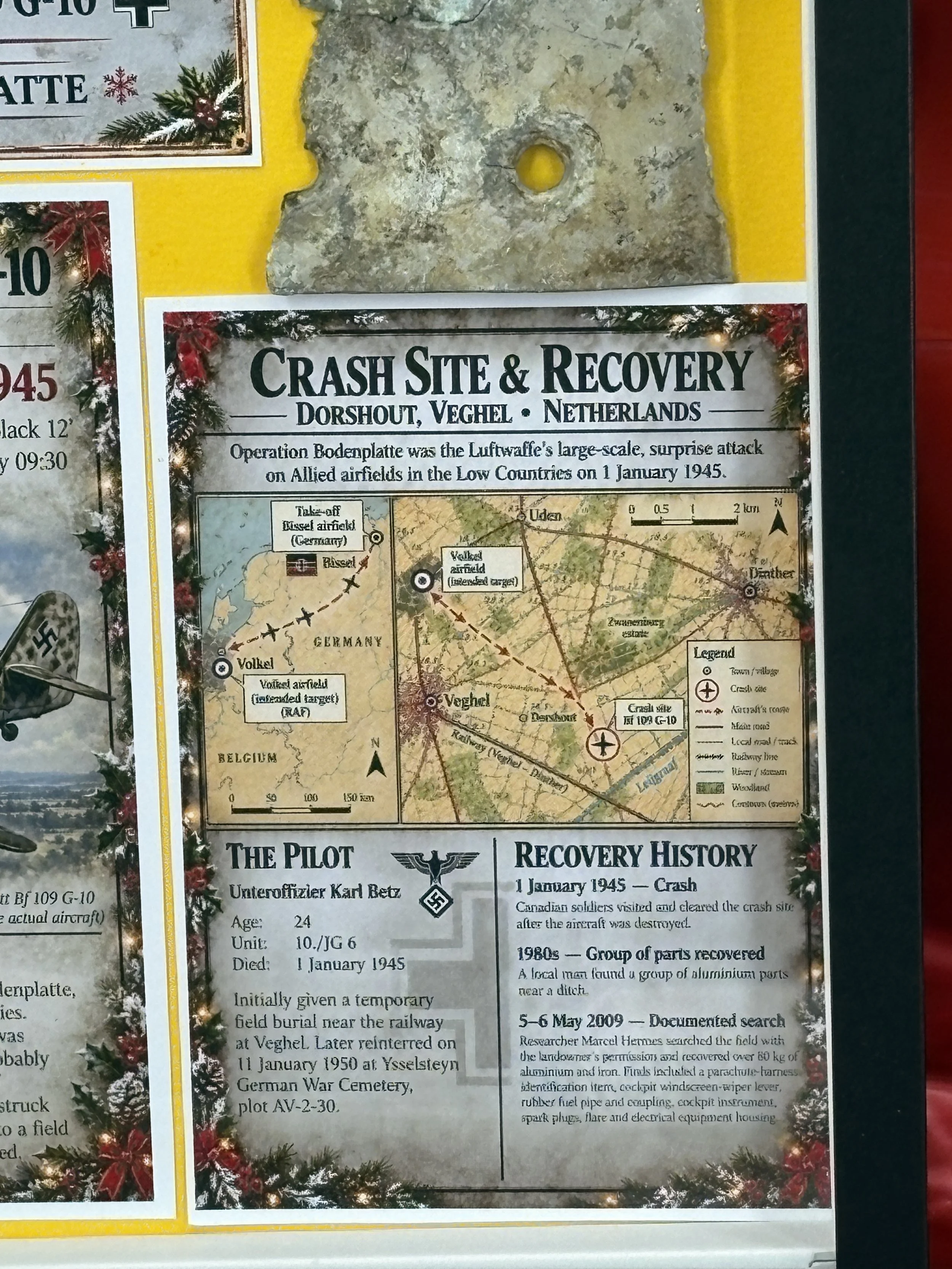 Image 6 of 8
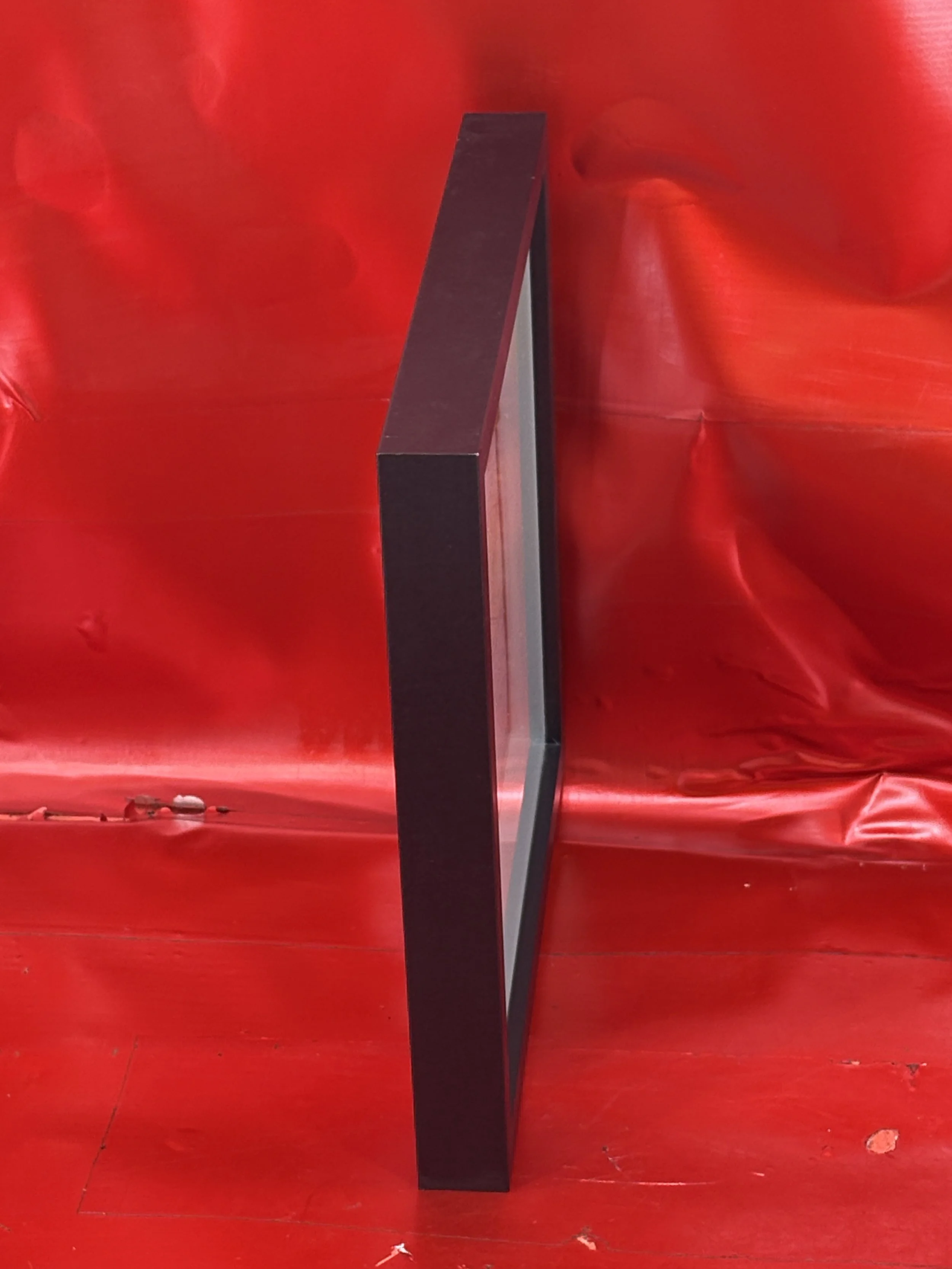 Image 7 of 8
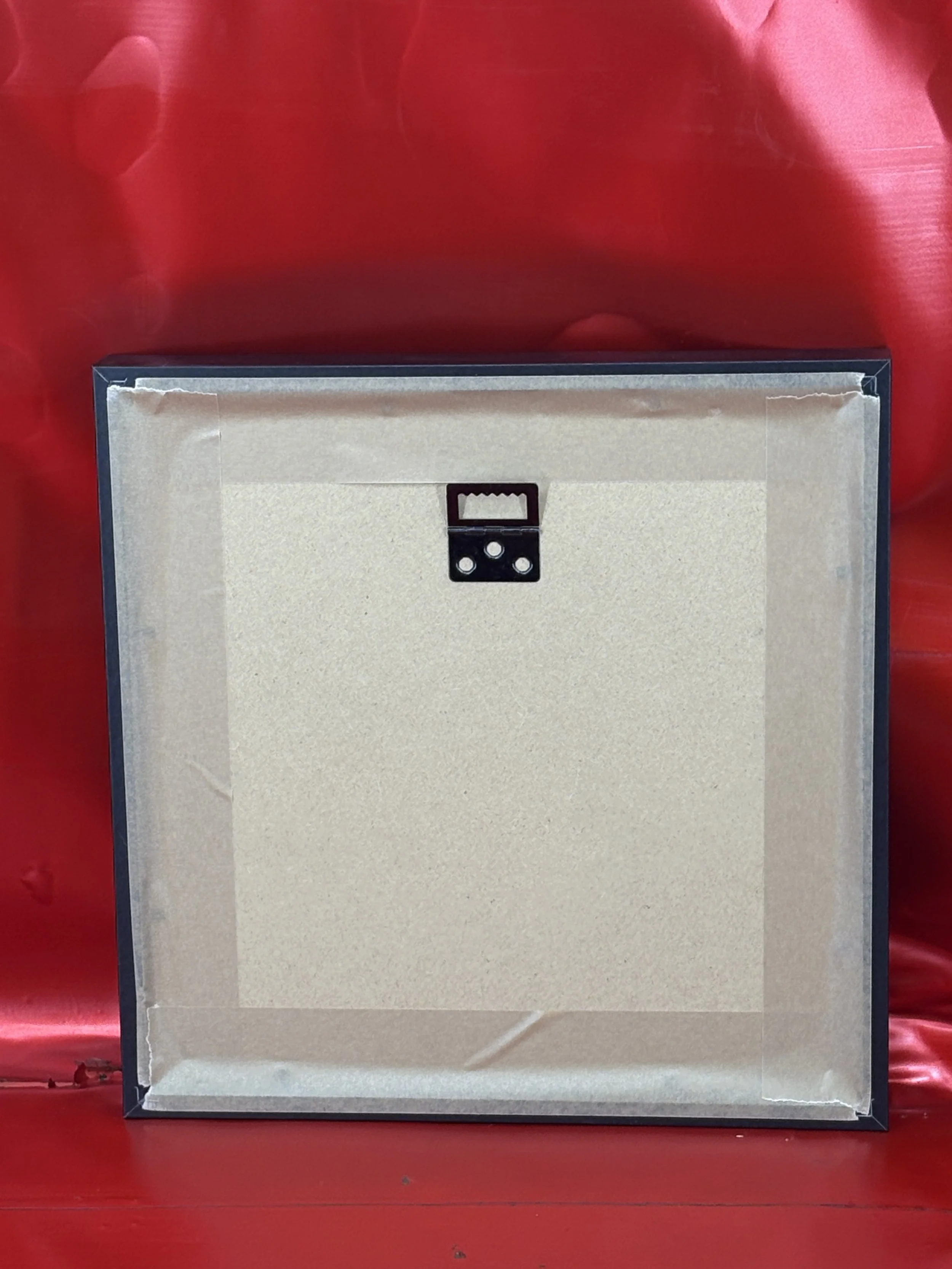 Image 8 of 8