This is a lovely relic condition French F1 hand grenade which are very unusual to find recovered from the battlefield. This is the outer casing only which is empty and inert the metal case has no holes only some light surface rust and pitting and still retains some original colour in places and is perfect for display or rare one for any collection. The grenade which was recovered in woodland where the French and British front lines met at close range to the German trenches at Maricourt on the 1st July 1916 Somme battlefield .This grenade comes with A5 laminated information card.
The French F1 grenade, introduced in May 1915, was a staple World War I defensive weapon known for its iconic cast-iron, deeply grooved "pineapple" body, designed for better grip and controlled fragmentation Developed from 1915 experience for trench warfare, the F1 was intended as a defensive weapon, with its 38-segment body designed to break into fragments, although it often produced fewer than 10 large fragments in practice.
Maricourt village was held by the Allies an attack was launched from this area on the 1st July 1916 at the beginning of the Battles of the Somme offensive, but no major gains were made until a week or so later. Maricourt was the point of junction where the British and French trench lines connected and was a very short distance between the Allied and German front lines. The Village was lost in the German advance of March 1918 and recaptured at the end of the following August.
This is a lovely relic condition French F1 hand grenade which are very unusual to find recovered from the battlefield. This is the outer casing only which is empty and inert the metal case has no holes only some light surface rust and pitting and still retains some original colour in places and is perfect for display or rare one for any collection. The grenade which was recovered in woodland where the French and British front lines met at close range to the German trenches at Maricourt on the 1st July 1916 Somme battlefield .This grenade comes with A5 laminated information card.
The French F1 grenade, introduced in May 1915, was a staple World War I defensive weapon known for its iconic cast-iron, deeply grooved "pineapple" body, designed for better grip and controlled fragmentation Developed from 1915 experience for trench warfare, the F1 was intended as a defensive weapon, with its 38-segment body designed to break into fragments, although it often produced fewer than 10 large fragments in practice.
Maricourt village was held by the Allies an attack was launched from this area on the 1st July 1916 at the beginning of the Battles of the Somme offensive, but no major gains were made until a week or so later. Maricourt was the point of junction where the British and French trench lines connected and was a very short distance between the Allied and German front lines. The Village was lost in the German advance of March 1918 and recaptured at the end of the following August.

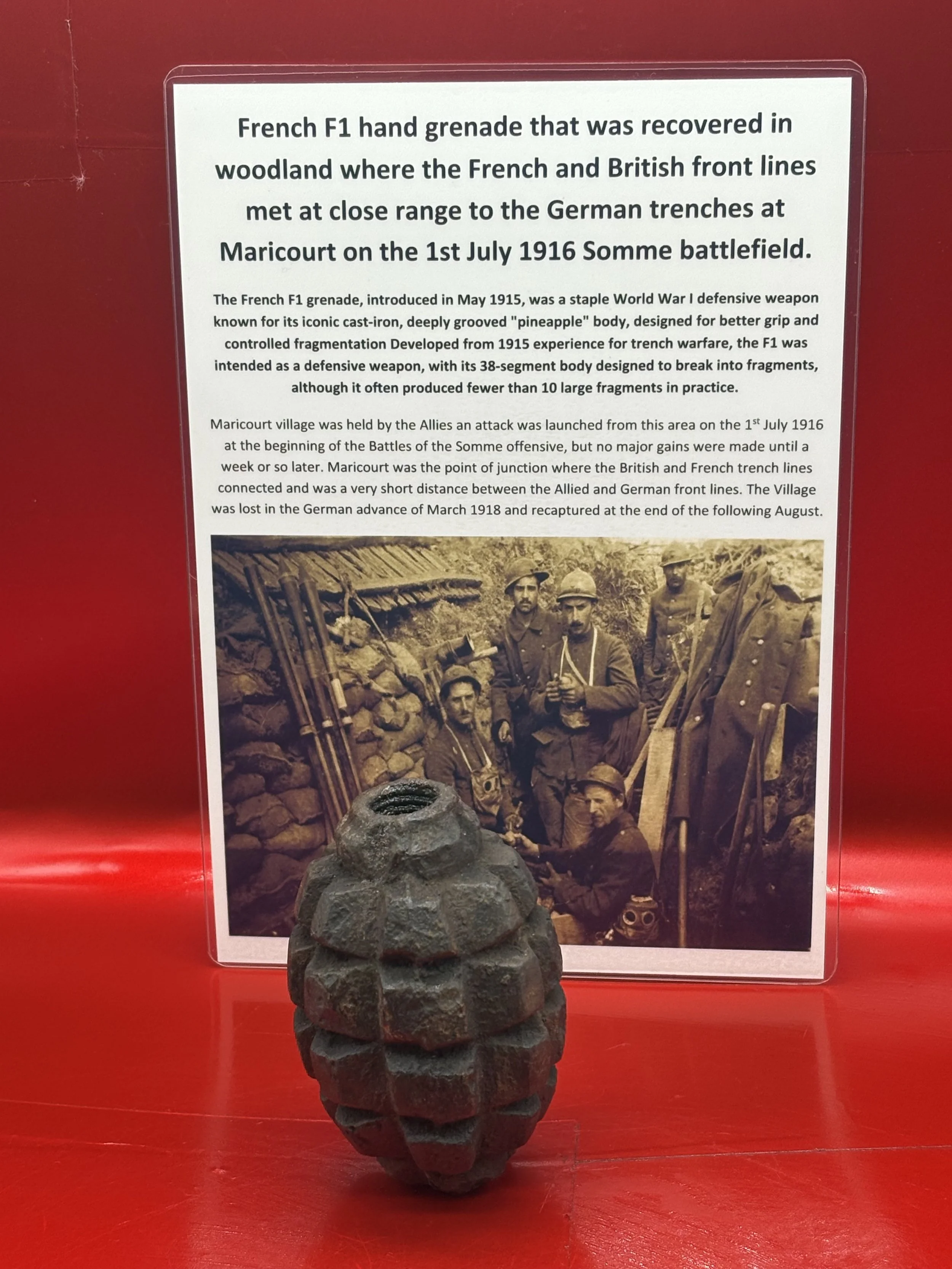 Image 1 of 7
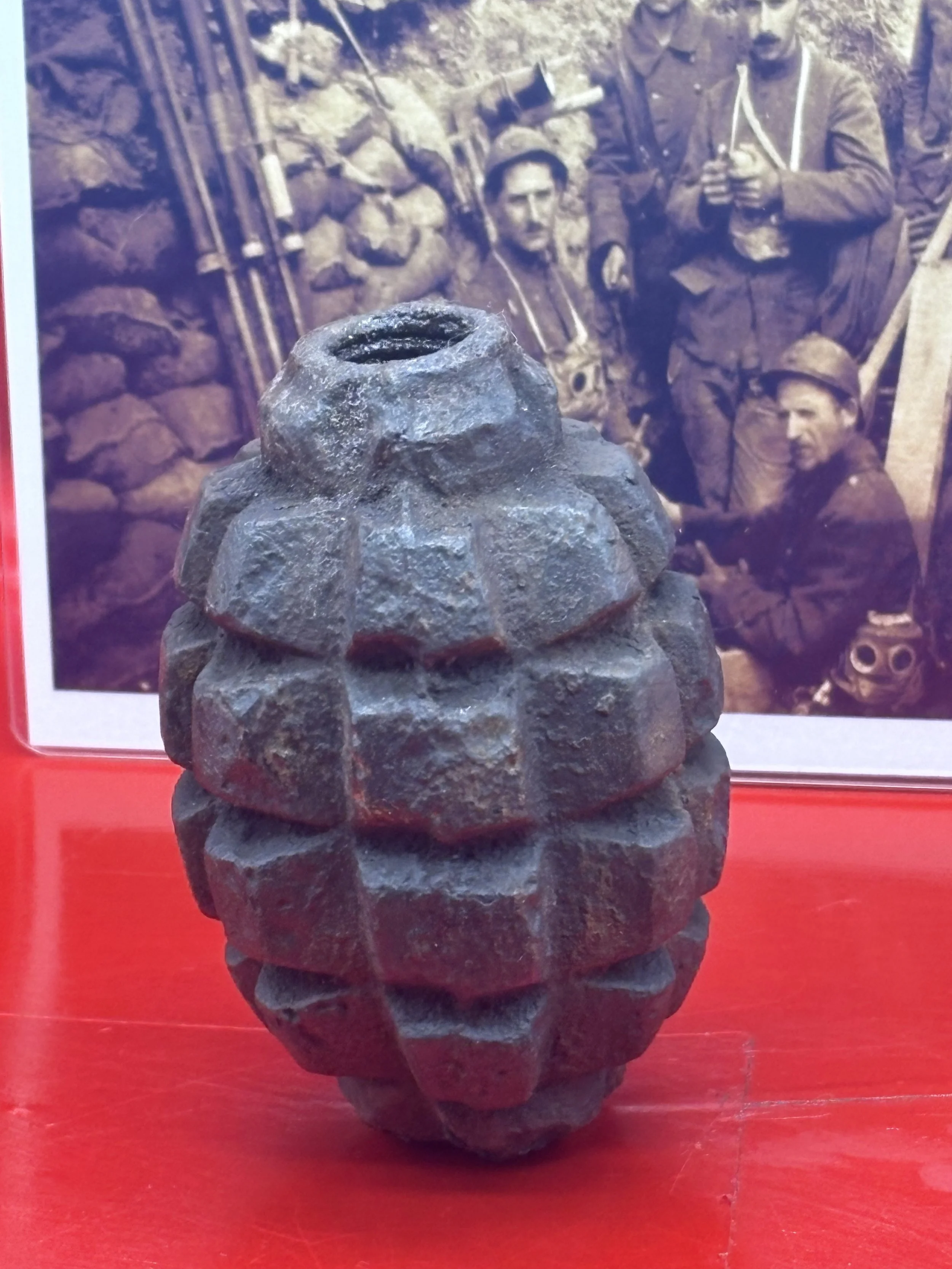 Image 2 of 7
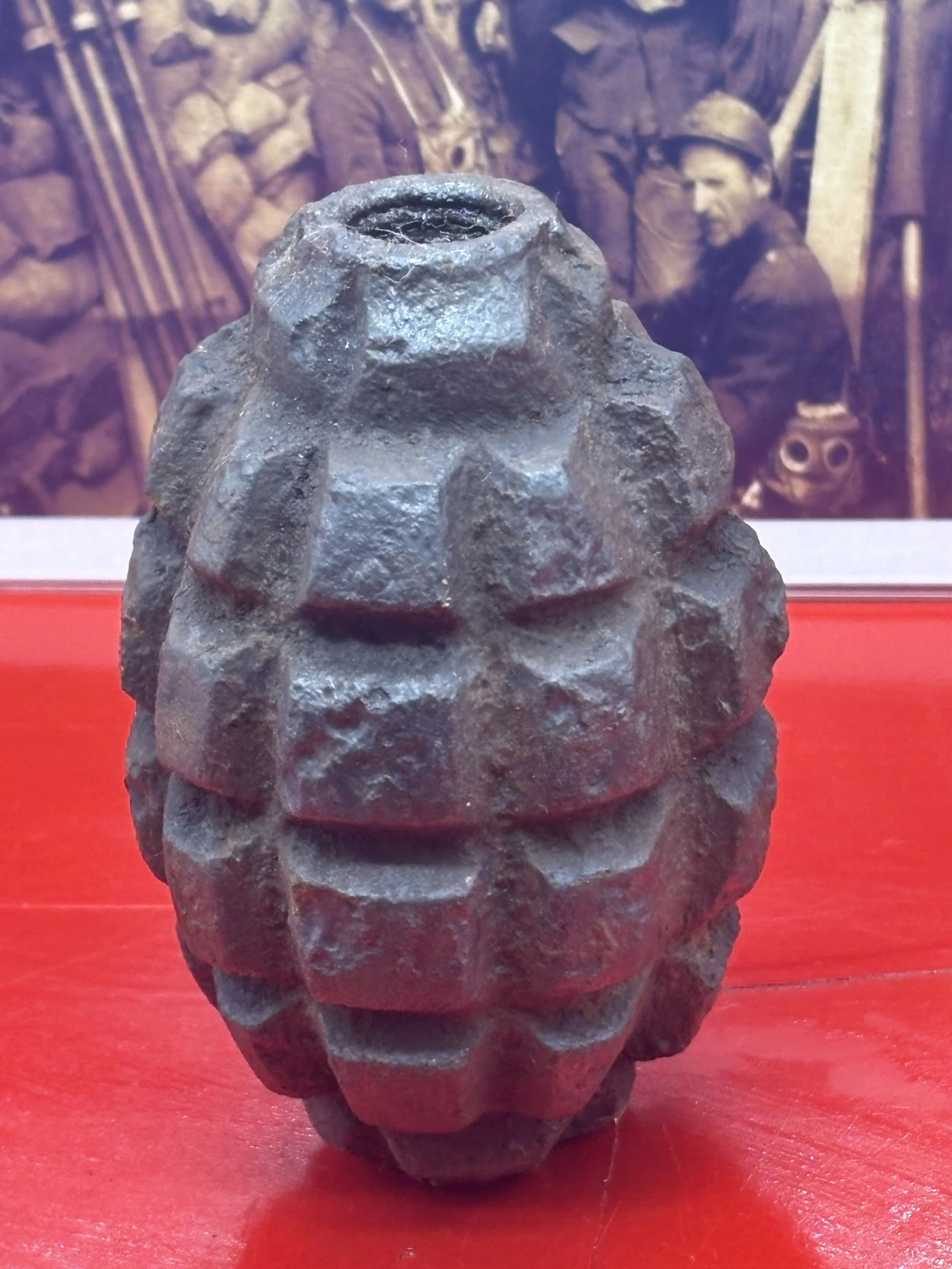 Image 3 of 7
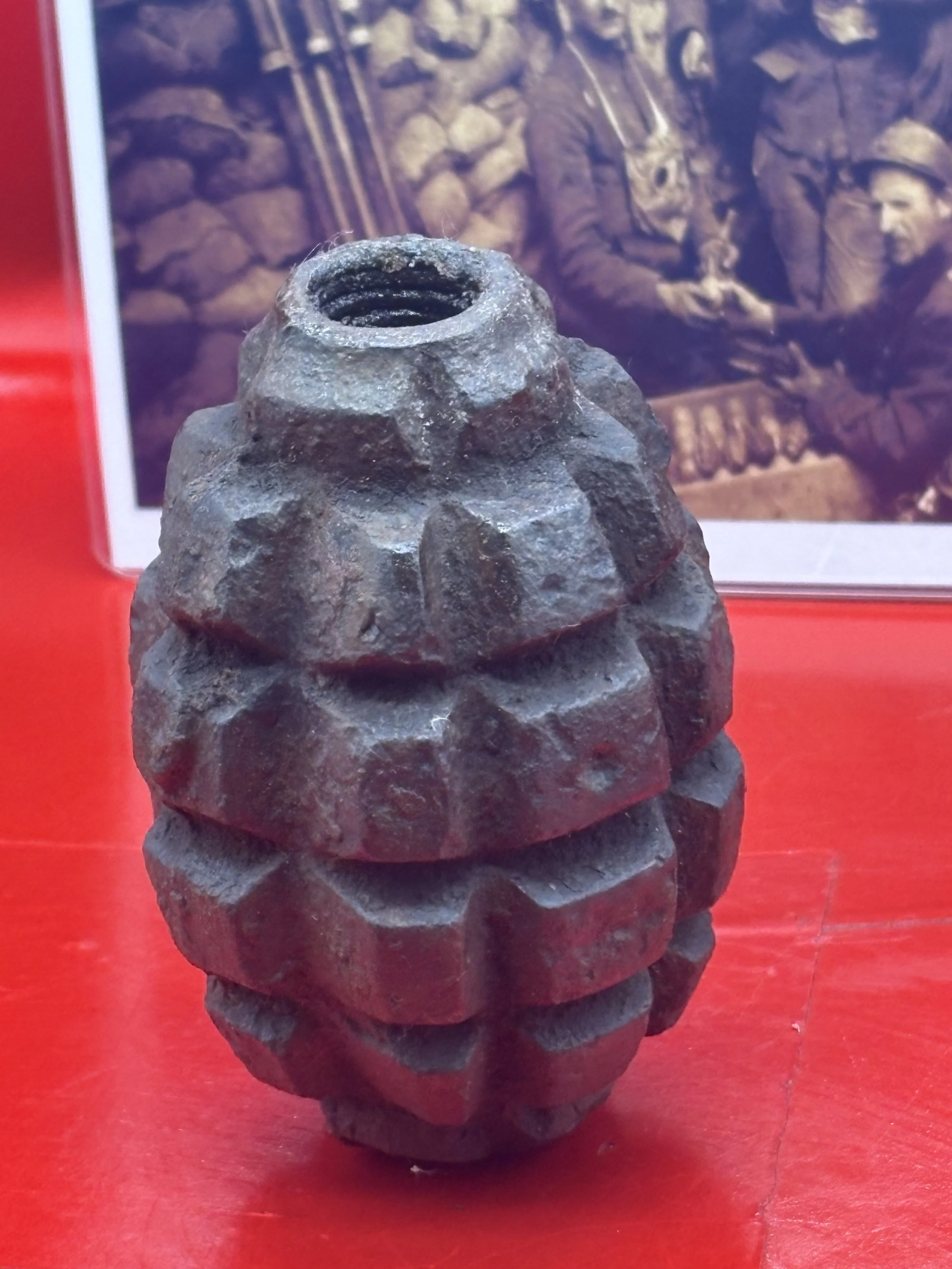 Image 4 of 7
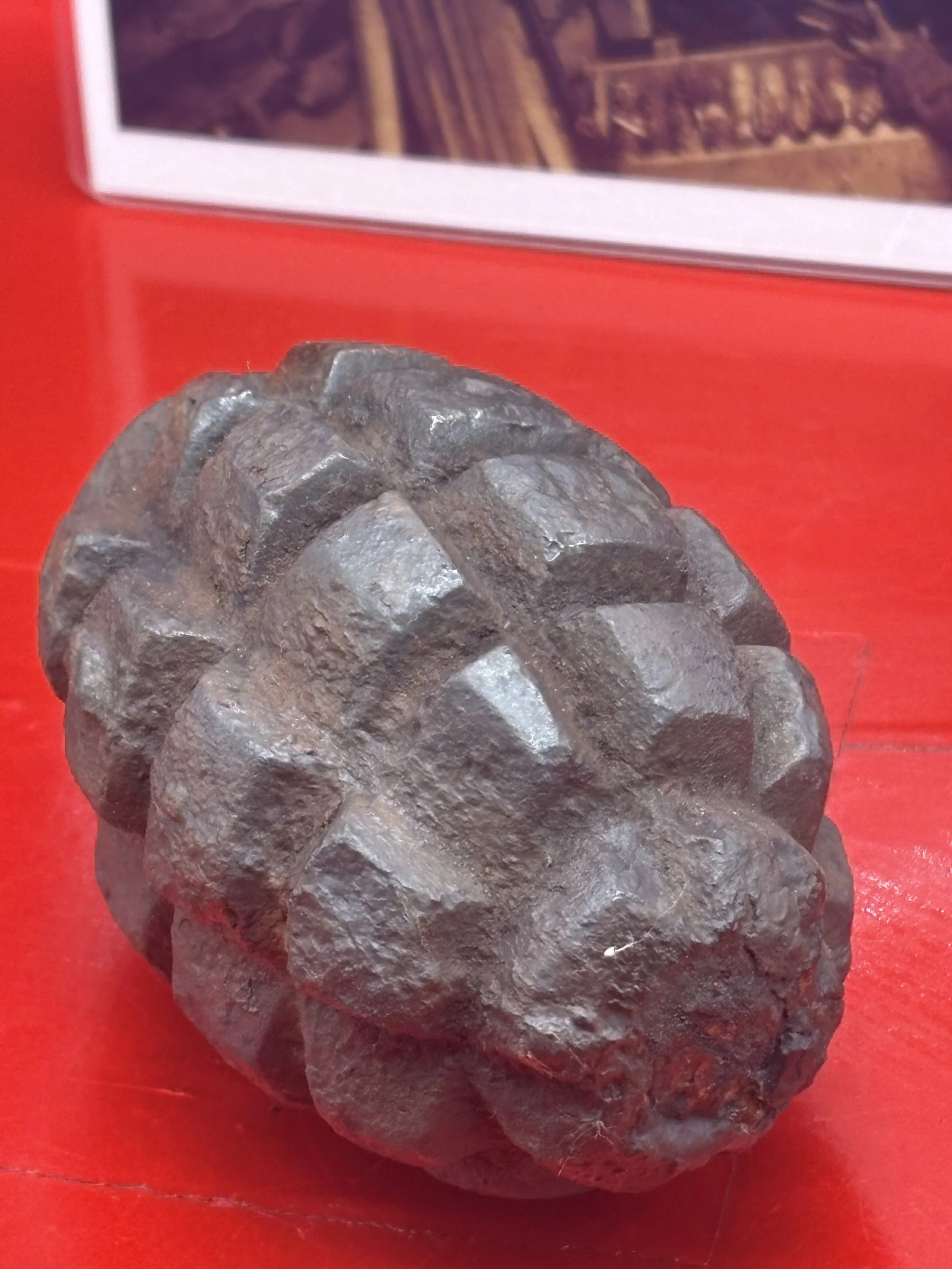 Image 5 of 7
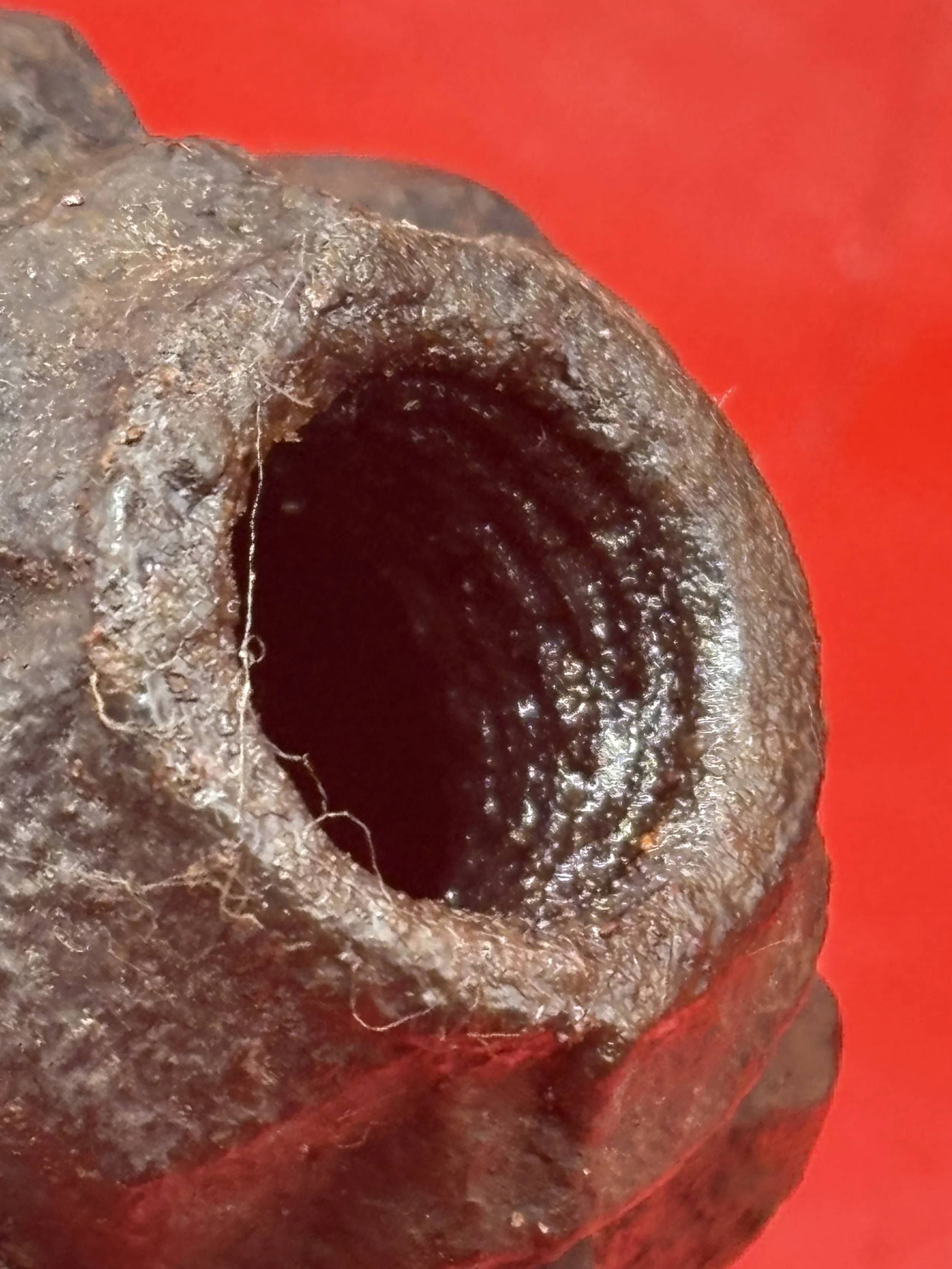 Image 6 of 7
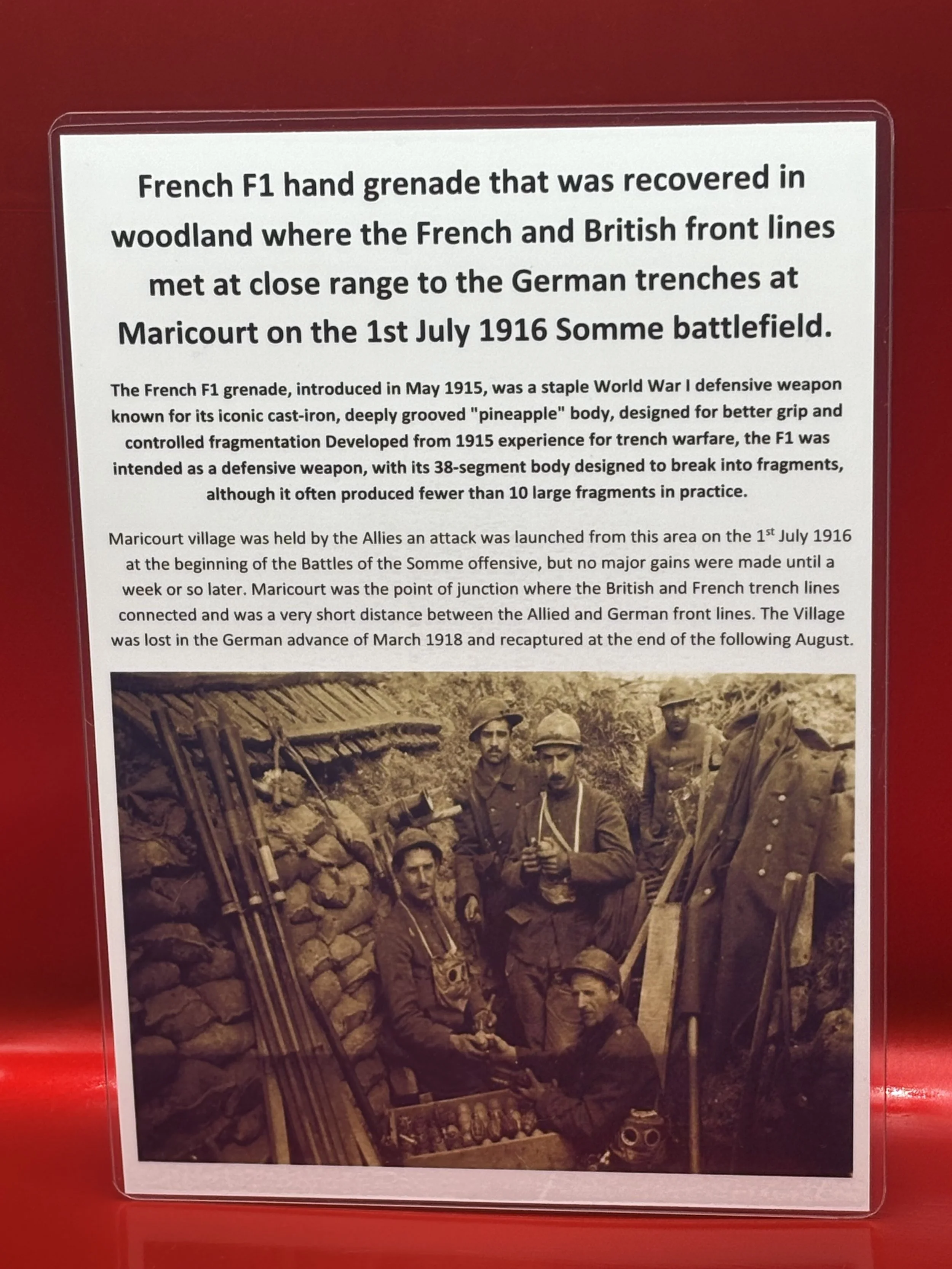 Image 7 of 7