This is a very rare and authentic, glass-framed display featuring an original aircraft airframe section retaining its original green camouflage paintwork, together with an original cockpit control label. The control label is accompanied by a full English translation, identifying its exact location within the aircraft and explaining its function. Both components retain their original wartime finish, with the control label displaying its maker's markings clearly.
The aluminium airframe section has been torn, bent and distorted by the impact of the crash, yet it remains in good, solid condition. The relics have been carefully cleaned and stabilised while preserving their original character, wartime finish and authentic patina.
The relics are attractively presented in a glass-fronted box frame, complete with information about the aircraft, making this an outstanding display piece for any aviation or Second World War collection. The frame measures approximately 13 inches by 13 inches.
The relic is from German Messerschmitt Bf 110 Werknummer 3373 of 1./Erprobungsgruppe 210, which was shot down on 6 September 1940 during the Battle of Britain before crashing at Crowhurst, Surrey.
The aircraft was flown by 24-year-old Unteroffizier Gerhard Rüger (pictured below) with his 20-year-old gunner, Gefreiter Edmund Ernst. It is believed the aircraft was intercepted and shot down by Pilot Officer Dibnah of No. 1 Squadron RAF. Much of the combat took place over Redhill and Godstone. Pilot Officer Dibnah first carried out a beam attack on the Messerschmitt Bf 110 before making a second, head-on attack. As he passed Rüger's aircraft, it was seen to enter a spiral dive before crashing near Crowhurst.
Although the wreckage was recovered shortly after the crash, local accounts have long suggested that the remains of Gerhard Rüger may have been buried in an unmarked grave close to the crash site. However, this has never been conclusively verified, and the official historical records list Unteroffizier Gerhard Rüger as Missing in Action (MIA).
This is a very rare and authentic, glass-framed display featuring an original aircraft airframe section retaining its original green camouflage paintwork, together with an original cockpit control label. The control label is accompanied by a full English translation, identifying its exact location within the aircraft and explaining its function. Both components retain their original wartime finish, with the control label displaying its maker's markings clearly.
The aluminium airframe section has been torn, bent and distorted by the impact of the crash, yet it remains in good, solid condition. The relics have been carefully cleaned and stabilised while preserving their original character, wartime finish and authentic patina.
The relics are attractively presented in a glass-fronted box frame, complete with information about the aircraft, making this an outstanding display piece for any aviation or Second World War collection. The frame measures approximately 13 inches by 13 inches.
The relic is from German Messerschmitt Bf 110 Werknummer 3373 of 1./Erprobungsgruppe 210, which was shot down on 6 September 1940 during the Battle of Britain before crashing at Crowhurst, Surrey.
The aircraft was flown by 24-year-old Unteroffizier Gerhard Rüger (pictured below) with his 20-year-old gunner, Gefreiter Edmund Ernst. It is believed the aircraft was intercepted and shot down by Pilot Officer Dibnah of No. 1 Squadron RAF. Much of the combat took place over Redhill and Godstone. Pilot Officer Dibnah first carried out a beam attack on the Messerschmitt Bf 110 before making a second, head-on attack. As he passed Rüger's aircraft, it was seen to enter a spiral dive before crashing near Crowhurst.
Although the wreckage was recovered shortly after the crash, local accounts have long suggested that the remains of Gerhard Rüger may have been buried in an unmarked grave close to the crash site. However, this has never been conclusively verified, and the official historical records list Unteroffizier Gerhard Rüger as Missing in Action (MIA).

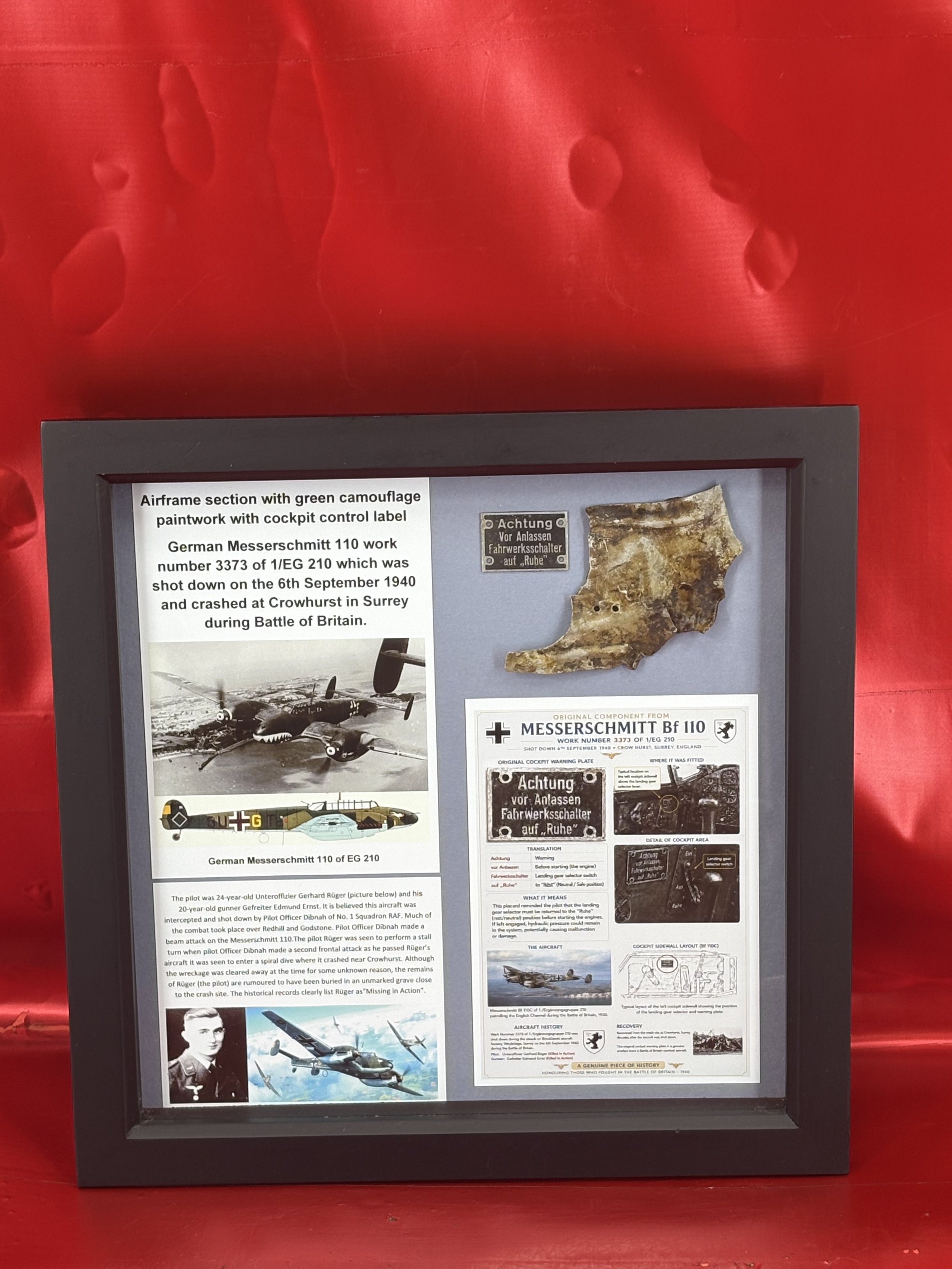 Image 1 of 10
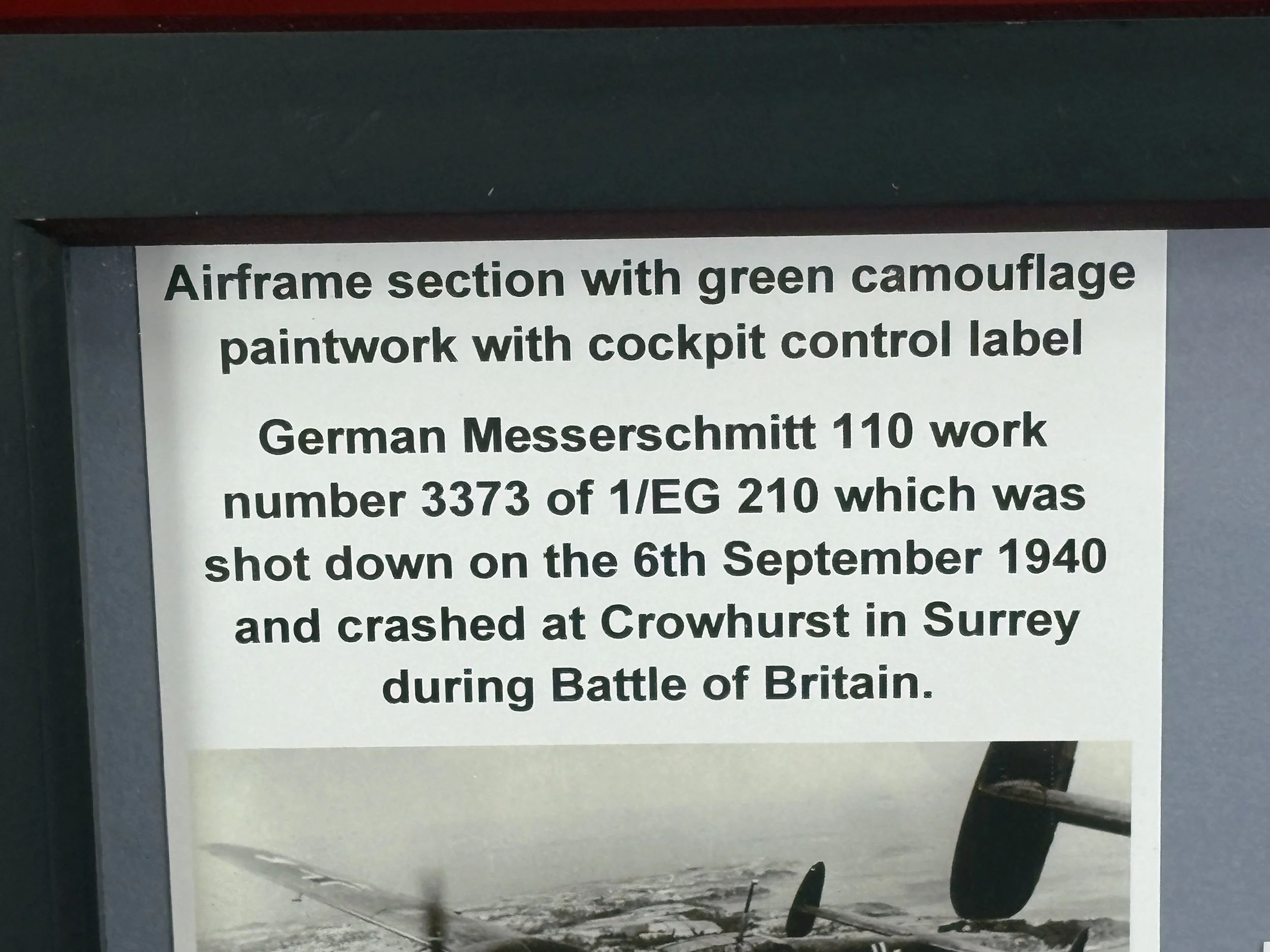 Image 2 of 10
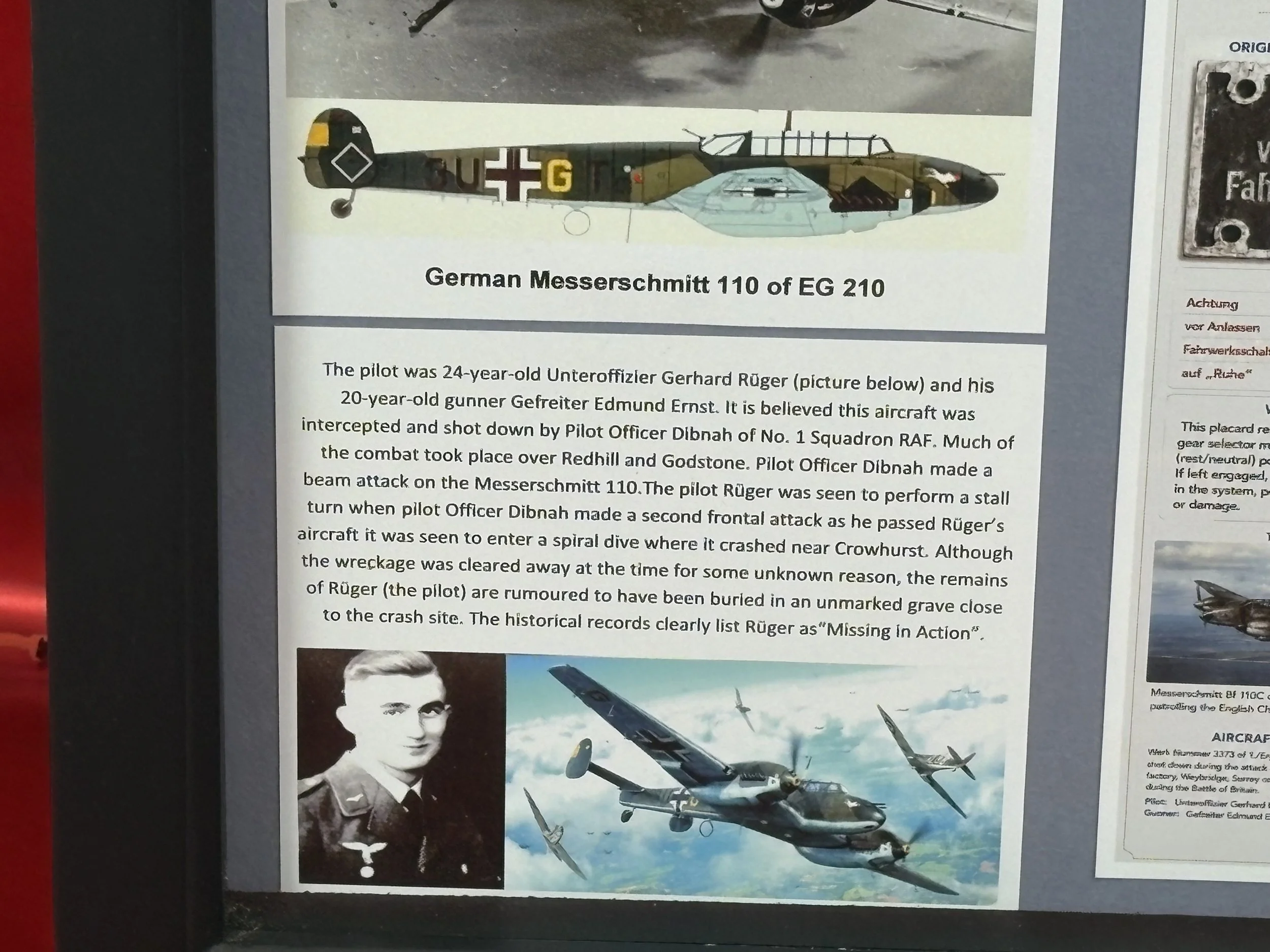 Image 3 of 10
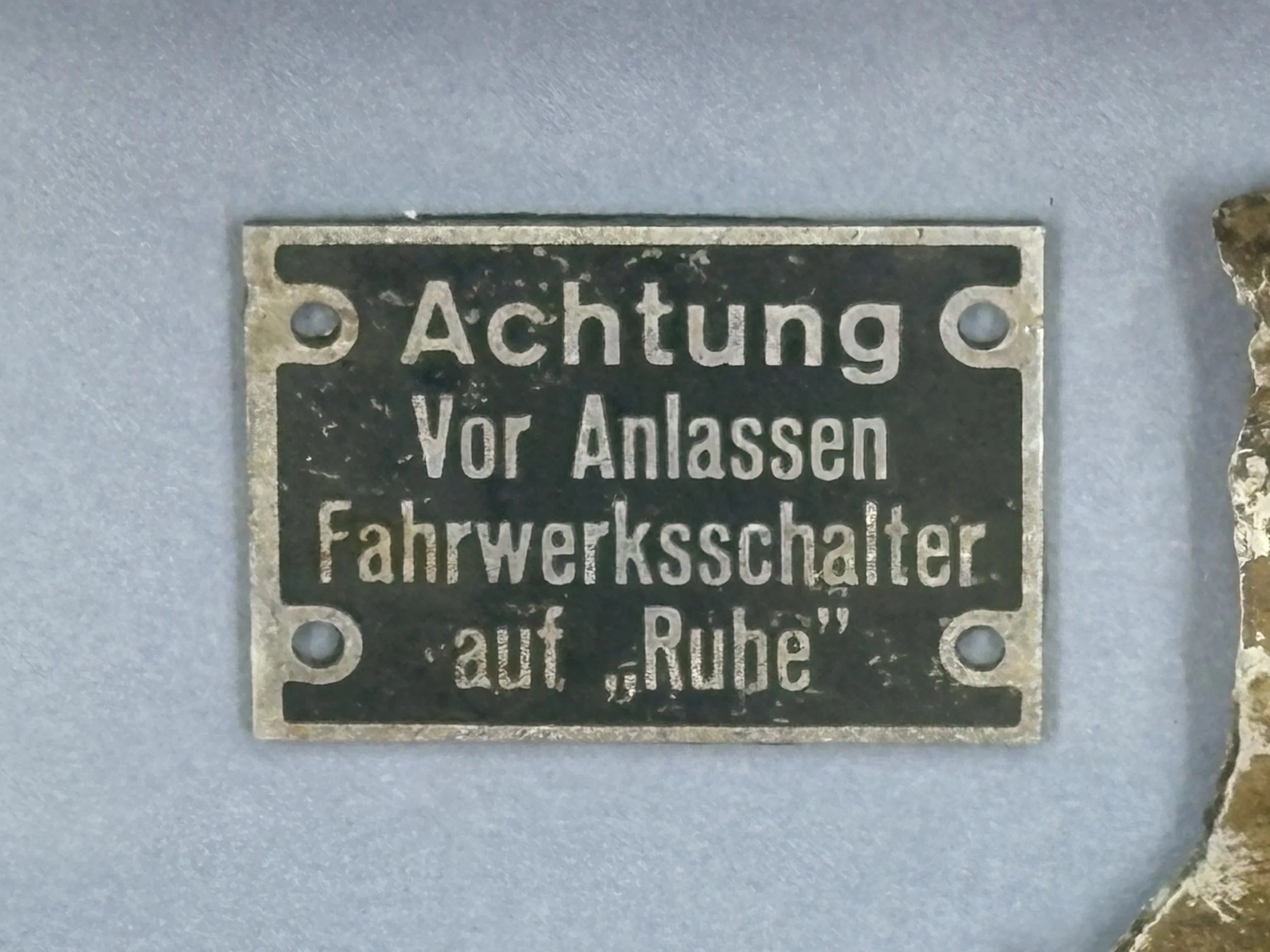 Image 4 of 10
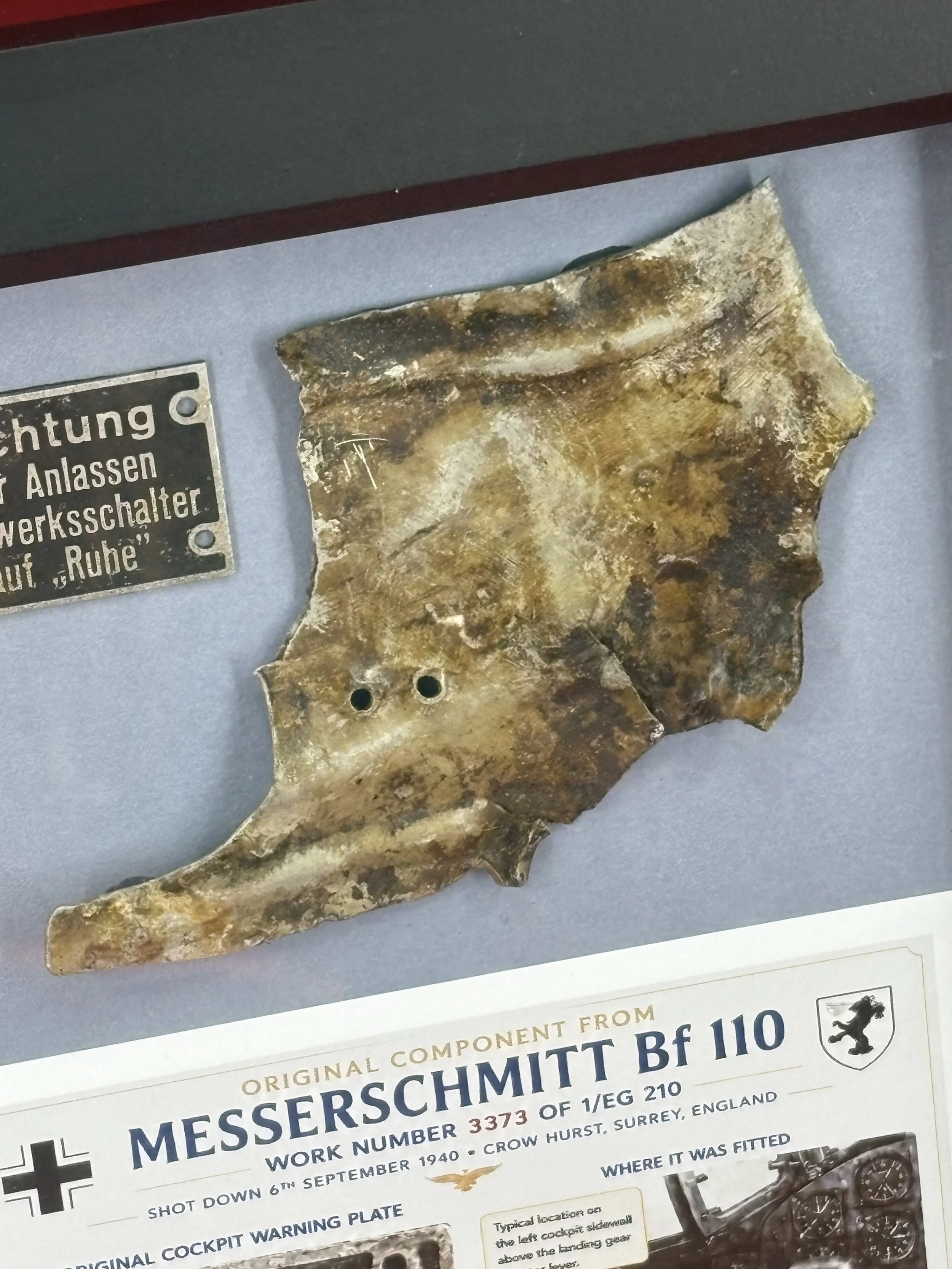 Image 5 of 10
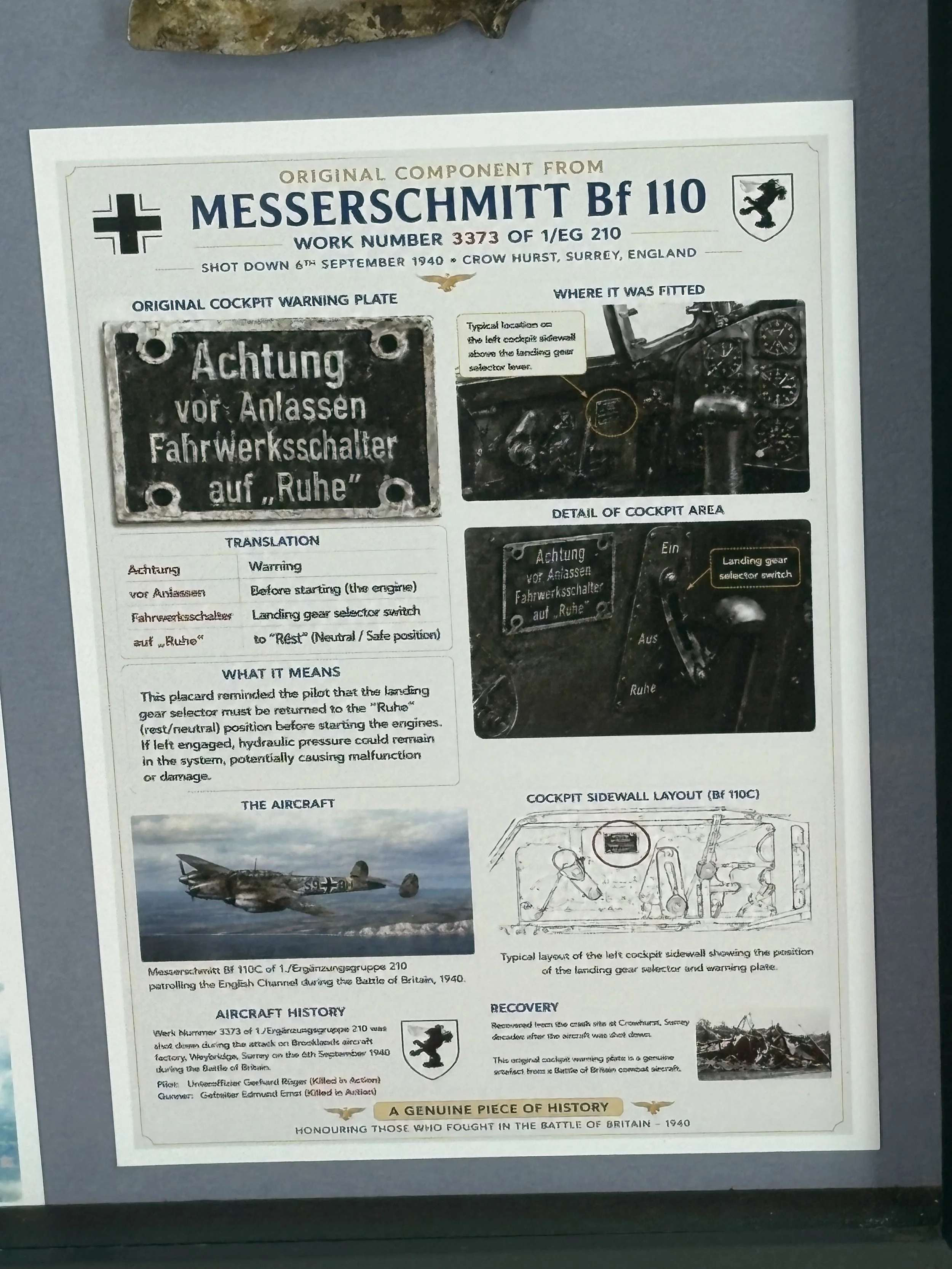 Image 6 of 10
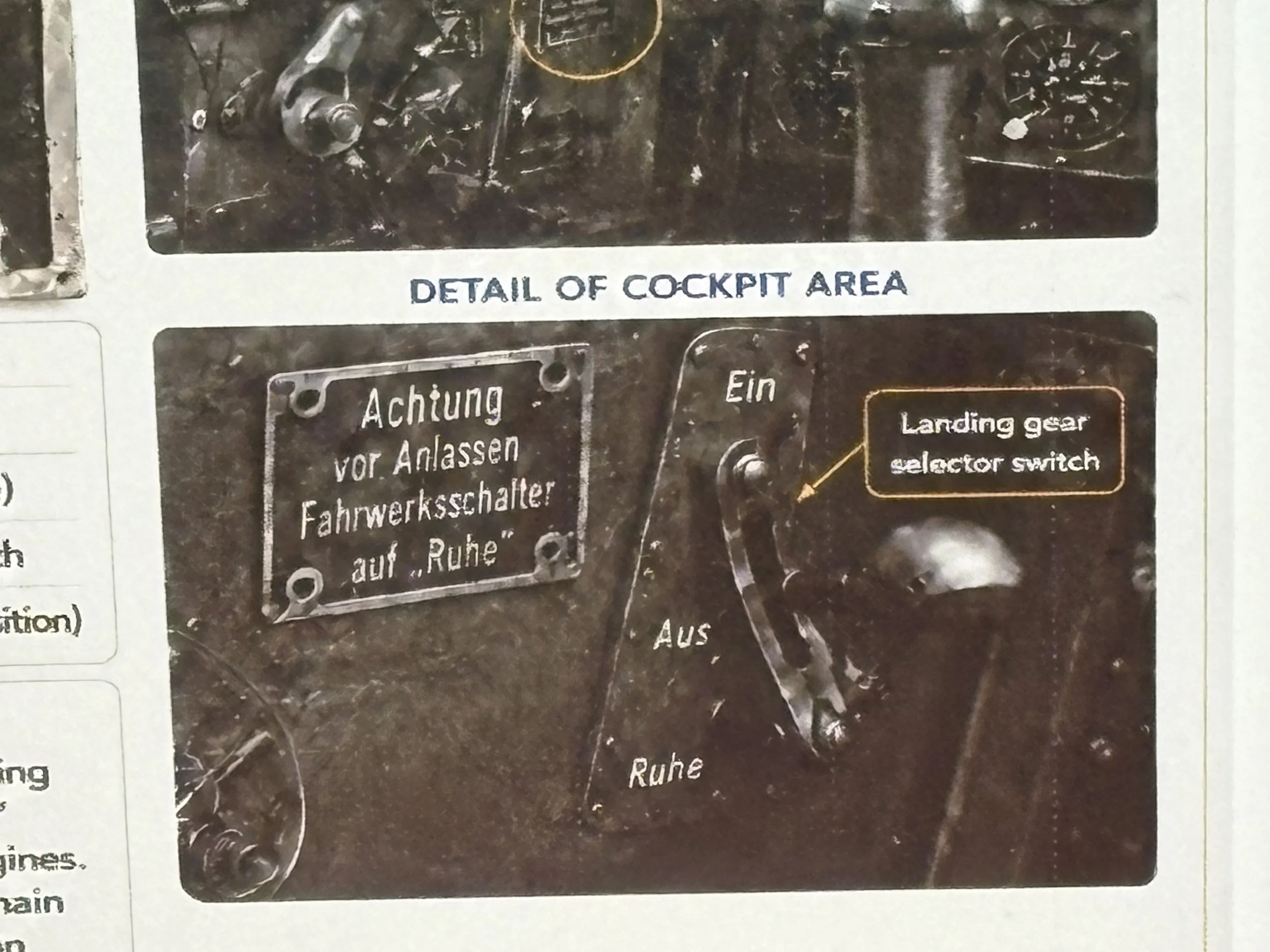 Image 7 of 10
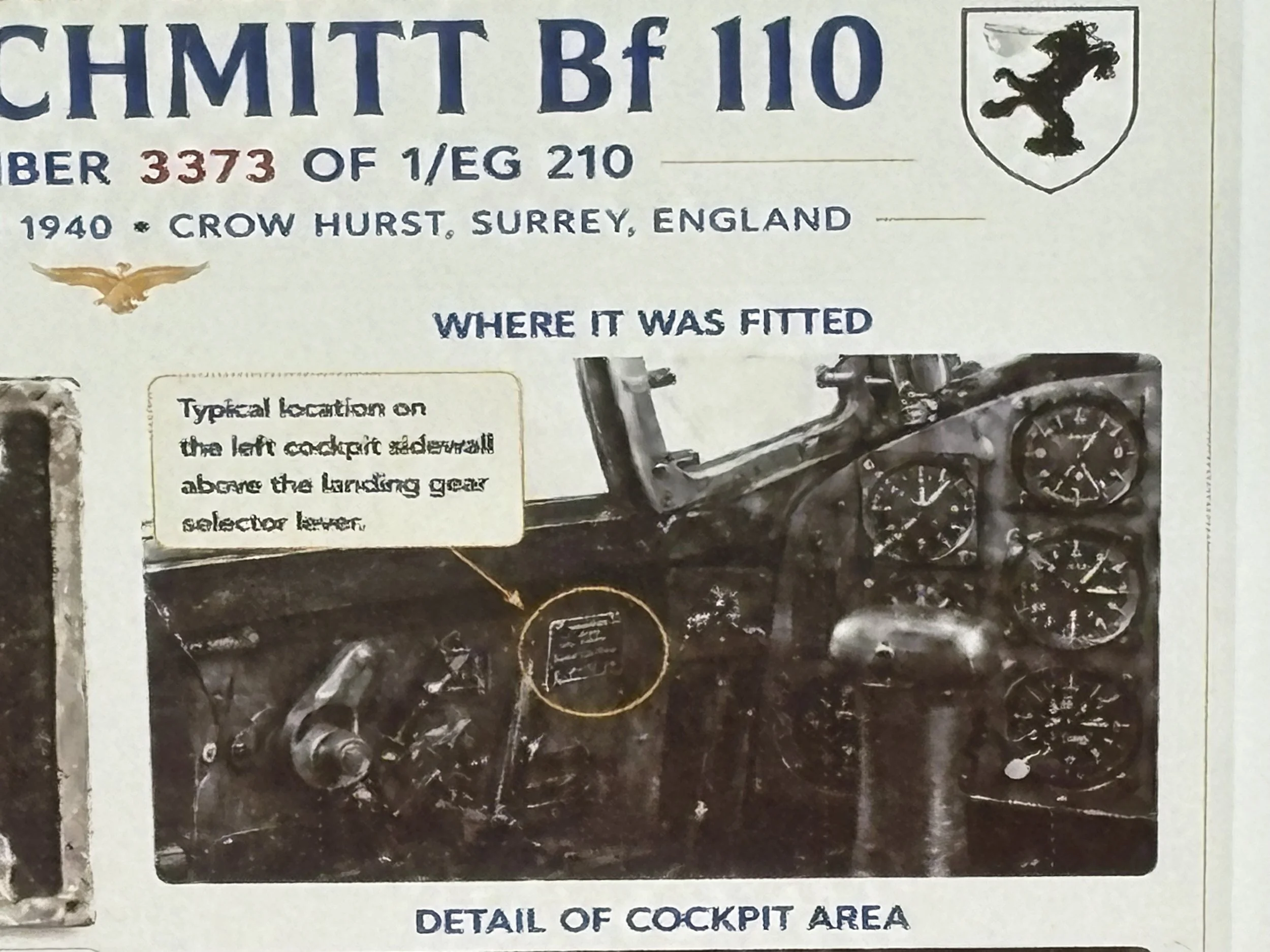 Image 8 of 10
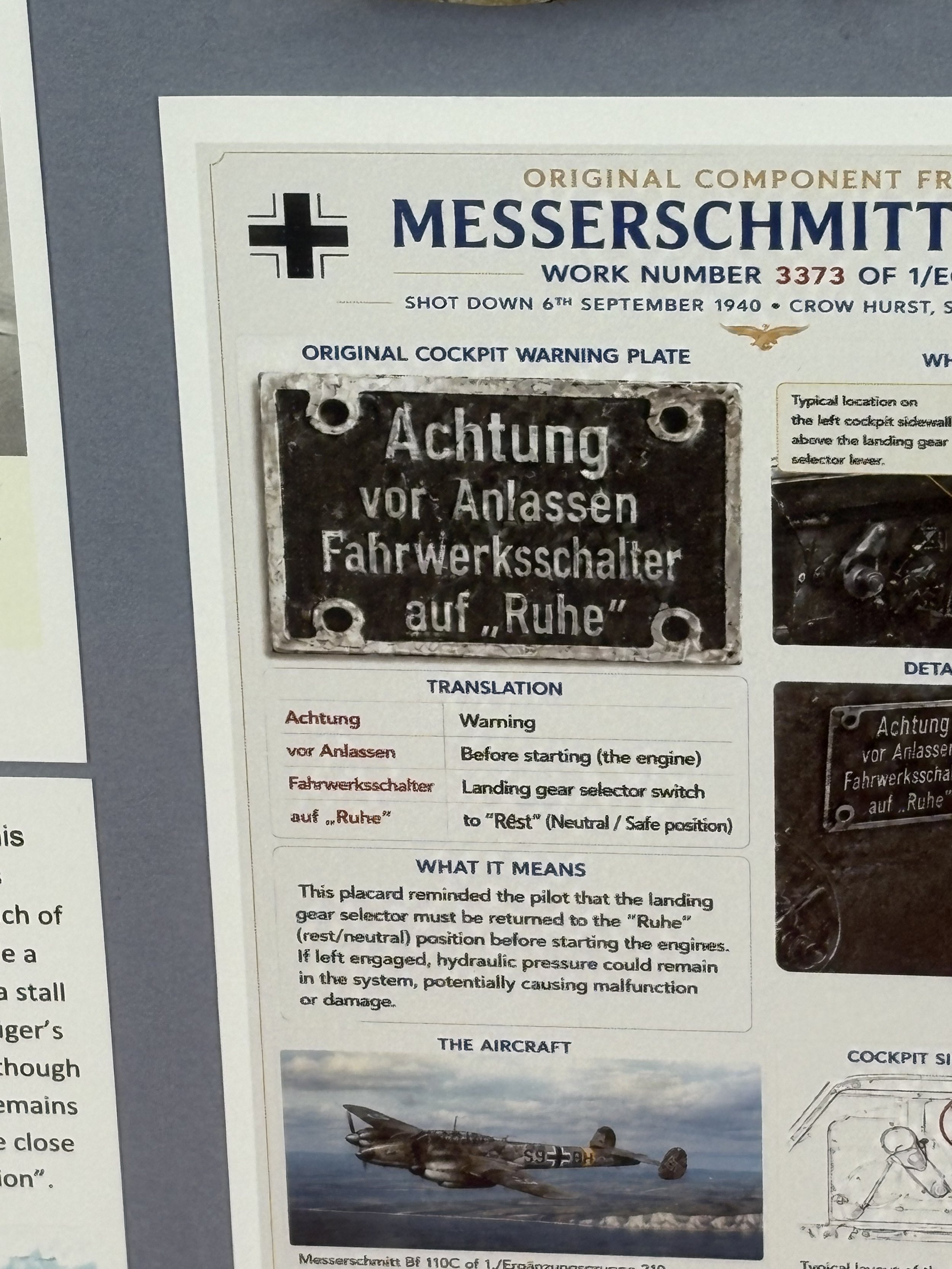 Image 9 of 10
 Image 10 of 10