Sale Price:
£45.00
Original Price:
£60.00
This is an original, large Perspex-framed collection comprising the memorial paperwork of Oberschütze (Senior Rifleman/Private First Class) Matthias Fruth (1918–1940). The display includes his German Second World War death card (Sterbebild or Totenzettel), together with the original funeral memorial booklet, all professionally mounted with English translations and historical information.
Both original paper items remain in remarkably good condition. They are clean, solid and stable, with no signs of crumbling or significant deterioration. They have been attractively mounted in a large Perspex-fronted display frame measuring approximately 16 inches by 12 inches, making this an impressive display piece for any Second World War or militaria collection.
German World War II death cards (Sterbebilder or Totenzettel) were memorial cards produced by the families of soldiers who had been killed, gone missing or died during military service. They were commonly distributed at funerals or sent to relatives and friends as a lasting tribute to the deceased.
This collection relates to Oberschütze Matthias Fruth, a 22-year-old soldier serving with the 20th Infantry Regiment, part of the 20th Infantry Division (Motorised). Alongside the death card is his original folded funeral memorial booklet, which was distributed during his funeral service.
Biographical Information
Matthias Fruth was born in 1918 and came from a farming family in Eckertshof, Germany. The memorial booklet describes him as hardworking, deeply religious and devoted to both his family and his military service. He entered the German Army shortly after the outbreak of the Second World War in 1939.
His portrait photograph clearly shows shoulder straps bearing the number 20, identifying his service with the 20th Infantry Regiment of the 20th Infantry Division (Motorised).
Campaign Service
As a member of the 20th Infantry Division (Motorised), Fruth may have taken part in the German invasion of Poland in 1939 and the Battle of France during May and June 1940. The division formed part of Germany's highly mobile forces employed during the early Blitzkrieg campaigns.
Death and Funeral
The memorial cards record that Matthias Fruth died on 10 July 1940 as the result of an accident (infolge Unglücksfall). Unlike memorial cards issued for soldiers killed in action, the wording deliberately avoids the term gefallen ("fallen in battle"), indicating that his death did not occur during combat.
The accompanying funeral booklet explains that his commanding officers considered him well suited to training younger soldiers and had therefore retained him in Germany rather than deploying him to frontline combat at the time of his death.
Although the exact circumstances are not recorded, accidental military deaths during the period commonly resulted from vehicle accidents, weapons handling incidents, training exercises or ammunition explosions. The precise cause of Matthias Fruth's death remains unknown.
This is an original and increasingly scarce wartime memorial grouping that offers a personal insight into the life and service of an individual German soldier during the early years of the Second World War. Beautifully presented with translations and historical information, it makes a fascinating addition to any military history collection.
This is an original, large Perspex-framed collection comprising the memorial paperwork of Oberschütze (Senior Rifleman/Private First Class) Matthias Fruth (1918–1940). The display includes his German Second World War death card (Sterbebild or Totenzettel), together with the original funeral memorial booklet, all professionally mounted with English translations and historical information.
Both original paper items remain in remarkably good condition. They are clean, solid and stable, with no signs of crumbling or significant deterioration. They have been attractively mounted in a large Perspex-fronted display frame measuring approximately 16 inches by 12 inches, making this an impressive display piece for any Second World War or militaria collection.
German World War II death cards (Sterbebilder or Totenzettel) were memorial cards produced by the families of soldiers who had been killed, gone missing or died during military service. They were commonly distributed at funerals or sent to relatives and friends as a lasting tribute to the deceased.
This collection relates to Oberschütze Matthias Fruth, a 22-year-old soldier serving with the 20th Infantry Regiment, part of the 20th Infantry Division (Motorised). Alongside the death card is his original folded funeral memorial booklet, which was distributed during his funeral service.
Biographical Information
Matthias Fruth was born in 1918 and came from a farming family in Eckertshof, Germany. The memorial booklet describes him as hardworking, deeply religious and devoted to both his family and his military service. He entered the German Army shortly after the outbreak of the Second World War in 1939.
His portrait photograph clearly shows shoulder straps bearing the number 20, identifying his service with the 20th Infantry Regiment of the 20th Infantry Division (Motorised).
Campaign Service
As a member of the 20th Infantry Division (Motorised), Fruth may have taken part in the German invasion of Poland in 1939 and the Battle of France during May and June 1940. The division formed part of Germany's highly mobile forces employed during the early Blitzkrieg campaigns.
Death and Funeral
The memorial cards record that Matthias Fruth died on 10 July 1940 as the result of an accident (infolge Unglücksfall). Unlike memorial cards issued for soldiers killed in action, the wording deliberately avoids the term gefallen ("fallen in battle"), indicating that his death did not occur during combat.
The accompanying funeral booklet explains that his commanding officers considered him well suited to training younger soldiers and had therefore retained him in Germany rather than deploying him to frontline combat at the time of his death.
Although the exact circumstances are not recorded, accidental military deaths during the period commonly resulted from vehicle accidents, weapons handling incidents, training exercises or ammunition explosions. The precise cause of Matthias Fruth's death remains unknown.
This is an original and increasingly scarce wartime memorial grouping that offers a personal insight into the life and service of an individual German soldier during the early years of the Second World War. Beautifully presented with translations and historical information, it makes a fascinating addition to any military history collection.

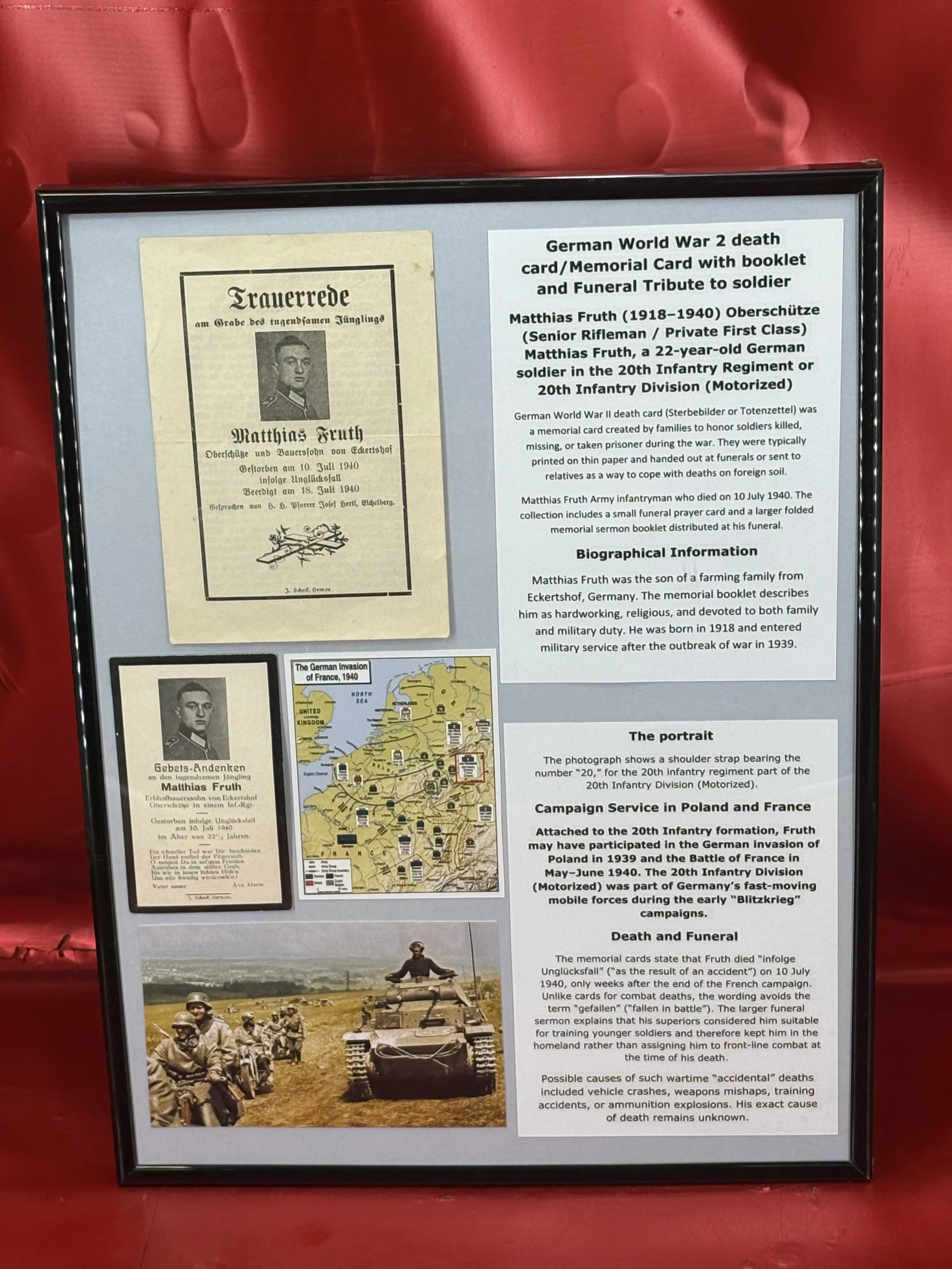 Image 1 of 8
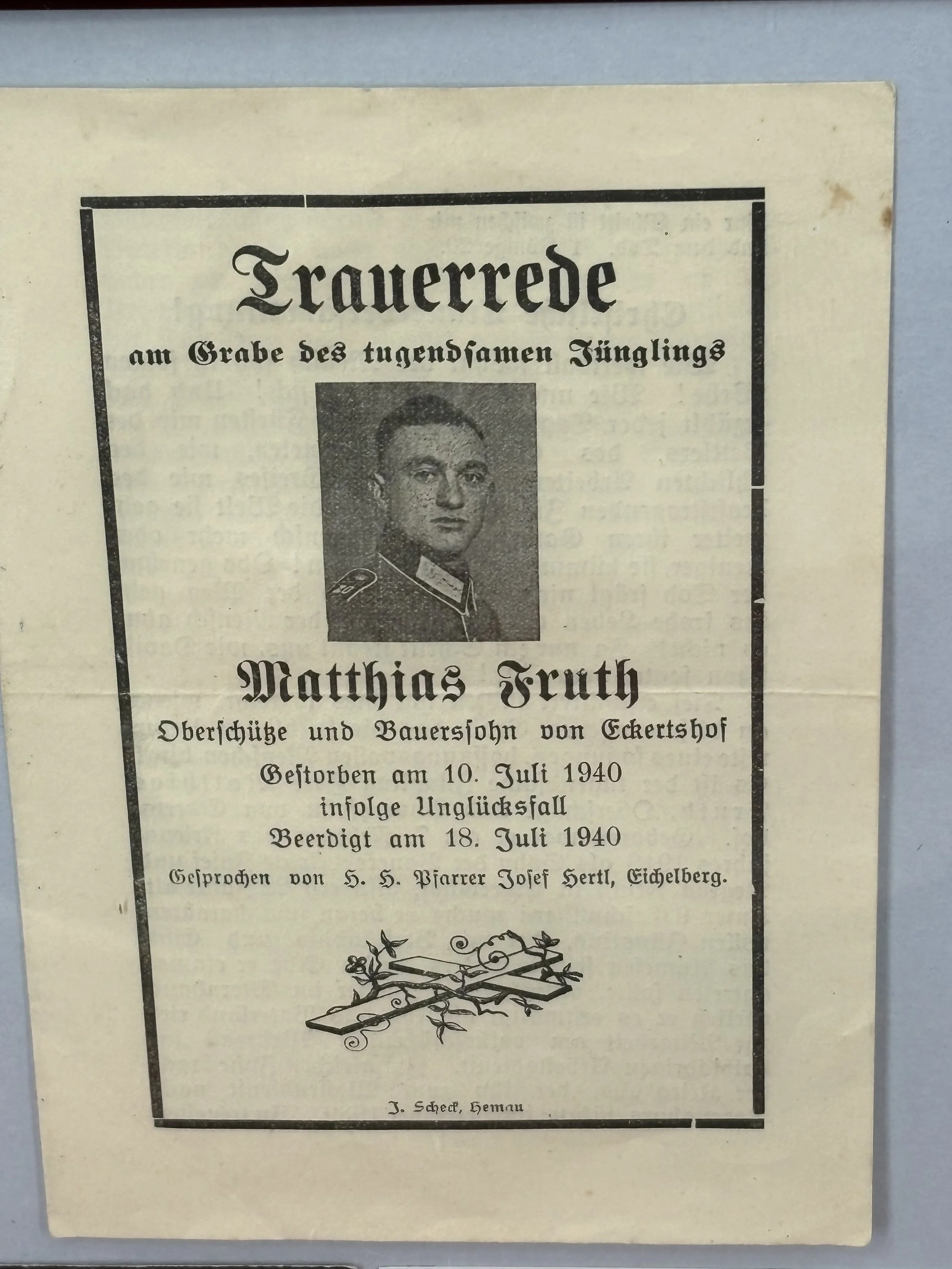 Image 2 of 8
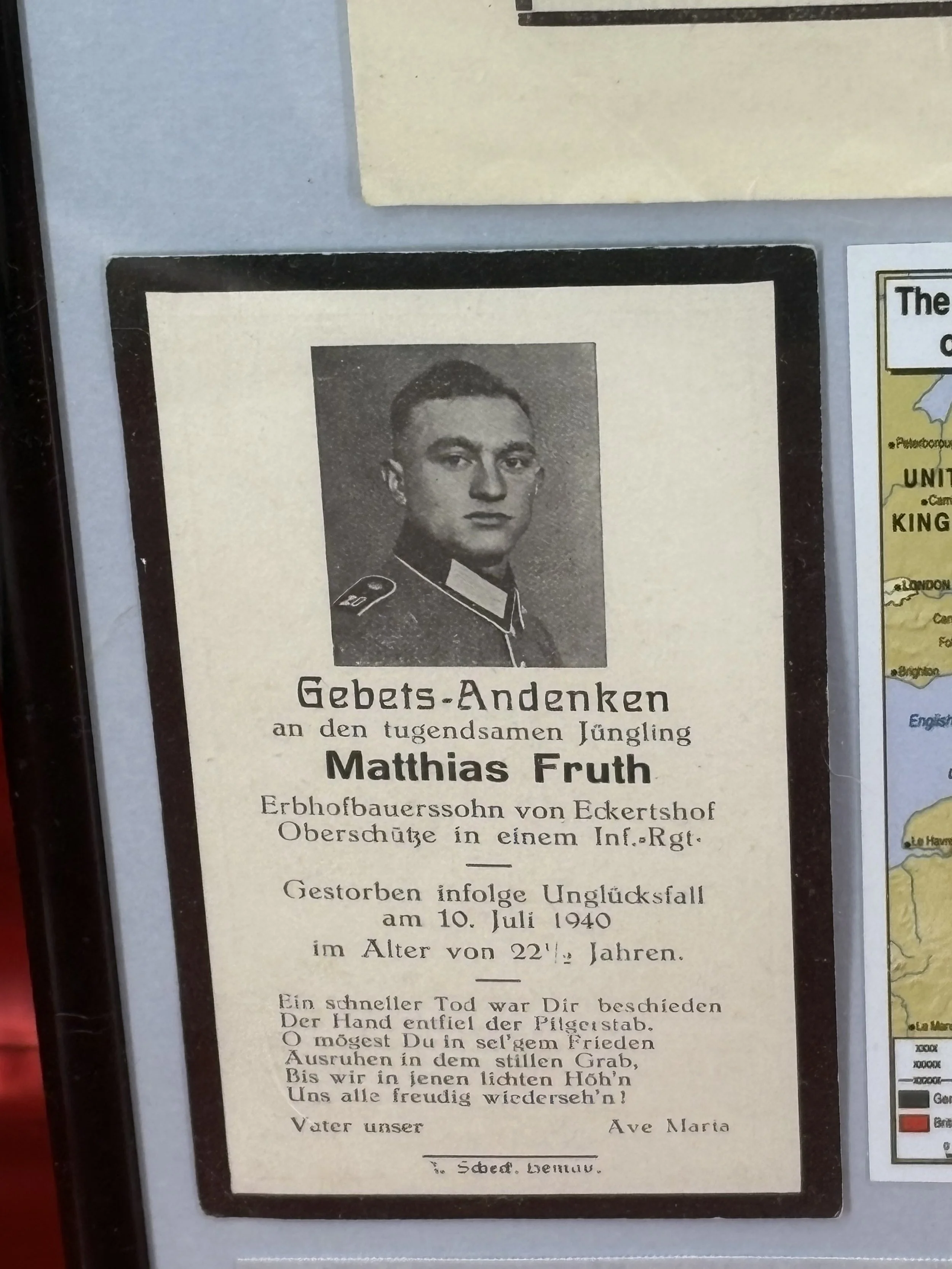 Image 3 of 8
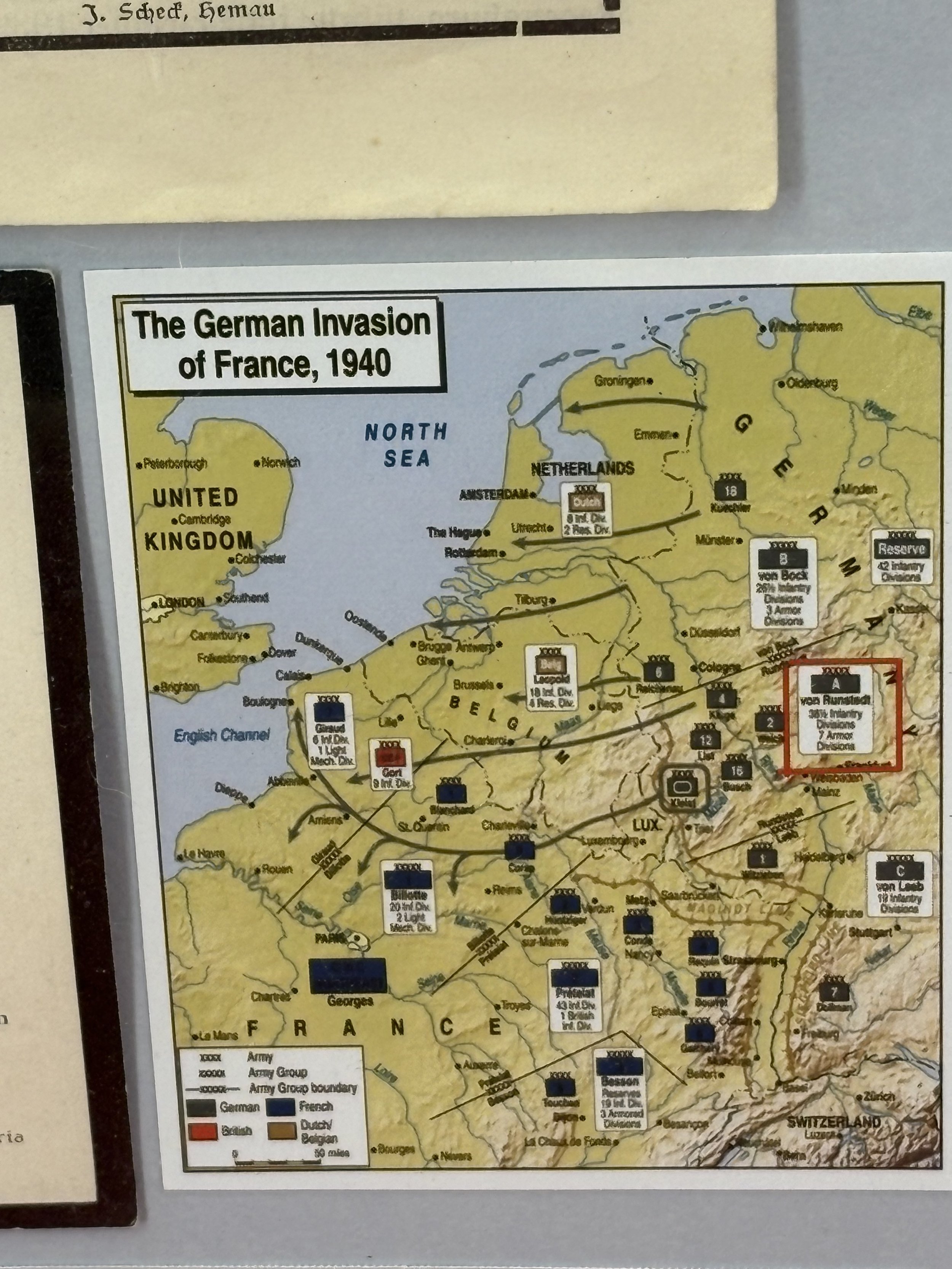 Image 4 of 8
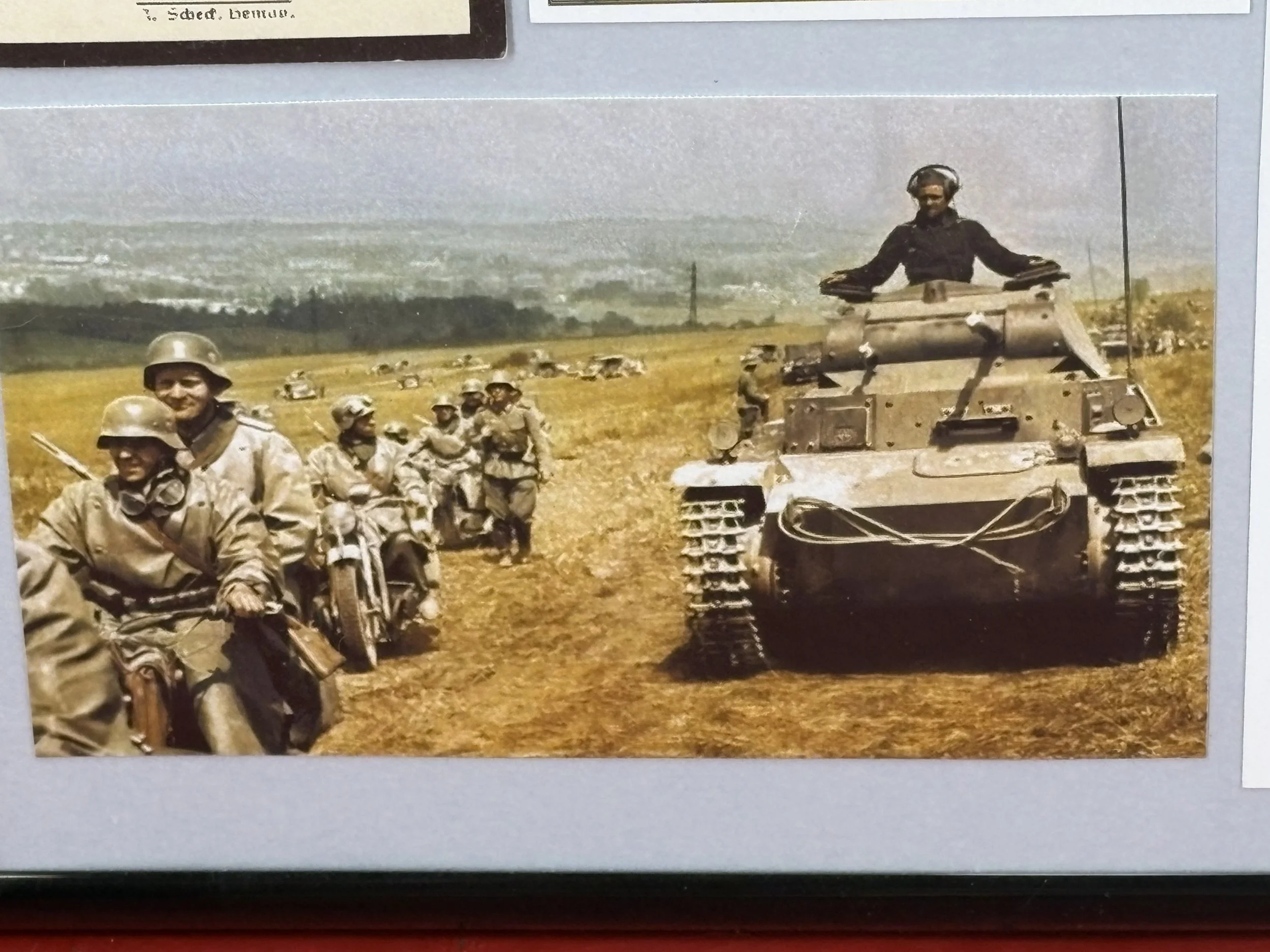 Image 5 of 8
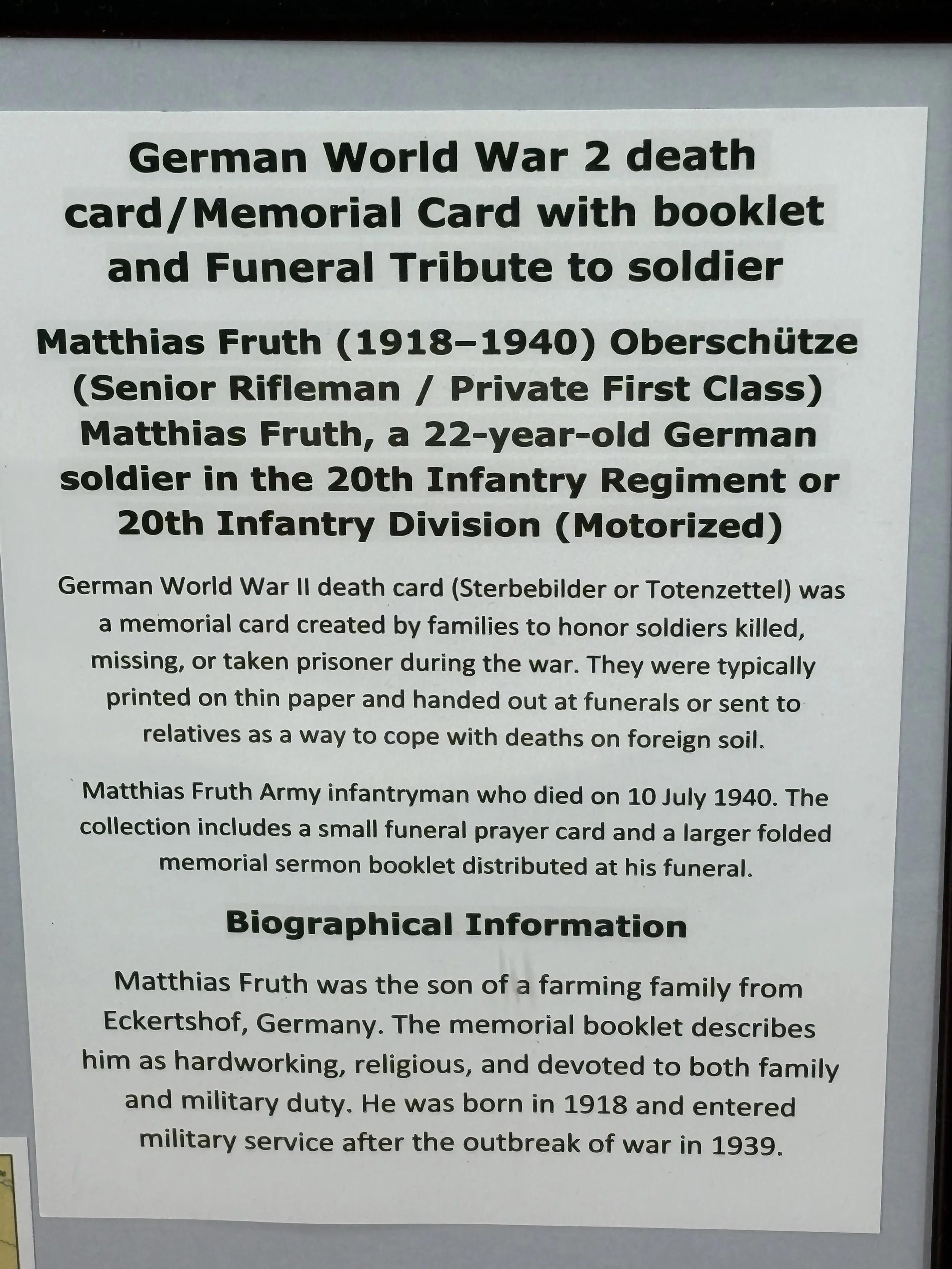 Image 6 of 8
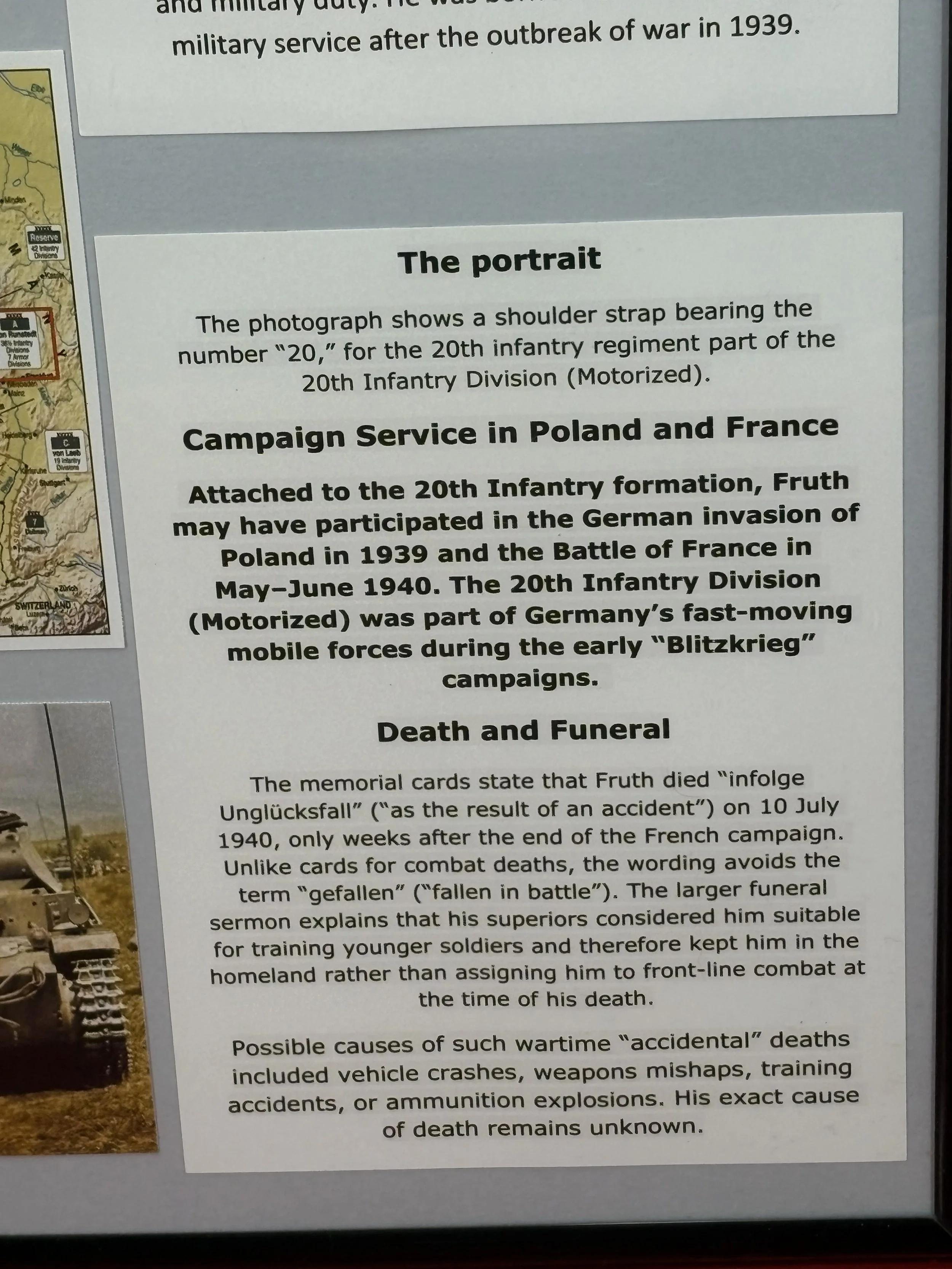 Image 7 of 8
 Image 8 of 8