This is a collection of 8 original aluminium airframe sections together with magnesium-alloy engine components and pipework part, bakerite part all from an RAF Avro Lancaster bomber. Included is part of an engine casing that has been melted by the intense heat of the post-crash fire, creating a striking and historically significant display piece.
The airframe fragments retain some of their original paintwork remains, while the engine casing still shows traces of its original black finish and the pipework part is brass made. The pieces display the damage expected from a high-impact crash, with torn and distorted metal throughout. Despite this, they remain in solid relic condition and have been carefully cleaned and preserved. The largest pieces measure approximately 4-2 inches long in size, making them ideal for display in any aviation or Second World War collection.
The parts are from RAF Lancaster bomber ND761 in the crew was the 19 year old at the time air commodore Charles Clarke OBE the aircraft was shot down by a German night fighter on 25 February 1944.The bomber was returning from a night bombing raid over Stuttgart, Germany. The bomber crashed into the Black Forest and was discovered in around 2018.
The relics come complete with two A5 laminated information sheets featuring:
A photograph of the crew.
Historical information about the aircraft and its final mission.
A diagram illustrating the aircraft.
The crew of the bomber
Deceased: Pilot Officer Robert McPherson (Pilot), Sergeant John "Jack" Alvyn (Flight Engineer), and Sergeant George "Nobby" Hall (Rear Gunner) were killed in the crash.
Survivors: Air Commodore Charles Clarke (Bomb Aimer) and three other crew members successfully parachuted out, survived, and were captured as Prisoners of War. They were Imprisoned at Stalag Luft III (the "Great Escape" camp), where Charles Clarke acted as a watcher and helped forge documents, surviving the notorious "Long March" before his final liberation
This is a collection of 8 original aluminium airframe sections together with magnesium-alloy engine components and pipework part, bakerite part all from an RAF Avro Lancaster bomber. Included is part of an engine casing that has been melted by the intense heat of the post-crash fire, creating a striking and historically significant display piece.
The airframe fragments retain some of their original paintwork remains, while the engine casing still shows traces of its original black finish and the pipework part is brass made. The pieces display the damage expected from a high-impact crash, with torn and distorted metal throughout. Despite this, they remain in solid relic condition and have been carefully cleaned and preserved. The largest pieces measure approximately 4-2 inches long in size, making them ideal for display in any aviation or Second World War collection.
The parts are from RAF Lancaster bomber ND761 in the crew was the 19 year old at the time air commodore Charles Clarke OBE the aircraft was shot down by a German night fighter on 25 February 1944.The bomber was returning from a night bombing raid over Stuttgart, Germany. The bomber crashed into the Black Forest and was discovered in around 2018.
The relics come complete with two A5 laminated information sheets featuring:
A photograph of the crew.
Historical information about the aircraft and its final mission.
A diagram illustrating the aircraft.
The crew of the bomber
Deceased: Pilot Officer Robert McPherson (Pilot), Sergeant John "Jack" Alvyn (Flight Engineer), and Sergeant George "Nobby" Hall (Rear Gunner) were killed in the crash.
Survivors: Air Commodore Charles Clarke (Bomb Aimer) and three other crew members successfully parachuted out, survived, and were captured as Prisoners of War. They were Imprisoned at Stalag Luft III (the "Great Escape" camp), where Charles Clarke acted as a watcher and helped forge documents, surviving the notorious "Long March" before his final liberation

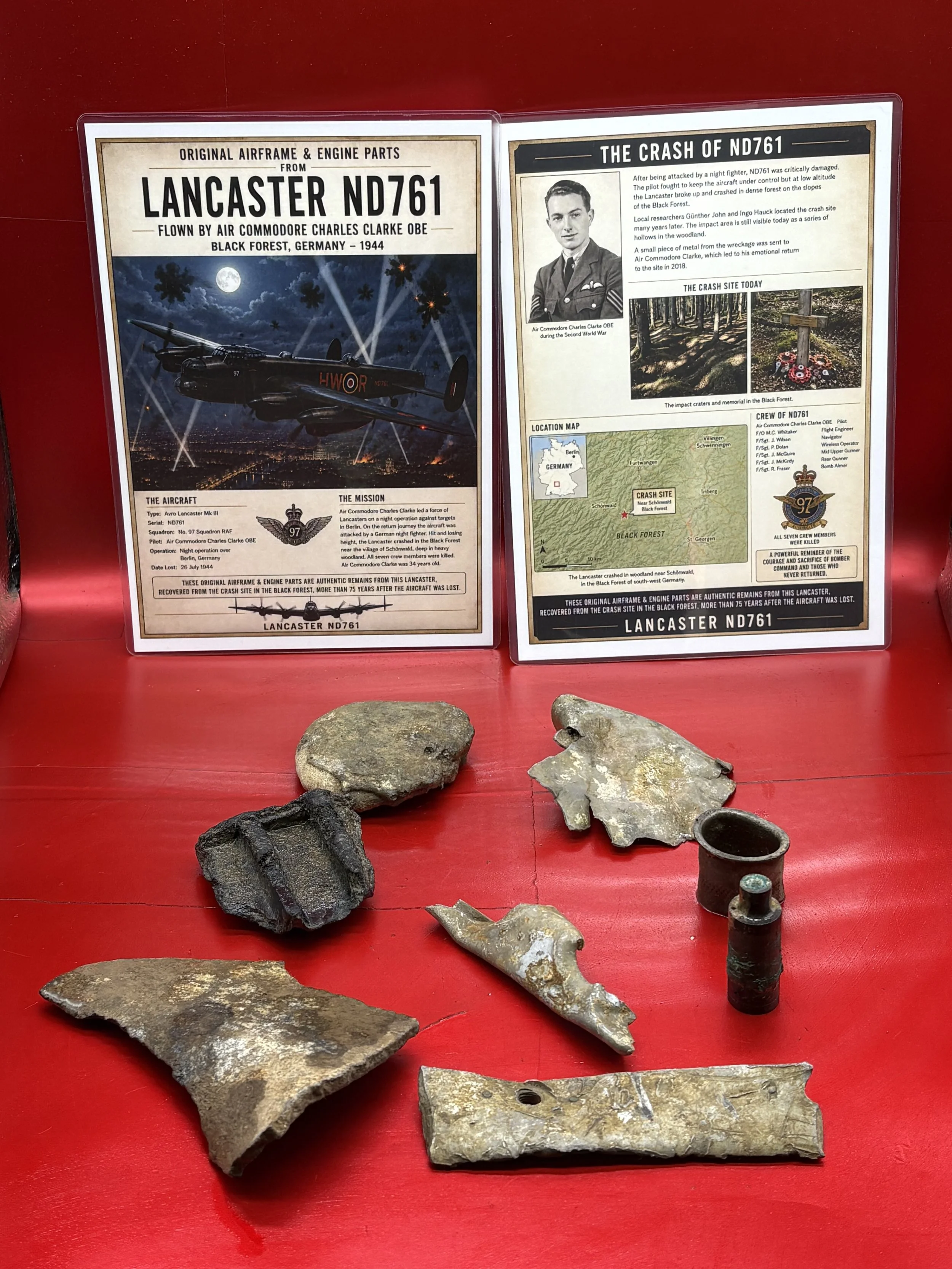 Image 1 of 12
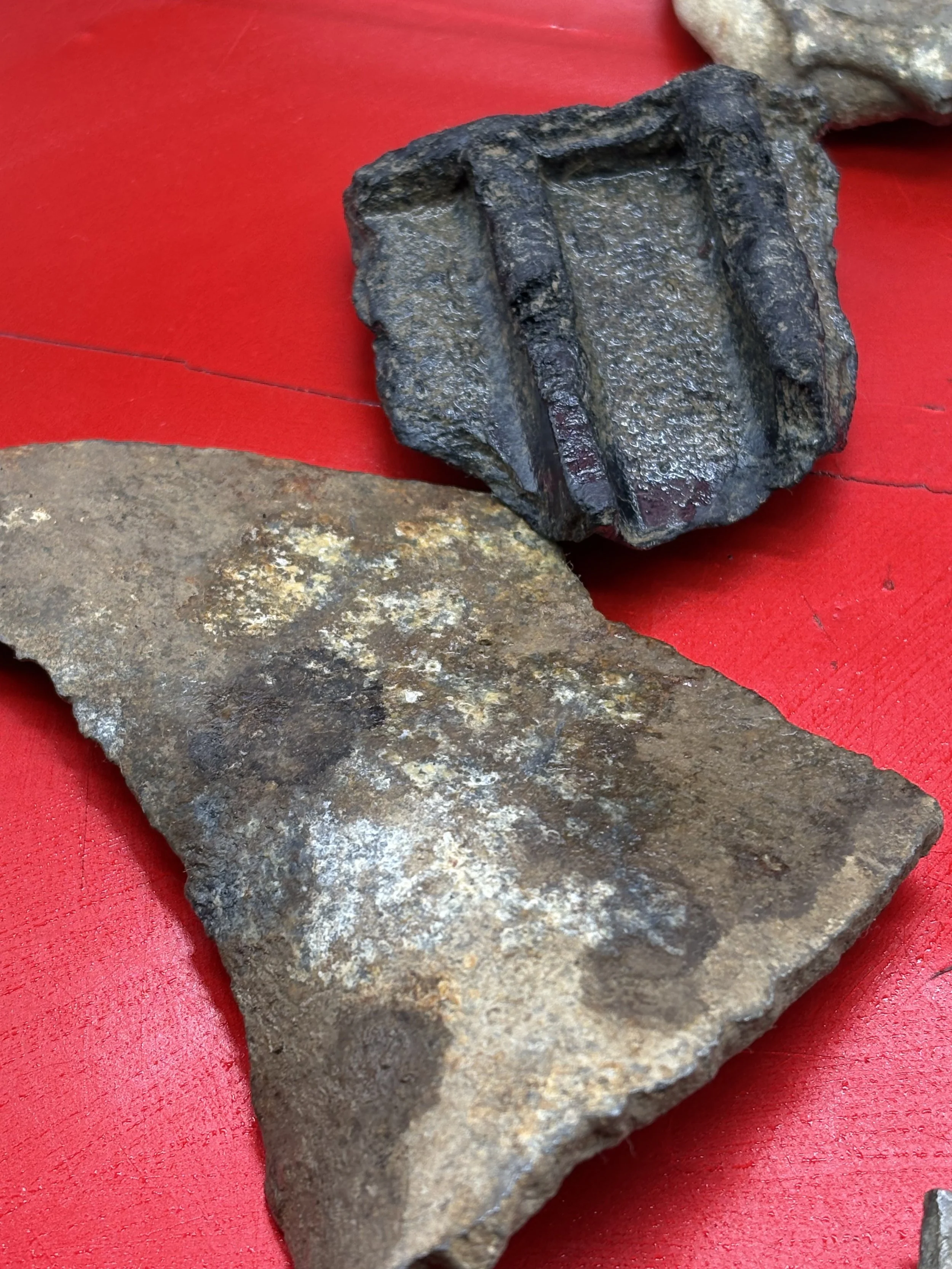 Image 2 of 12
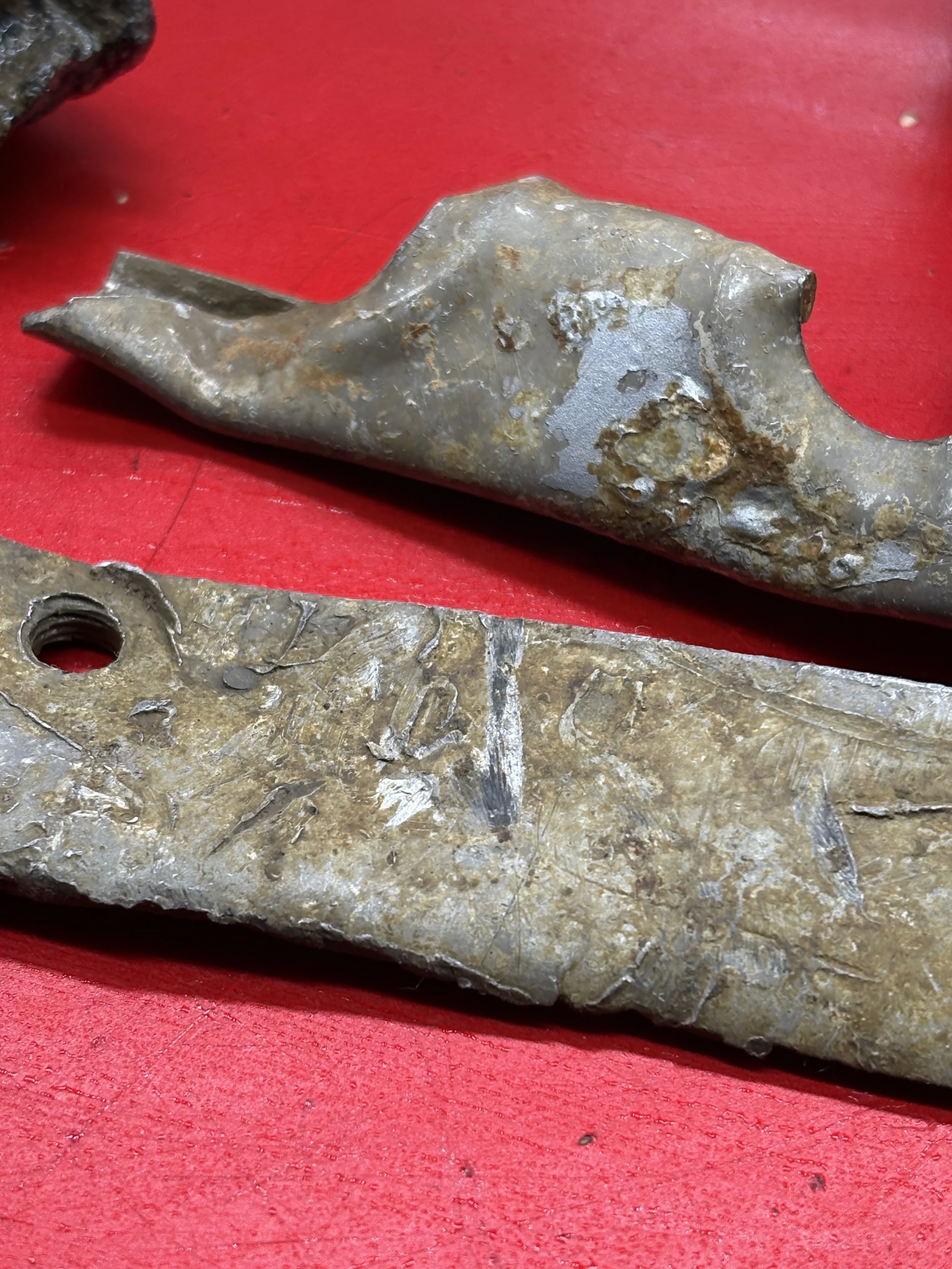 Image 3 of 12
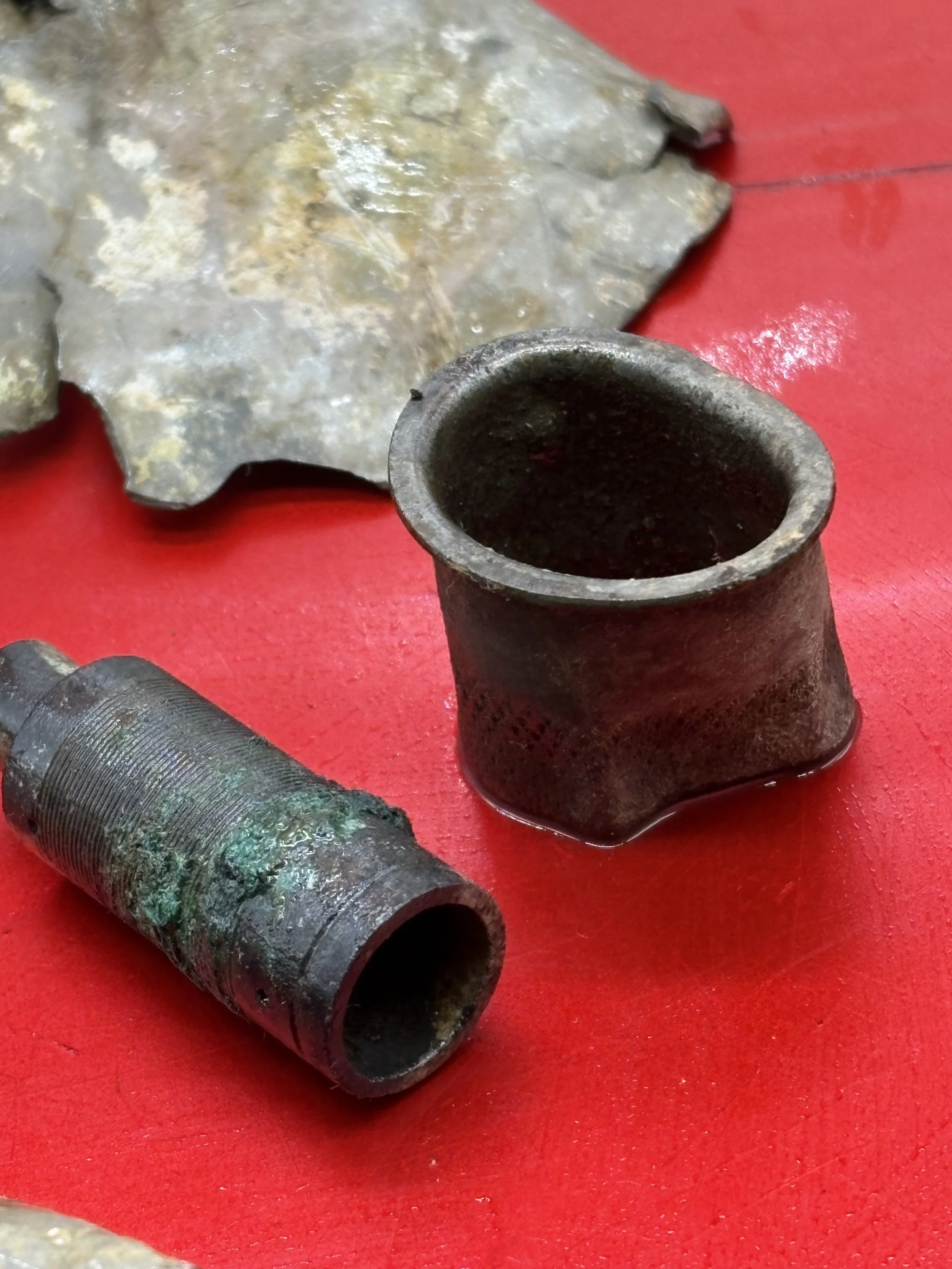 Image 4 of 12
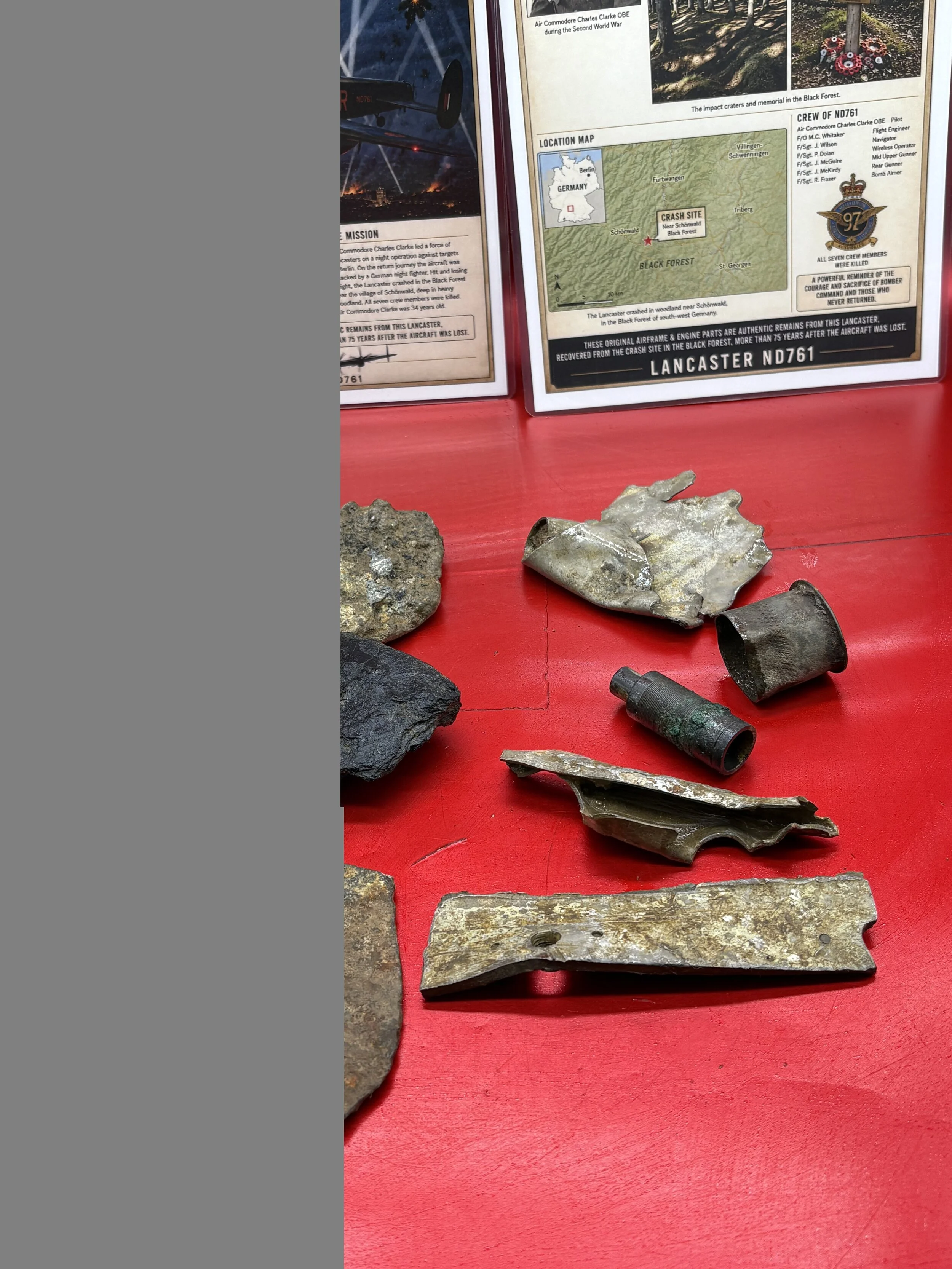 Image 5 of 12
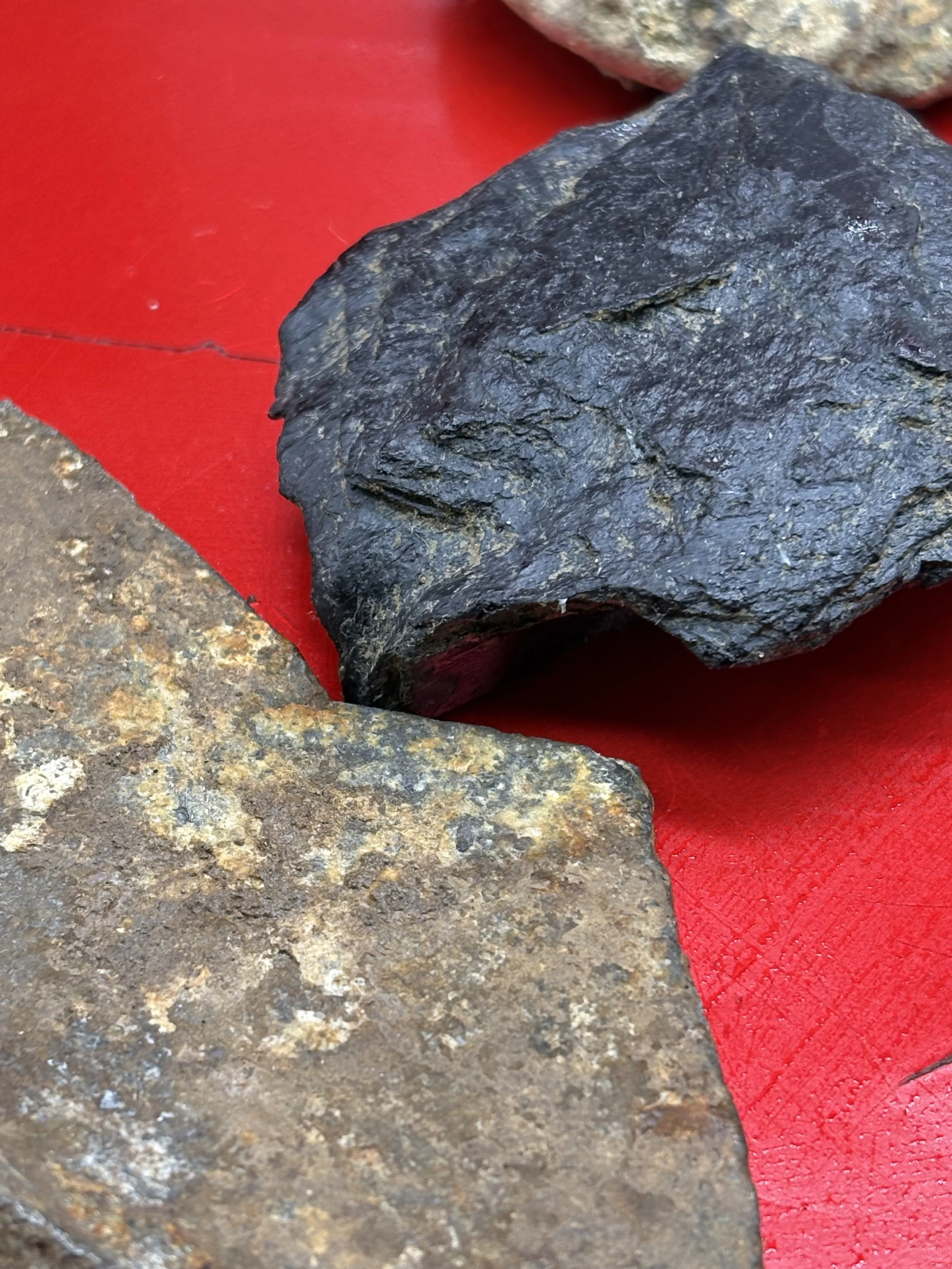 Image 6 of 12
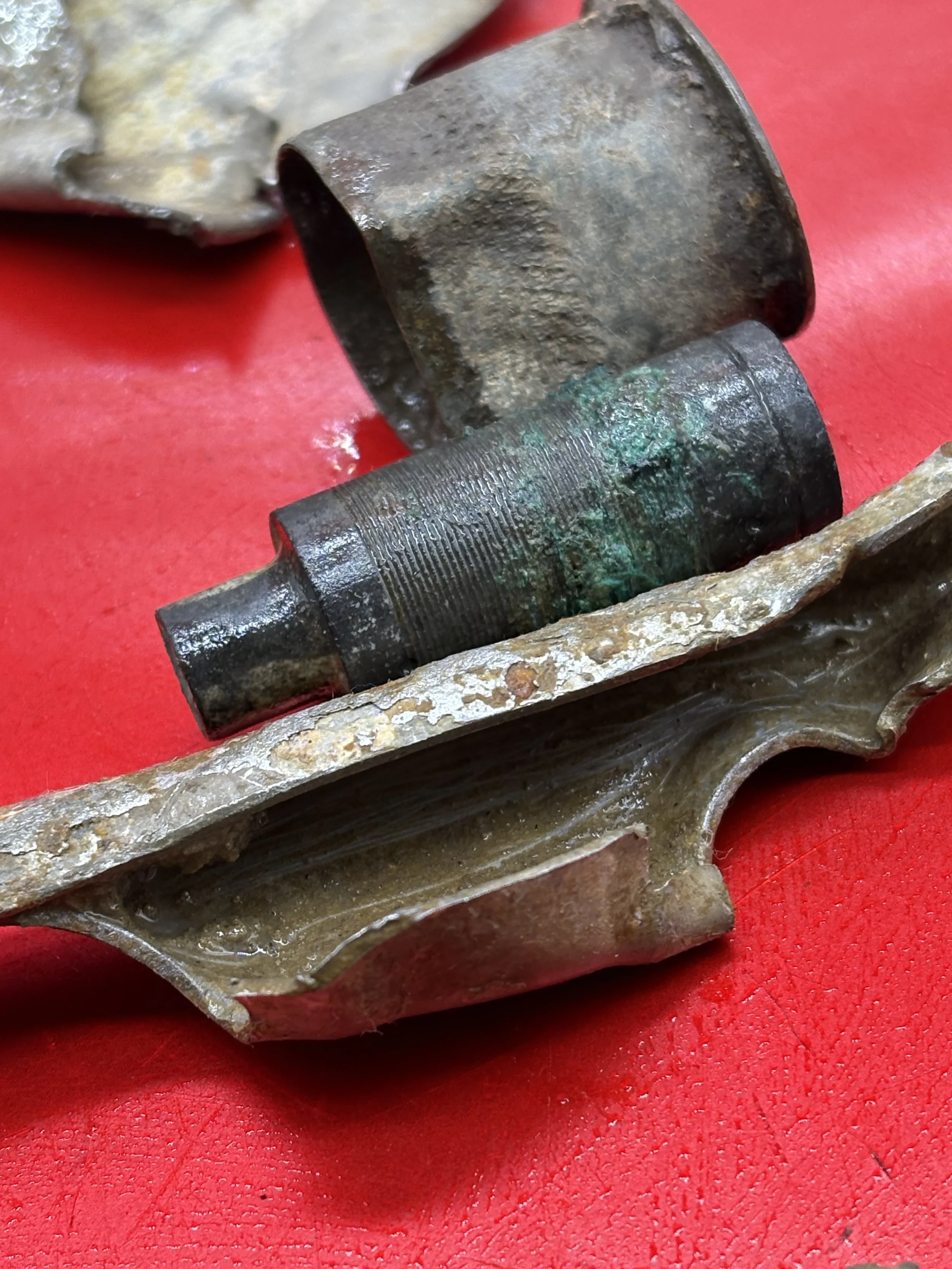 Image 7 of 12
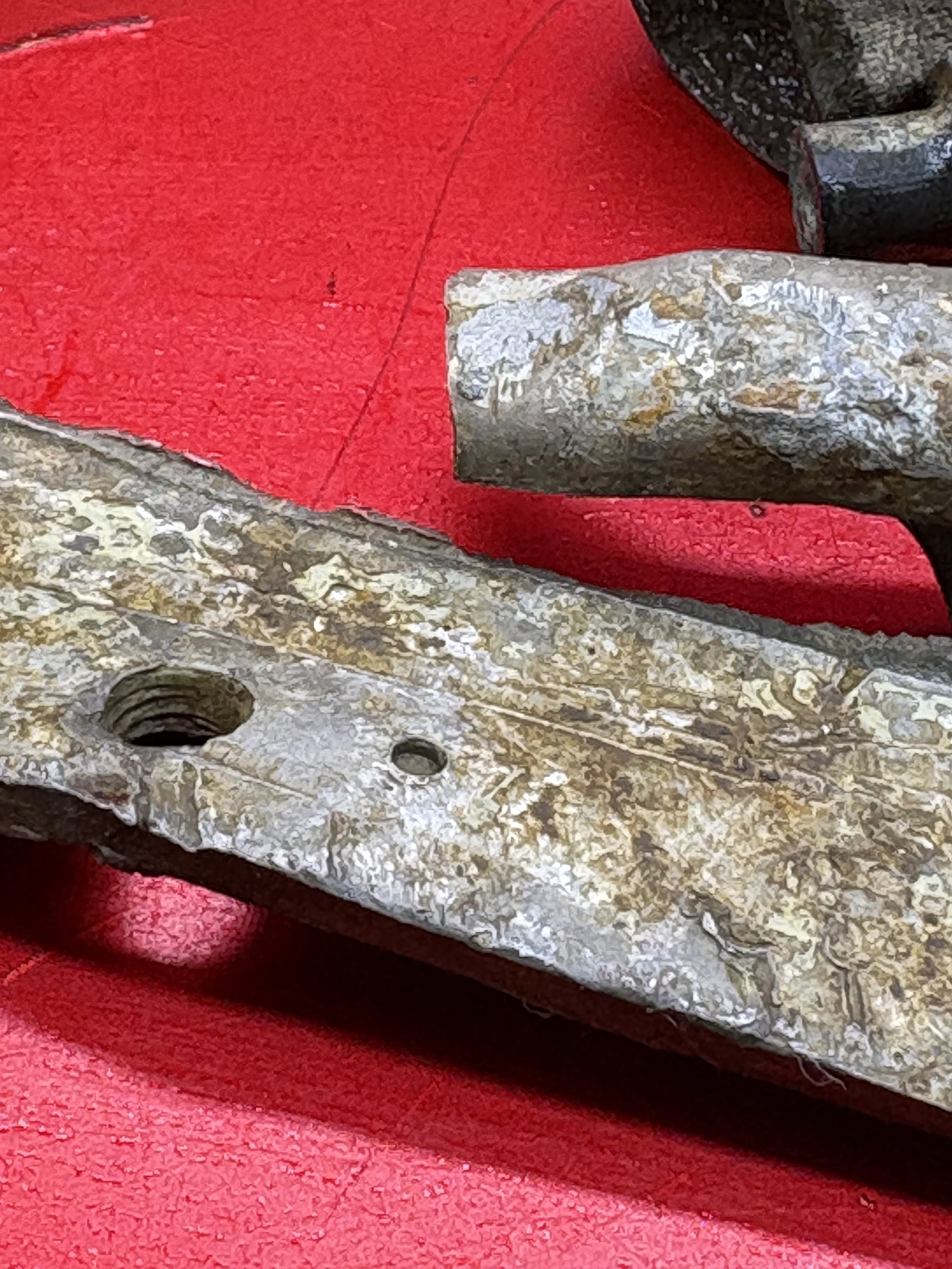 Image 8 of 12
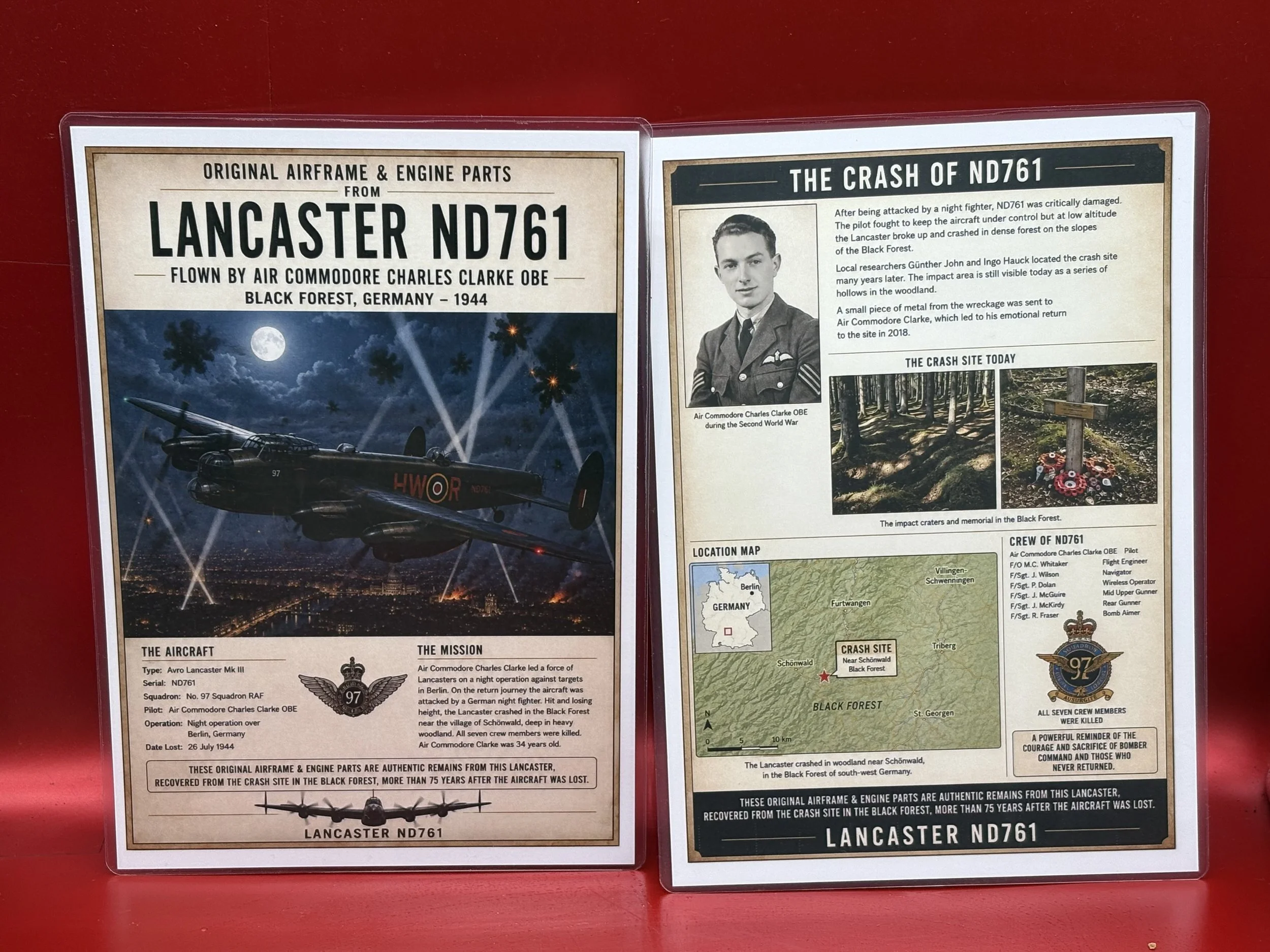 Image 9 of 12
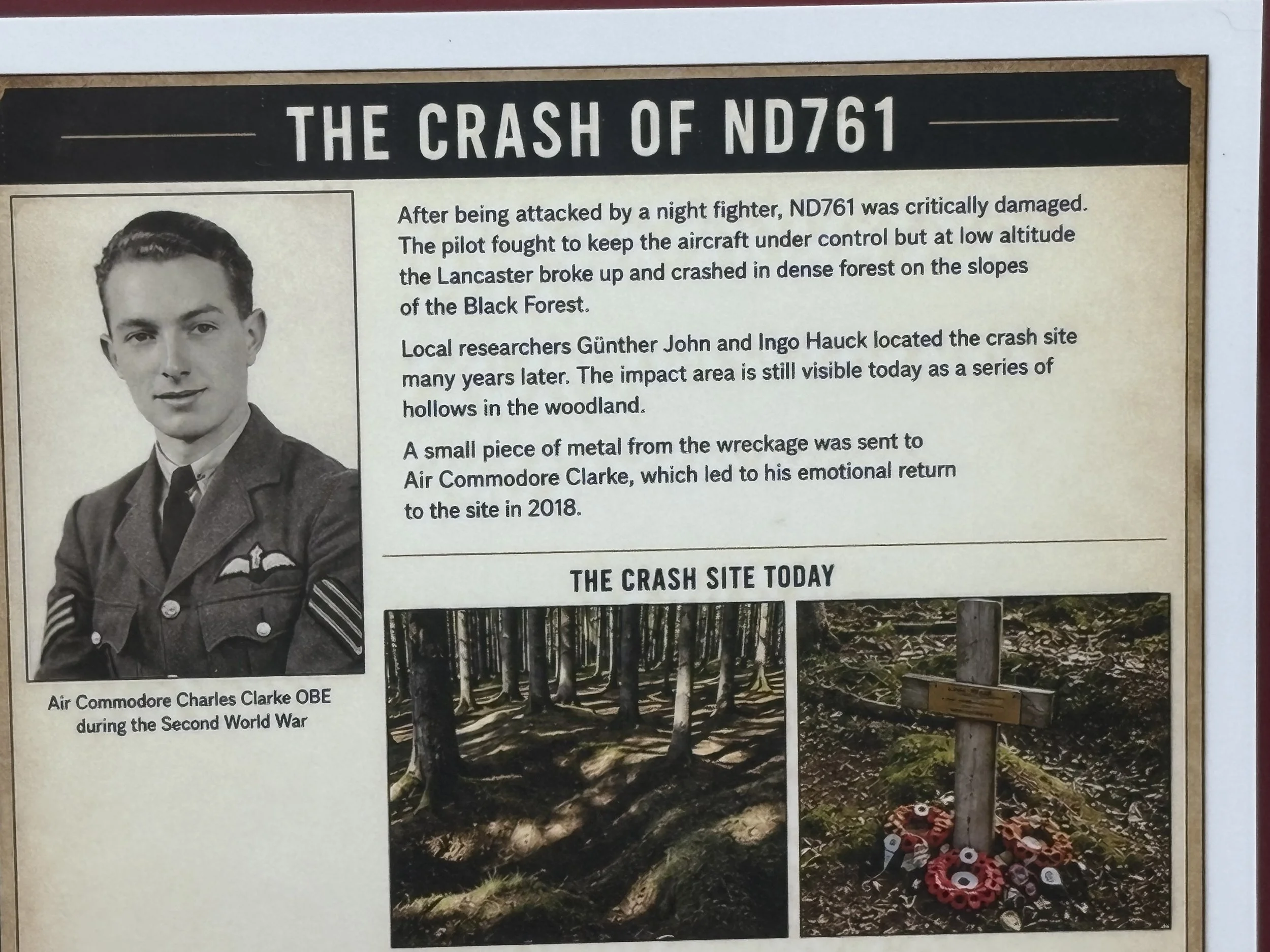 Image 10 of 12
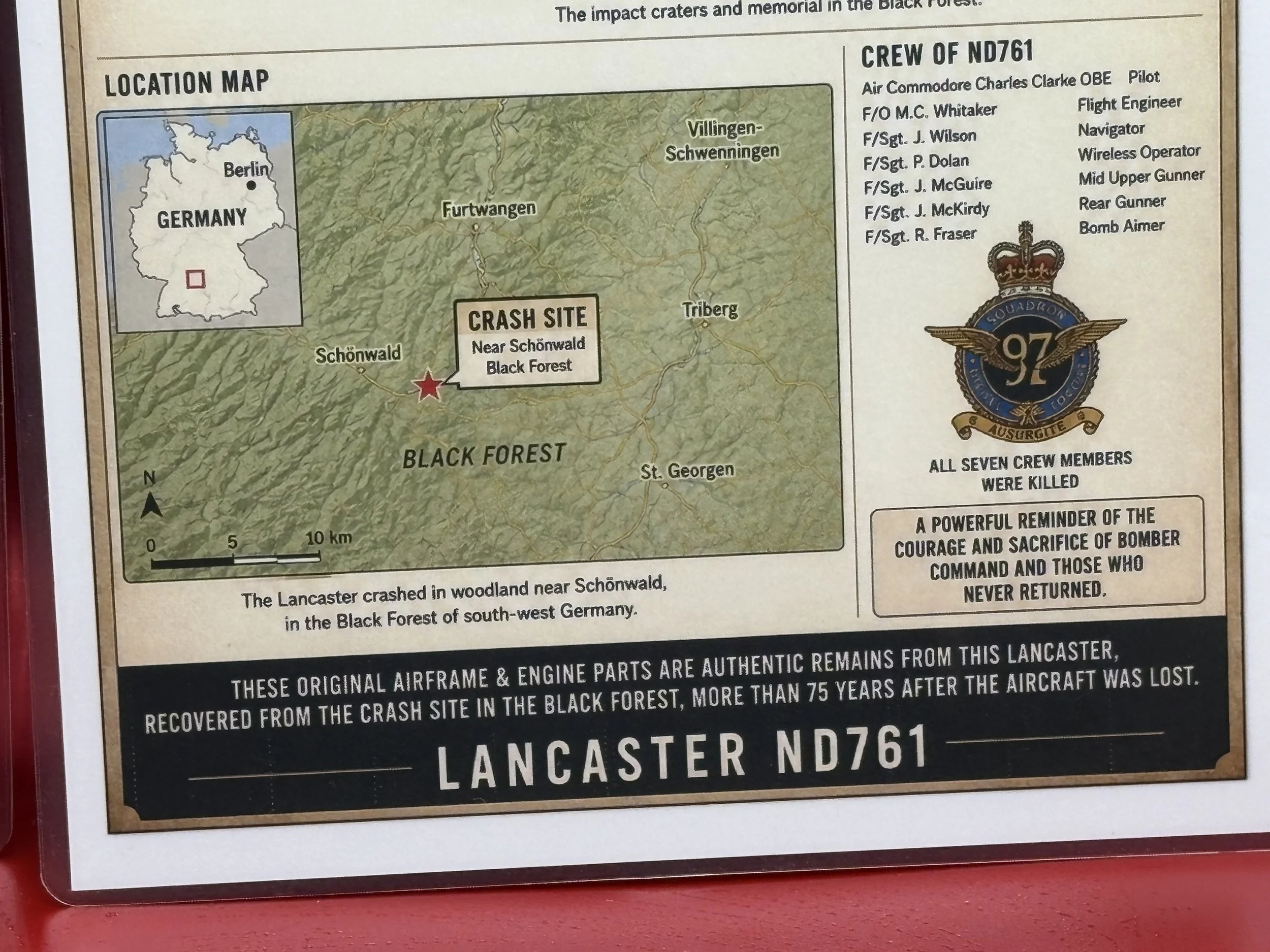 Image 11 of 12
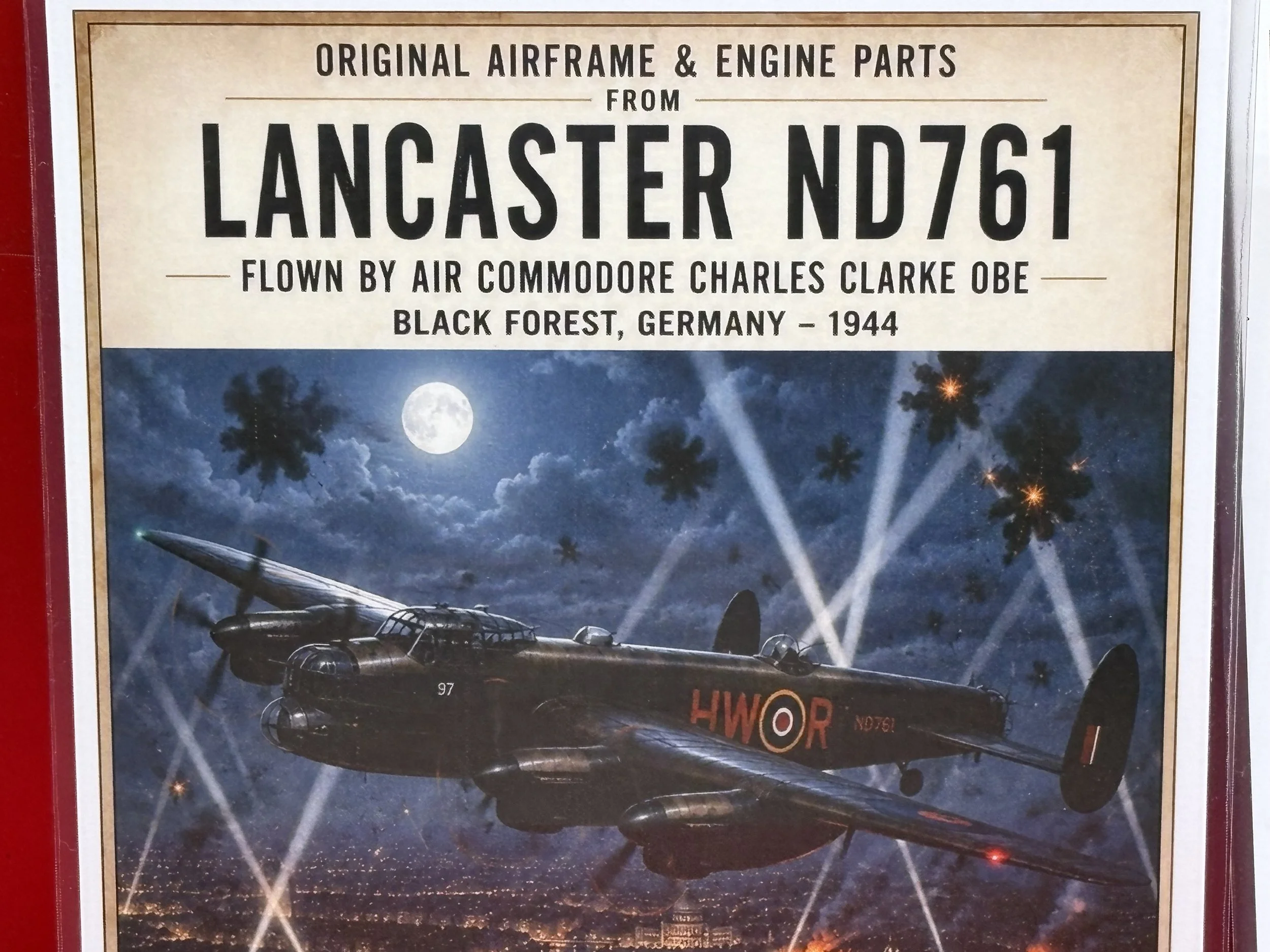 Image 12 of 12