This is a glass-framed nice and recognisable group of parts 4 of them in all with a bayonet blade tip also soldiers tooth brush a G98 ammunition clip and half a German soldiers dog tag[ looks blank] they are in nice condition for relic they are very solid not braking up or falling apart they still retain some of there original colours and are a bit rusty, dirty and discoloured from being buried but have been nicely cleaned and are solid not braking up or falling apart. The parts have been mounted in to a glass-fronted box frame, complete with background information and pictures also a map, making it perfect for display. The frame measures 12 half inches long by 12 half inches wide in size.
The parts were all recovered from the Birdcage this was the name associated with a heavily fortified German position in the Ploegsteert sector of the Western Front, near Le Pèlerin and east of Ploegsteert Wood in Belgium. In December 1914, British and German troops faced one another across a narrow strip of no-man’s-land, amid trenches, wire and ground scarred by the early battles of the war. The sector had seen intense fighting, including a major British attack on 19 December. The Birdcage area was a section that took part in the Christmas Truce and the famous football match that happened somewhere in the general area around the Birdcage.
On Christmas Eve and Christmas Day 1914, an unofficial truce developed in parts of the Western Front. In the Ploegsteert–Saint-Yvon area, accounts describe British and German soldiers leaving their trenches, meeting in no-man’s-land, exchanging greetings and small gifts, and helping to recover and bury the dead. Reports from the wider sector also mention football: some soldiers later recalled a kickabout or a match, while other accounts suggest games were proposed, improvised or took place between men of the same side. Historians have not established one definitive, organised British–German match at a precisely identified field in this sector. The best-supported story is therefore of a series of local truces and acts of fraternisation, with football reported in some accounts but its exact location and form uncertain.

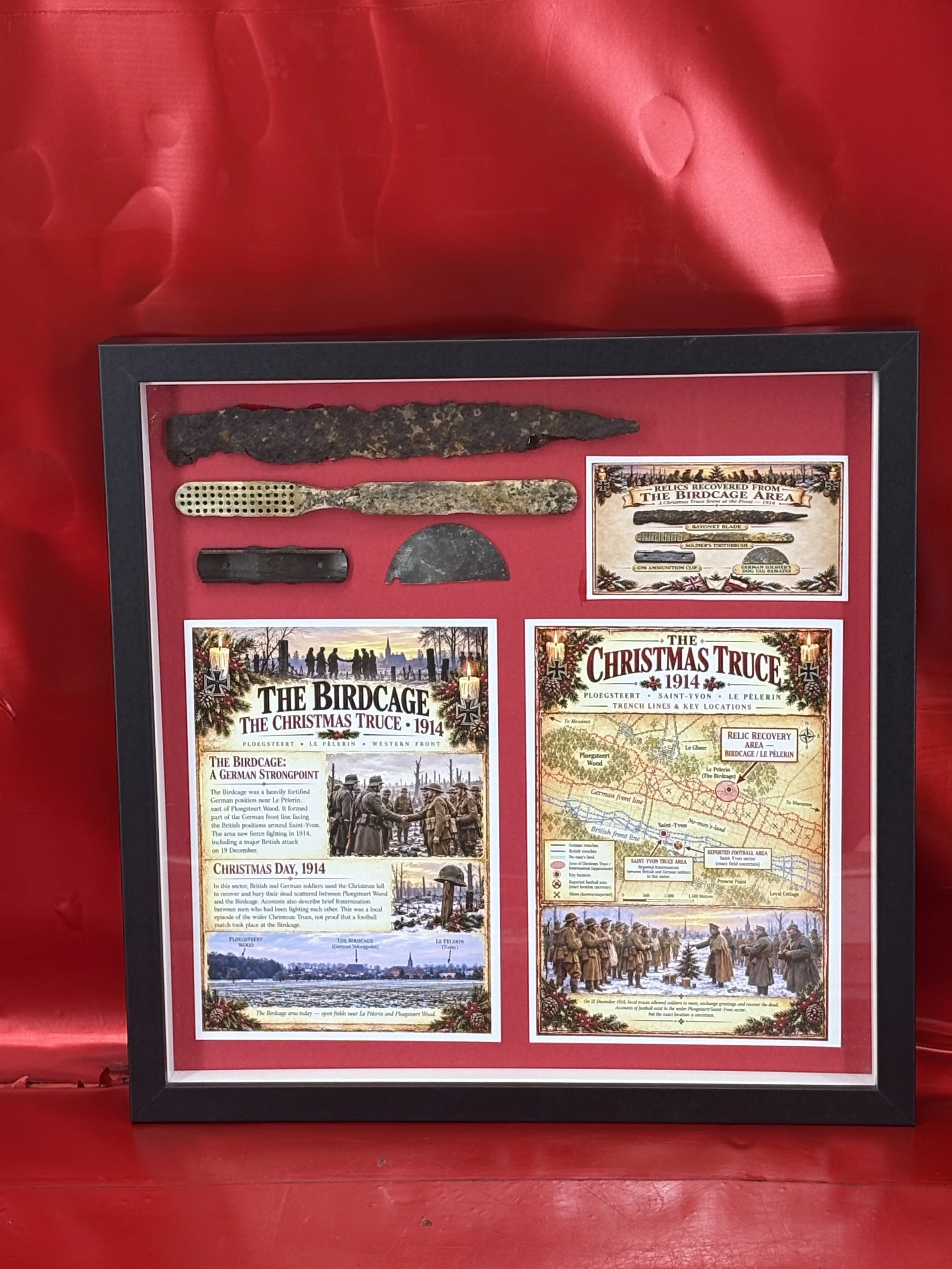 Image 1 of 9
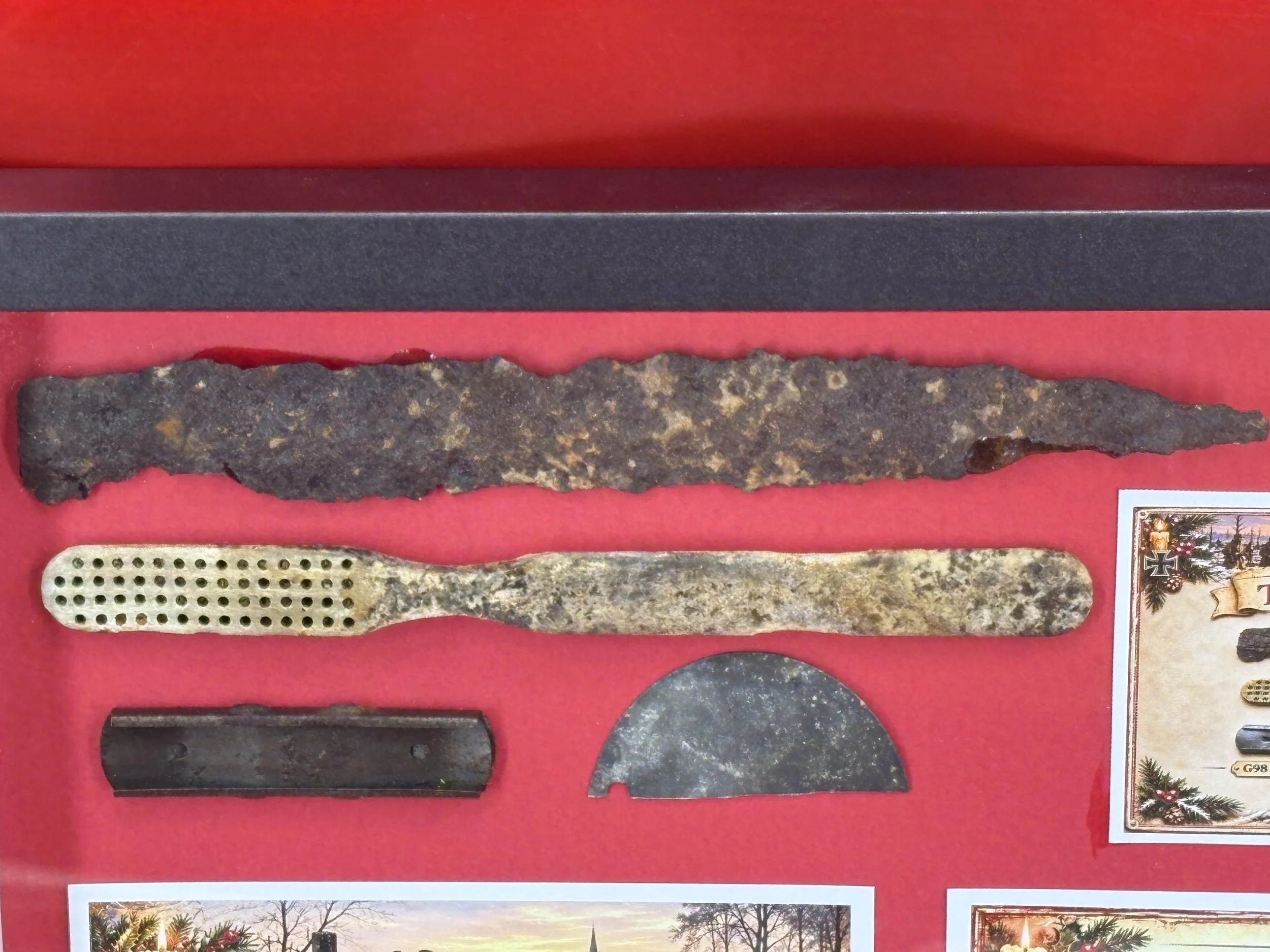 Image 2 of 9
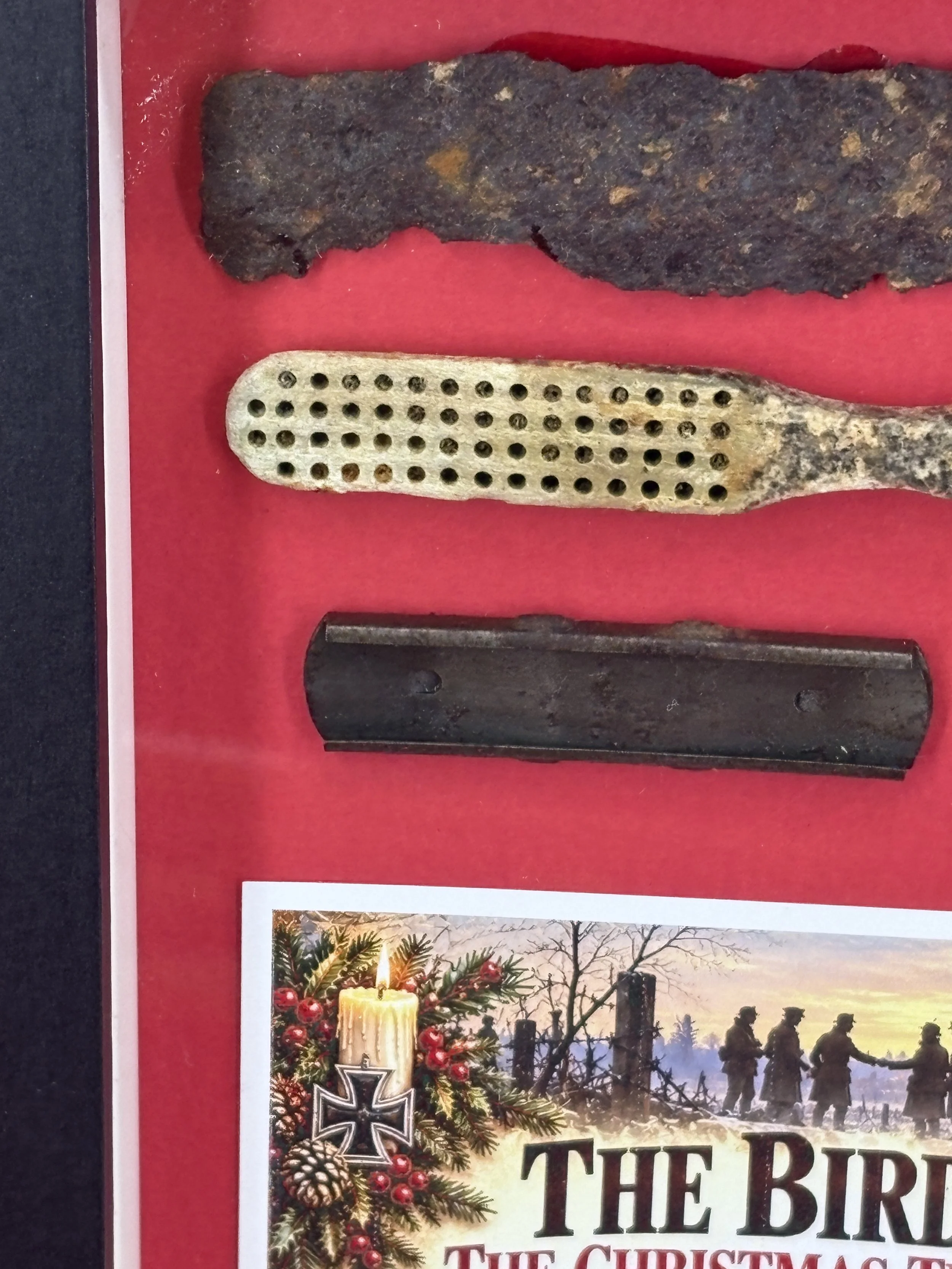 Image 3 of 9
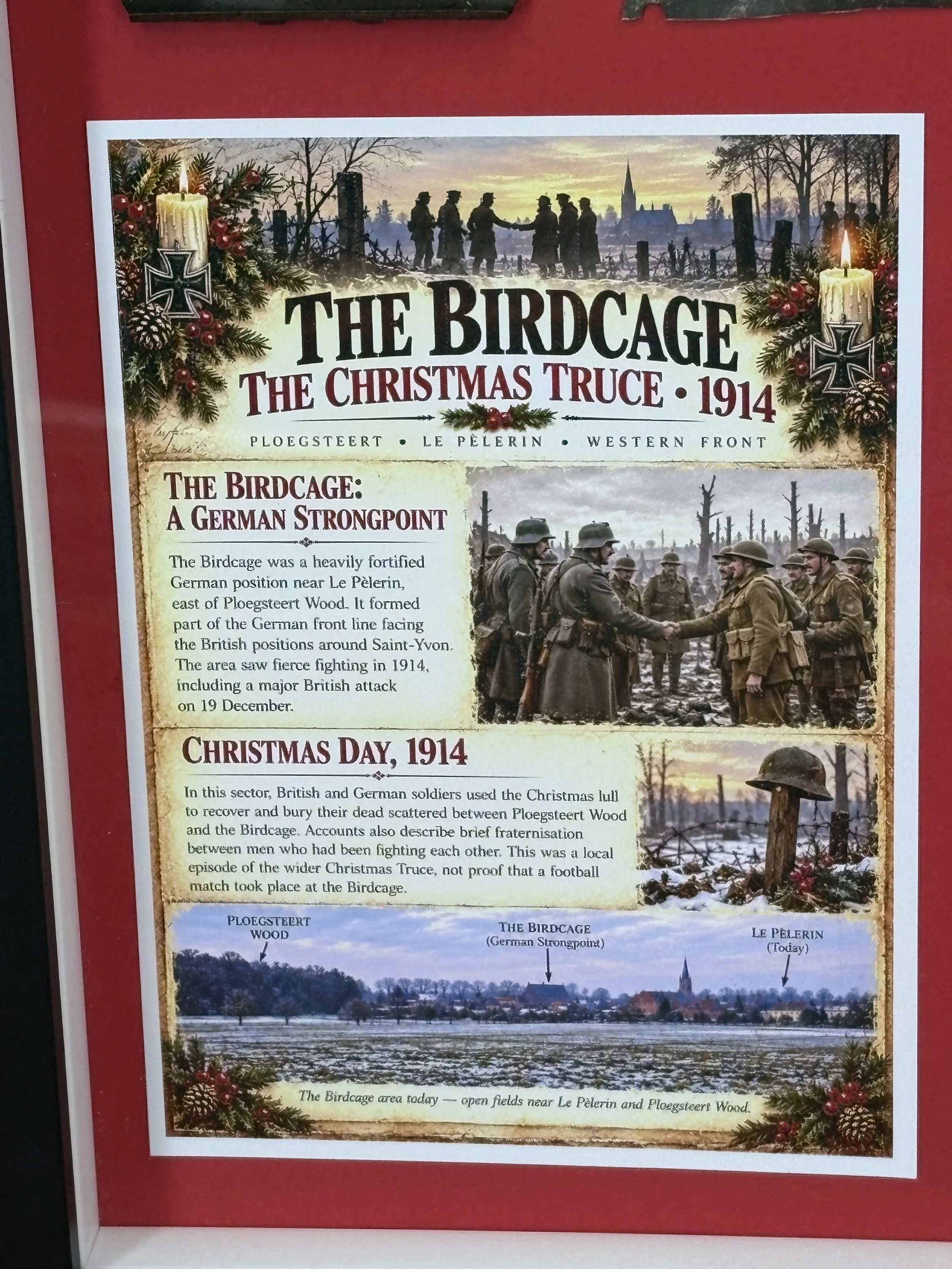 Image 4 of 9
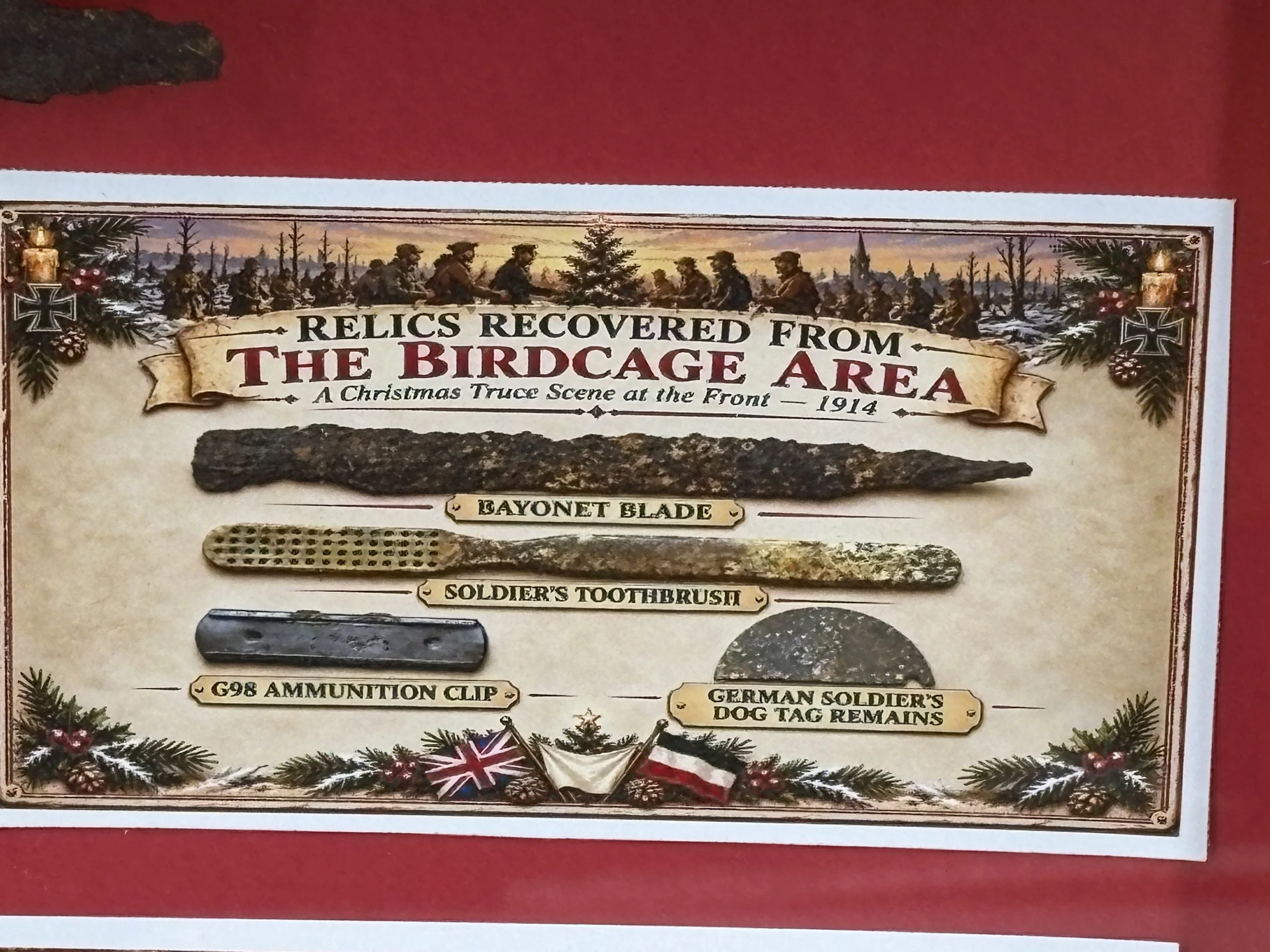 Image 5 of 9
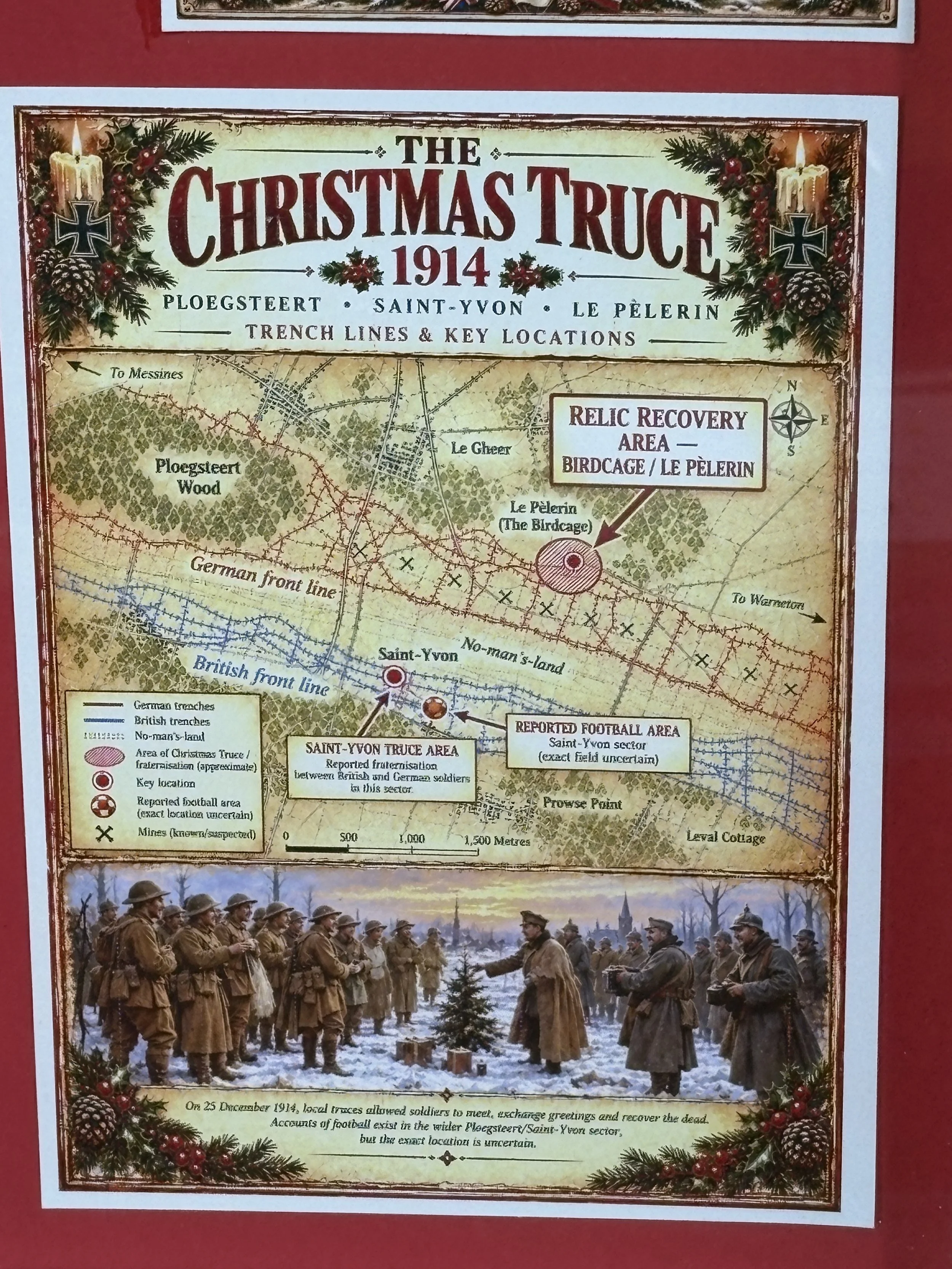 Image 6 of 9
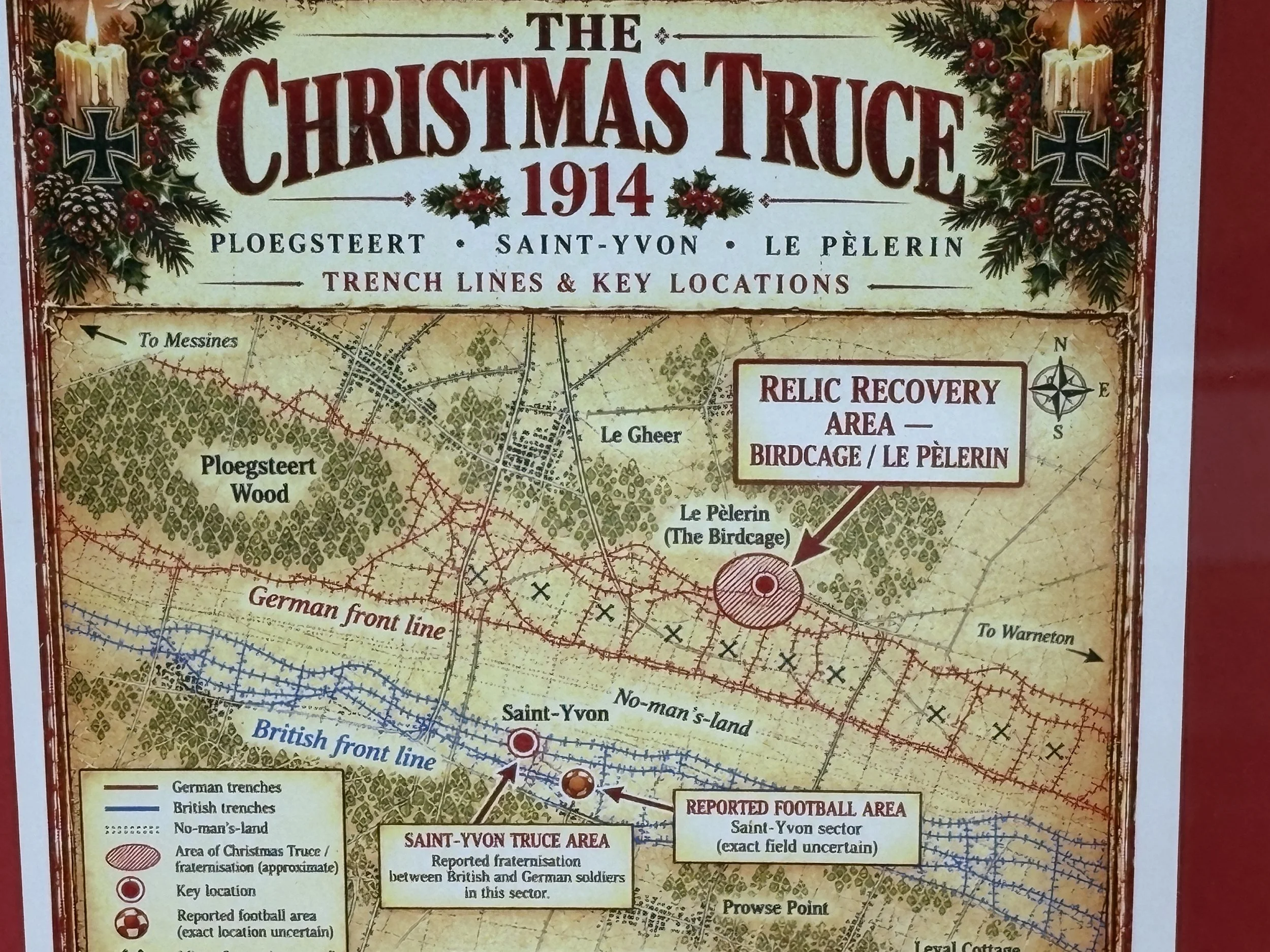 Image 7 of 9
 Image 8 of 9
 Image 9 of 9