This is a large glass framed display which a copies of original photographs and documents for German night fighter pilot OBERFELDWEBEL OTTO WIESE who was highly decorated pilot who was shot down on 21st June 1941 over England
The old photo copy’s have been mounted with many pictures including diagrams and pictures showing the writing on the back of them as well this makes it perfect for display or a collection. The frame is 23 inches long by 19 inches wide.
OBERFELDWEBEL OTTO WIESE
LUFTWAFFE NIGHT FIGHTER PILOT
A copy of the original pilot’s licence and photographs belonging to Oberfeldwebel Otto Wiese, a Luftwaffe night fighter pilot who lost his life on 22 June 1941 during an intruder mission over England.
PERSONAL DETAILS
Born: 10 December 1913
Rank: Oberfeldwebel
Unit: 1./Nachtjagdgeschwader 2
Previously: 4./NJG 1
Pilot’s Licence Issued: 19 August 1938
Kiel – Luftwaffenkommando See
AWARDS
• Iron Cross 2nd Class
• Pilot’s Badge
• Night Fighter Operational Clasp
THE PHOTOGRAPHS
These are copies of original photographs of Otto Wiese in his Luftwaffe uniform, most likely dating from the late 1930s.
OPERATIONAL SERVICE
PIONEER OF NIGHT FIGHTING
Otto Wiese was one of the pioneers of the Luftwaffe’s long-range night intruder force (Fernnachtjagd), which operated over Britain to attack returning RAF bombers and airfields.
FIRST AERIAL VICTORY
On the night of 23/24 July 1940, flying with 4./NJG 1, Otto Wiese shot down a Vickers Wellington bomber approximately 100 km west of Texel.
This was his first and only confirmed aerial victory and one of the earliest successful intruder victories of the war.
HIS FINAL AIRCRAFT
Type: Junkers Ju 88C-2
Werknummer: 0827
Code: R4+JH
Call sign: “White J”
Unit: 1./Nachtjagdgeschwader 2
Based: Gilze-Rijen Airfield, Netherlands
THE MISSION – 21/22 JUNE 1941
Otto Wiese took off from Gilze-Rijen at 00:15 hrs on a night intruder mission over eastern England.
His aircraft carried eight 50 kg bombs and incendiaries to attack RAF airfields after following bombers home.
THE COMBAT – INTERCEPTED BY RAF BEAUFIGHTER
Near The Wash, the crew of the Ju 88 noticed that British anti-aircraft guns were silent – a sign that night fighters were in the area.
F/O Michael J. Herrick DFC of No. 25 Squadron, with radar operator P/O Len Yeomans, was vectored onto the German aircraft.
Herrick approached from astern and slightly below. After confirming the aircraft was hostile, he opened fire with his cannons.
THE ATTACK
The first burst missed. Otto Wiese immediately threw his aircraft into a diving turn to starboard.
A second long burst struck the starboard wing, setting the external fuel tanks ablaze.
Otto dived steeply in an attempt to extinguish the flames but they rapidly spread.
He then ordered:
“Abspringen!” – “Bail out!”
THE CREW’S FATE
Unteroffizier Heinrich Beul bailed out and survived, becoming a Prisoner of War.
Gefreiter Hermann Mandel also bailed out, but his parachute caught fire and he was killed.
Oberfeldwebel Otto Wiese remained at the controls and was killed when the Ju 88 crashed.
THE CRASH
At approximately 01:25 hrs on 22 June 1941, the Ju 88 crashed at Haines Farm, Deeping St James, Lincolnshire.
The aircraft disintegrated on impact and caught fire.
AFTER THE WAR
Otto Wiese was initially buried at the local church cemetery.
In 1956, his remains were reinterred at Cannock Chase German Military Cemetery, Staffordshire – Grave S.K.24.
AWARDS & DECORATIONS
Iron Cross 2nd Class
Pilot’s Badge
Night Fighter Operational Clasp
THE REVERSE OF TWO COPIES OF ORIGINAL PHOTOGRAPHS
Reverse of a copy of an original photograph:
“Otto Wiese sits on the Right.”
Reverse of a copy of an original photograph with an inscription regarding his parents’ grave in Germany.
PERSONAL COLLECTION
A personal collection preserving the memory of a Luftwaffe pilot.
This is a large glass framed display which a copies of original photographs and documents for German night fighter pilot OBERFELDWEBEL OTTO WIESE who was highly decorated pilot who was shot down on 21st June 1941 over England
The old photo copy’s have been mounted with many pictures including diagrams and pictures showing the writing on the back of them as well this makes it perfect for display or a collection. The frame is 23 inches long by 19 inches wide.
OBERFELDWEBEL OTTO WIESE
LUFTWAFFE NIGHT FIGHTER PILOT
A copy of the original pilot’s licence and photographs belonging to Oberfeldwebel Otto Wiese, a Luftwaffe night fighter pilot who lost his life on 22 June 1941 during an intruder mission over England.
PERSONAL DETAILS
Born: 10 December 1913
Rank: Oberfeldwebel
Unit: 1./Nachtjagdgeschwader 2
Previously: 4./NJG 1
Pilot’s Licence Issued: 19 August 1938
Kiel – Luftwaffenkommando See
AWARDS
• Iron Cross 2nd Class
• Pilot’s Badge
• Night Fighter Operational Clasp
THE PHOTOGRAPHS
These are copies of original photographs of Otto Wiese in his Luftwaffe uniform, most likely dating from the late 1930s.
OPERATIONAL SERVICE
PIONEER OF NIGHT FIGHTING
Otto Wiese was one of the pioneers of the Luftwaffe’s long-range night intruder force (Fernnachtjagd), which operated over Britain to attack returning RAF bombers and airfields.
FIRST AERIAL VICTORY
On the night of 23/24 July 1940, flying with 4./NJG 1, Otto Wiese shot down a Vickers Wellington bomber approximately 100 km west of Texel.
This was his first and only confirmed aerial victory and one of the earliest successful intruder victories of the war.
HIS FINAL AIRCRAFT
Type: Junkers Ju 88C-2
Werknummer: 0827
Code: R4+JH
Call sign: “White J”
Unit: 1./Nachtjagdgeschwader 2
Based: Gilze-Rijen Airfield, Netherlands
THE MISSION – 21/22 JUNE 1941
Otto Wiese took off from Gilze-Rijen at 00:15 hrs on a night intruder mission over eastern England.
His aircraft carried eight 50 kg bombs and incendiaries to attack RAF airfields after following bombers home.
THE COMBAT – INTERCEPTED BY RAF BEAUFIGHTER
Near The Wash, the crew of the Ju 88 noticed that British anti-aircraft guns were silent – a sign that night fighters were in the area.
F/O Michael J. Herrick DFC of No. 25 Squadron, with radar operator P/O Len Yeomans, was vectored onto the German aircraft.
Herrick approached from astern and slightly below. After confirming the aircraft was hostile, he opened fire with his cannons.
THE ATTACK
The first burst missed. Otto Wiese immediately threw his aircraft into a diving turn to starboard.
A second long burst struck the starboard wing, setting the external fuel tanks ablaze.
Otto dived steeply in an attempt to extinguish the flames but they rapidly spread.
He then ordered:
“Abspringen!” – “Bail out!”
THE CREW’S FATE
Unteroffizier Heinrich Beul bailed out and survived, becoming a Prisoner of War.
Gefreiter Hermann Mandel also bailed out, but his parachute caught fire and he was killed.
Oberfeldwebel Otto Wiese remained at the controls and was killed when the Ju 88 crashed.
THE CRASH
At approximately 01:25 hrs on 22 June 1941, the Ju 88 crashed at Haines Farm, Deeping St James, Lincolnshire.
The aircraft disintegrated on impact and caught fire.
AFTER THE WAR
Otto Wiese was initially buried at the local church cemetery.
In 1956, his remains were reinterred at Cannock Chase German Military Cemetery, Staffordshire – Grave S.K.24.
AWARDS & DECORATIONS
Iron Cross 2nd Class
Pilot’s Badge
Night Fighter Operational Clasp
THE REVERSE OF TWO COPIES OF ORIGINAL PHOTOGRAPHS
Reverse of a copy of an original photograph:
“Otto Wiese sits on the Right.”
Reverse of a copy of an original photograph with an inscription regarding his parents’ grave in Germany.
PERSONAL COLLECTION
A personal collection preserving the memory of a Luftwaffe pilot.

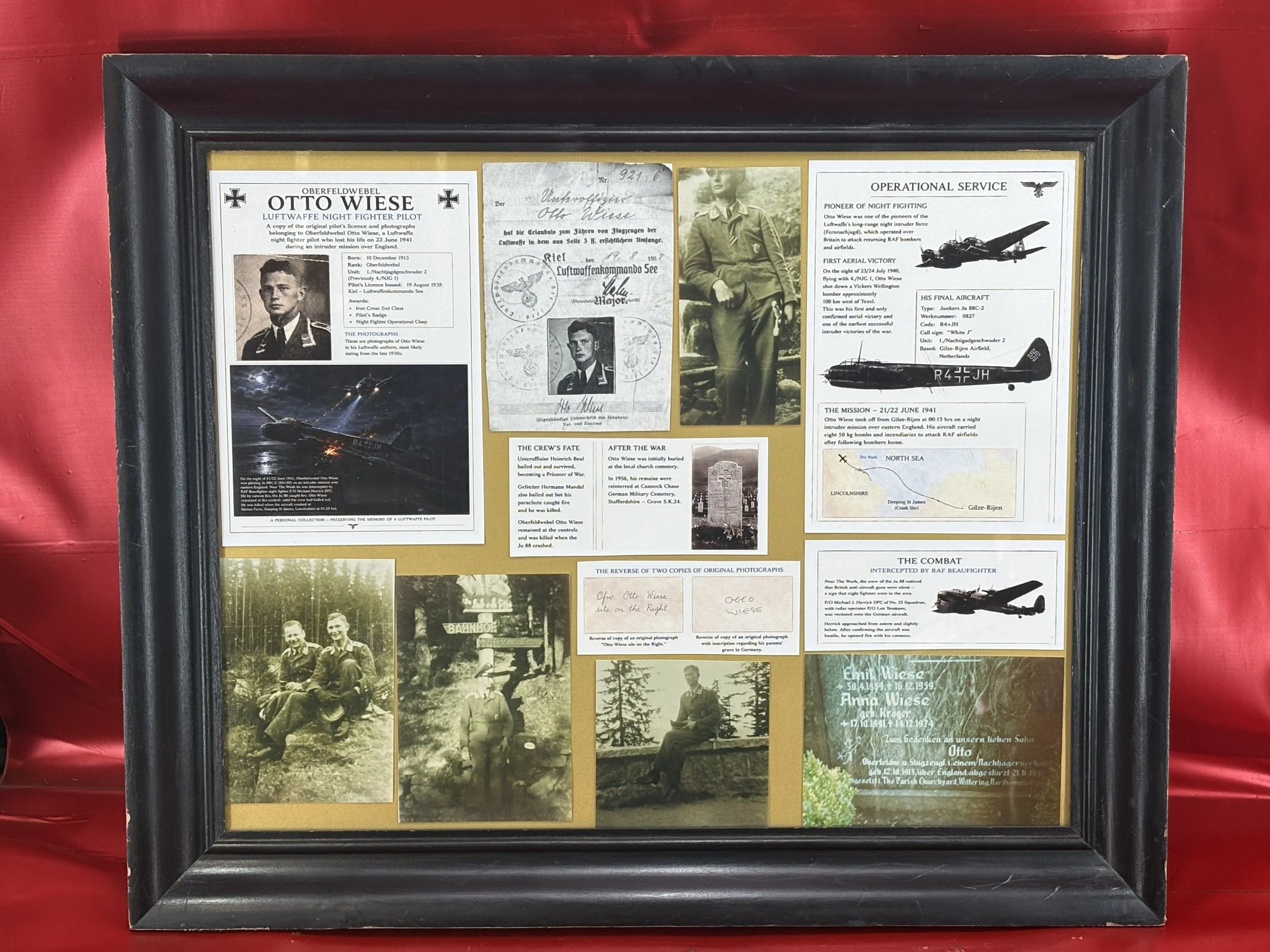 Image 1 of 11
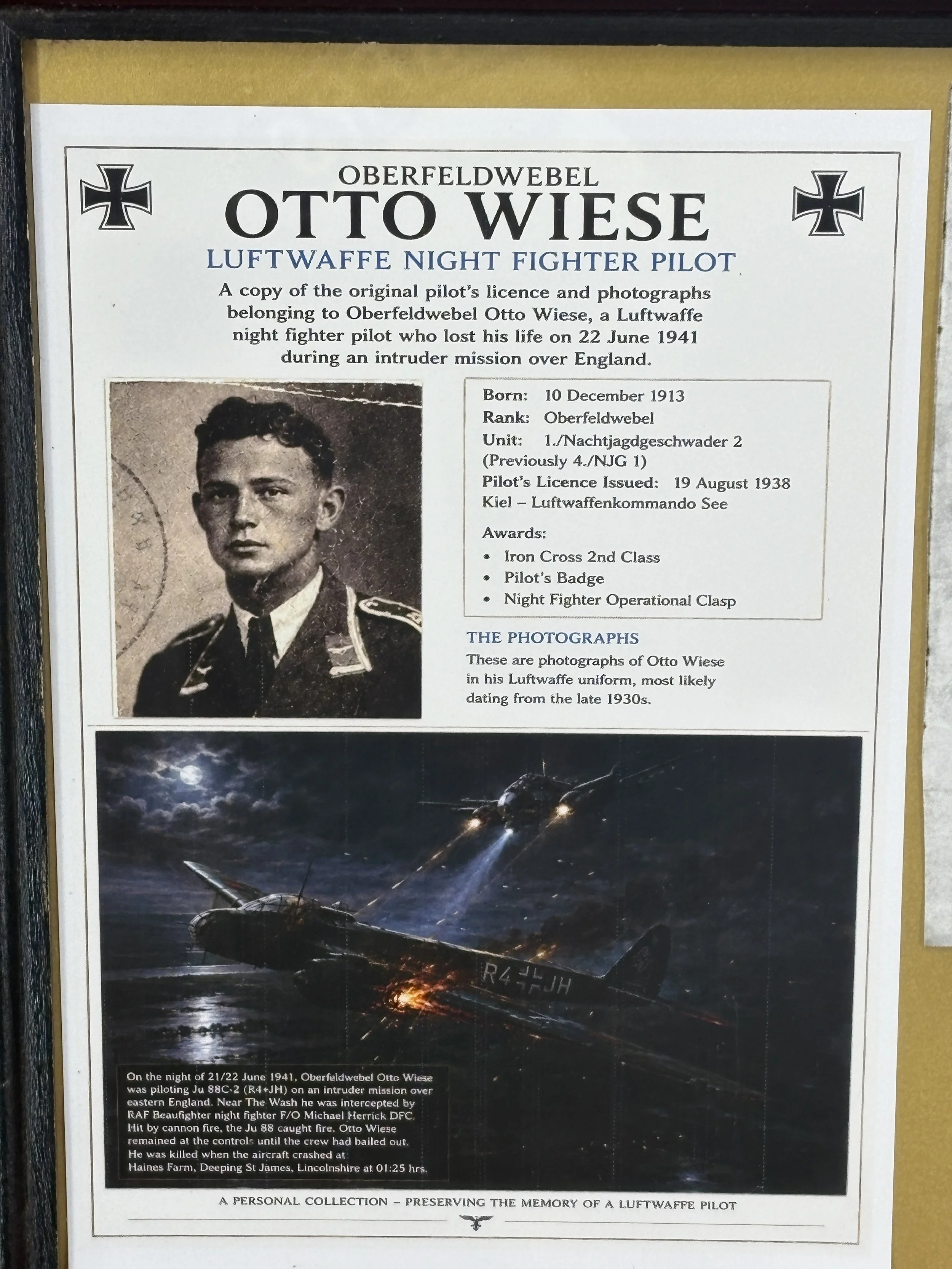 Image 2 of 11
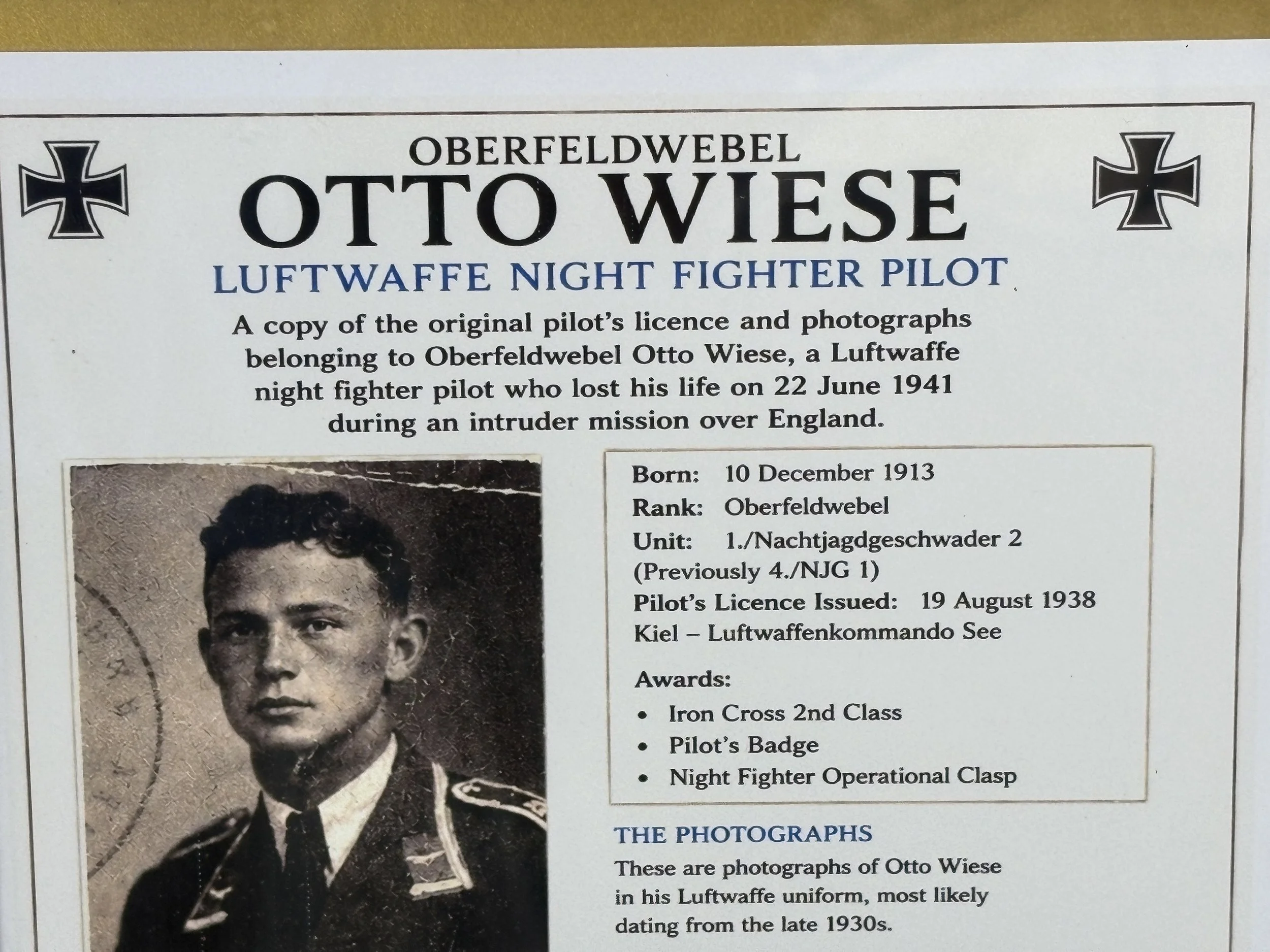 Image 3 of 11
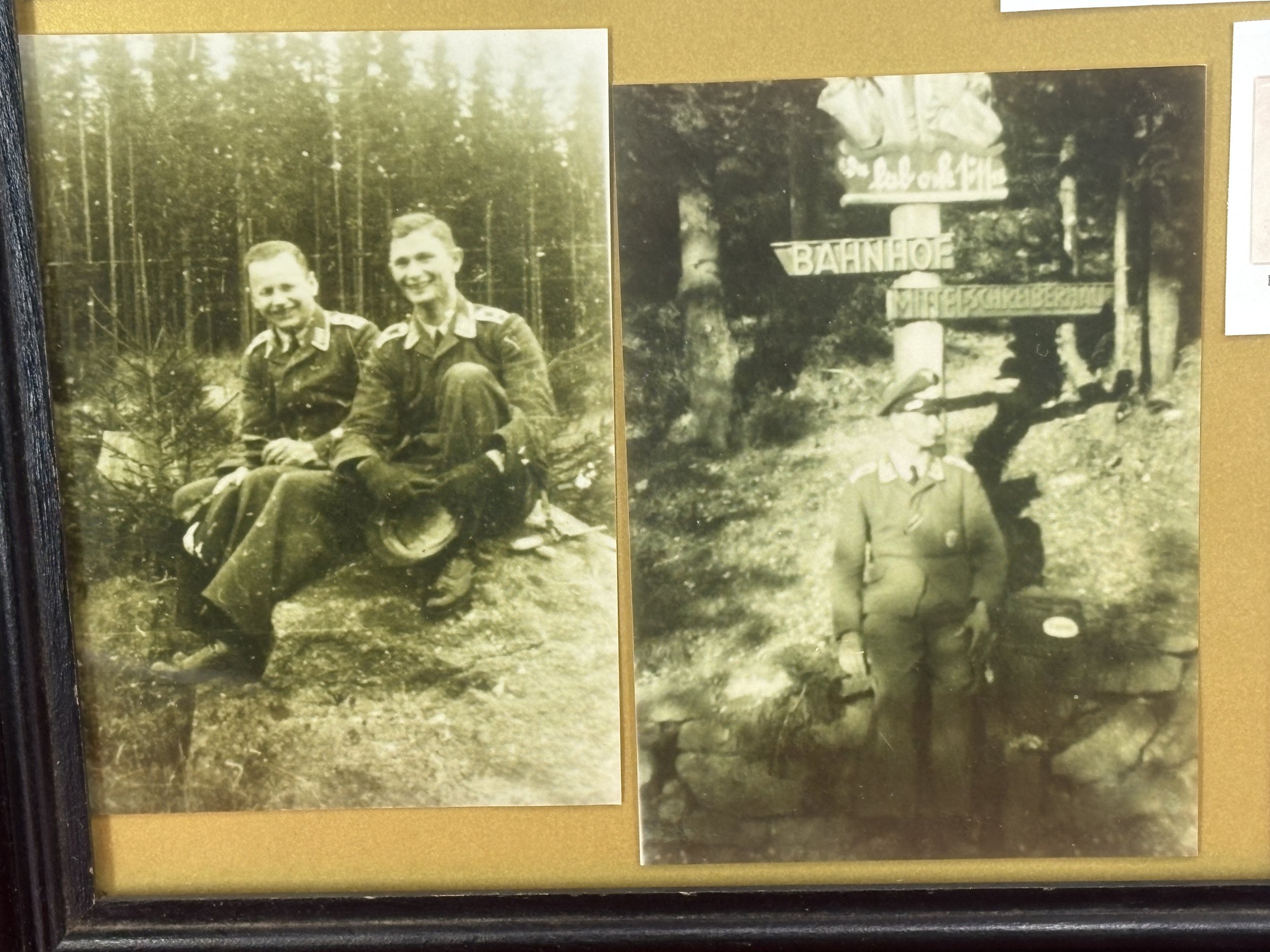 Image 4 of 11
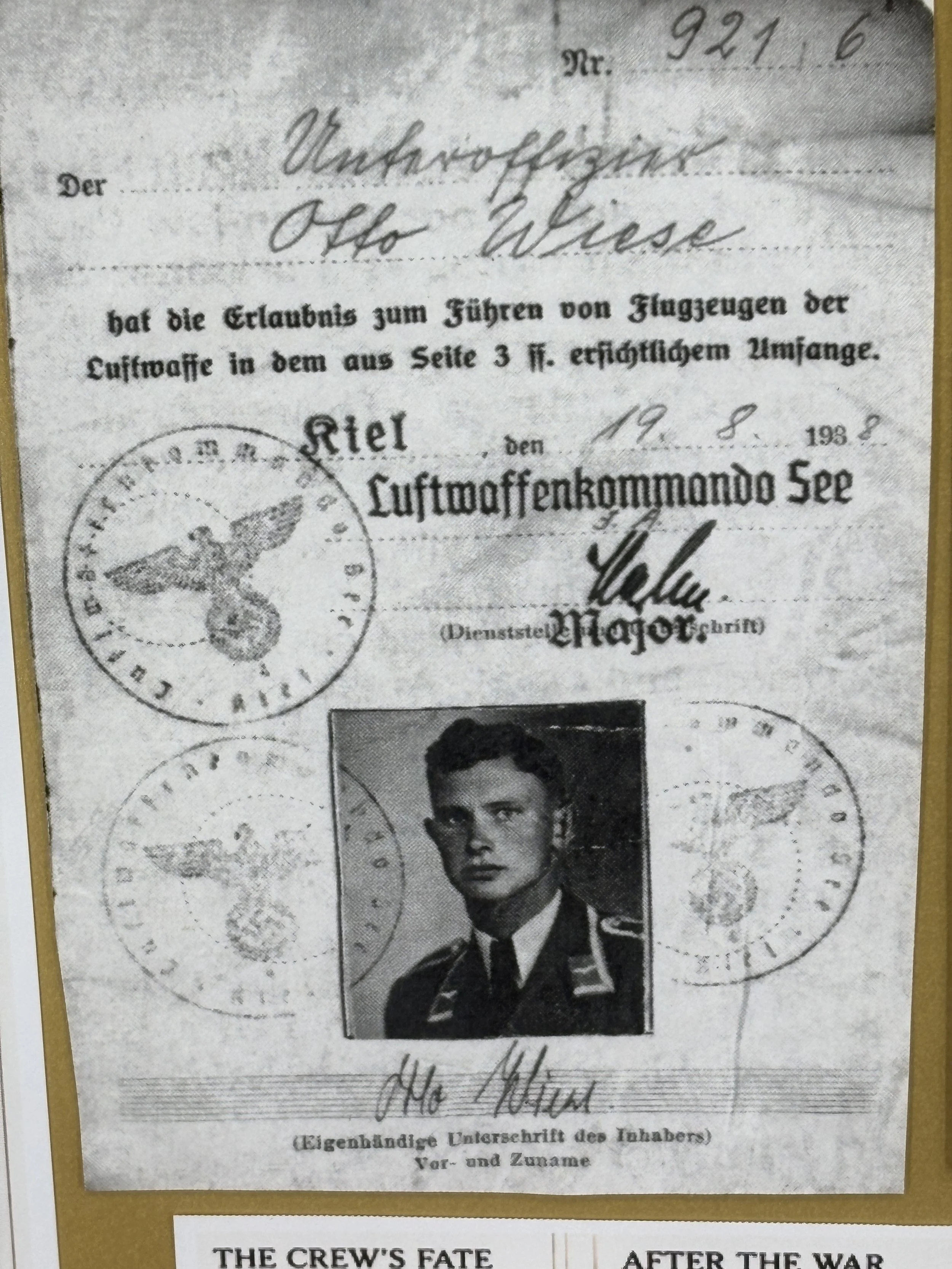 Image 5 of 11
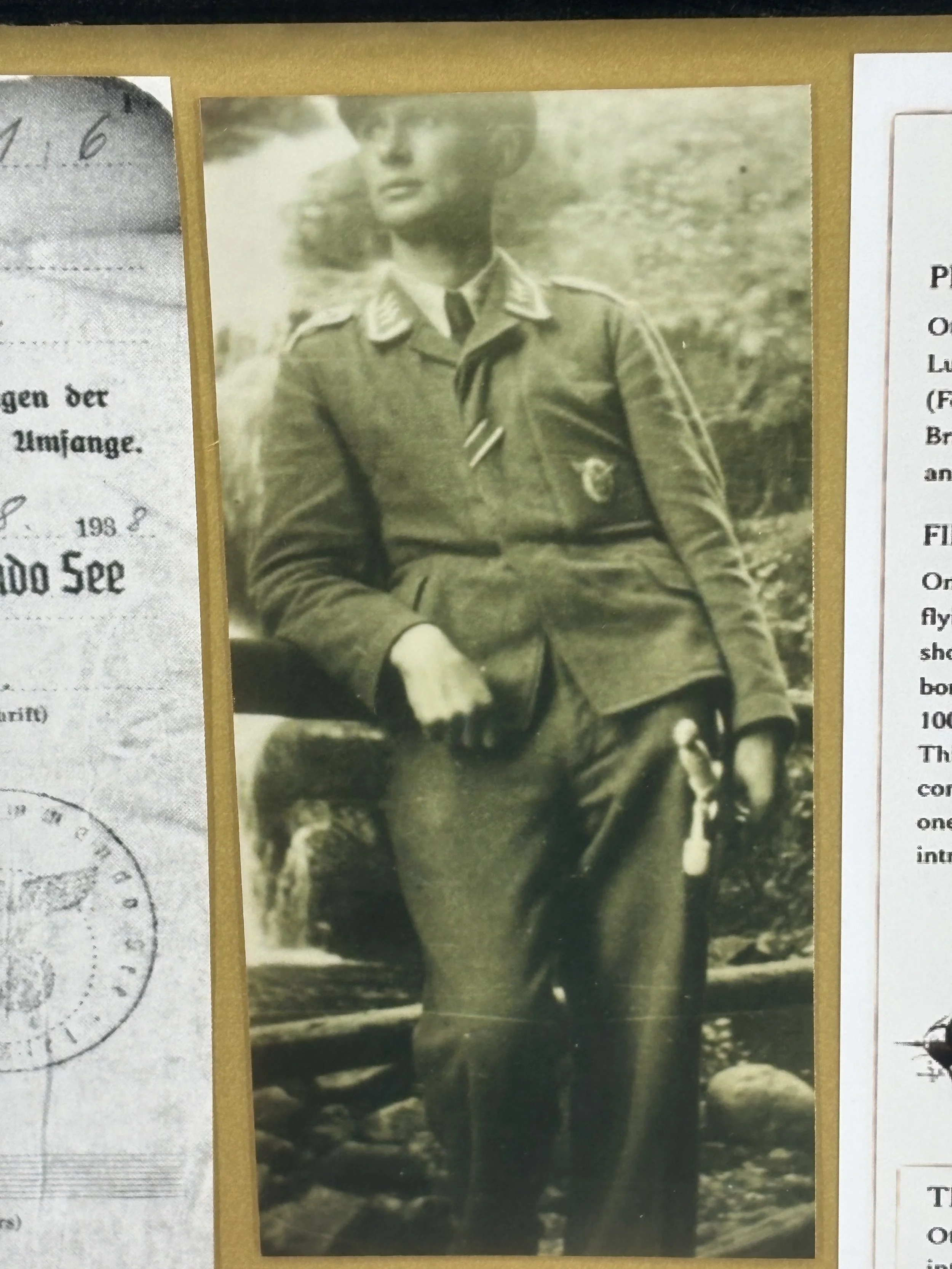 Image 6 of 11
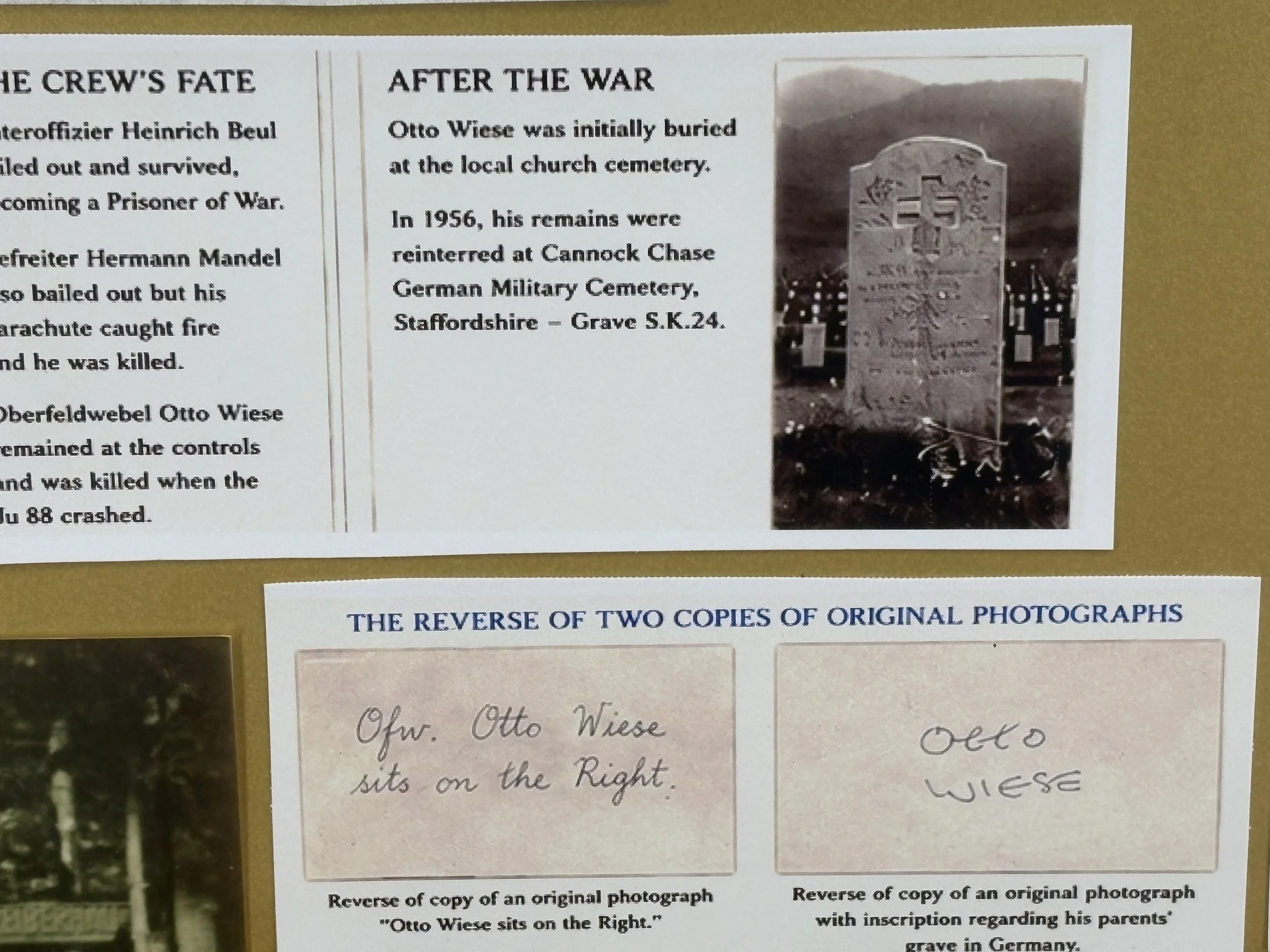 Image 7 of 11
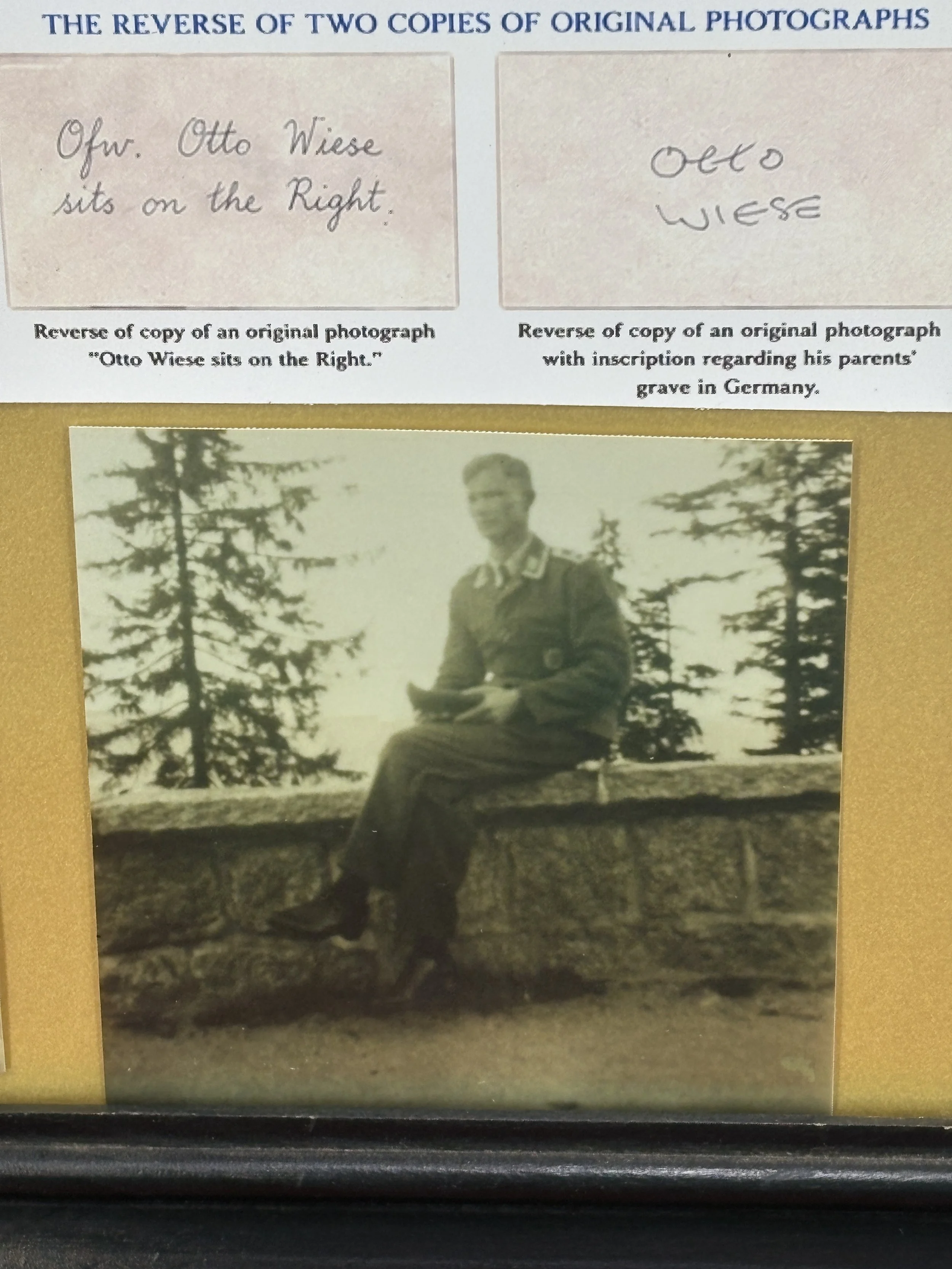 Image 8 of 11
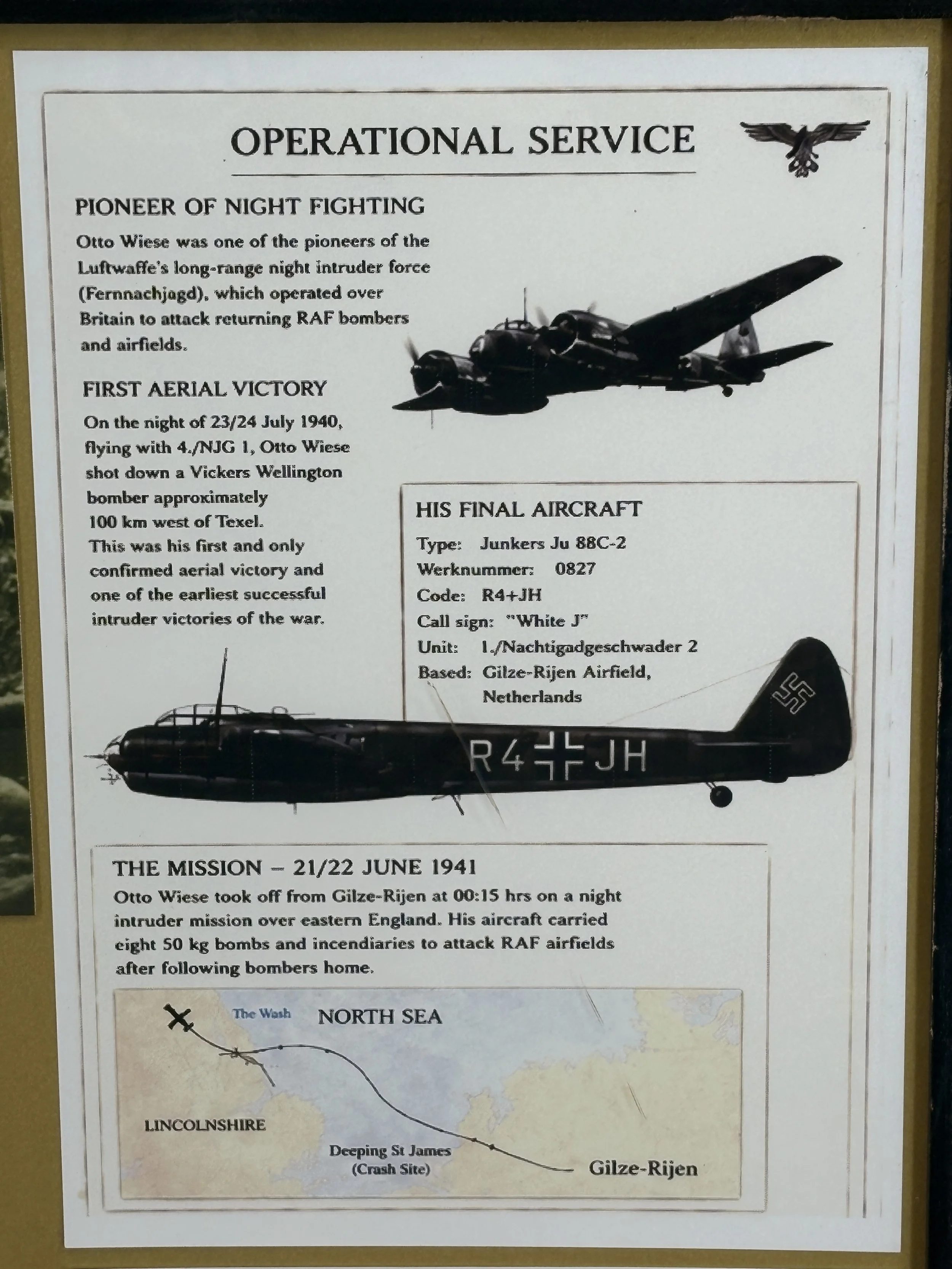 Image 9 of 11
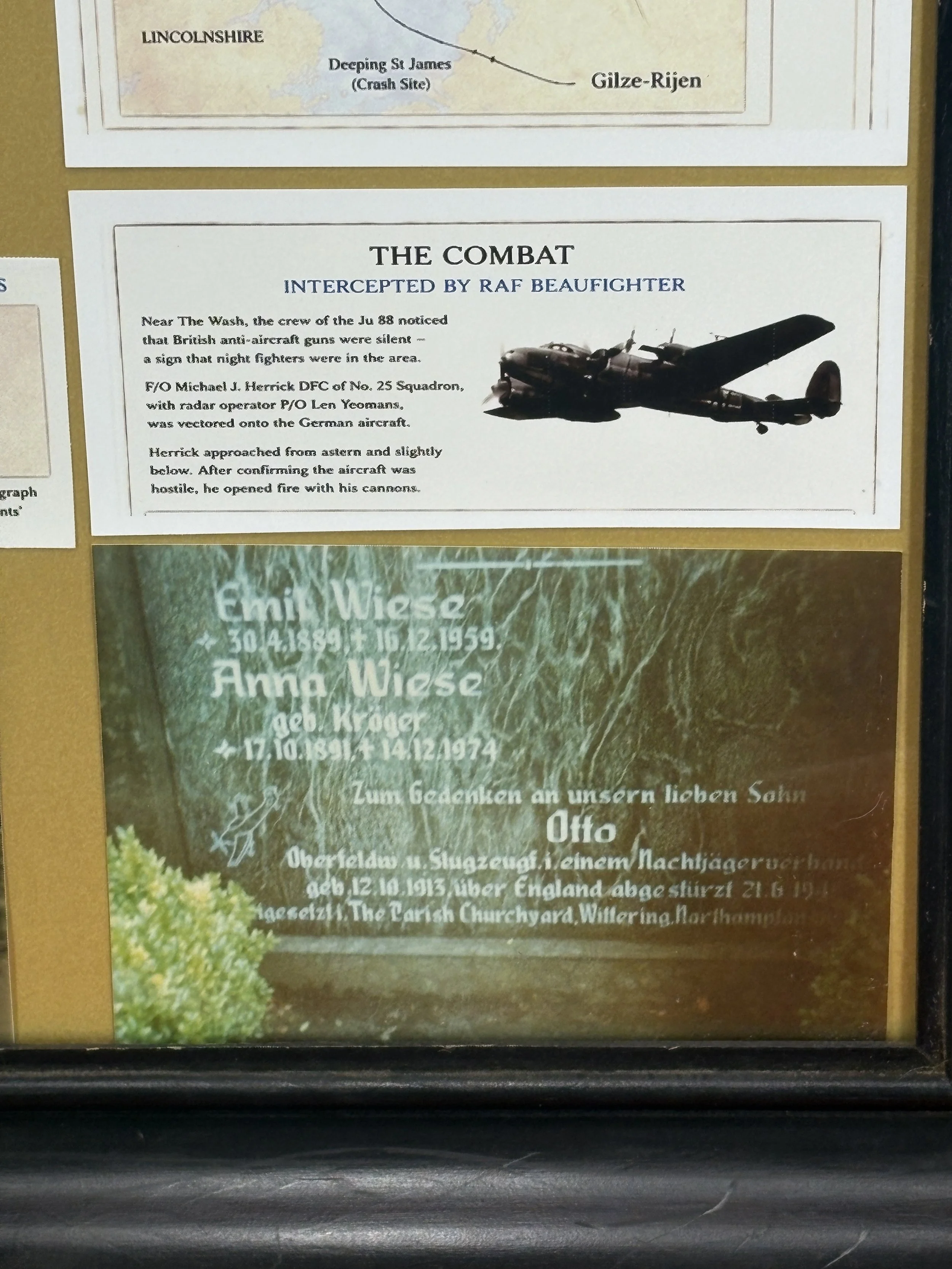 Image 10 of 11
 Image 11 of 11