Sale Price:
£20.00
Original Price:
£30.00
Copilot said:
This is an internal engine bay mounting bracket, most likely associated with the exhaust system, where it would have supported and secured pipework within the engine compartment.
The component is incomplete but survives in remarkably good condition considering its history. Although the tank was destroyed, the bracket itself escaped major damage, with the most obvious evidence of the explosion being the torn section and damaged bolt hole where it was ripped from its original mounting point. The piece remains solid and stable throughout, displaying surface rust consistent with its age and recovery conditions. It has been carefully cleaned and preserved and makes an excellent display item for any armoured vehicle or battlefield relic collection.
The bracket measures approximately 8 inches long by 4 inches wide.
This relic was recovered from the site of a destroyed German Tiger I tank belonging to schwere Panzer-Abteilung 301, serving with the 9th Panzer Division under the 5th Panzer Army. The tank was lost near Elsdorf, south of Düsseldorf, during the closing stages of the war in the Ruhr Pocket in April 1945.
Included are two A5 laminated information cards featuring historical background and a map showing the recovery location.
The 5th Panzer Army was originally formed in North Africa in December 1942, surrendering in Tunisia in May 1943. Reformed in August 1944 from Panzergruppe West, the army fought in Normandy and narrowly escaped destruction in the Falaise Pocket before withdrawing towards Germany. It later took part in the Lorraine campaign, the Ardennes Offensive of December 1944, and the fighting around the Remagen bridgehead.
During the final months of the war, elements of the 9th Panzer Division were rebuilt with support from schwere Panzer-Abteilung 301, which was equipped with Tiger tanks. The formation fought desperately in the defence of western Germany before being encircled and destroyed within the Ruhr Pocket, finally surrendering on 17 April 1945.
A scarce relic from one of Germany's most iconic tanks, recovered from a documented battlefield location associated with the final battles of the war in Western Europe
Copilot said:
This is an internal engine bay mounting bracket, most likely associated with the exhaust system, where it would have supported and secured pipework within the engine compartment.
The component is incomplete but survives in remarkably good condition considering its history. Although the tank was destroyed, the bracket itself escaped major damage, with the most obvious evidence of the explosion being the torn section and damaged bolt hole where it was ripped from its original mounting point. The piece remains solid and stable throughout, displaying surface rust consistent with its age and recovery conditions. It has been carefully cleaned and preserved and makes an excellent display item for any armoured vehicle or battlefield relic collection.
The bracket measures approximately 8 inches long by 4 inches wide.
This relic was recovered from the site of a destroyed German Tiger I tank belonging to schwere Panzer-Abteilung 301, serving with the 9th Panzer Division under the 5th Panzer Army. The tank was lost near Elsdorf, south of Düsseldorf, during the closing stages of the war in the Ruhr Pocket in April 1945.
Included are two A5 laminated information cards featuring historical background and a map showing the recovery location.
The 5th Panzer Army was originally formed in North Africa in December 1942, surrendering in Tunisia in May 1943. Reformed in August 1944 from Panzergruppe West, the army fought in Normandy and narrowly escaped destruction in the Falaise Pocket before withdrawing towards Germany. It later took part in the Lorraine campaign, the Ardennes Offensive of December 1944, and the fighting around the Remagen bridgehead.
During the final months of the war, elements of the 9th Panzer Division were rebuilt with support from schwere Panzer-Abteilung 301, which was equipped with Tiger tanks. The formation fought desperately in the defence of western Germany before being encircled and destroyed within the Ruhr Pocket, finally surrendering on 17 April 1945.
A scarce relic from one of Germany's most iconic tanks, recovered from a documented battlefield location associated with the final battles of the war in Western Europe

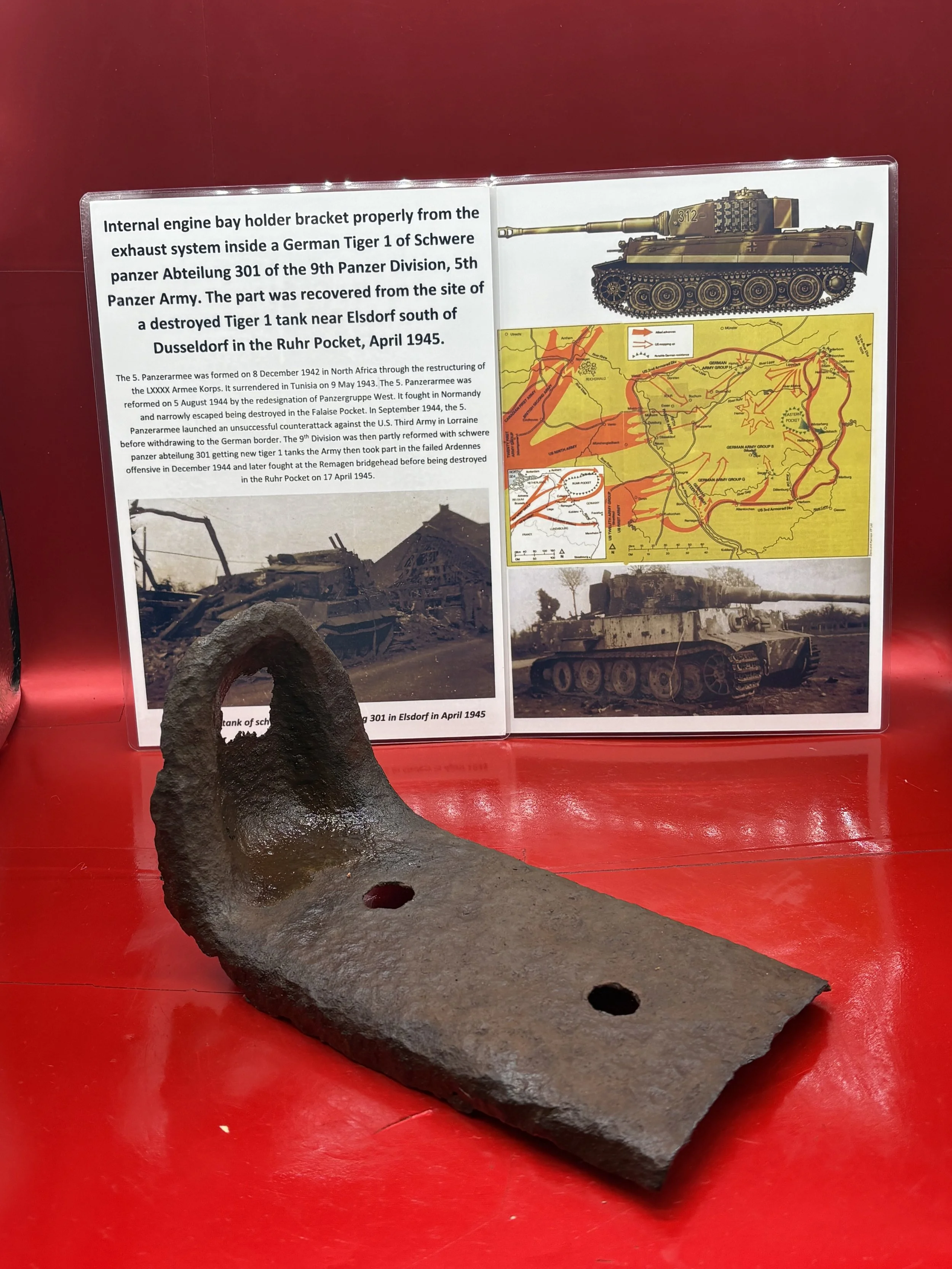 Image 1 of 8
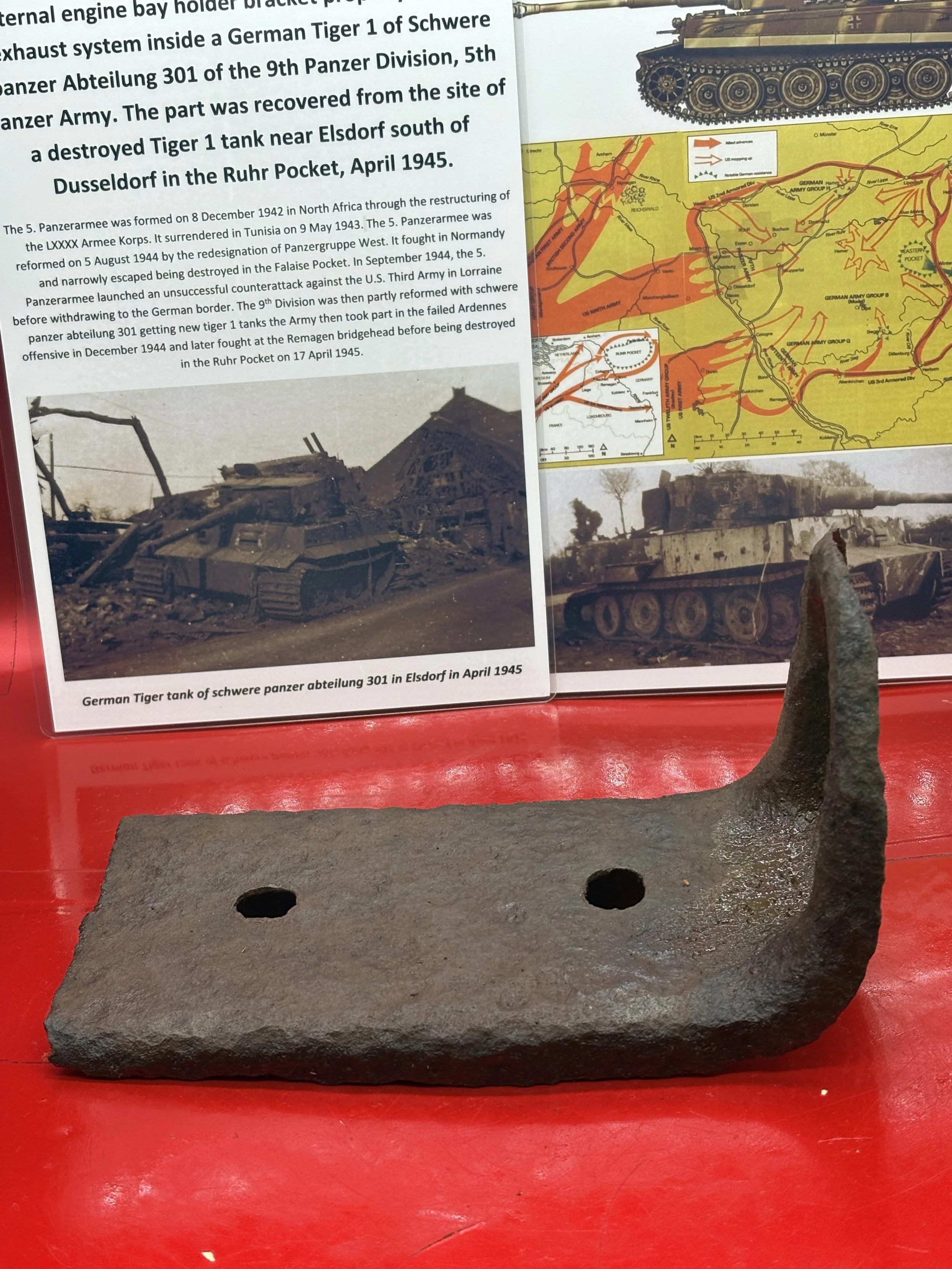 Image 2 of 8
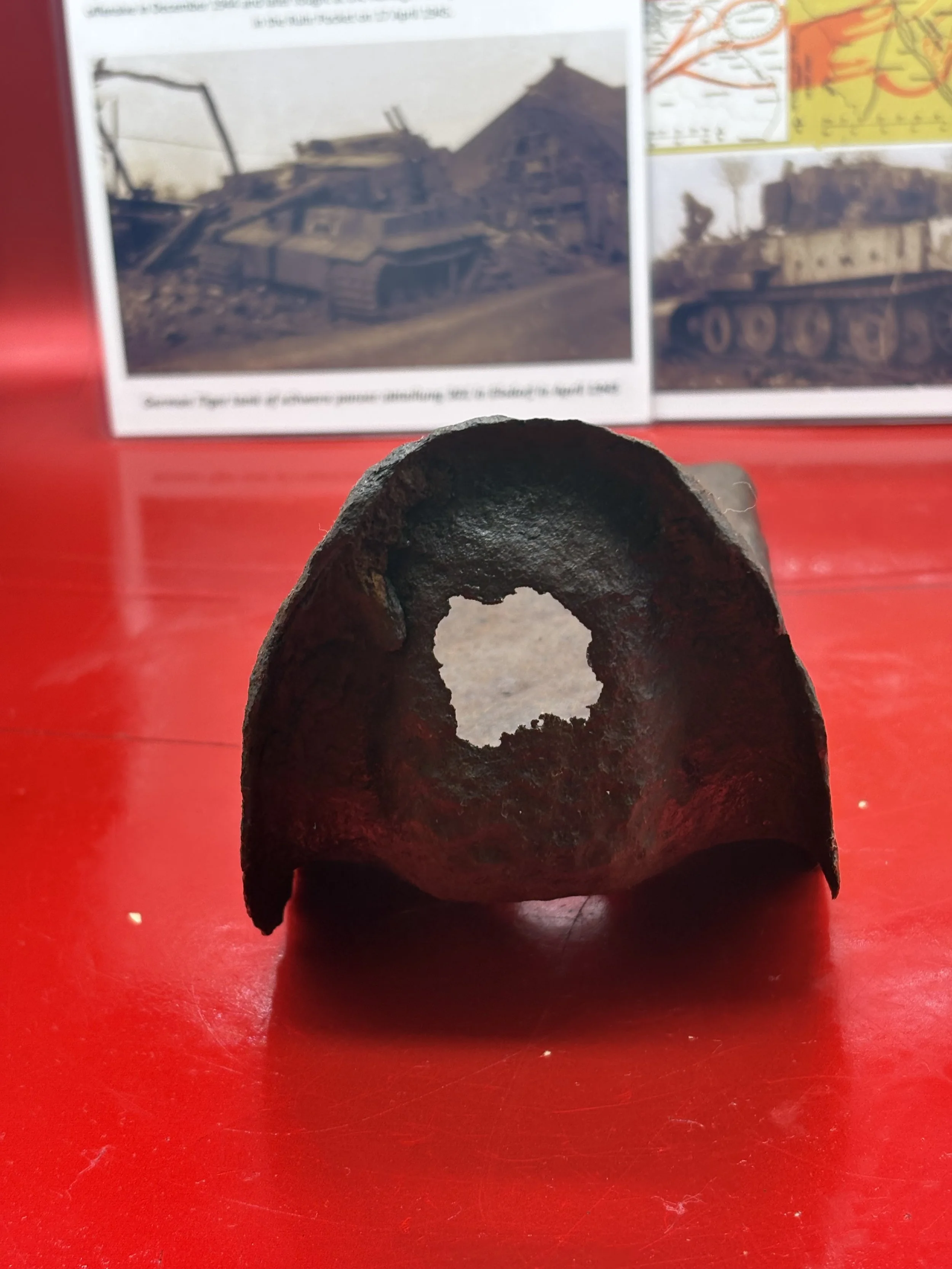 Image 3 of 8
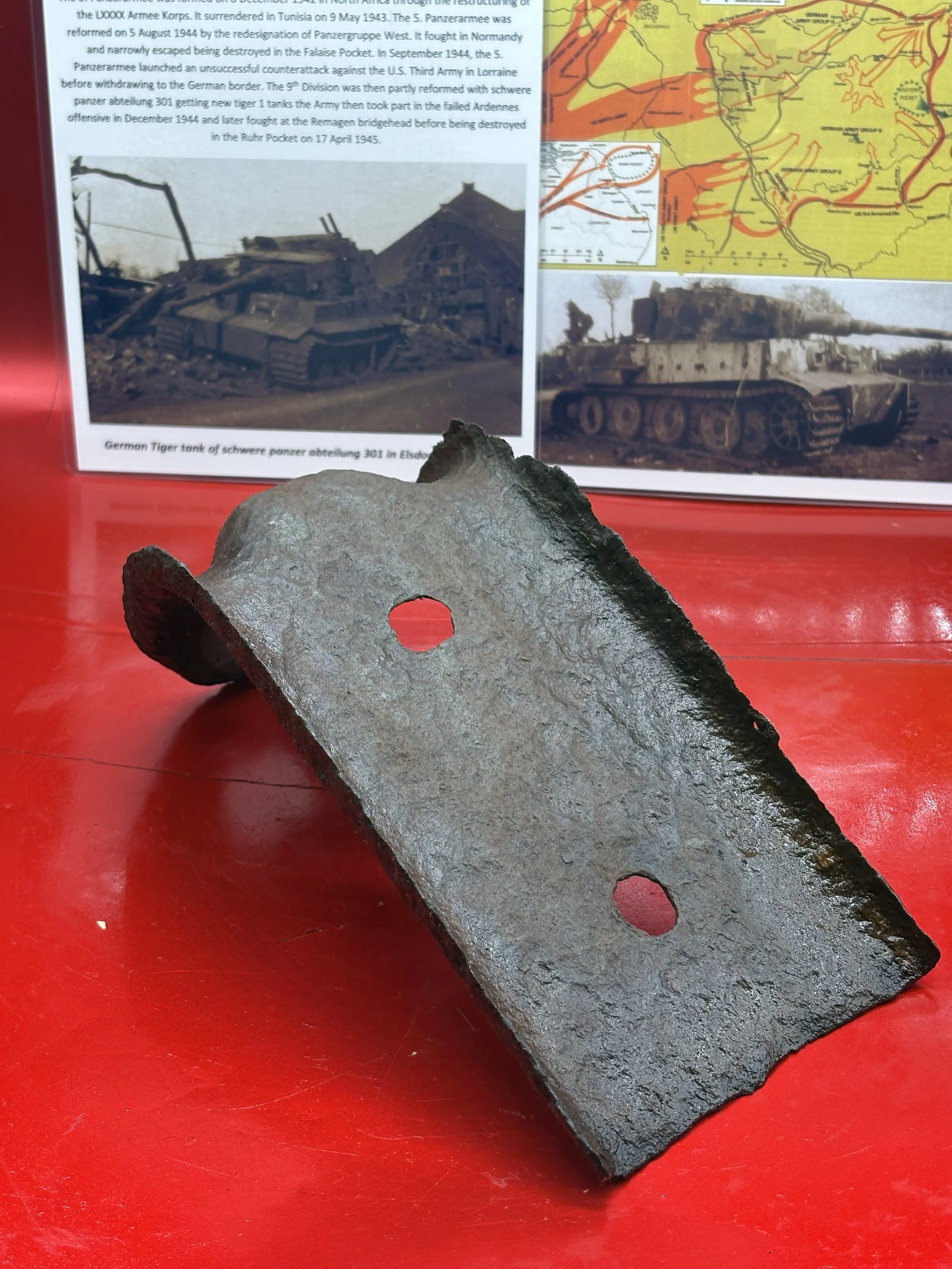 Image 4 of 8
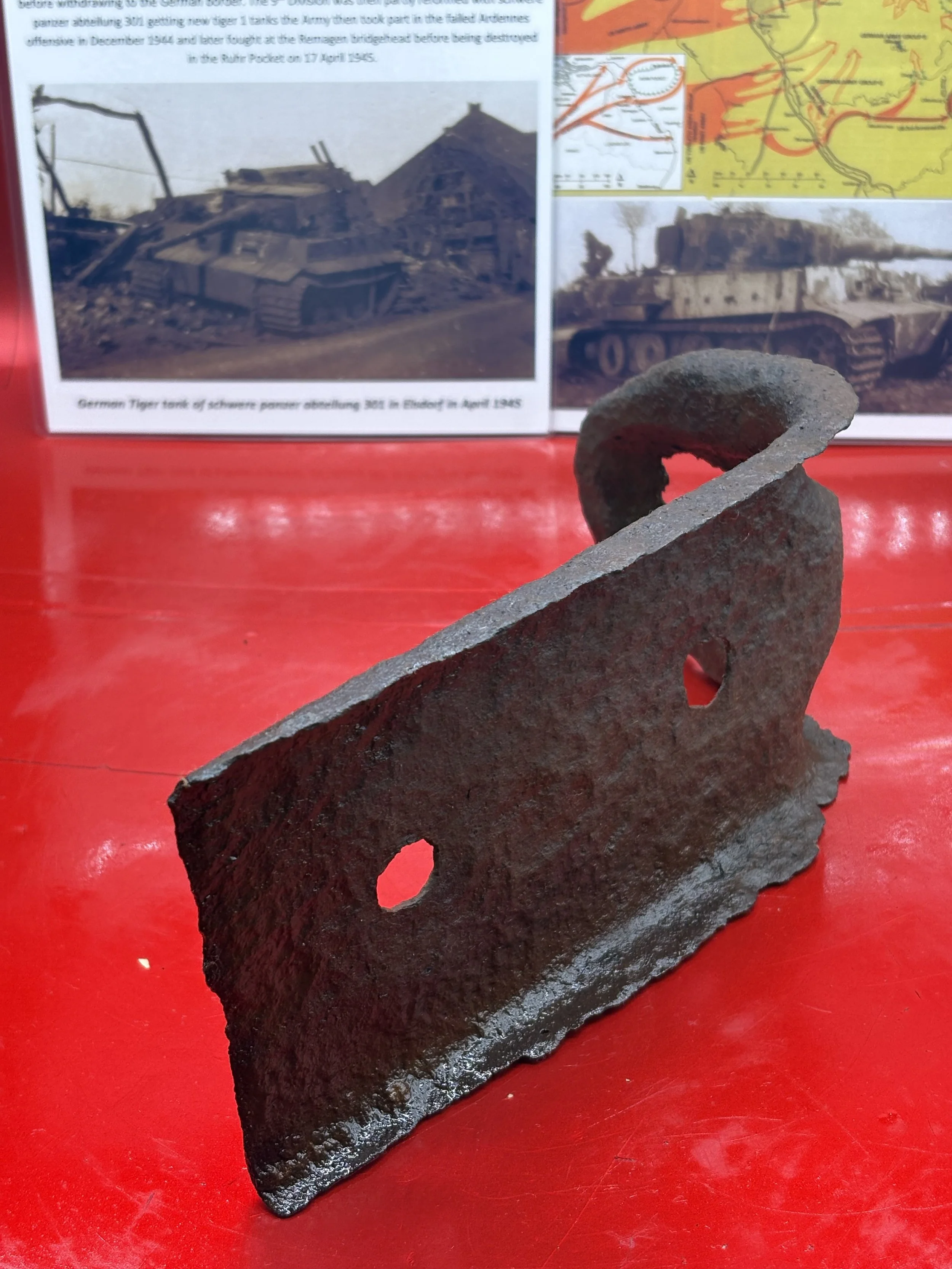 Image 5 of 8
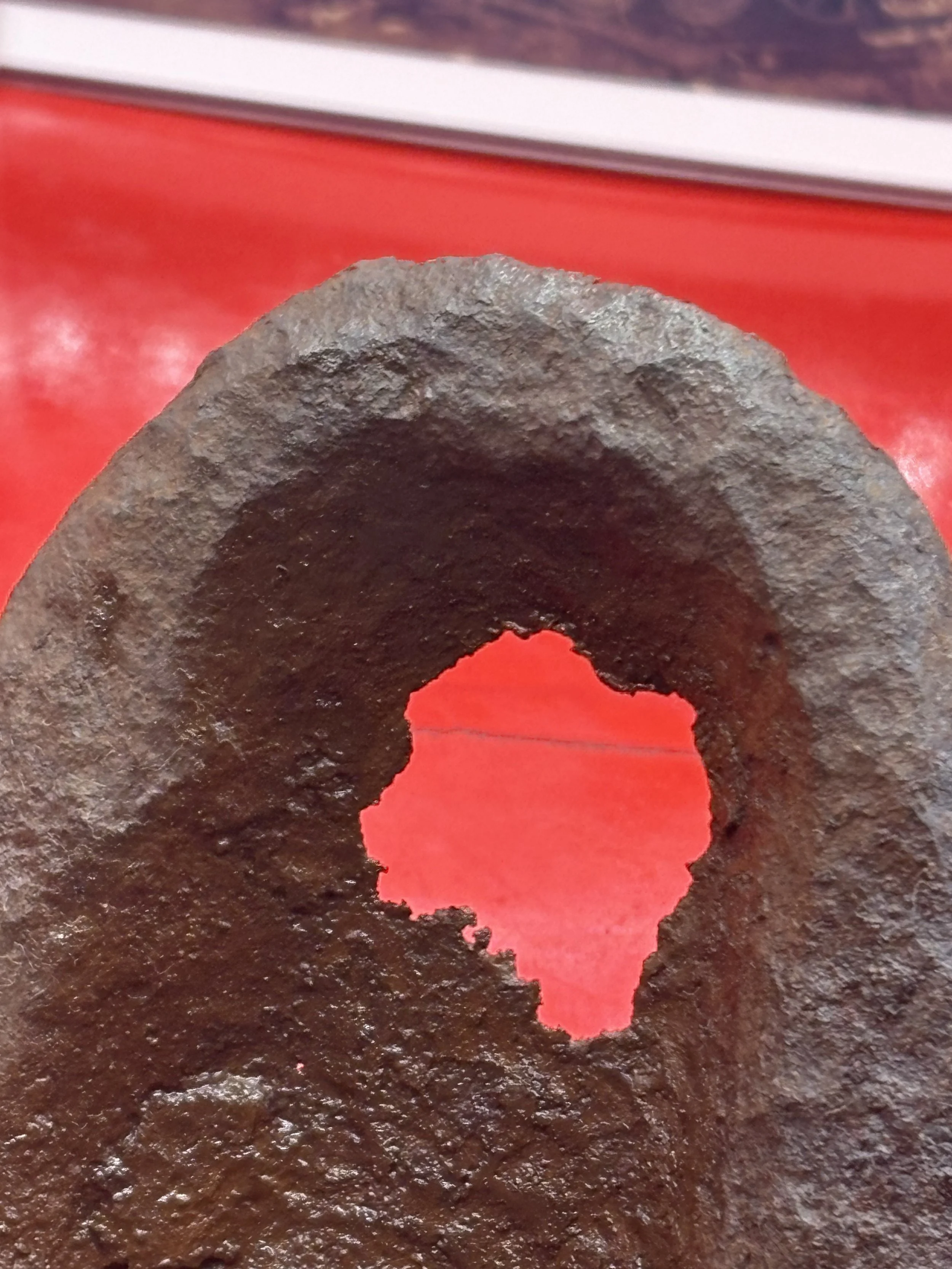 Image 6 of 8
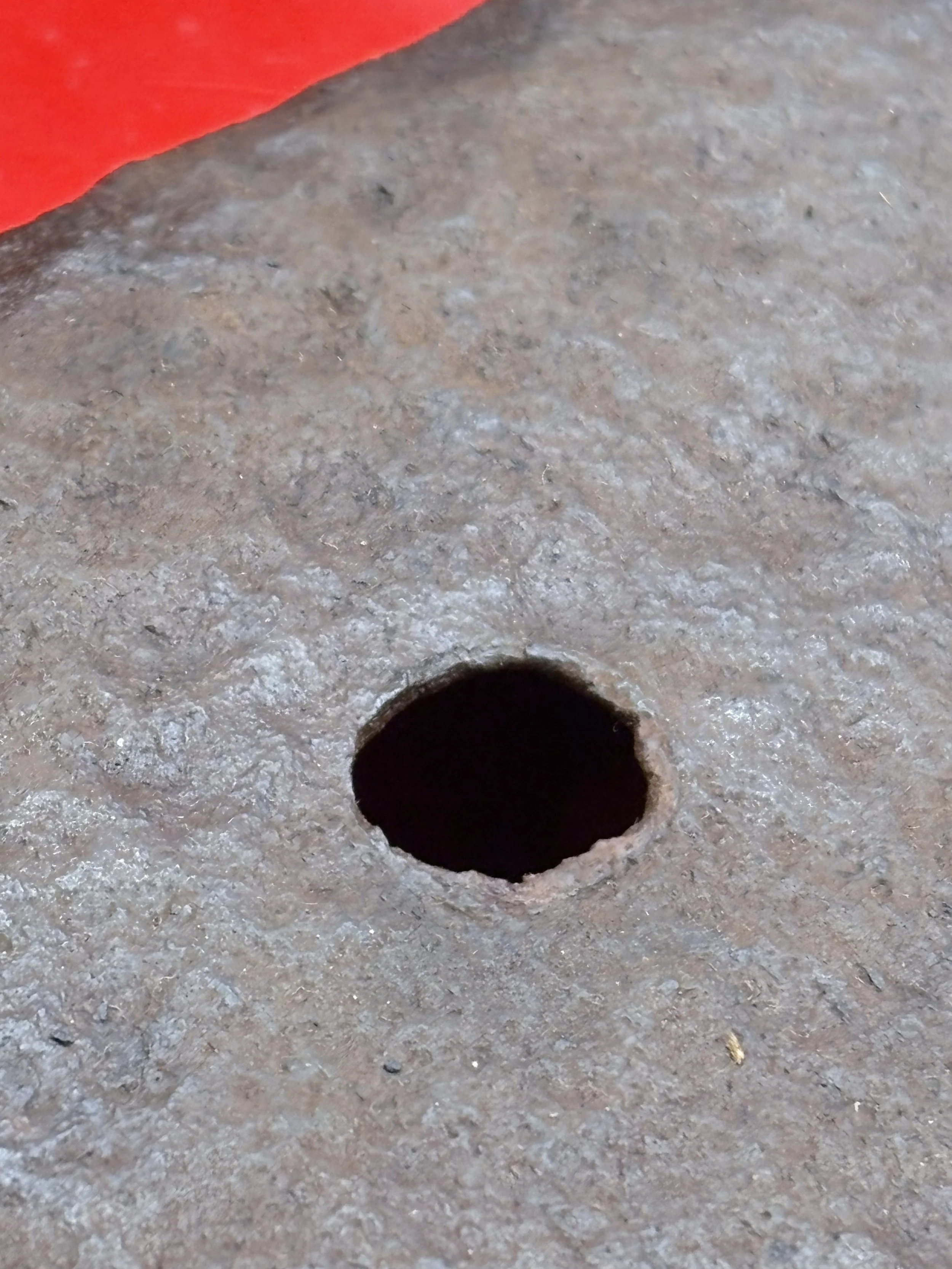 Image 7 of 8
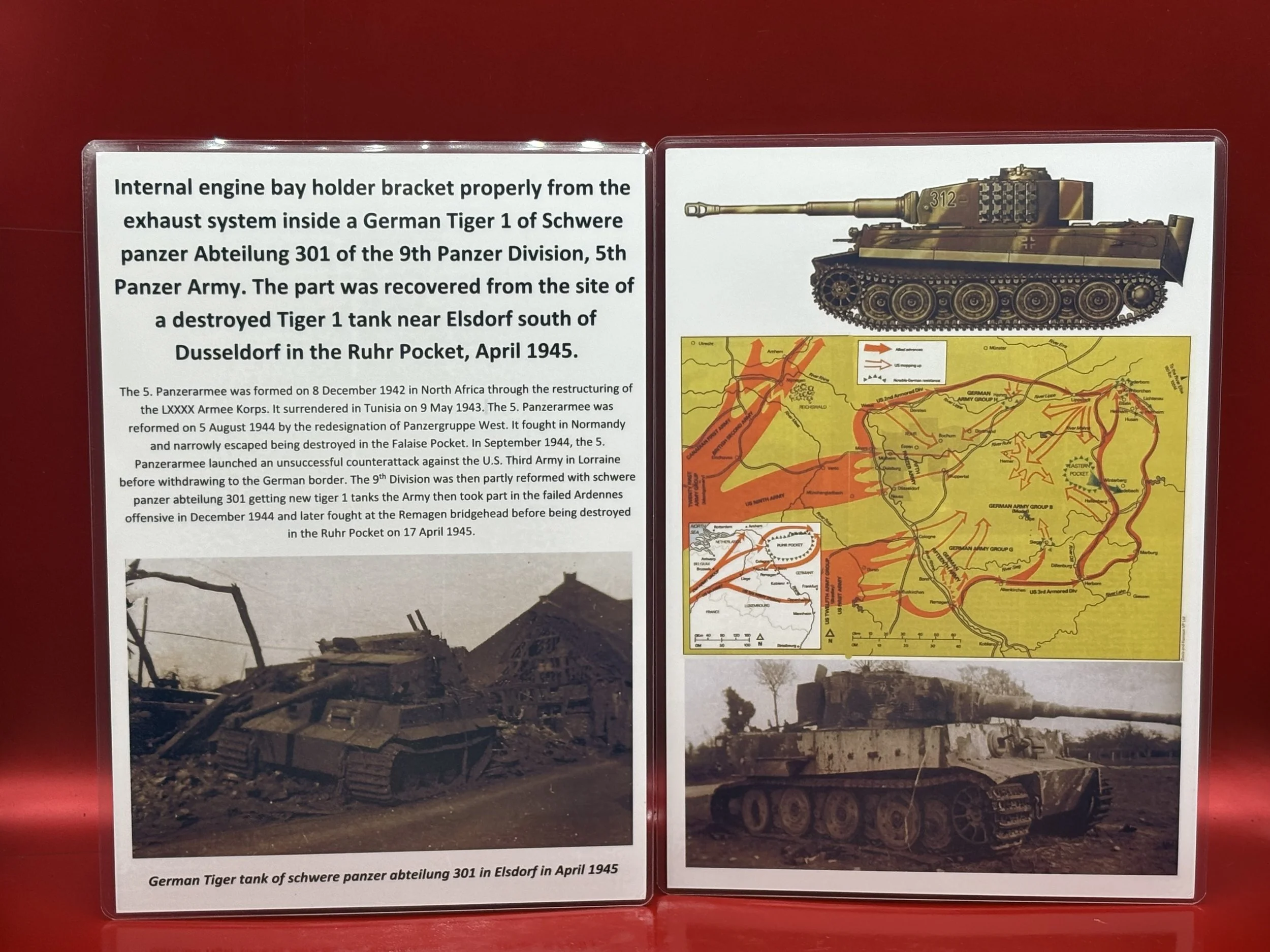 Image 8 of 8