This is an authentic, glass-framed group of aluminium airframe sections and engine parts recovered from a aircraft lost during the last Christmas of the war on a very special mission. The relics which are in fantastic condition which still retains most of there original colours and lots of paintwork remains only very lightly corroded and pitted from laying around the surface on the mountains and there is very little around from this particular aircraft and a increasingly scarce piece from one of the Luftwaffe's most unusual crash sites because of the mission the aircraft was on carrying spies in to Russia. .
The aluminium sections are torn, bent and distorted by the impact of the crash but remains in good, solid condition. They have been carefully cleaned while preserving its original character and wartime patina.
The relics are presented in a glass-fronted box frame, complete with aircraft information, making it an excellent display piece for any aviation or Second World War collection. The frame measures approximately 12 half inches by 12 half inches.
The parts come from German Heinkel he 111 bomber code D7+GP,carrying abwehr agents in to Russia in Christmas time on 16 December 1944 when it crashed in Khibiny Mountains, Russia.
The He 111H-16 marked a later wartime development of the type. On 16 December 1944, an He 111 identified by the code D7+GP departed from Bardufoss in German-occupied Norway on a secret intelligence operation over Soviet territory on the Kola Peninsula. Accounts of the mission describe five agents being carried aboard, dressed in Soviet military uniforms and equipped with forged papers, maps and Soviet currency. Their reported task was to gather information about Soviet military activity in the Murmansk region, including troop movements and possible preparations for operations against German-occupied Norway. The aircraft is listed in loss records as belonging to Aufklärungsstaffel 1.(F)/AGr 124, a long-range reconnaissance unit. It was therefore a covert reconnaissance and agent-insertion flight, rather than a normal bombing mission.
The loss and crash site. The He 111 crashed in the Khibiny Mountains on the Kola Peninsula, north of Apatity and near the towns of Kirovsk and Apatity in the Murmansk region of the Soviet Union (now north-western Russia). Available accounts indicate that the aircraft was not shot down: it appears to have struck a mountainside in darkness and poor visibility during the polar winter. The wreck was reportedly discovered in 1945, and later visits documented scattered aircraft remains on the mountainside. A Russian account of the operation says that several German aircrew and mission personnel, together with agents, were found beneath the wreckage. The precise identities and fate of everyone aboard are not consistently detailed in accessible sources.

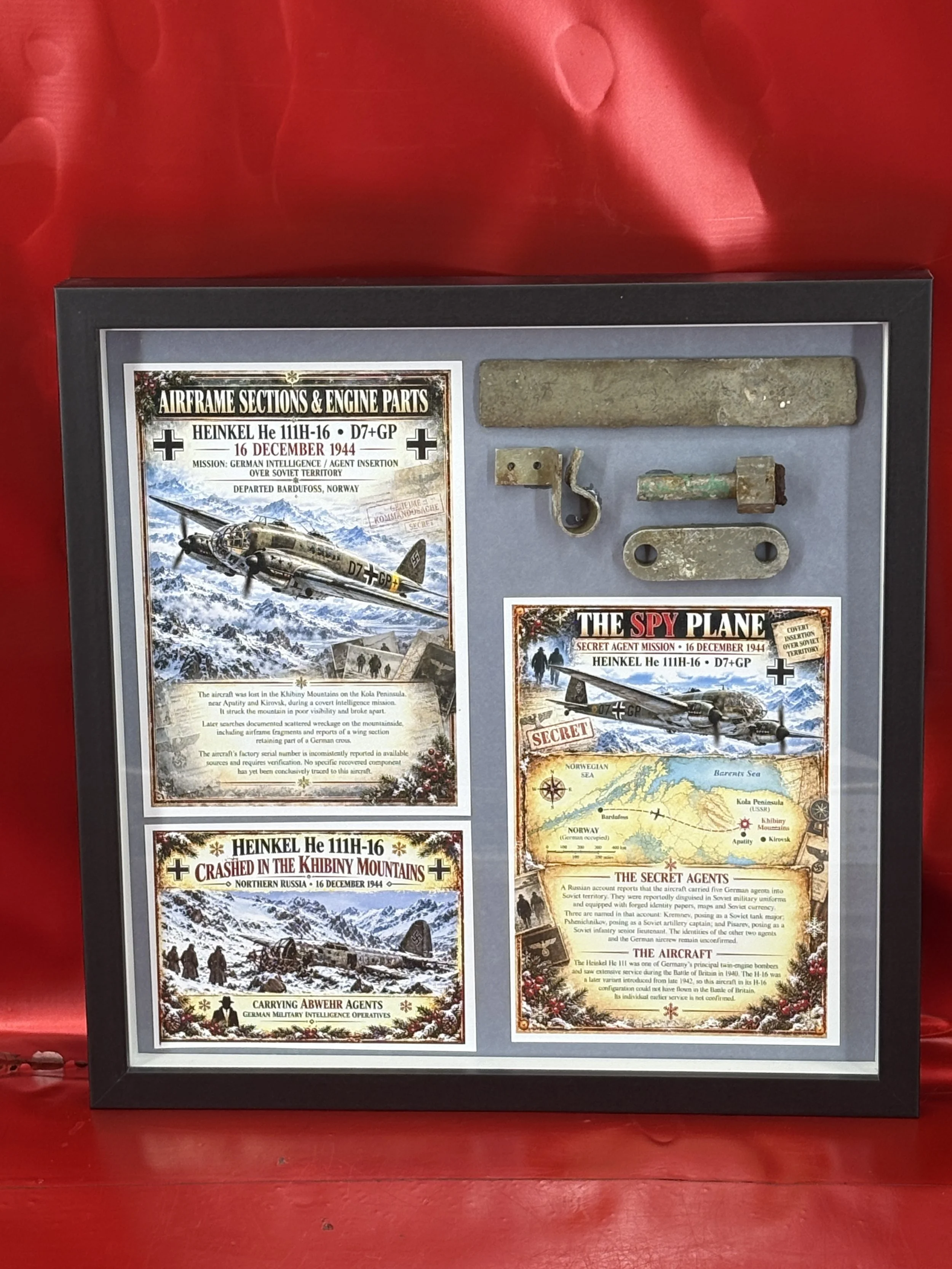 Image 1 of 9
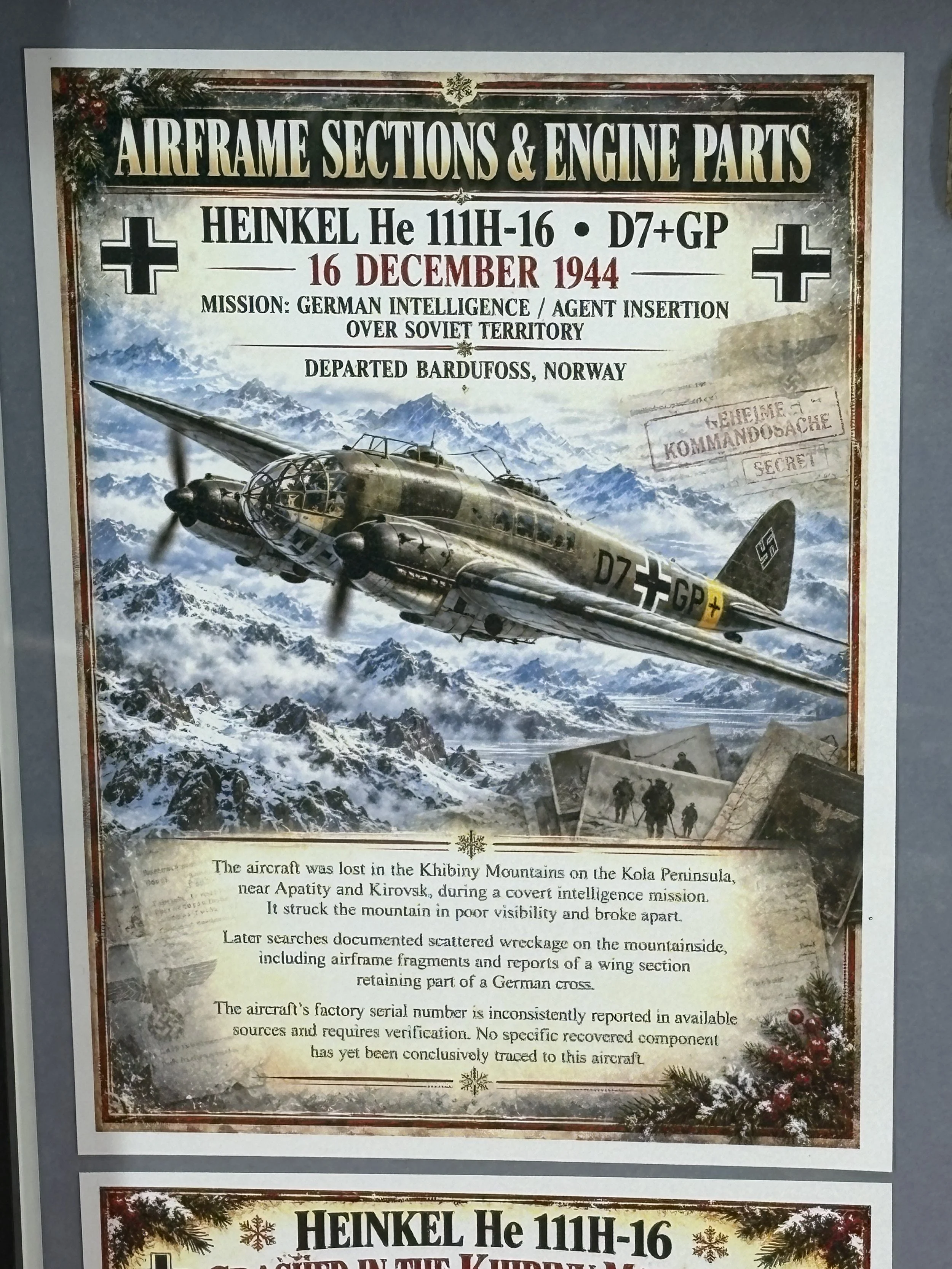 Image 2 of 9
 Image 3 of 9
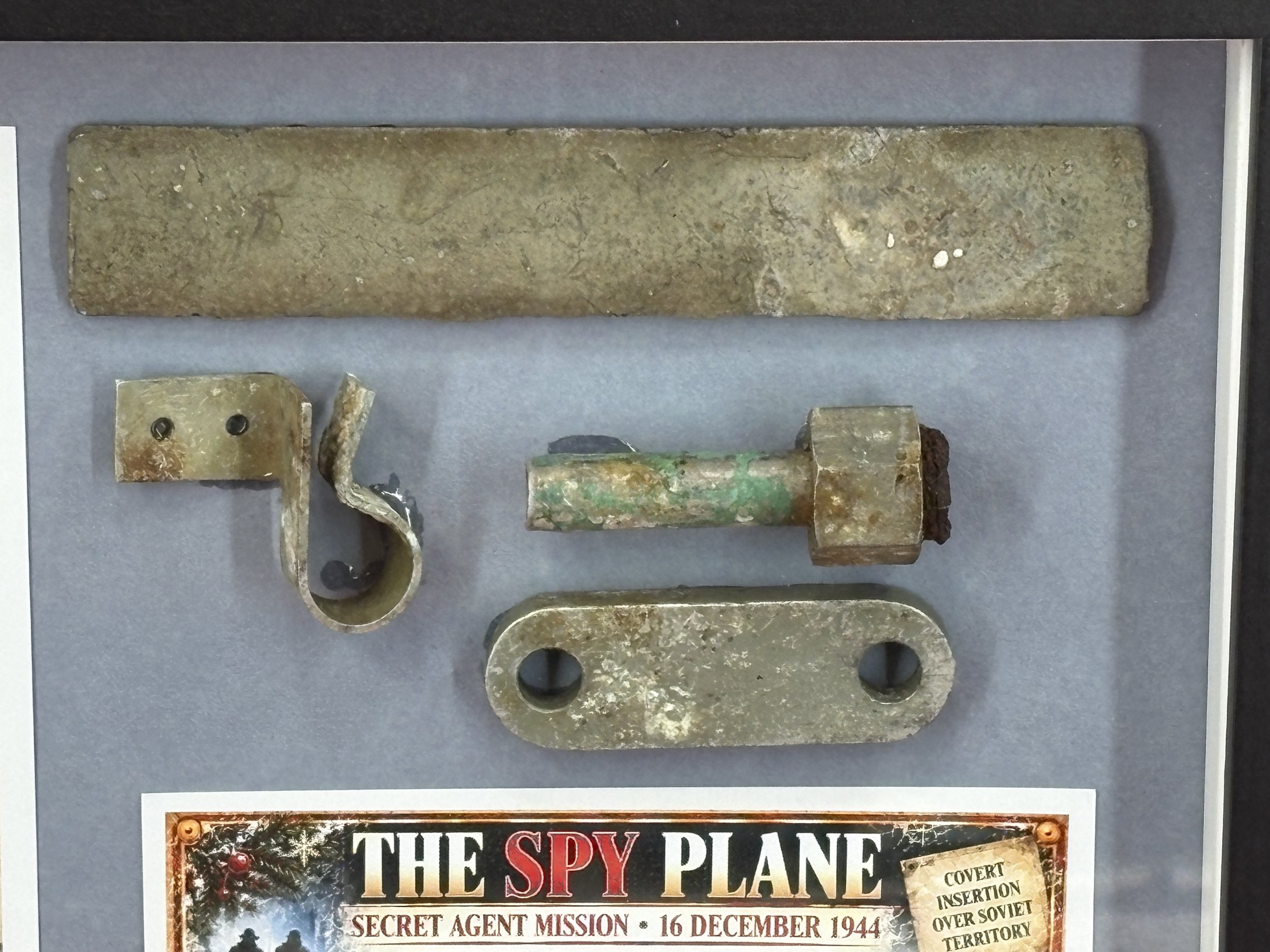 Image 4 of 9
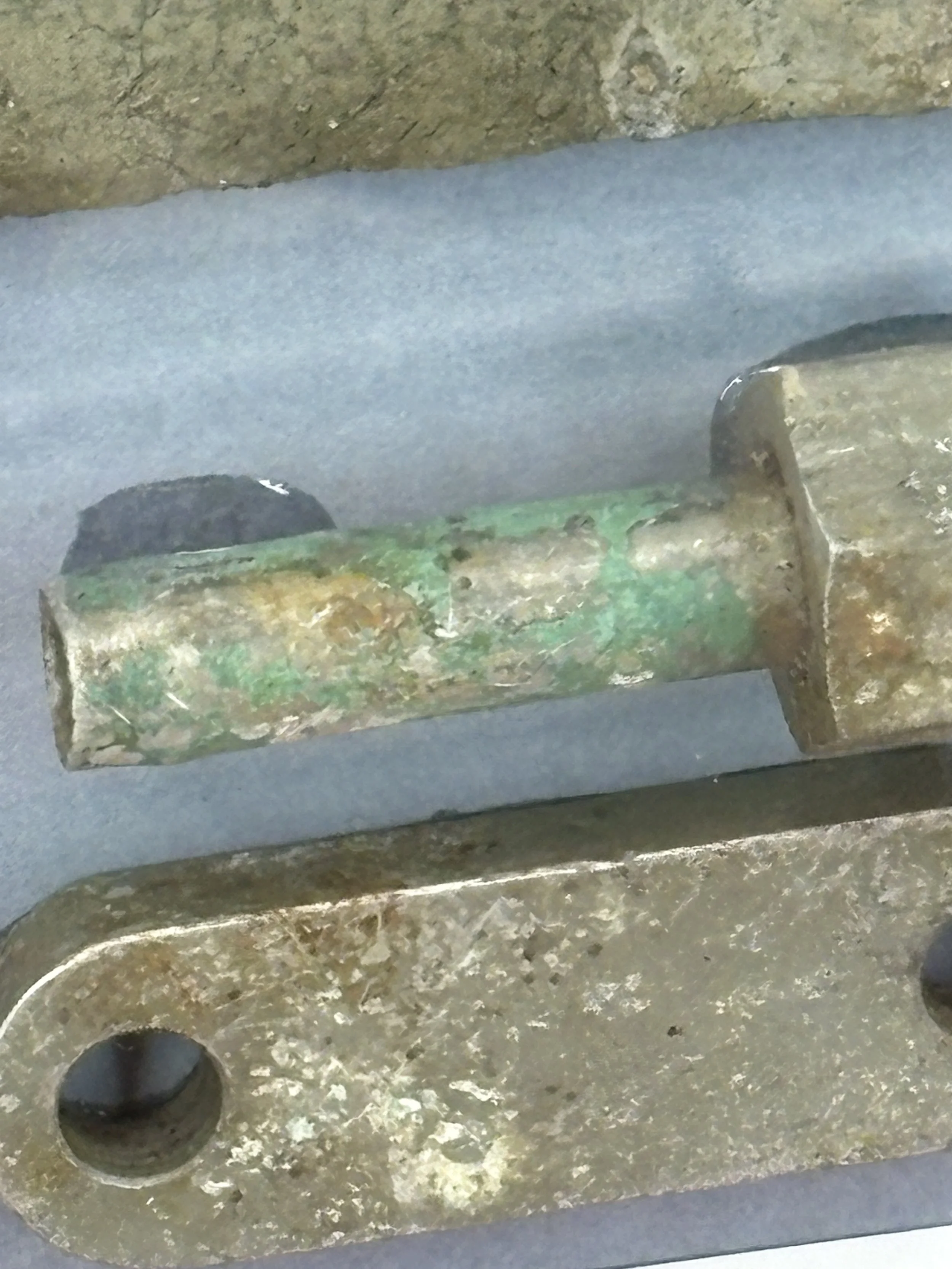 Image 5 of 9
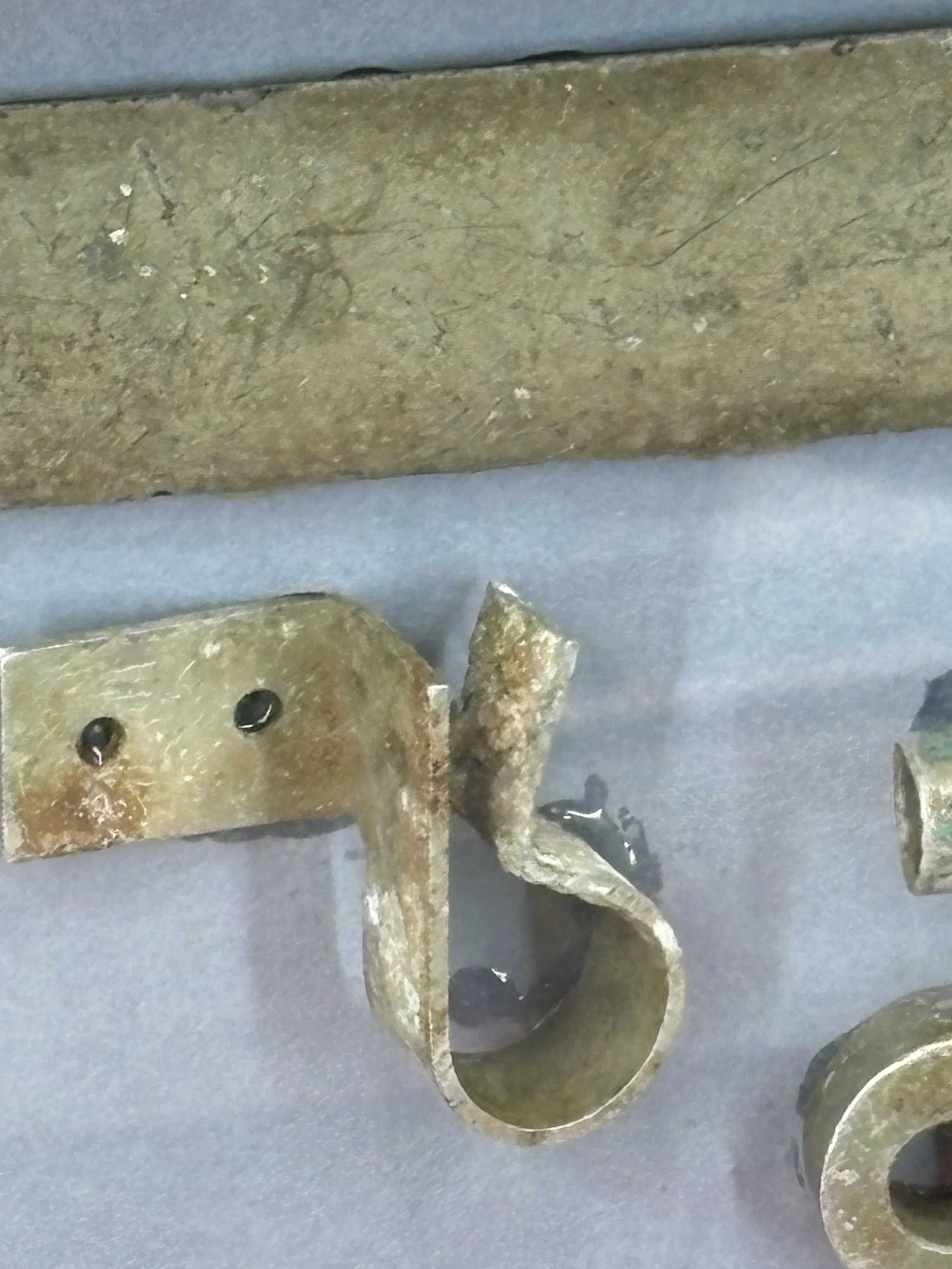 Image 6 of 9
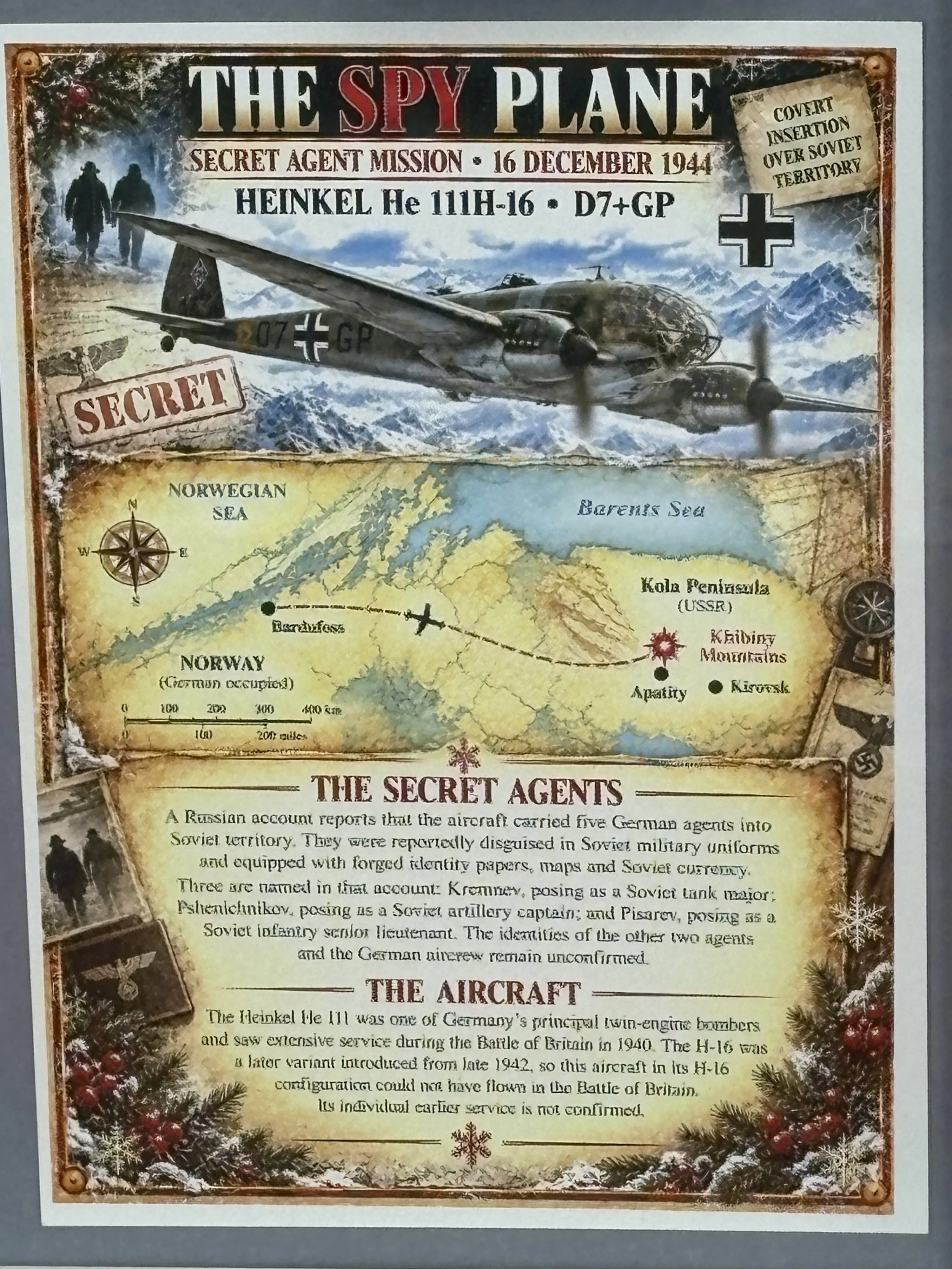 Image 7 of 9
 Image 8 of 9
 Image 9 of 9