This is an authentic, glass-framed aluminium airframe section recovered from a American B-17G flying fortress bomber involved in a very famous Christmas battle. The relic which is in lovely condition still retains some of its original wartime finish and some original green paintwork, making it an attractive and increasingly scarce piece from one of the American air force most recognisable aircraft.
The aluminium section was torn, bent and distorted by the impact of the crash but remains in good, solid condition and most of its original colour. It has been carefully cleaned while preserving its original character and wartime patina.
The relic is presented in a glass-fronted box frame, complete with aircraft information, making it an excellent display piece for any aviation or Second World War collection. The frame measures approximately 12 half inches by 12 half inches.
This part comes from American B-17G bomber serial number 43-37569 shot down by German fighters attacked south of Liège on boxing day the 26 December 1944 during raid on German forces during the Battle of the Bulge.
On Christmas Eve, 24 December 1944, B-17G serial number 43-37569 took off from the US Eighth Air Force’s airfield in Suffolk, England, as part of a major operation supporting Allied forces during the Battle of the Bulge. The mission targeted German airfields and supply routes, with this formation assigned to attack Babenhausen airfield in Germany. The aircraft was flown by First Lieutenant Ira L. Ball and was operating with the 836th Bomb Squadron of the 487th Bomb Group, although the aircraft was administratively assigned to the 839th Bomb Squadron. As the bomber formation crossed Belgium, German fighters attacked south of Liège before the aircraft reached its target.
The shoot-down and crash site. The attack broke the B-17 apart in the air. Most of the wreckage fell into the Amblève River at Le Gouffre, on the western outskirts of Aywaille, Belgium. The tail section came down separately near the hamlet of Septroux and the area of Chambralles. Six of the nine crew members died in the crash; tail gunner First Lieutenant Cuno V. Becker survived the fall in the tail section but was gravely injured and died in hospital on 26 December 1944. Navigator First Lieutenant Harold P. Sperber and bombardier First Lieutenant John C. Broom escaped by parachute and survived. The loss took place during one of the largest Eighth Air Force operations of the war, launched to disrupt German airfields and supply lines while the German Ardennes offensive was still under way. A memorial now marks the crash near the Amblève River, commemorating the crew and their sacrifice.

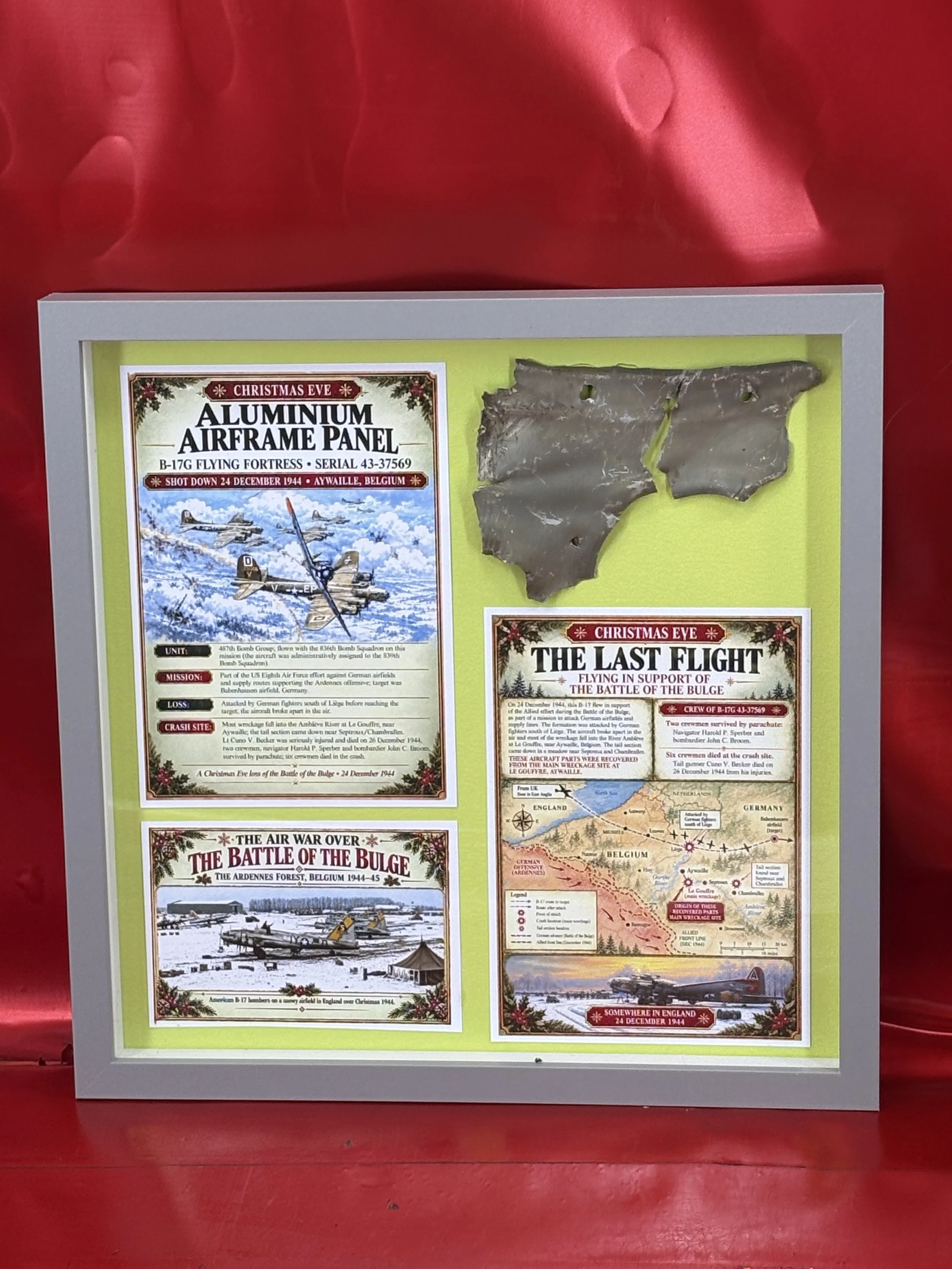 Image 1 of 9
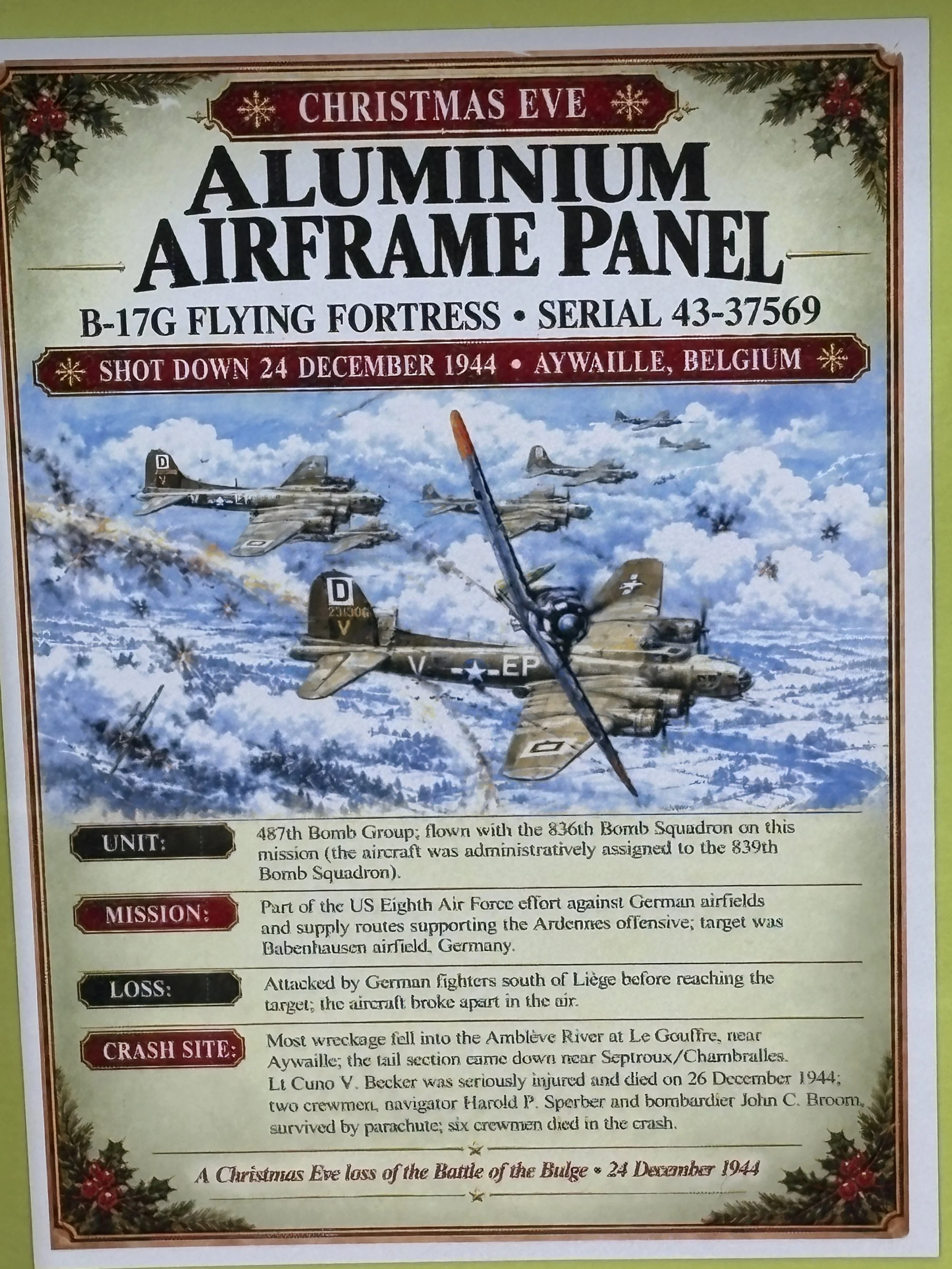 Image 2 of 9
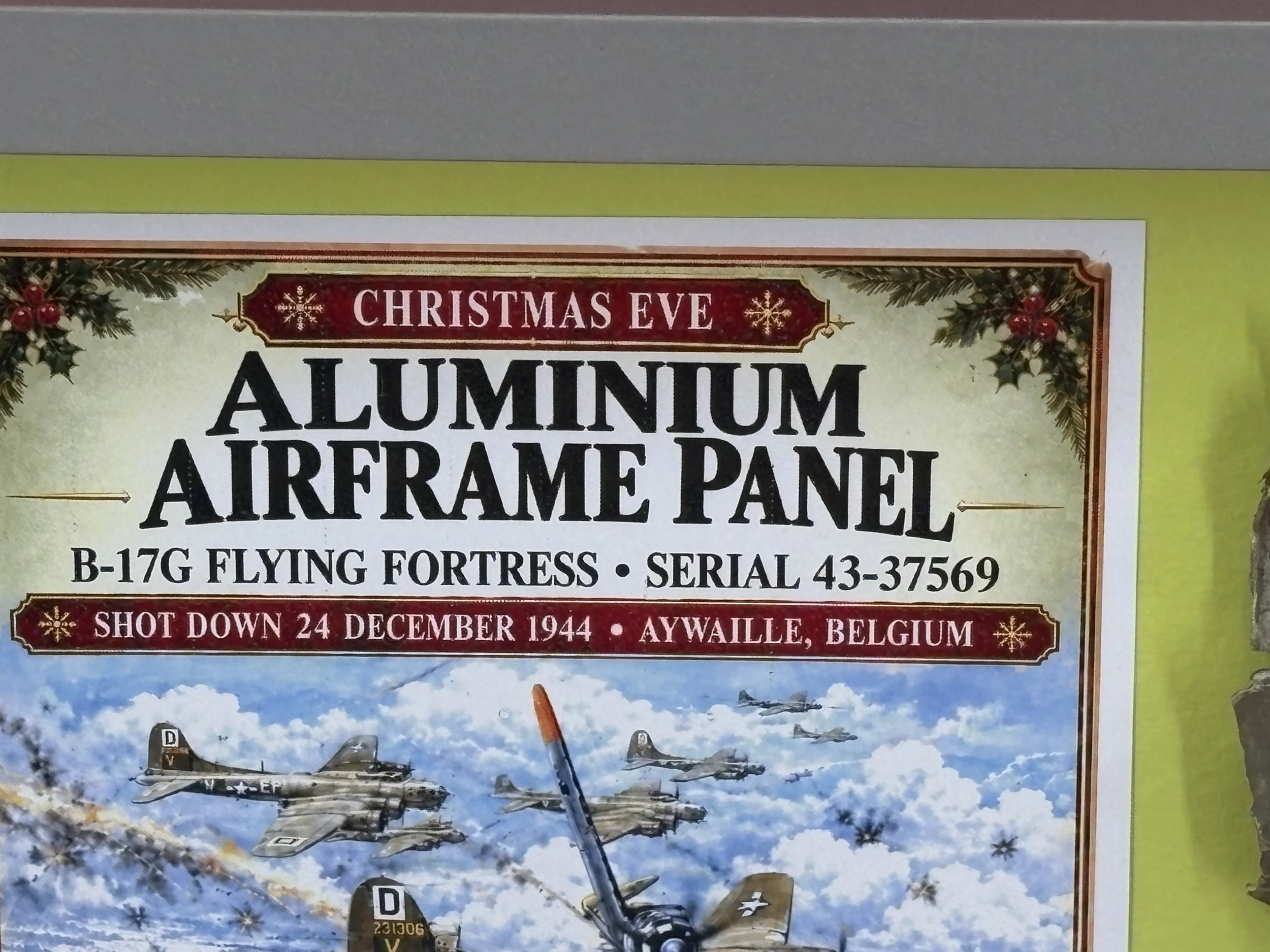 Image 3 of 9
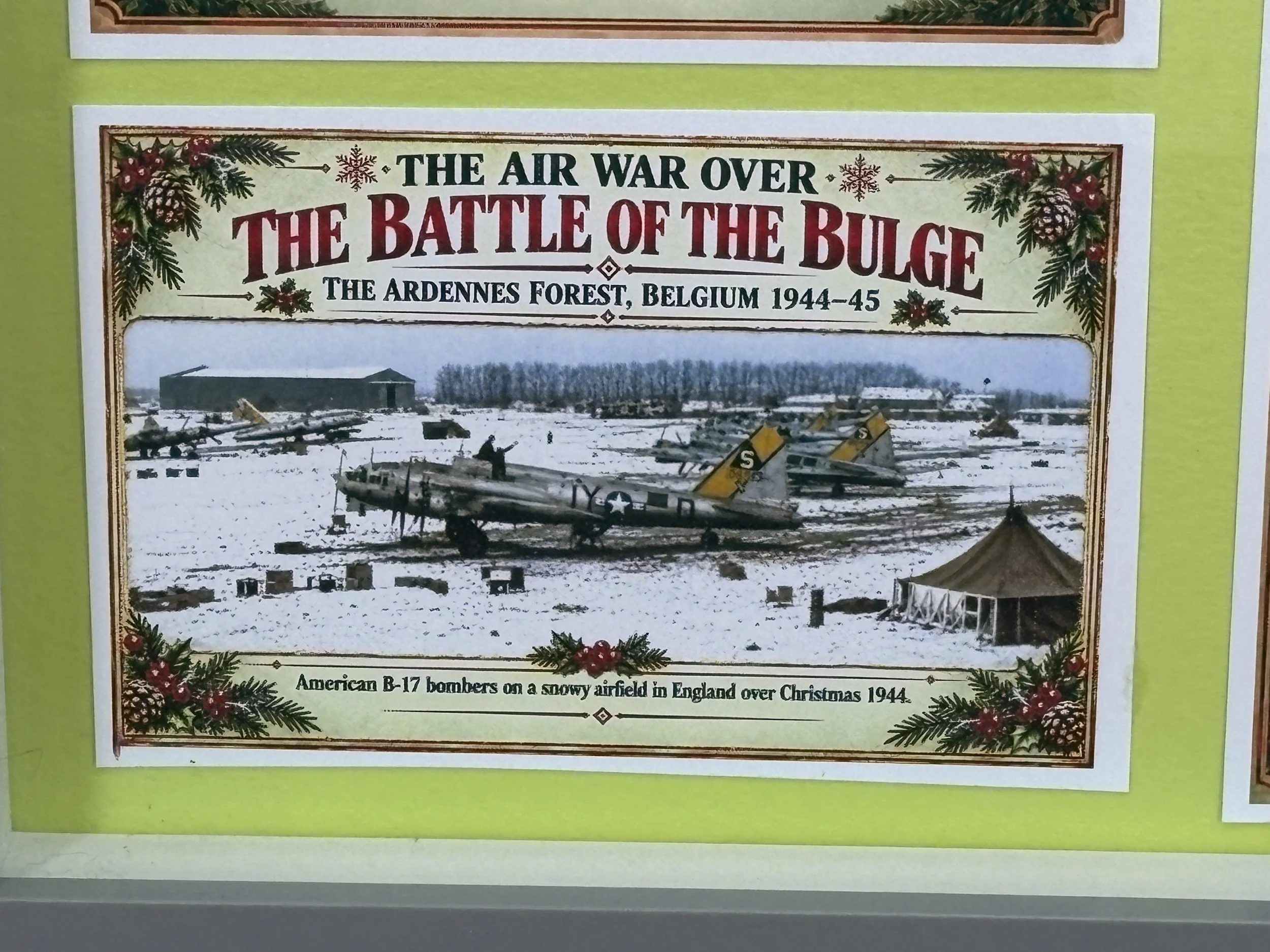 Image 4 of 9
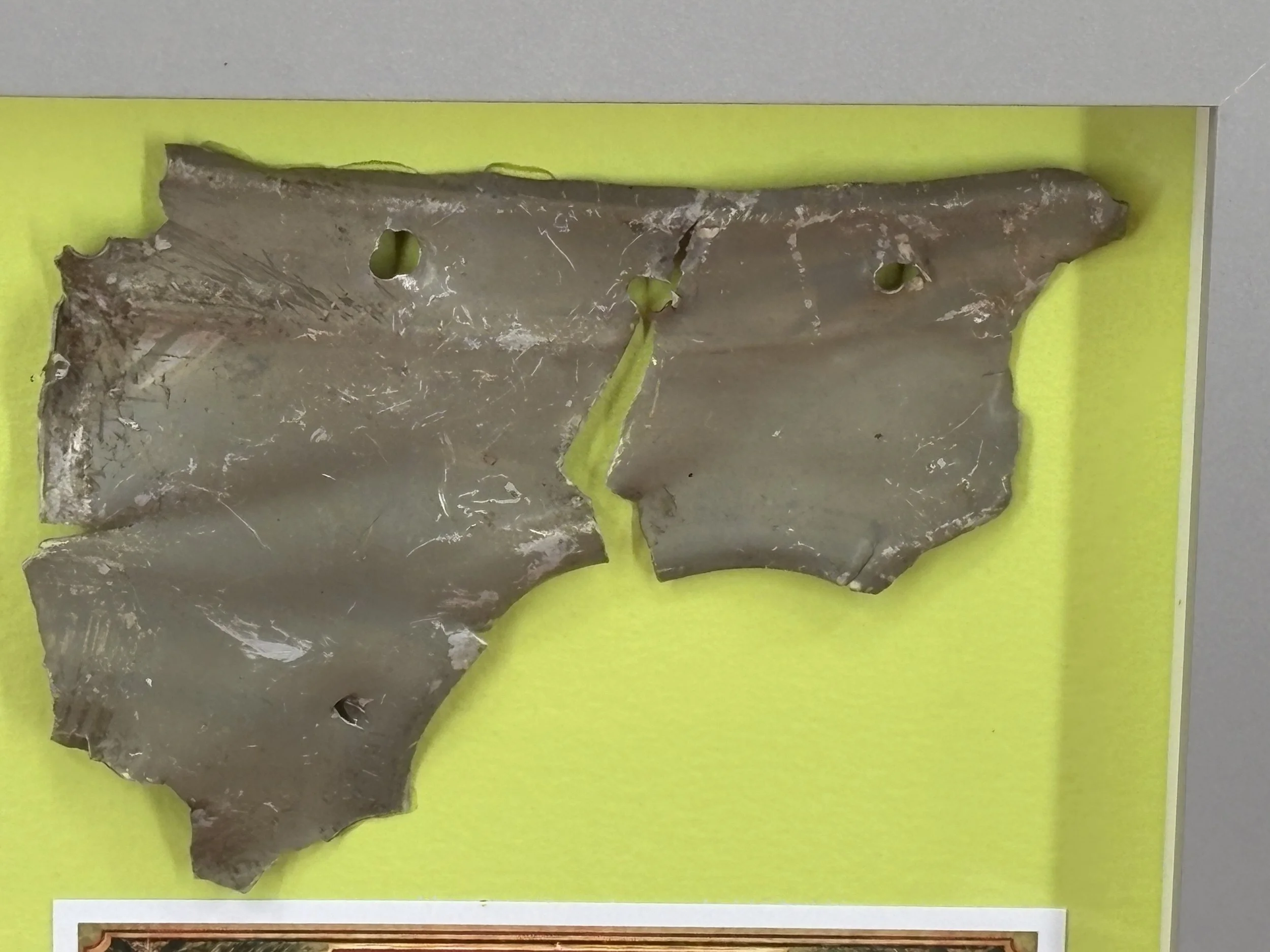 Image 5 of 9
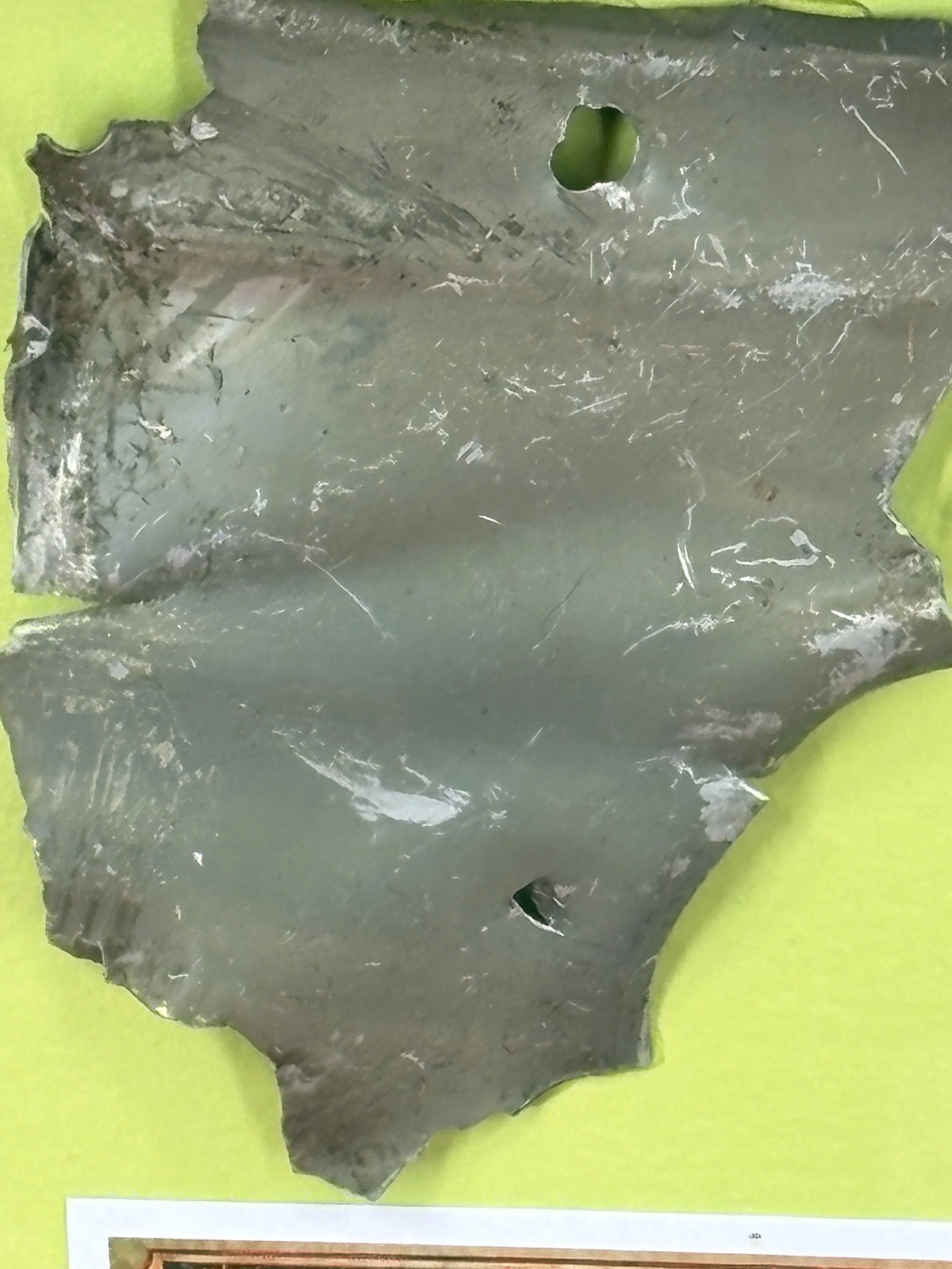 Image 6 of 9
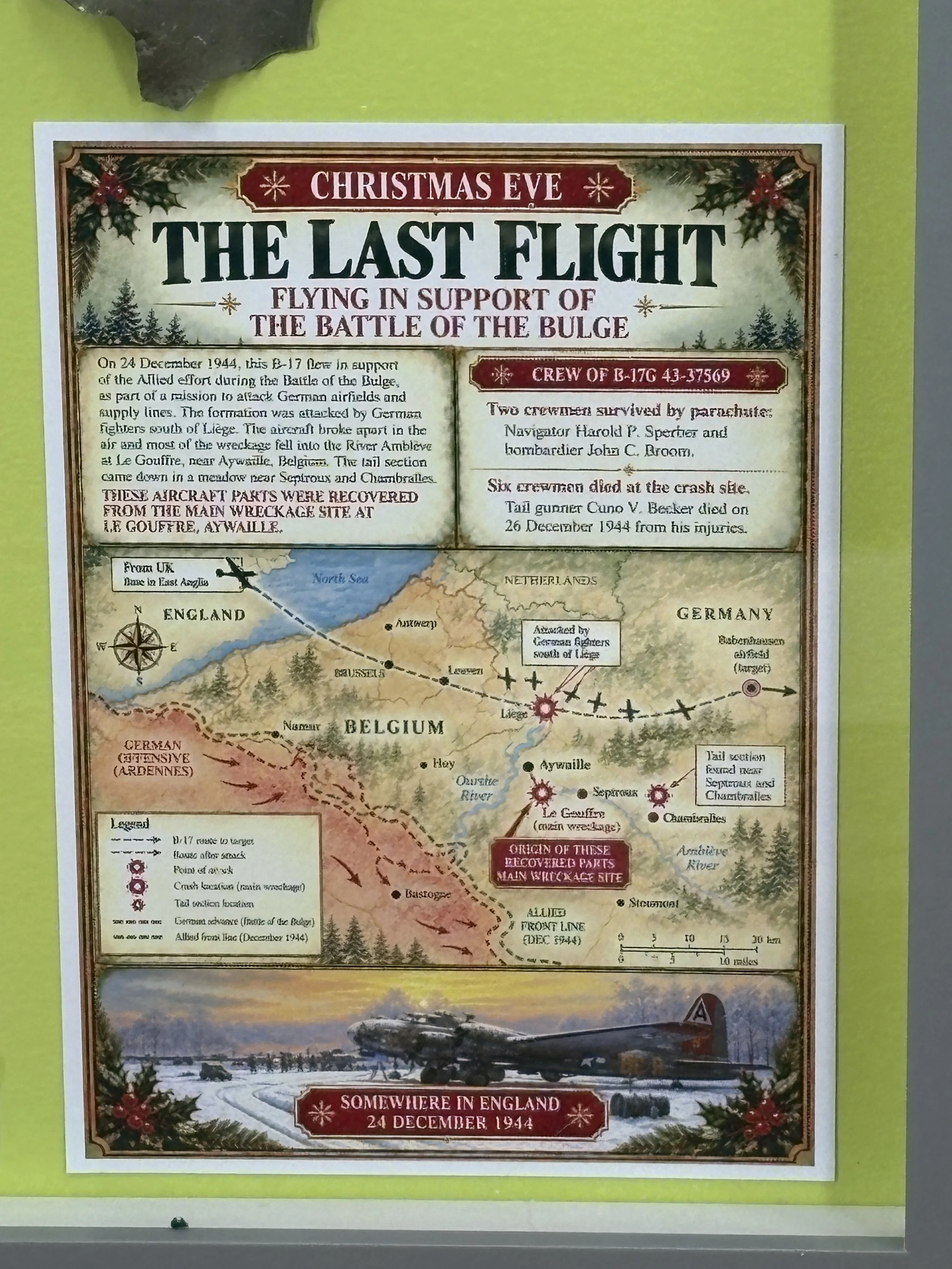 Image 7 of 9
 Image 8 of 9
 Image 9 of 9