Sale Price:
£30.00
Original Price:
£45.00
This is a Glass framed Death card Death card for Georg Göttler (1915-1947 ) Wehrmacht Artillery Officer • Regimental Adjutant with the rank of Hauptmann (Captain) captured during the major Soviet offensives of late 1944 or early 1945 and died as POW in 1947.
The death card with picture and all writing clear to see it is still very solid not crumbling or braking up and has been mounted in a large glass fronted frame with all the information and translations the frame measuring 12 inches long by 12 inches wide making it perfect for display or a collection.
Georg Göttler was an educated Wehrmacht staff officer. Born in Hof, Bavaria, on 15 February 1915, Göttler trained in law and held the title “Assessor juris,” indicating advanced legal qualification in Germany.
During the war he served as a Hauptmann (Captain) and Regimental Adjutant of an artillery regiment in the German Heer (Army). The position of regimental adjutant was highly important within a military headquarters. Anadjutant worked directly with senior commanders and was responsible for operational coordination,administration, communications, personnel management, and the issuing of orders. This role was normallyentrusted to educated and reliable officers.
Göttler served on the EasternFront against the Soviet Union. As an artillery regimental adjutant, he would most likely have operated fromregimental headquarters rather than directly beside gun batteries. Officers in these positions were commonly captured together with command staffs during the collapse of German formations in the final phase of the war.
Goerg Göttler was probarly captured during the major Soviet offensives of late 1944 or early 1945, possibly in East Prussia, Poland, Silesia, Pomerania, or eastern Germany. By this stage of the war, entire German divisions and headquarters units were frequently surrounded or overwhelmed during retreat operations.
His survival until 1947 strongly suggests an organised surrender or mass capture rather than isolated battlefield capture.
Captivity and Death in the Soviet Union
The memorial card records that Göttler died in March 1947 in the prisoner-of-war camp system at Vologda (spelled “Wologda” in German). Vologda was not a front-line prison camp but part of the Soviet interior POW network, where German prisoners were held for labour, interrogation, administration, and long-term detention
after the war.
German POWs in the Vologda region were commonly employed in forestry, railway construction, industrial labour, and reconstruction work. Many prisoners died from malnutrition, disease, exhaustion, or harsh climatic conditions.
No confirmed grave for Georg Göttler has yet been identified. Like many German POWs who died in Soviet captivity, he was probably buried in a camp cemetery in northern Russia. His memorial card remains one of thefew surviving personal records of his life and final years
This is a Glass framed Death card Death card for Georg Göttler (1915-1947 ) Wehrmacht Artillery Officer • Regimental Adjutant with the rank of Hauptmann (Captain) captured during the major Soviet offensives of late 1944 or early 1945 and died as POW in 1947.
The death card with picture and all writing clear to see it is still very solid not crumbling or braking up and has been mounted in a large glass fronted frame with all the information and translations the frame measuring 12 inches long by 12 inches wide making it perfect for display or a collection.
Georg Göttler was an educated Wehrmacht staff officer. Born in Hof, Bavaria, on 15 February 1915, Göttler trained in law and held the title “Assessor juris,” indicating advanced legal qualification in Germany.
During the war he served as a Hauptmann (Captain) and Regimental Adjutant of an artillery regiment in the German Heer (Army). The position of regimental adjutant was highly important within a military headquarters. Anadjutant worked directly with senior commanders and was responsible for operational coordination,administration, communications, personnel management, and the issuing of orders. This role was normallyentrusted to educated and reliable officers.
Göttler served on the EasternFront against the Soviet Union. As an artillery regimental adjutant, he would most likely have operated fromregimental headquarters rather than directly beside gun batteries. Officers in these positions were commonly captured together with command staffs during the collapse of German formations in the final phase of the war.
Goerg Göttler was probarly captured during the major Soviet offensives of late 1944 or early 1945, possibly in East Prussia, Poland, Silesia, Pomerania, or eastern Germany. By this stage of the war, entire German divisions and headquarters units were frequently surrounded or overwhelmed during retreat operations.
His survival until 1947 strongly suggests an organised surrender or mass capture rather than isolated battlefield capture.
Captivity and Death in the Soviet Union
The memorial card records that Göttler died in March 1947 in the prisoner-of-war camp system at Vologda (spelled “Wologda” in German). Vologda was not a front-line prison camp but part of the Soviet interior POW network, where German prisoners were held for labour, interrogation, administration, and long-term detention
after the war.
German POWs in the Vologda region were commonly employed in forestry, railway construction, industrial labour, and reconstruction work. Many prisoners died from malnutrition, disease, exhaustion, or harsh climatic conditions.
No confirmed grave for Georg Göttler has yet been identified. Like many German POWs who died in Soviet captivity, he was probably buried in a camp cemetery in northern Russia. His memorial card remains one of thefew surviving personal records of his life and final years

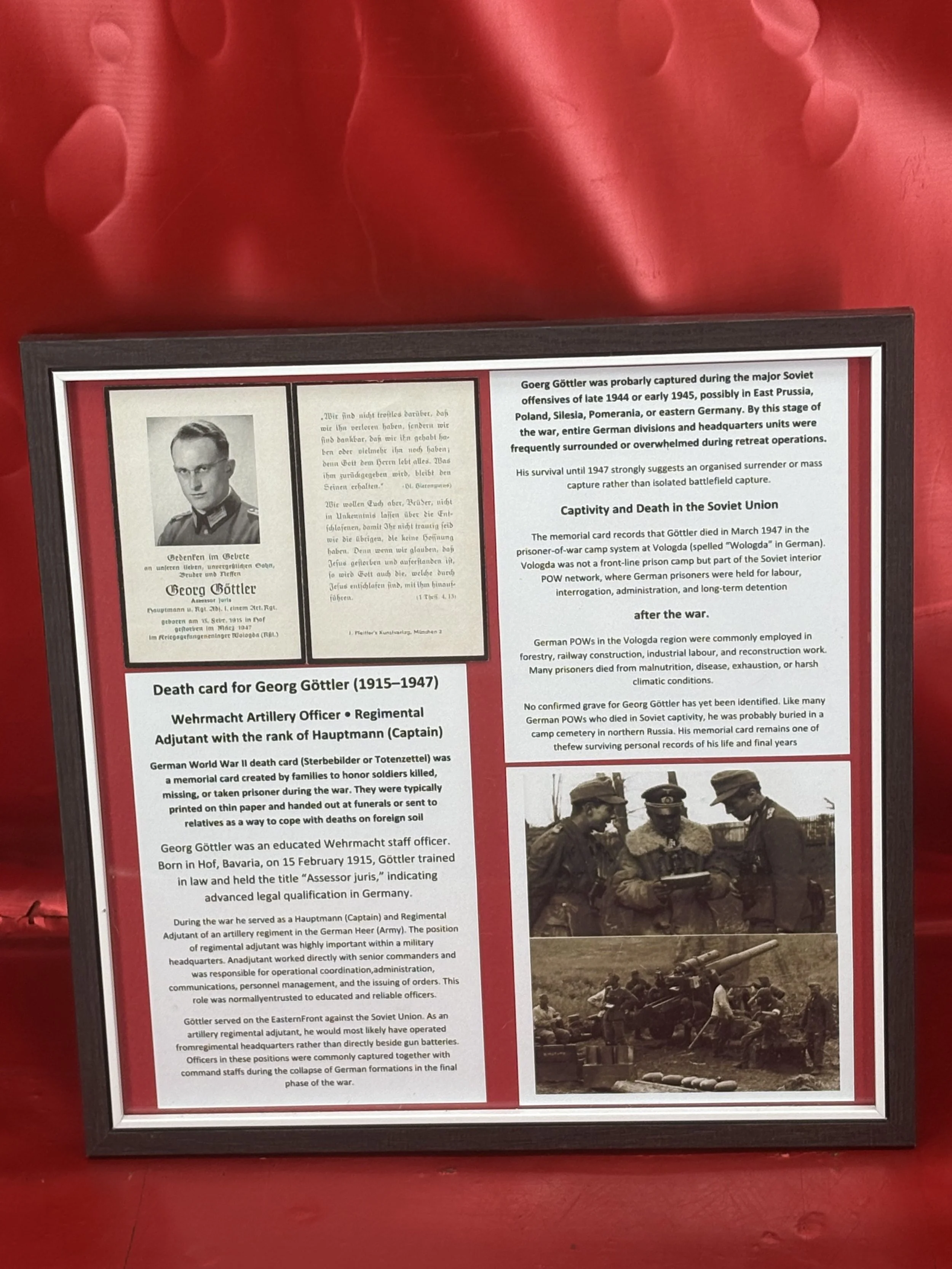 Image 1 of 8
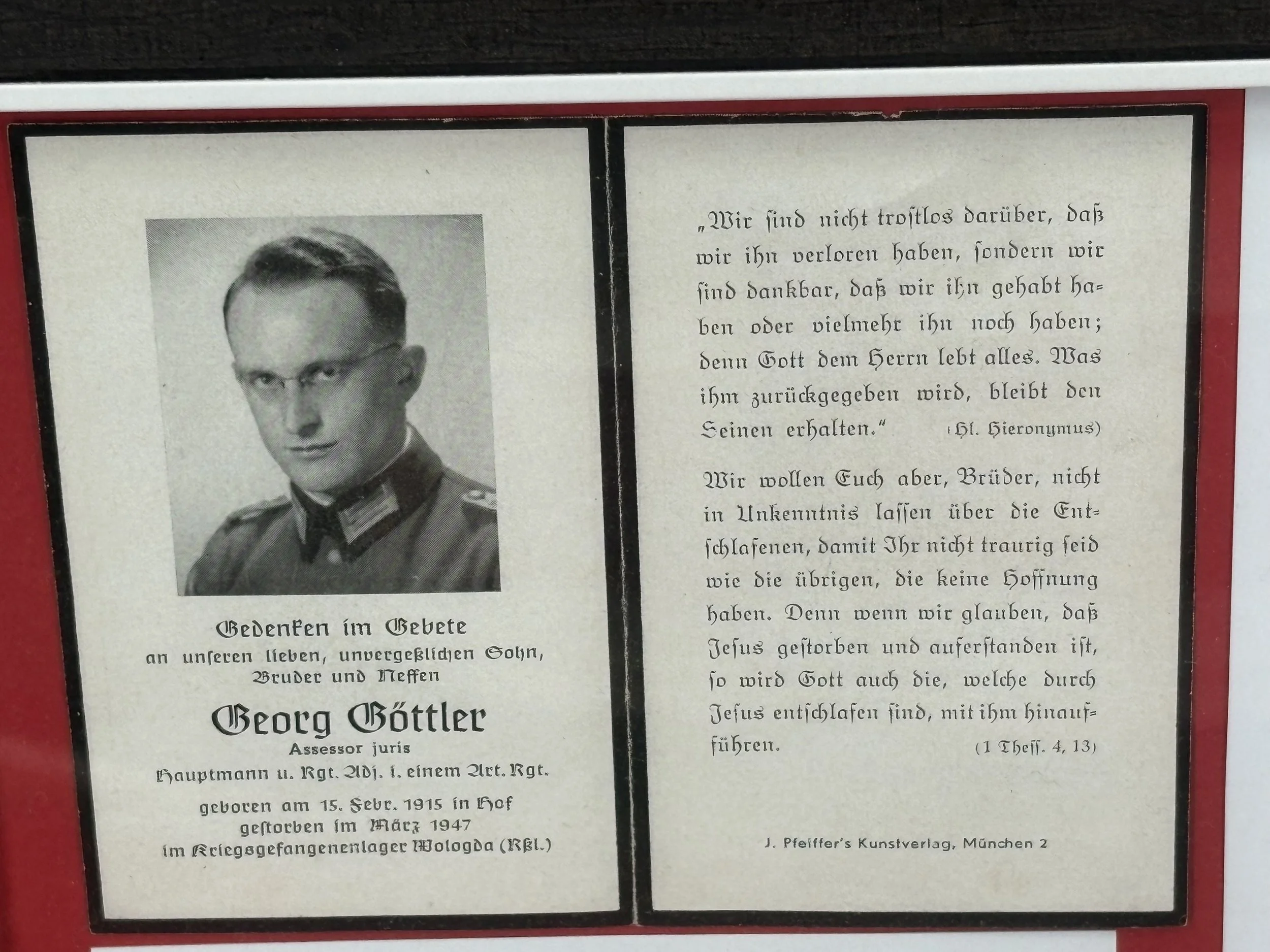 Image 2 of 8
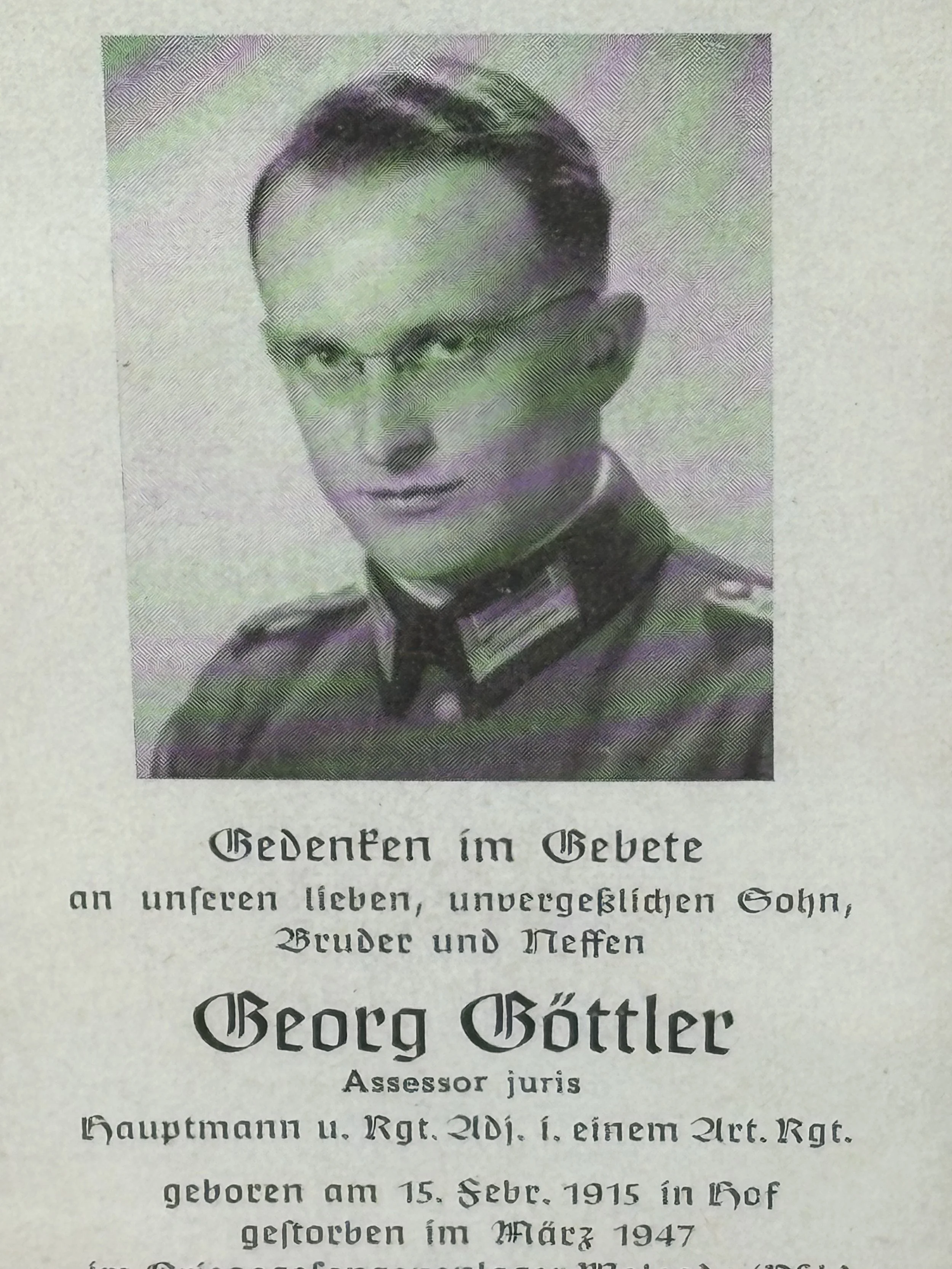 Image 3 of 8
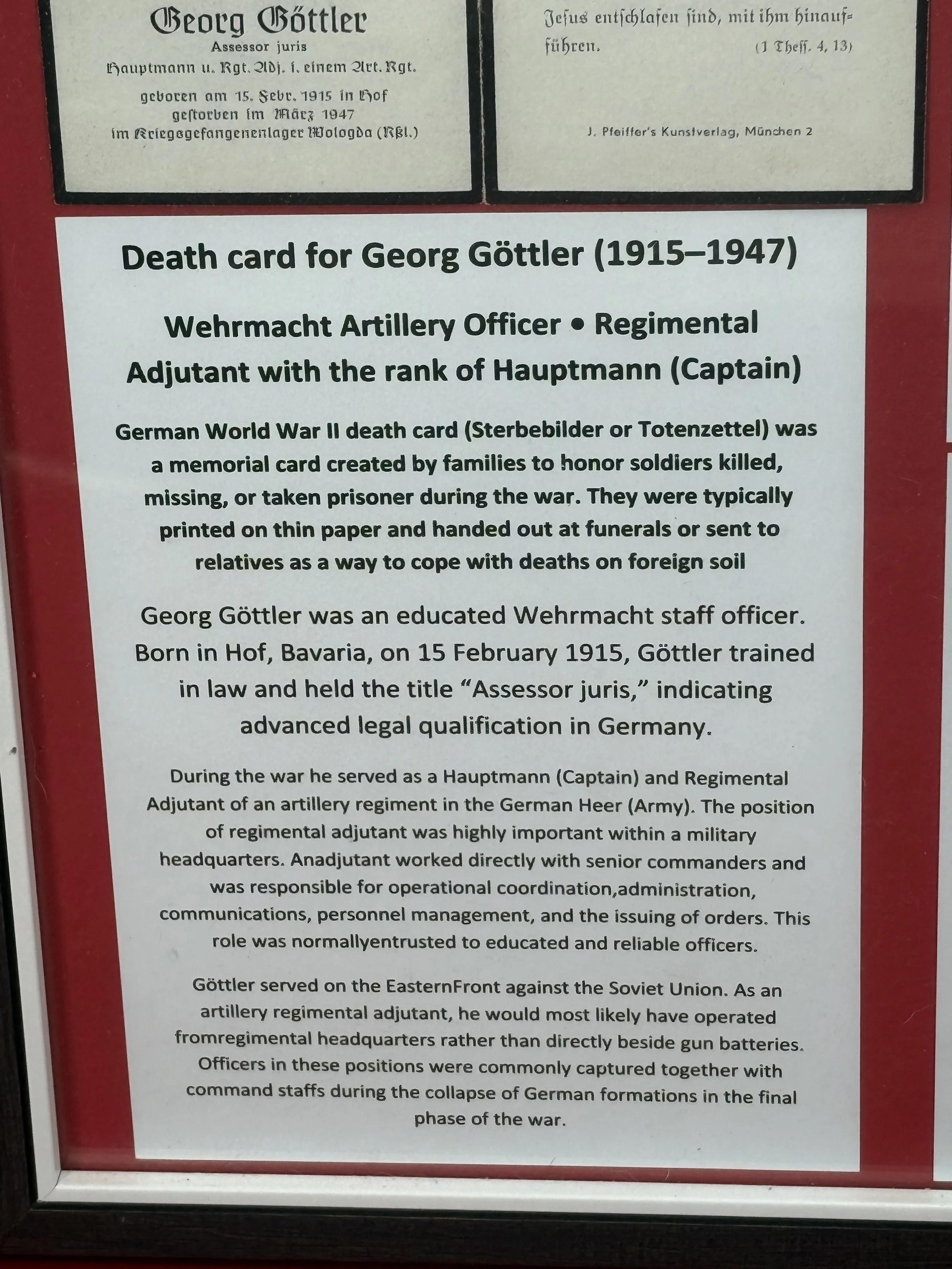 Image 4 of 8
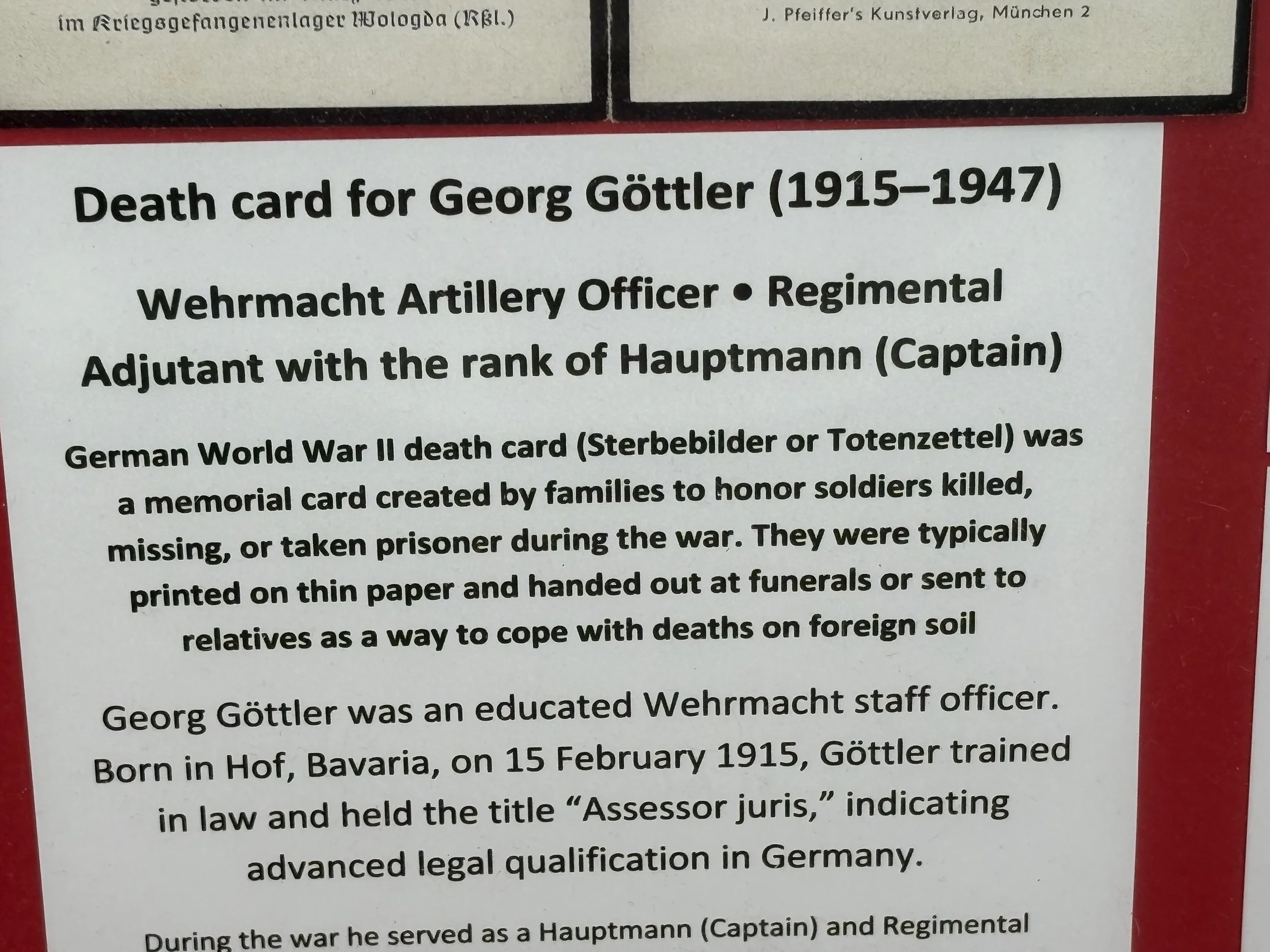 Image 5 of 8
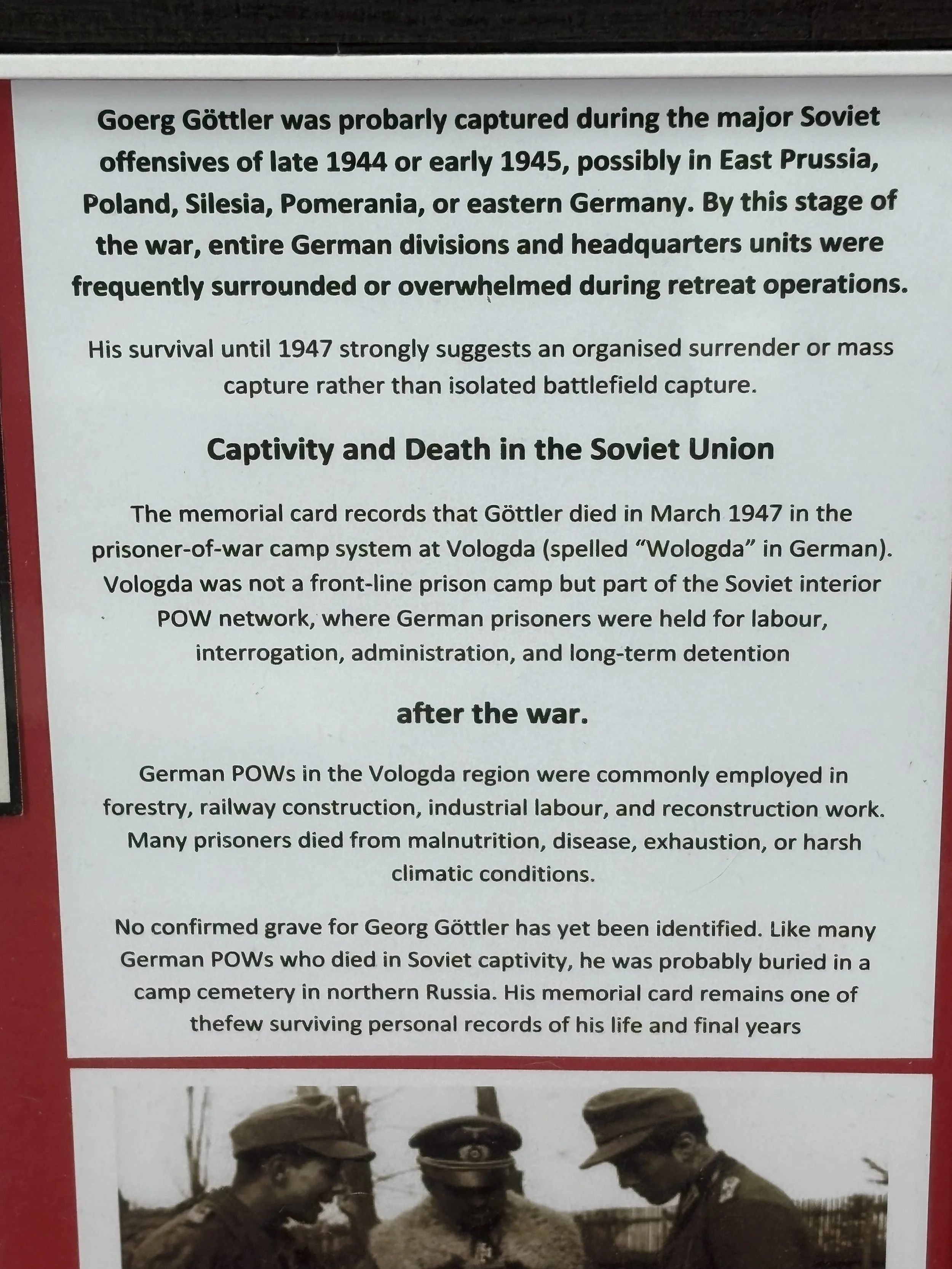 Image 6 of 8
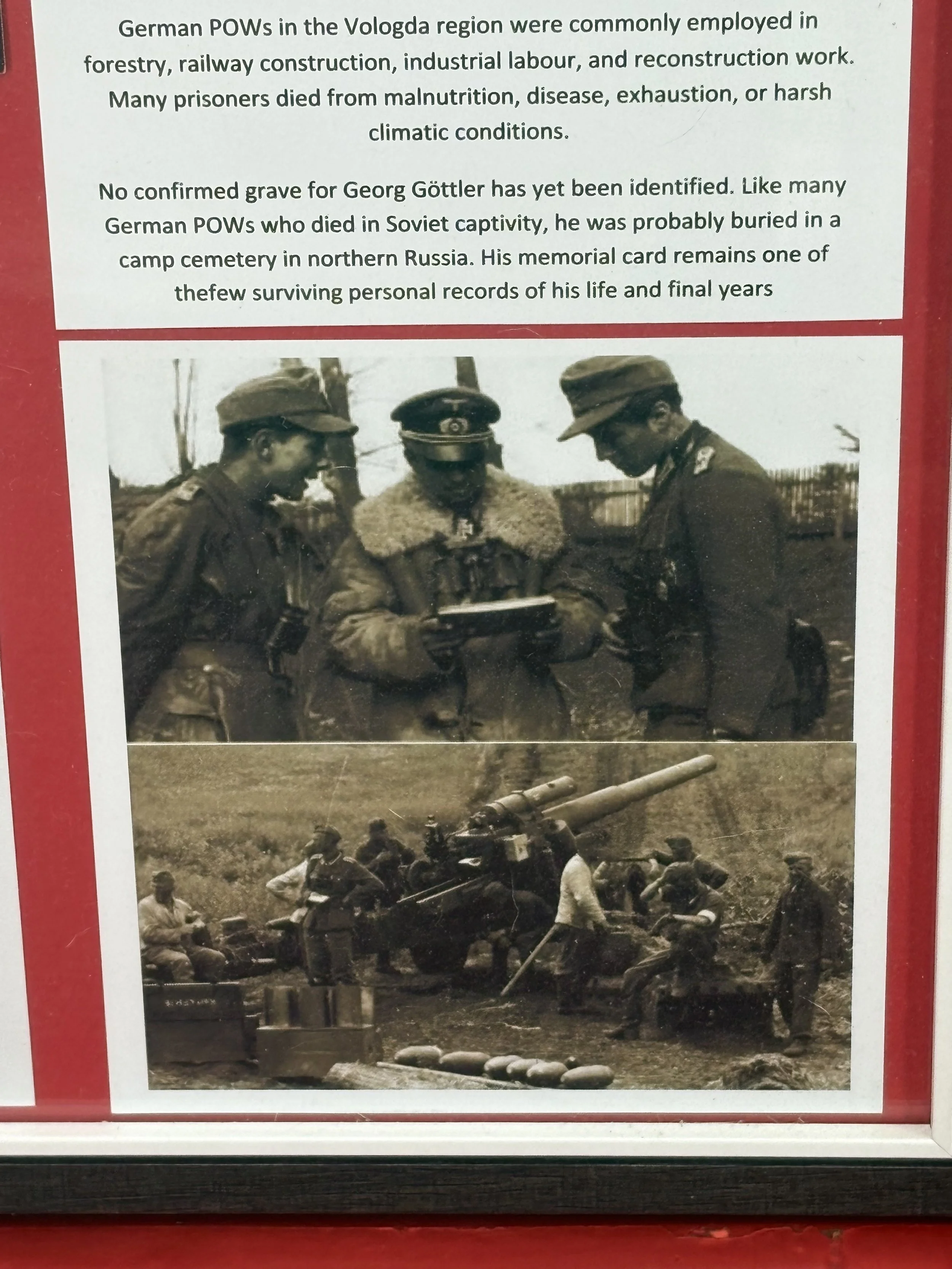 Image 7 of 8
 Image 8 of 8