Sale Price:
£60.00
Original Price:
£75.00
This is a German waterbottle for maxim machine gun which still has some remains of its original black paintwork with a large impact hit down one side which was possibly done when the mine exploded at Lochnagar. The tin still very solid not braking up or falling apart they have been very well cleaned and is perfect for display or any collection.The waterbottle was recovered in 2014 from the field opposite Lochnagar mine crater. This field was a German frontline trench on the morning of the 1st July 1916 which was the British attack on Somme battlefield.The tin comes with 2x A5 laminated information cards with map.
The British named the mine after Lochnagar Street, the British trench from which the gallery was driven. The charge at Lochnagar was one of 19 mines that were placed beneath the German lines on the British section of the Somme front, to assist the infantry advance at the start of the battle. The mine was sprung at 7:28 a.m. on 1 July 1916 and left a crater 98 ft (30 m) deep and 330 ft (100 m) wide, which was captured and held by British troops. The attack on either flank was defeated by German small-arms and artillery fire, except on the extreme right flank and just south of La Boisselle, north of the Lochnagar Crater.
This is a German waterbottle for maxim machine gun which still has some remains of its original black paintwork with a large impact hit down one side which was possibly done when the mine exploded at Lochnagar. The tin still very solid not braking up or falling apart they have been very well cleaned and is perfect for display or any collection.The waterbottle was recovered in 2014 from the field opposite Lochnagar mine crater. This field was a German frontline trench on the morning of the 1st July 1916 which was the British attack on Somme battlefield.The tin comes with 2x A5 laminated information cards with map.
The British named the mine after Lochnagar Street, the British trench from which the gallery was driven. The charge at Lochnagar was one of 19 mines that were placed beneath the German lines on the British section of the Somme front, to assist the infantry advance at the start of the battle. The mine was sprung at 7:28 a.m. on 1 July 1916 and left a crater 98 ft (30 m) deep and 330 ft (100 m) wide, which was captured and held by British troops. The attack on either flank was defeated by German small-arms and artillery fire, except on the extreme right flank and just south of La Boisselle, north of the Lochnagar Crater.

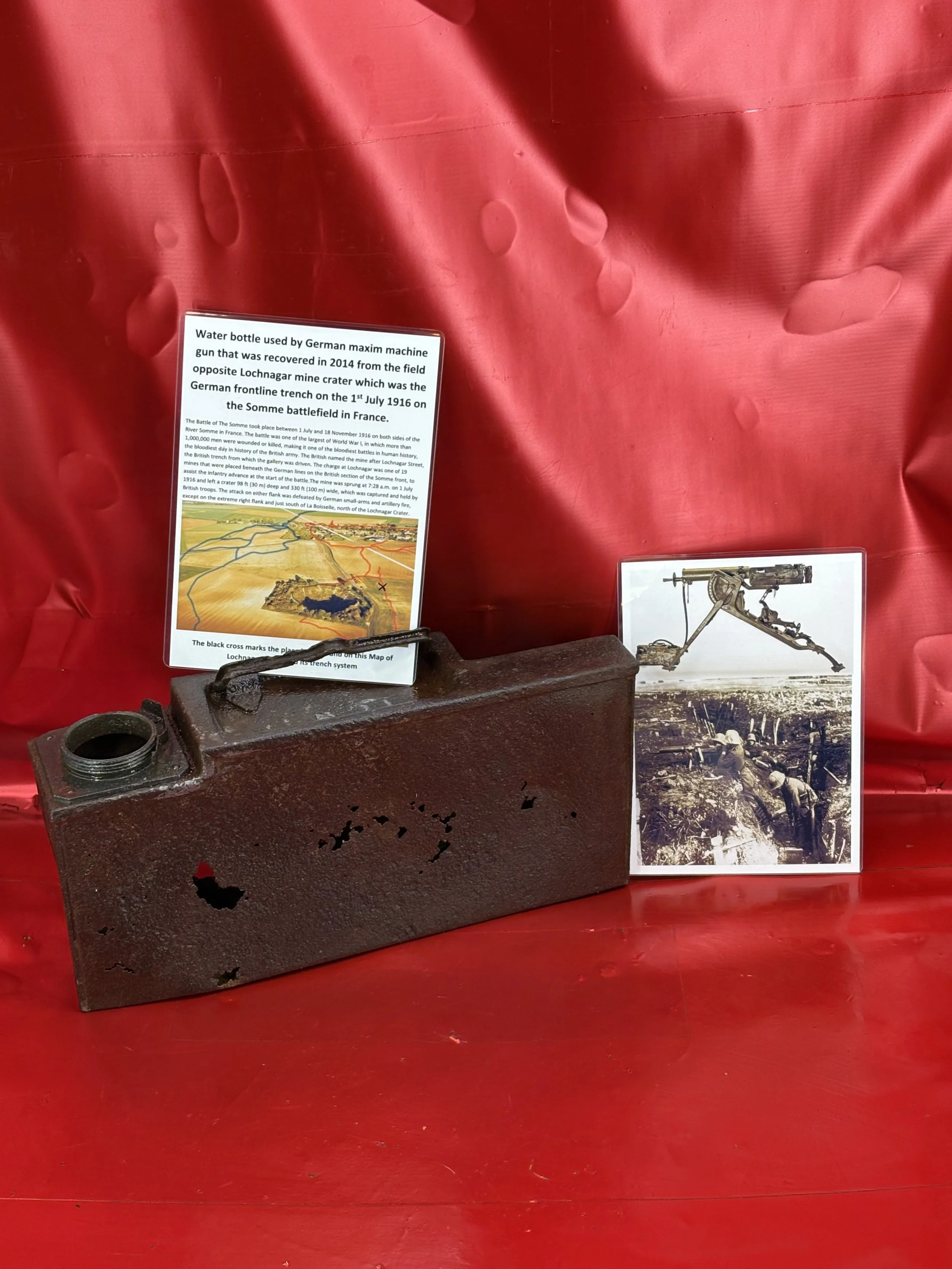 Image 1 of 11
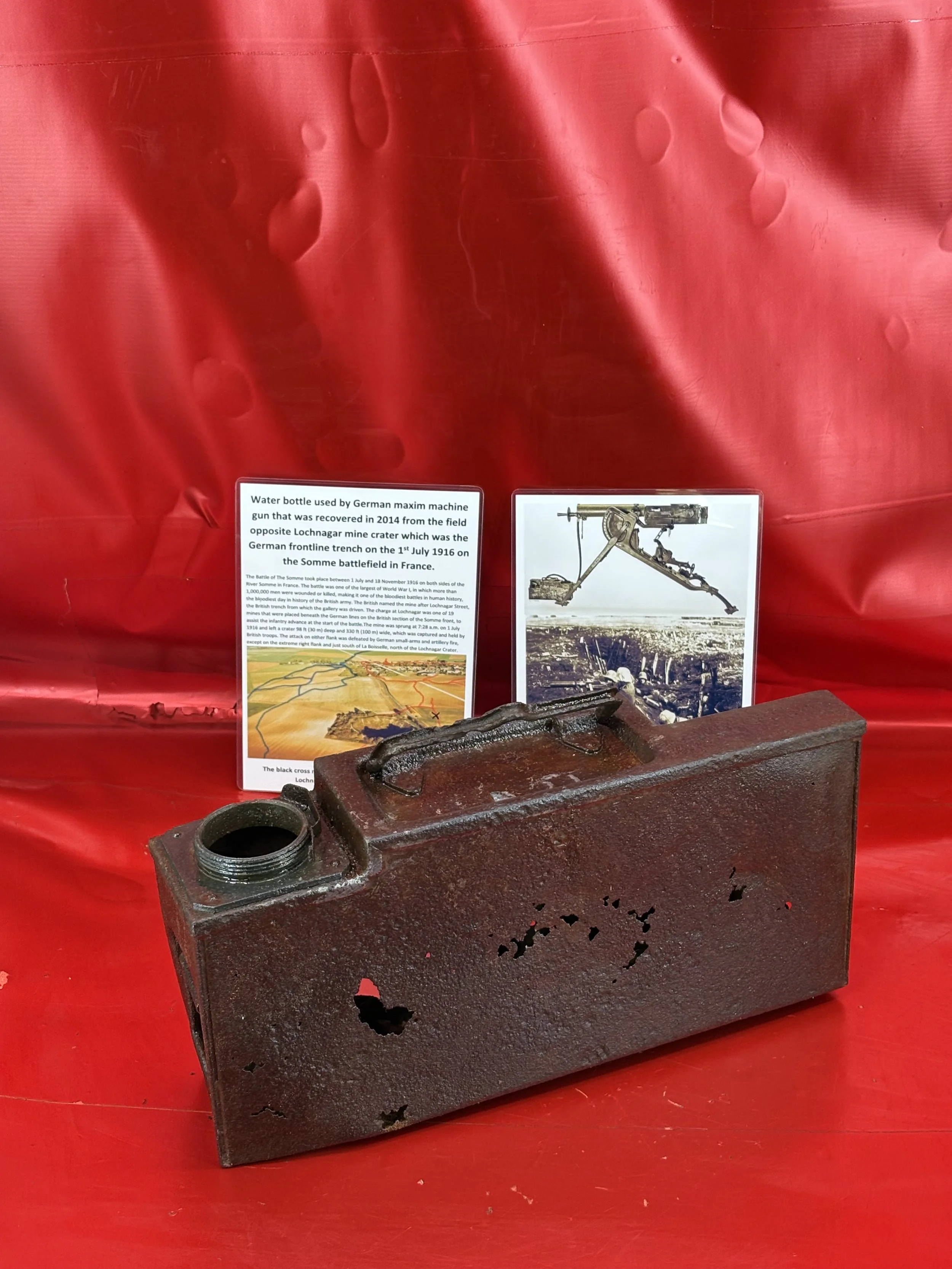 Image 2 of 11
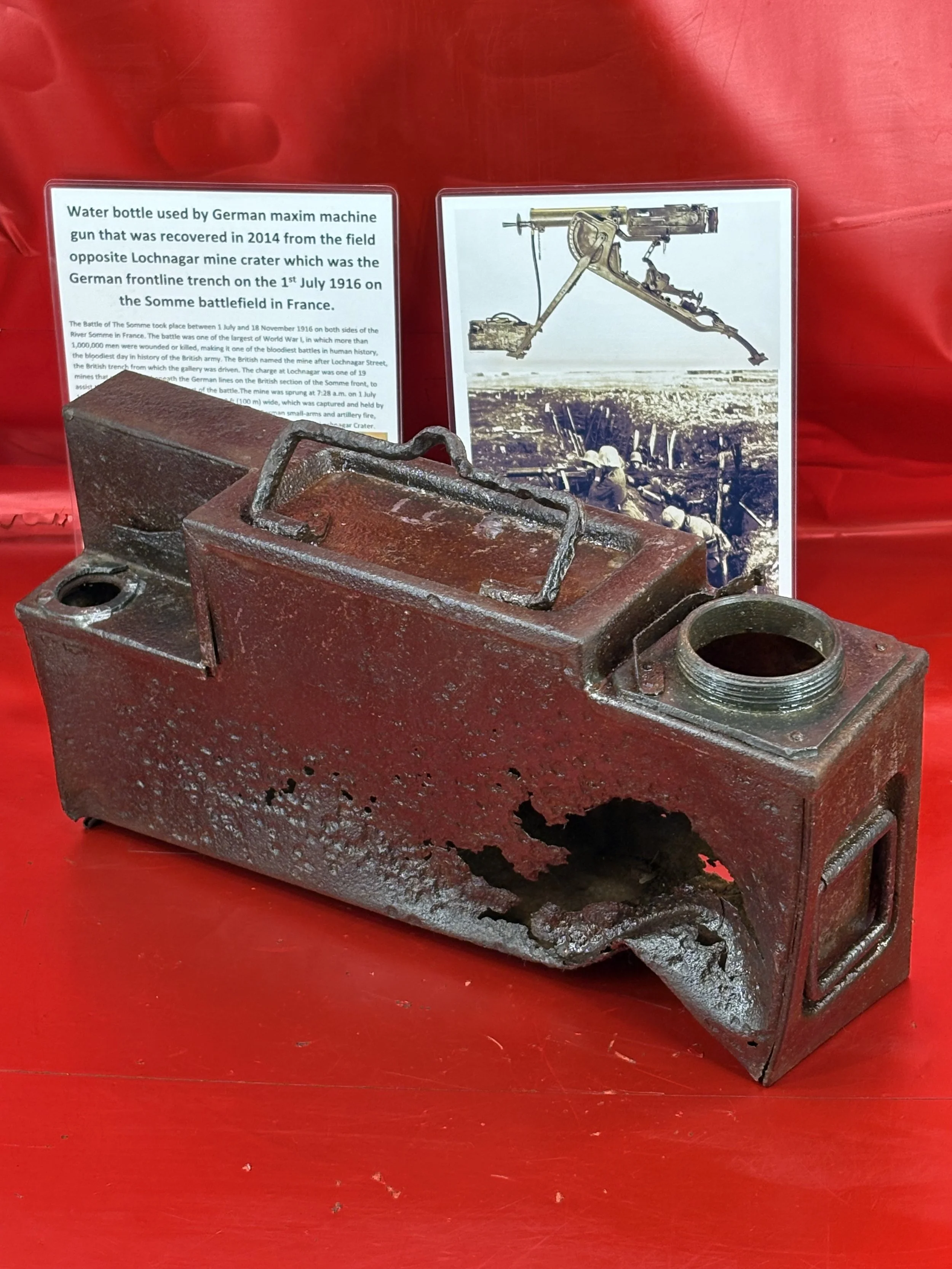 Image 3 of 11
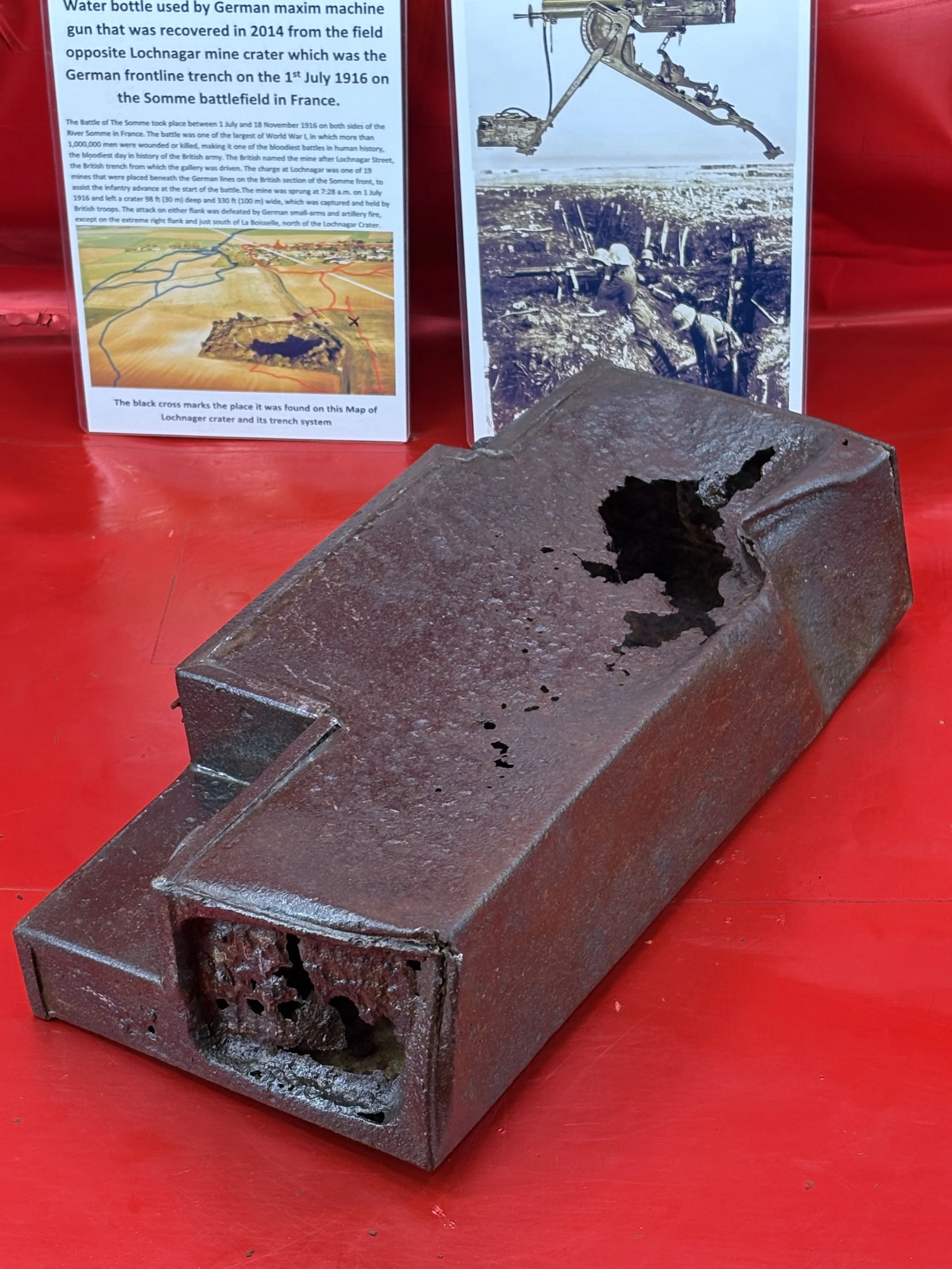 Image 4 of 11
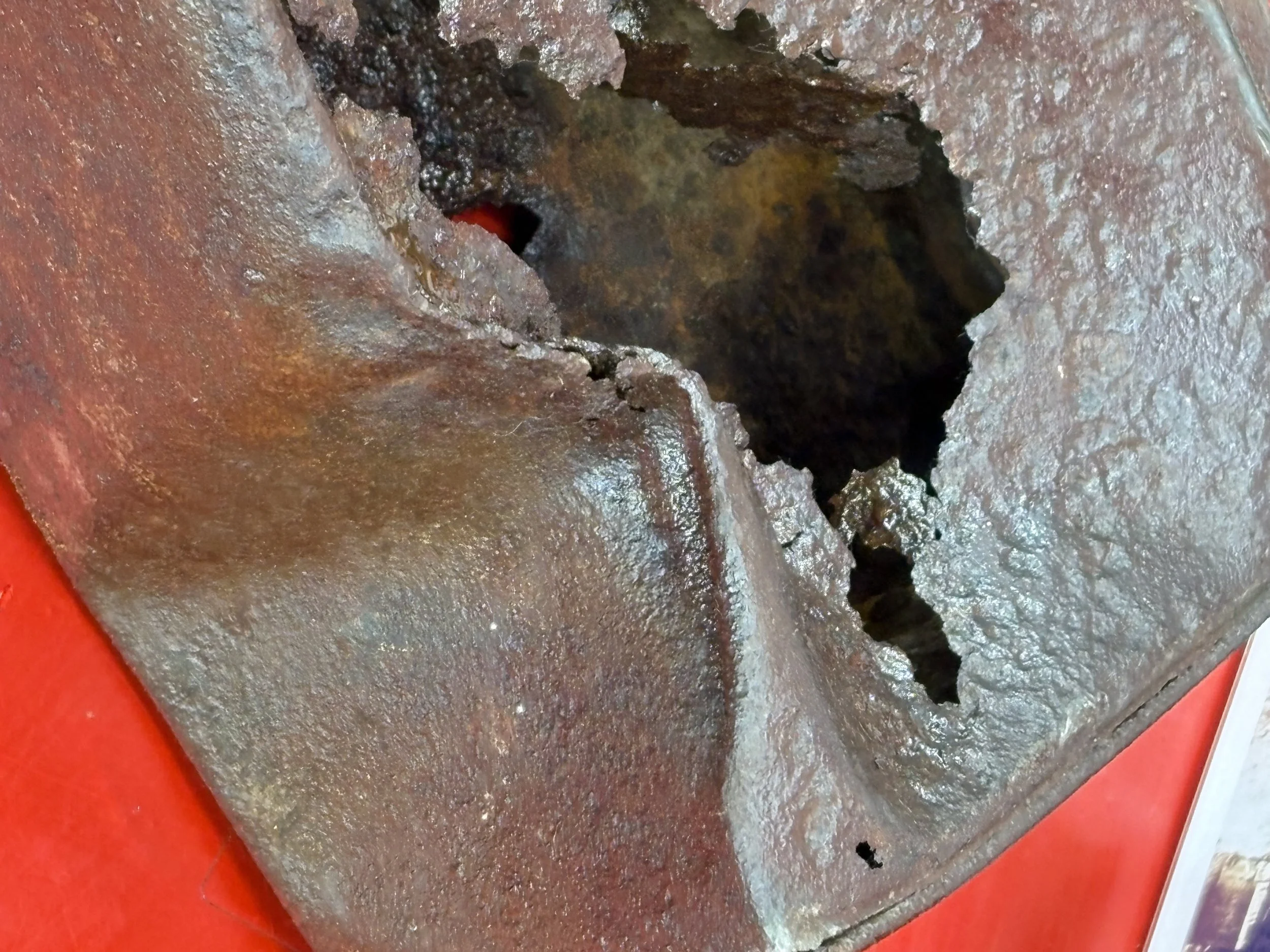 Image 5 of 11
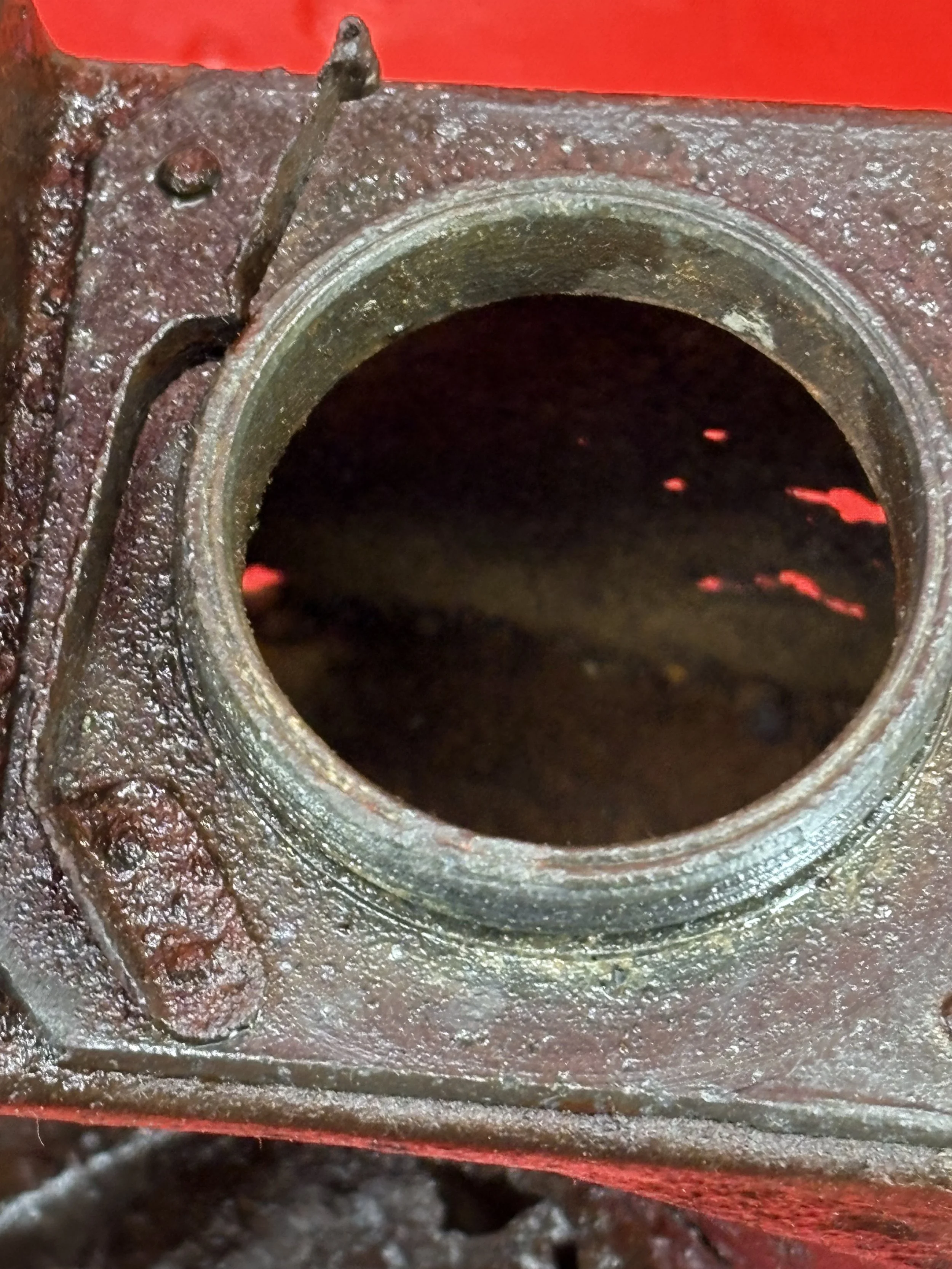 Image 6 of 11
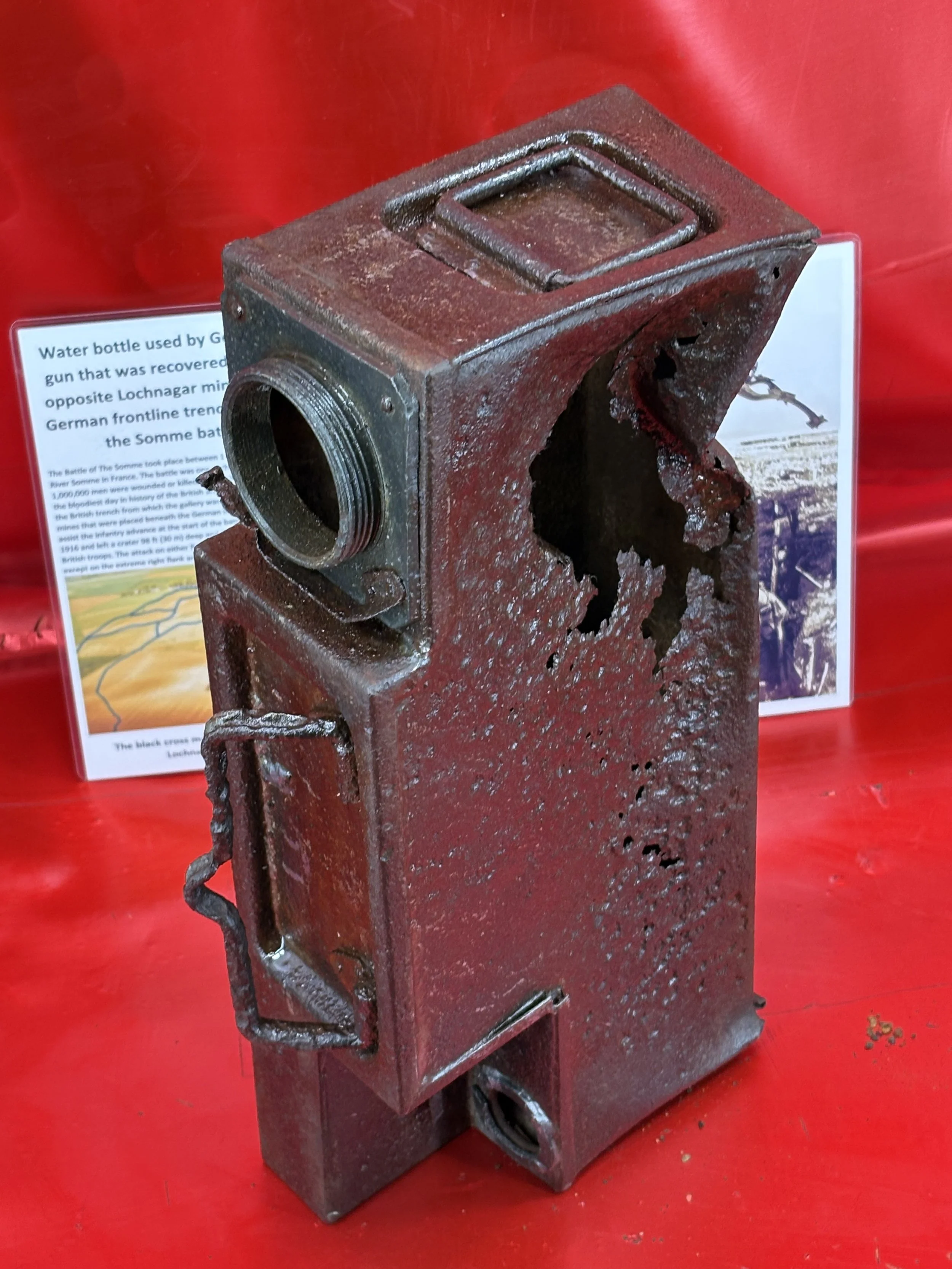 Image 7 of 11
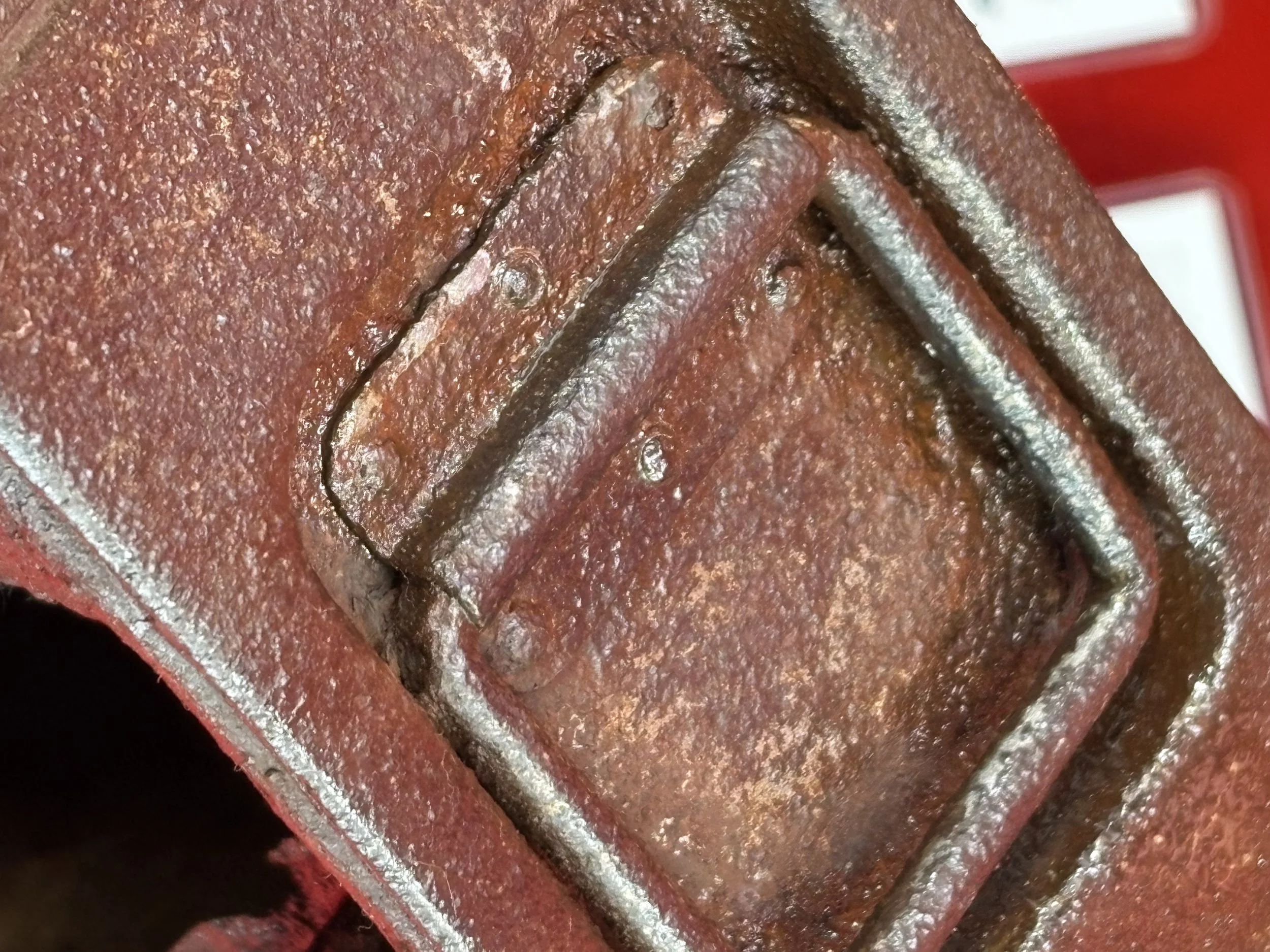 Image 8 of 11
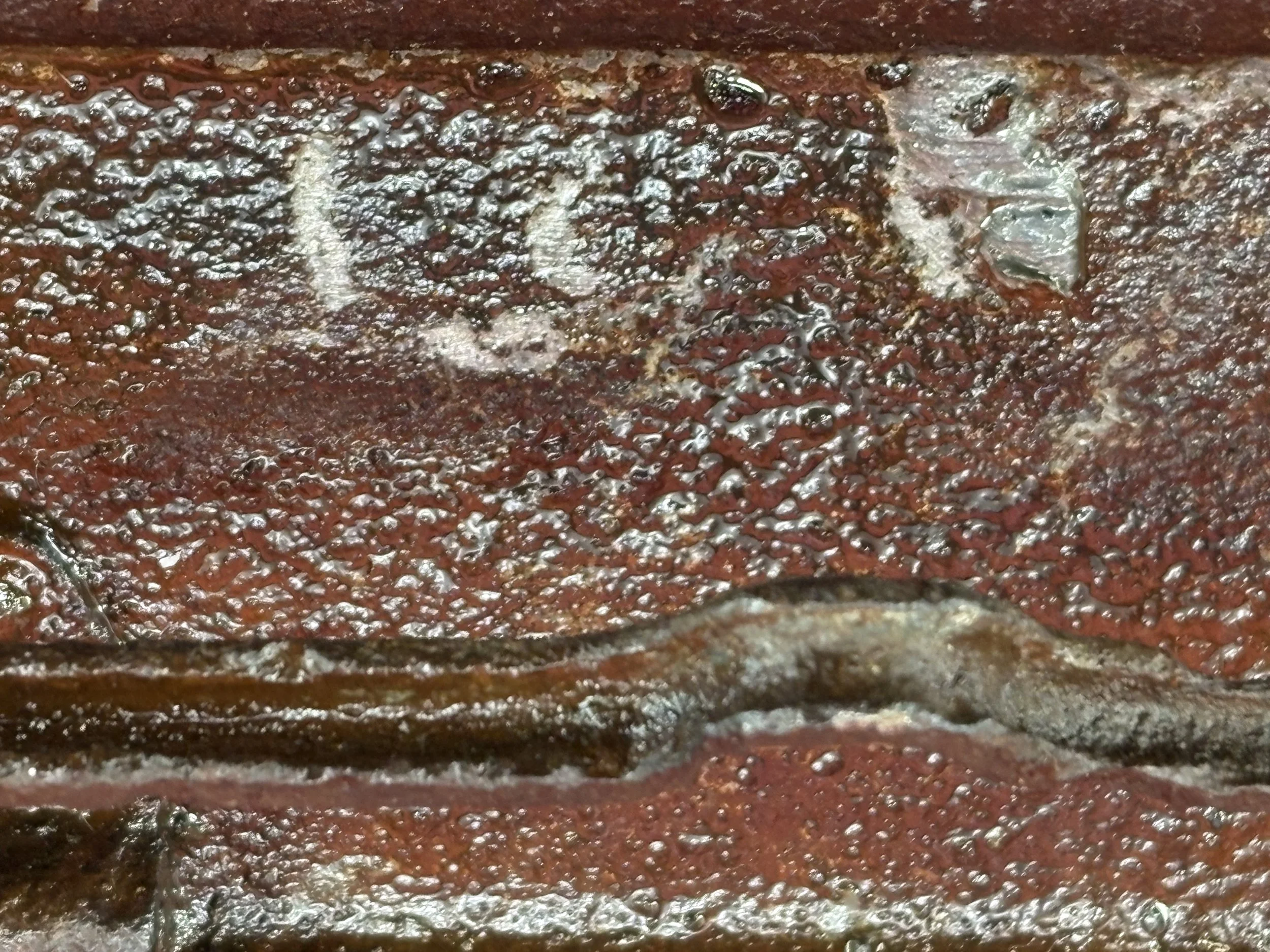 Image 9 of 11
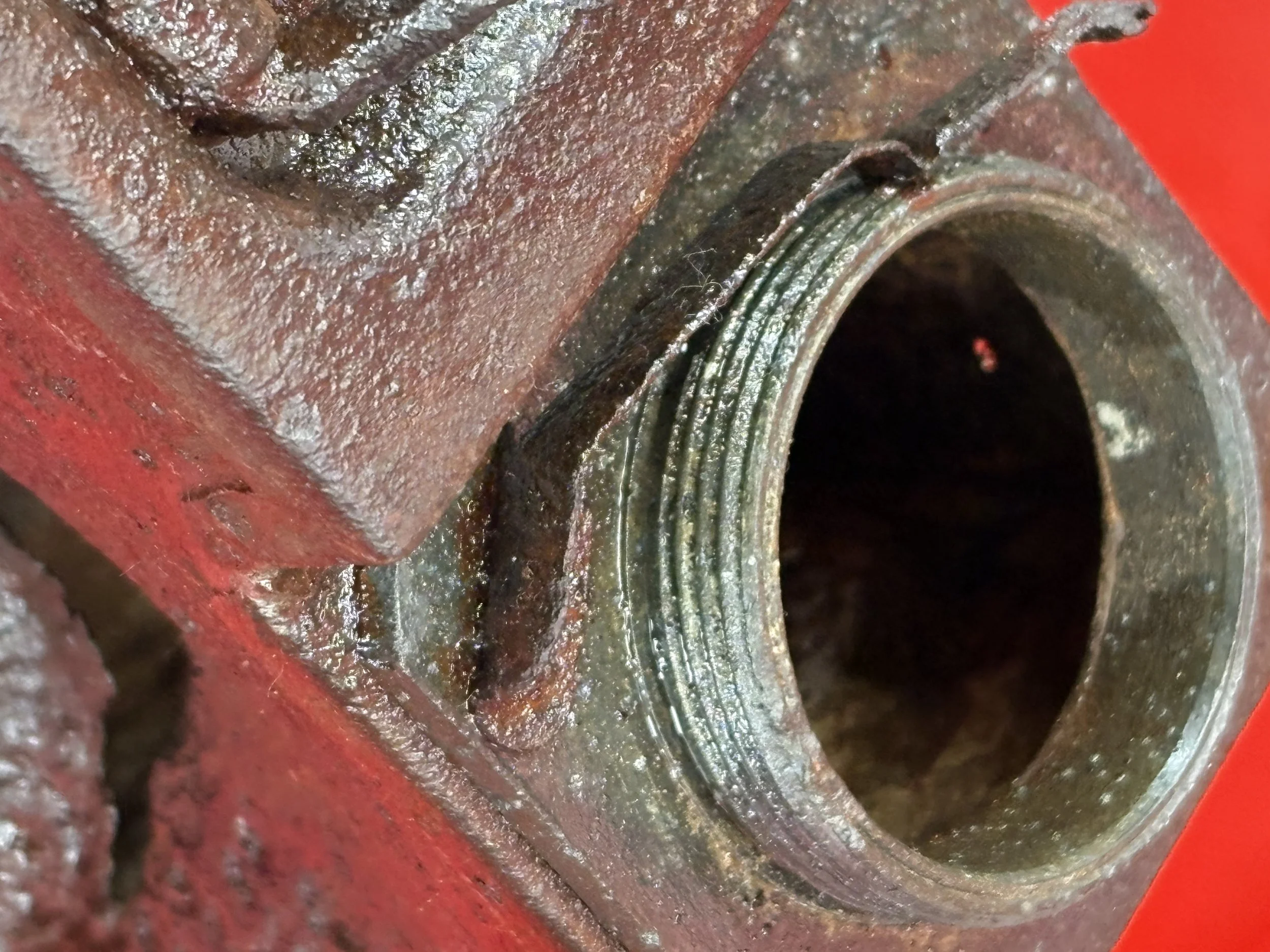 Image 10 of 11
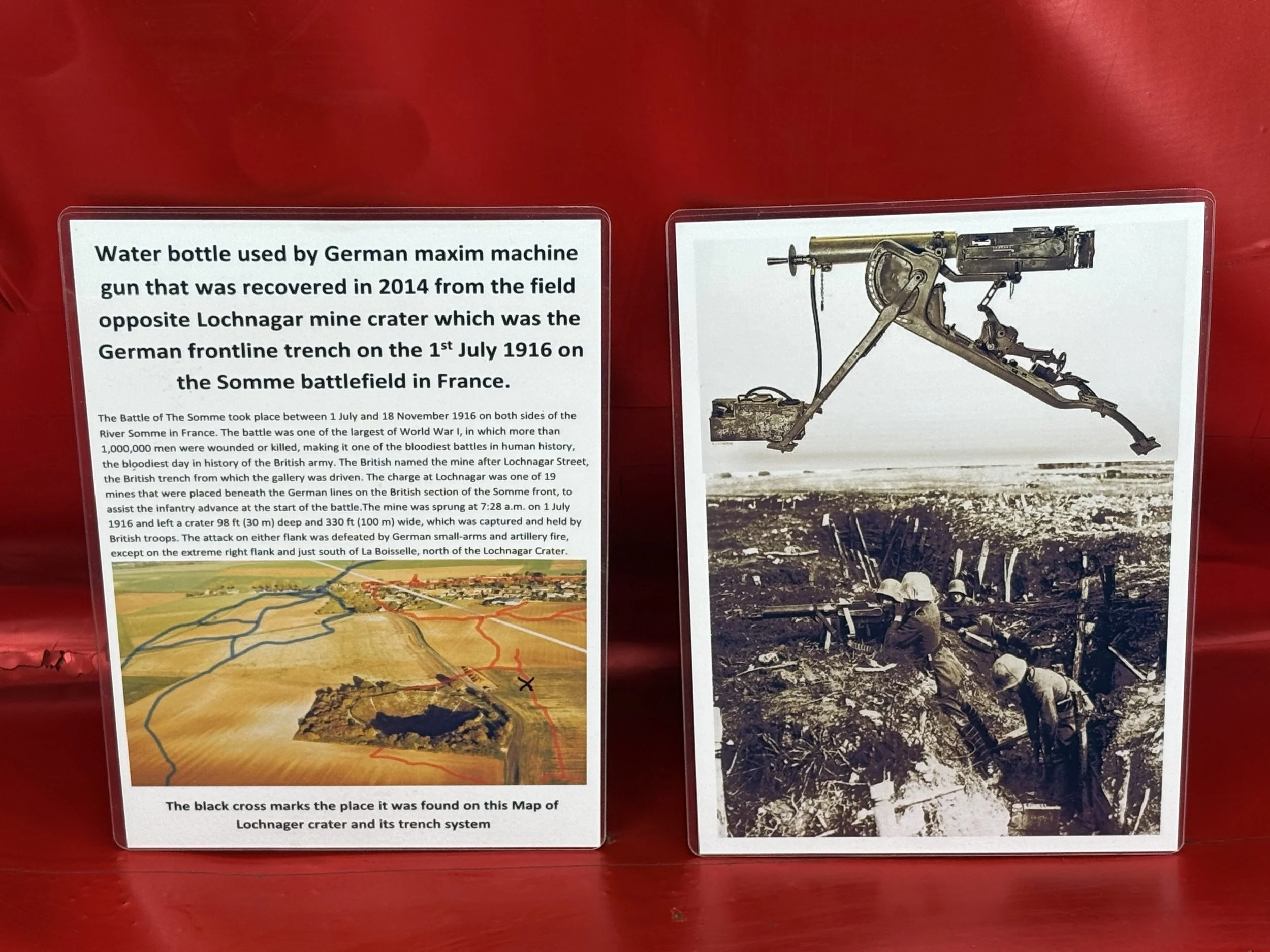 Image 11 of 11