This is a German soldiers lovely semi-relic condition and the rare bit with some original green paintwork remains not much but there is a few bits. The helmet is only lightly rusty with only some small rust holes but has filled in as well after its recovery it is very solid and is not braking up or falling apart but does not have any of its leather liner it has been very nicely cleaned and is perfect for display or any collection. This M16 steel helmet was recovered years ago from the area around the German crown prince bunker which is in the Argonne Forest in France it was built during the opening months of war for Crown Prince Wilhelm and the command staff of the German 5th Army. The helmet come with 2xA5 laminated information cards with many pictures and a map
The history of the Crown Prince bunkers dates back to late 1914, when German forces established defensive positions in the dense Argonne Forest during the opening months of World War I. Realizing the conflict had ground into a brutal war of attrition, German engineers constructed a highly sophisticated underground complex designed to house Crown Prince Wilhelm—the eldest son of Kaiser Wilhelm II—and the command staff of the German 5th Army. Built deep into the hillsides to withstand heavy Allied artillery, this command post served as a vital nerve centre during the catastrophic Battle of Verdun in 1916 and the subsequent Meuse-Argonne Offensive in 1918. While regular infantry endured horrific conditions in muddy trenches, this secure headquarters featured unprecedented wartime luxuries, including multi-layered concrete reinforcement, electricity, brick chimneys, and furnished officer quarters. The bunkers remained firmly in German hands for nearly four years until September 1918, when a massive assault by the American Expeditionary Forces (AEF) finally forced a German retreat, leaving behind the remarkably intact concrete shells that still stand in the forest today.. The helmet comes with 2xA5 laminated information cards with pictures and map.
This is a German soldiers lovely semi-relic condition and the rare bit with some original green paintwork remains not much but there is a few bits. The helmet is only lightly rusty with only some small rust holes but has filled in as well after its recovery it is very solid and is not braking up or falling apart but does not have any of its leather liner it has been very nicely cleaned and is perfect for display or any collection. This M16 steel helmet was recovered years ago from the area around the German crown prince bunker which is in the Argonne Forest in France it was built during the opening months of war for Crown Prince Wilhelm and the command staff of the German 5th Army. The helmet come with 2xA5 laminated information cards with many pictures and a map
The history of the Crown Prince bunkers dates back to late 1914, when German forces established defensive positions in the dense Argonne Forest during the opening months of World War I. Realizing the conflict had ground into a brutal war of attrition, German engineers constructed a highly sophisticated underground complex designed to house Crown Prince Wilhelm—the eldest son of Kaiser Wilhelm II—and the command staff of the German 5th Army. Built deep into the hillsides to withstand heavy Allied artillery, this command post served as a vital nerve centre during the catastrophic Battle of Verdun in 1916 and the subsequent Meuse-Argonne Offensive in 1918. While regular infantry endured horrific conditions in muddy trenches, this secure headquarters featured unprecedented wartime luxuries, including multi-layered concrete reinforcement, electricity, brick chimneys, and furnished officer quarters. The bunkers remained firmly in German hands for nearly four years until September 1918, when a massive assault by the American Expeditionary Forces (AEF) finally forced a German retreat, leaving behind the remarkably intact concrete shells that still stand in the forest today.. The helmet comes with 2xA5 laminated information cards with pictures and map.

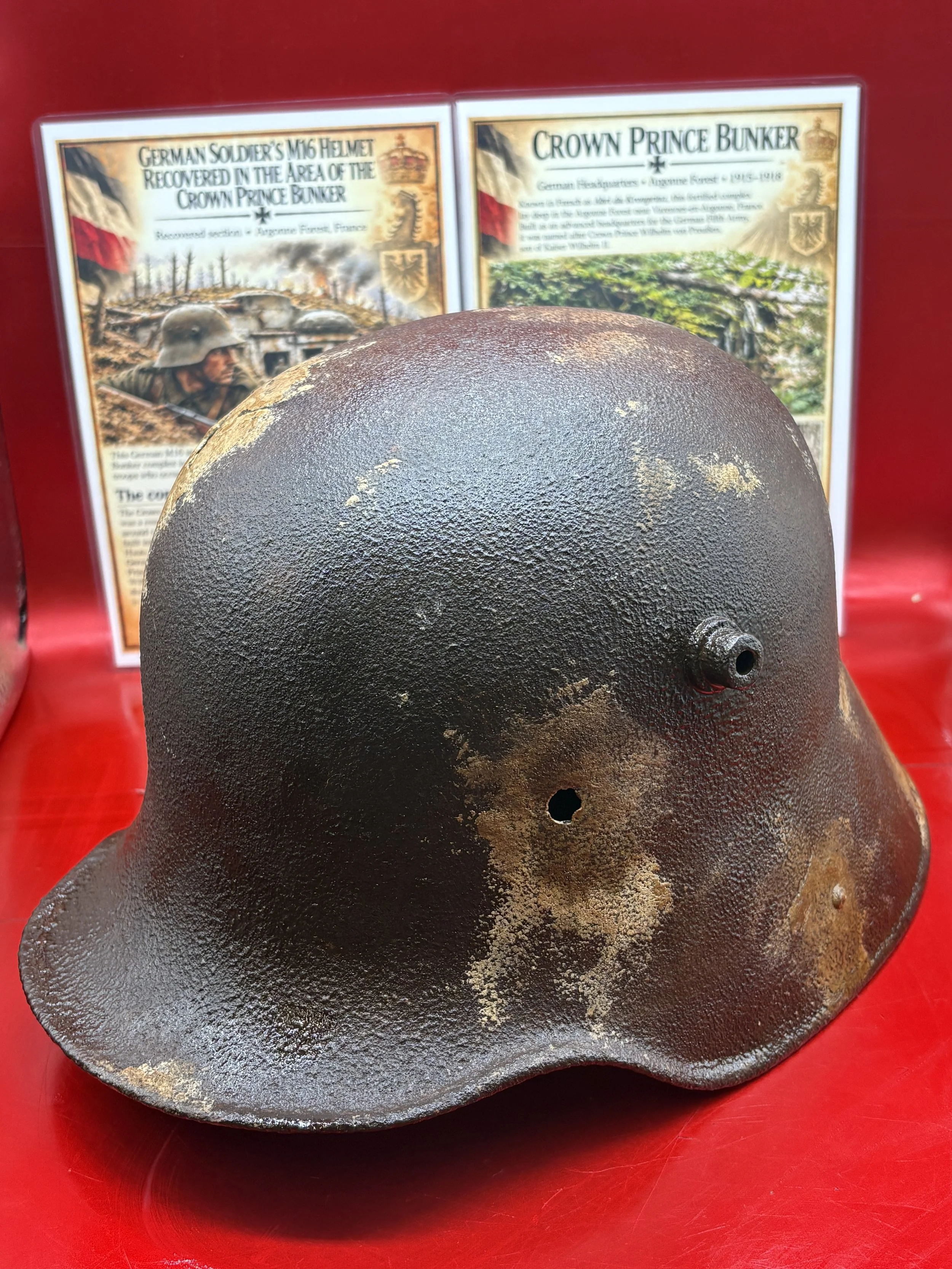 Image 1 of 12
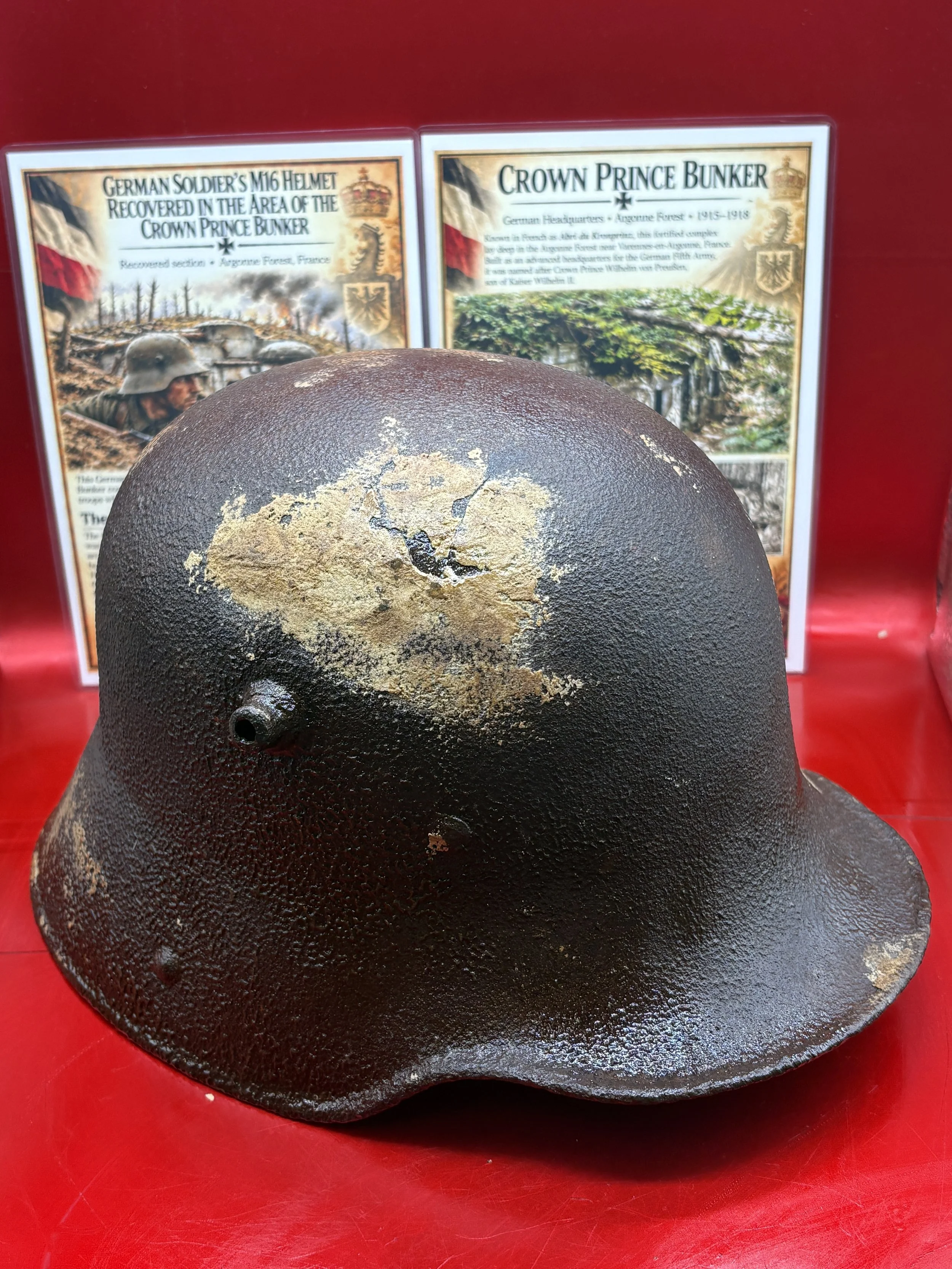 Image 2 of 12
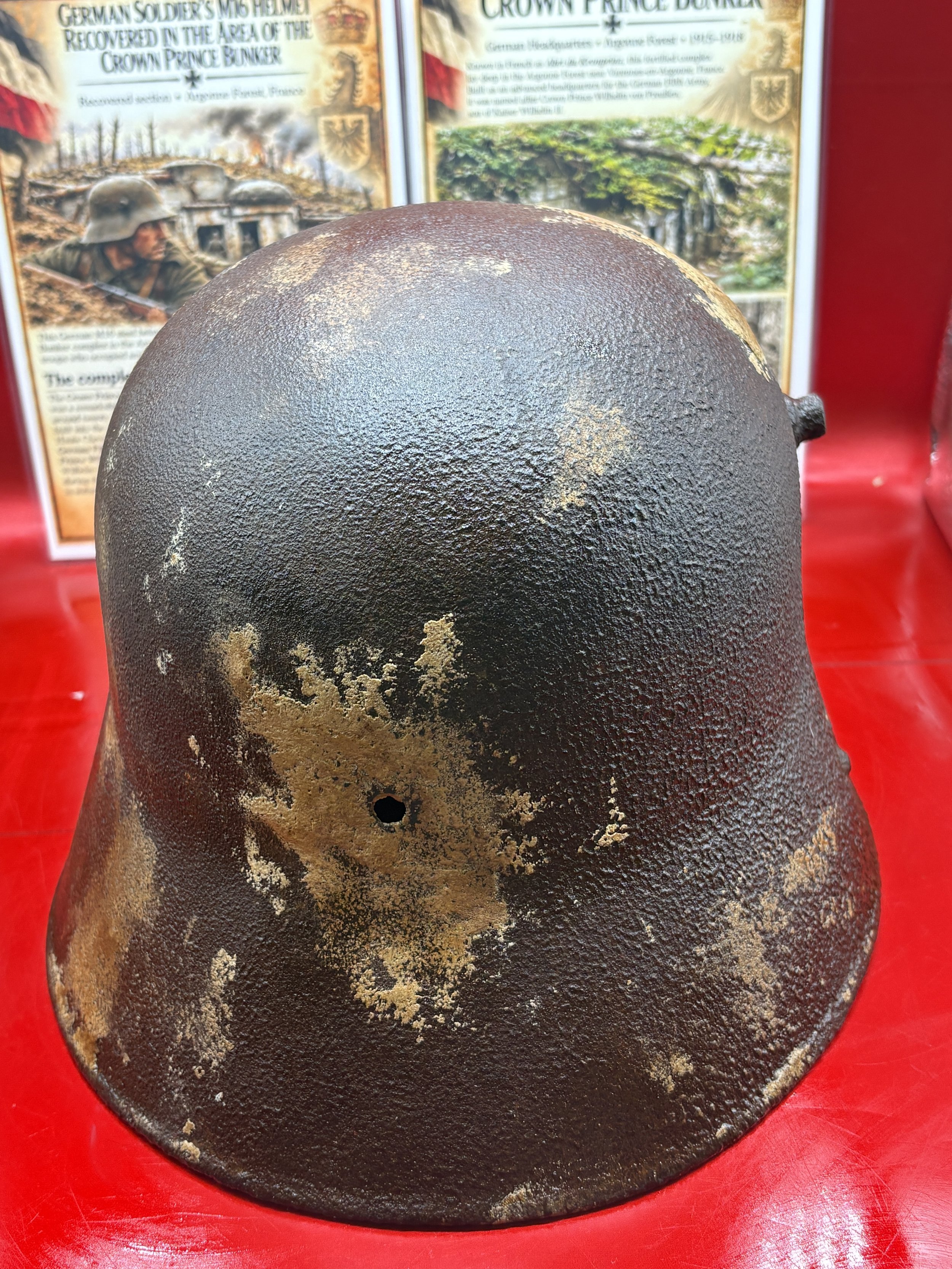 Image 3 of 12
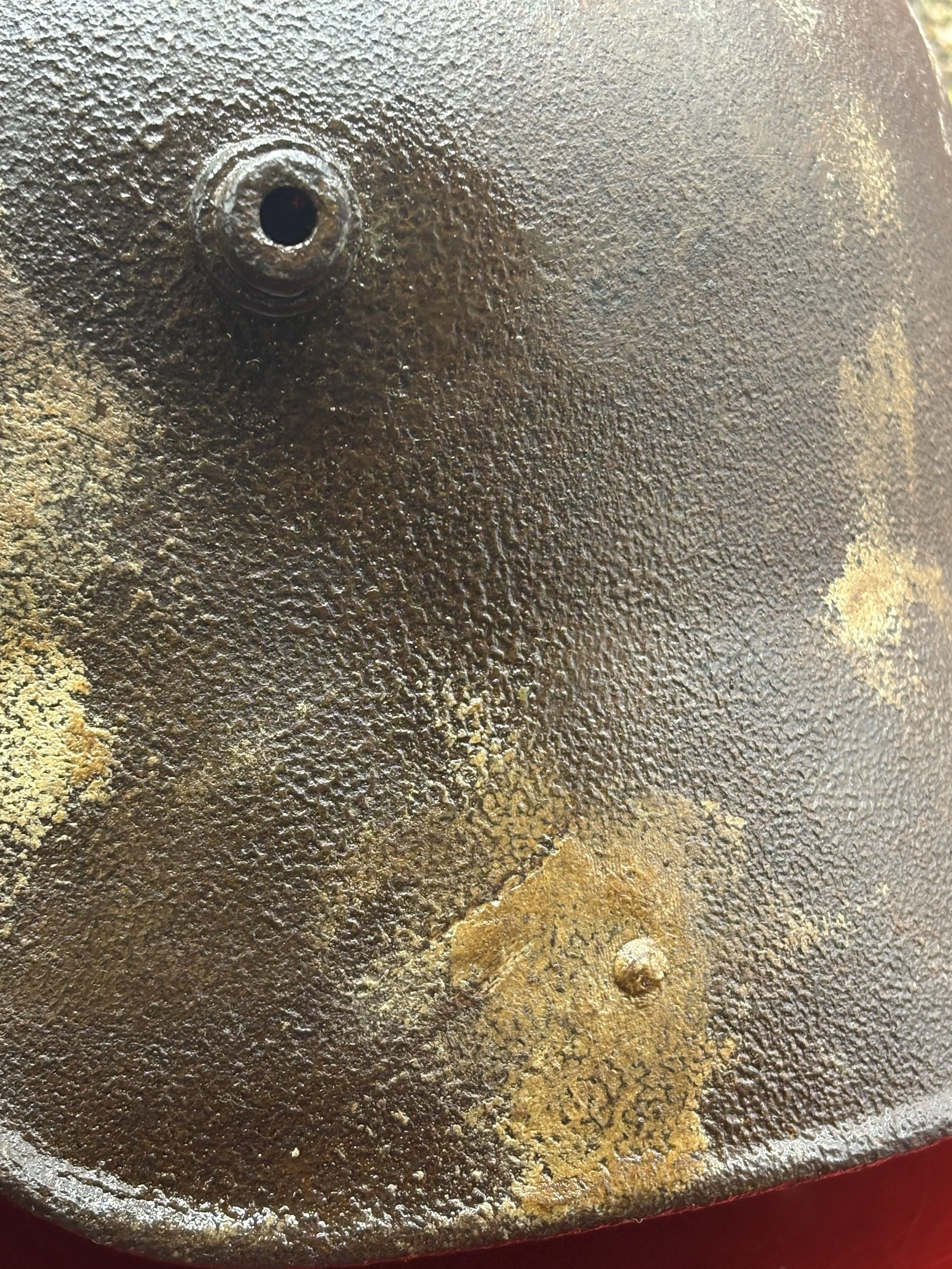 Image 4 of 12
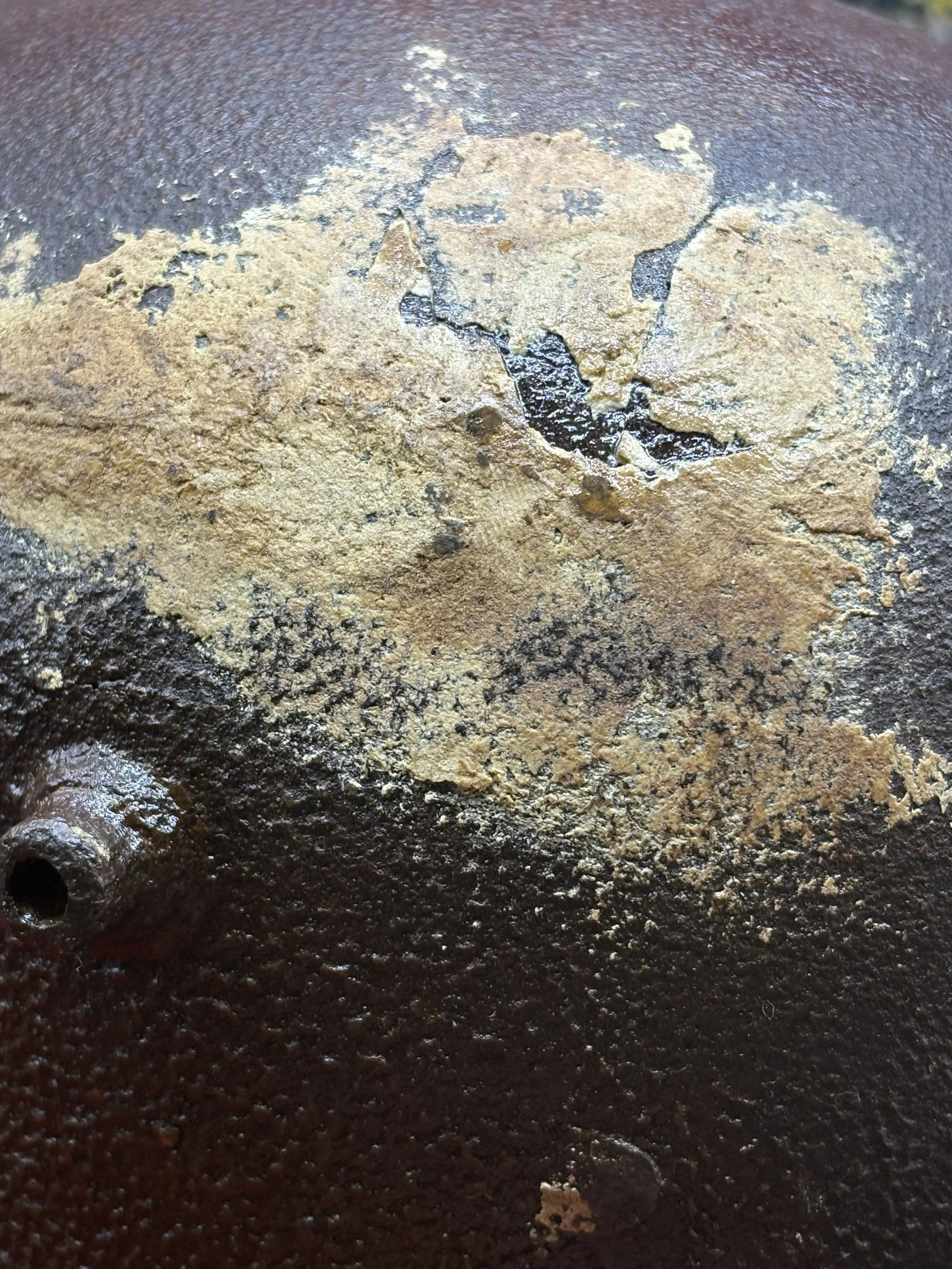 Image 5 of 12
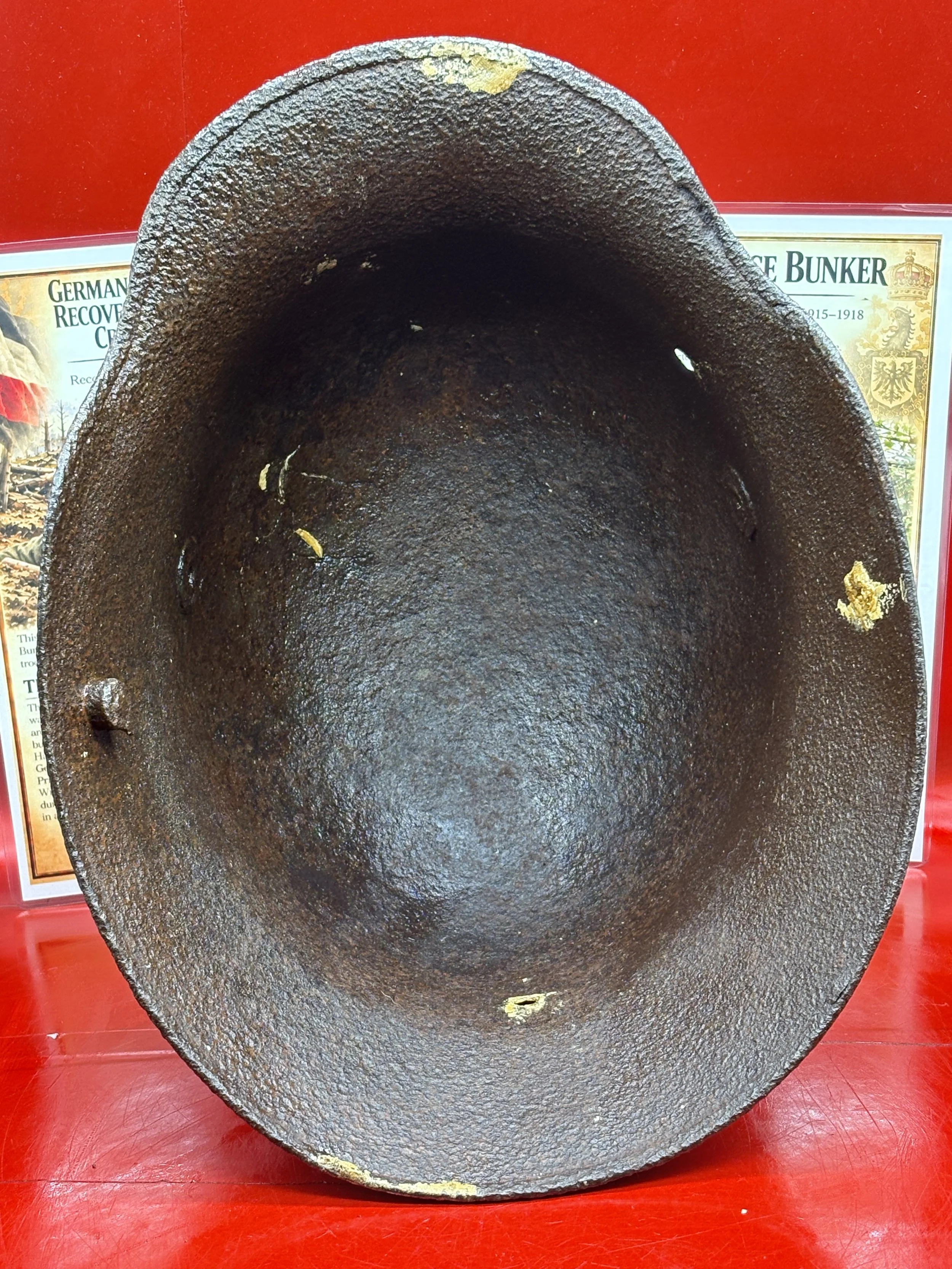 Image 6 of 12
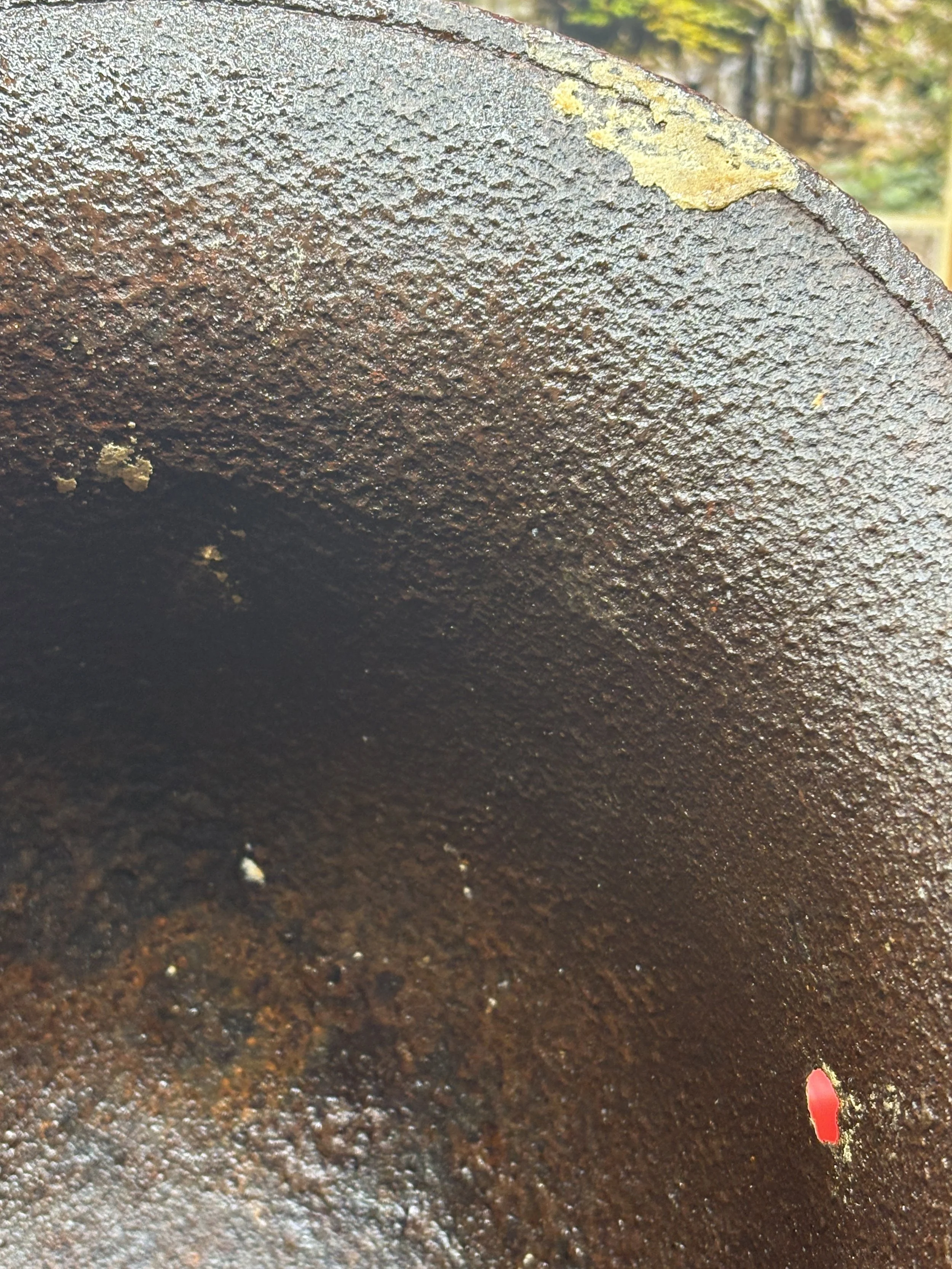 Image 7 of 12
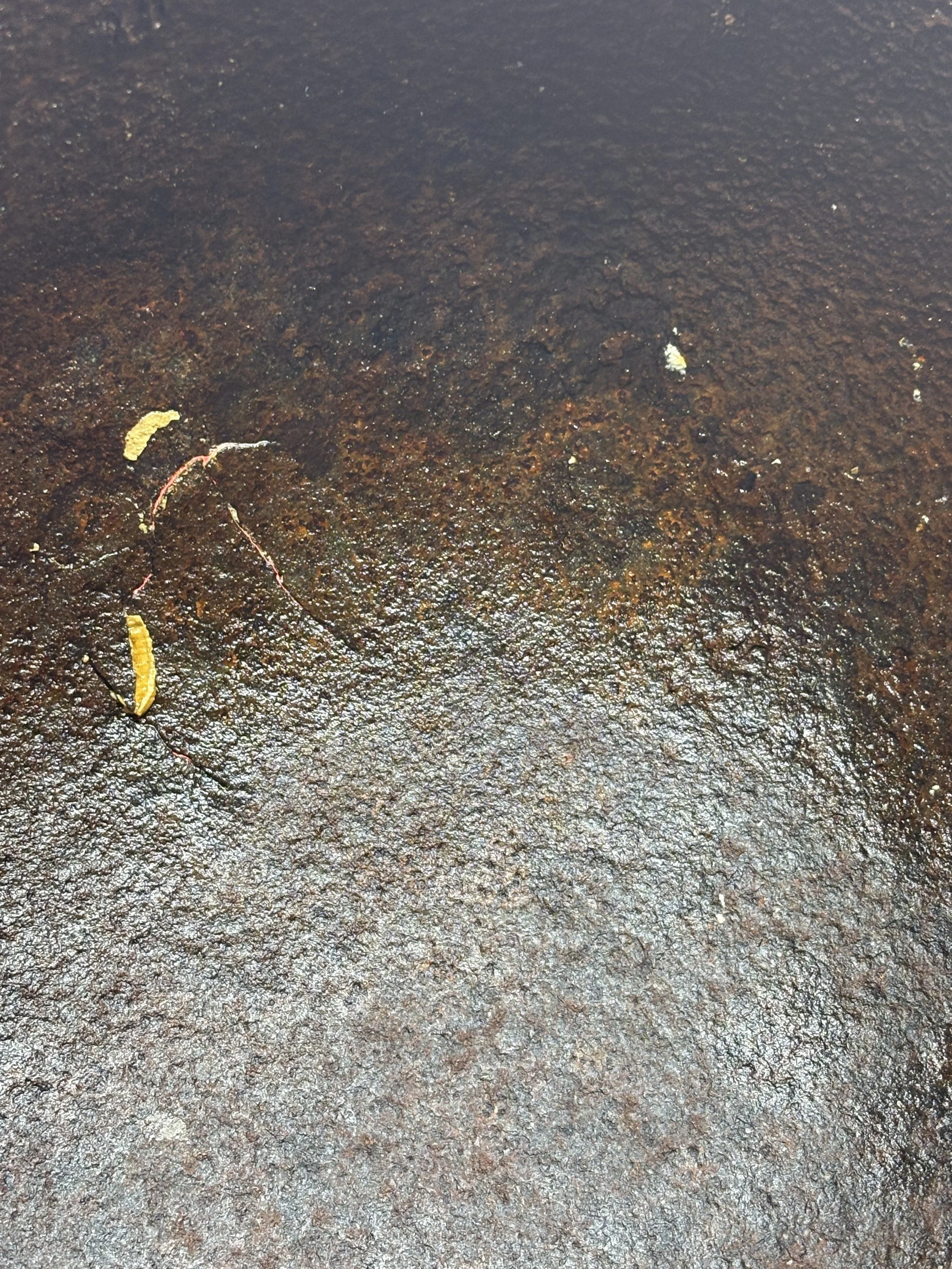 Image 8 of 12
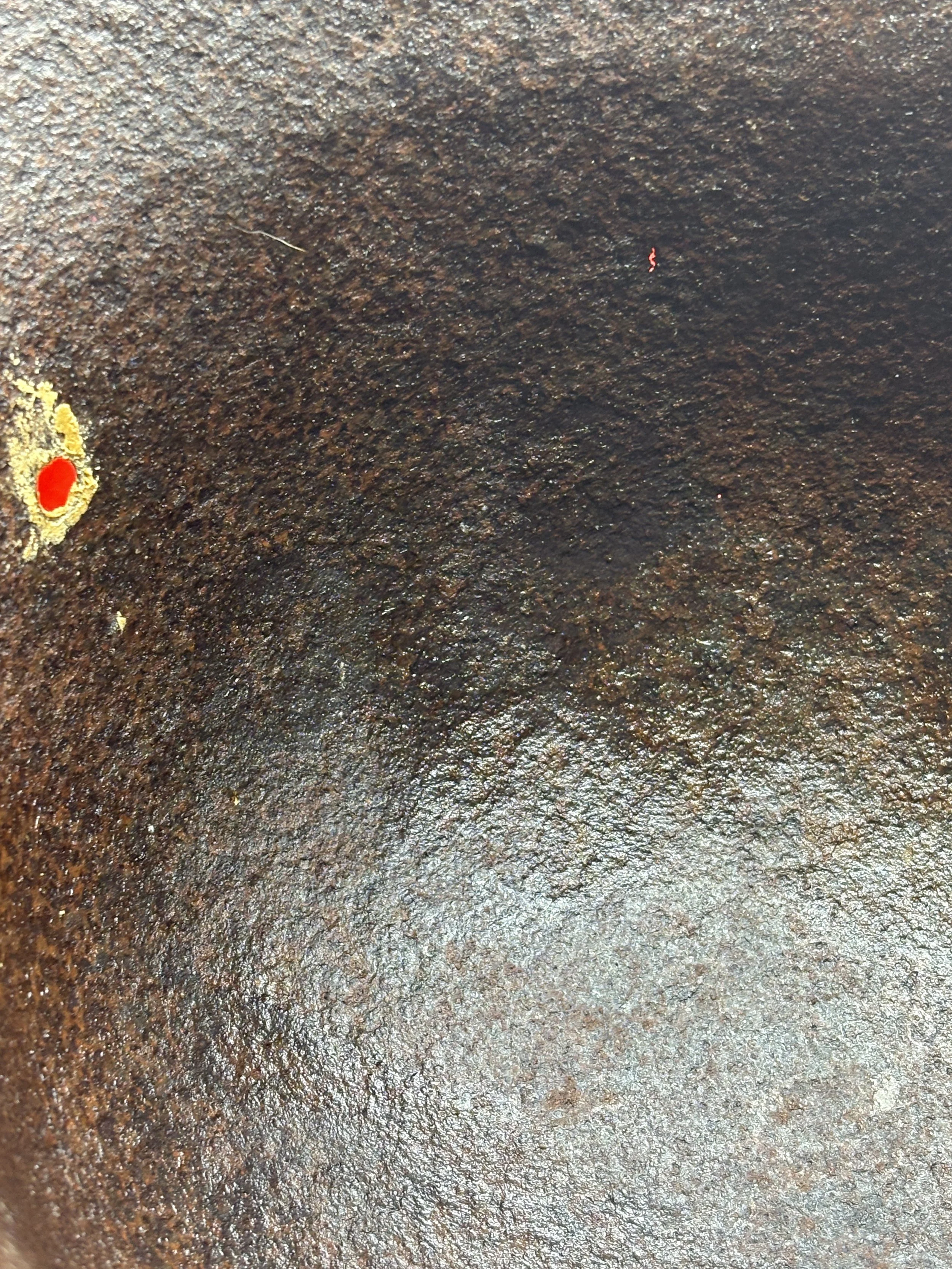 Image 9 of 12
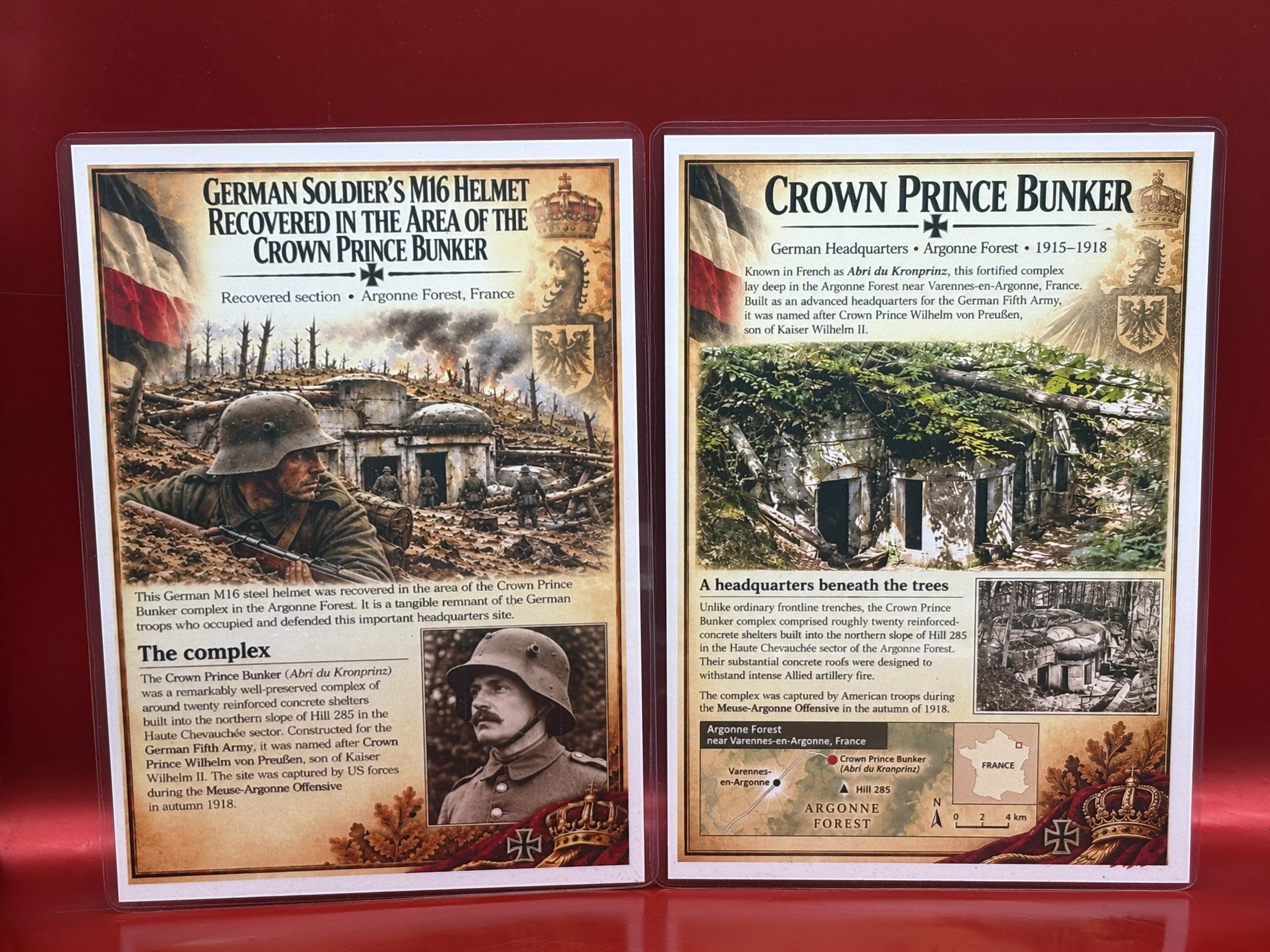 Image 10 of 12
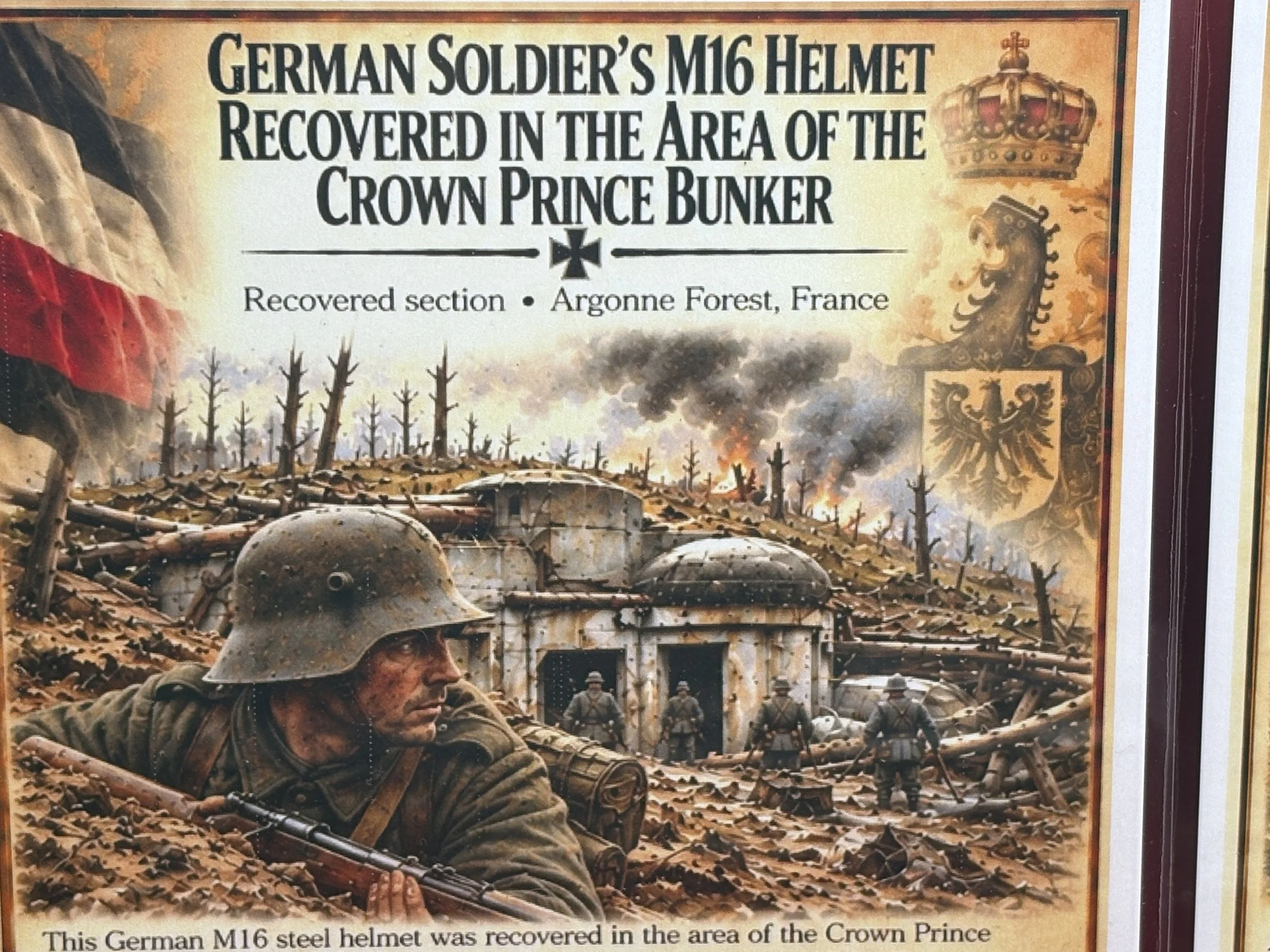 Image 11 of 12
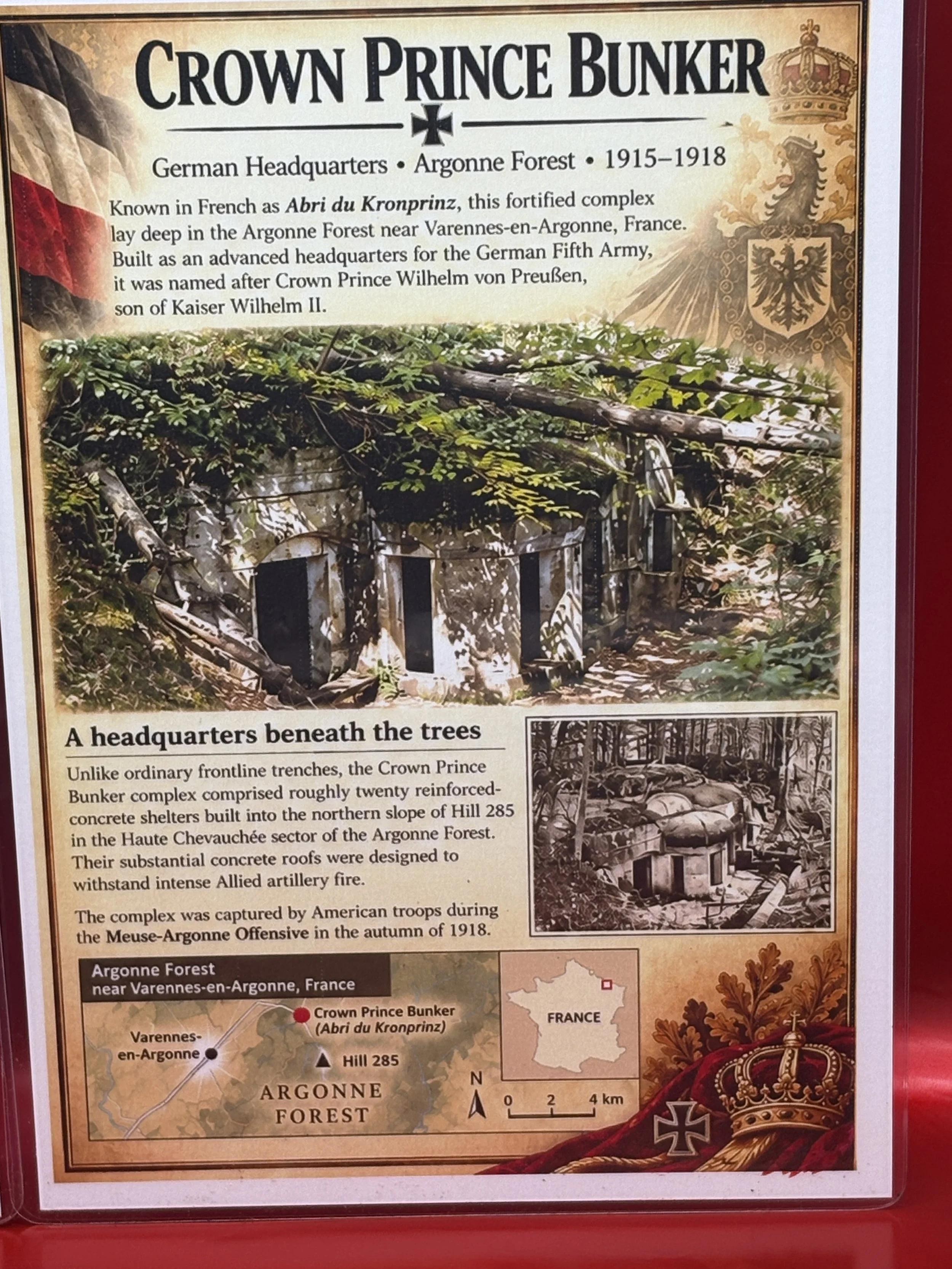 Image 12 of 12