This is a German soldiers dog tag for soldier Paul Hittel in the Saxon Army Transport Troops in Ersatz-Abteilung 5 Fahr-Bataillon which is the horse transport service for taking supplies to the front lines.The tag is rare to find from the battlefield in this a nice condition with most of its markings still fairly clear to see overall nice relic but solid condition; not crumbling or breaking up, and has been well cleaned and is perfect for display or any collection. The tag was recovered on the Somme battlefield from the site of a former British prisoner-of-war holding camp (prisoner cage) near Amiens. This site was used to process captured German soldiers during the Allied Hundred Days Offensive of 1918 and the Battle of Amiens in August 1918.
The tag comes with 2xA5 laminated information sheets with pictures.
Owner: Paul Hittel (born 24 March 1887)
Hometown: Striesen, Dresden, Kingdom of Saxony, German Empire
The abbreviation Ersatz-Abteilung identifies a replacement and training detachment, while Fahr-Bataillon refers to the German Army's transport service. These troops formed the logistical backbone of the army, operating horse-drawn wagons and supply columns responsible for moving ammunition, food, engineering stores, forage, and other vital supplies to the front.
Unlike infantry regiments, transport battalions rarely fought as independent units. Instead, trained personnel were distributed to supply columns supporting divisions and corps throughout the German Army. As a result, the unit stamped on the disc is not necessarily the unit with which Hittel ultimately served at the front.
In March 1918 Germany launched Operation Michael, the opening phase of the Spring Offensive (Kaiserschlacht). German forces advanced across the old Somme battlefield, recapturing towns such as Péronne, Bapaume, and Albert while driving toward Amiens. This is where Paul Hittel at the age of 31 years old would have been taken prisoner properly in around August 1918.
This is a German soldiers dog tag for soldier Paul Hittel in the Saxon Army Transport Troops in Ersatz-Abteilung 5 Fahr-Bataillon which is the horse transport service for taking supplies to the front lines.The tag is rare to find from the battlefield in this a nice condition with most of its markings still fairly clear to see overall nice relic but solid condition; not crumbling or breaking up, and has been well cleaned and is perfect for display or any collection. The tag was recovered on the Somme battlefield from the site of a former British prisoner-of-war holding camp (prisoner cage) near Amiens. This site was used to process captured German soldiers during the Allied Hundred Days Offensive of 1918 and the Battle of Amiens in August 1918.
The tag comes with 2xA5 laminated information sheets with pictures.
Owner: Paul Hittel (born 24 March 1887)
Hometown: Striesen, Dresden, Kingdom of Saxony, German Empire
The abbreviation Ersatz-Abteilung identifies a replacement and training detachment, while Fahr-Bataillon refers to the German Army's transport service. These troops formed the logistical backbone of the army, operating horse-drawn wagons and supply columns responsible for moving ammunition, food, engineering stores, forage, and other vital supplies to the front.
Unlike infantry regiments, transport battalions rarely fought as independent units. Instead, trained personnel were distributed to supply columns supporting divisions and corps throughout the German Army. As a result, the unit stamped on the disc is not necessarily the unit with which Hittel ultimately served at the front.
In March 1918 Germany launched Operation Michael, the opening phase of the Spring Offensive (Kaiserschlacht). German forces advanced across the old Somme battlefield, recapturing towns such as Péronne, Bapaume, and Albert while driving toward Amiens. This is where Paul Hittel at the age of 31 years old would have been taken prisoner properly in around August 1918.

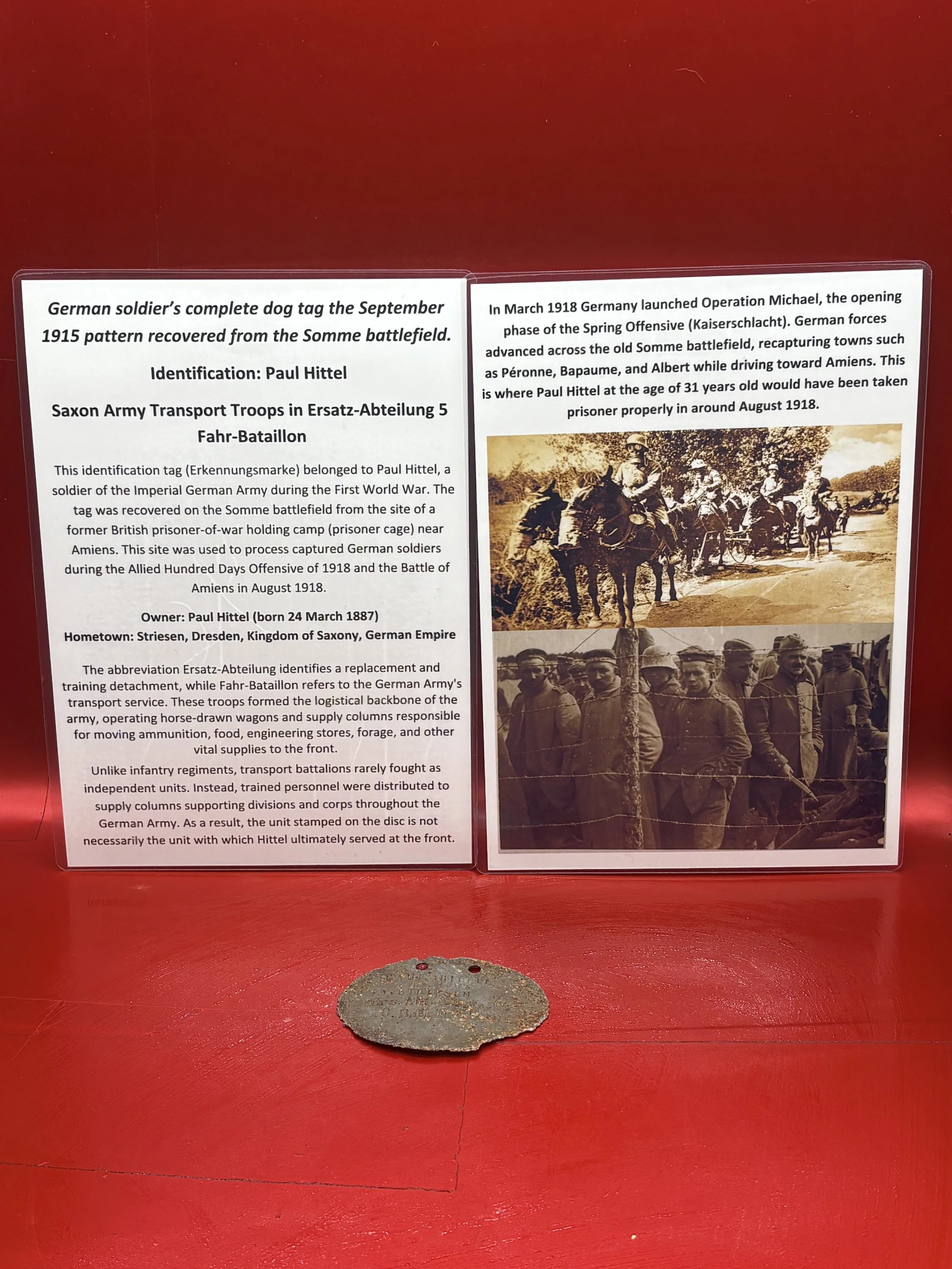 Image 1 of 7
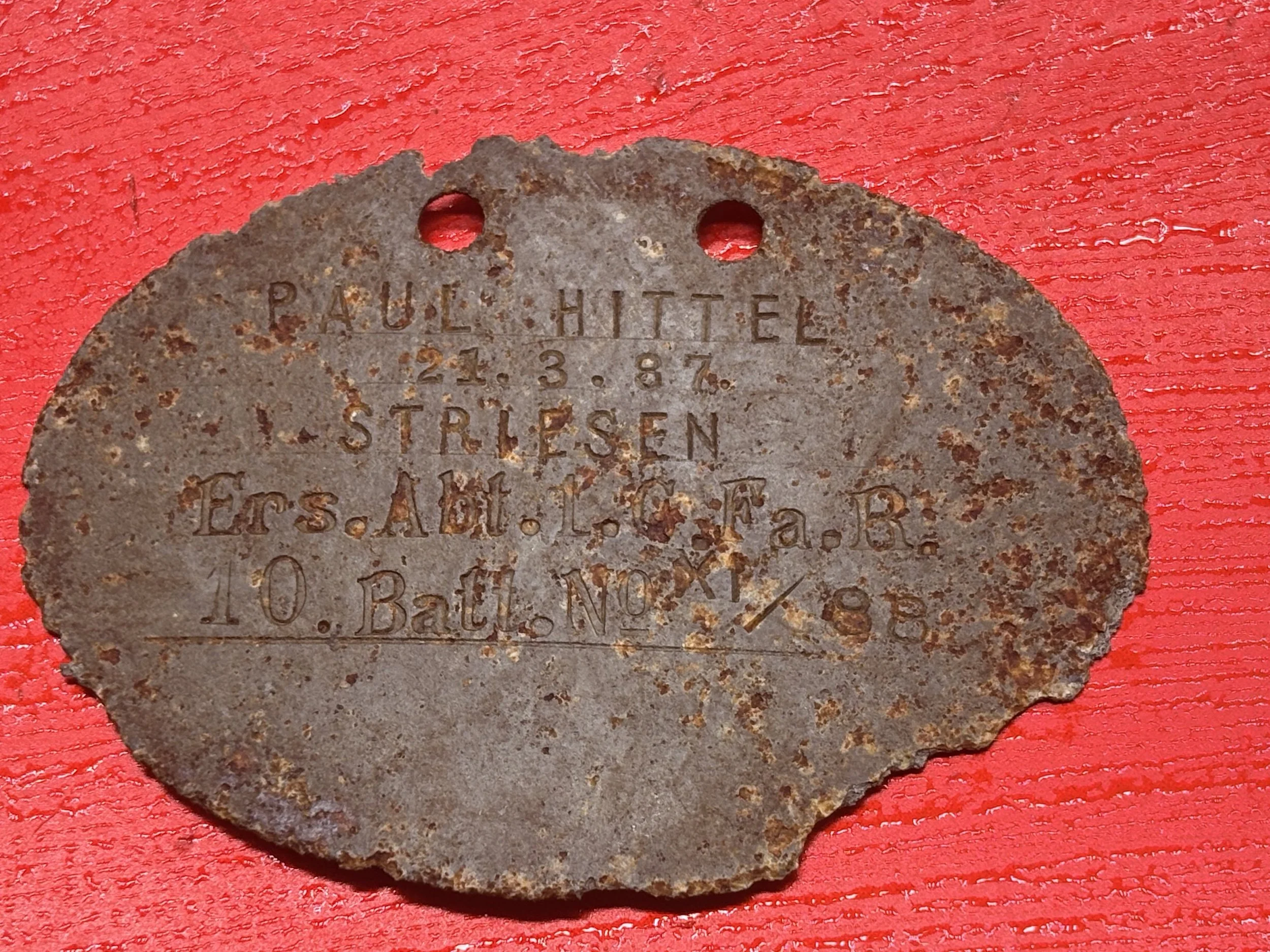 Image 2 of 7
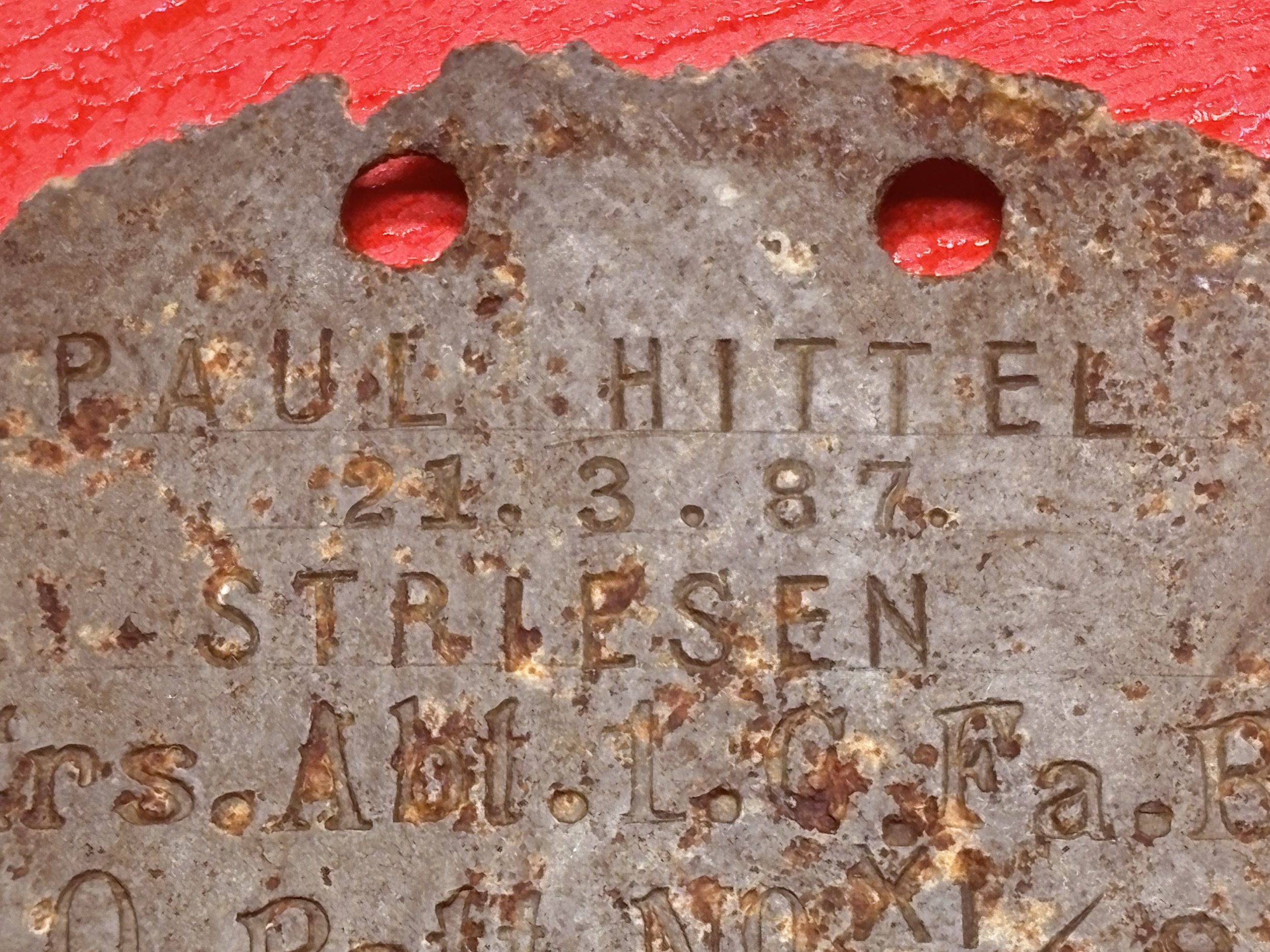 Image 3 of 7
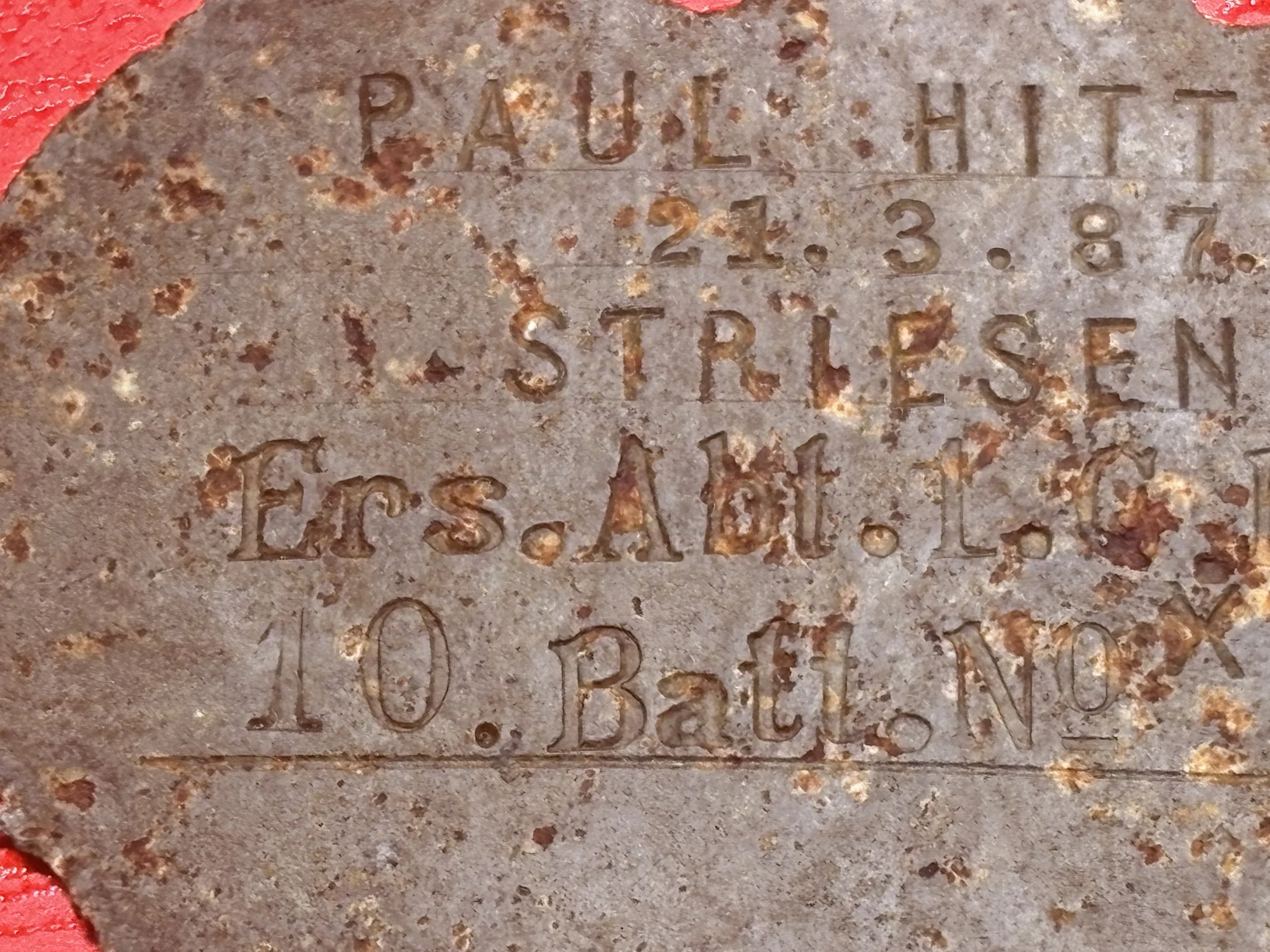 Image 4 of 7
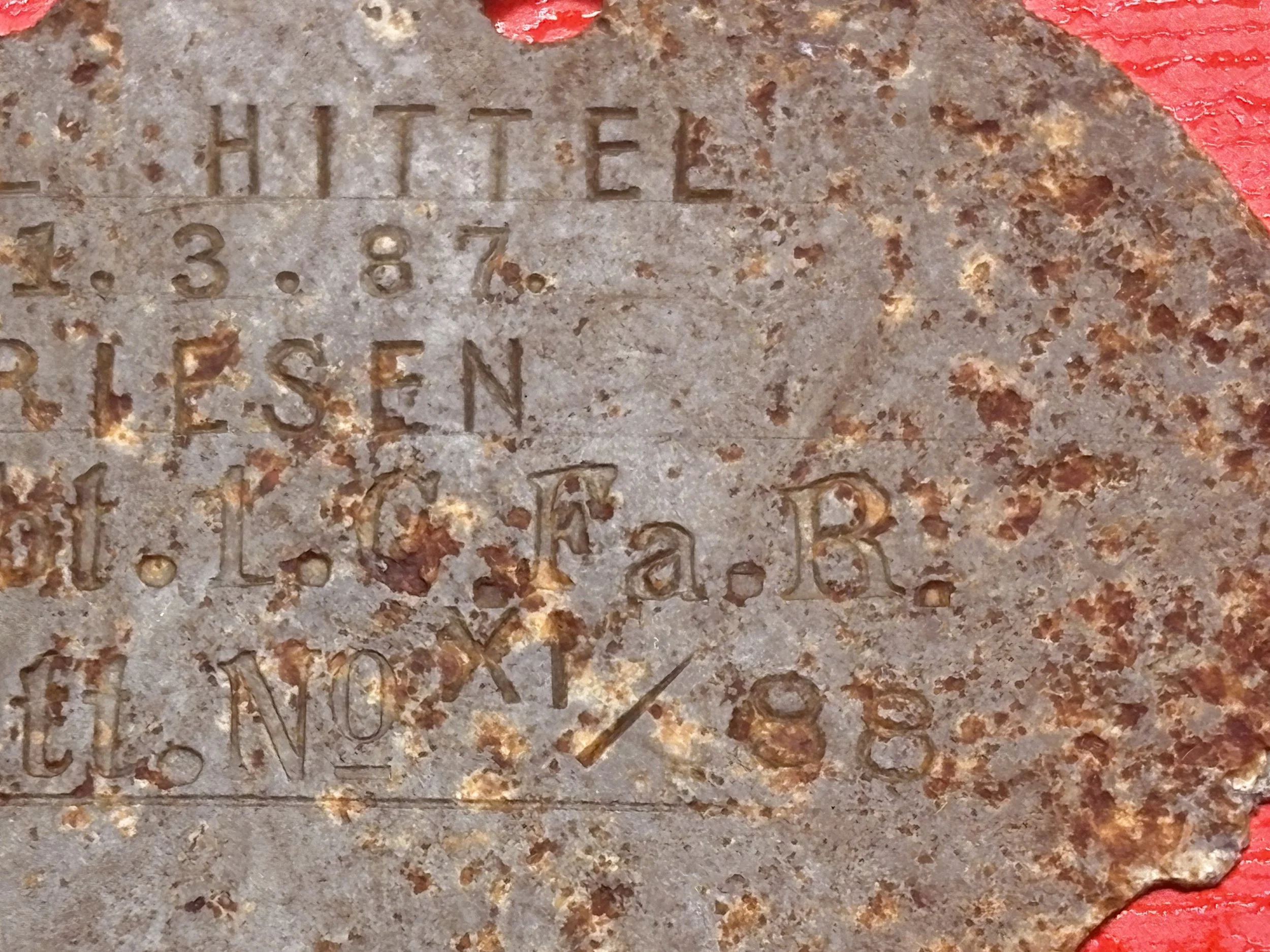 Image 5 of 7
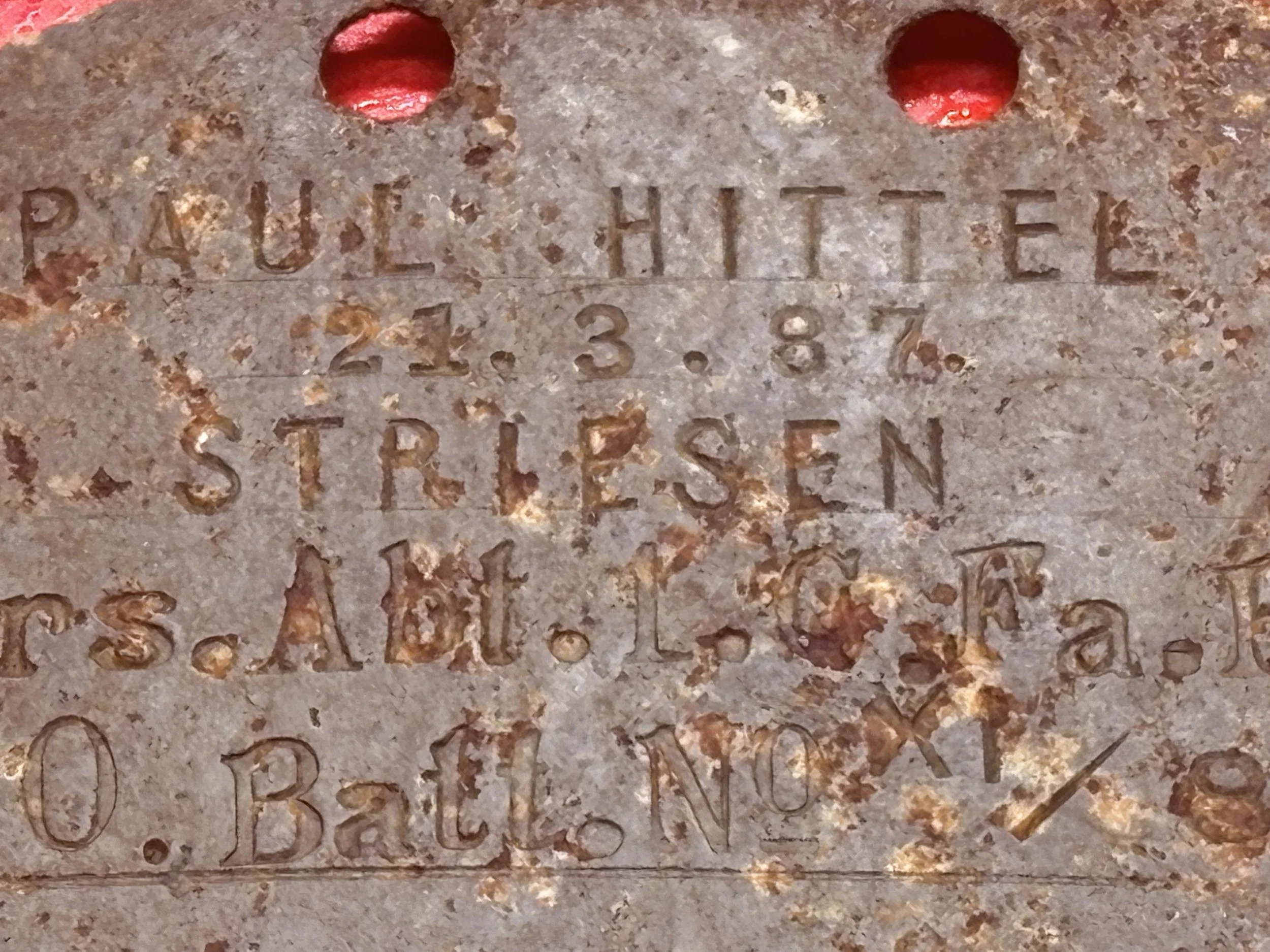 Image 6 of 7
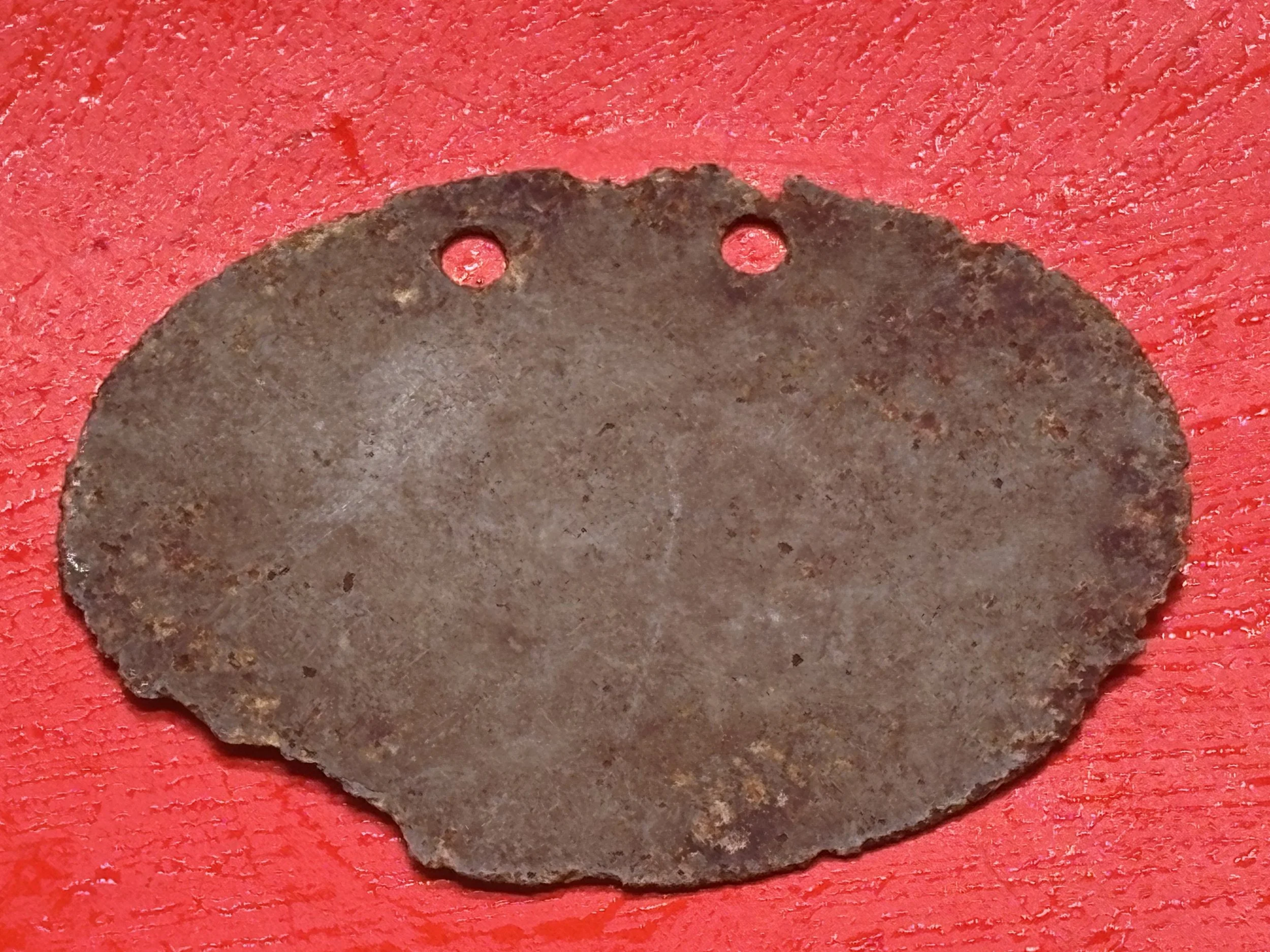 Image 7 of 7