The German M43 Stielhandggranate ("potato masher") was a late-war (1943) simplification of the M24 stick grenade, featuring a solid wood handle and a top-mounted fuse. It used the BZE 39 fuze, allowing the head to function as a self-contained explosive without the stick. The M43 was often tan, used a 4.5-second delay, and offered better throwing range and accuracy than other grenades.
The grenade is in good condition for a relic and amongst the ones found this is one of the few that is still its round shape not bent up and still has its top fuse which is not attached to the can.
The grenade featuring a aluminium can with its fragmentation sleeve still attached also its base plate to attach the handle with near complete wooden handle which is still a single part not broken bits. It is completely empty and inert. The wood is still solid, not breaking apart,the top of the can still has some very little original yellow sand paintwork it is rusty but still solid with a few small holes and the piece has been carefully cleaned and is nice condition for display or any collection. The grenade was recovered from a field near Trun, which we think was a pit dug by the allies where lots of German equipment was thrown in and buried after the battle in the Falaise Pocket, Normandy in France 1944. A nice rare relic from the famous Normandy battlefield. The grenade comes with 2xA5 laminated information cards,map and pictures.
The German M43 Stielhandggranate ("potato masher") was a late-war (1943) simplification of the M24 stick grenade, featuring a solid wood handle and a top-mounted fuse. It used the BZE 39 fuze, allowing the head to function as a self-contained explosive without the stick. The M43 was often tan, used a 4.5-second delay, and offered better throwing range and accuracy than other grenades.
The grenade is in good condition for a relic and amongst the ones found this is one of the few that is still its round shape not bent up and still has its top fuse which is not attached to the can.
The grenade featuring a aluminium can with its fragmentation sleeve still attached also its base plate to attach the handle with near complete wooden handle which is still a single part not broken bits. It is completely empty and inert. The wood is still solid, not breaking apart,the top of the can still has some very little original yellow sand paintwork it is rusty but still solid with a few small holes and the piece has been carefully cleaned and is nice condition for display or any collection. The grenade was recovered from a field near Trun, which we think was a pit dug by the allies where lots of German equipment was thrown in and buried after the battle in the Falaise Pocket, Normandy in France 1944. A nice rare relic from the famous Normandy battlefield. The grenade comes with 2xA5 laminated information cards,map and pictures.

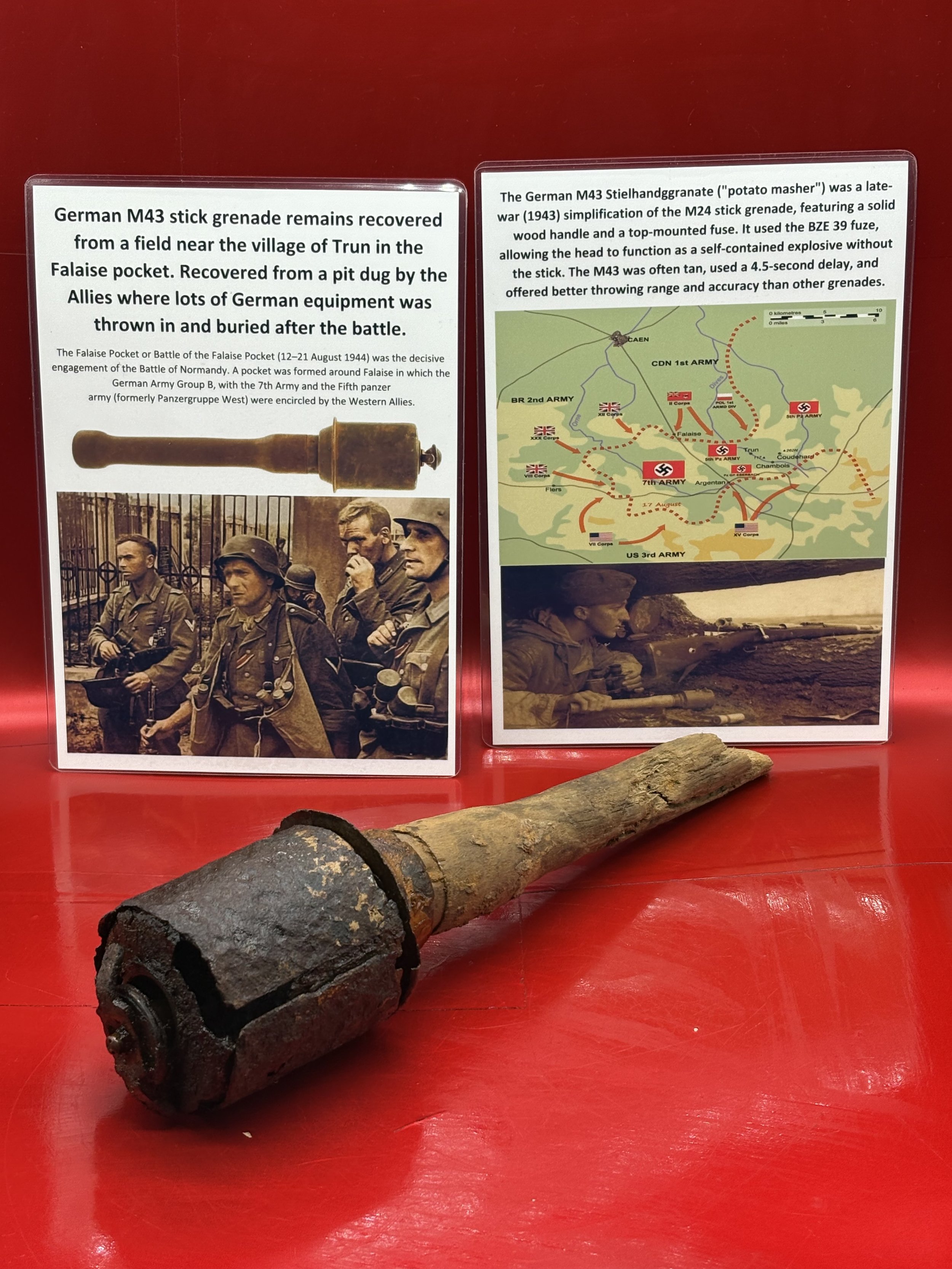 Image 1 of 11
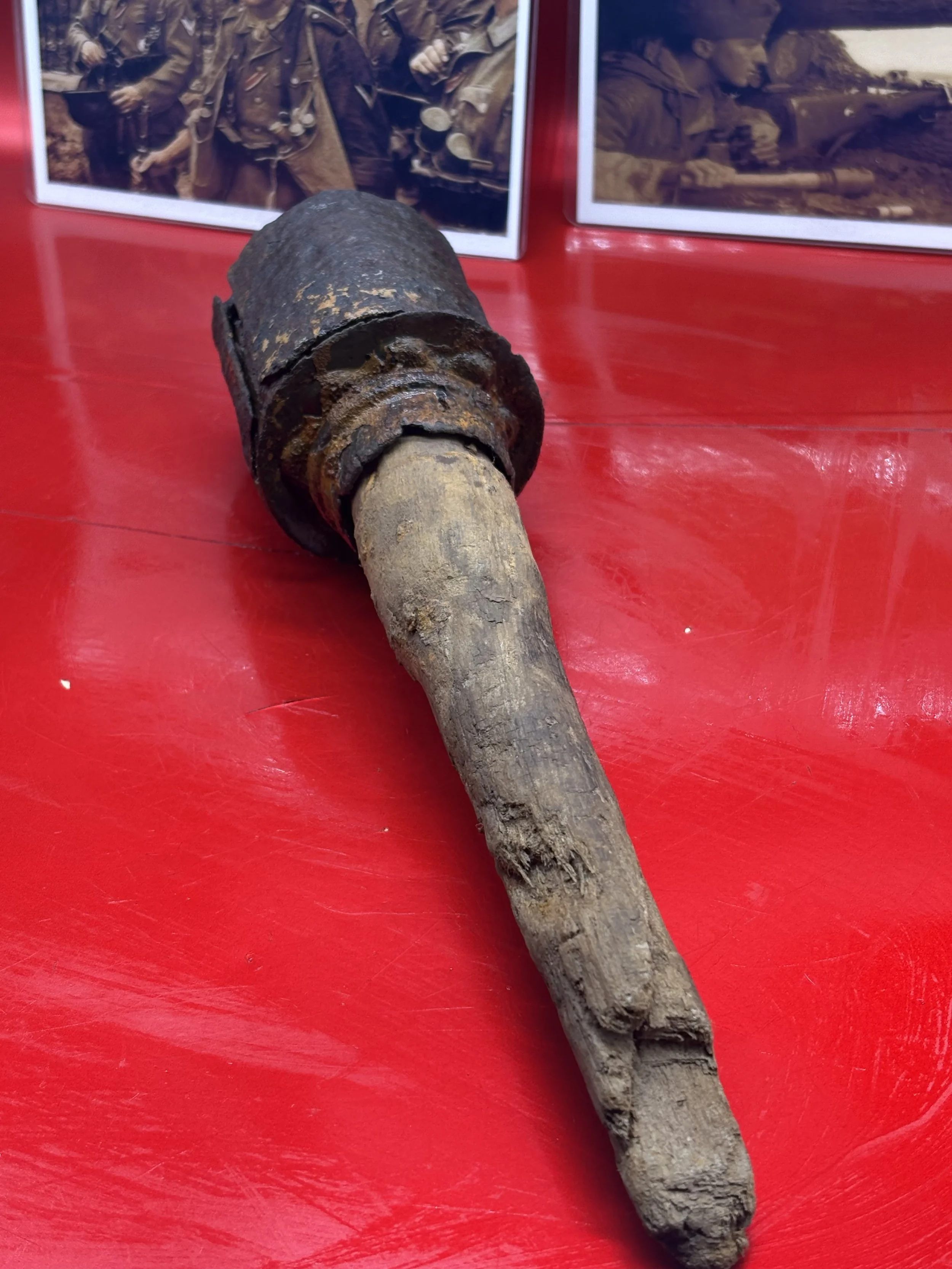 Image 2 of 11
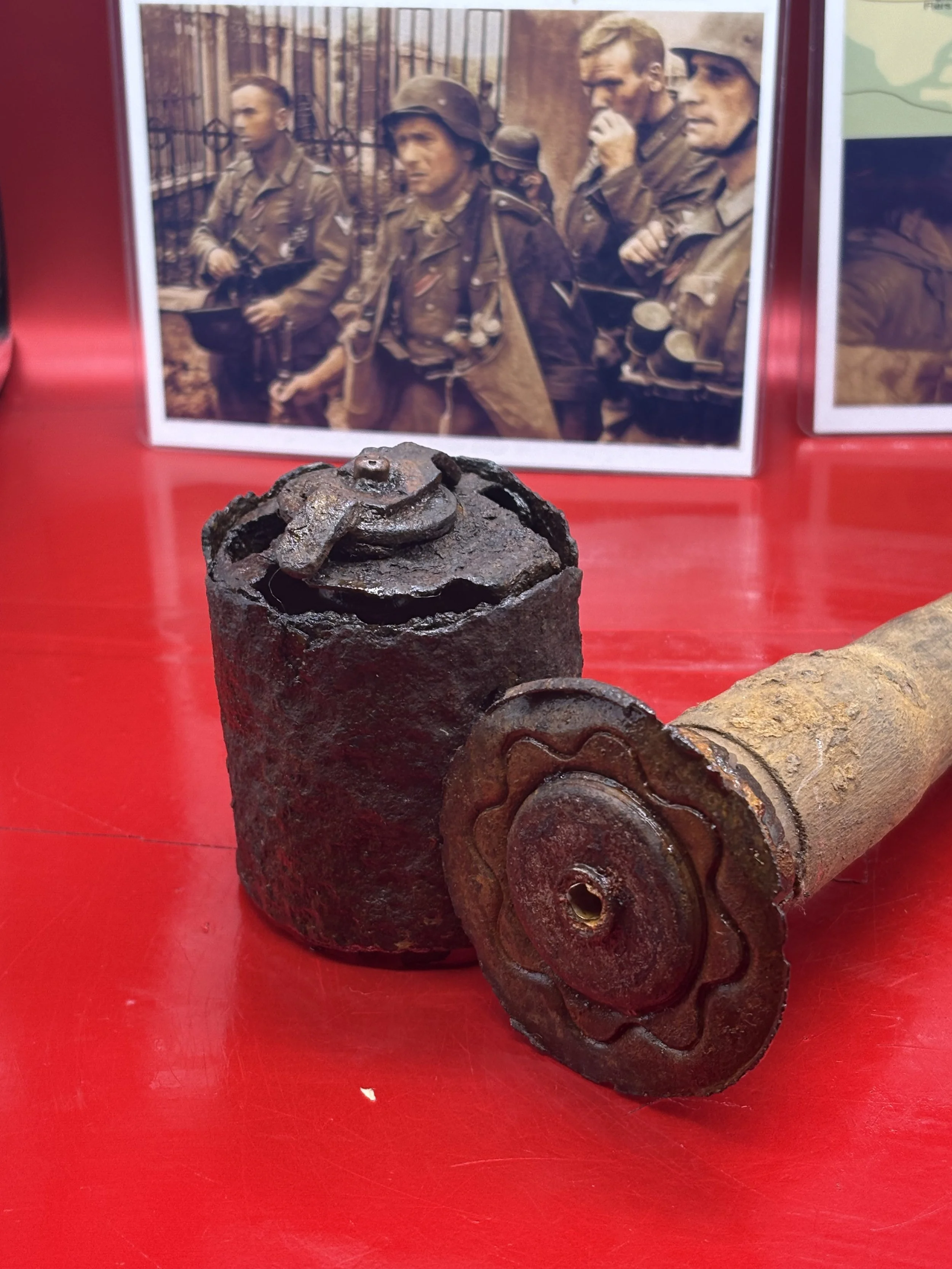 Image 3 of 11
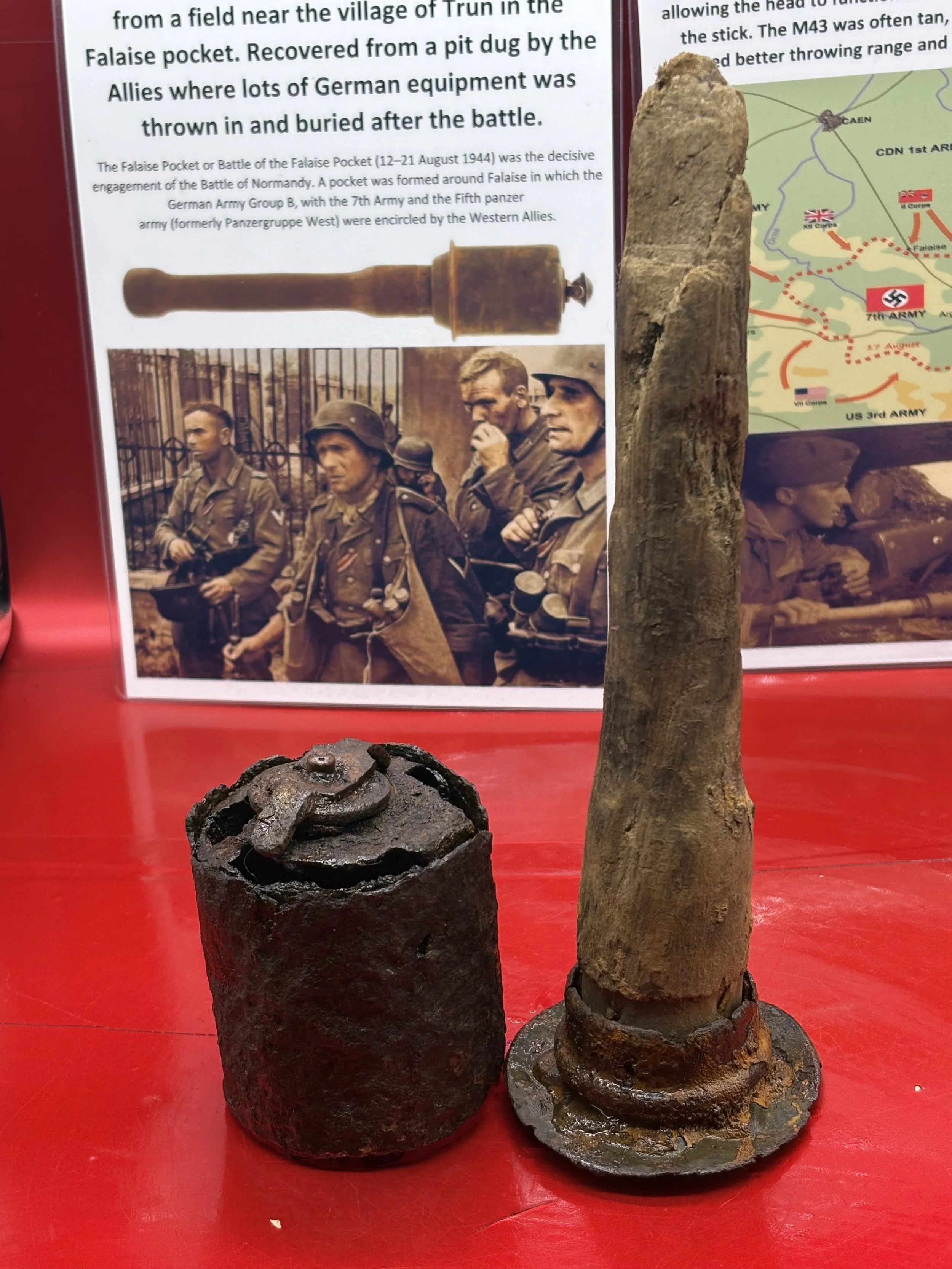 Image 4 of 11
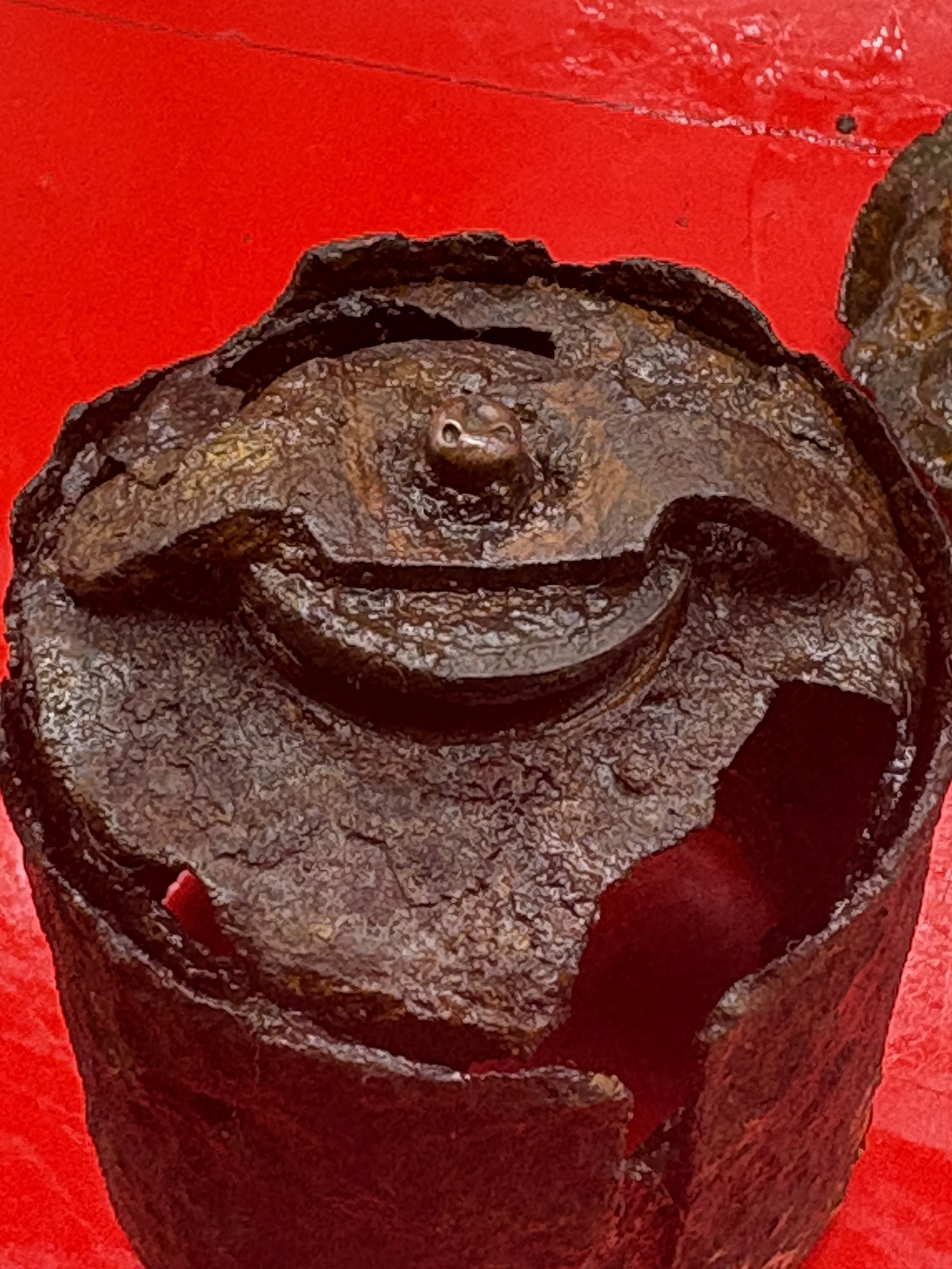 Image 5 of 11
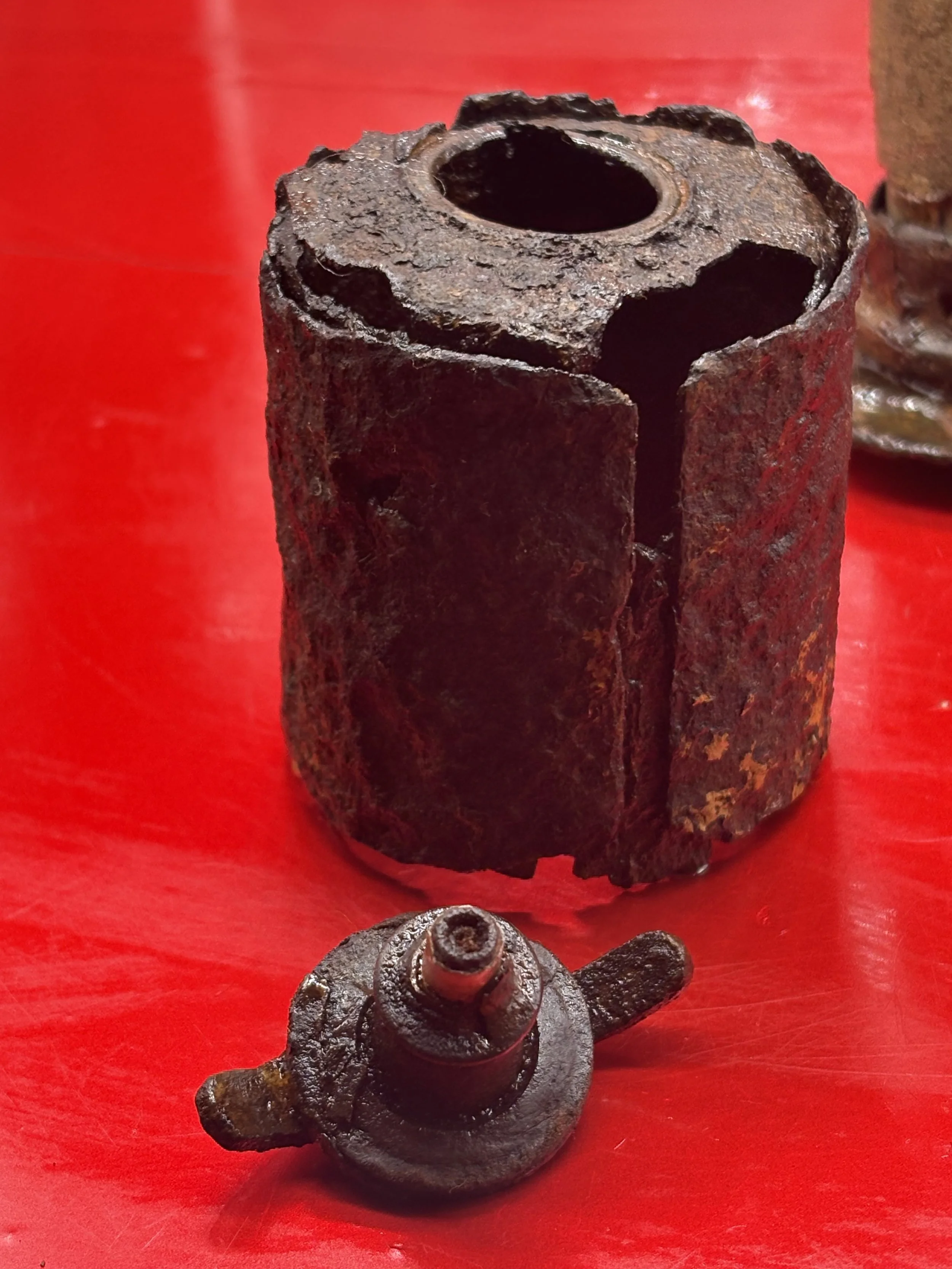 Image 6 of 11
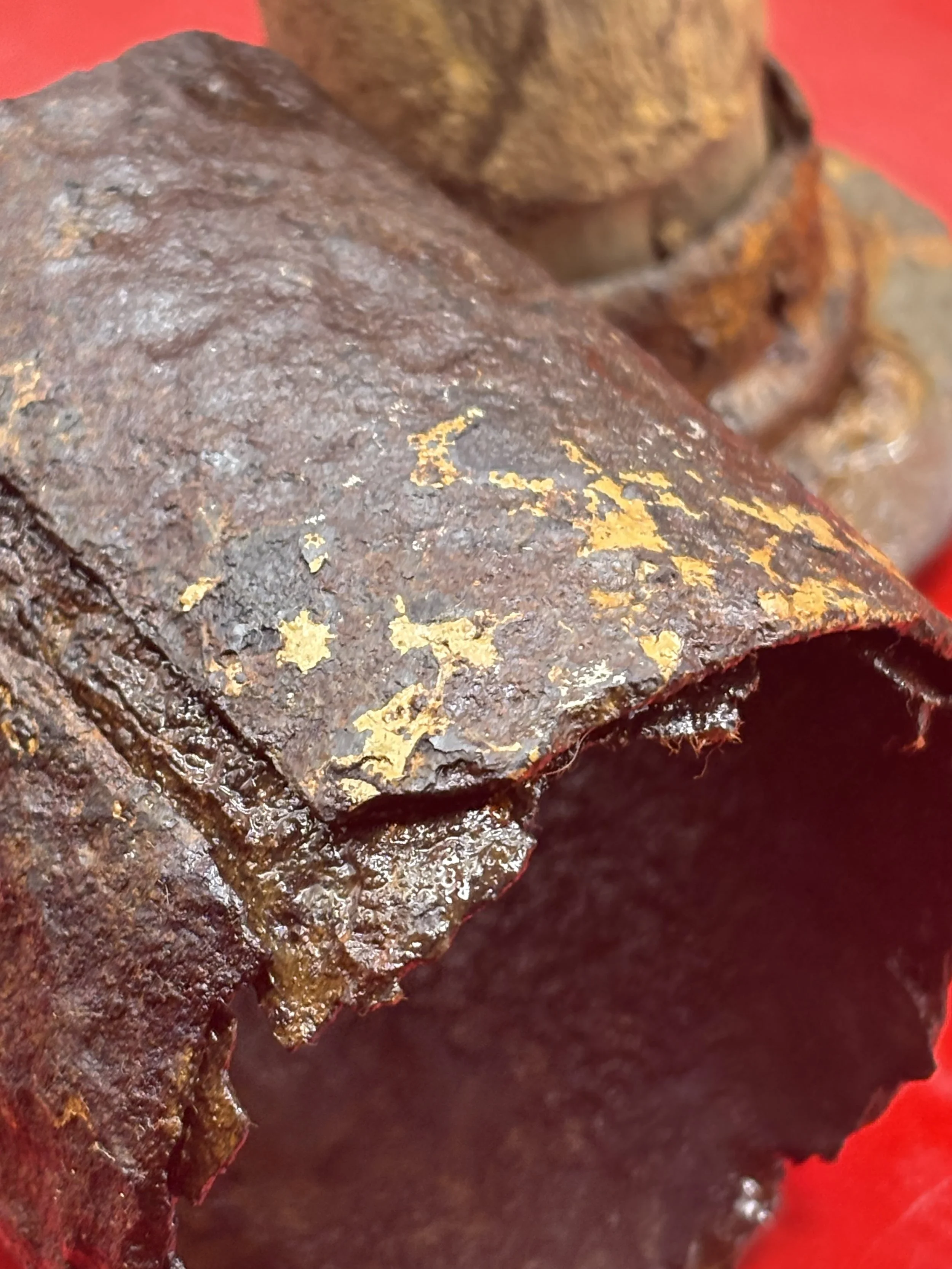 Image 7 of 11
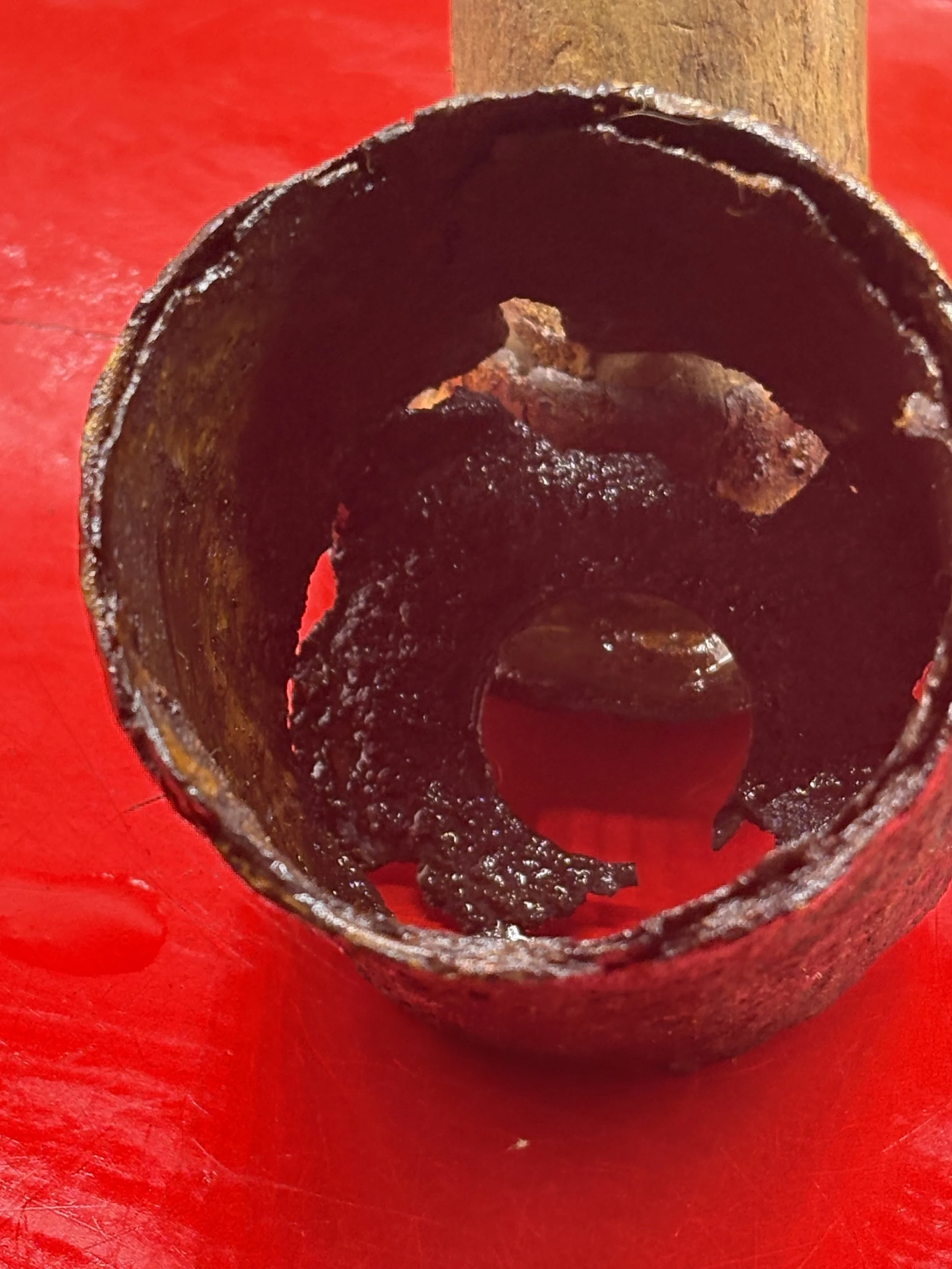 Image 8 of 11
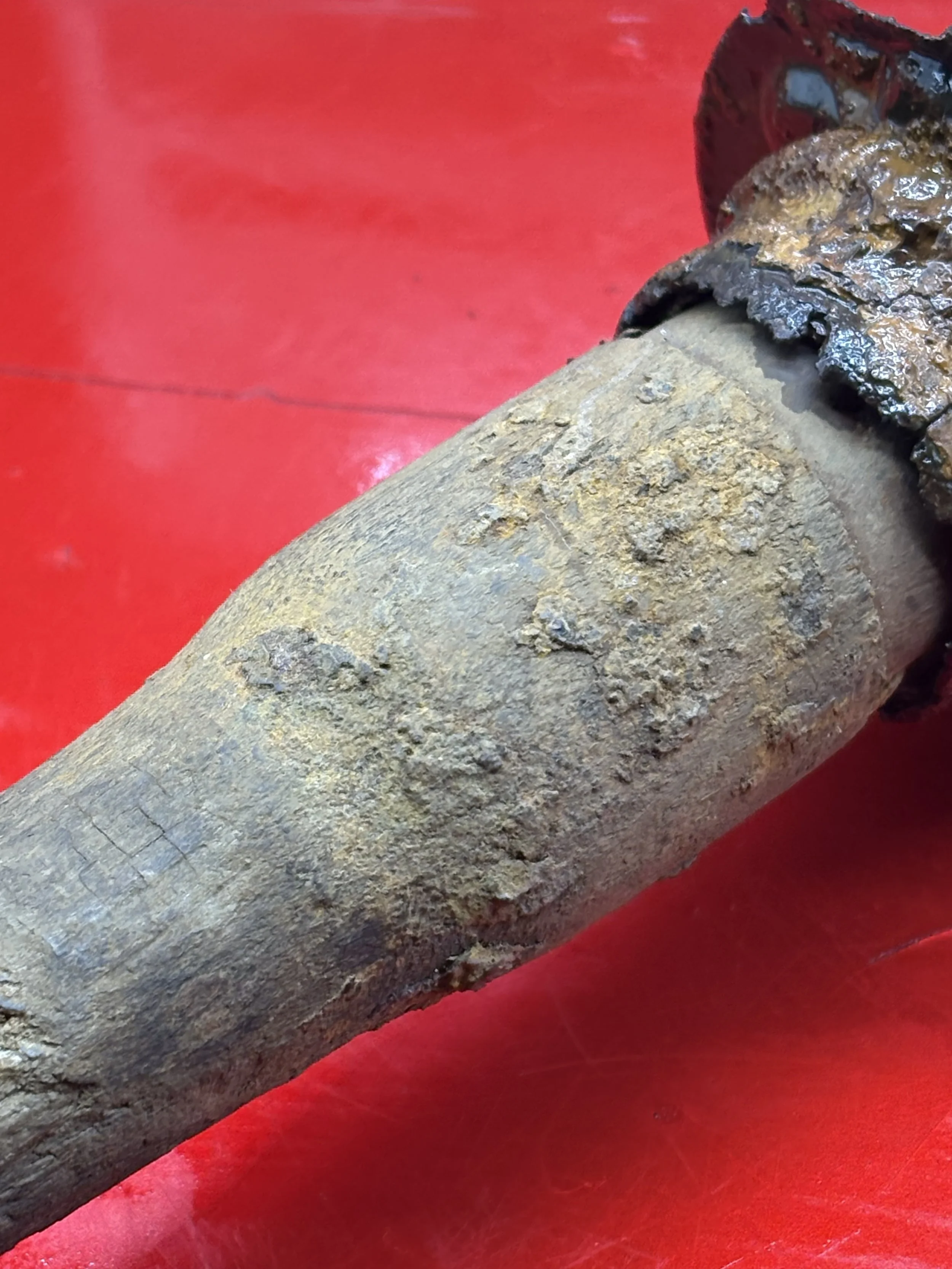 Image 9 of 11
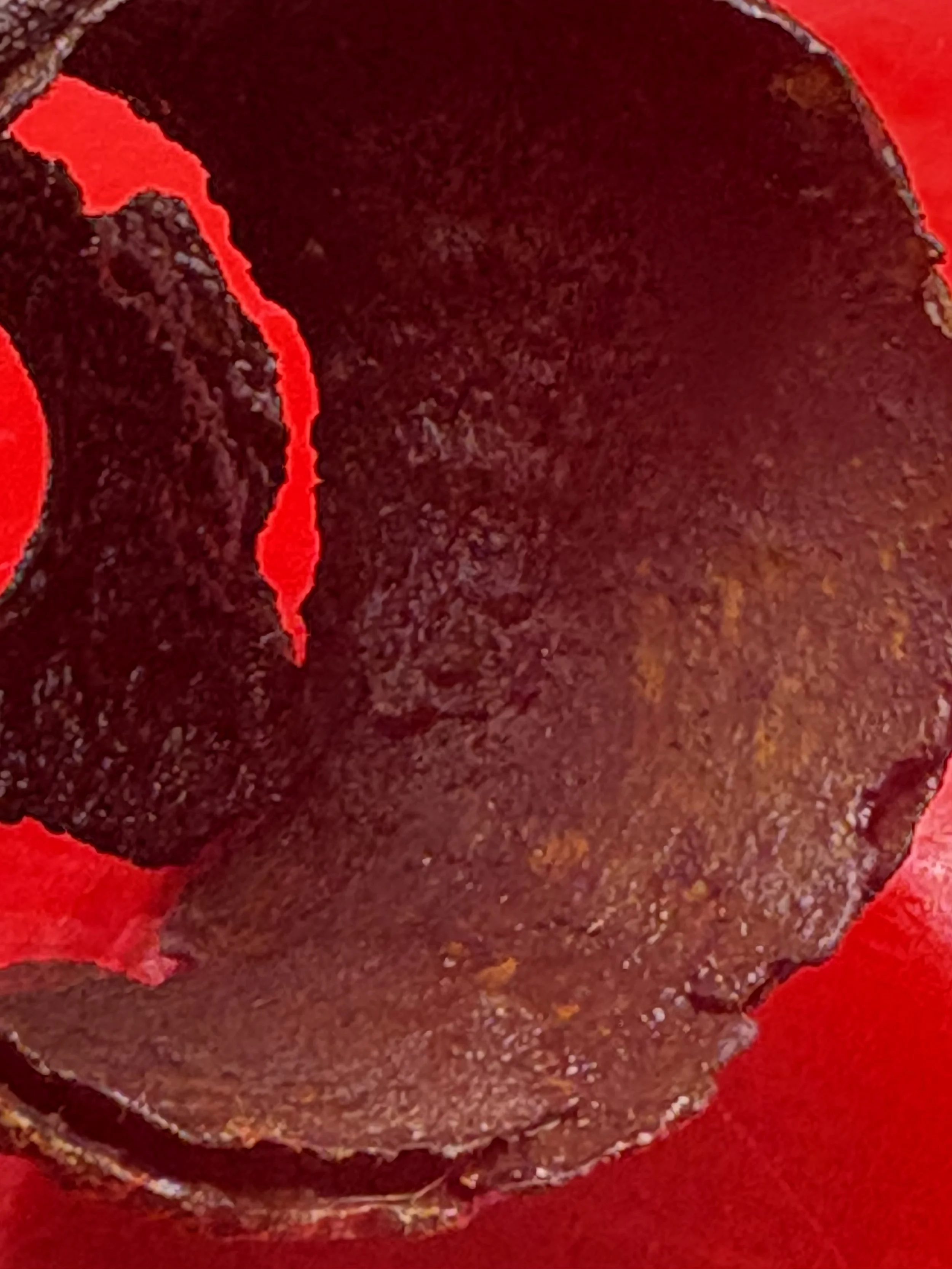 Image 10 of 11
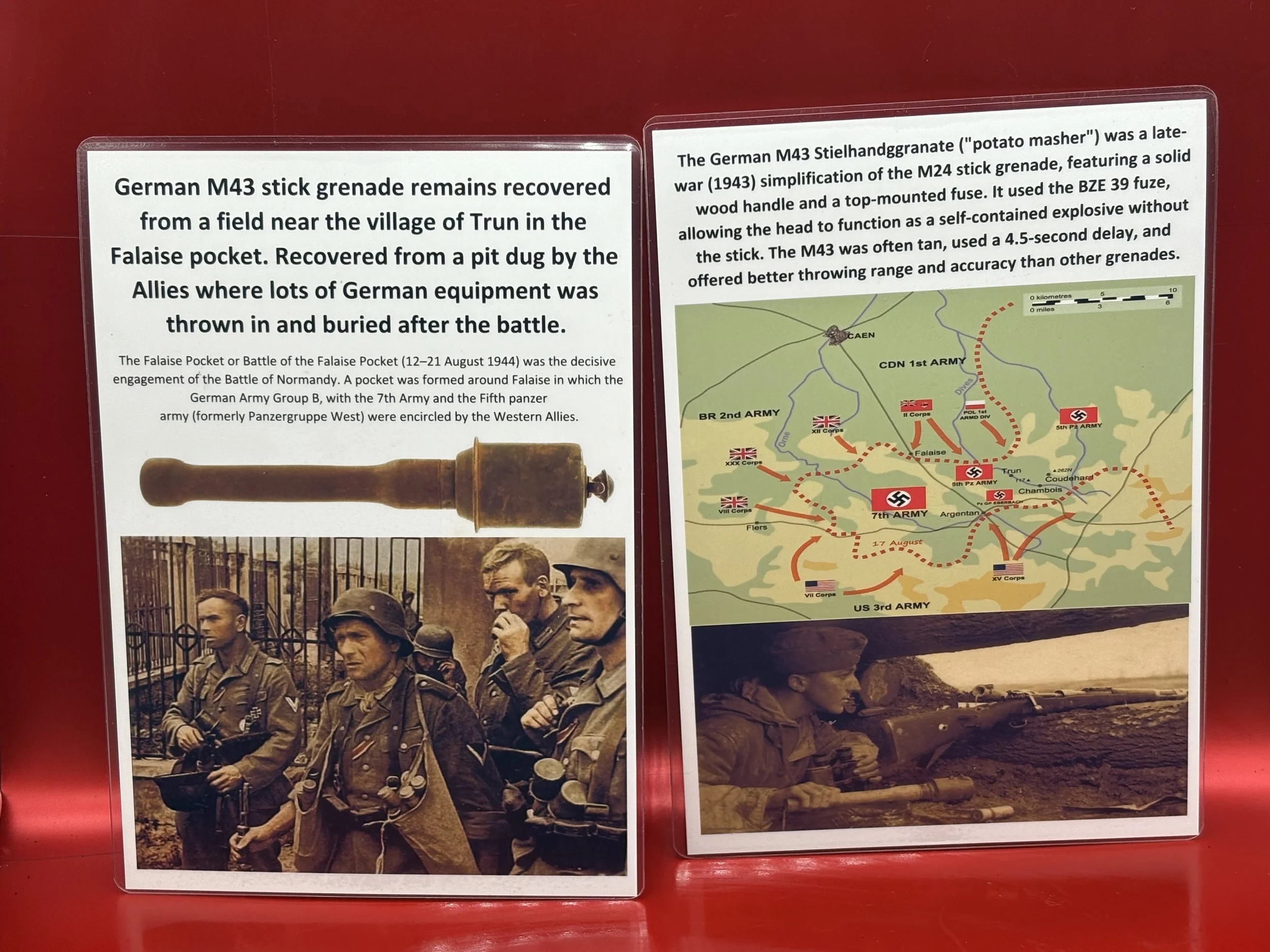 Image 11 of 11