Sale Price:
£60.00
Original Price:
£85.00
German WWII Ammunition Crate – Schießbecher Propaganda Grenades
A German large wooden ammunition crate originally used to store 40 Schießbecher propaganda grenades. This is an unusual and highly displayable wartime storage box in very good overall condition.
Condition
The crate retains most of its original brown-stained finish, although it has been overpainted at some point in its service life. It shows expected signs of age including dirt, surface discoloration, and minor wear, but remains completely solid and stable, not breaking apart or deteriorating.
A small maker’s mark is present on the lid. Both hinges remain intact and in good condition, with one locking catch still fully functional and retaining traces of green paint. The lid opens and closes correctly without issue. A rope carry handle is also still present.
Inside, remnants of the original paper label remain, with some maker markings still legible. The interior shows typical knocks and usage marks, but nothing significant for its age and purpose.
Overall, this is a fine and scarce example of a specialised ammunition crate, ideal for display or any serious collection.
Historical Context
The German Schießbecher (“shooting cup”) rifle grenade system was developed during the Second World War to increase infantry capability. The first version, introduced in 1941, was a spigot-type launcher intended to provide anti-tank capability to small infantry units, but it proved ineffective and was withdrawn in 1942.
A second, cup-type launcher was introduced in early 1943 and remained in service until the end of the war. It was used with a variety of grenade types, including anti-personnel, anti-tank, smoke, flare, and propaganda leaflets. The anti-tank Grenade 40 was specifically developed for use with the Schießbecher launcher system.
Additional Information
Supplied with 2 x A5 laminated information cards, including photographs and diagrams.
German WWII Ammunition Crate – Schießbecher Propaganda Grenades
A German large wooden ammunition crate originally used to store 40 Schießbecher propaganda grenades. This is an unusual and highly displayable wartime storage box in very good overall condition.
Condition
The crate retains most of its original brown-stained finish, although it has been overpainted at some point in its service life. It shows expected signs of age including dirt, surface discoloration, and minor wear, but remains completely solid and stable, not breaking apart or deteriorating.
A small maker’s mark is present on the lid. Both hinges remain intact and in good condition, with one locking catch still fully functional and retaining traces of green paint. The lid opens and closes correctly without issue. A rope carry handle is also still present.
Inside, remnants of the original paper label remain, with some maker markings still legible. The interior shows typical knocks and usage marks, but nothing significant for its age and purpose.
Overall, this is a fine and scarce example of a specialised ammunition crate, ideal for display or any serious collection.
Historical Context
The German Schießbecher (“shooting cup”) rifle grenade system was developed during the Second World War to increase infantry capability. The first version, introduced in 1941, was a spigot-type launcher intended to provide anti-tank capability to small infantry units, but it proved ineffective and was withdrawn in 1942.
A second, cup-type launcher was introduced in early 1943 and remained in service until the end of the war. It was used with a variety of grenade types, including anti-personnel, anti-tank, smoke, flare, and propaganda leaflets. The anti-tank Grenade 40 was specifically developed for use with the Schießbecher launcher system.
Additional Information
Supplied with 2 x A5 laminated information cards, including photographs and diagrams.

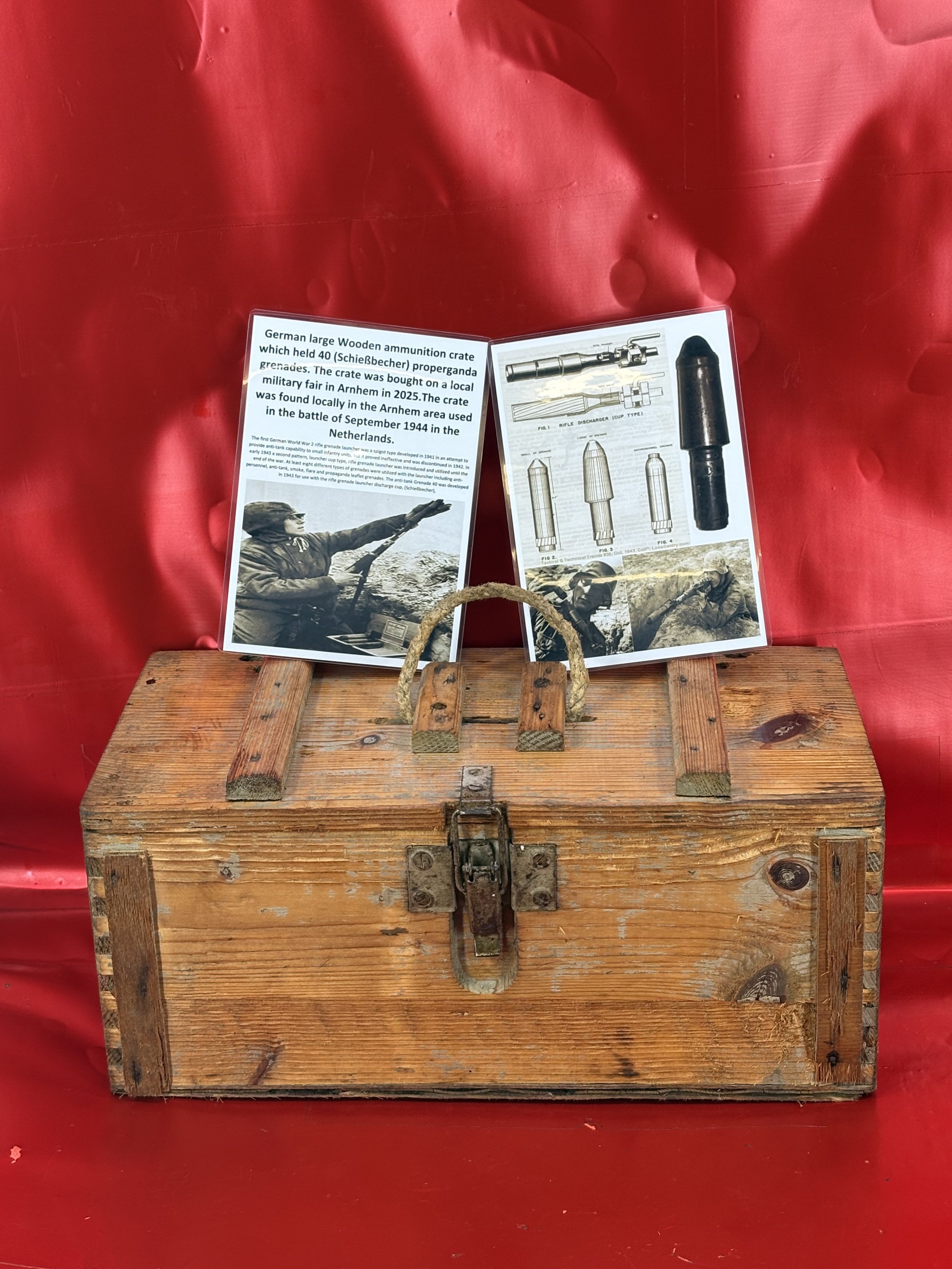 Image 1 of 12
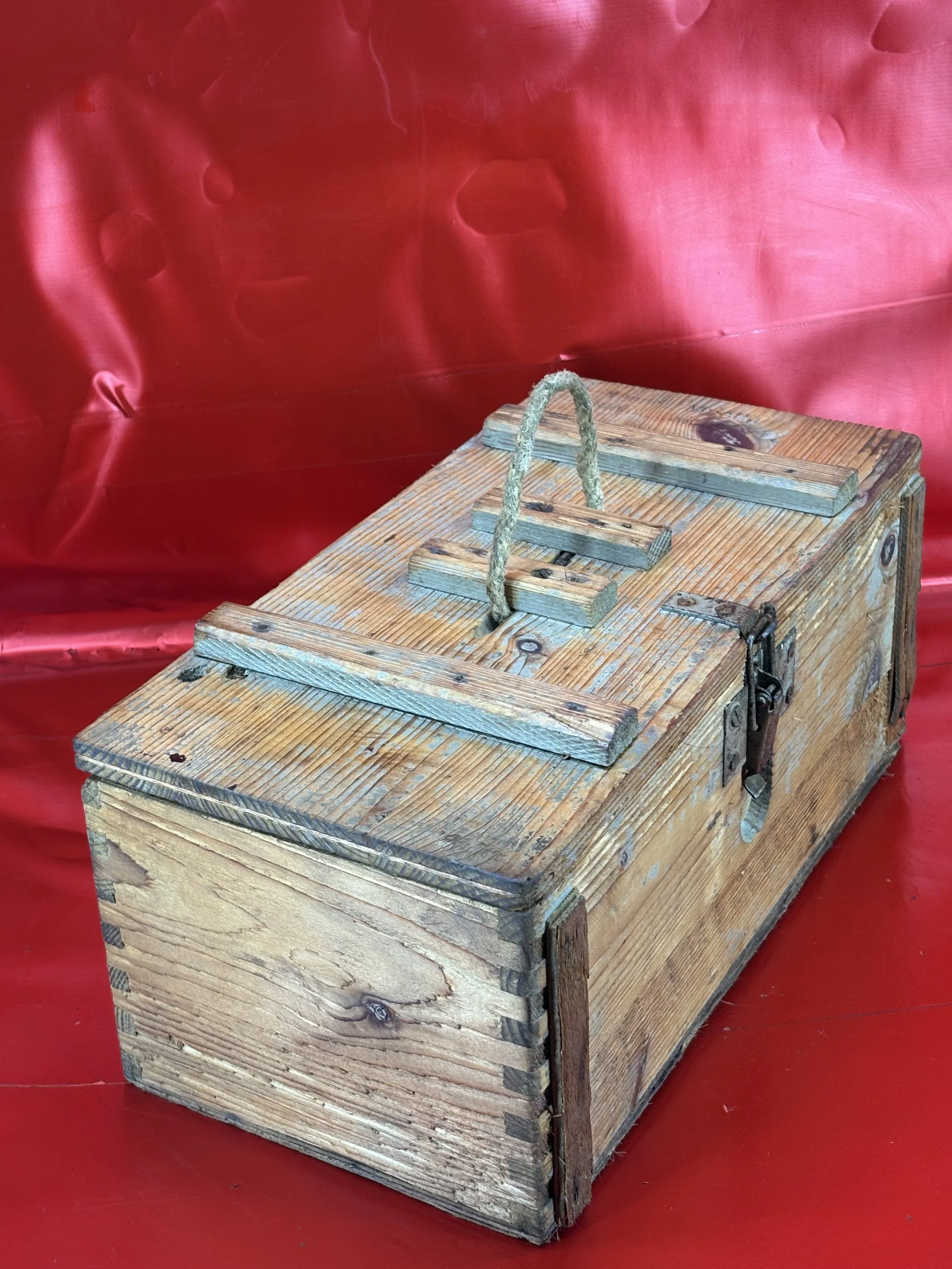 Image 2 of 12
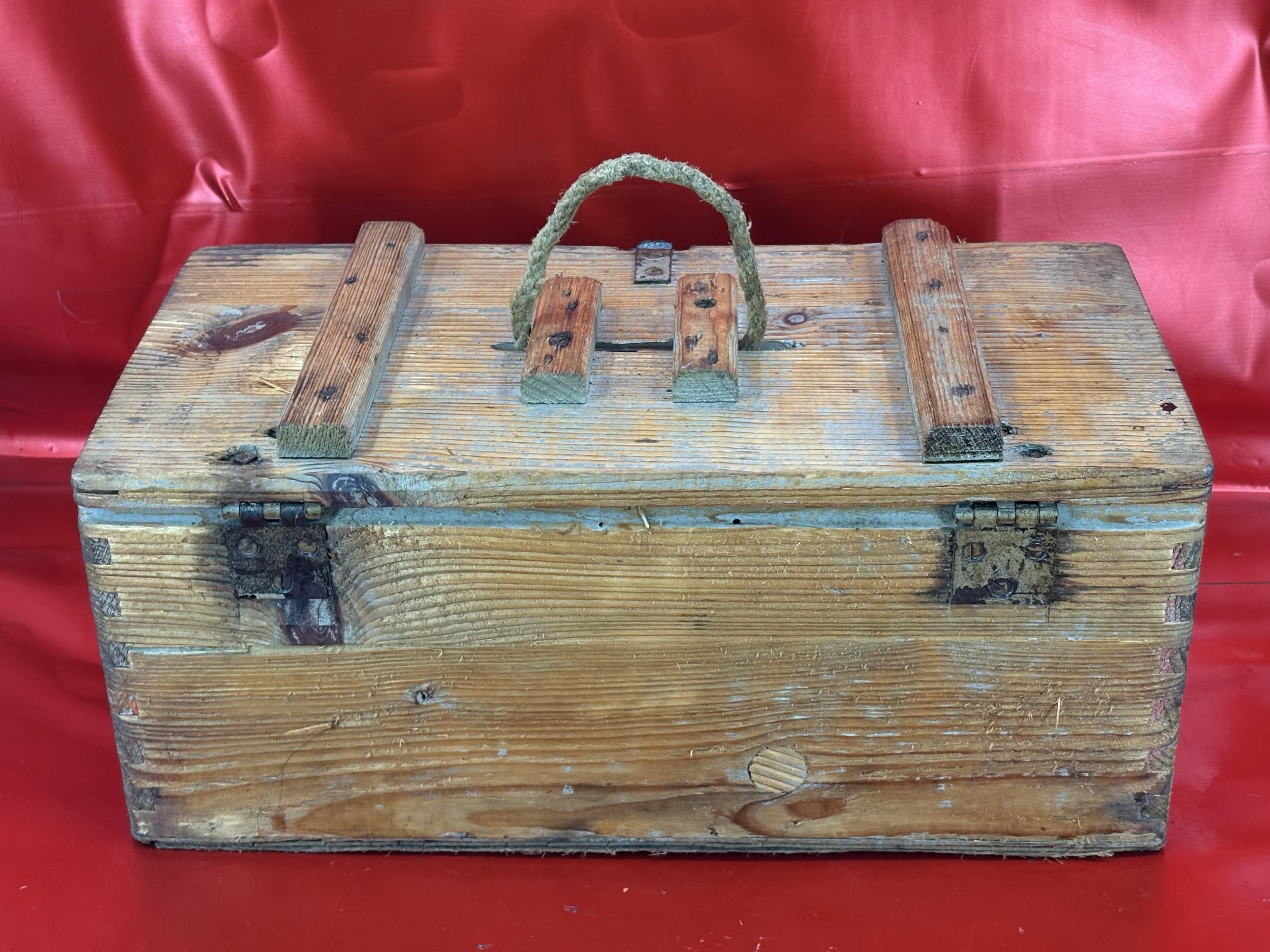 Image 3 of 12
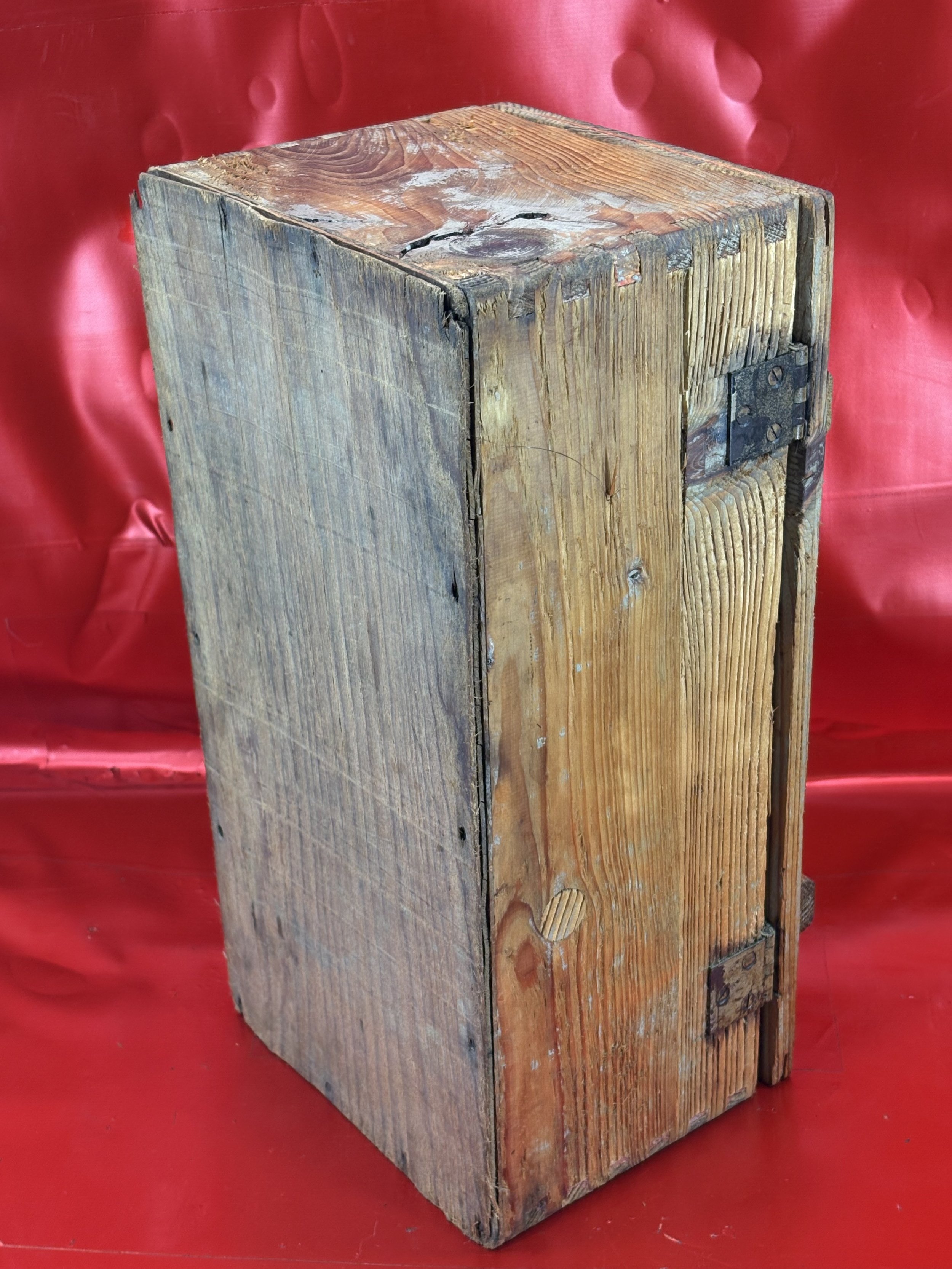 Image 4 of 12
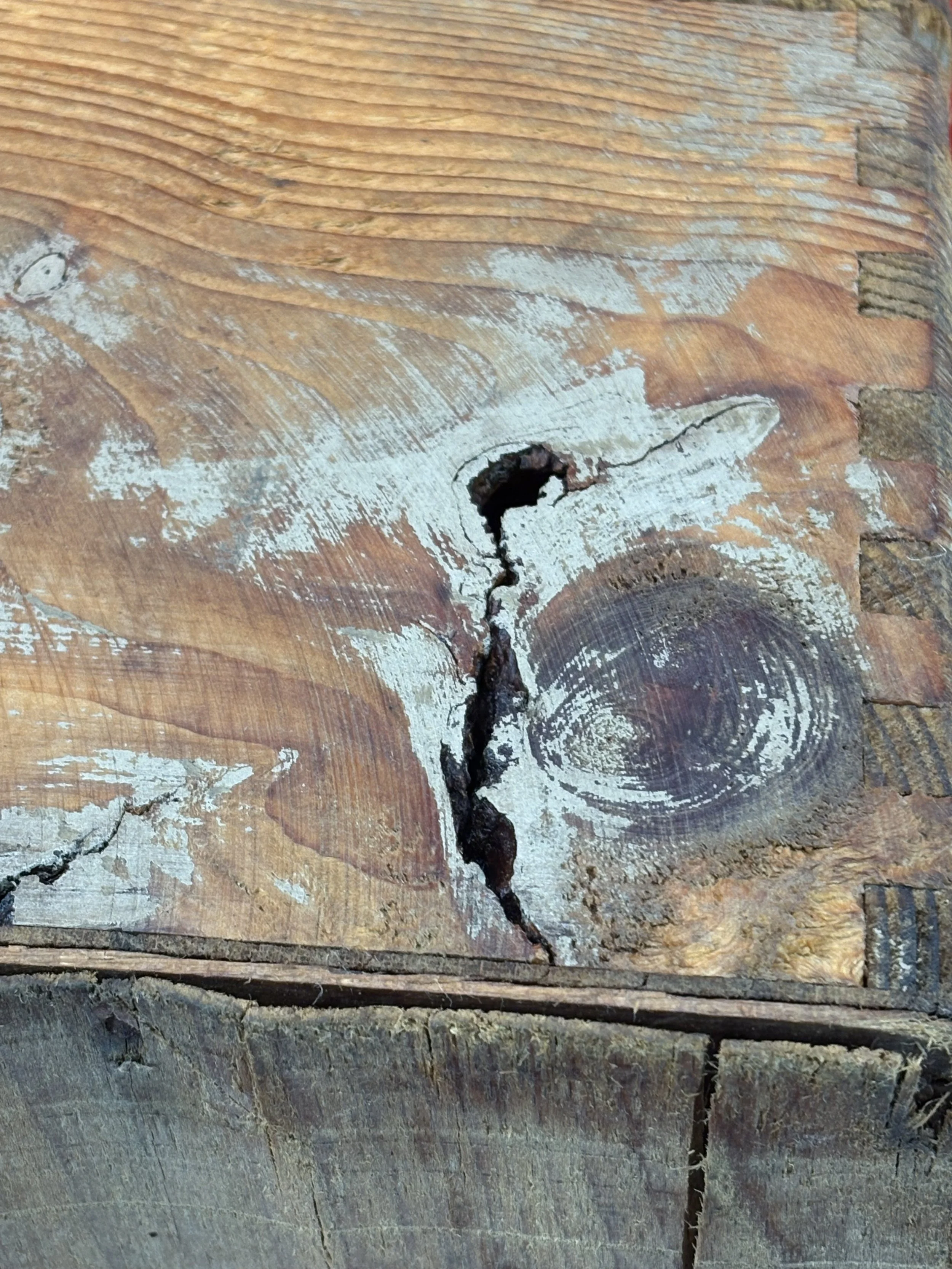 Image 5 of 12
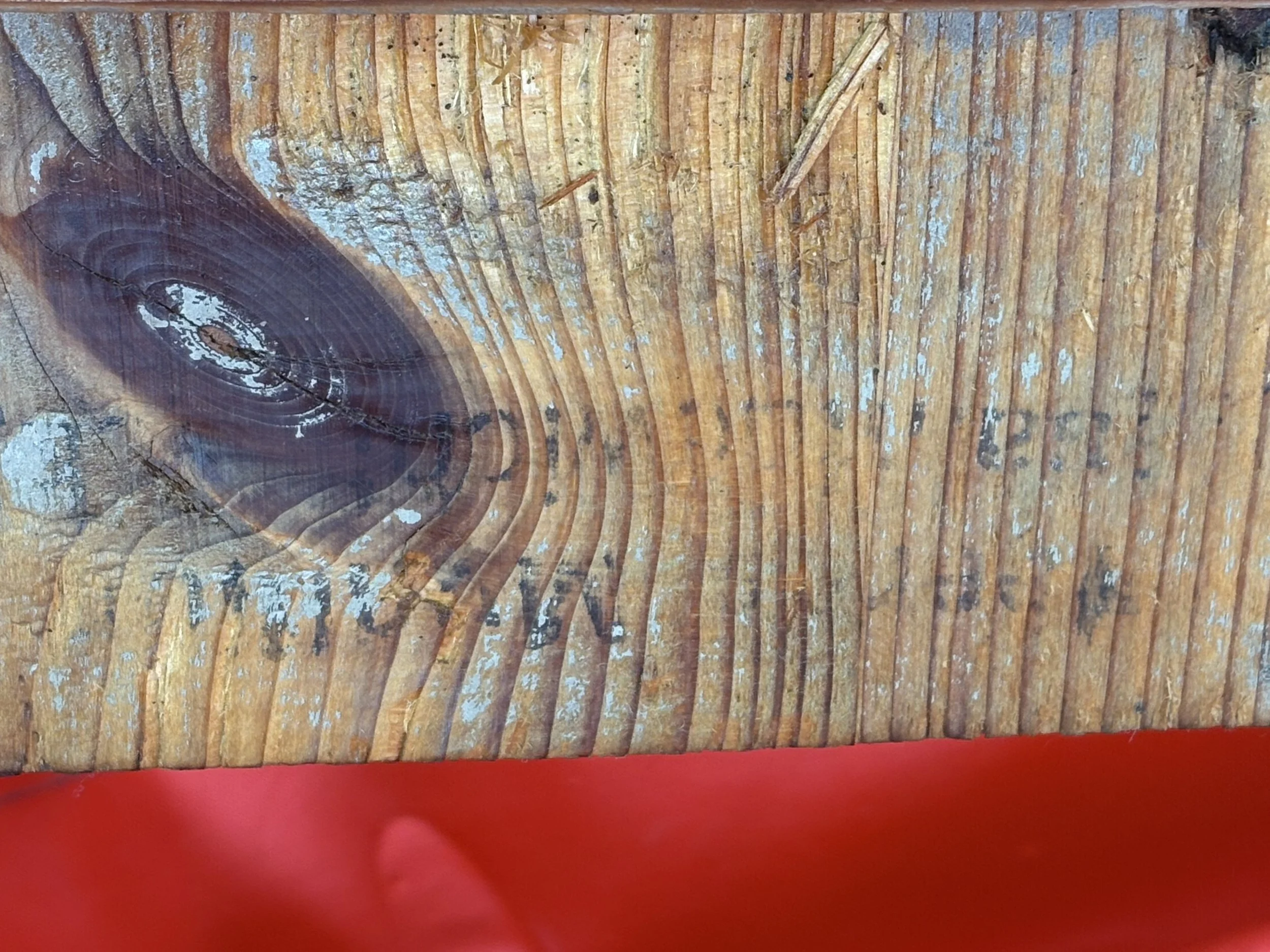 Image 6 of 12
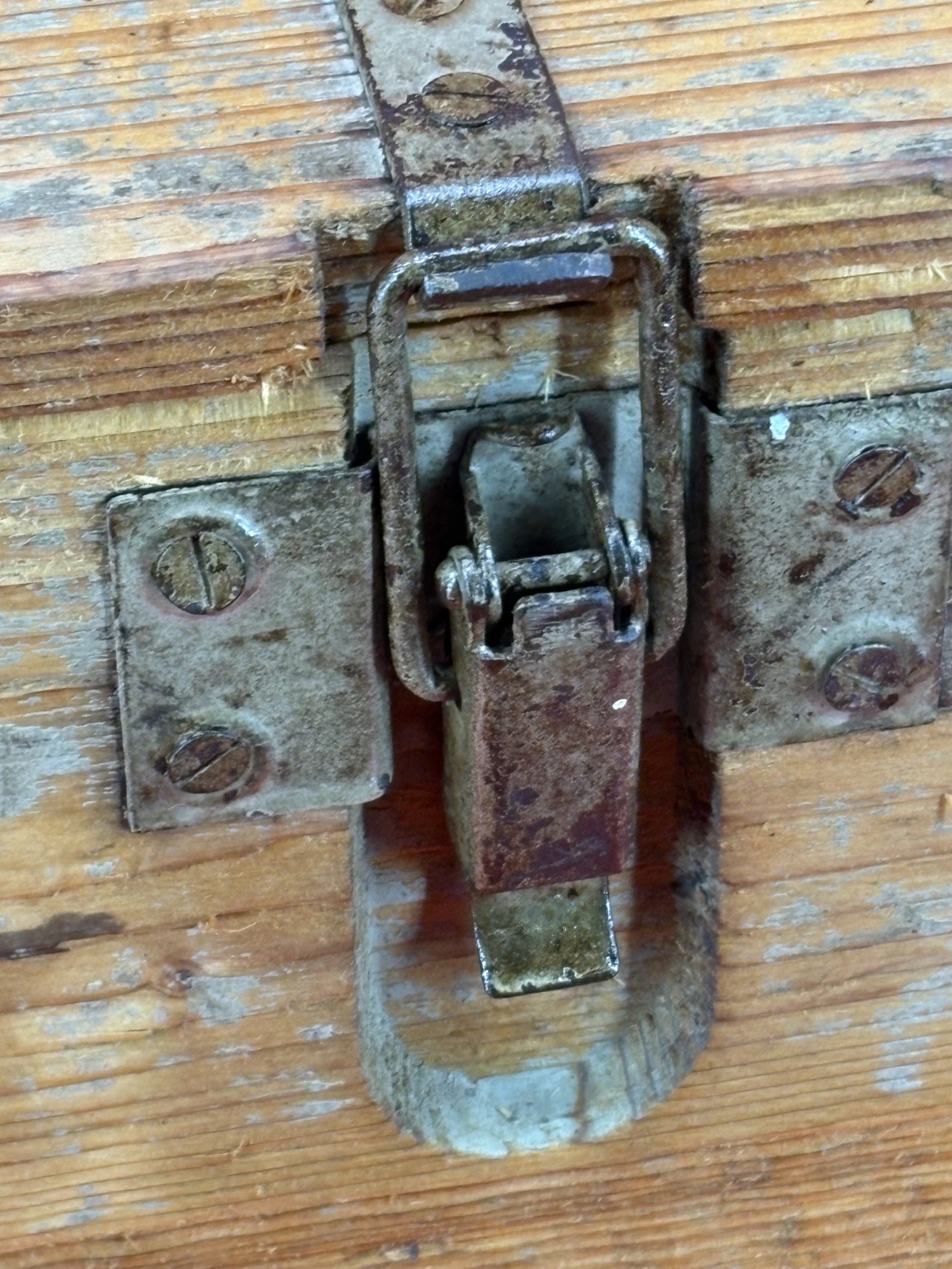 Image 7 of 12
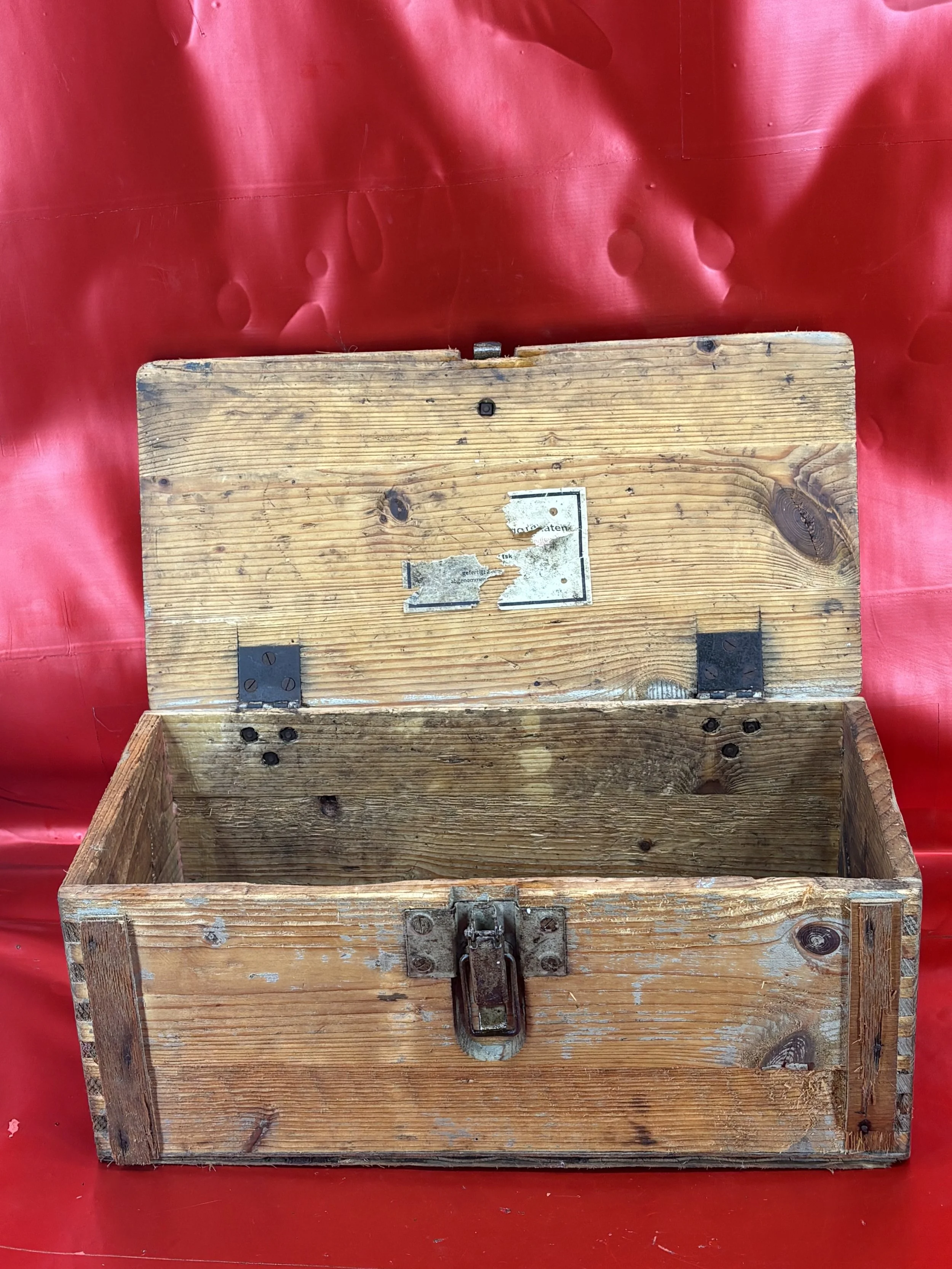 Image 8 of 12
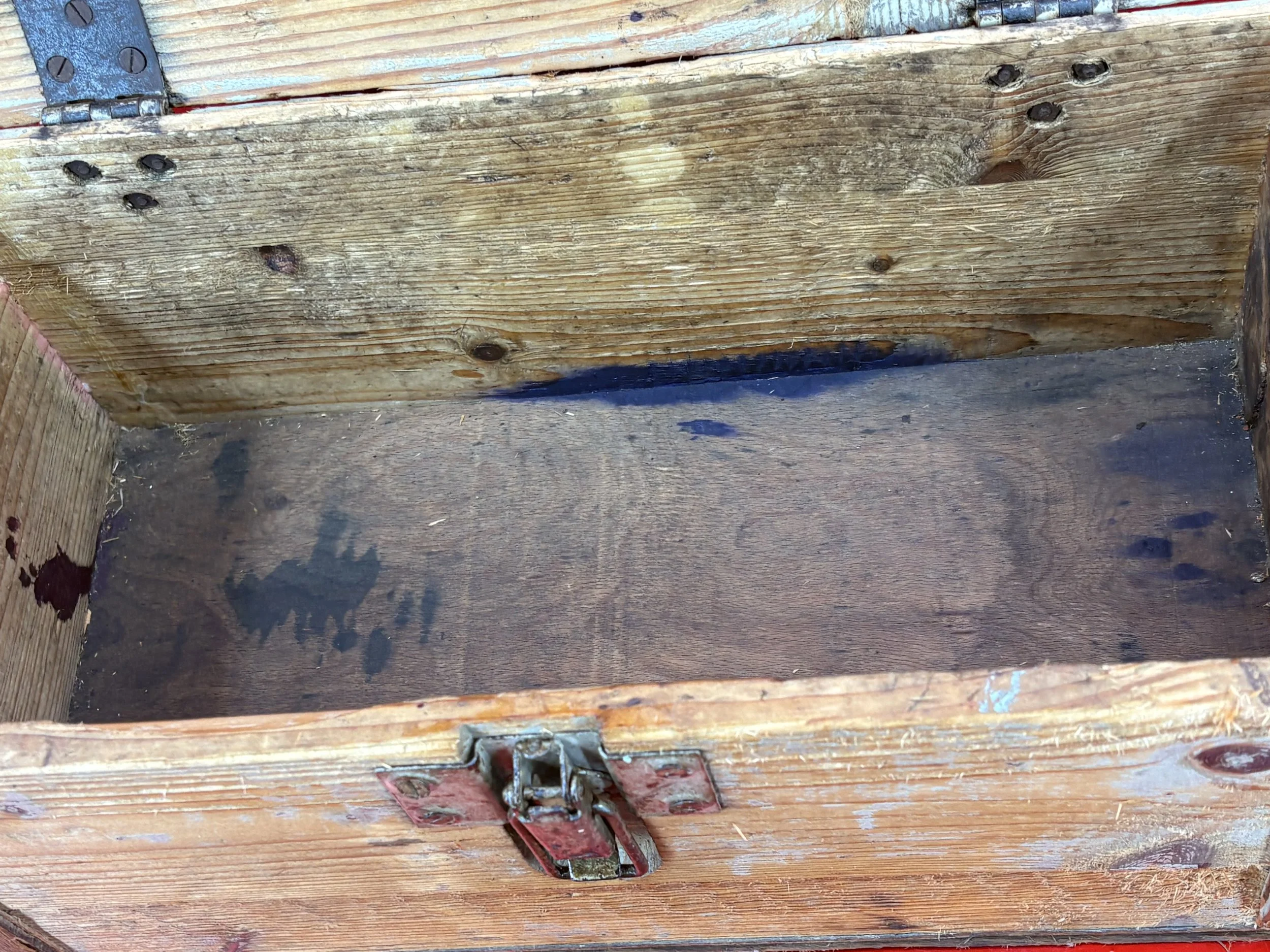 Image 9 of 12
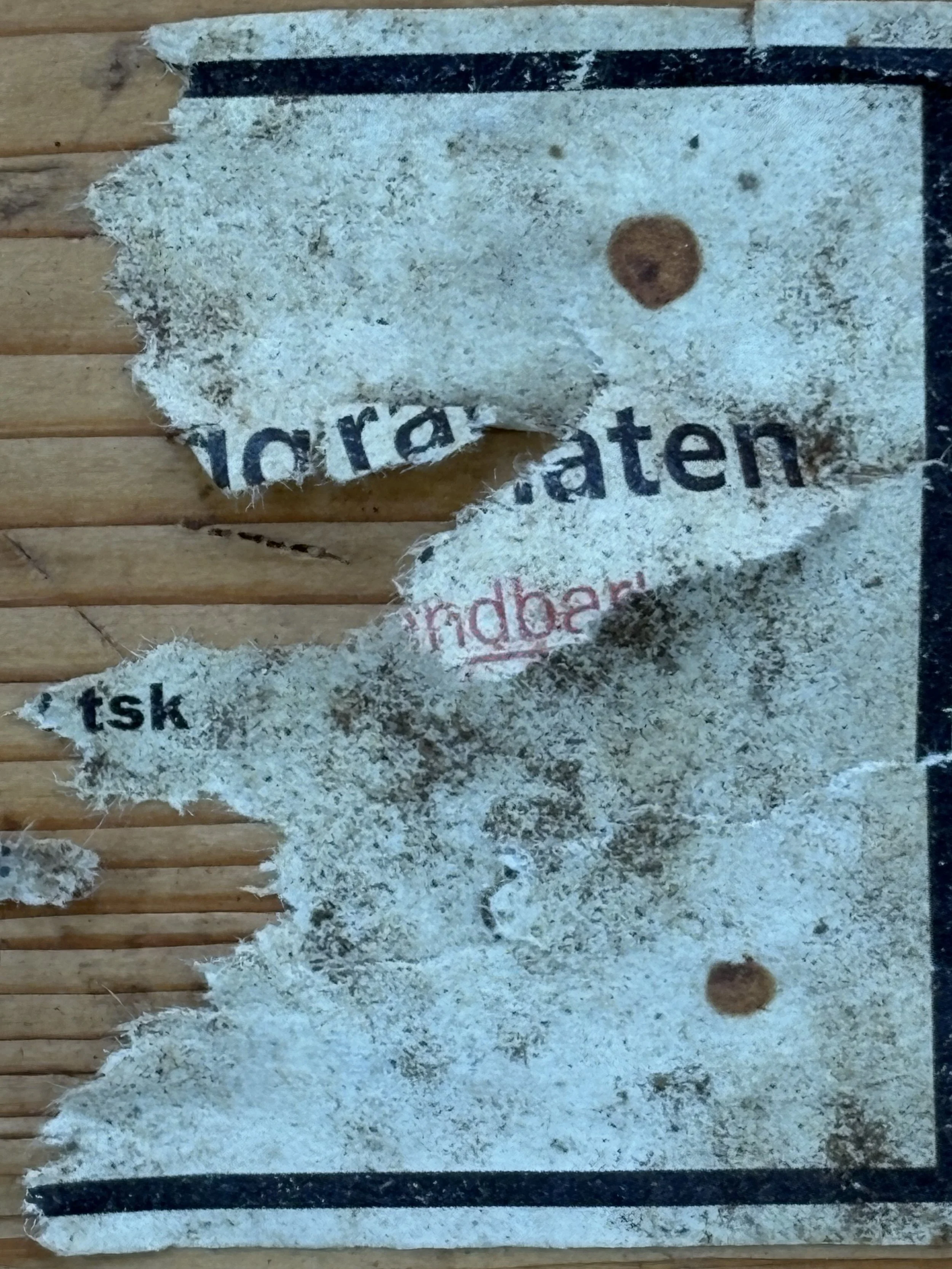 Image 10 of 12
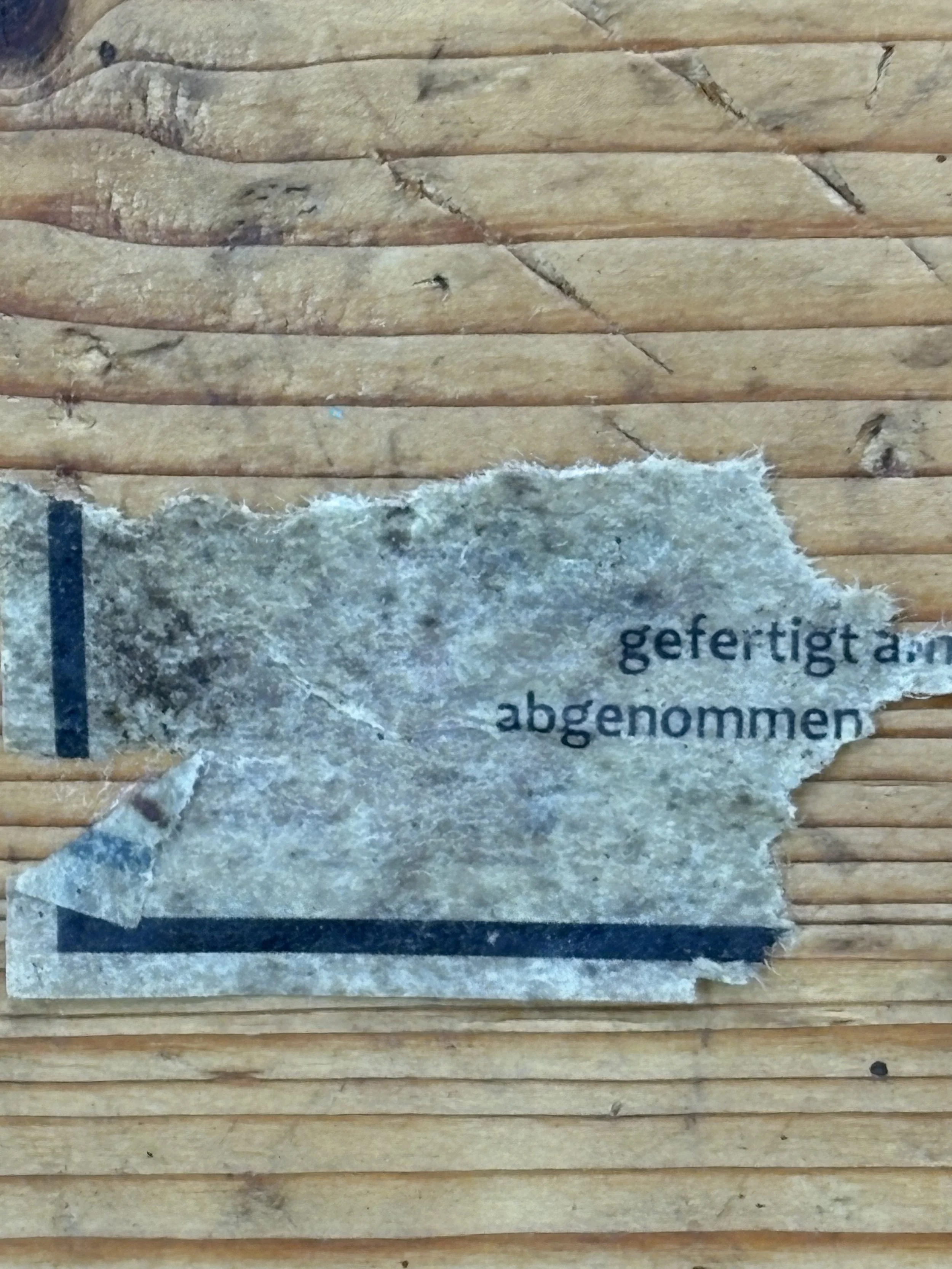 Image 11 of 12
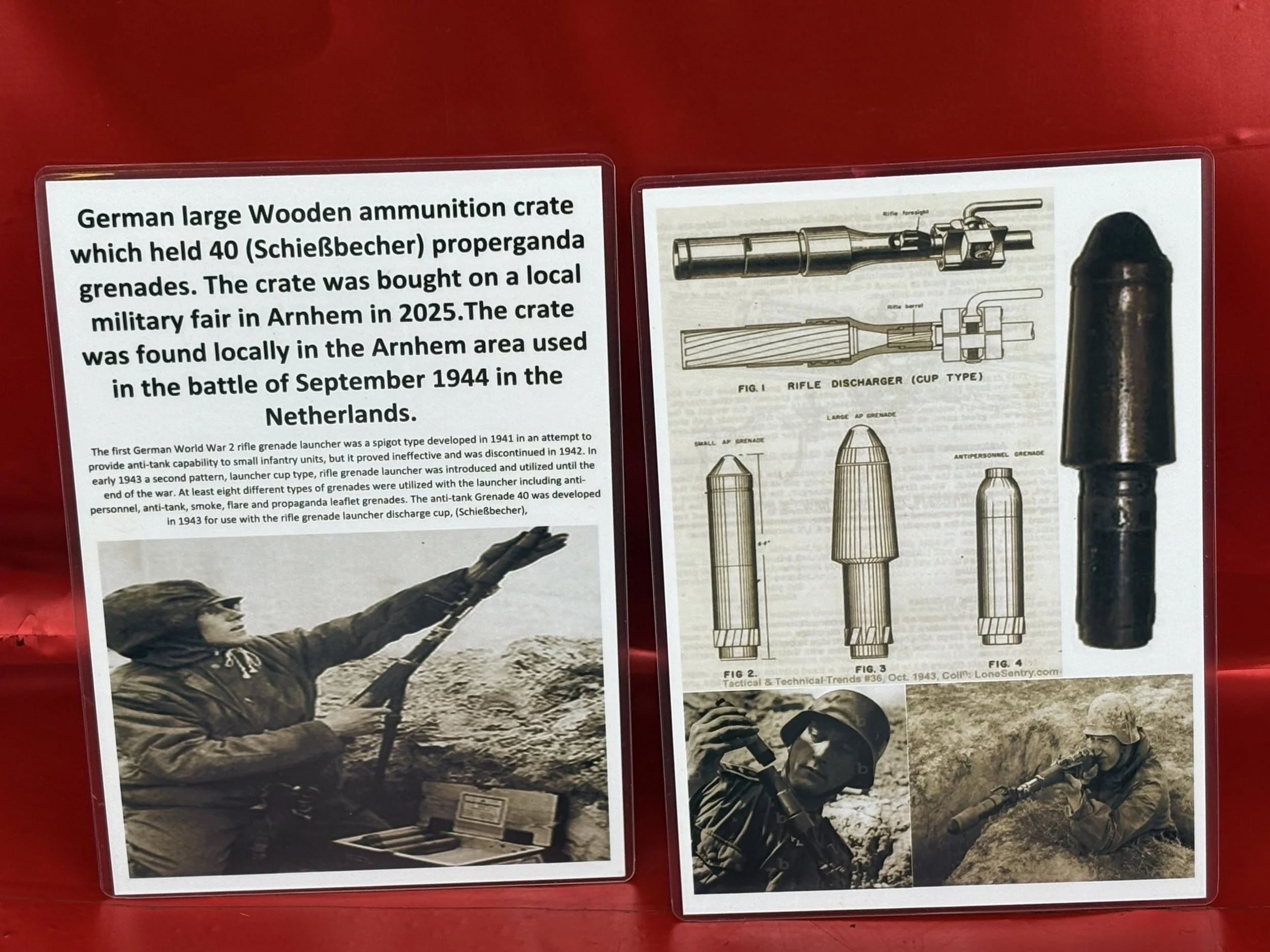 Image 12 of 12