German double decal (remains of decals) transitional M40 helmet (aluminium liner band ) from the 44th Infantry Division, recovered from outside of Brody, Western Ukraine
Helmet in fantastic solid relic condition with loads of original paint remaining , also the aluminium liner band with chin strap fixing points. Battle damage to front of rim - a fantastic addition to a collection
The German 44th Infantry Division, an Austrian unit known as the "Hoch- und Deutschmeister," advanced as part of the Wehrmacht's 6th Army along the southern flank of the breakthrough sector toward the Brody-Dubno axis. During the intense engagements between 23 and 30 June 1941, the division was rapidly brought forward to secure the vulnerable southern corridor created by the fast-moving spearheads of Panzer Group 1. Tasked with protecting these supply lines from being severed by the massive Red Army counter-offensive, the 44th Division played a critical defensive role, digging in to absorb and repel heavy, uncoordinated flank attacks launched by the Soviet 8th and 15th Mechanised Corps.
German double decal (remains of decals) transitional M40 helmet (aluminium liner band ) from the 44th Infantry Division, recovered from outside of Brody, Western Ukraine
Helmet in fantastic solid relic condition with loads of original paint remaining , also the aluminium liner band with chin strap fixing points. Battle damage to front of rim - a fantastic addition to a collection
The German 44th Infantry Division, an Austrian unit known as the "Hoch- und Deutschmeister," advanced as part of the Wehrmacht's 6th Army along the southern flank of the breakthrough sector toward the Brody-Dubno axis. During the intense engagements between 23 and 30 June 1941, the division was rapidly brought forward to secure the vulnerable southern corridor created by the fast-moving spearheads of Panzer Group 1. Tasked with protecting these supply lines from being severed by the massive Red Army counter-offensive, the 44th Division played a critical defensive role, digging in to absorb and repel heavy, uncoordinated flank attacks launched by the Soviet 8th and 15th Mechanised Corps.

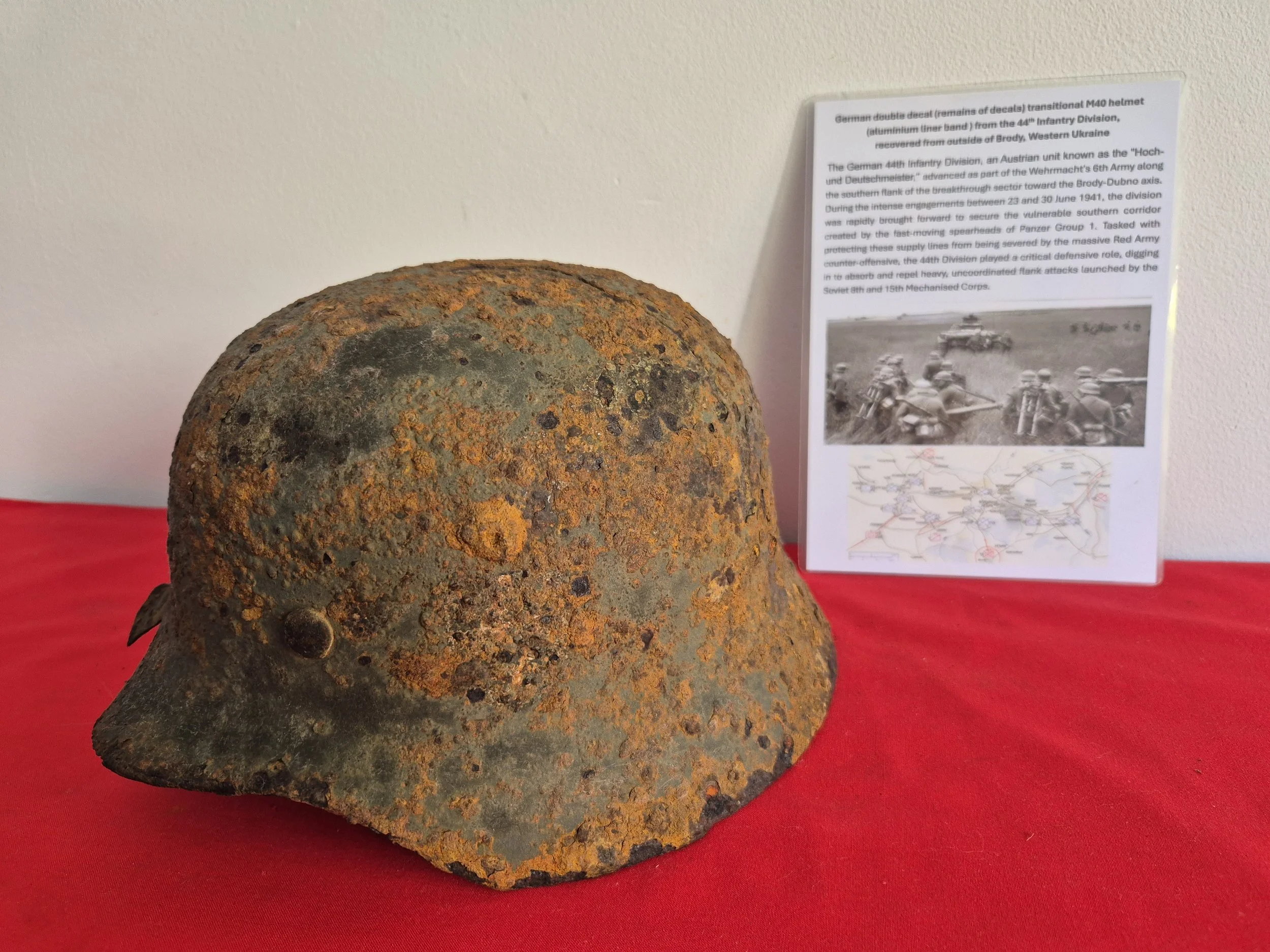 Image 1 of 9
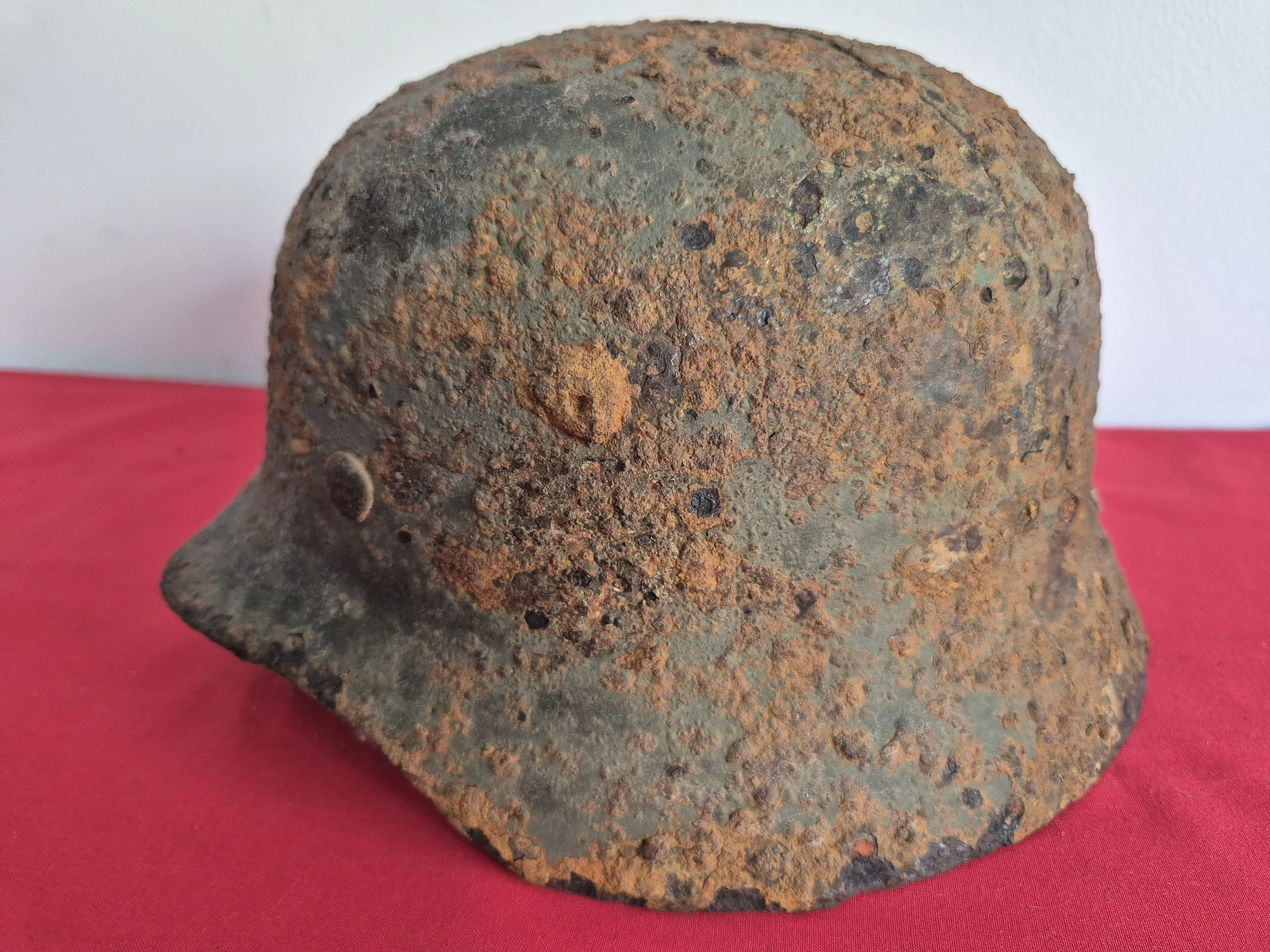 Image 2 of 9
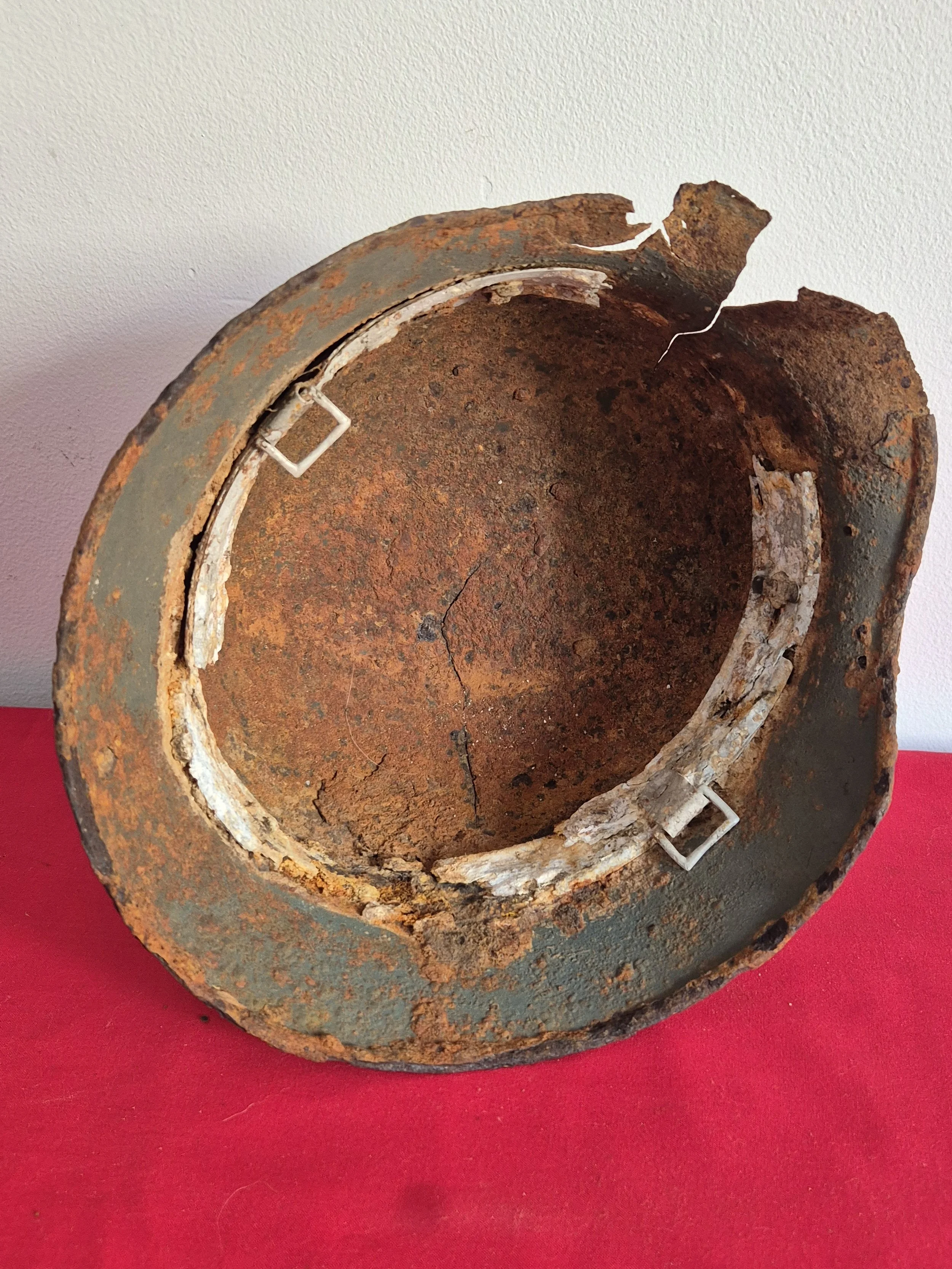 Image 3 of 9
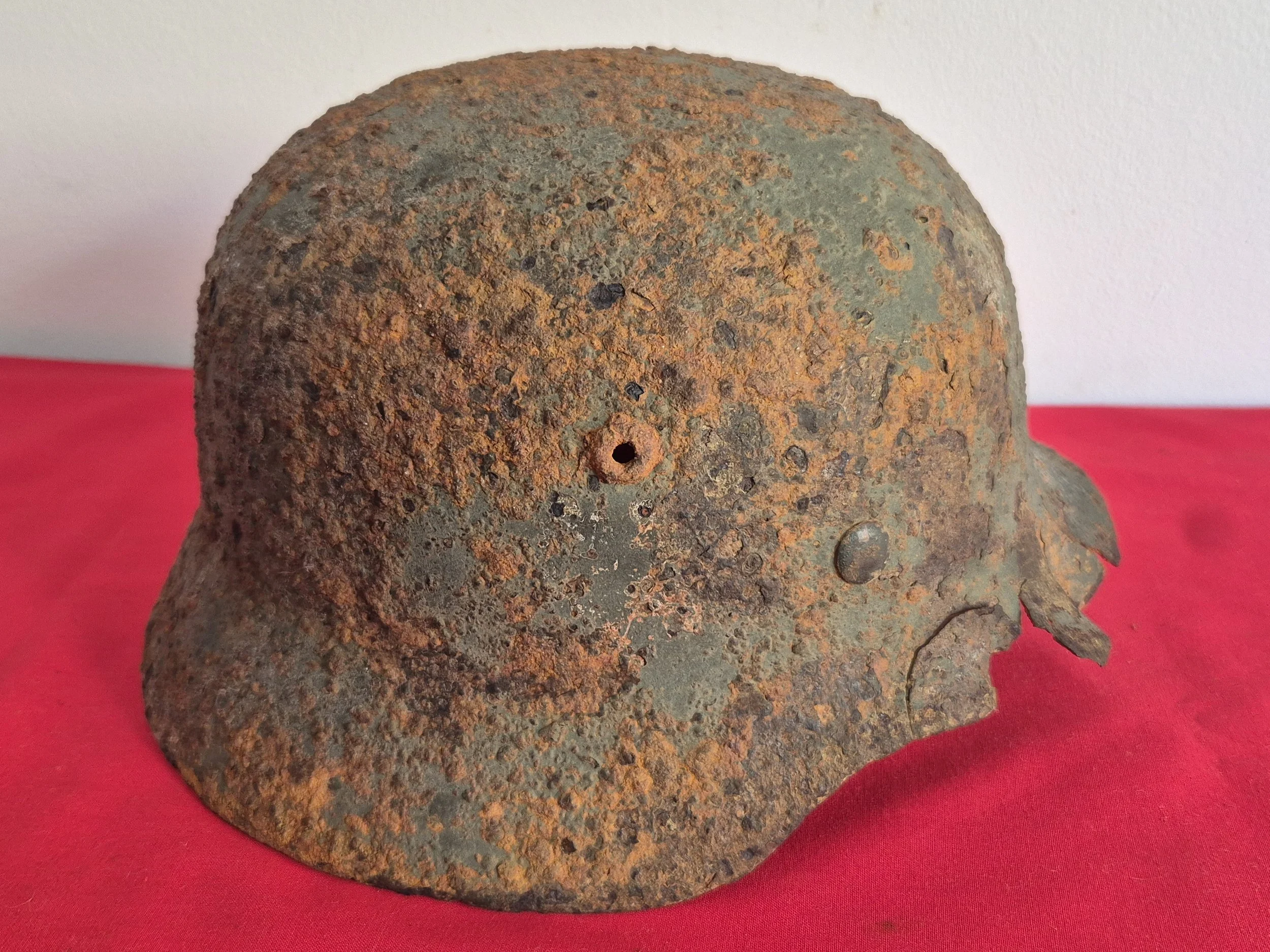 Image 4 of 9
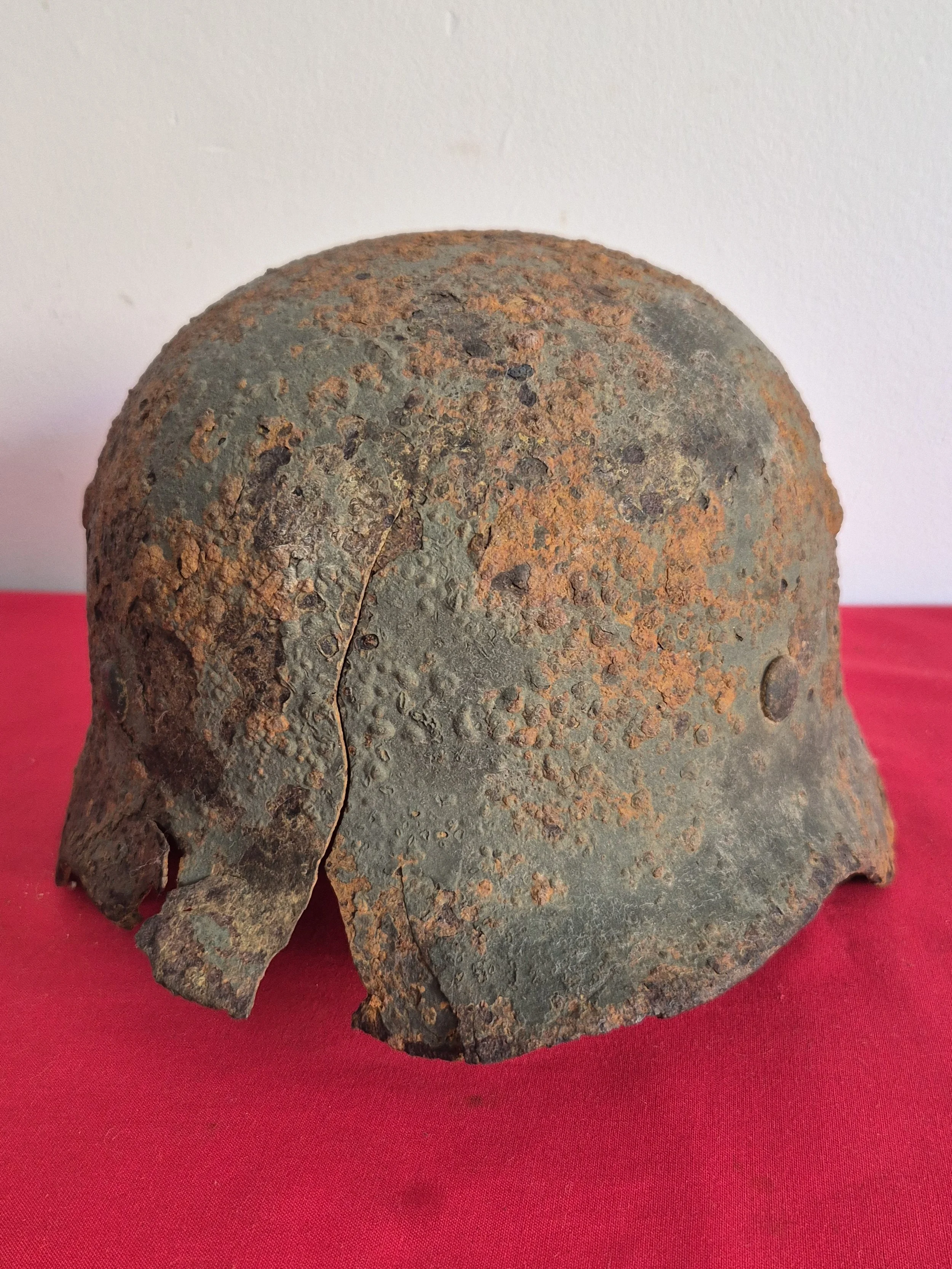 Image 5 of 9
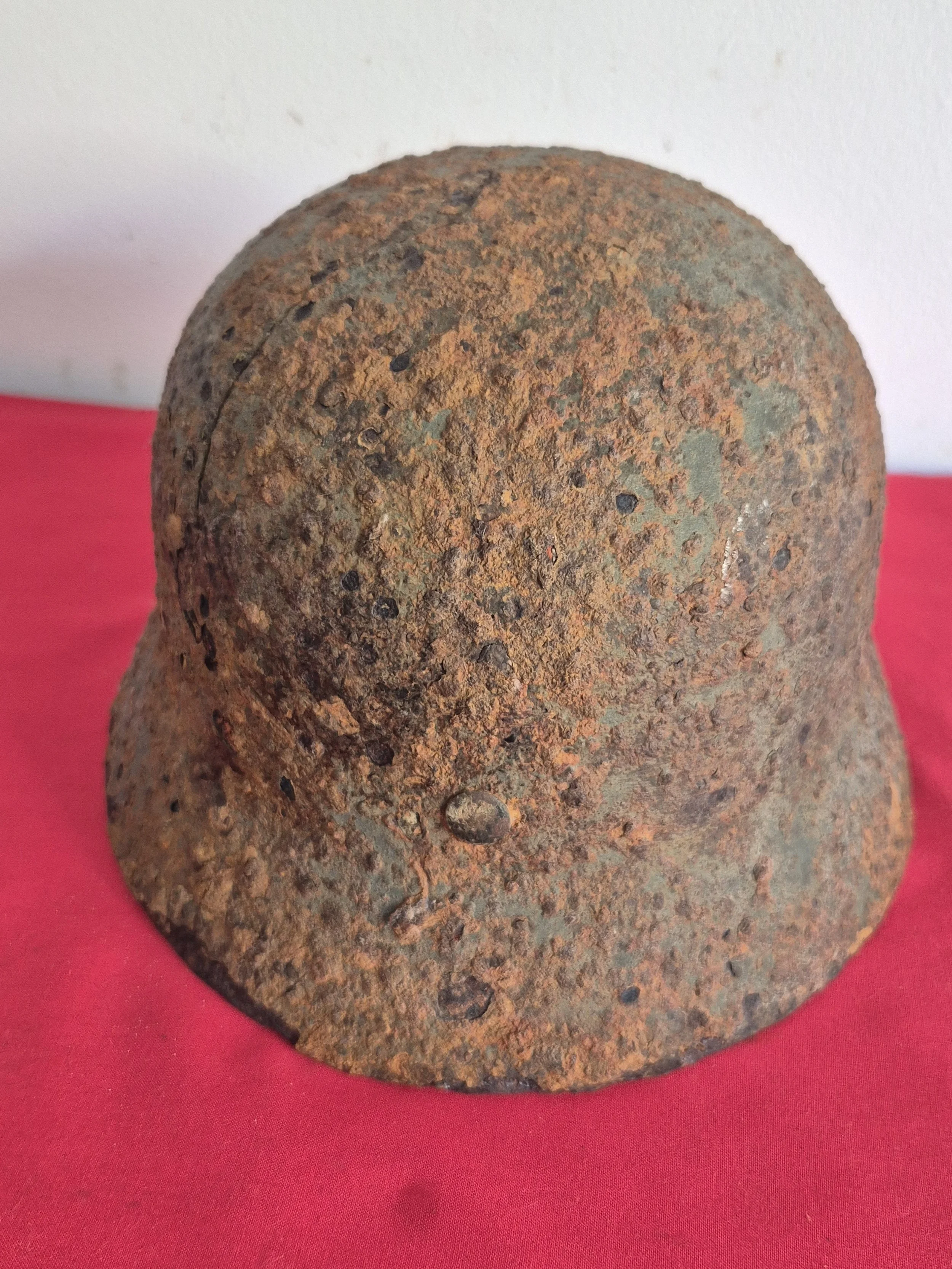 Image 6 of 9
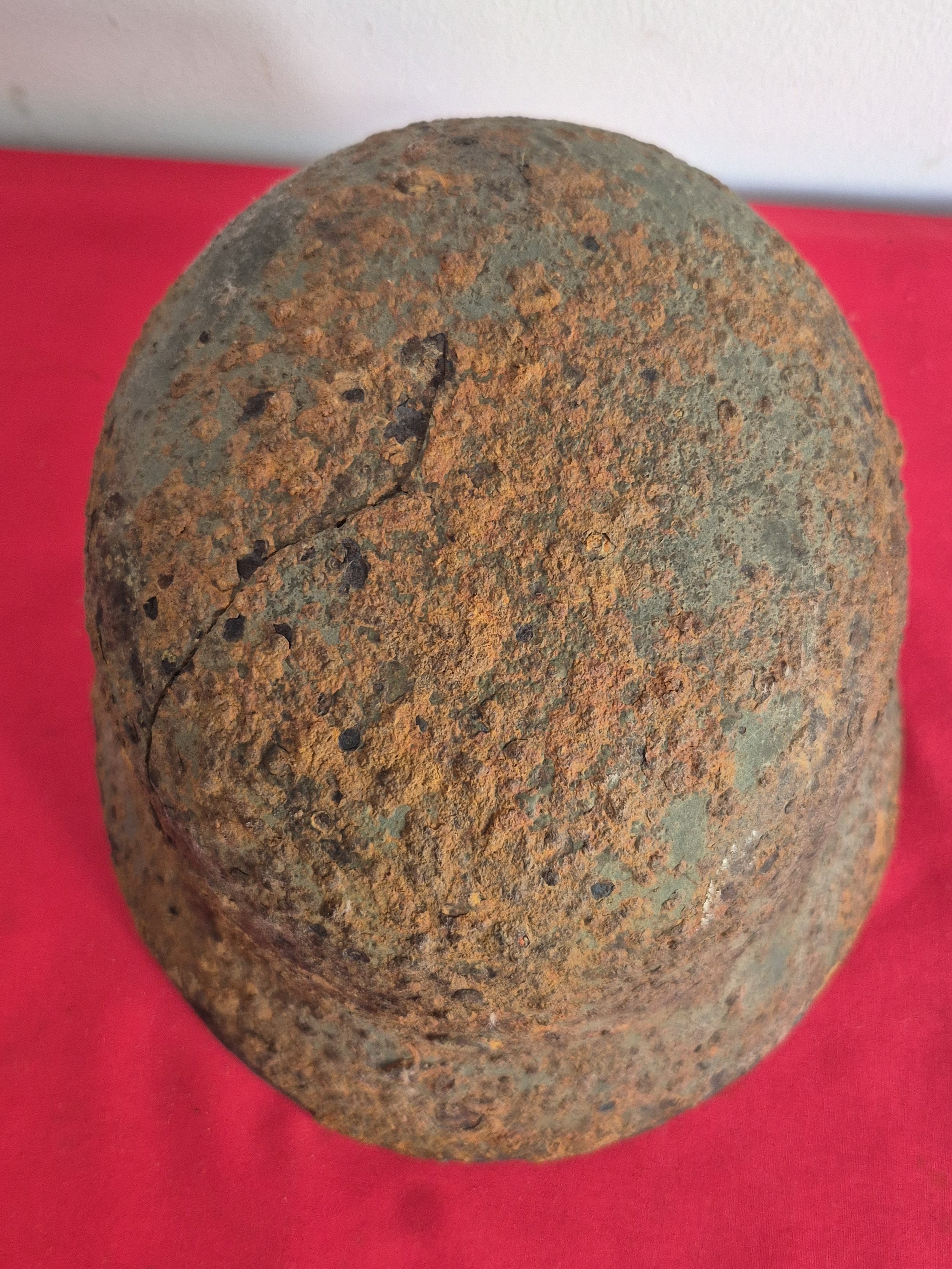 Image 7 of 9
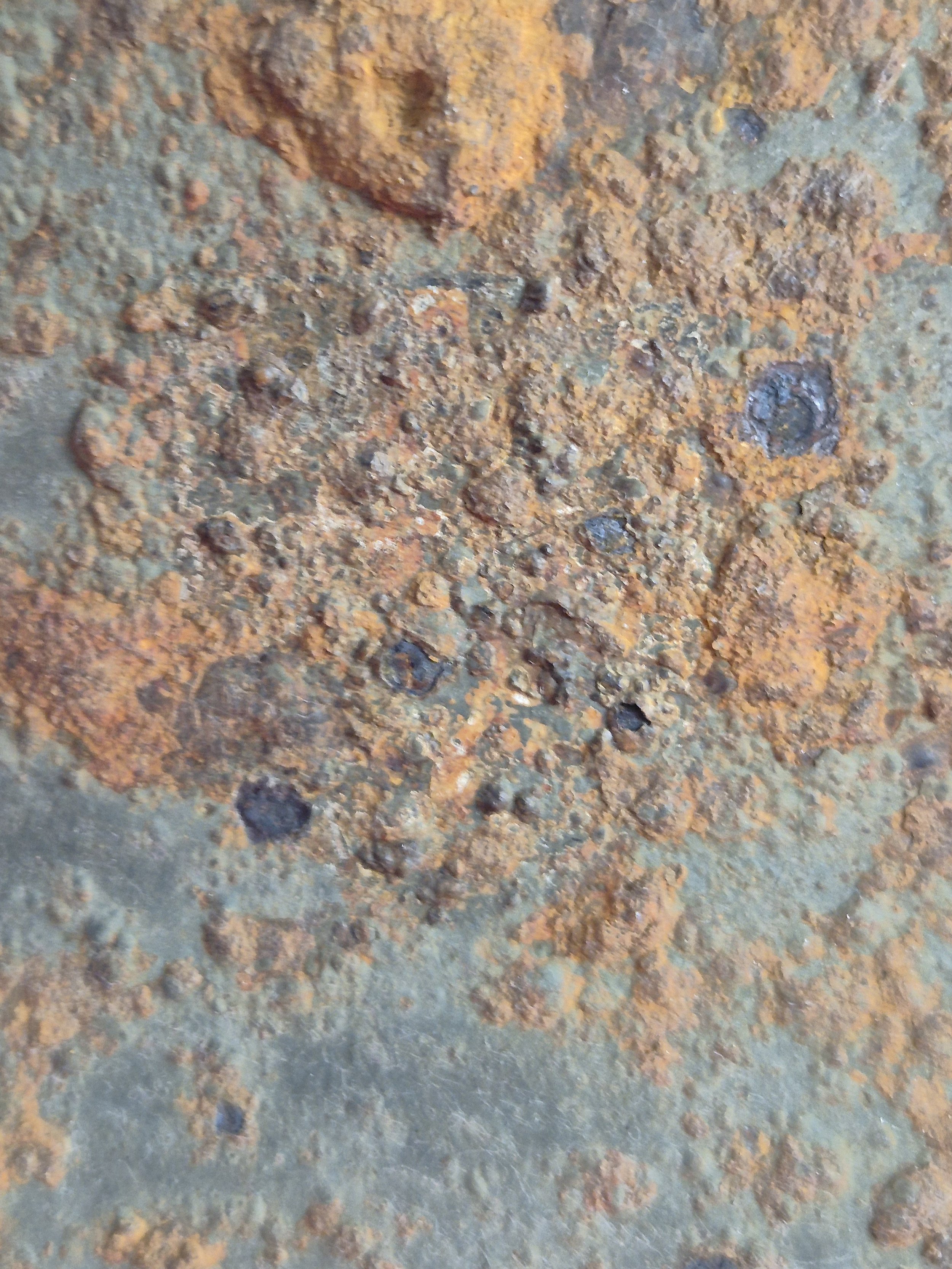 Image 8 of 9
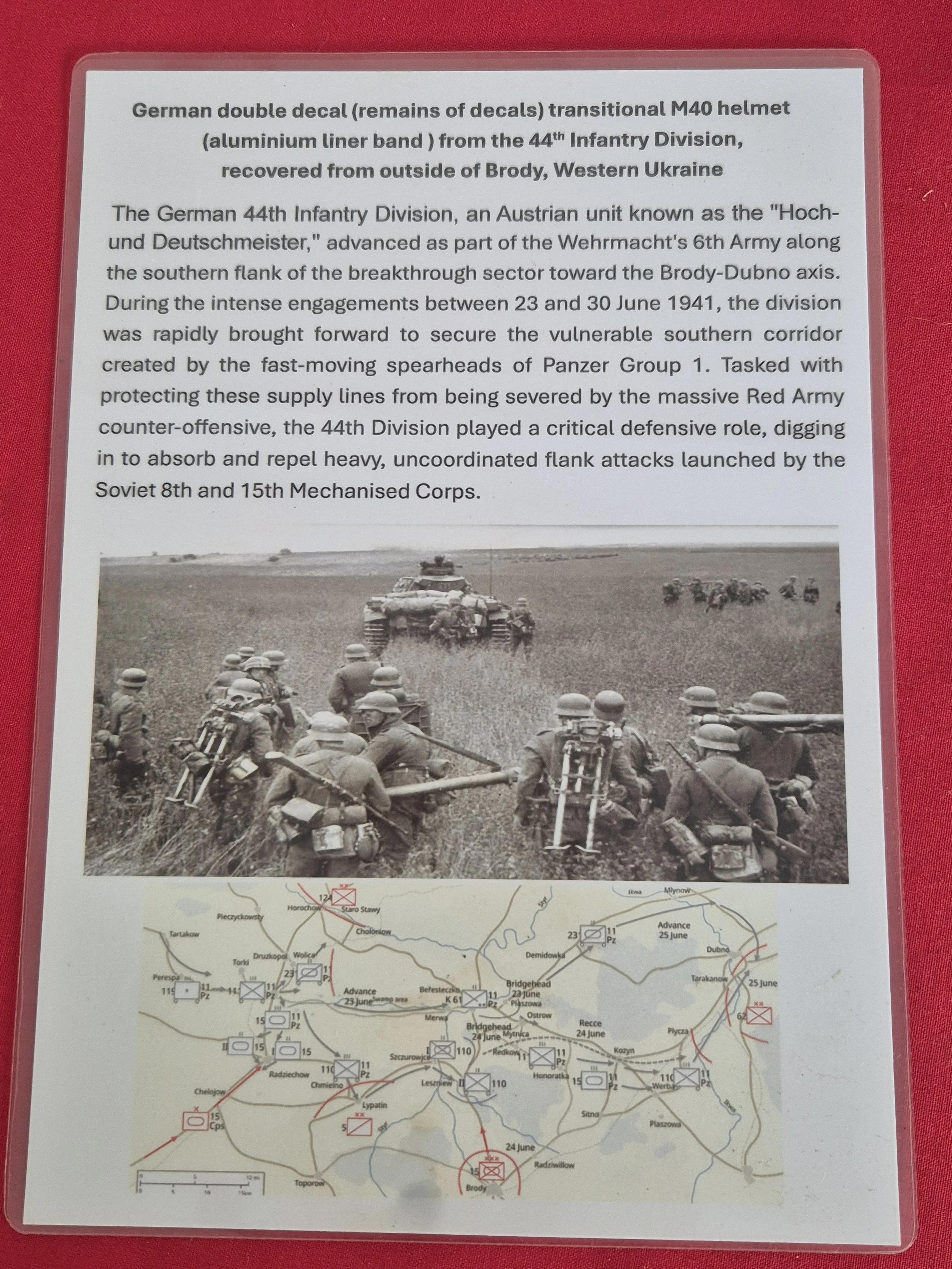 Image 9 of 9