Safe conduct pass for German soldiers
This particular design (US/GB-ZG90-1944) was used from December 1944 to April 1945. Both dropped from aircraft and fired by artillery to target specific, localized frontline positions using adapted standard base ejection smoke rounds, the leaflets were deemed to be highly effective – by late 1944 a large percentage of captured German prisoners reported having read or carried them. This leaflet has a small added comment under the word “Passierschein” on the front which says, “Valid for one or several bearers.” It was meant to convey to the German soldier that multiple users could come across the lines on one pass.
First produced and distributed soon after the Normandy invasion, the early Passierschein contained the seal of the United States and the British royal crest; its text, in English and German, directed Allied frontline troops to give good treatment to surrendering Germans. As the campaign continued, a series of improvements was made in the leaflet, based on results of prisoner of-war interviews. By the time it went into its sixth printing, the following changes had been made: (a) the German text was placed above the English; (b) a note specifically stated that the English text was a translation of the German; (c) General Eisenhower's signature was added; (d) his name was spelled out after it had been learned Germans did not recognize his handwriting; (e) the leaflet colour was changed from green to a more conspicuous red; (f) under the word "Safe Conduct," a note was added stating that the document was valid for "one or several bearers." Continuous interrogations of the German prisoners had netted these improvements. In phrasing Safe-Conducts, Allied leaflet writers considered it essential to expound constantly the good treatment theme and Allied adherence to the Geneva Convention. These promises were printed on the back of the pass.

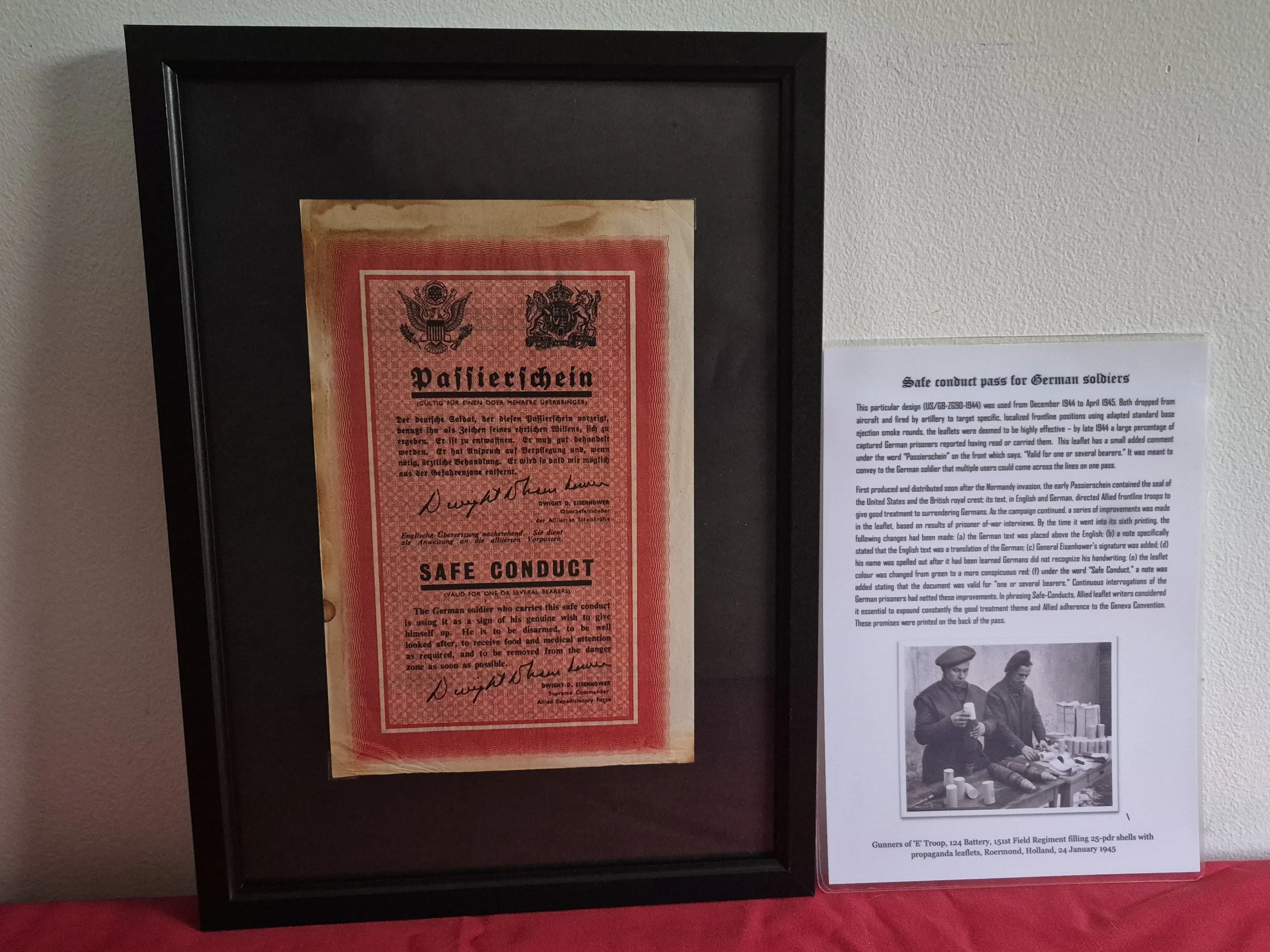 Image 1 of 2
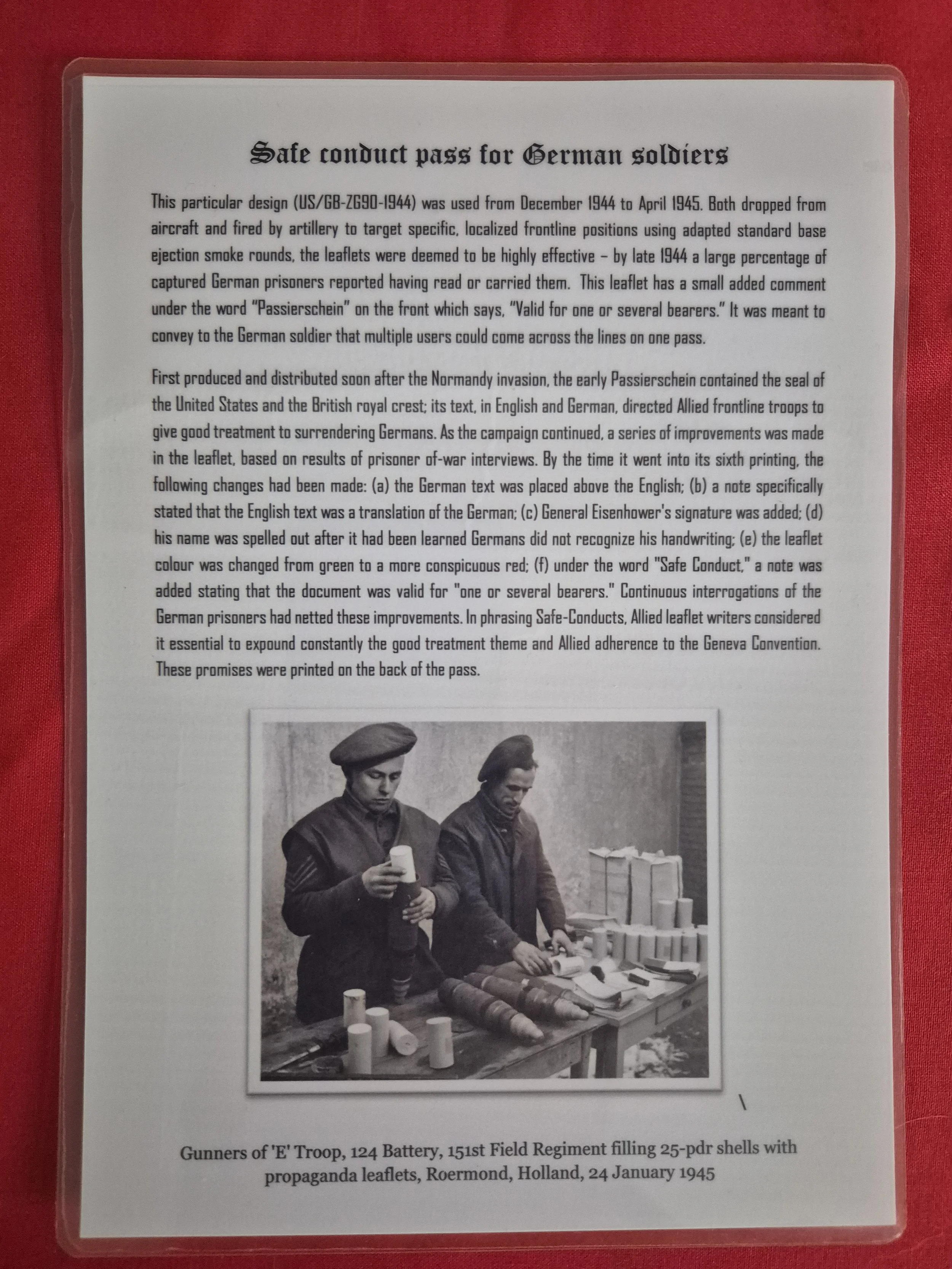 Image 2 of 2