Sale Price:
£30.00
Original Price:
£58.00
This is an electrical rheostat unit, a resistance control assembly mounted behind the cockpit or radio operator's panel of a German Heinkel He 111 bomber. This component was used to regulate electrical power for cockpit lighting, heating systems, or radio equipment, making it an interesting and recognisable piece of the aircraft's electrical system.
The relic consists of a steel tubular mounting bracket with numerous original electrical components and connectors still attached. It also retains traces of its original black painted finish. The unit sustained some damage during the aircraft's crash but remains in solid relic condition, with only surface rust and having been carefully cleaned and preserved. It measures approximately 13 inches long by 3 inches wide and makes an excellent display piece for any aviation or Second World War collection.
This component was recovered from German Heinkel He 111 H-2, Stab/KG 53, Werknummer 2630.
On 9th September 1940, during the Battle of Britain, the aircraft was taking part in a bombing raid on London when it collided with the damaged RAF Hurricane L2059, flown by Pilot Officer G. M. Forrester of No. 605 Squadron. The collision caused the Heinkel to lose a wing before crashing and exploding at Southfield Farm, Chawton, near Alton, Hampshire, at approximately 5:50 pm. Pilot Officer Forrester was tragically killed in the collision.
The relic comes complete with two A5 laminated information sheets containing historical information and photographs relating to the aircraft and its loss.
This is a rare and historically significant Battle of Britain relic from one of the Luftwaffe's principal bomber types, making it an excellent addition to any aviation, Battle of Britain, or Second World War collection.
This is an electrical rheostat unit, a resistance control assembly mounted behind the cockpit or radio operator's panel of a German Heinkel He 111 bomber. This component was used to regulate electrical power for cockpit lighting, heating systems, or radio equipment, making it an interesting and recognisable piece of the aircraft's electrical system.
The relic consists of a steel tubular mounting bracket with numerous original electrical components and connectors still attached. It also retains traces of its original black painted finish. The unit sustained some damage during the aircraft's crash but remains in solid relic condition, with only surface rust and having been carefully cleaned and preserved. It measures approximately 13 inches long by 3 inches wide and makes an excellent display piece for any aviation or Second World War collection.
This component was recovered from German Heinkel He 111 H-2, Stab/KG 53, Werknummer 2630.
On 9th September 1940, during the Battle of Britain, the aircraft was taking part in a bombing raid on London when it collided with the damaged RAF Hurricane L2059, flown by Pilot Officer G. M. Forrester of No. 605 Squadron. The collision caused the Heinkel to lose a wing before crashing and exploding at Southfield Farm, Chawton, near Alton, Hampshire, at approximately 5:50 pm. Pilot Officer Forrester was tragically killed in the collision.
The relic comes complete with two A5 laminated information sheets containing historical information and photographs relating to the aircraft and its loss.
This is a rare and historically significant Battle of Britain relic from one of the Luftwaffe's principal bomber types, making it an excellent addition to any aviation, Battle of Britain, or Second World War collection.

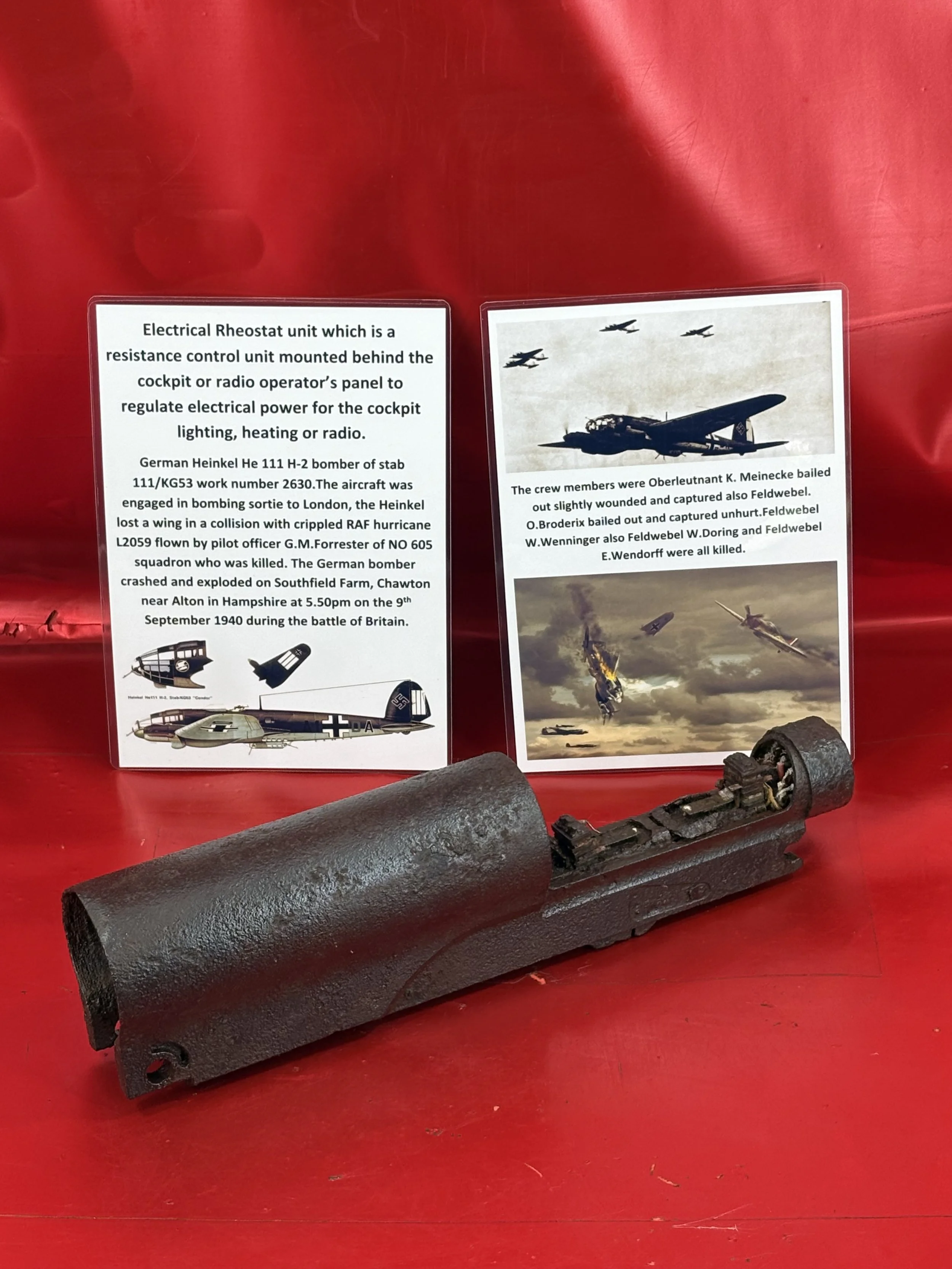 Image 1 of 11
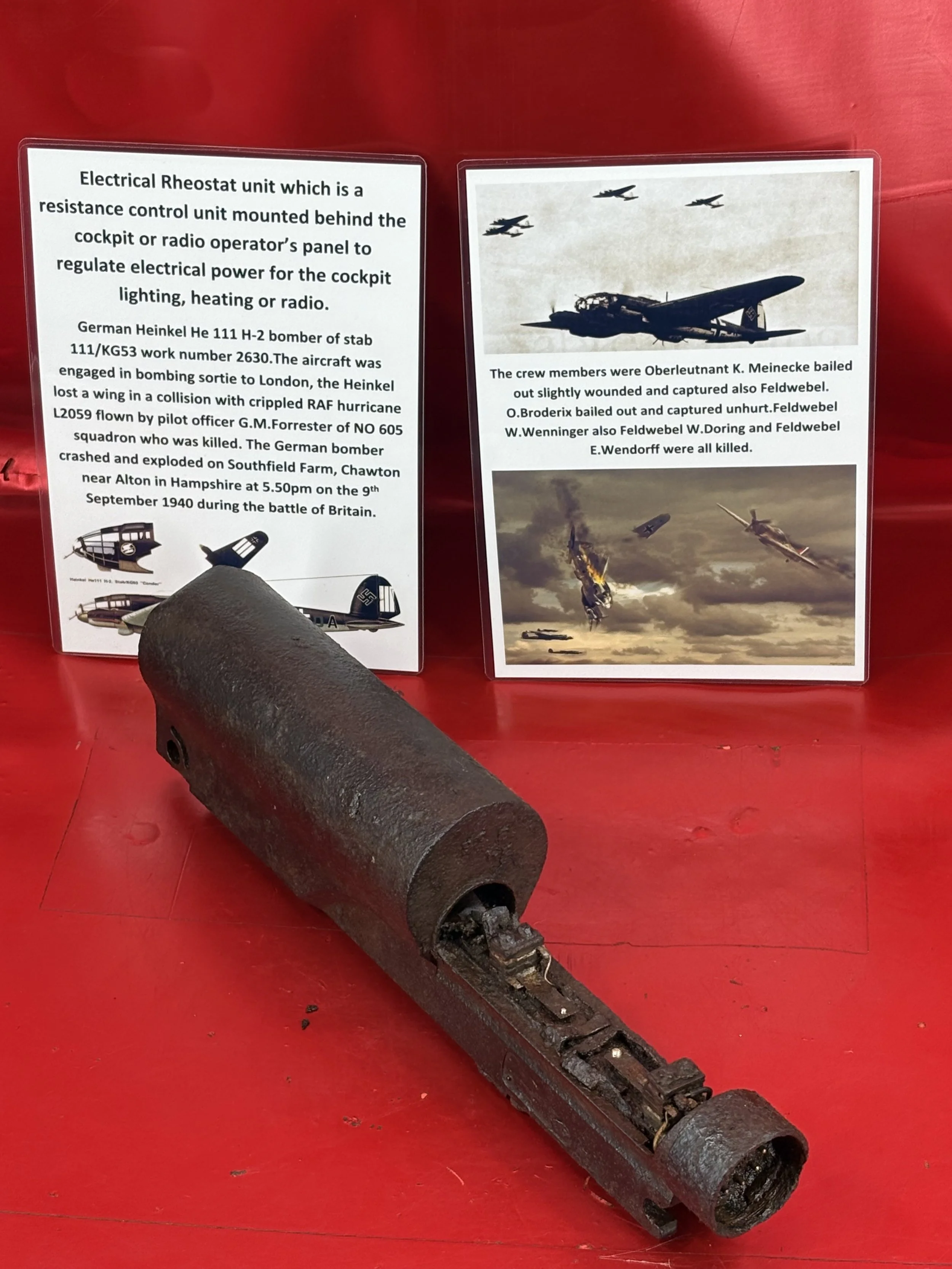 Image 2 of 11
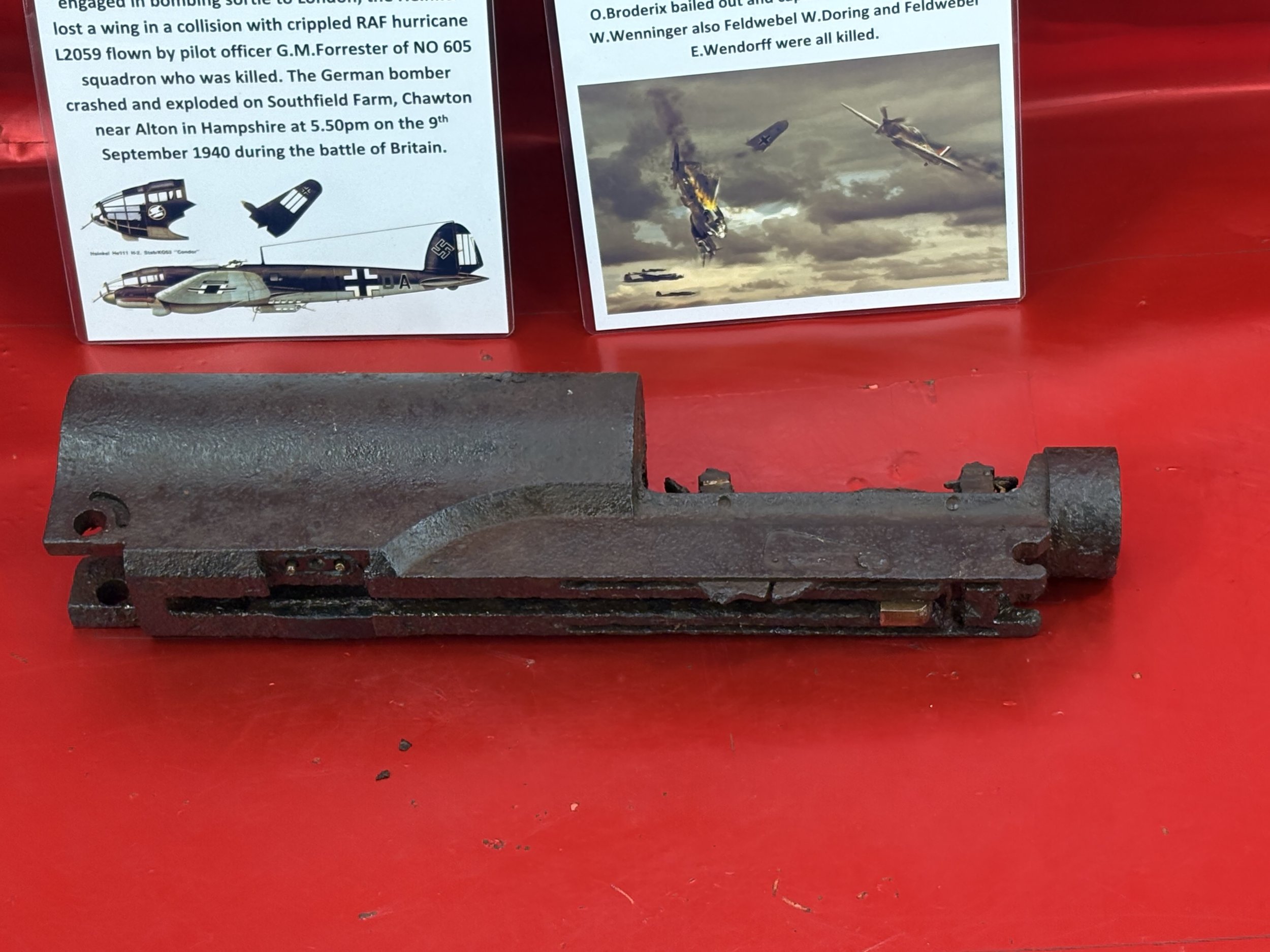 Image 3 of 11
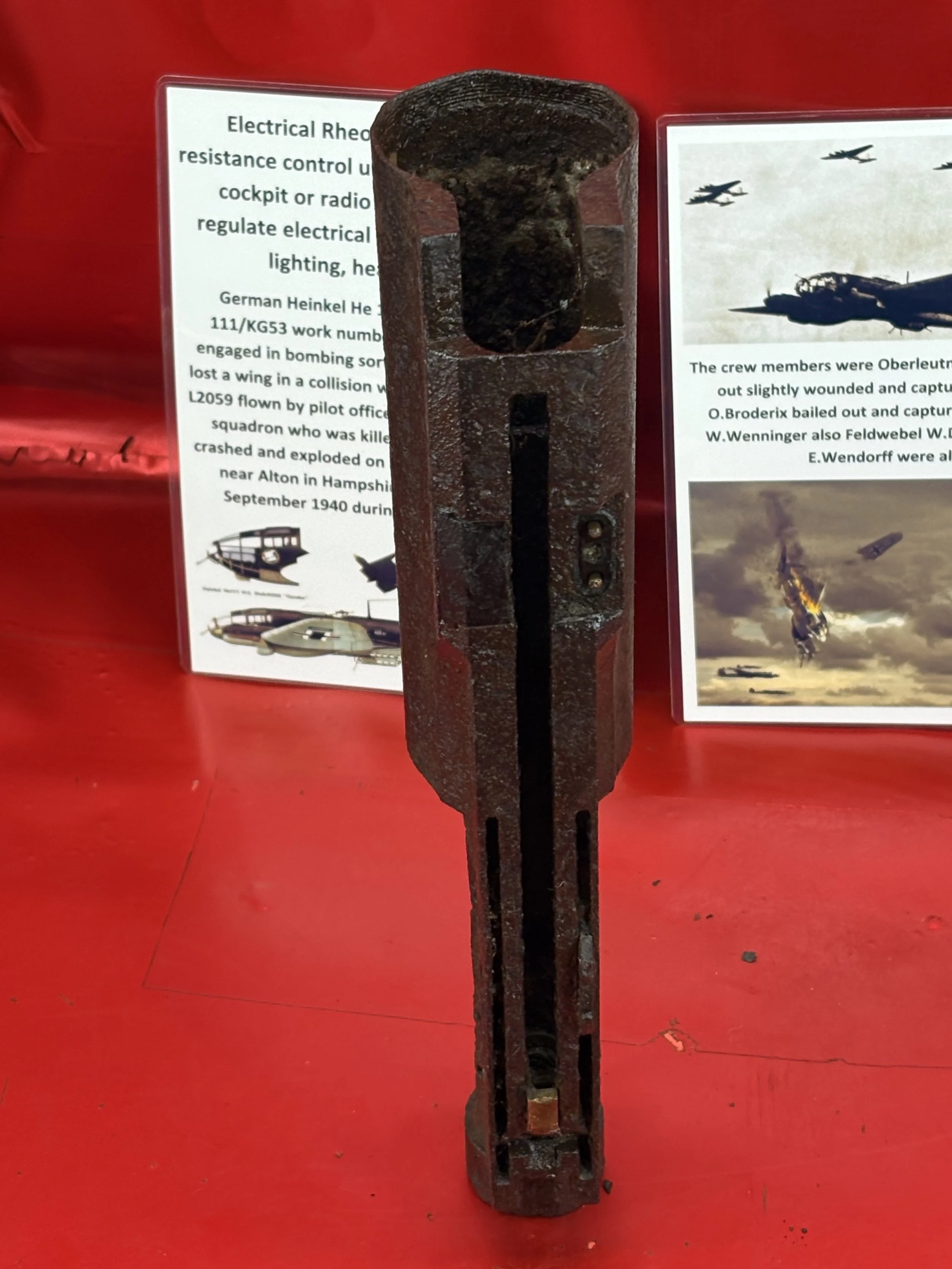 Image 4 of 11
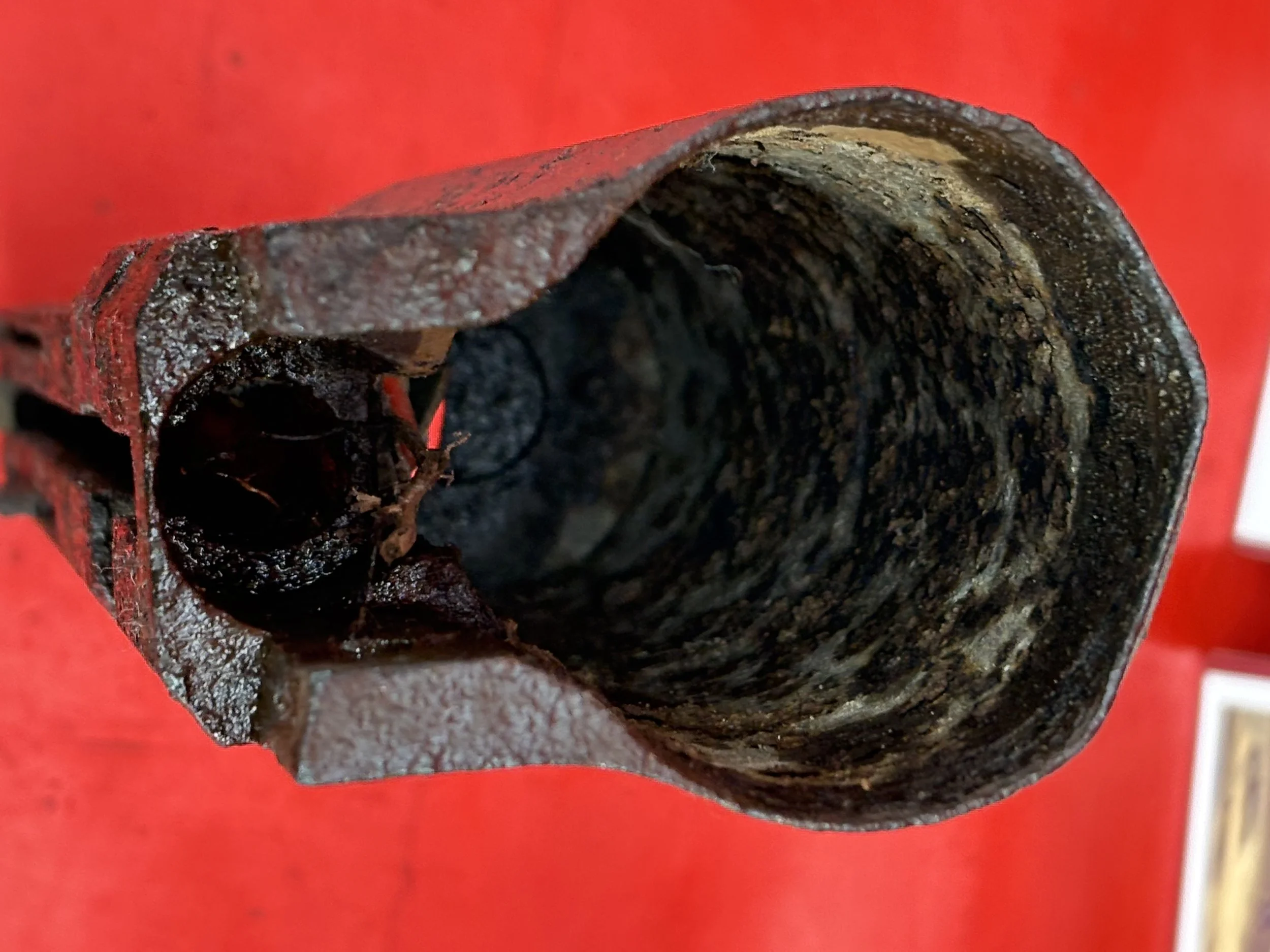 Image 5 of 11
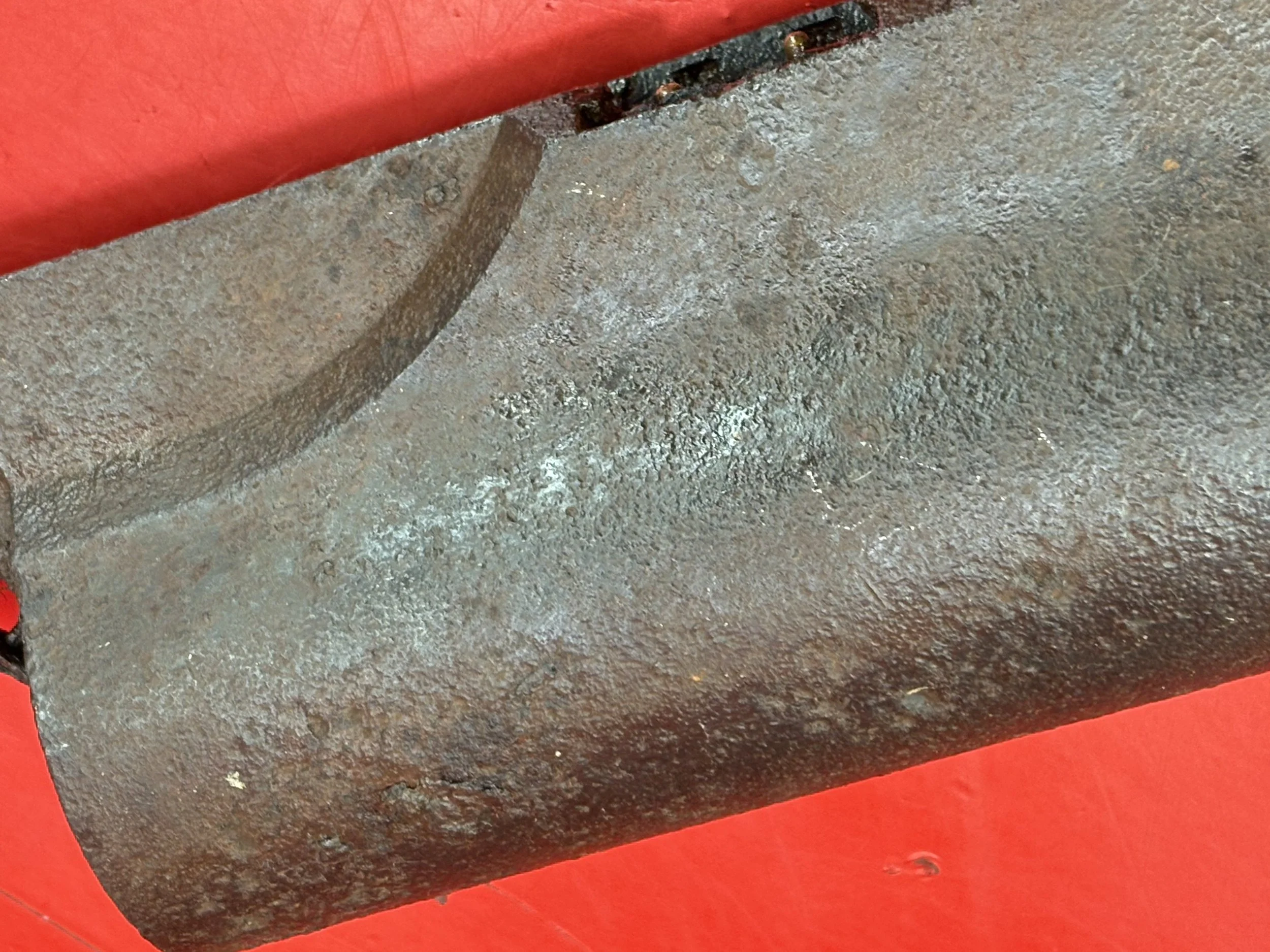 Image 6 of 11
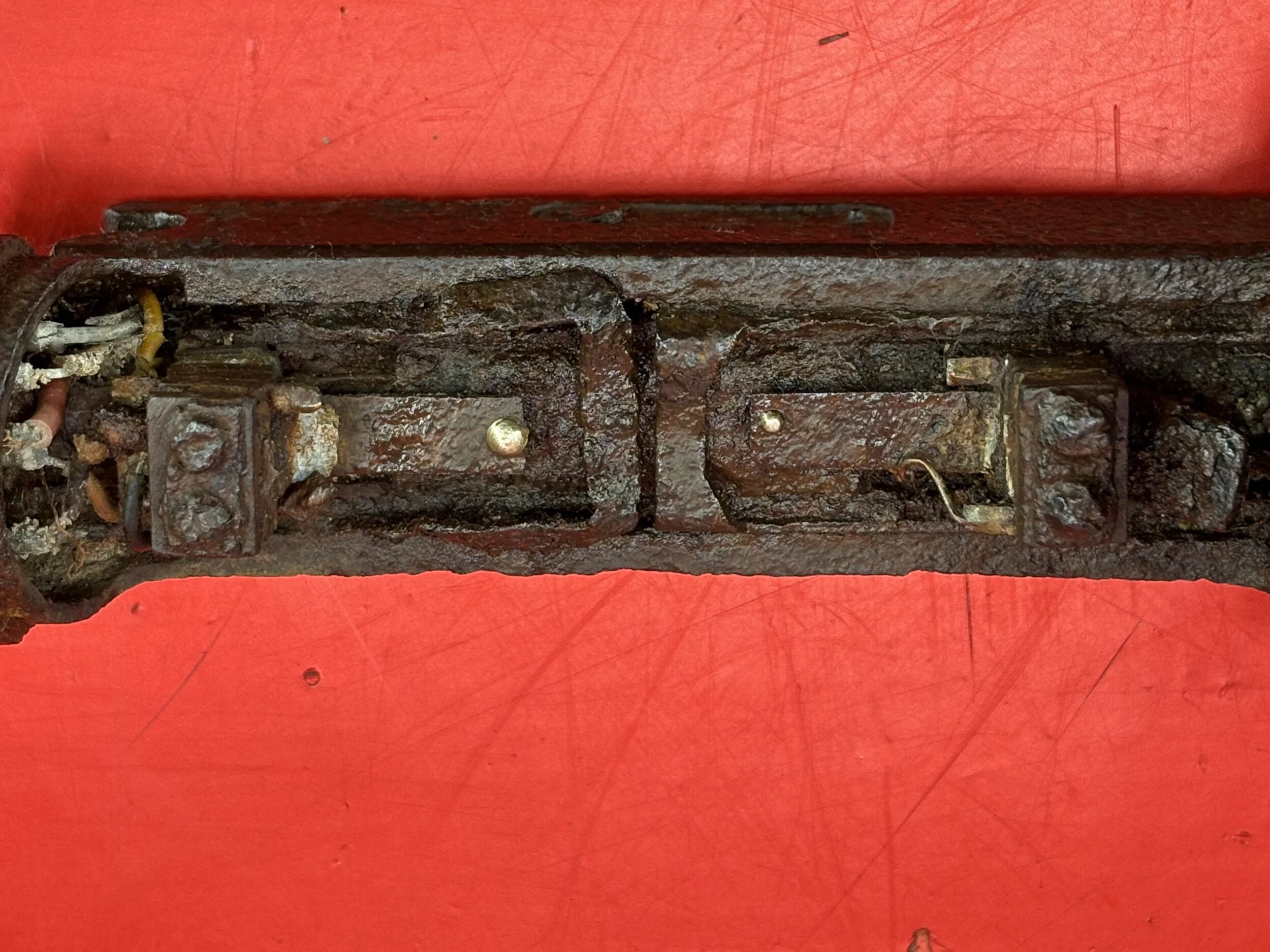 Image 7 of 11
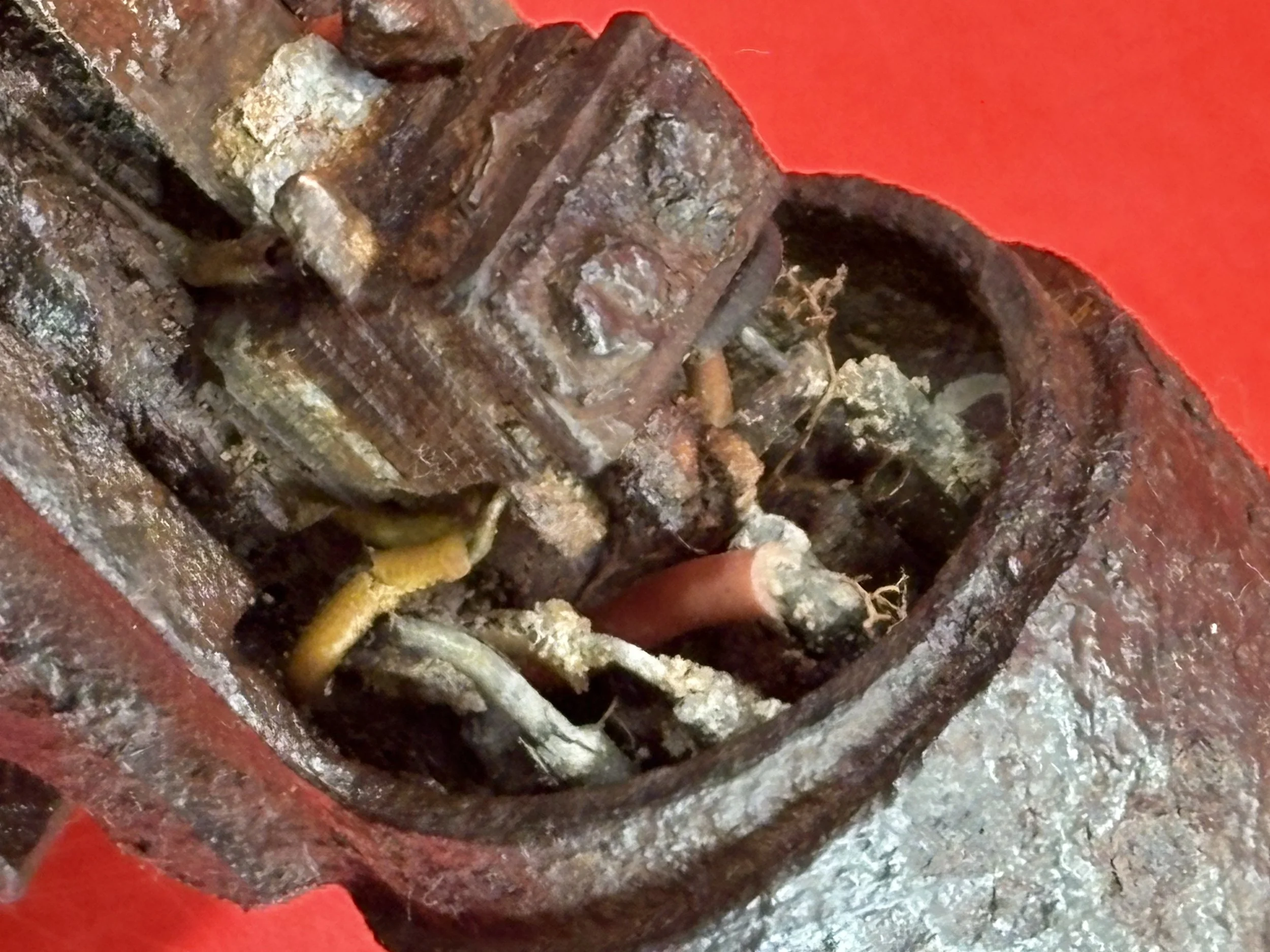 Image 8 of 11
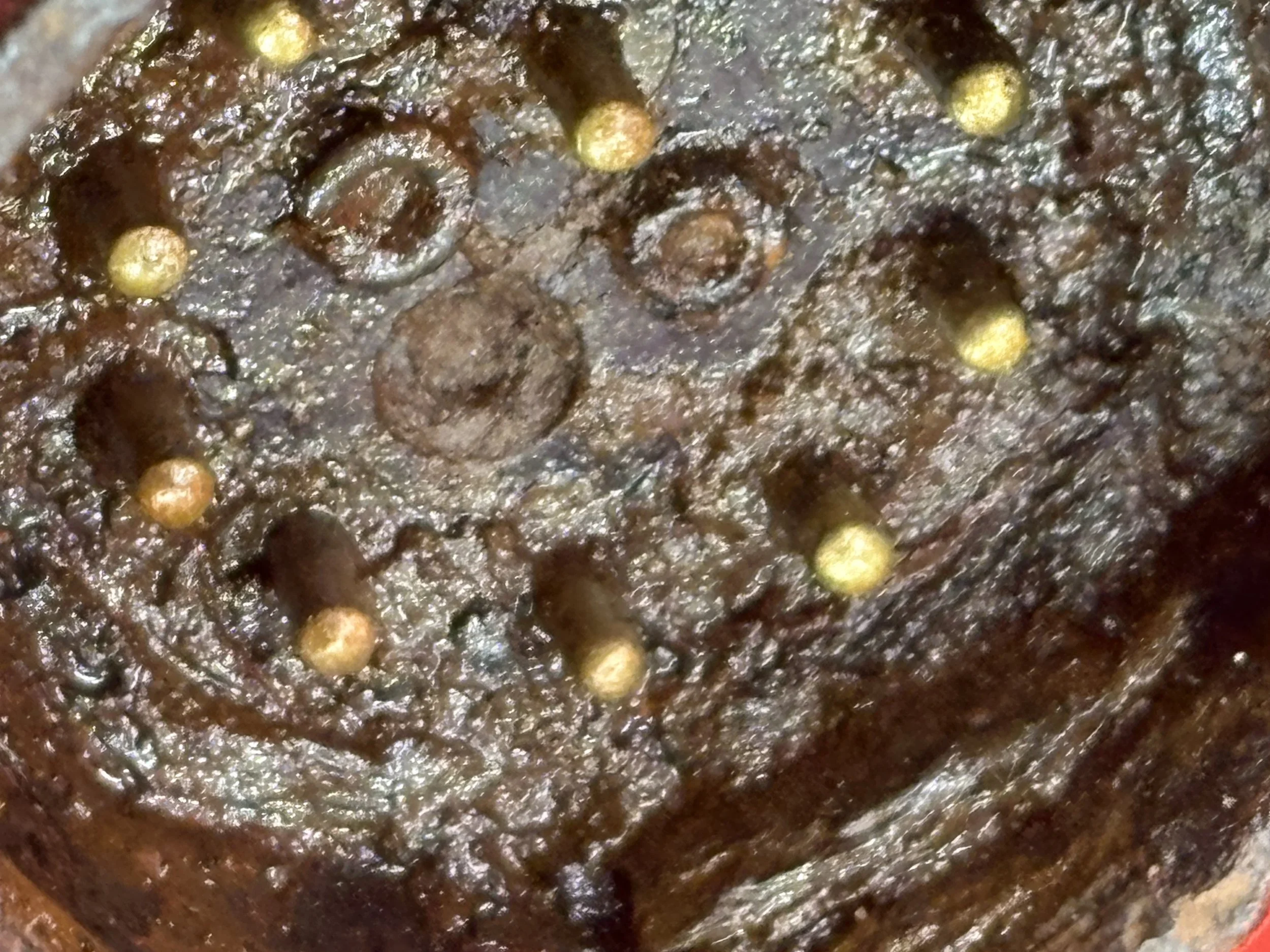 Image 9 of 11
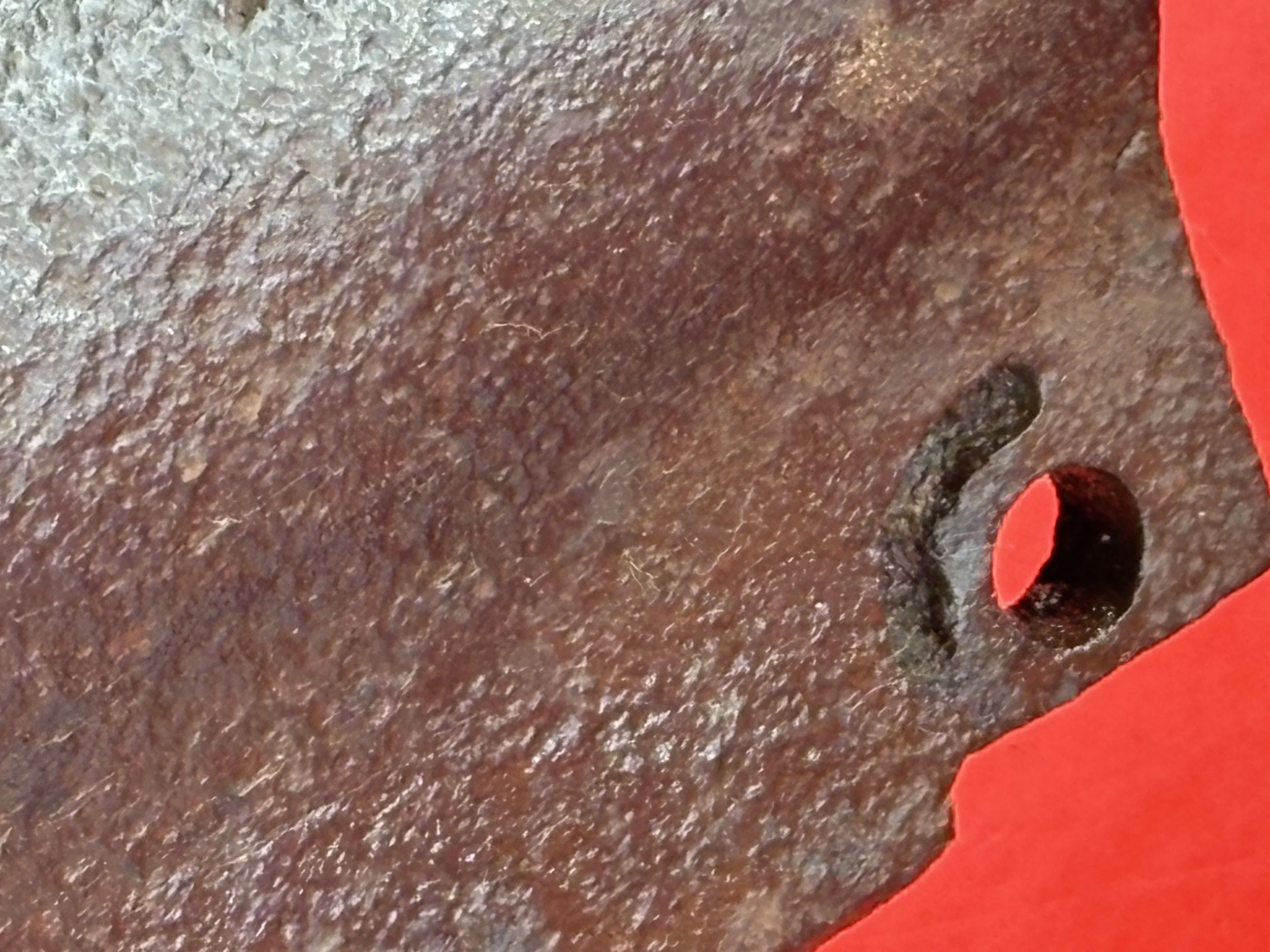 Image 10 of 11
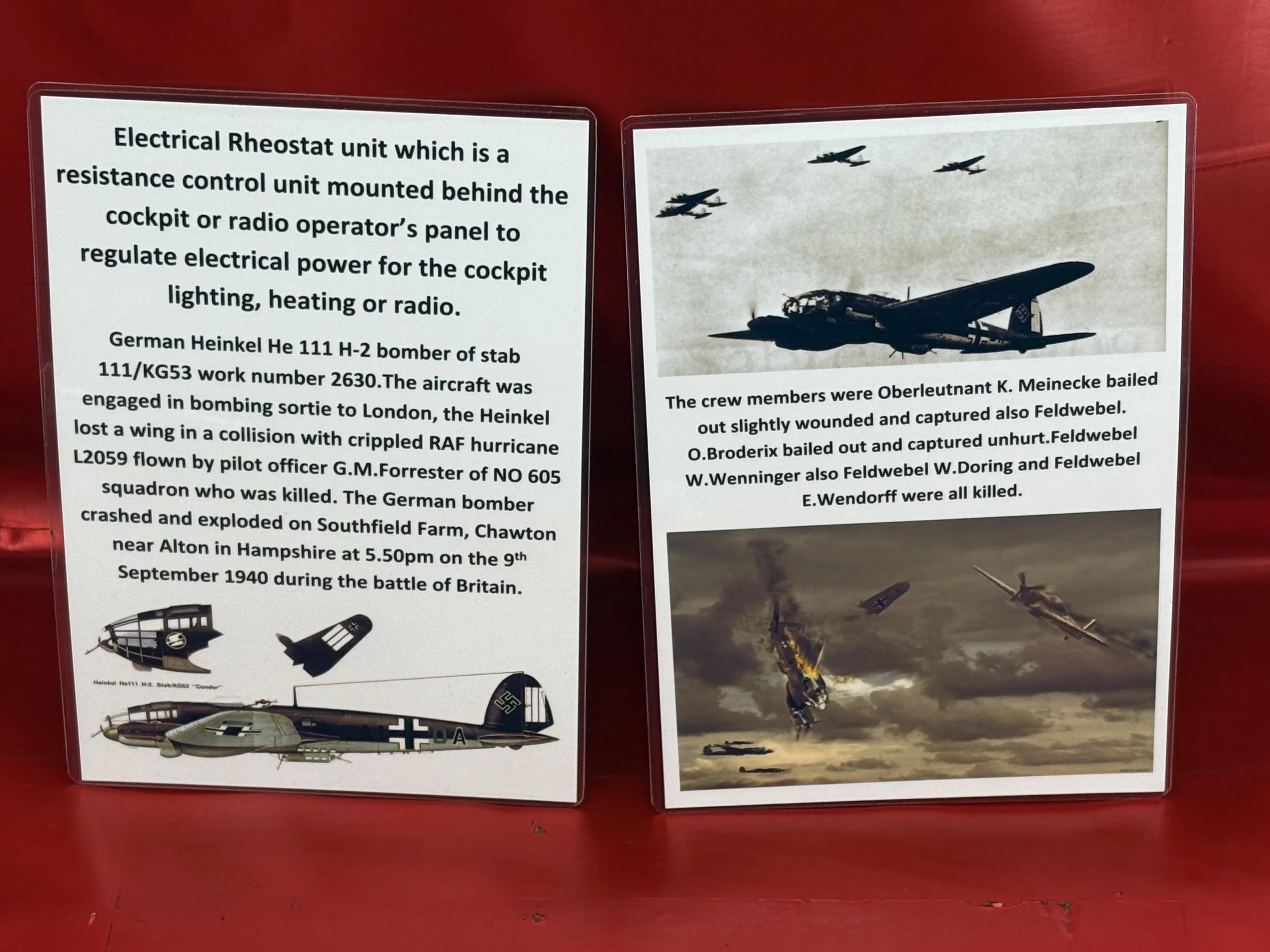 Image 11 of 11