This is a complete airframe inspection panel which is a larger size panel but does not have any real paintwork remains. The part is in nice solid condition and nice clean condition for recovered relic it is perfect for display or any collection the part is 6 inches long in size and perfect for display or any collection. This part is from British fleet air arm Vought Corsair Mk II JT461 from HMS Formidable, crashed in bad weather in Scapa flow Naval base 11 July 1944.These part com with 2xA5 laminated information cards with pictures and crash site photos.
Vought Corsair Mk II JT461 “7C” — Enegars, Isle of Hoy
11 July 1944 | 1841 Naval Air Squadron, Fleet Air Arm
A carrier fighter in the Orkney campaign
The Vought Corsair was a powerful American-designed fighter adopted by the Royal Navy’s Fleet Air Arm for carrier operations. Its distinctive inverted gull wings accommodated a large propeller and helped give the aircraft the clearance needed for its substantial engine. In 1944, 1841 Naval Air Squadron was working up for operations from HMS Formidable. The carrier and its air groups were preparing for attacks on the German battleship Tirpitz in Norway, part of the series of operations known as Operation Mascot. The squadron was operating from RNAS Hatston in Orkney while aircraft and pilots prepared to rejoin the carrier.
The loss of JT461
On 11 July 1944, Corsair Mk II JT461, coded 7C and belonging to 1841 Naval Air Squadron, was being flown from RNAS Hatston near Kirkwall towards HMS Formidable. The aircraft encountered low cloud and poor visibility over the high ground of the Isle of Hoy. Sub-Lieutenant Edward de Aulton Hewetson, a pilot of the Royal New Zealand Naval Volunteer Reserve, flew into the cloud-covered hillside near Enegars on Hoy’s western side. The aircraft struck the ground and was destroyed, killing Hewetson, aged 23. The wreckage was not located immediately; reports state that the weather took about a week to clear enough for the site to be found.
Sub-Lieutenant Edward de Aulton Hewetson
Hewetson was serving with the Fleet Air Arm as part of the Royal New Zealand Naval Volunteer Reserve. He was buried at Lyness Royal Naval Cemetery on Hoy, the island where his aircraft was lost. His grave and the surviving wreckage preserve the memory of a fatal training and transit flight during the intense preparations for the Fleet Air Arm’s 1944 operations against Tirpitz. Although the Corsair was a formidable combat aircraft, flights across Orkney’s mountainous islands could be hazardous when cloud obscured the terrain.
The wreckage at Enegars
The crash site lies on remote, rugged ground near Enegars, above the coast of Hoy. Specialist crash-site researchers have documented aircraft remains spread across several gullies, including sections of the wing roots and rear fuselage, with parts of the undercarriage still attached to some pieces. The difficult terrain and the scattered nature of the wreckage have left material at the site. These remains provide a physical link to JT461 and to the young New Zealand pilot who died there in July 1944.

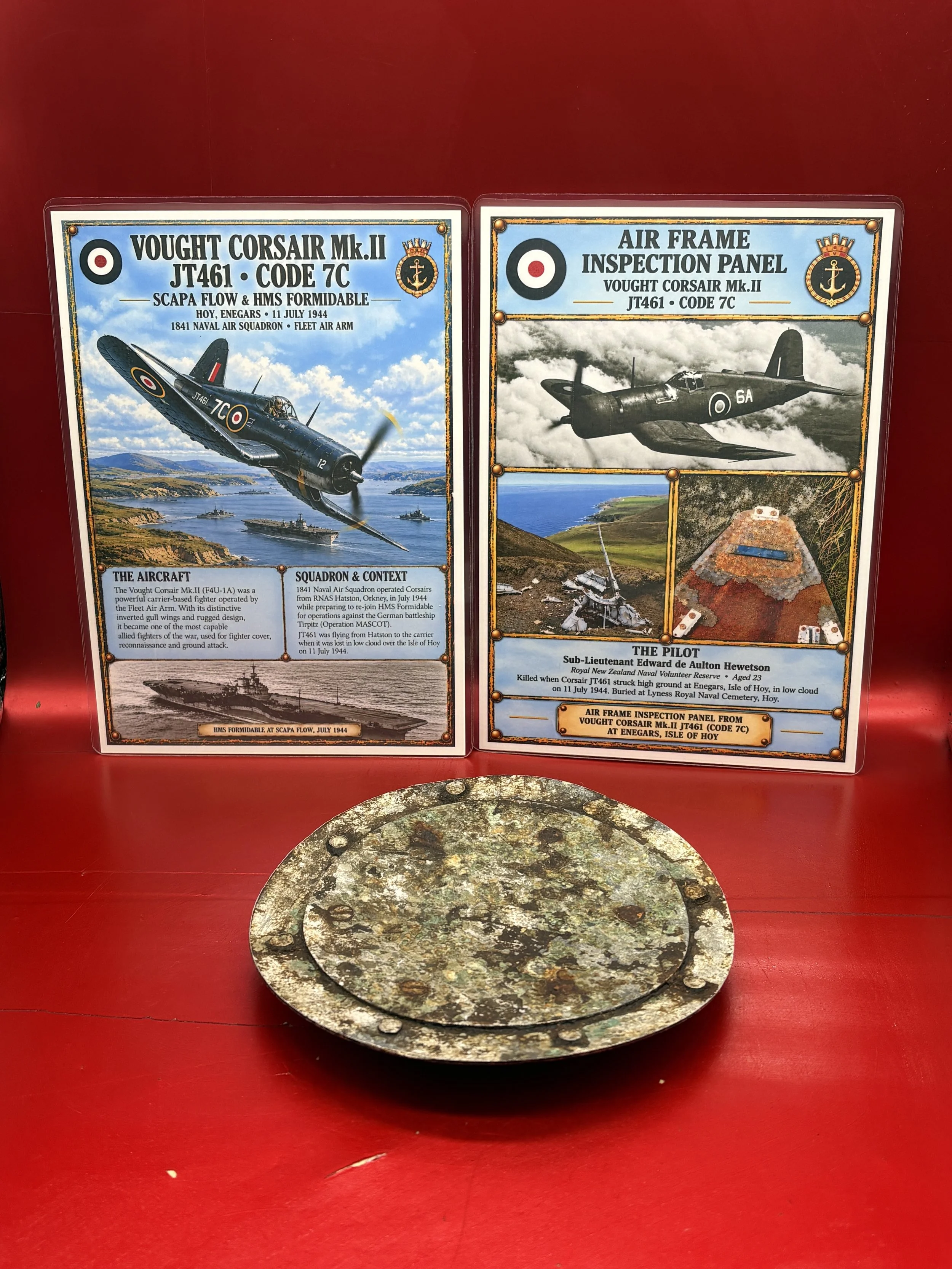 Image 1 of 10
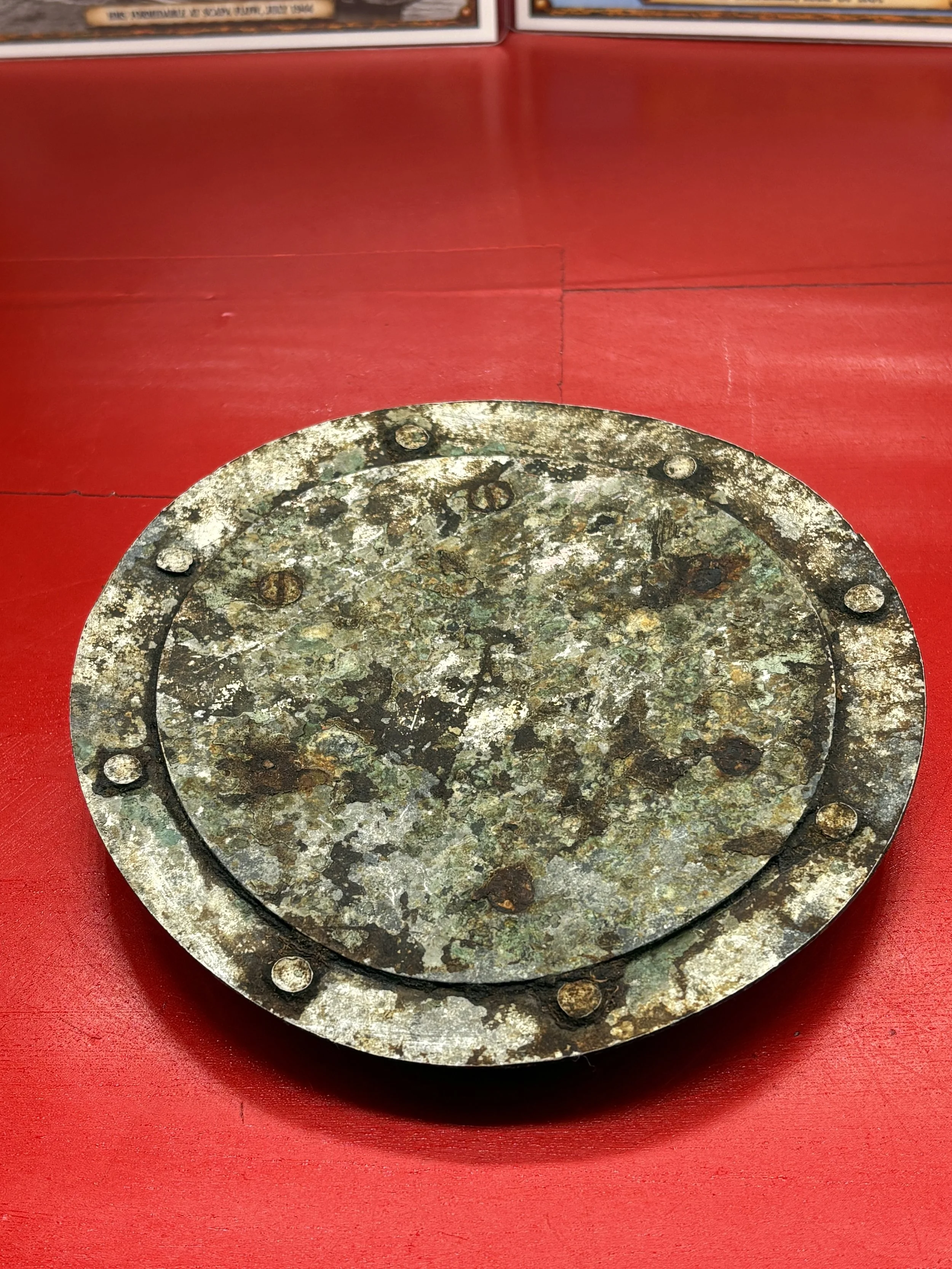 Image 2 of 10
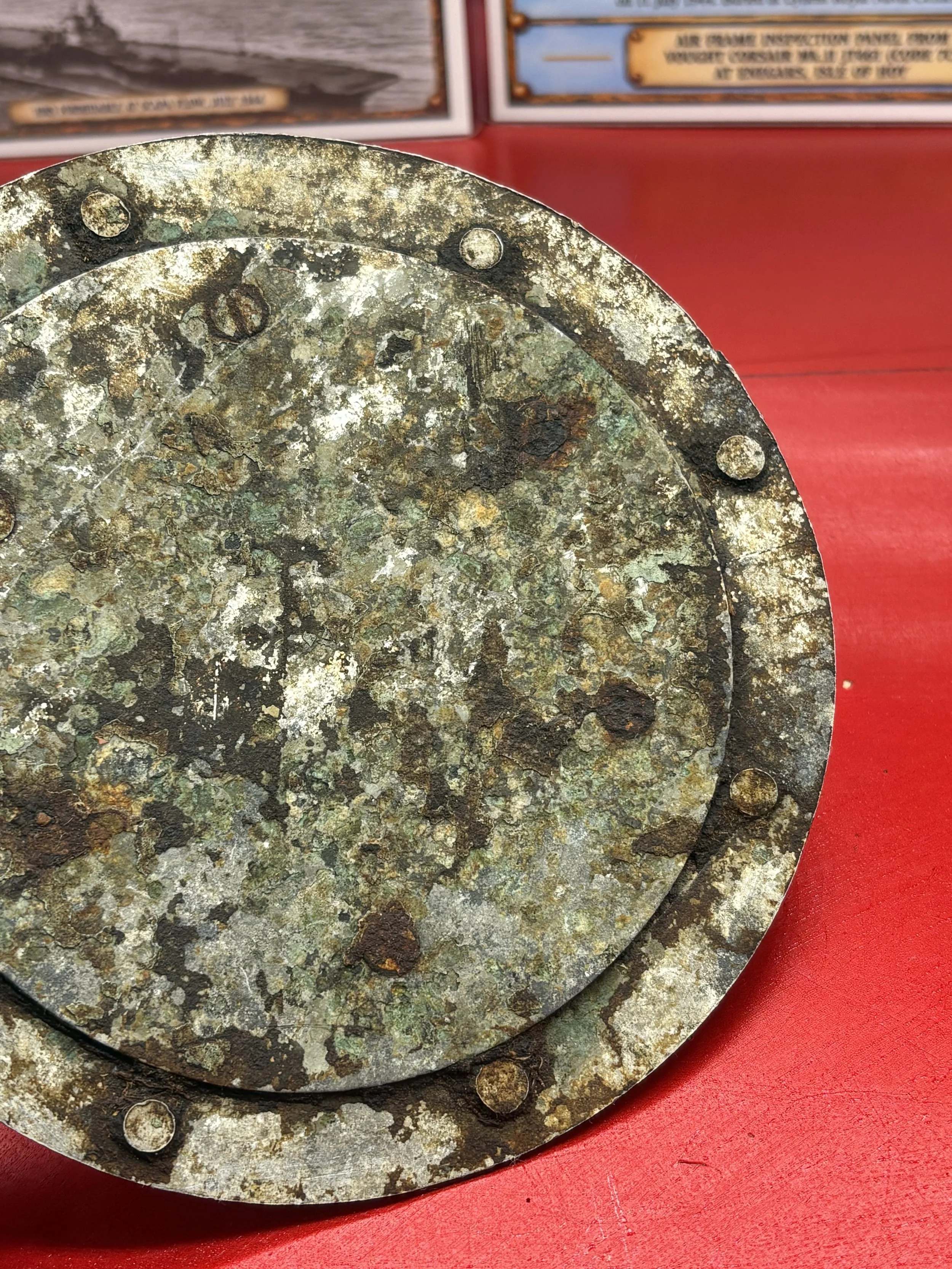 Image 3 of 10
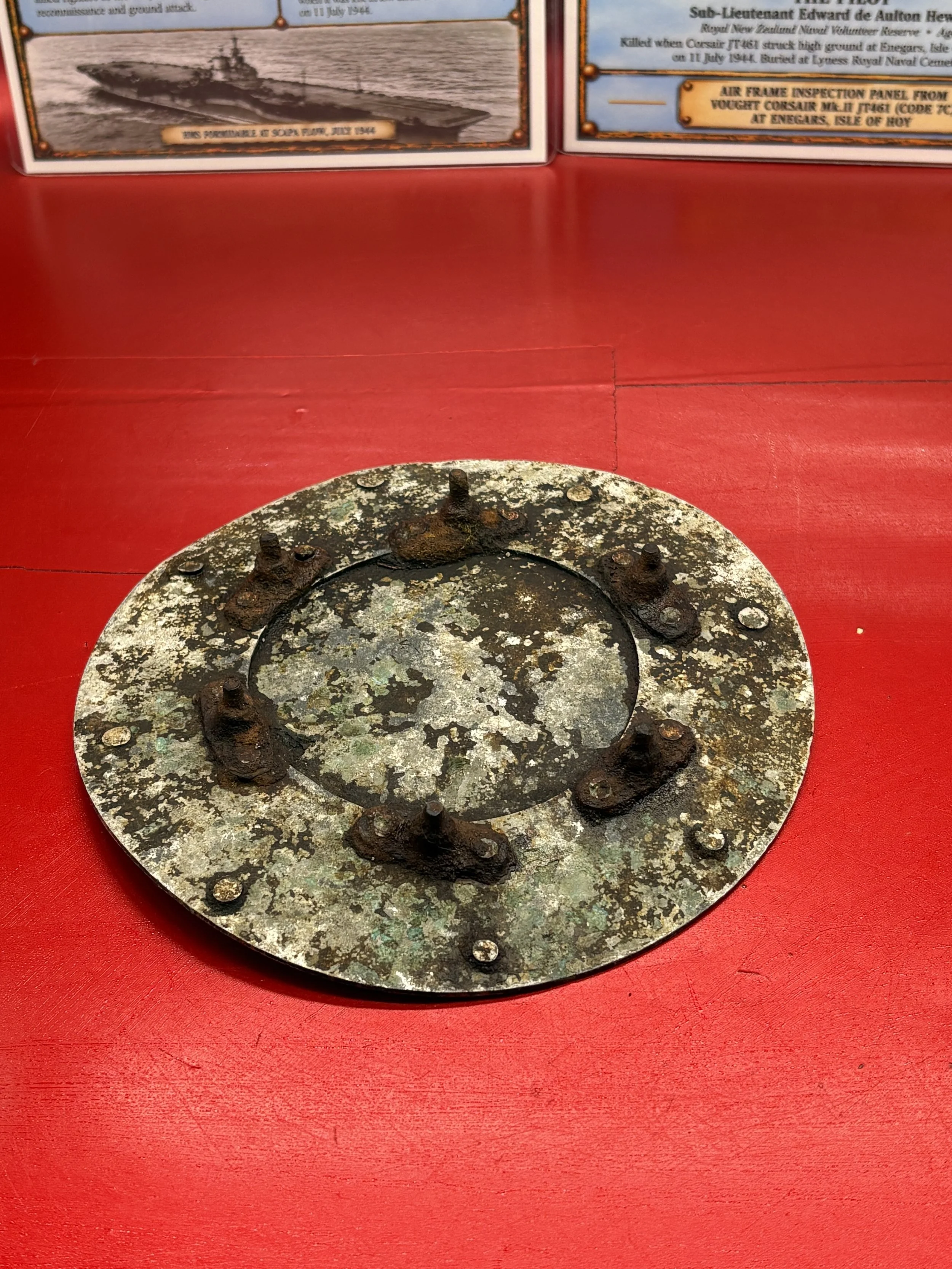 Image 4 of 10
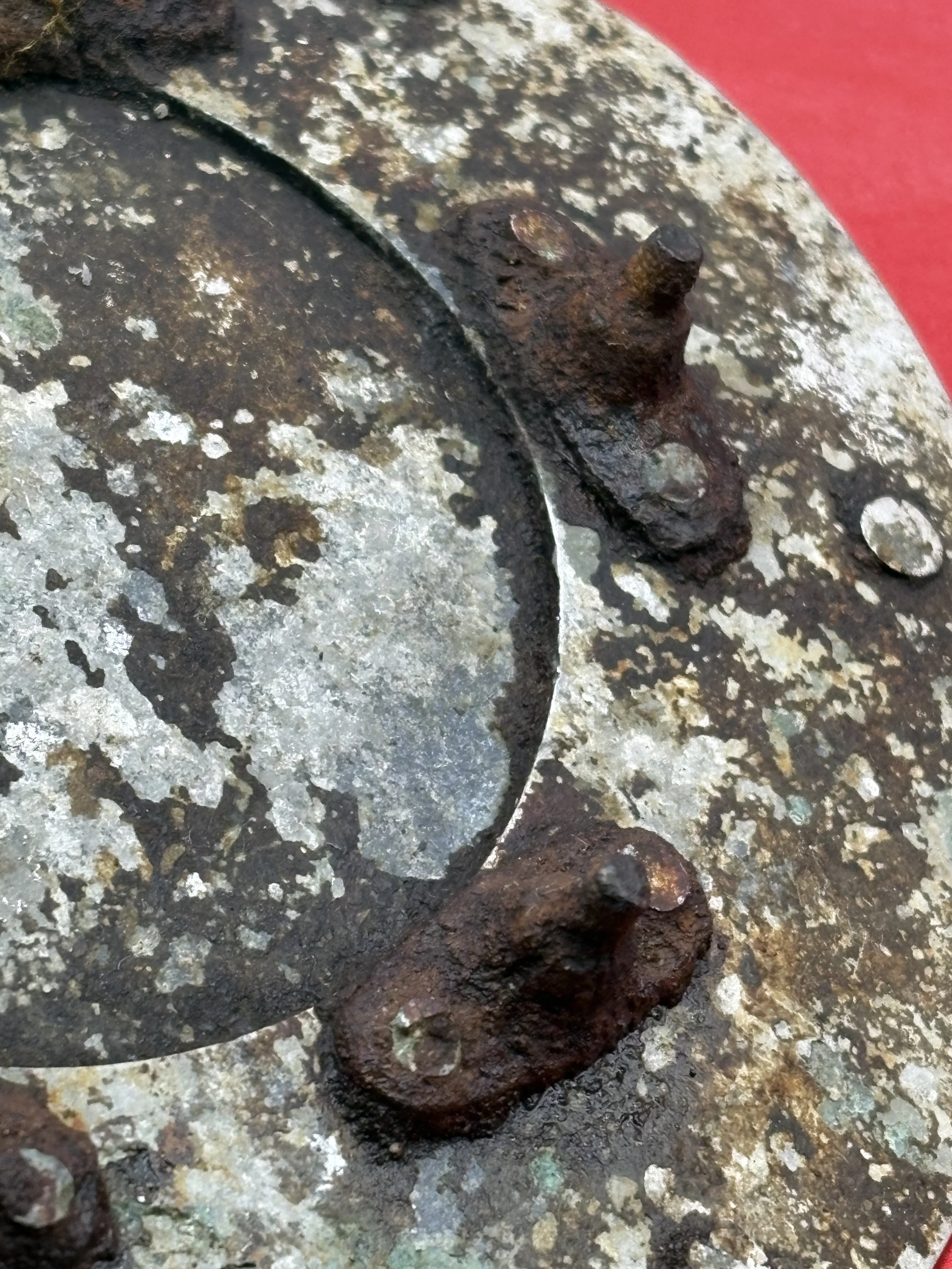 Image 5 of 10
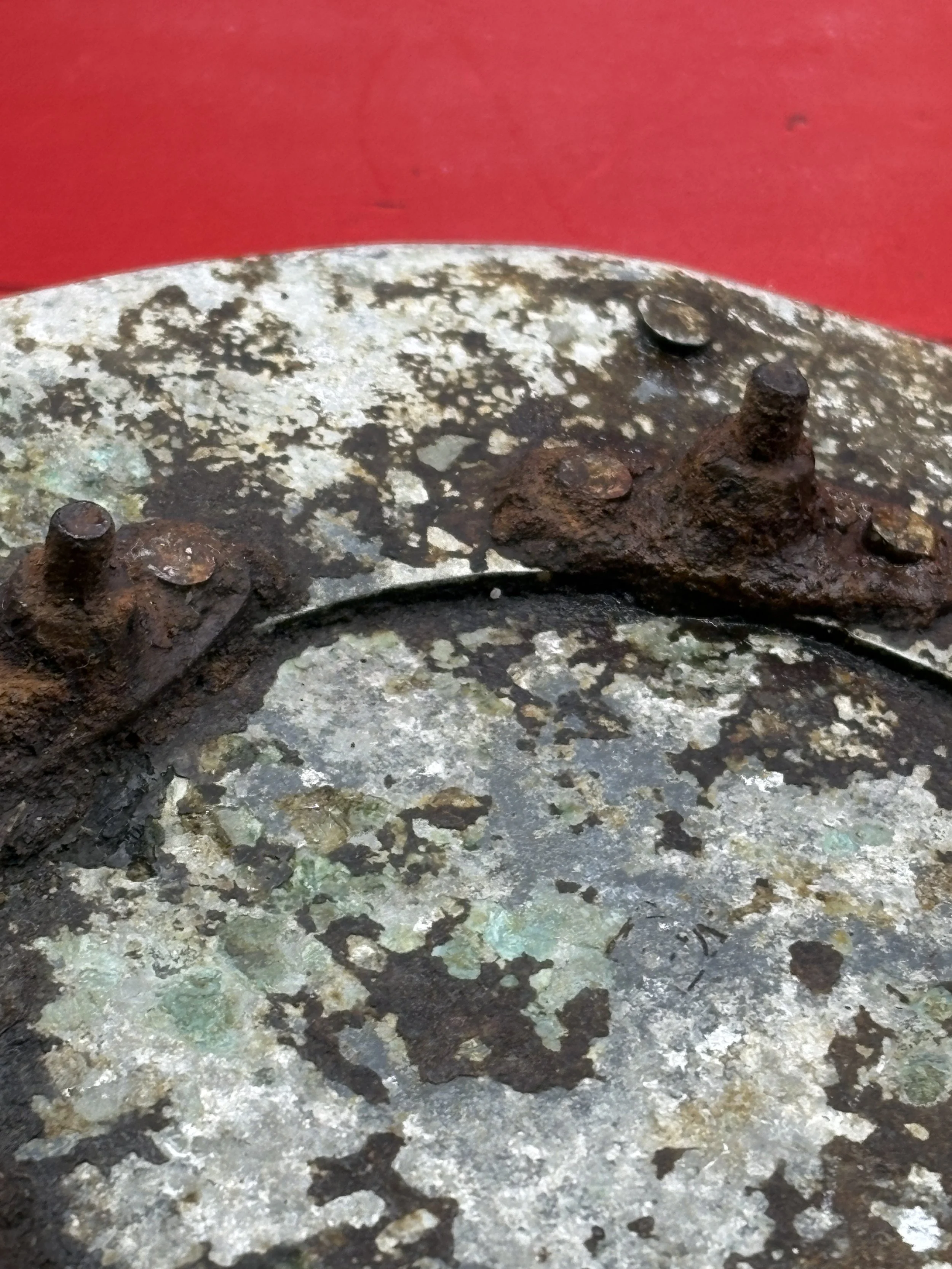 Image 6 of 10
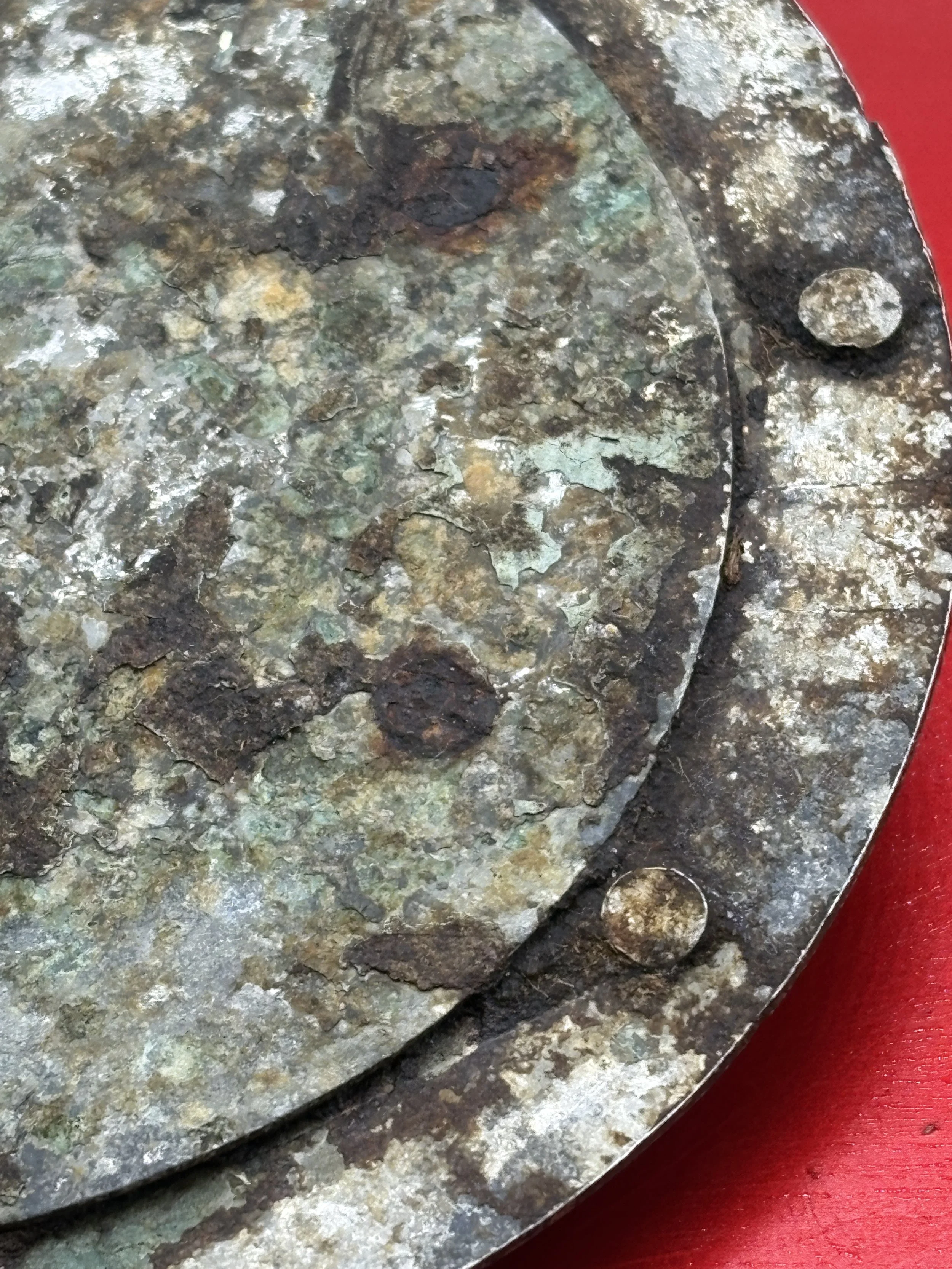 Image 7 of 10
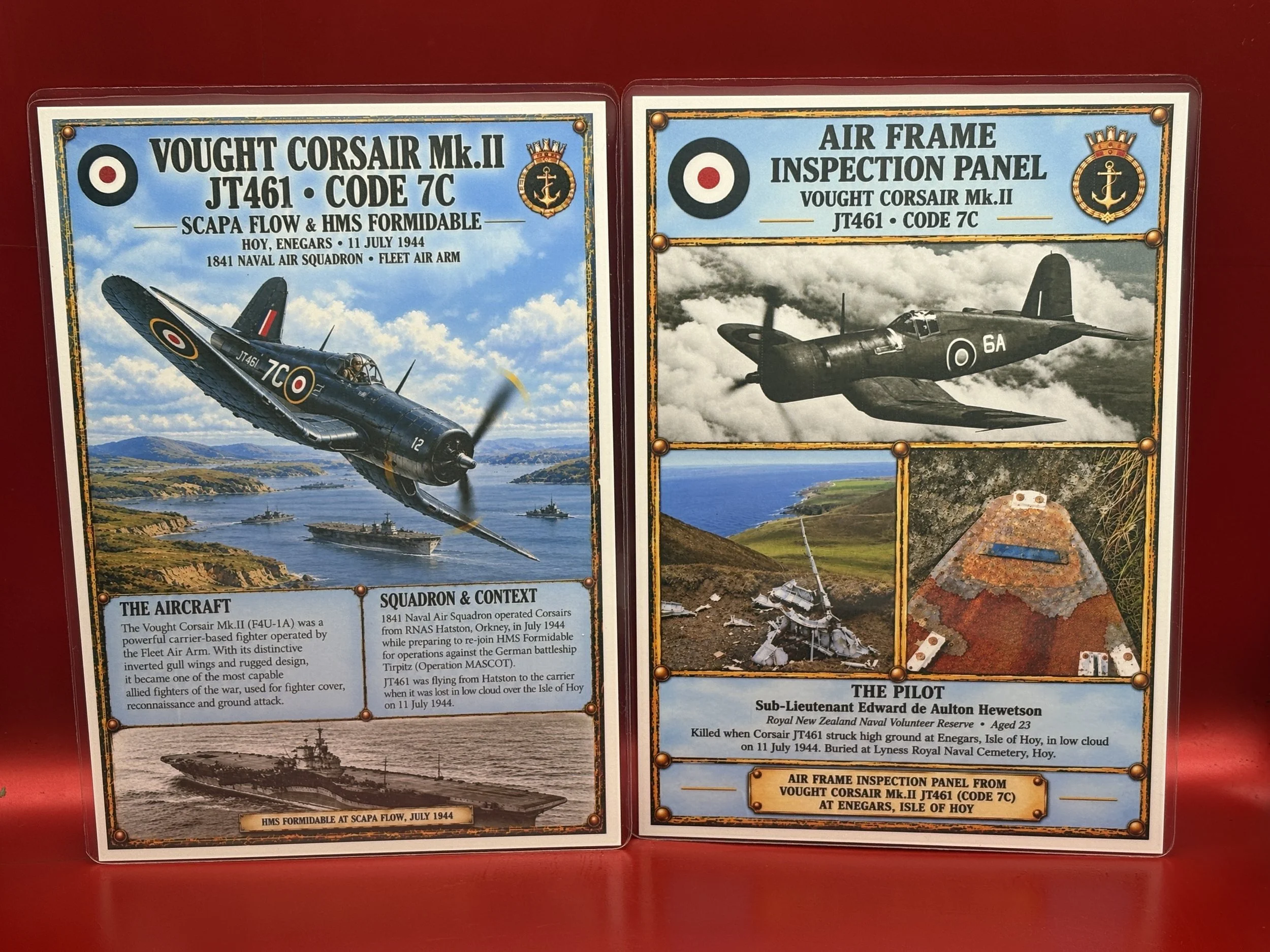 Image 8 of 10
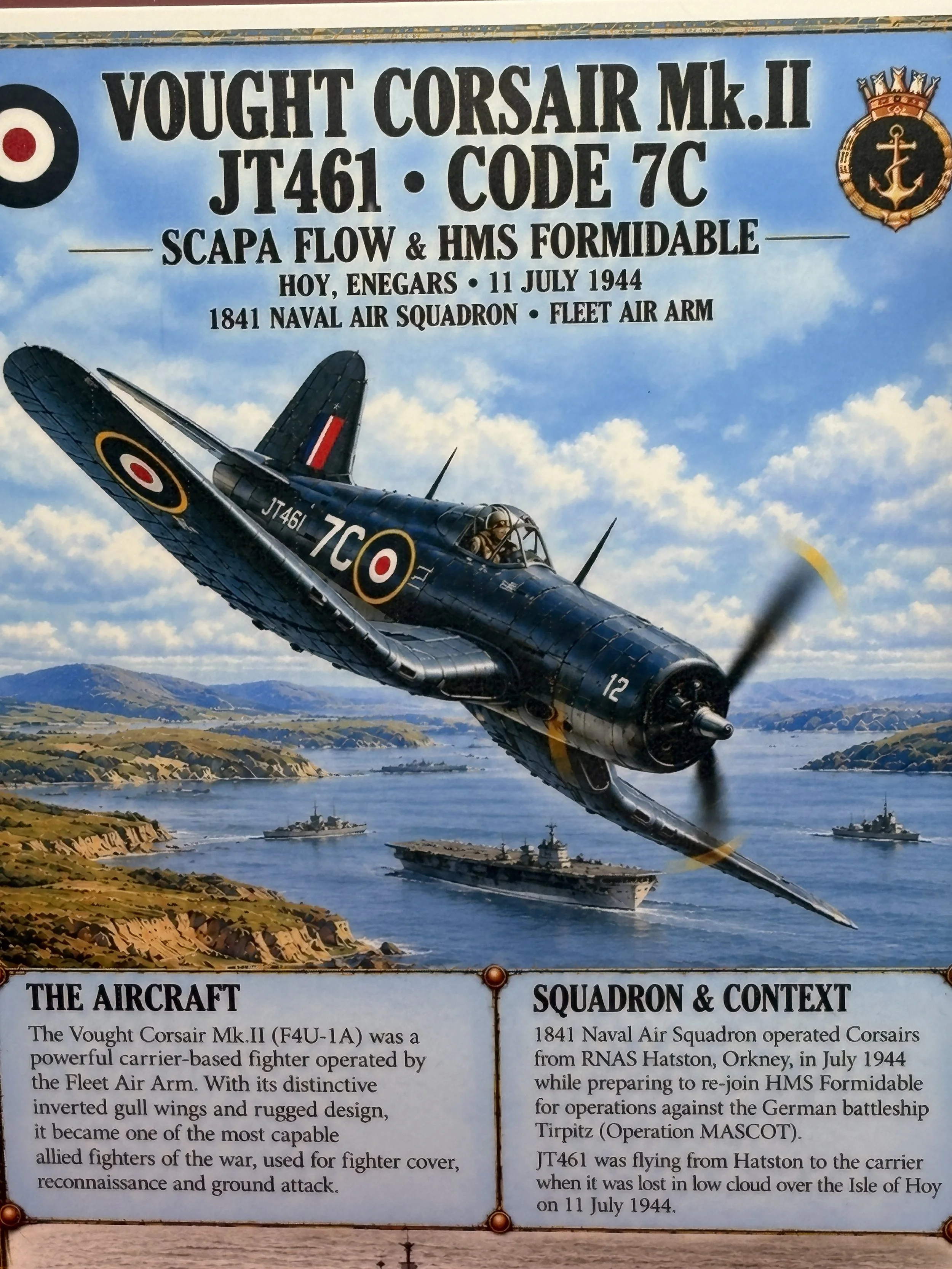 Image 9 of 10
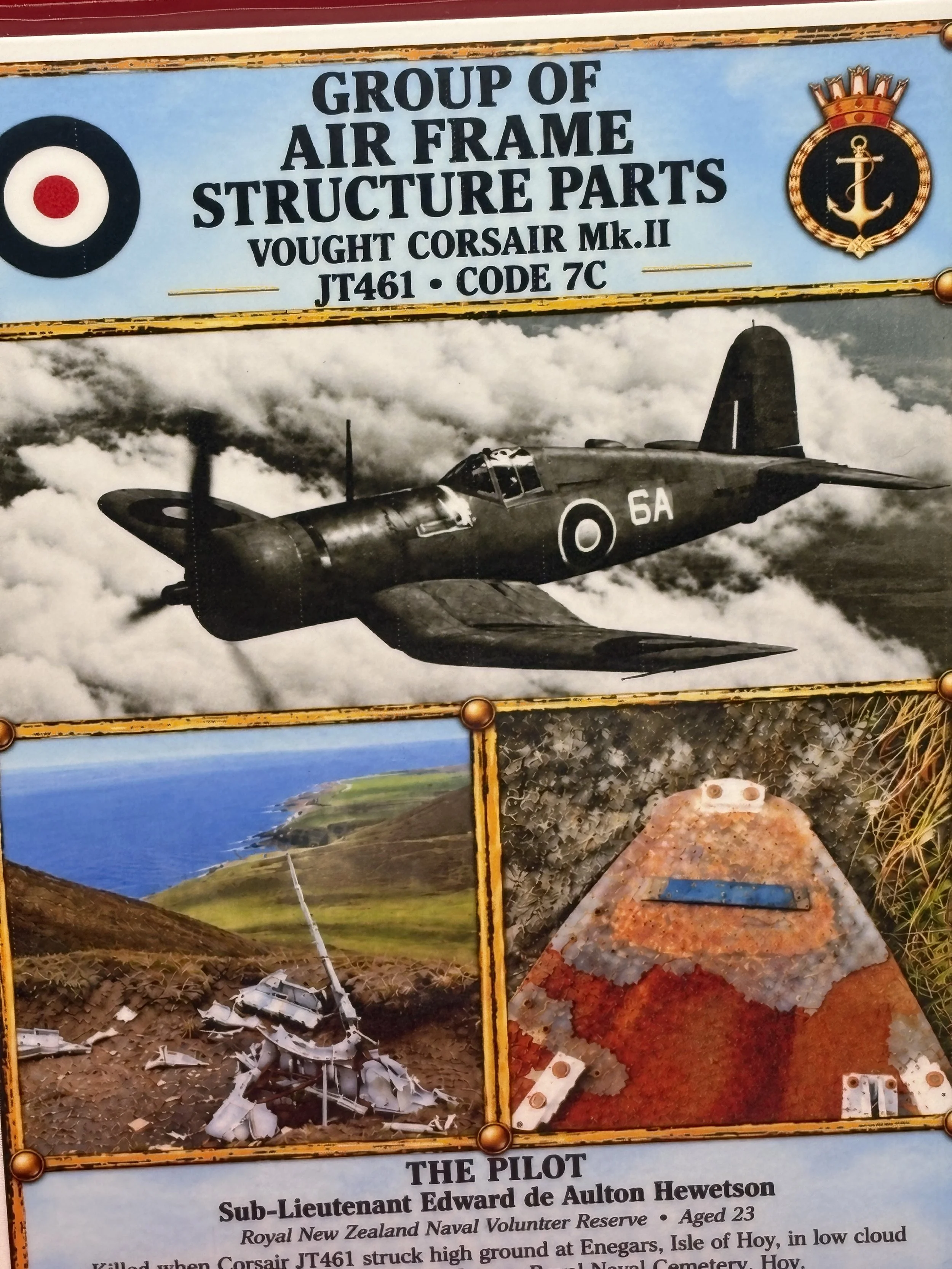 Image 10 of 10