This is a circular steel mounting flange from the forward fuselage in the front air intake it is steel made and shows some clear impact damage from the crash.
This part is in relic condition it is rusty but pretty much complete with 2 large bolt holes and is solid condition and has been carefully cleaned. The plate is 10 inches long by 7 half inches wide it is ideal for display or any military collection. The part is from Hawker Tempest JN765, collision with V1 rocket on 1 July 1944 and crashed at Winchelsea. It comes with an 2x A5 laminated information cards with diagram card also map.
Hawker Tempest V JN765 “JF-K” — Flying Officer George “Ted” Kosh
Near Winchelsea, East Sussex | 1 July 1944
Hunting the V-1 flying bombs
In the summer of 1944, No. 3 Squadron RAF operated Hawker Tempest Mk V fighters from the advanced landing ground at Newchurch in Kent. The Tempest was exceptionally fast at low altitude and became one of the RAF’s most effective aircraft for intercepting Germany’s V-1 flying bombs, pilotless weapons launched from occupied Europe towards London and southern England. Pilots had to locate the small, fast targets and destroy them before they reached populated areas. Shooting at a V-1 from close range was dangerous, and attempting to tip one over with a wing could risk damaging the fighter itself. No. 3 Squadron became a leading V-1 interceptor unit during this campaign.
The loss of JN765
On 1 July 1944, Flying Officer George Edward “Ted” Kosh took off from RAF Newchurch in Tempest V JN765, coded JF-K, to intercept a V-1 flying bomb. During the pursuit, Kosh followed the target into cloud and his aircraft disappeared from view. The Tempest subsequently crashed near Winchelsea in East Sussex, killing the pilot. The aircraft was lost in the countryside near the Sussex coast, and the incident became one of the tragic losses suffered by the RAF during the intense anti-V-1 campaign.
The pilot and the unresolved cause
Kosh was a young pilot of No. 3 Squadron who had already achieved success against enemy aircraft and V-1s. Accounts differ over the precise cause of the crash. The official explanation is reported as loss of control in cloud while pursuing the flying bomb. Some fellow pilots reportedly suspected that the coastal anti-aircraft guns may have been responsible, while another possibility raised by later writers is that a V-1 exploded close to the Tempest. These alternatives have not been conclusively established, so the most reliable wording is that Kosh disappeared into cloud during the interception and crashed shortly afterwards, with the exact cause remaining uncertain.
The crash site and later recovery
The crash site was excavated in 1995. Reports of the recovery indicate that substantial remains of the aircraft and evidence relating to Kosh were found at the site. His remains were subsequently recovered and he was buried at Hawkinge Cemetery in Kent. The discovery linked the physical remains of JN765 with the documented loss of the Tempest and its pilot on 1 July 1944.
Historical accuracy note
The aircraft identity JN765, code JF-K, unit, pilot and date are supported by RAF squadron history and specialist aviation research. The crash is associated with a V-1 interception near Winchelsea, but the precise cause remains disputed. Avoid stating as fact that a V-1 explosion or friendly anti-aircraft fire brought the aircraft down; both appear in later discussion as possibilities rather than proven conclusions.

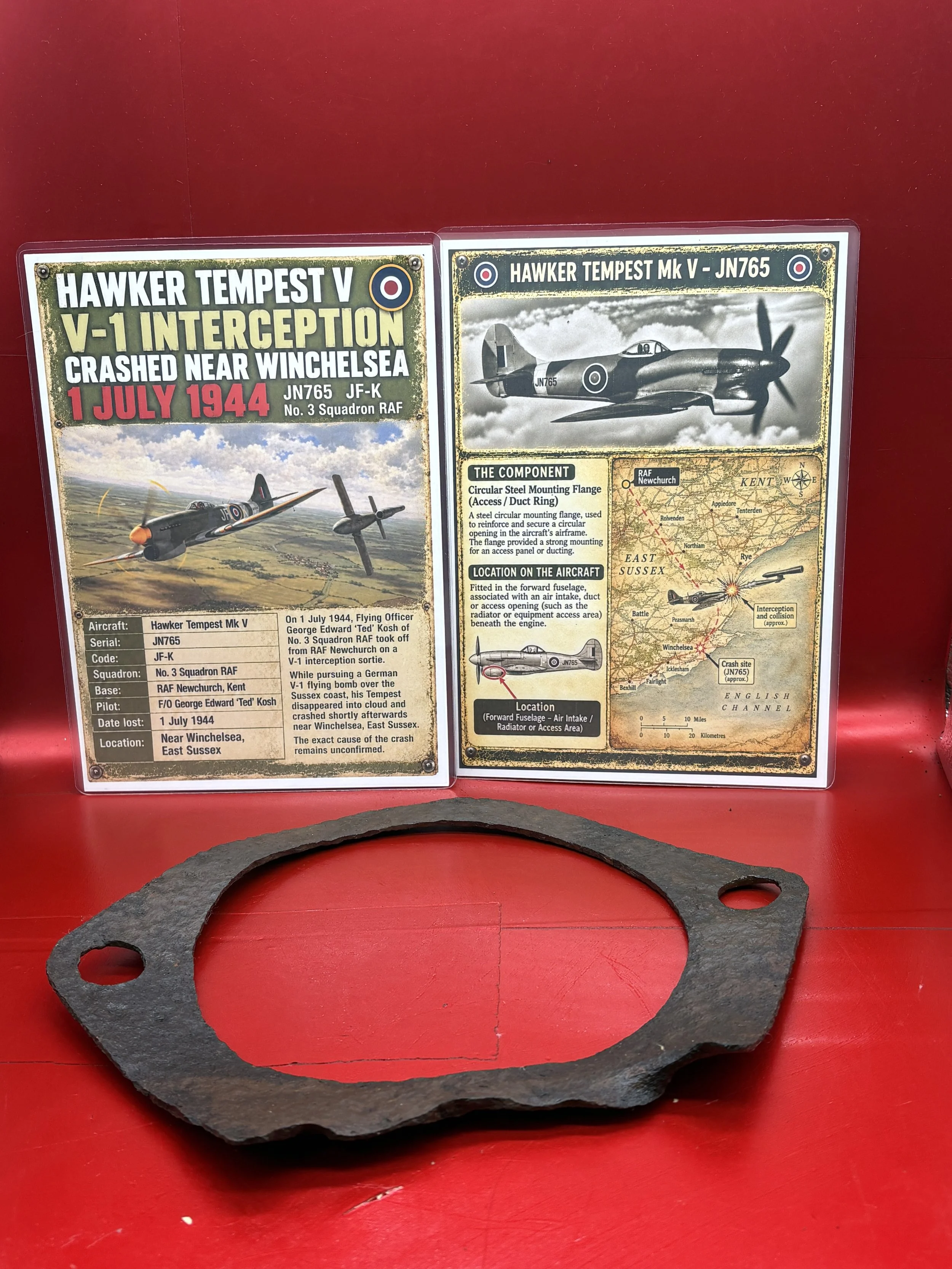 Image 1 of 9
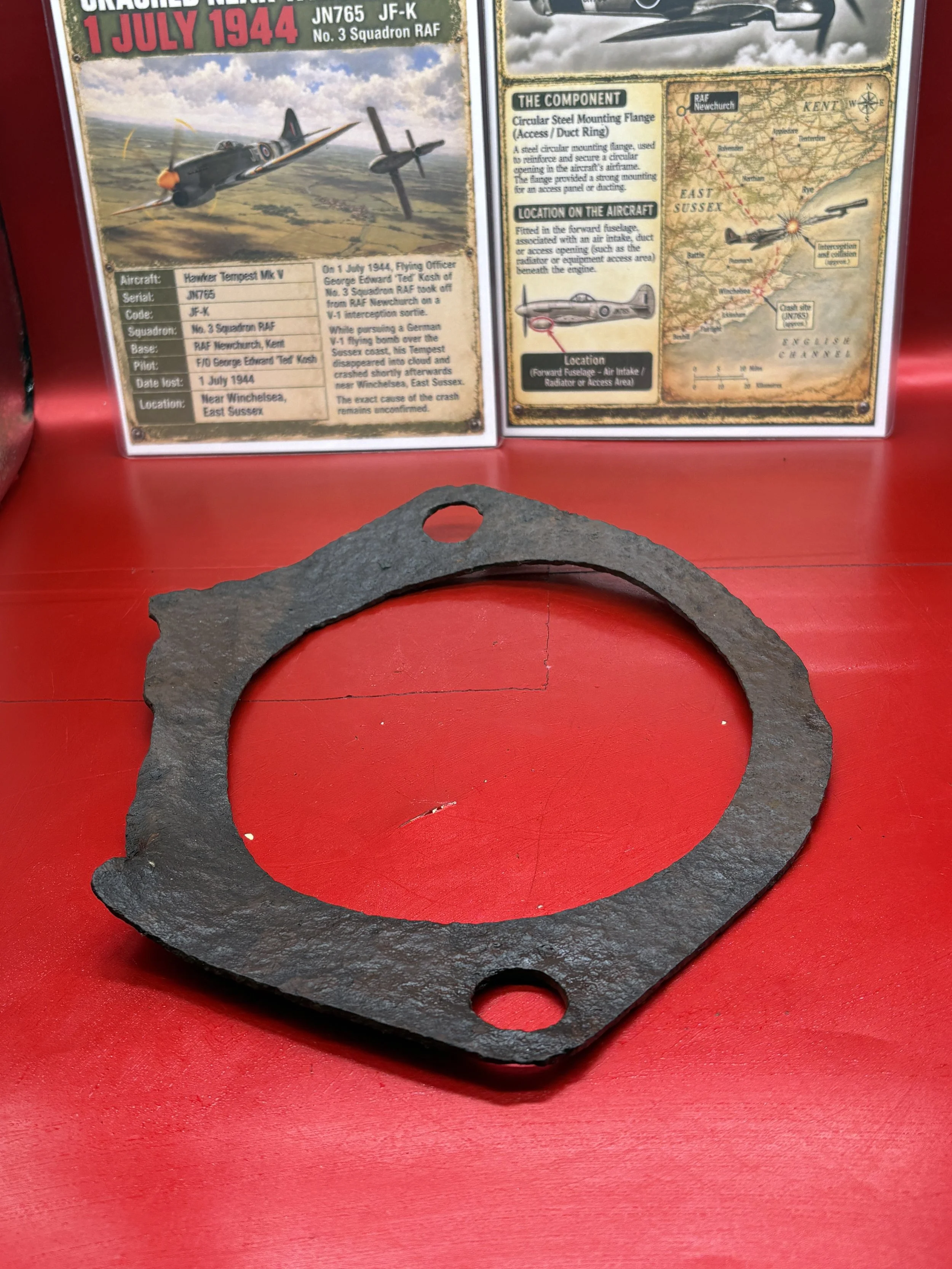 Image 2 of 9
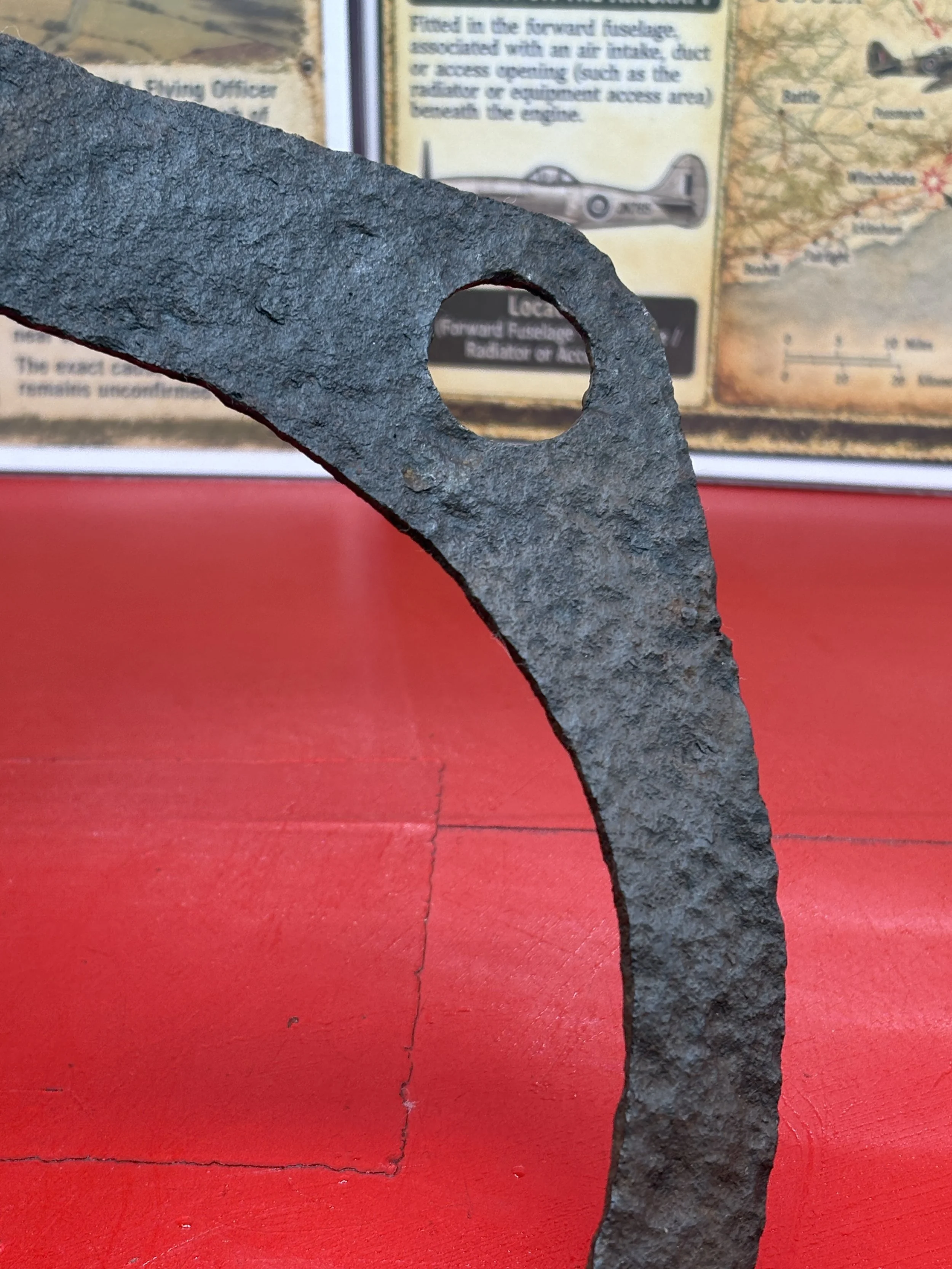 Image 3 of 9
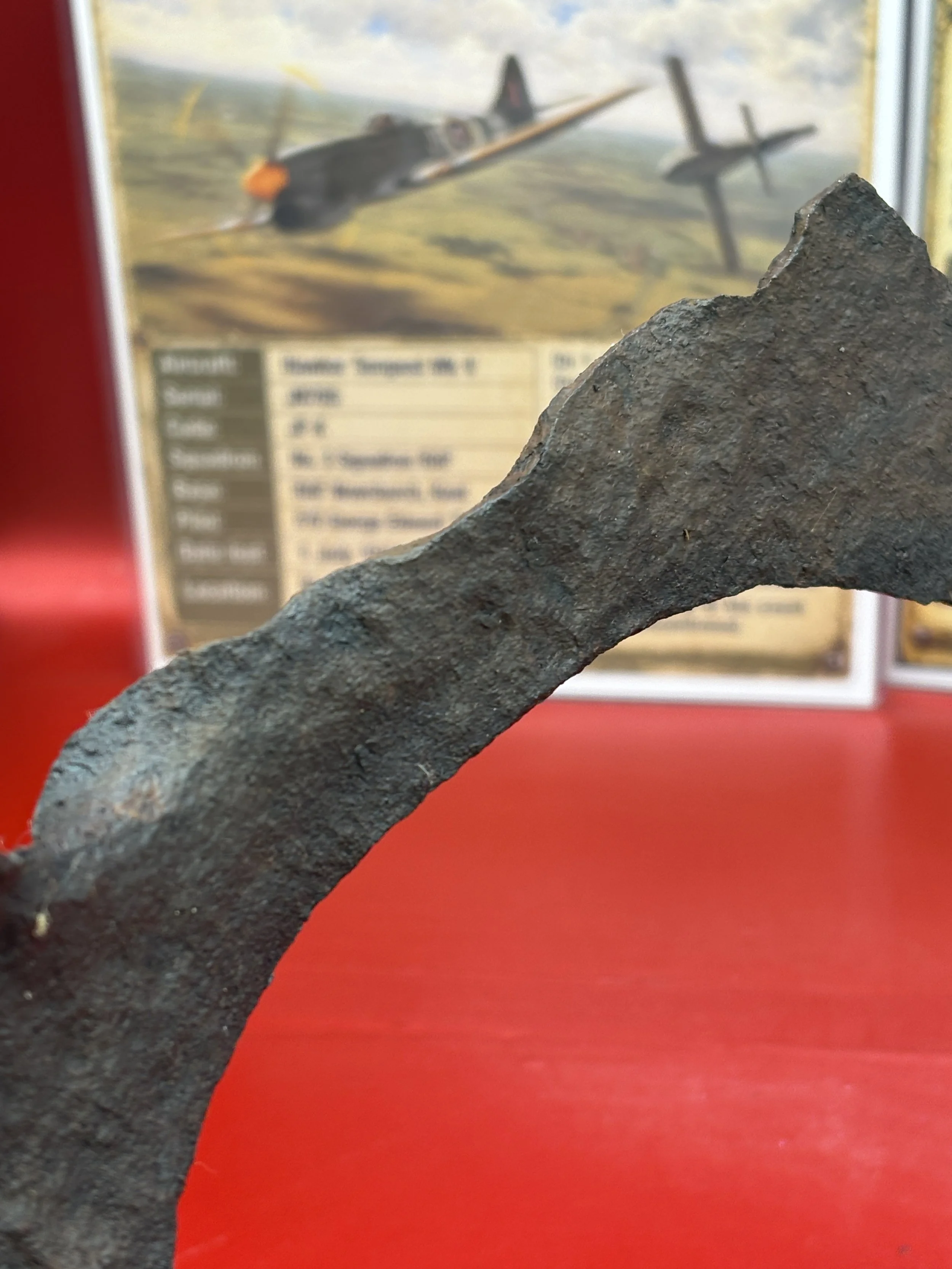 Image 4 of 9
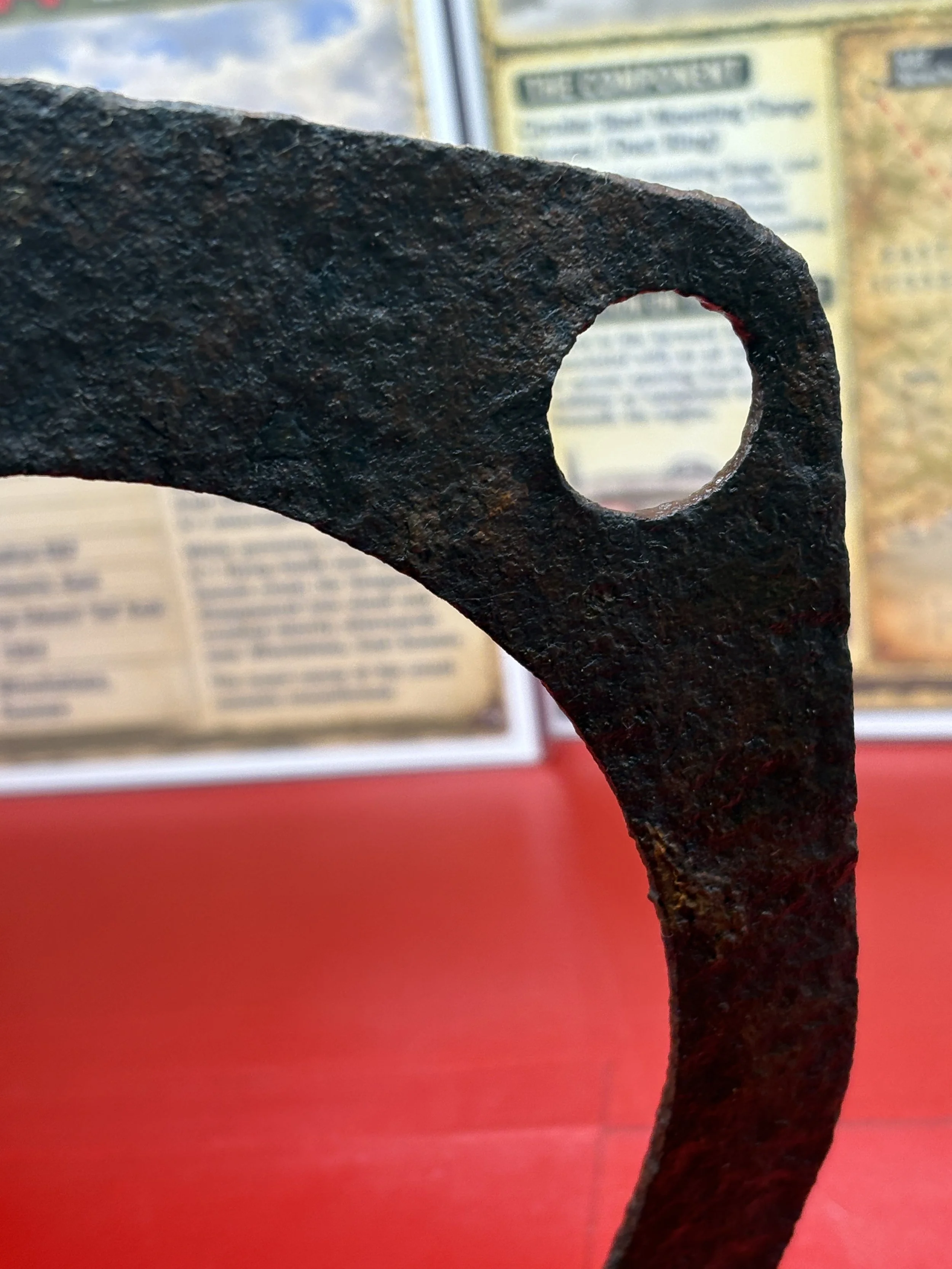 Image 5 of 9
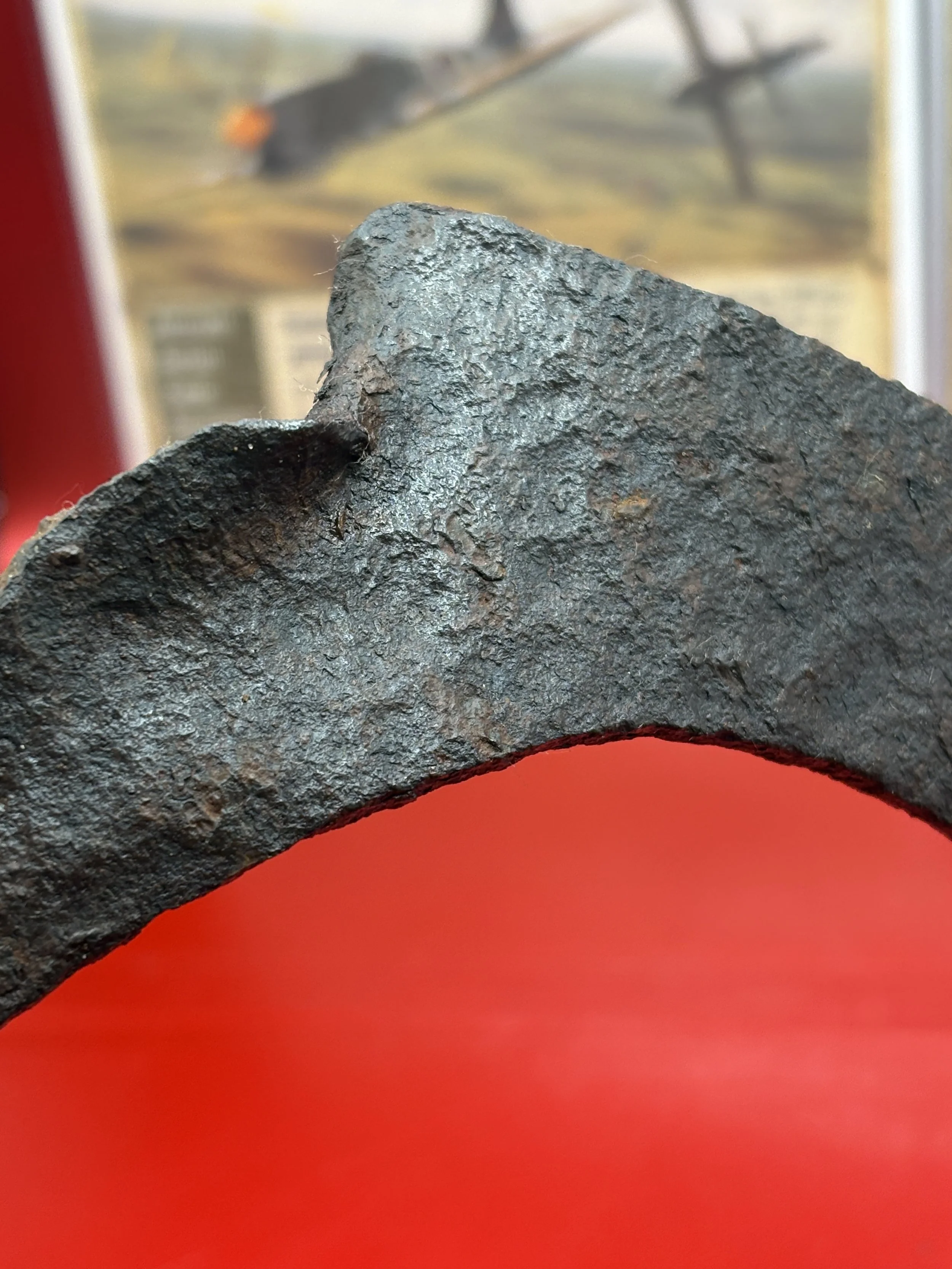 Image 6 of 9
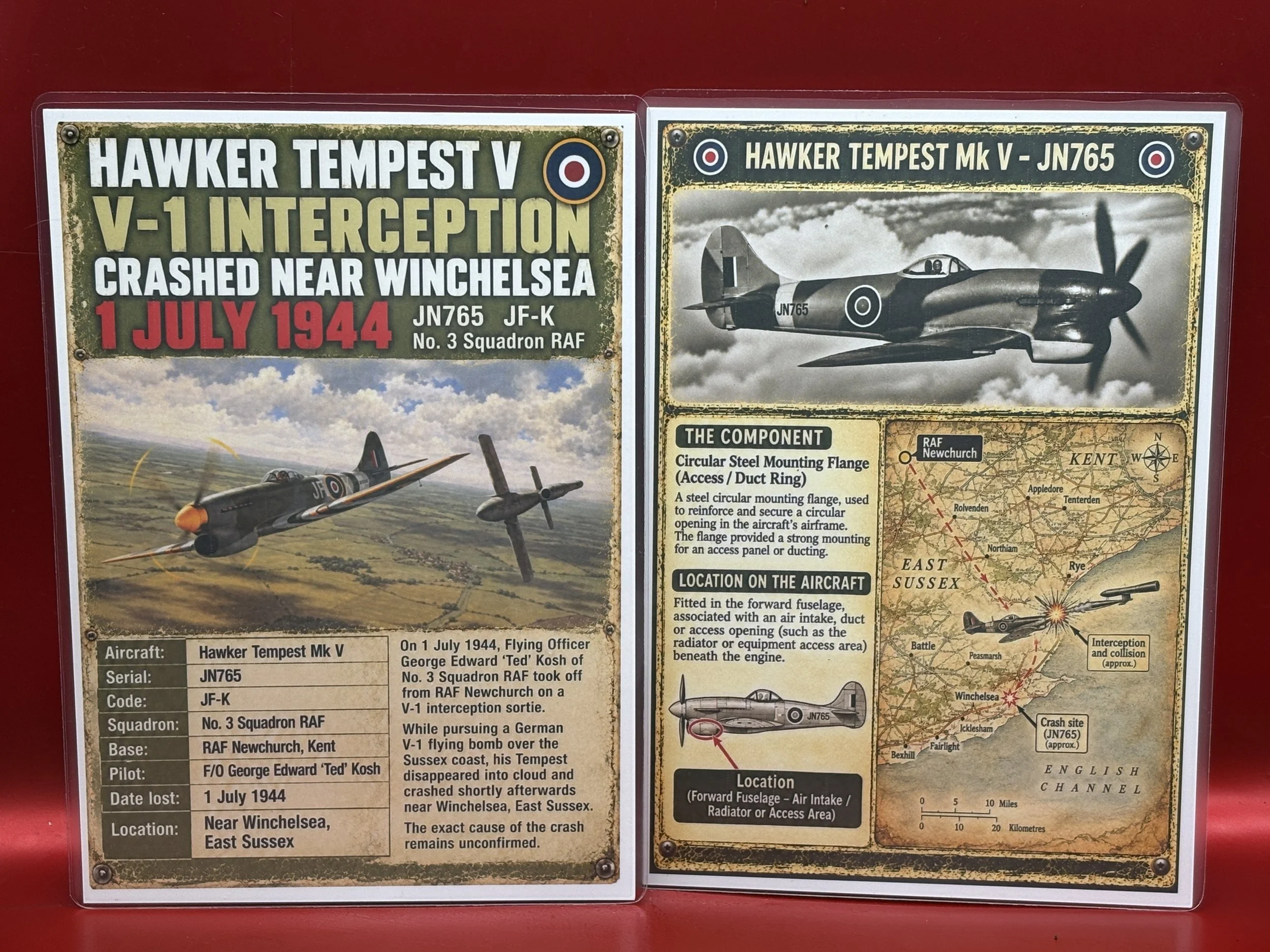 Image 7 of 9
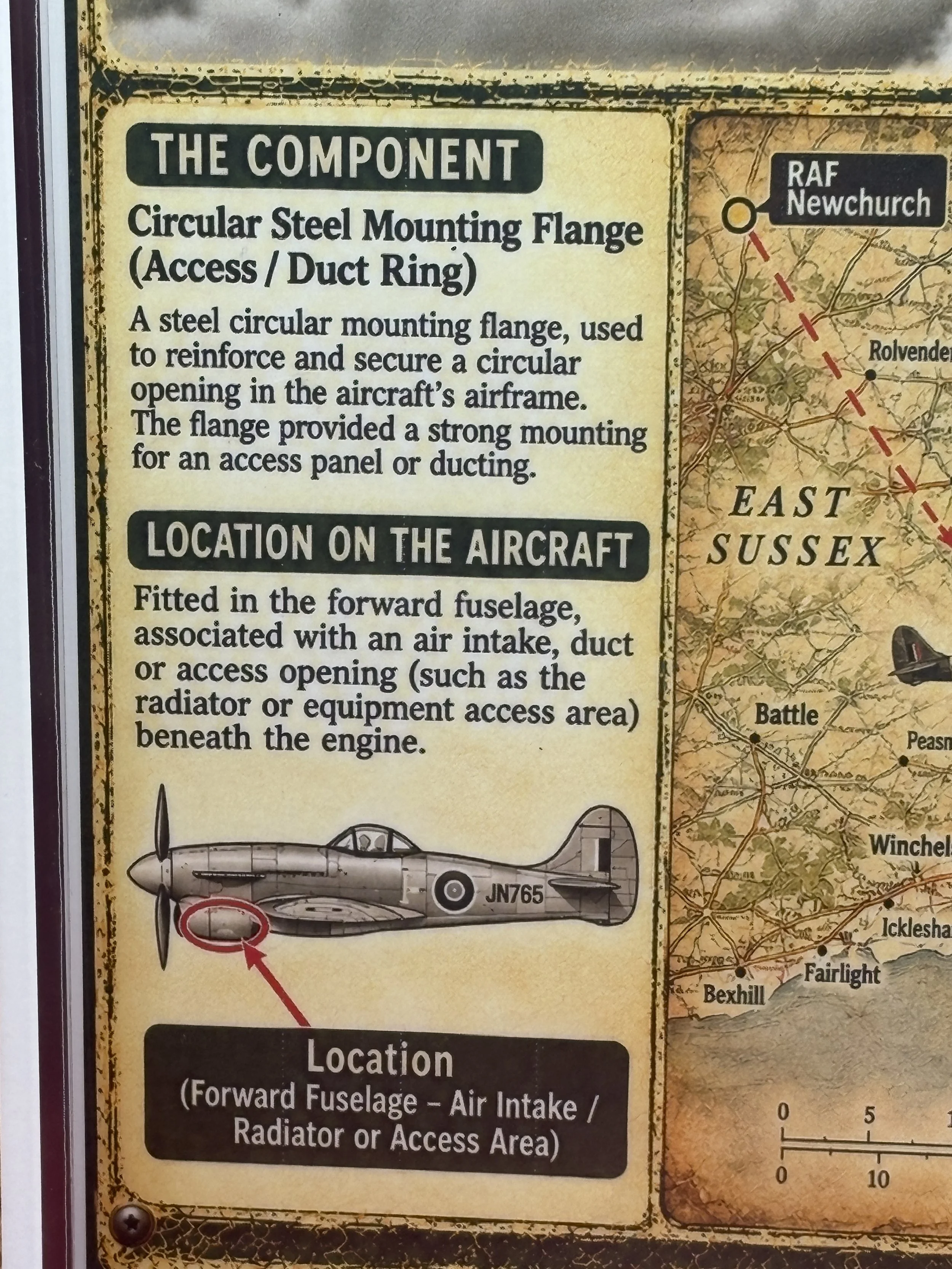 Image 8 of 9
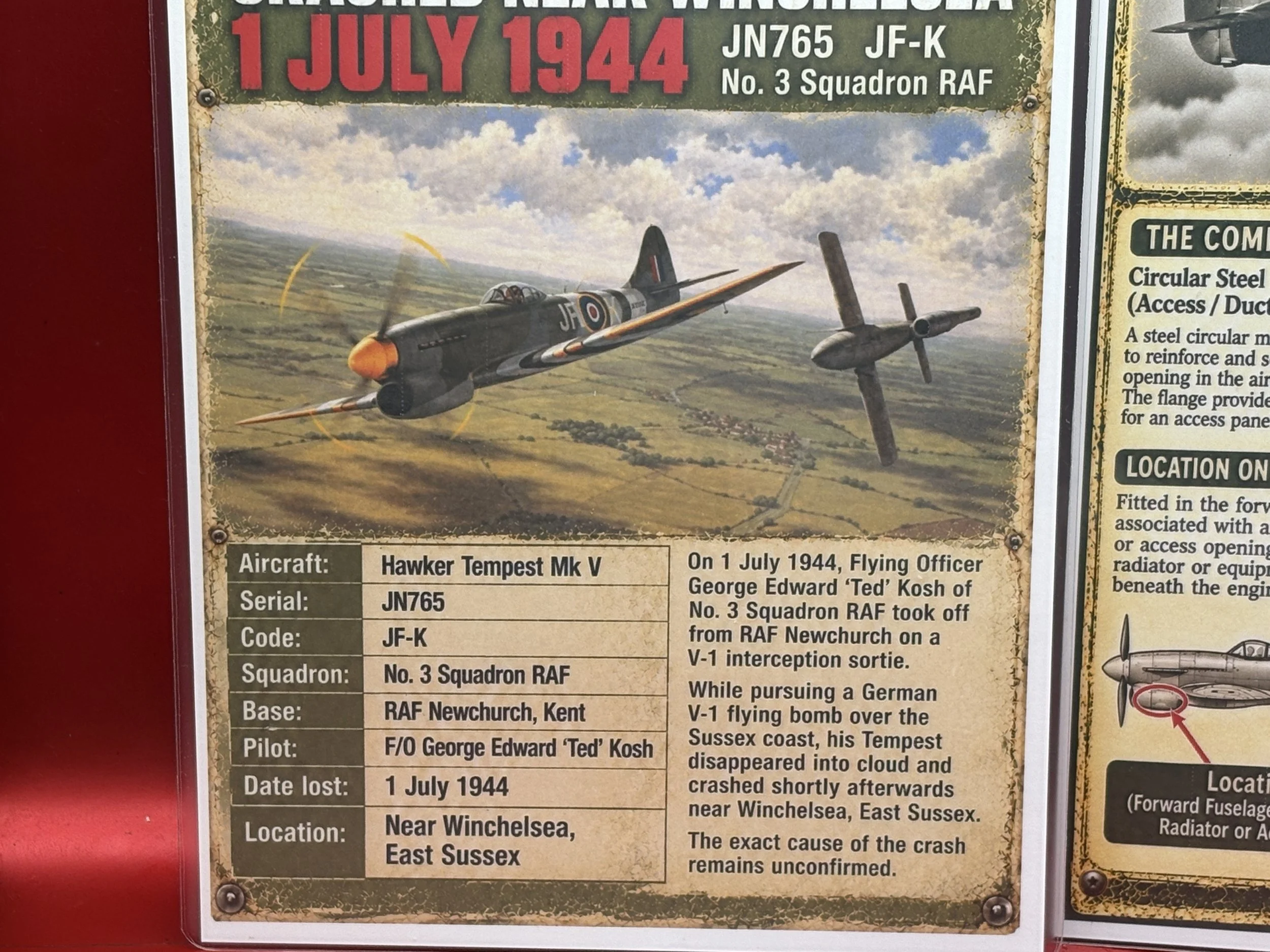 Image 9 of 9