This is a German 20mm Flak 30/38 anti-aircraft gun magazine box which is heavily battle damaged looks like it has been ripped apart in an explosion, it has ripped and bent up with lots of damage and overall the box remains solid. and has a small remains of its original blue paintwork, both on the exterior and partially inside all fairly clear to see. The lid has completely ripped off in the explosion and is missing. Inside, both magazine-holding brackets are still there, also there are some rust holes as well nothing to bad also some impact damage holes overall the box has been nicely cleaned and is perfect for display or any collection. The box was recovered in 1993-1995 around Tempelhof airport. This was part of the German defence line for the battle of Berlin in April 1945 in the fighting in last days of the Reich and defence of the Capital against the Russians. The box comes with 2xA5 laminated information cards with map and pictures.
The Battle for Tempelhof Airport in April 1945 was a brutal and desperate struggle during the final Soviet assault on Berlin. As the last viable escape route and military stronghold, the airfield was fiercely defended by a hodgepodge of SS units, an armoured division, local flak units and the airbase garrison. They resisted stubbornly for several hours. Only after intensive aerial bombardment and massive artillery fire from reinforcing units, Tempelhof Airport was taken. A few days later, the Soviet war photographer Yevgeny Khaldey shot his famous photograph showing Soviet troops under their victory banner standing next to the Nazi eagle on the roof of Tempelhof Airport.
1993–1995: The Allied Withdrawal, When the U.S. Army officially vacated their Berlin Brigade installations at Tempelhof air base following the end of the Cold War, extensive ground surveys, environmental cleanups, and structural handovers took place. During these foundation surveys in the mid-1990s, forgotten WWII-era bunker levels and collapsed trenches containing personal military gear—including helmets—were reassessed and cleared.
This is a German 20mm Flak 30/38 anti-aircraft gun magazine box which is heavily battle damaged looks like it has been ripped apart in an explosion, it has ripped and bent up with lots of damage and overall the box remains solid. and has a small remains of its original blue paintwork, both on the exterior and partially inside all fairly clear to see. The lid has completely ripped off in the explosion and is missing. Inside, both magazine-holding brackets are still there, also there are some rust holes as well nothing to bad also some impact damage holes overall the box has been nicely cleaned and is perfect for display or any collection. The box was recovered in 1993-1995 around Tempelhof airport. This was part of the German defence line for the battle of Berlin in April 1945 in the fighting in last days of the Reich and defence of the Capital against the Russians. The box comes with 2xA5 laminated information cards with map and pictures.
The Battle for Tempelhof Airport in April 1945 was a brutal and desperate struggle during the final Soviet assault on Berlin. As the last viable escape route and military stronghold, the airfield was fiercely defended by a hodgepodge of SS units, an armoured division, local flak units and the airbase garrison. They resisted stubbornly for several hours. Only after intensive aerial bombardment and massive artillery fire from reinforcing units, Tempelhof Airport was taken. A few days later, the Soviet war photographer Yevgeny Khaldey shot his famous photograph showing Soviet troops under their victory banner standing next to the Nazi eagle on the roof of Tempelhof Airport.
1993–1995: The Allied Withdrawal, When the U.S. Army officially vacated their Berlin Brigade installations at Tempelhof air base following the end of the Cold War, extensive ground surveys, environmental cleanups, and structural handovers took place. During these foundation surveys in the mid-1990s, forgotten WWII-era bunker levels and collapsed trenches containing personal military gear—including helmets—were reassessed and cleared.

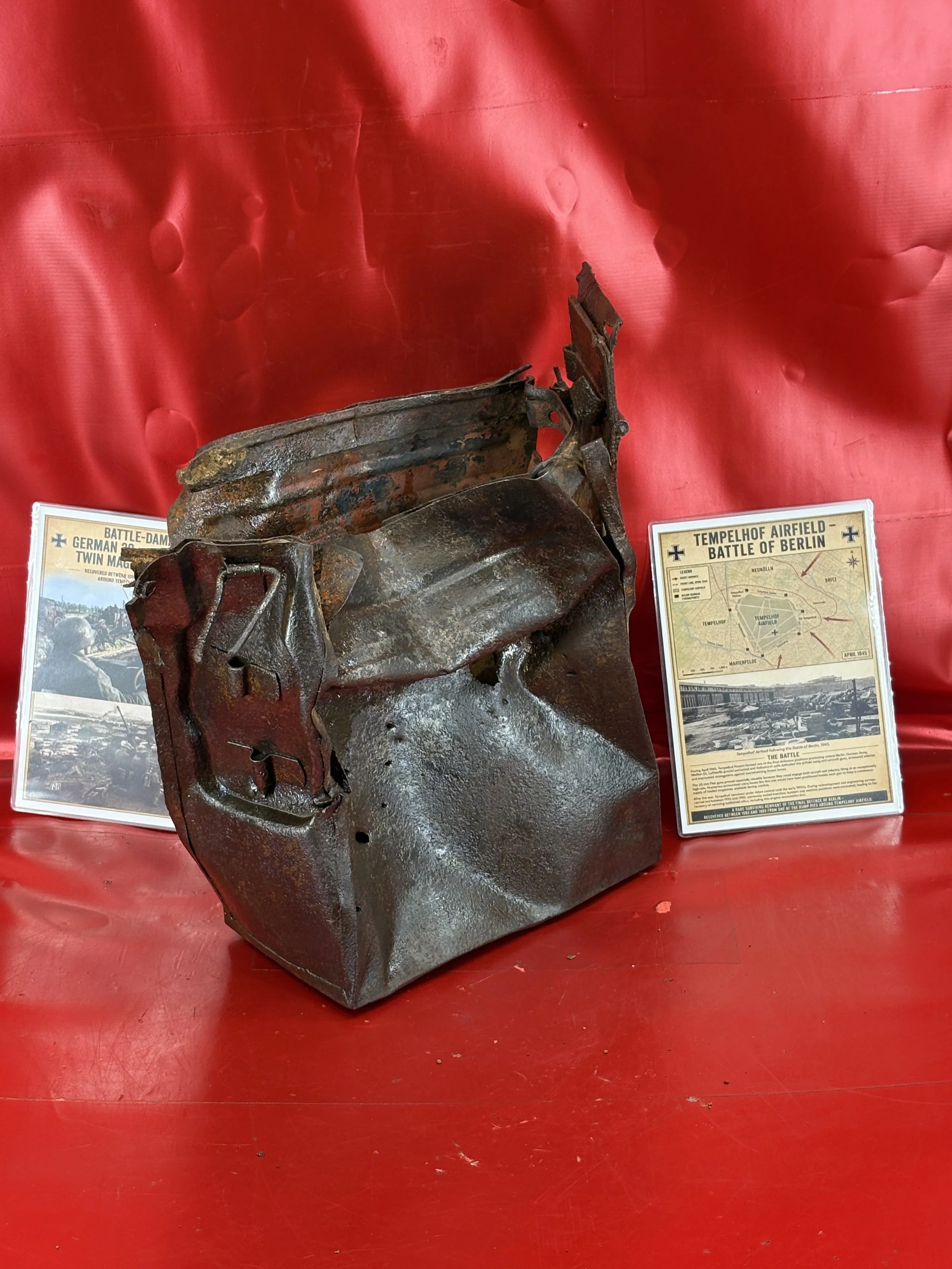 Image 1 of 12
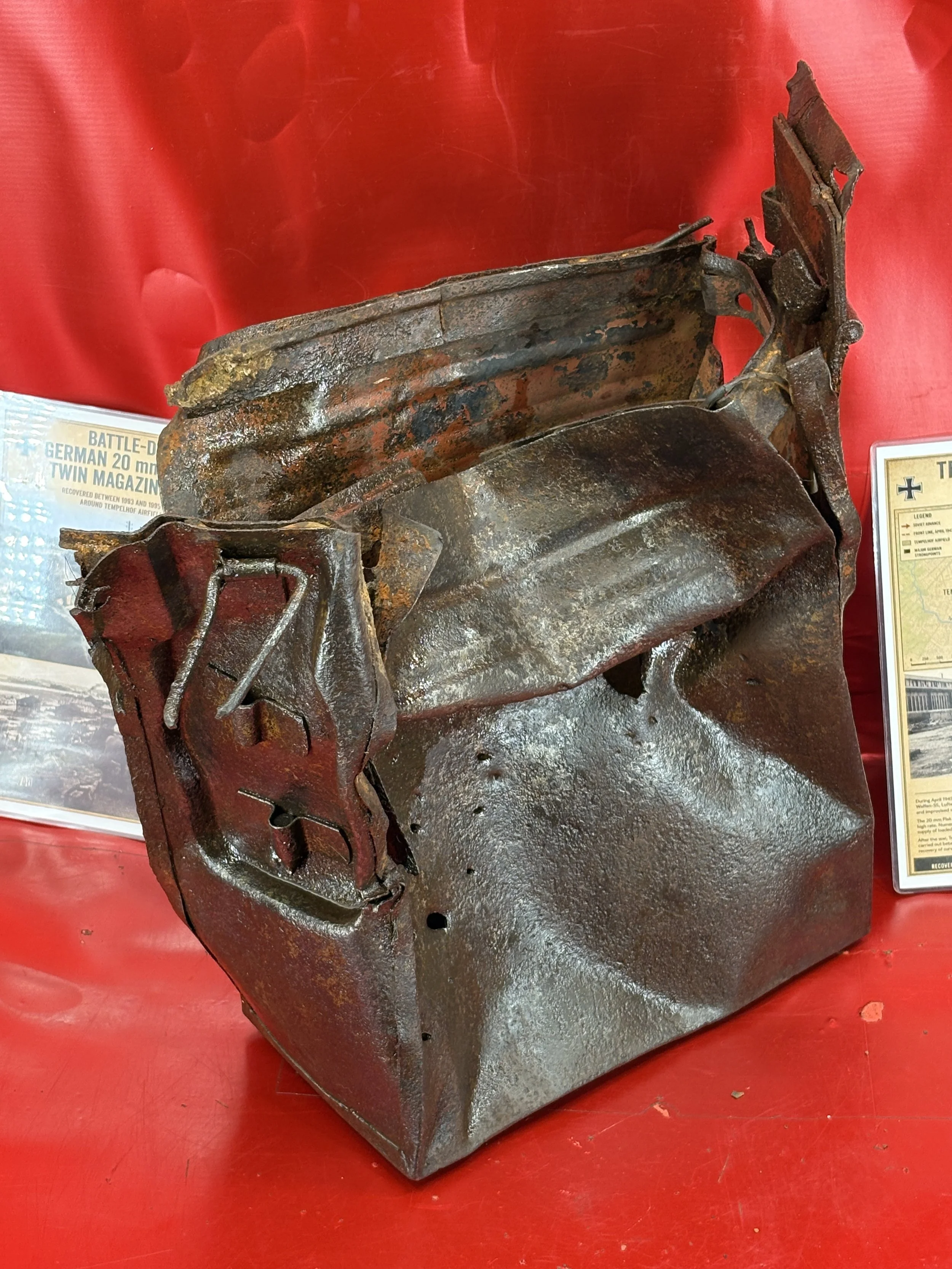 Image 2 of 12
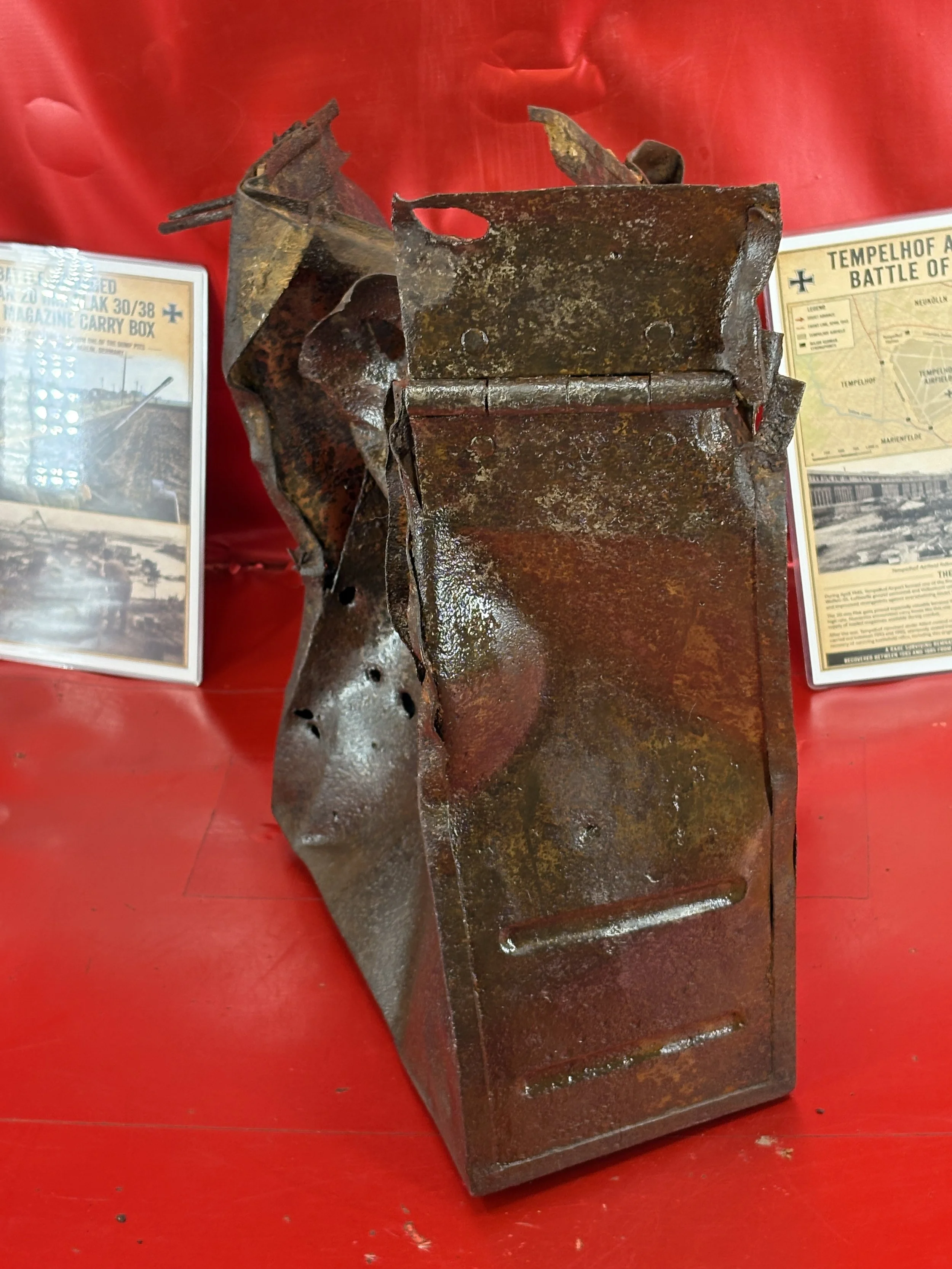 Image 3 of 12
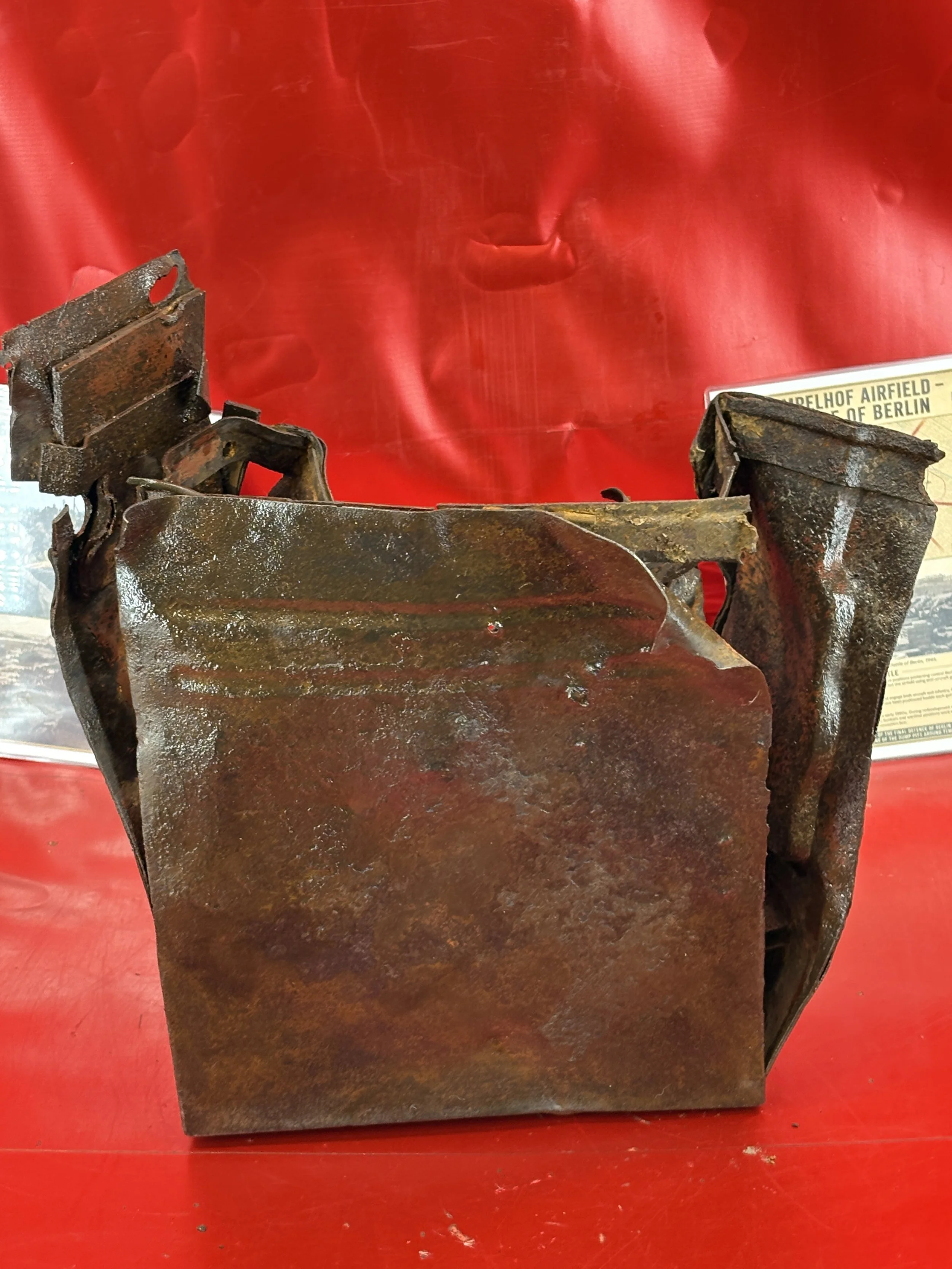 Image 4 of 12
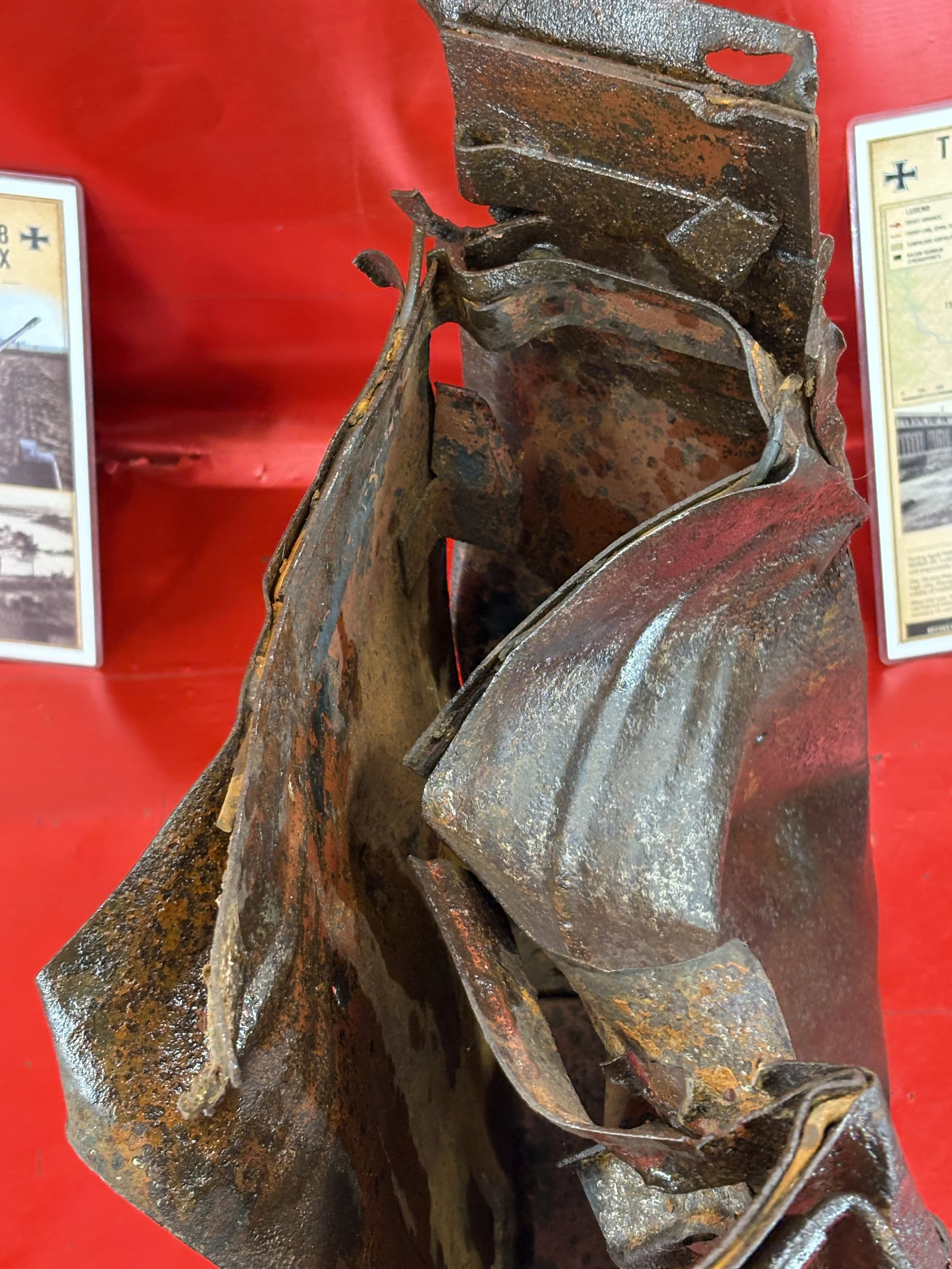 Image 5 of 12
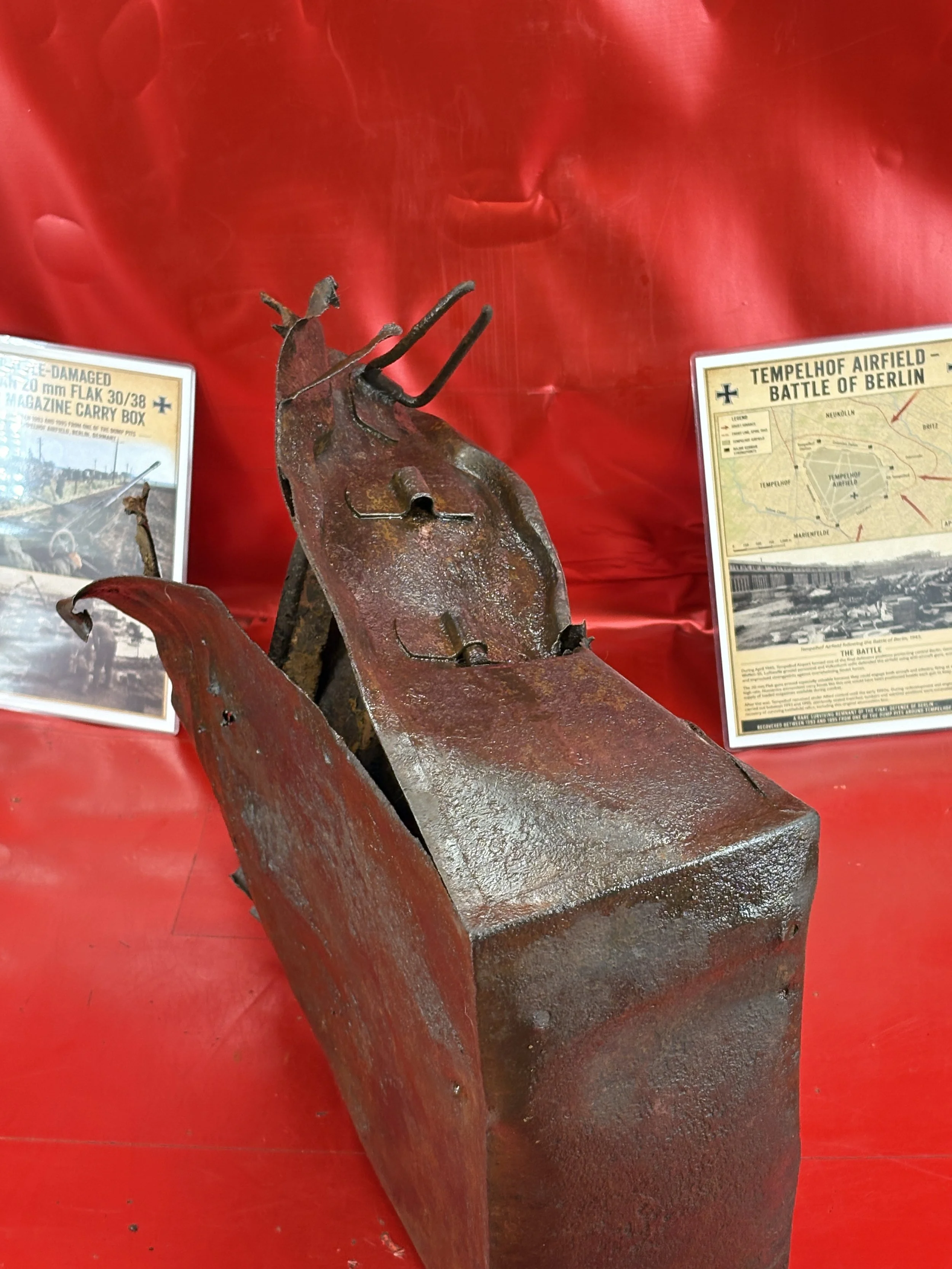 Image 6 of 12
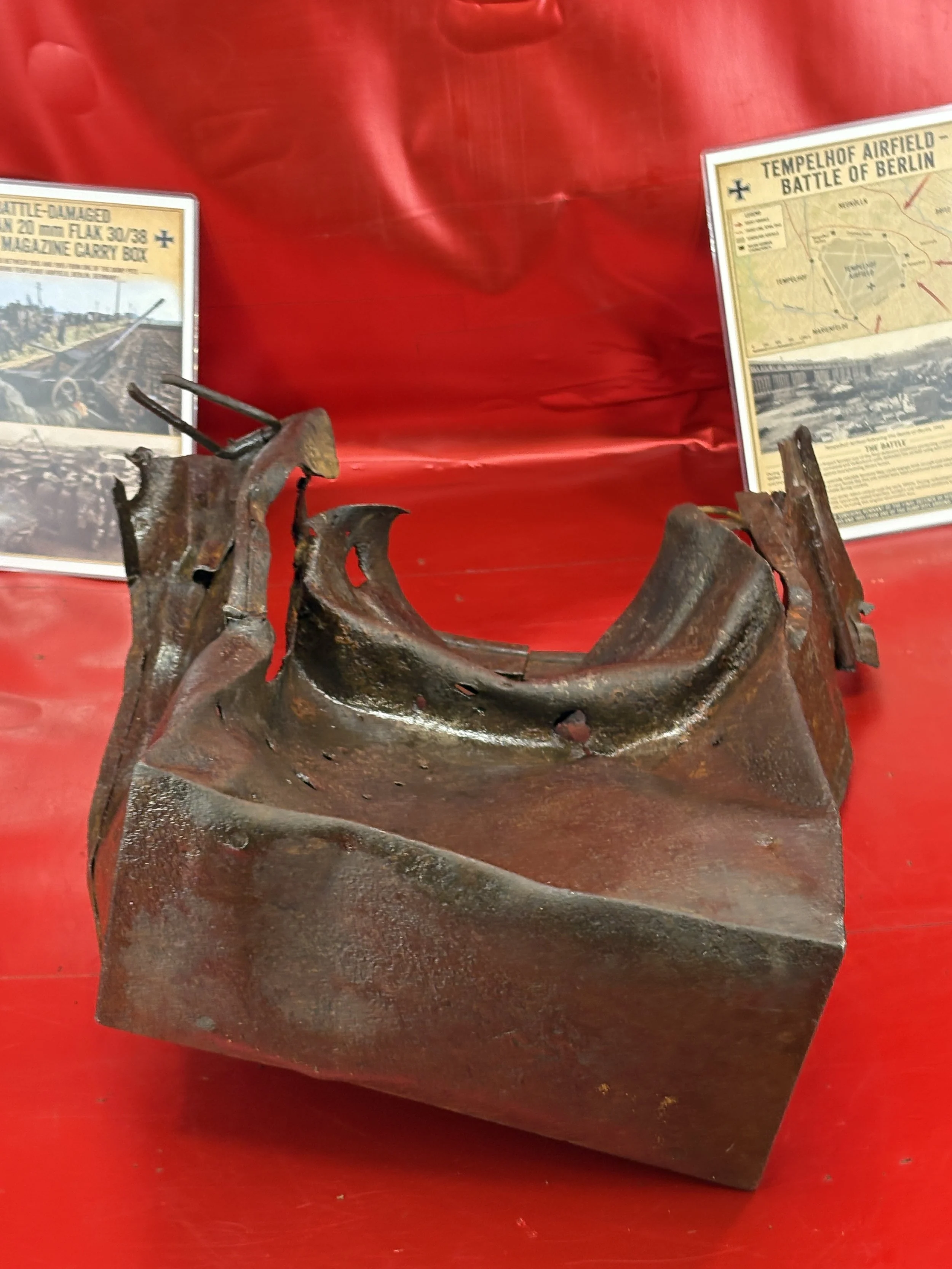 Image 7 of 12
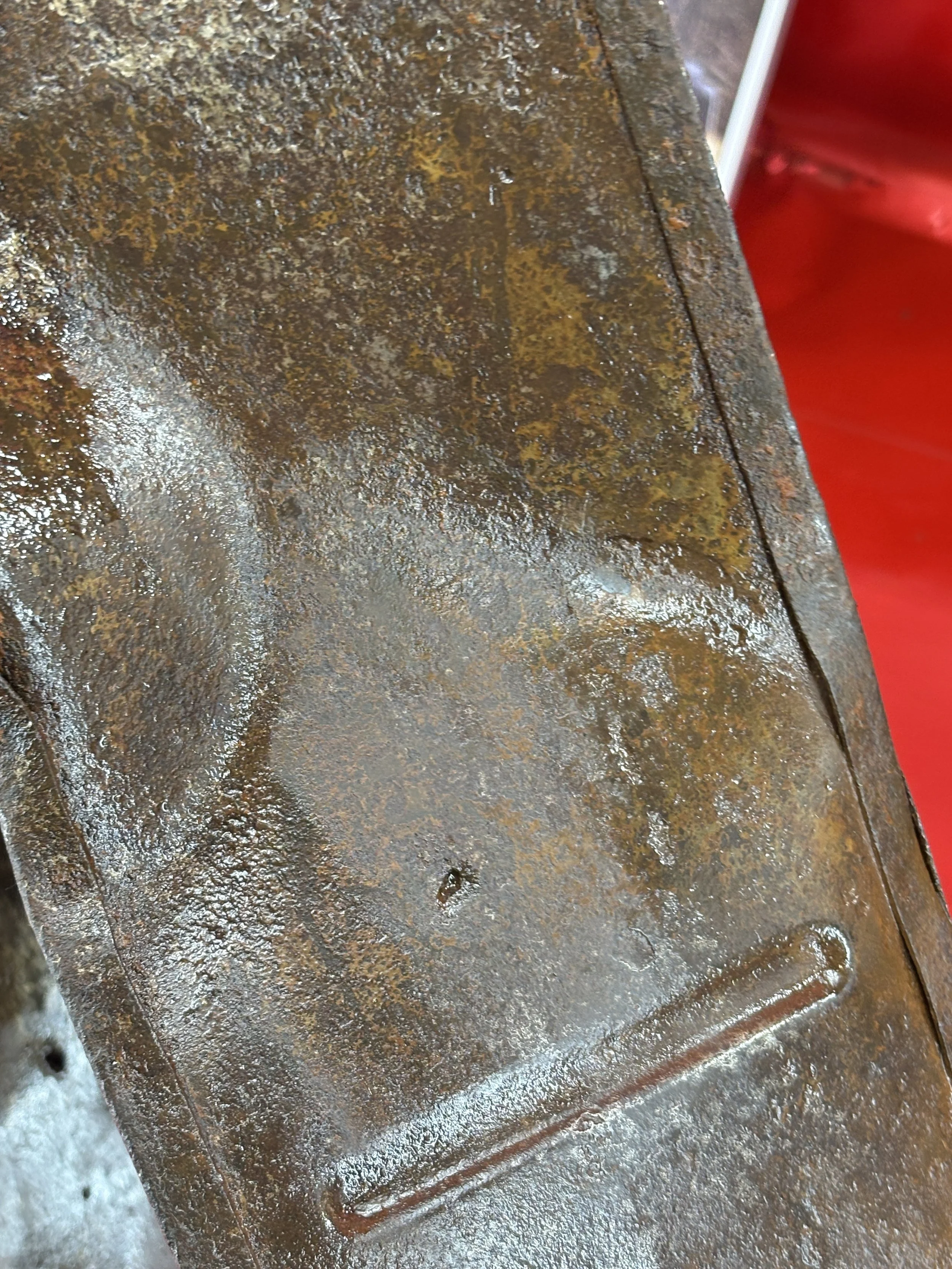 Image 8 of 12
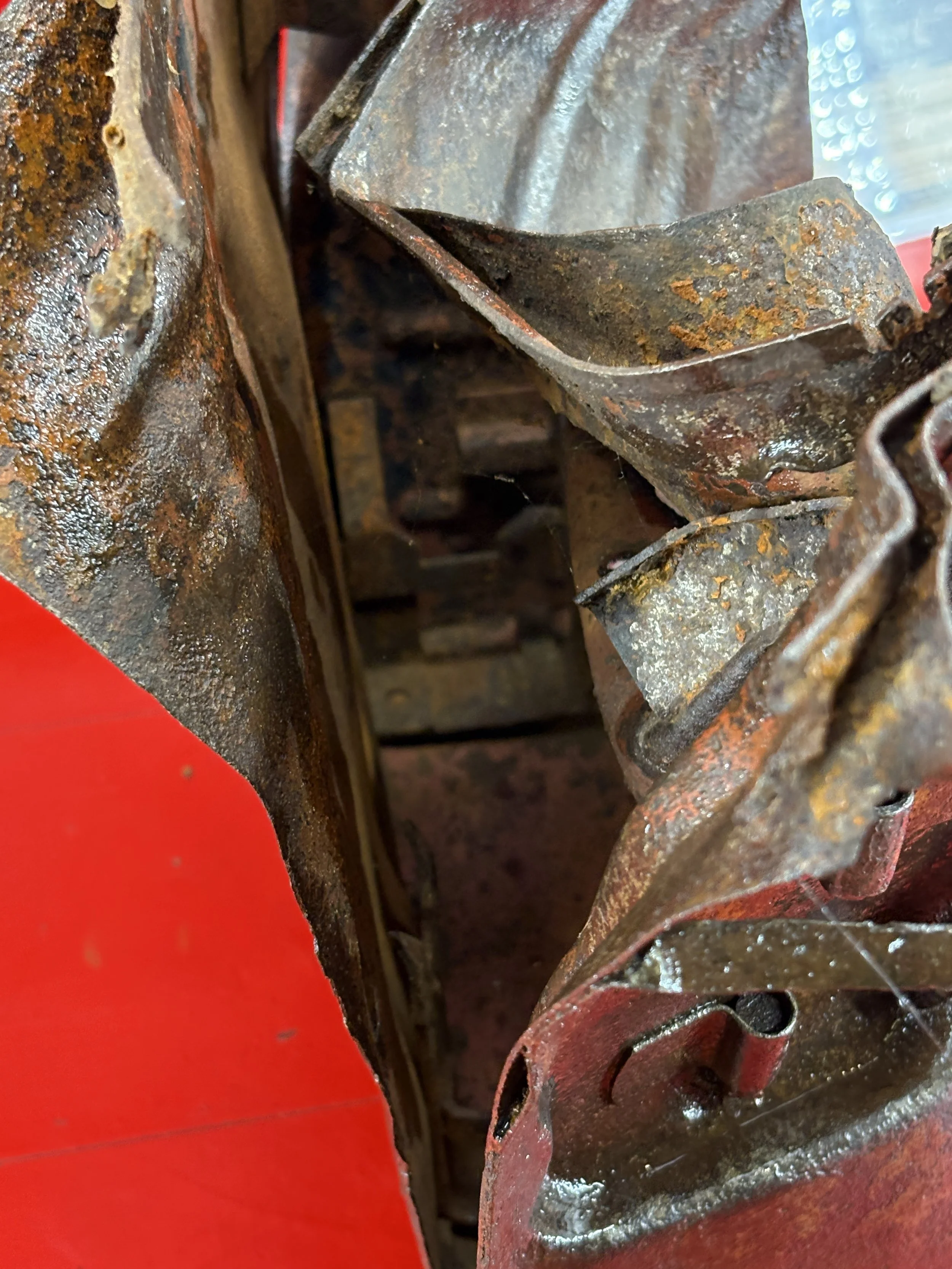 Image 9 of 12
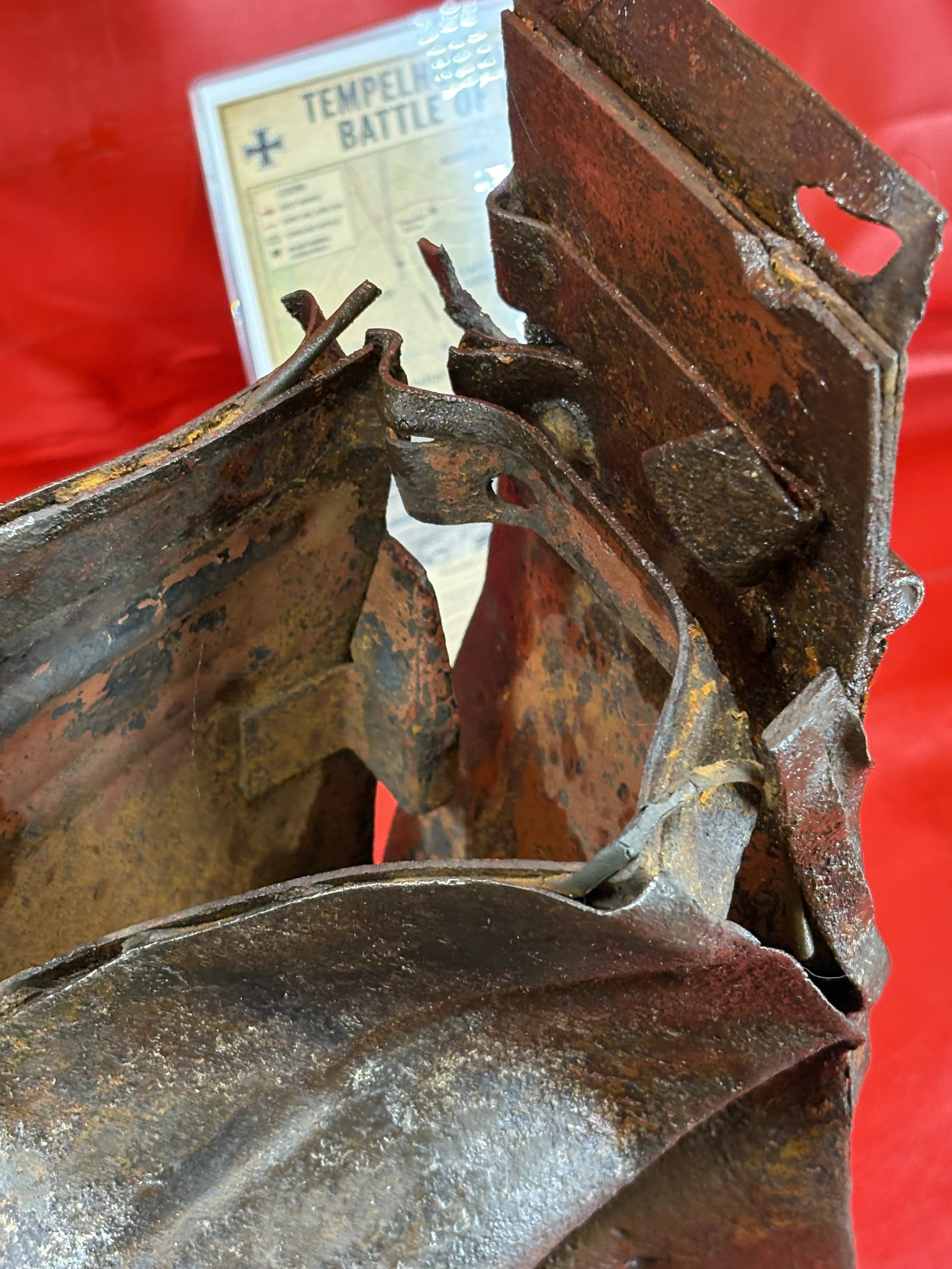 Image 10 of 12
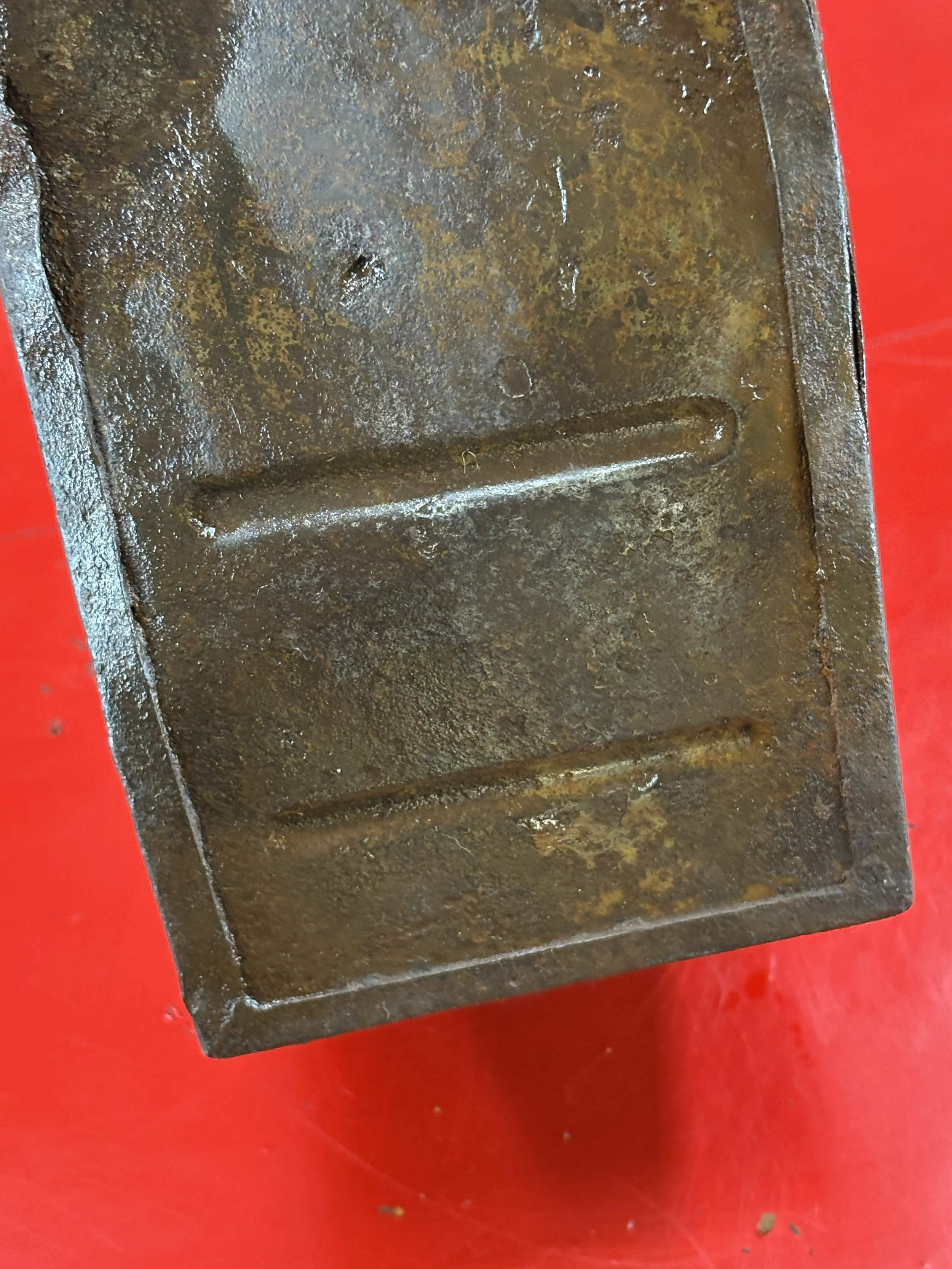 Image 11 of 12
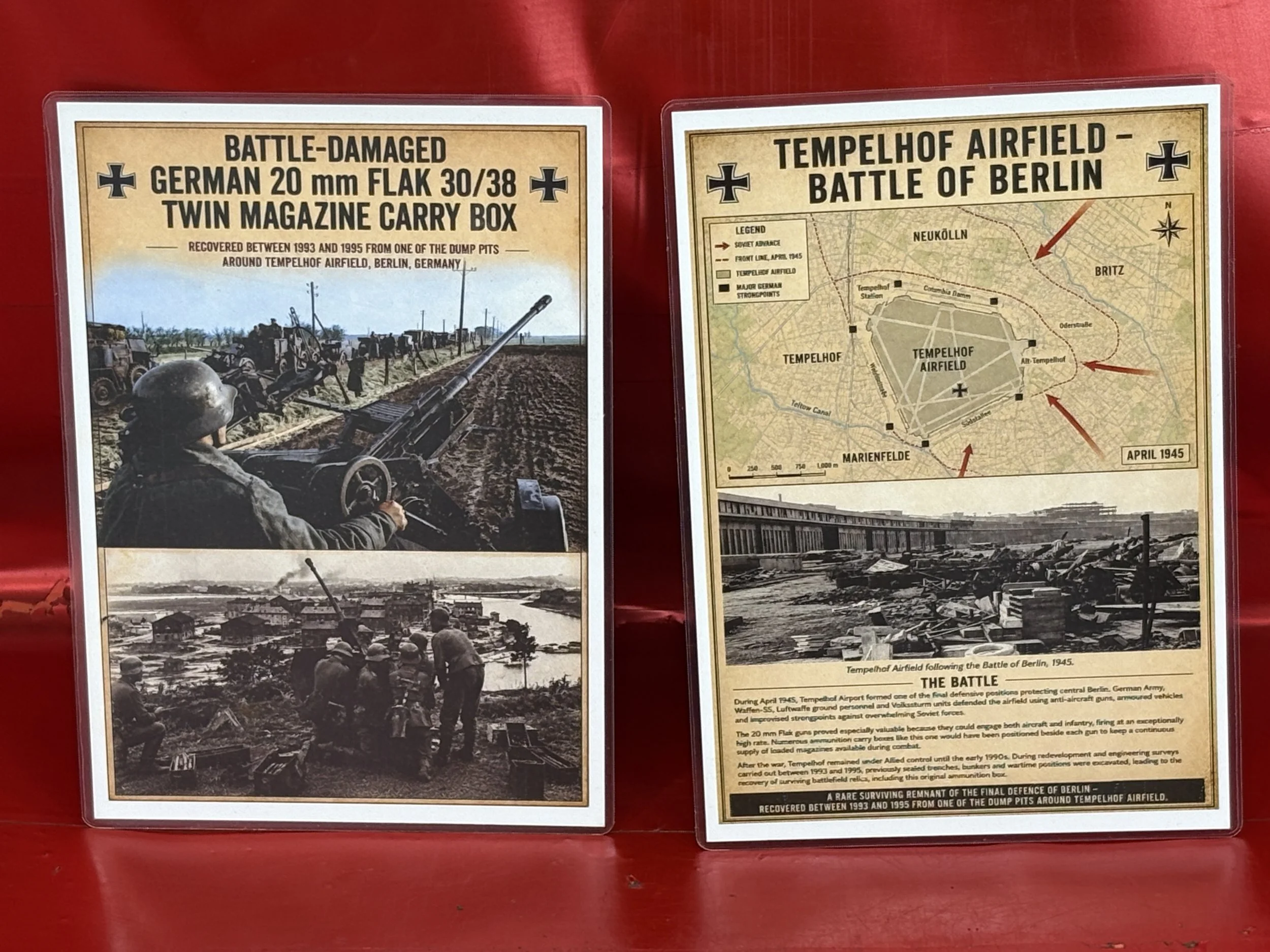 Image 12 of 12